
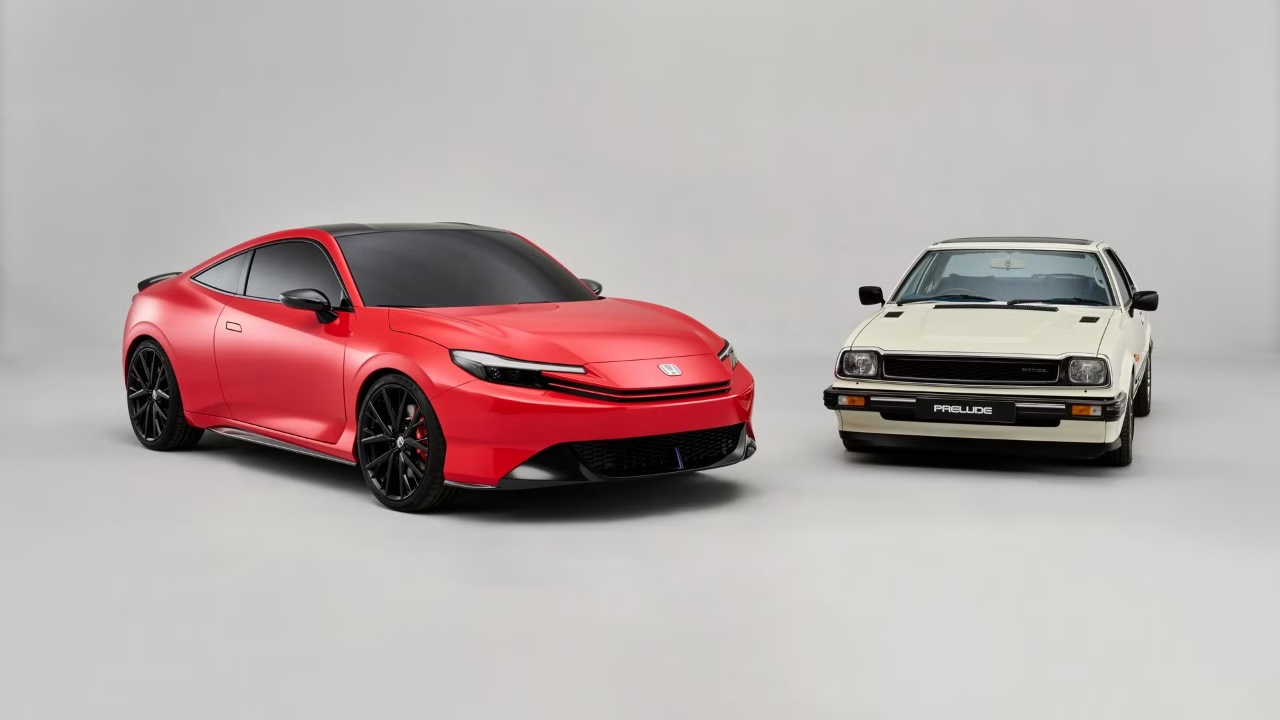
The Honda Prelude has remained a favorite among enthusiasts because it combined sporty handling, naturally aspirated four-cylinder engines, and distinctive coupe styling in a relatively compact package.
Finding a good one today, however, requires more than choosing a year at random. Most U.S.-market Predoids are now decades old, and condition, maintenance history, and rust can matter as much as the model year itself.
This guide separates five Prelude years with comparatively favorable complaint records from five that deserve greater caution. The selections are based on available NHTSA owner-complaint, recall, and investigation data, while recognizing that complaint counts are not equivalent to failure rates.
5 Best Honda Prelude Years
1. 1996 Honda Prelude
The 1996 Prelude is one of the strongest candidates when looking strictly at the available complaint data. RoadVitals records only four NHTSA owner complaints for the model year, involving the engine, body and structure, and suspension.
That is a notably small number compared with the much higher complaint totals recorded for several later fifth-generation models.
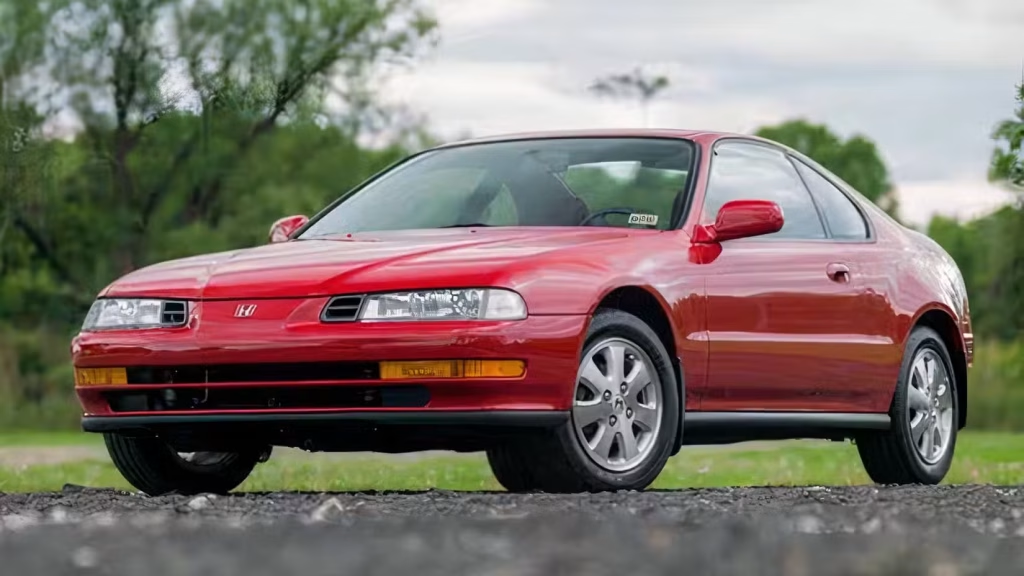
The model belongs to the fourth-generation Prelude, which had already established Honda’s formula of combining a compact coupe body with a naturally aspirated four-cylinder engine and front-wheel-drive chassis. Certain versions also featured Honda’s innovative four-wheel-steering system, giving the car a distinctive handling character.
The low complaint count should not be interpreted too broadly. Six recalls are recorded for the 1996 model, including campaigns involving lighting equipment and other safety-related components. A prospective buyer should therefore check the VIN and confirm that applicable recall repairs were completed.
Age remains the biggest issue. A 1996 Prelude is now around three decades old, meaning suspension bushings, hoses, seals, brake components, and electrical connections may need attention even if the engine has relatively low mileage.
Still, the combination of only four recorded owner complaints and the mature fourth-generation design makes the 1996 model an attractive year to investigate. A rust-free, largely original example with documented maintenance would be considerably more desirable than a heavily modified car with an uncertain history.
2. 1995 Honda Prelude
The 1995 Prelude provides another promising option from the fourth-generation run. RoadVitals records six NHTSA owner complaints for this model year, with reported issues involving airbags, interior components, brakes, and the engine. Five recalls are also listed. The complaint total remains relatively low compared with several other Prelude years.
This model benefits from the same basic engineering philosophy that made the fourth-generation Prelude interesting in the first place.
Honda built the car around a four-cylinder engine and front-wheel-drive chassis, while certain versions offered four-wheel steering. It was designed as a driver’s coupe rather than a simple transportation appliance.
The available complaint record does contain issues worth investigating. One owner report concerned ABS and four-wheel-steering warning lights, while another involved transmission fluid consumption at very high mileage. These are individual reports and do not establish a pattern affecting every 1995 vehicle.
Five recalls also mean the VIN needs to be checked before purchase. A recall campaign is not automatically a reason to reject an old vehicle because a completed repair can resolve the specific safety issue.
The larger concern is preservation. At roughly 31 years old, the 1995 Prelude can suffer from age-related deterioration that will not appear in a basic reliability database. Rust, worn suspension components, deteriorated seals, and previous accident repairs should all be investigated.
For enthusiasts, however, the relatively low complaint count gives the 1995 model a credible place among the years worth searching for.
3. 1994 Honda Prelude
The 1994 Prelude occupies an interesting middle ground. RoadVitals records nine NHTSA owner complaints for the model year, along with five recalls and one investigation. That complaint count is higher than the 1995 and 1996 models but remains well below the totals associated with several later Preludes.
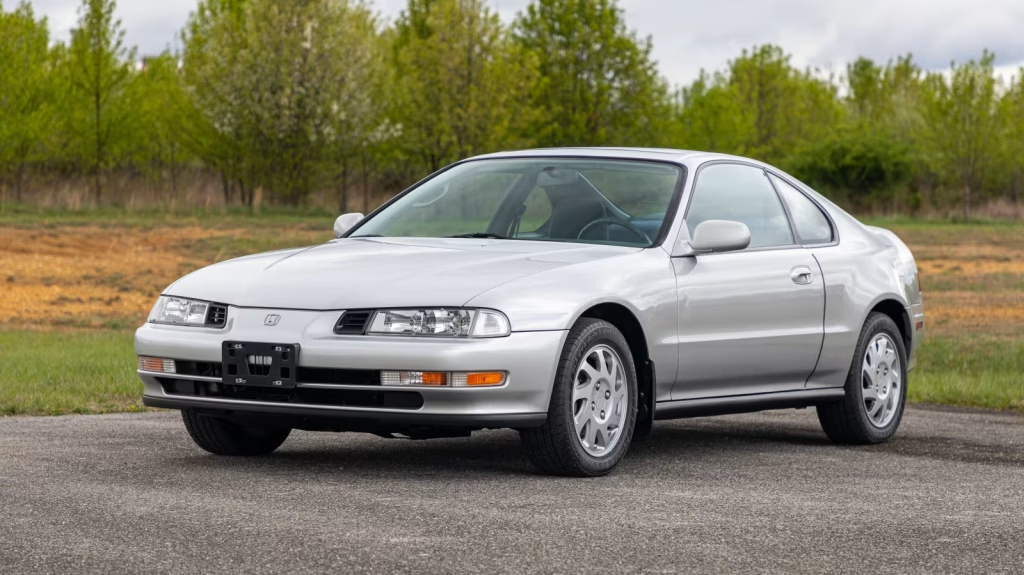
Being part of the fourth-generation lineup gives the 1994 model several characteristics that enthusiasts still appreciate. The Prelude was compact, relatively lightweight, and engineered around responsive handling. Its four-cylinder powertrain also avoided the complexity associated with turbocharged engines that became common in later performance cars.
The recall record deserves attention. Five campaigns are listed, so buyers should not rely on a general assumption that an old Honda has already received all necessary repairs. A VIN-specific recall check is the appropriate way to determine whether outstanding campaigns remain.
Another reason to take a close look at the 1994 is its history of modifications. Many surviving Predoids have been fitted with aftermarket suspension, wheels, exhaust systems, or engine upgrades over the years. These changes are not necessarily a bad thing, but they can make it harder to establish how the car was driven and how well it was maintained.
The 1994 model therefore makes sense primarily as an enthusiast purchase. Its relatively low complaint activity is encouraging, but a buyer should put greater weight on structural condition and maintenance records than on the model-year number itself.
A clean example with an original or professionally maintained drivetrain can be considerably more valuable than a cheaper car with extensive modifications.
4. 1991 Honda Prelude
The 1991 Prelude is another year that stands out for relatively low complaint activity. RoadVitals records 15 NHTSA owner complaints and one recall for the model year, with no federal investigation listed.
That gives the 1991 model an unusually limited documented safety history compared with some later Prelude years. However, buyers need to remember that this is now a roughly 35-year-old vehicle. Low complaint numbers cannot account for every form of age-related deterioration.
The 1991 model comes from the fourth-generation era and carries the classic Prelude formula of a sporty front-wheel-drive coupe powered by a four-cylinder engine. Its relatively compact dimensions and lower seating position give it a character that is increasingly difficult to find among modern cars.
A pre-purchase inspection is essential. The engine should be checked for leaks and overheating, while the transmission needs to be examined for slipping, delayed engagement, or difficult shifting. Suspension components, steering parts, and brake lines should also be inspected.
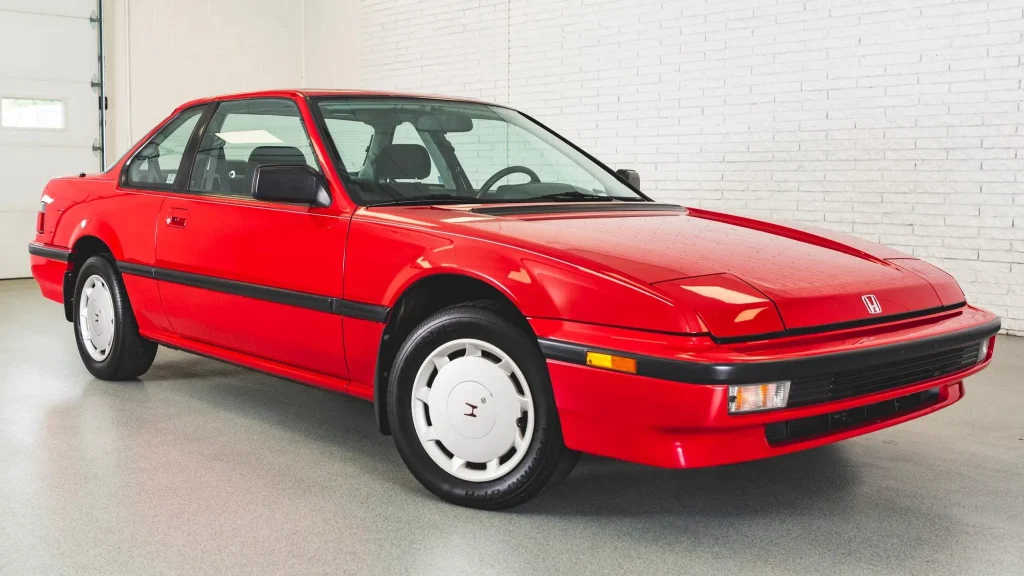
Body condition may matter even more. Structural rust can be expensive to repair and can undermine an otherwise desirable restoration candidate. Buyers should inspect the floor, wheel wells, suspension mounting areas, and underside rather than relying on exterior photographs or a clean-looking body.
The 1991 Prelude is therefore best suited to someone who understands that buying a 35-year-old sports coupe involves preservation work. Its low complaint and recall counts make it worth investigating, but the individual car’s condition remains the deciding factor.
5. 1990 Honda Prelude
The 1990 Prelude has one of the smallest complaint totals in the available data, with four NHTSA owner complaints and one recall recorded for the model year. That makes it an interesting candidate when looking at historical complaint activity.
The low number should be interpreted cautiously because complaint totals do not represent failure rates. Production volume, vehicle survival rates, and how frequently owners report problems can all affect the numbers.
RoadVitals specifically warns that owner complaints are not verified findings and that raw totals cannot be treated as direct reliability measurements.
Age is the central issue here. A 1990 Prelude is now more than 35 years old, so finding one in genuinely good condition is much harder than finding a newer fourth-generation example. Mechanical wear is only part of the equation. Interior plastics, weather seals, wiring, suspension components, and body panels can all become difficult or expensive to replace.
For the right enthusiast, however, that age can also be part of the attraction. A well-preserved 1990 Prelude has genuine classic-car character and represents an era when Honda was producing relatively compact performance-oriented coupes without relying on large engines.
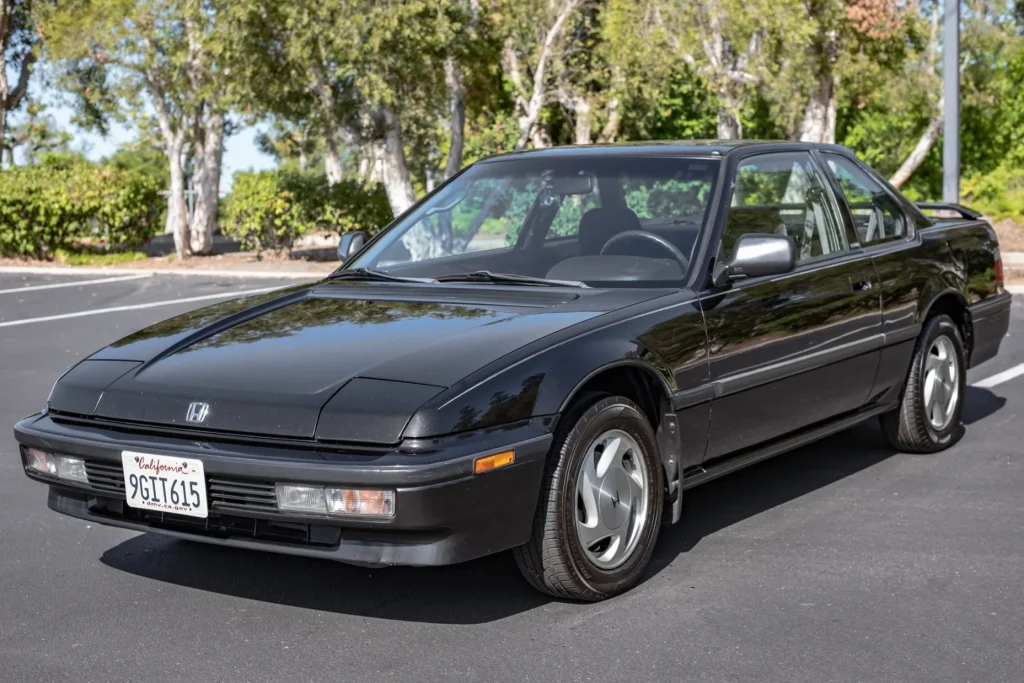
The best candidate would be an original, rust-free vehicle with a documented maintenance history. Buyers should be especially cautious about cars that have undergone extensive modifications or have spent years in storage without regular maintenance.
The 1990 model earns its position because its available complaint record is unusually light. It should still be purchased as an old collector-oriented car rather than treated like an inexpensive modern commuter.
5 Honda Prelude Years to Skip
1. 1998 Honda Prelude
The 1998 Prelude is the clearest year to approach cautiously based on the available complaint data. RoadVitals records 69 NHTSA owner complaints, five recalls, and one investigation for this model year. The most frequently mentioned categories include the transmission, electrical system, and suspension.
The transmission figure deserves particular attention. CarComplaints’ breakdown records 29 transmission-related NHTSA complaints for the 1998 Prelude. Reported problems include situations involving slipping, shifting, and other transmission behavior.
These are owner reports rather than confirmed defects, but the concentration is significant enough to justify a careful test drive and professional inspection.
Engine and electrical complaints also appear in the database. Some reported problems include no-start or shutdown situations, while other owners reported water entering the interior. Again, individual reports should not be generalized to every vehicle.
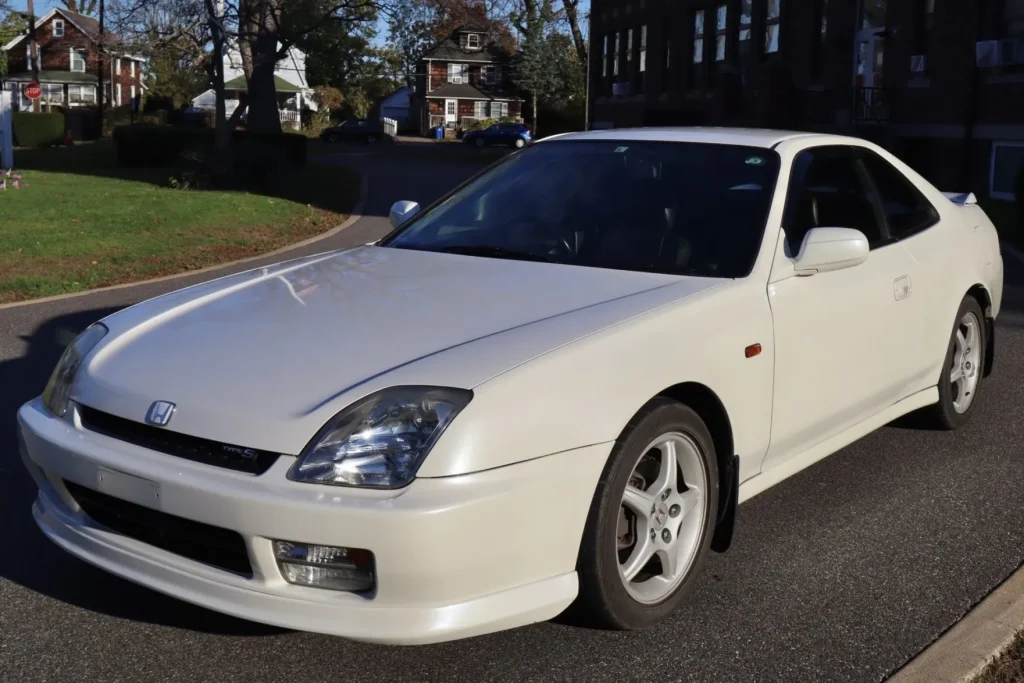
The car itself remains desirable from an enthusiast perspective. It has the fifth-generation chassis and Honda’s 2.2-liter four-cylinder engines, with the Type SH providing additional performance-focused equipment.
That desirability can make finding an unmodified example difficult. Many surviving cars have been lowered, tuned, or otherwise altered. A modified car with questionable maintenance can be much riskier than its model-year reputation suggests.
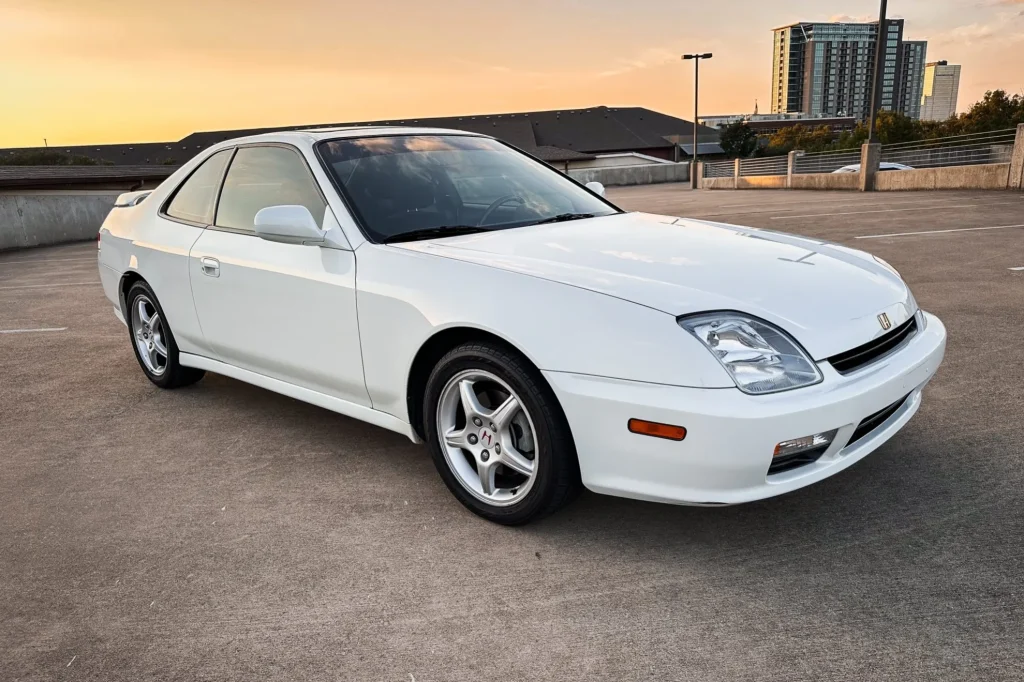
The 1998 Prelude therefore belongs in the caution group primarily because of its high complaint activity and particularly notable transmission-related reports. Buyers should not automatically reject every 1998, but they should demand unusually strong evidence of mechanical condition before purchasing one.
2. 1997 Honda Prelude
The 1997 Prelude introduced the fifth-generation design, but its available complaint history makes it another year worth approaching carefully. RoadVitals records 66 NHTSA owner complaints, five recalls, and one investigation. Transmission, electrical, and suspension problems are among the most frequently reported categories.
CarComplaints’ breakdown is particularly notable for the transmission category, with 39 NHTSA complaints listed there. Reported problems include slipping and jerking, while other complaints involve electrical systems and suspension components.
These reports do not prove that every 1997 Prelude suffers from the same issues, but the concentration warrants careful examination.
The first-year status of the fifth-generation design adds another consideration. New-generation vehicles introduce redesigned systems, components, and electronics, and early production vehicles can accumulate more complaints than later examples.
That does not make the 1997 fundamentally flawed, but it gives buyers another reason to compare it carefully with later fourth-generation cars.
Recall history should also be checked. Five safety recalls are recorded for the model year, while one NHTSA investigation names the vehicle.
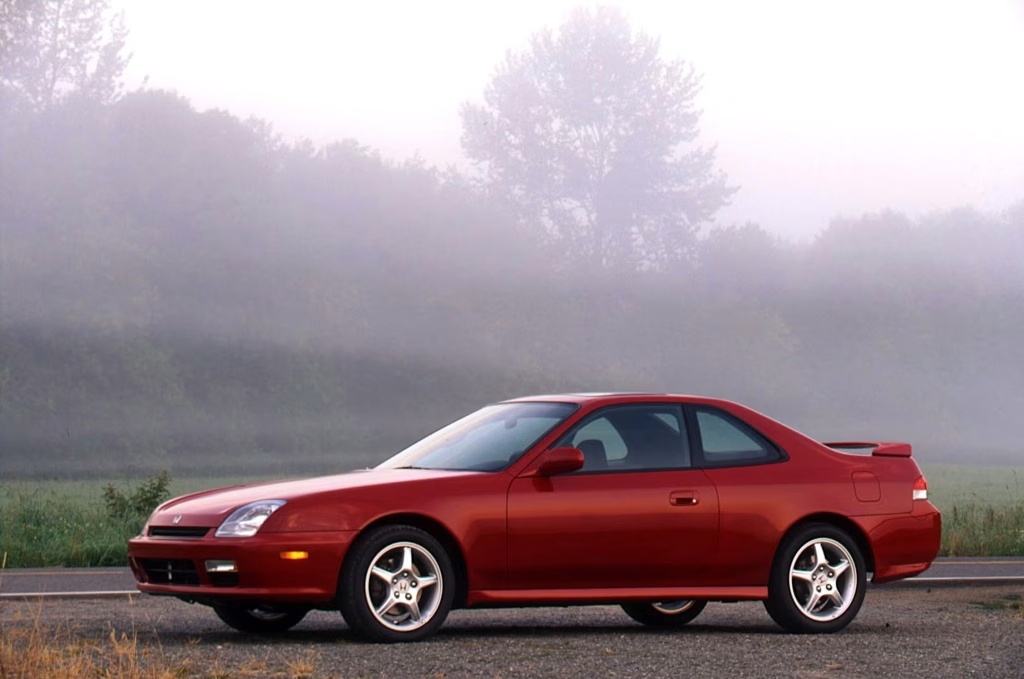
A 1997 Prelude can still be an exciting enthusiast car, particularly in manual-transmission form and with a clean chassis. The problem is finding one that has not been subjected to years of hard use.
For a buyer seeking the lowest possible mechanical uncertainty, the 1997 model requires more inspection than the lower-complaint years listed earlier.
3. 1992 Honda Prelude
The 1992 Prelude deserves caution for a different combination of reasons. Available NHTSA-derived data records 22 owner complaints, five recalls, and two investigations for this model year.
That puts it well above the complaint activity recorded for the 1994 through 1996 models and gives it one of the more substantial investigation histories among the years selected here.
The investigations should not be interpreted as proof of a defect. Federal investigations are inquiries into reported concerns, and an investigation can close without a recall or finding of a safety defect. Their presence is nevertheless useful context when evaluating an old vehicle.
The age of the 1992 model compounds the issue. Any surviving example is now more than three decades old, so the buyer must account for deterioration that cannot be captured through complaint statistics.
Mechanical inspection should include the engine, transmission, cooling system, and suspension. The car should be driven long enough to identify overheating, shifting problems, vibration, or abnormal noises. A short trip around a dealership lot is not enough for a vehicle this old.
The underbody is equally important. Rust around structural areas, suspension mounting points, and brake lines can make an apparently inexpensive Prelude very costly to restore.
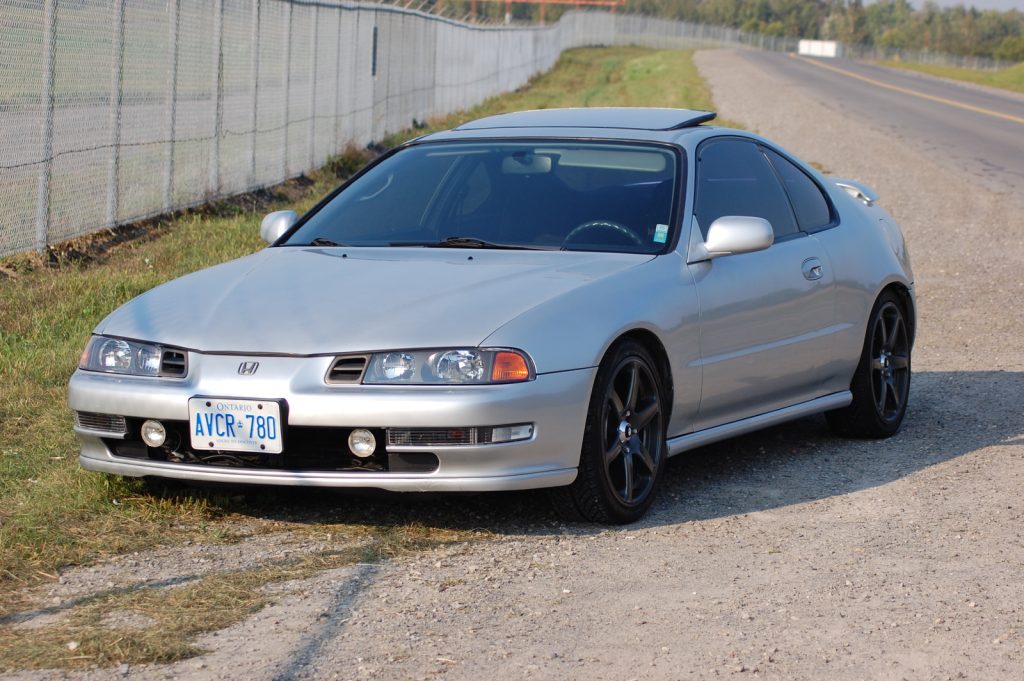
The 1992 model remains interesting to collectors because of its fourth-generation styling and Honda’s focus on handling. Yet the combination of 22 complaints, five recalls, and two investigations makes it a year where buyers should demand particularly strong documentation and condition before paying enthusiast-market prices.
4. 1993 Honda Prelude
The 1993 Prelude occupies the next position because its available records show 11 owner complaints, five recalls, and one investigation. Its complaint total is not especially high in absolute terms, but the investigation and recall history add reasons to verify the vehicle carefully.
One historical investigation concerned reports involving airbag deployment. An investigation does not establish that every vehicle had a defect, and it should not be treated as a confirmed failure. Nevertheless, the existence of the investigation is relevant when evaluating an older vehicle’s safety history.
The complaint database includes reports involving the engine, transmission, electrical system, brakes, tires, and wheels. One owner report described a clutch component breaking and making shifting difficult, while another concerned an engine-related oil leak. These are individual complaints and should not be generalized to the entire 1993 production run.
The vehicle’s age is again the major consideration. A 1993 Prelude has had more than 30 years to accumulate wear, previous repairs, and modifications. Buyers should determine whether major components remain original and whether maintenance has been performed at appropriate intervals.
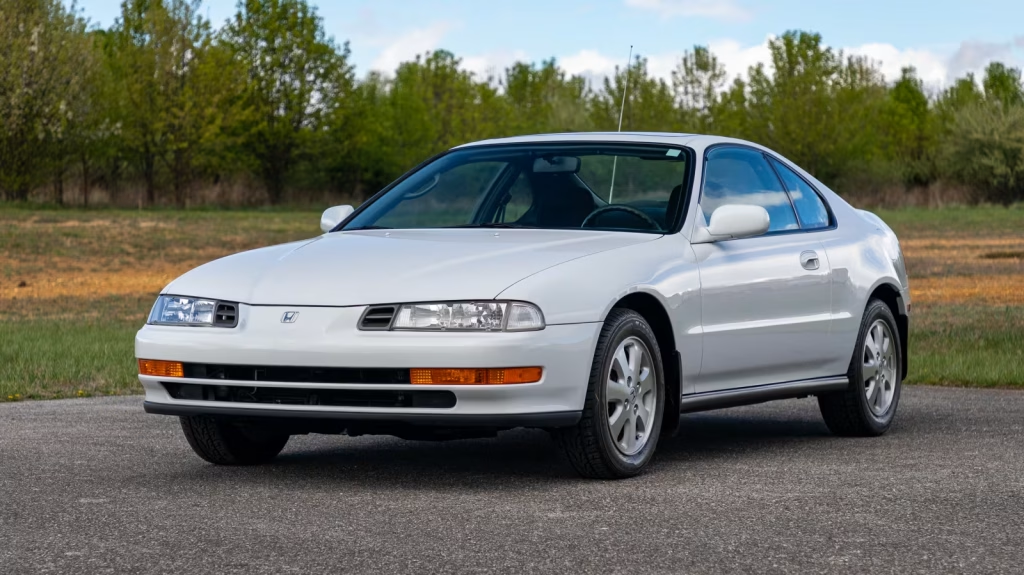
The body deserves careful examination as well. Rust can be more damaging than a mechanical issue because structural repairs can quickly exceed the value of the vehicle.
A clean 1993 Prelude can still be an appealing enthusiast car, particularly when it retains its original drivetrain and interior. However, compared with the lower-complaint 1994 through 1996 examples, the available record gives buyers more reasons to investigate before committing.
5. 2001 Honda Prelude
The 2001 Prelude is the youngest year in this group and also the final U.S.-market model year of the fifth-generation Prelude. That final-year status makes it attractive to collectors, but available complaint data prevents it from being an automatic recommendation.
RoadVitals records 21 NHTSA owner complaints, three recalls, and one investigation for the 2001 model. The complaint total is considerably lower than the 1997 and 1998 figures, but it is still higher than the four complaints recorded for the 1996 model and the six recorded for the 1995 model.
CarComplaints identifies the 2001 Prelude as its worst model year under its own methodology, with engine-related complaints featuring prominently. Its database should not be treated as an official reliability study, but the information is useful as another warning signal when combined with NHTSA data.
The 2001 model still has significant enthusiast appeal. It represents the final version of the fifth-generation chassis, retains Honda’s 2.2-liter four-cylinder formula, and can be found with the desirable Type SH package. A clean manual-transmission example can command considerable interest among enthusiasts.
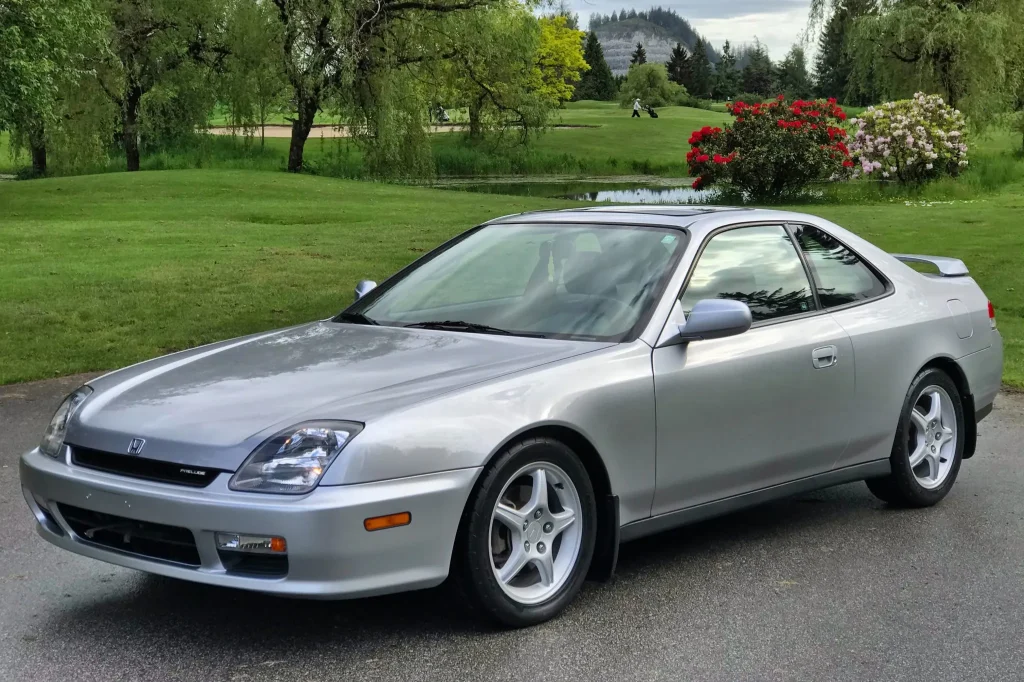
The challenge is price. Because final-year pre-rides have collector appeal, sellers can sometimes ask substantial premiums for cars that still require significant mechanical work. Buyers should not confuse rarity with condition.
A 2001 Prelude with excellent documentation, a healthy drivetrain, and an untouched chassis can absolutely be worth considering. However, when buying specifically on reliability grounds, the available complaint record gives buyers enough reasons to inspect it more carefully than the lower-complaint years identified earlier.
