
Reliability matters more when an SUV is carrying children, commuting every day, handling road trips, and facing years of changing weather. For American families, a dependable vehicle can mean fewer unexpected repairs, less time in the shop, and greater confidence as the odometer climbs.
The SUVs below are selected using established reliability data, owner reports, powertrain history, and their practical suitability for family use. Rather than relying on reputation alone, the list focuses on models with documented reliability performance in the U.S. market.
Since the newest model-year reliability data can take time to accumulate, established results are especially important here.
1. Honda CR-V
The Honda CR-V has earned a strong reputation among families through a simple and practical formula. It offers manageable dimensions, efficient powertrains, generous cargo space, and a long-standing record of reliable ownership.
That reputation is supported by recent data. Consumer Reports rates the 2025 CR-V as more reliable than the average vehicle from the same model year, using its large owner survey and reliability history.
For families, the CR-V’s appeal goes beyond avoiding mechanical problems. Its compact footprint makes it easier to maneuver in crowded American cities while still providing enough interior room for children, groceries, luggage, and everyday equipment.
The available hybrid powertrain is another reason the CR-V works well as a daily family vehicle, particularly for drivers who spend considerable time commuting.
Honda also benefits from having decades of experience with the CR-V nameplate. That means buyers are not dealing with a completely unfamiliar vehicle architecture. Parts availability, service familiarity, and a large U.S. owner base can make routine ownership easier.
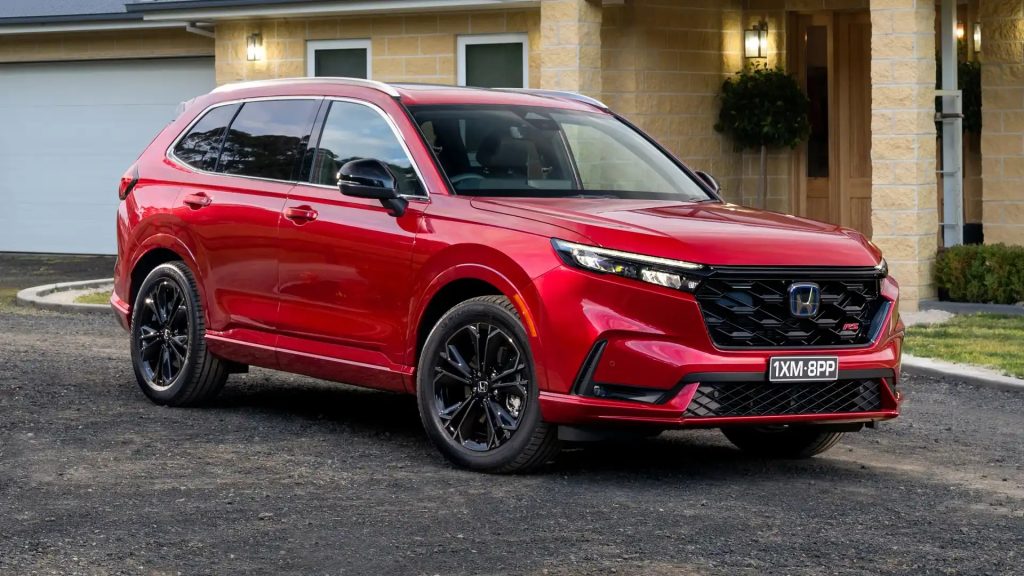
The 2025 model does have recalls listed by NHTSA, so reliability should never be interpreted as an absence of problems. Consumer Reports lists five recalls for that model year. Buyers should therefore check the vehicle identification number for outstanding campaigns before purchasing.
2. Toyota RAV4
Few SUVs have become as familiar on American roads as the Toyota RAV4, and its reliability reputation is backed by more than anecdotal owner praise. Consumer Reports expects the 2025 RAV4 to be more reliable than the average new vehicle, with its prediction based on data from 2023, 2024, and 2025 models.
That history is particularly valuable for a family vehicle because the RAV4 is designed around everyday usability rather than unnecessary complexity.
Families get a relatively manageable exterior size, useful cargo capacity, available all-wheel drive, and a hybrid option that can reduce fuel consumption during regular commuting. The combination makes it suitable for everything from school runs to long interstate journeys.
Toyota’s broad U.S. dealer network is another practical advantage. Routine maintenance can generally be handled by a large number of dealerships and independent shops familiar with the model. That matters when a family SUV is being kept for many years rather than traded after a short ownership period.
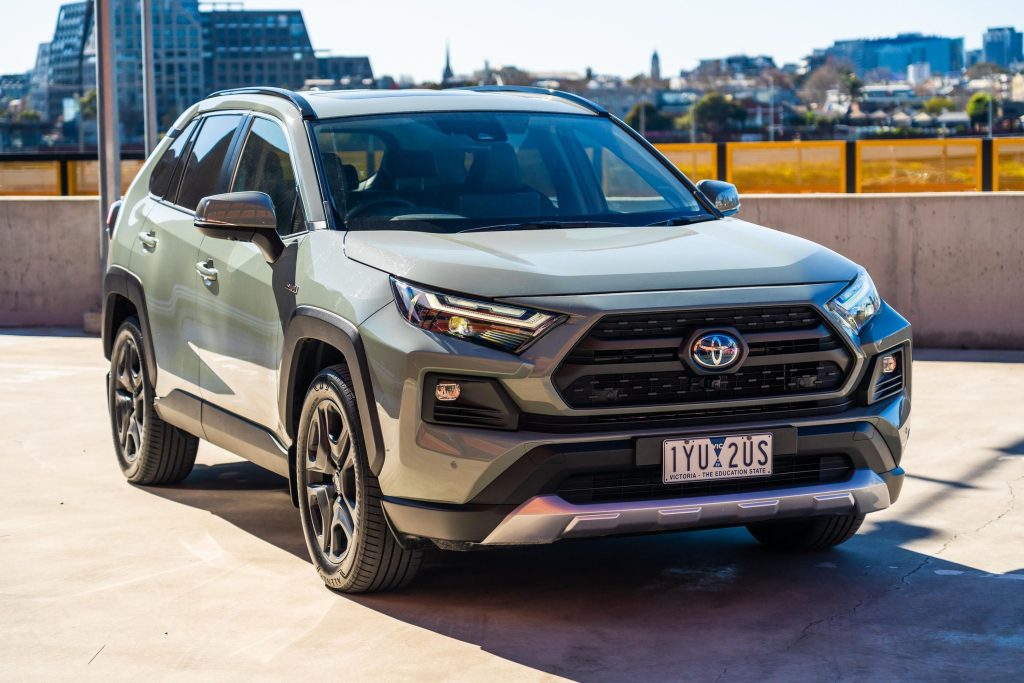
The 2025 RAV4 has had recalls as well, with Consumer Reports listing three NHTSA recalls for the model year. This highlights an important aspect of vehicle reliability. Even a model with a strong track record can still have individual vehicles that experience problems. Buyers should check recall completion and review maintenance records before purchasing a new or used vehicle.
For families wanting a proven compact SUV with a substantial reliability history, the RAV4 has the data and ownership history to justify its place on this list.
3. Toyota Highlander
For families that need three rows without stepping into a full-size SUV, the Toyota Highlander has a particularly strong reliability case.
Consumer Reports predicts that the 2026 Highlander will be more reliable than the average new vehicle, basing that prediction on reliability data from the 2023, 2024, and 2025 model years.
Its reliability history is built from owner reports covering problems across areas such as the engine, transmission, electrical equipment, and brakes.
The Highlander’s appeal is also tied to how it handles family duties. Toyota gives it three rows, while the available hybrid powertrain provides an alternative for families that spend a lot of time commuting.
The SUV’s 194.9-inch length and 76-inch width provide substantially more exterior presence than compact crossovers such as the RAV4, but it remains smaller and easier to place on the road than many traditional full-size SUVs.
Toyota lists up to 84.3 cubic feet of cargo space with the rear seats folded, giving families considerable room for luggage, sports equipment, and larger household items.
The Highlander also has an advantage as a long-term family vehicle because it builds on a well-established mechanical design. Toyota has refined the Highlander’s platform and powertrain options over many years, giving the SUV a proven foundation.
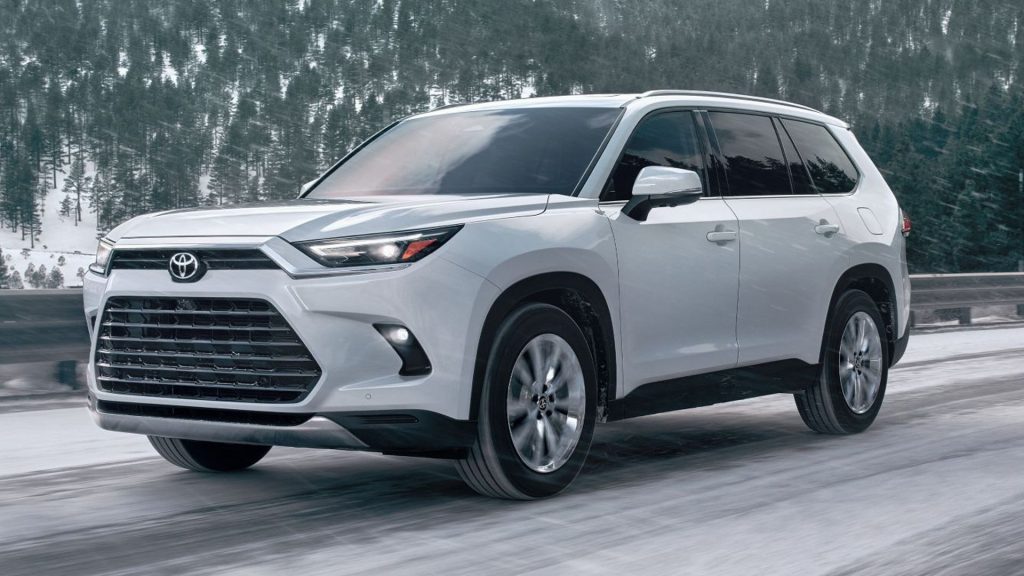
That does not make every Highlander trouble-free. Maintenance, recall completion, and service history still matter, particularly when buying used. But the combination of a long-established nameplate and strong predicted reliability makes the Highlander a practical choice for families that need additional seating.
4. Subaru Forester
The Subaru Forester takes a different approach to family transportation. Instead of concentrating on maximum size or towing strength, it combines a relatively compact body with standard all-wheel drive, a spacious cabin, and a long-running mechanical formula.
Subaru’s 2026 Forester uses a 2.5-liter horizontally opposed 4-cylinder producing 180 horsepower and 178 lb-ft of torque, while Symmetrical All-Wheel Drive is standard across the lineup.
Its reliability credentials require a little more nuance than simply calling it trouble-free. Consumer Reports currently predicts about-average reliability for the 2026 Forester, based on 2025 model data.
The organization also reports three NHTSA recalls for the 2026 model. That means its inclusion here is supported more by the Forester’s established history and family-friendly design than by an exceptionally high 2026 prediction.
The packaging is one of its biggest strengths. The standard Forester measures 183.3 inches long and 72 inches wide, making it considerably easier to maneuver than a large three-row SUV.
Yet Subaru provides 74.4 cubic feet of maximum cargo volume in the standard model. The company also lists 8.7 inches of ground clearance, while the Wilderness version raises that figure to 9.3 inches.
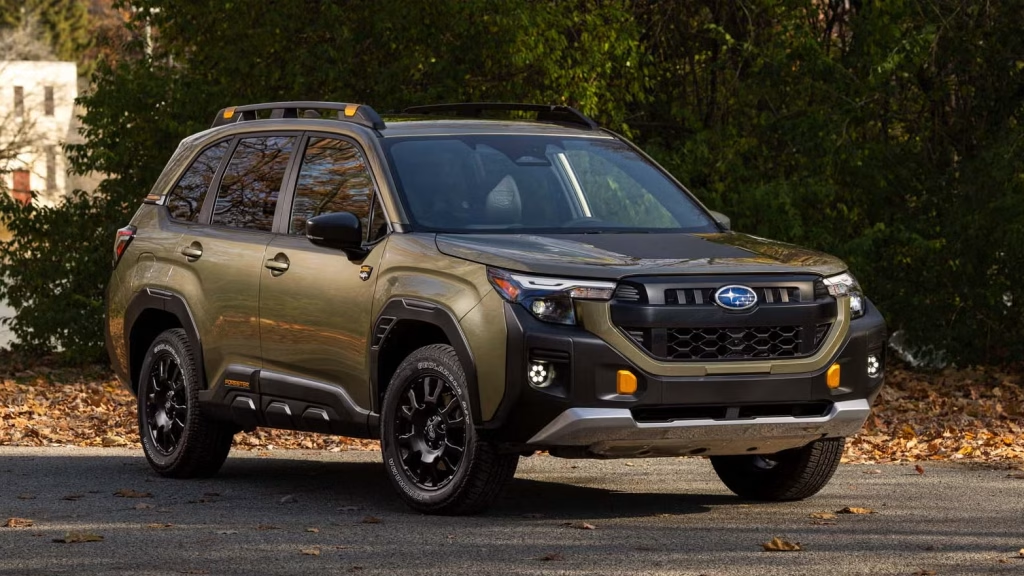
For an American family living in an area where rain, snow, or rough roads are common, a standard all-wheel drive can be more useful than a larger engine.
The Forester also offers a hybrid powertrain for 2026, giving buyers another option for improving fuel economy without moving to a fully electric SUV. Subaru lists up to 34 mpg city and 35 mpg highway for hybrid versions.
5. Toyota 4Runner
The Toyota 4Runner brings a different kind of reliability story to a family SUV. It is not designed primarily as a soft-riding commuter crossover.
Instead, its body-on-frame construction, available four-wheel drive, and substantial towing capability make it attractive to families that regularly travel beyond paved roads or need to pull a trailer.
More importantly for this list, Consumer Reports currently expects the 2026 4Runner to be much more reliable than the average new car. That prediction is based on data from the redesigned 2025 model.
The latest generation switched from the previous V6 to Toyota’s 2.4-liter turbocharged four-cylinder, with a hybrid version available in higher trims. The standard engine produces 278 horsepower and 317 lb-ft of torque, while the hybrid reaches 326 horsepower. An eight-speed automatic transmission is used with both powertrains.
For a family, the 4Runner’s usefulness becomes particularly apparent when vacations involve boats, campers, dirt roads, or snow-covered routes. Depending on configuration, Toyota’s SUV can tow up to 6,000 pounds, while the available third row provides additional seating in selected versions. The maximum cargo capacity reaches more than 90 cubic feet.
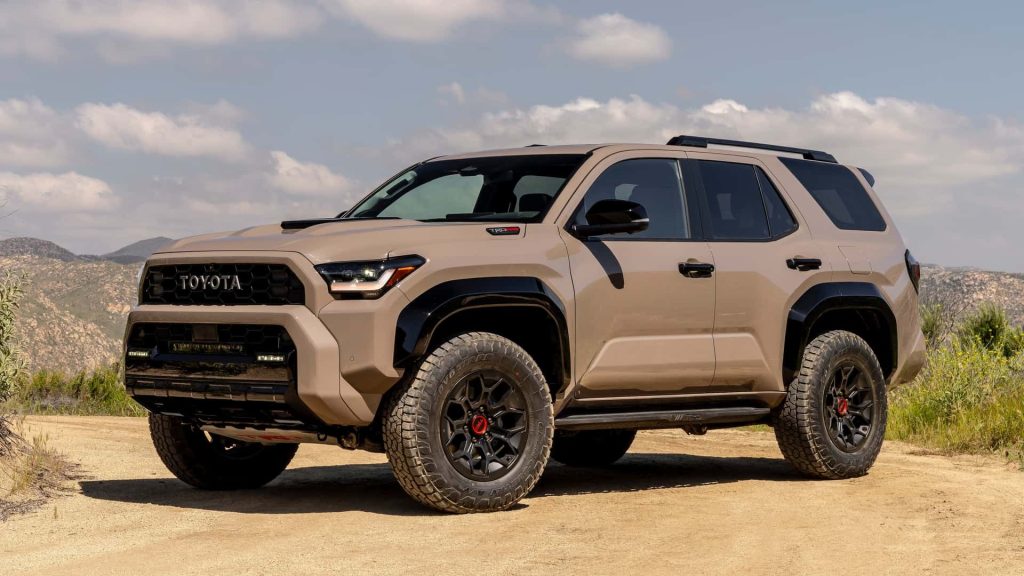
There is a caveat worth mentioning. The current generation was newly redesigned for 2025, so its long-term record is not yet as extensive as older 4Runner generations. Consumer Reports also lists one NHTSA recall for the 2026 model.
6. Lexus GX
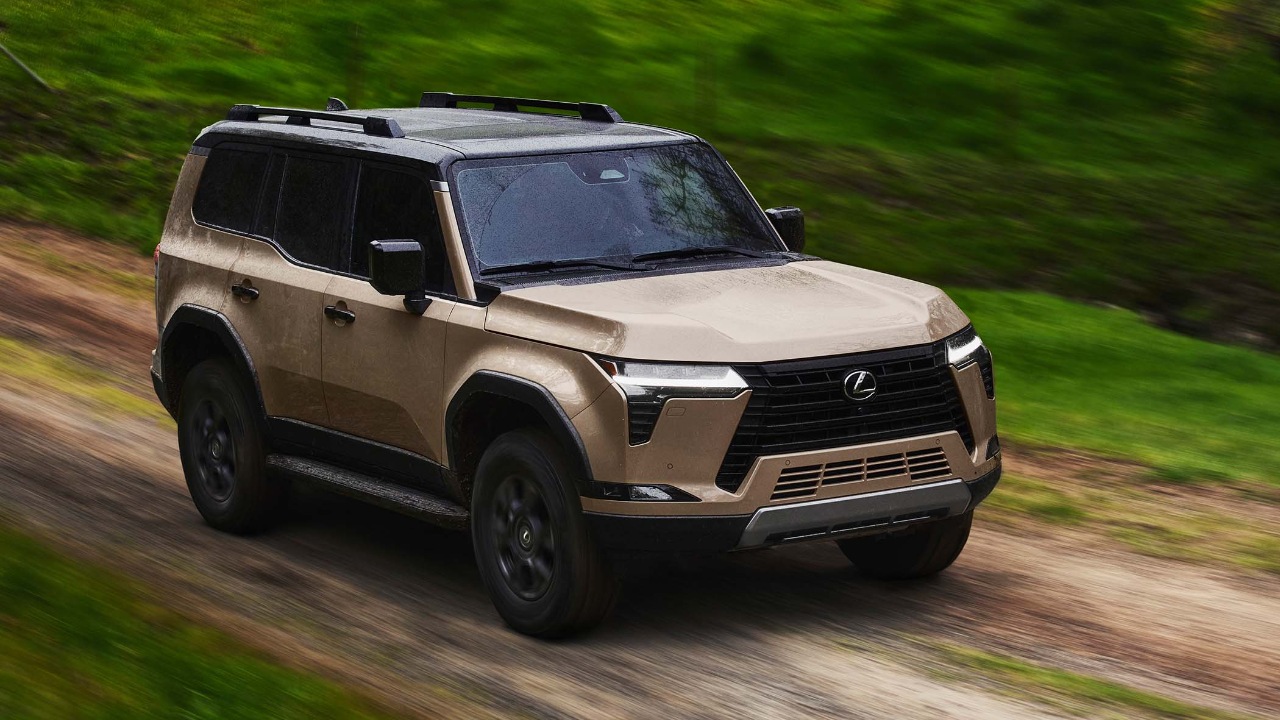
The Lexus GX is an unusual entry because it combines luxury-SUV comfort with a rugged body-on-frame architecture. That distinction matters for buyers who want a family vehicle capable of handling towing and difficult terrain without moving into a pickup truck.
Consumer Reports describes the current GX as a stout, three-row SUV built on the same GA-F platform used by other Toyota and Lexus body-on-frame models.
Reliability is one of Lexus’s strongest brand attributes. Consumer Reports ranks Lexus third among luxury brands for new-car reliability in its 2026 brand rankings, while also placing it first for used-car reliability.
The GX itself was redesigned for 2024, so its present-generation history is still relatively short, but the underlying Toyota/Lexus architecture has a substantial track record.
The 2026 GX uses a 3.4-liter twin-turbo V6 producing 349 horsepower and 479 lb-ft of torque. Full-time four-wheel drive and a 10-speed automatic are standard, and Edmunds lists a maximum towing capacity of 7,601 pounds.
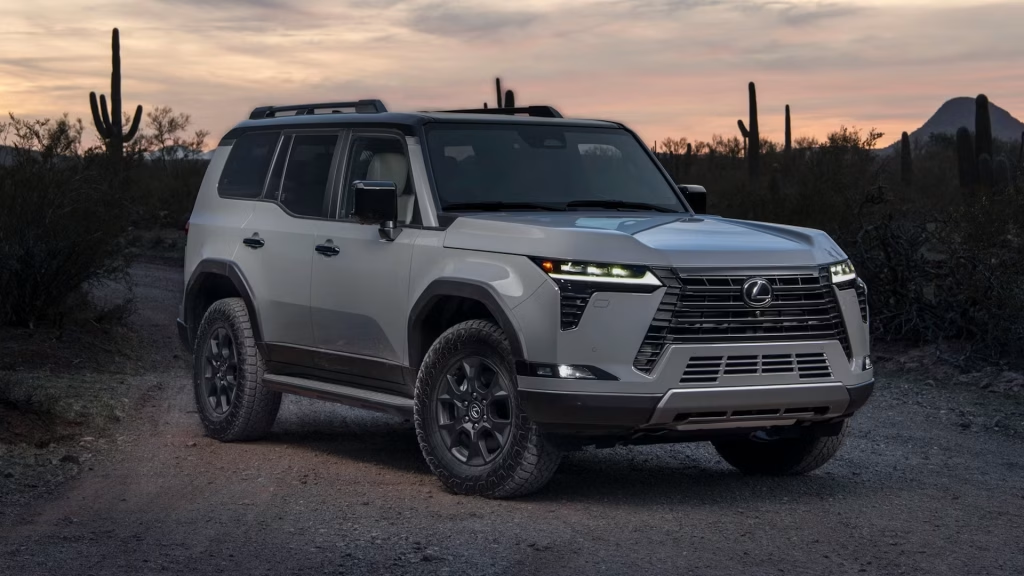
That towing figure can make a significant difference for an American family that owns a boat, camper, or utility trailer. At the same time, the GX offers three-row seating, although the third row is considerably less spacious than the first two rows. Its 197.1-inch length and 78-inch body width also make it a substantial vehicle for everyday urban driving.
The GX therefore fits families looking for durability with luxury, particularly when towing or off-road capability is part of the requirement.
7. Honda Pilot
A family that needs three rows often has to accept a compromise between space, comfort, and dependability. The Honda Pilot manages to keep those requirements together without becoming excessively complicated.
Consumer Reports expects the 2026 Pilot to have about-average reliability compared with the average new vehicle, using reliability information from the 2023 through 2025 model years.
That is a more measured assessment than the stronger predictions attached to some other SUVs on this list, but the Pilot benefits from a long-established nameplate and a mature powertrain.
Honda continues to use a naturally aspirated 3.5-liter V6 in the 2026 Pilot rather than replacing it with a smaller turbocharged engine. It produces 285 horsepower and works with a 10-speed automatic transmission.
Consumer Reports’ testing found the engine smooth and powerful enough for a heavily loaded family SUV, while its test vehicle returned 21 mpg overall with all-wheel drive.
Practicality is where Pilot makes its strongest case. Honda provides a genuinely usable third row, and the cabin has numerous storage compartments that can help keep family belongings organized. AWD versions can tow up to 5,000 pounds, giving Pilot enough capacity for many small campers, boats, and utility trailers.
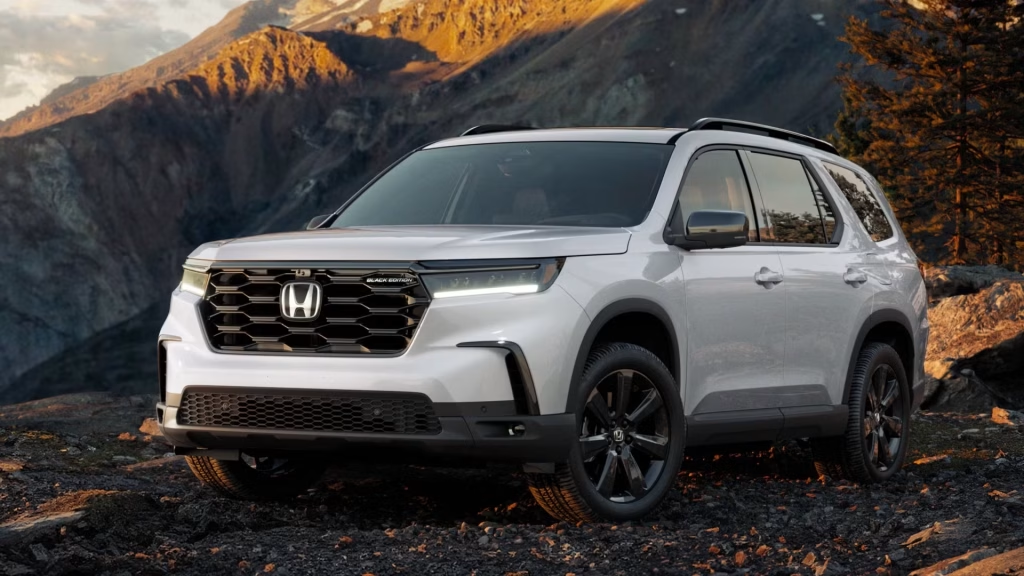
There is also a current recall worth knowing about. NHTSA reported a July 2026 recall involving certain 2026 Pilots because improperly tightened rear subframe bolts could affect vehicle stability. Honda’s remedy involves inspection and replacement where necessary.
8. Mazda CX-90
The Mazda CX-90 is a newer entry on the family-SUV scene, so its reliability case needs to be viewed differently from that of an established model such as the Toyota RAV4.
The CX-90 replaced the CX-9 for the 2024 model year and introduced Mazda’s new rear-wheel-drive-based platform, an inline-six engine, and an in-house eight-speed automatic transmission.
Consumer Reports specifically describes the architecture as brand new, which means there is less long-term reliability history available than with some older competitors.
Still, the CX-90 has qualities that make it worth considering for families. It is a three-row midsize SUV with standard all-wheel drive, and buyers can choose between a 3.3-liter turbocharged inline-six and a plug-in hybrid powertrain.
The regular turbo engine produces 280 horsepower, while the Turbo S version increases output to 340 horsepower. The plug-in hybrid produces 323 horsepower.
Mazda has also given the CX-90 useful passenger dimensions. Consumer Reports lists 43 inches of front legroom and 32 inches in the second row, while the third row provides 28.5 inches. That makes the first two rows particularly accommodating, although the third row is less generous than some family-focused rivals.
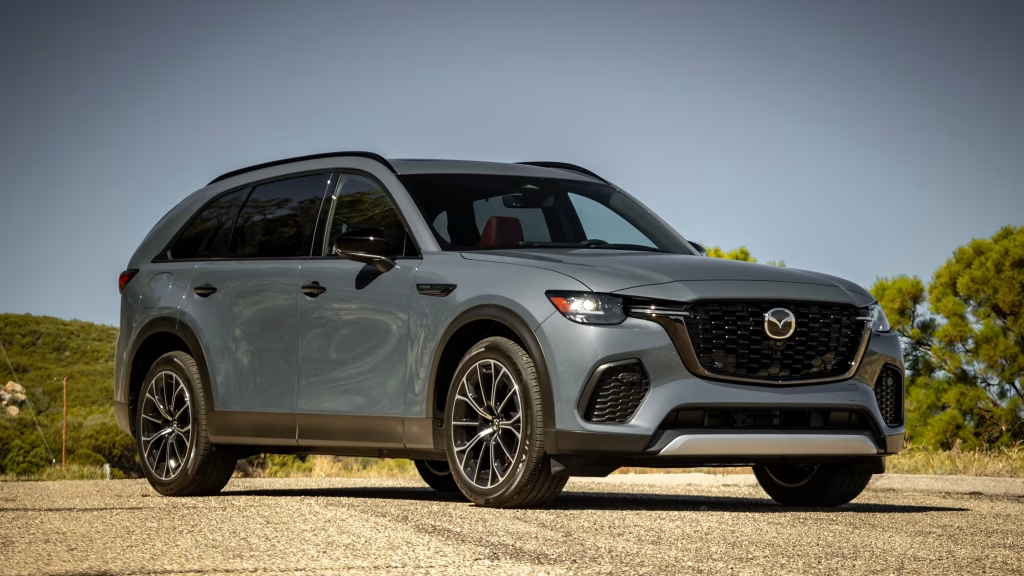
Its 201-inch length and 78-inch width put it firmly into the midsize three-row category. The available plug-in hybrid adds another interesting option for families with shorter daily commutes, with an EPA electric range of 27 miles.
The CX-90 therefore brings strong capability and multiple powertrain choices, but buyers should recognize that its relatively recent redesign means its long-term reliability record is still developing.
9. Toyota Grand Highlander
The Toyota Grand Highlander is particularly interesting for families because its reliability credentials come with a cabin designed around carrying people, not simply adding a small third row as an afterthought.
Consumer Reports expects the 2026 Grand Highlander to be more reliable than the average new vehicle, using reliability information from the 2024 and 2025 model years. Its reliability history is still relatively short because the model was introduced for 2024, but the early data gives buyers a useful indication of how the SUV is performing.
Space is one of the Grand Highlander’s biggest advantages. At 201 inches long, it is about six inches longer than the regular Highlander, and that extra length is used to improve both passenger room and cargo capacity.
Consumer Reports specifically notes that the third row is genuinely adult-friendly, which can make a major difference for families carrying older children or additional passengers.
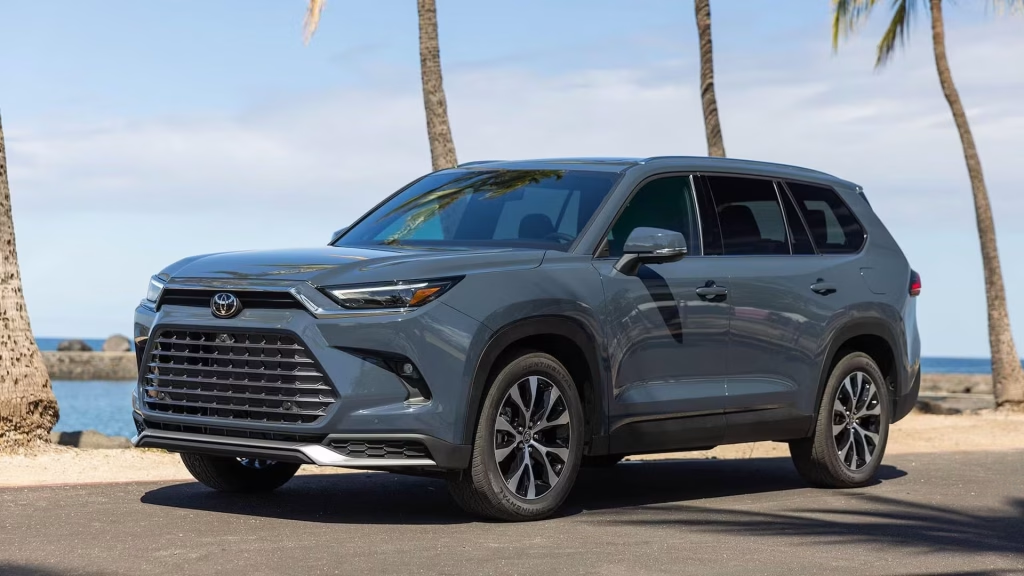
Toyota also offers several powertrain choices. The lineup includes a 265-horsepower 2.4-liter turbocharged four-cylinder, a 245-horsepower hybrid, and a 362-horsepower hybrid MAX powertrain. That gives families the ability to prioritize conventional power, fuel economy, or stronger acceleration without switching to another SUV.
There are, however, current recalls that buyers should know about. Consumer Reports lists two NHTSA recalls for the 2026 model, including a July 2026 campaign involving certain vehicles with potentially defective rear axle carriers.
10. Honda Passport
The redesigned Honda Passport gives this list a different personality. Unlike most family crossovers that focus almost entirely on pavement, the 2026 Passport is aimed at buyers who want a midsize SUV with greater off-road capability while retaining everyday family practicality.
Consumer Reports expects the 2026 Passport to be much more reliable than the average new car, based on data from the 2026 model.
Honda has also kept the mechanical recipe relatively straightforward. Every 2026 Passport uses a naturally aspirated 3.5-liter V6 producing 285 horsepower and 262 lb-ft of torque, paired with a 10-speed automatic transmission. All-wheel drive is standard, and Honda provides multiple drive modes, including Snow, Tow, Trail, and Sand.
The Passport is also large enough to serve as a genuine family hauler without becoming a three-row SUV. Consumer Reports lists 40.5 inches of front legroom and 32 inches in the rear, while the SUV measures 192 inches long and 79 inches wide. Its five-seat configuration leaves useful space behind the second row for family luggage and equipment.
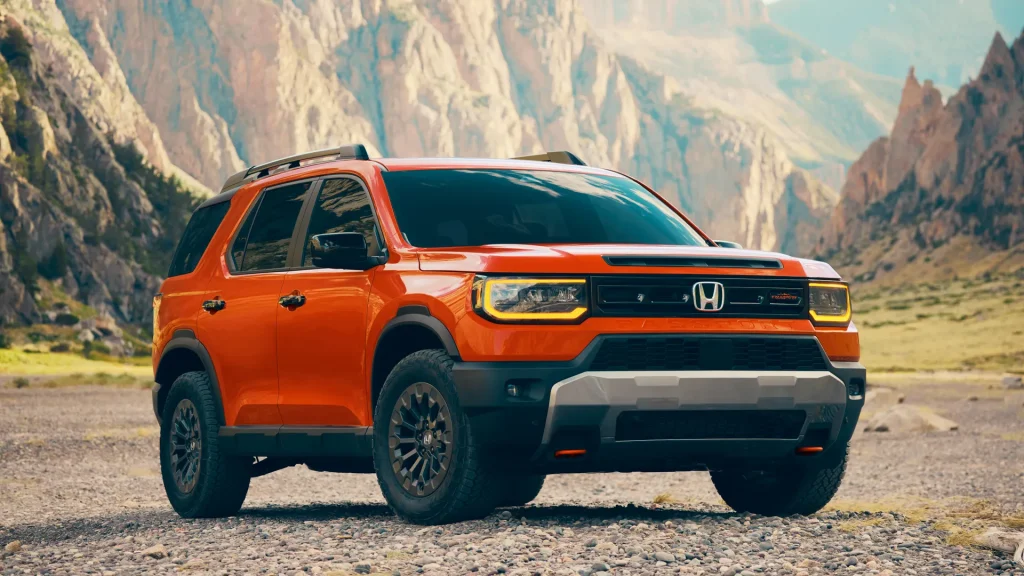
The 2026 redesign means its long-term reliability record is still developing, so buyers should not confuse a strong prediction with decades of accumulated data. There is also one NHTSA recall listed for the model year.
That recall concerns rear subframe bolts that may have been improperly tightened, with dealers instructed to inspect and replace the bolts when necessary.
For families wanting a rugged five-seat SUV without moving into a body-on-frame vehicle, the Passport brings a useful combination of power, standard AWD, and a strong current reliability prediction.
