For many American drivers, a plug-in hybrid can provide much of an EV’s quiet, electric-powered driving without requiring a complete switch away from gasoline. That matters for people who take frequent road trips, live where public charging is limited, or simply want the flexibility of a gasoline engine when the battery is depleted.
The strongest PHEVs can handle daily commuting on electricity while still offering hundreds of miles of combined range for longer journeys.
The ten vehicles below stand out because they combine meaningful electric capability with gasoline backup, giving owners flexibility that a battery-only vehicle cannot provide.
1. Toyota Prius Plug-in Hybrid
The Toyota Prius Plug-in Hybrid makes a strong case for drivers who want an electric commute without giving up the convenience of gasoline. The 2026 Prius Plug-in Hybrid can travel up to 44 miles on electricity alone, according to Toyota’s EPA-estimated rating.
That is enough to cover many daily commutes without starting the gasoline engine, yet the vehicle remains capable of traveling much farther once the battery’s charge is depleted.
That flexibility is particularly useful for Americans who regularly drive beyond the range of a typical battery-electric commuter. Instead of planning a road trip around DC fast-charging locations, Prius owners can simply stop at a conventional gas station when necessary.
The car’s gasoline-electric hybrid system continues operating after the plug-in battery’s usable charge has been consumed.
Toyota rates the 2026 Prius Plug-in Hybrid at 220 horsepower, with an EPA-estimated 127 MPGe combined on the most efficient configuration. The car can also accelerate from 0 to 60 mph in 6.6 seconds, giving it considerably more performance than the efficiency-focused Prius reputation might suggest.
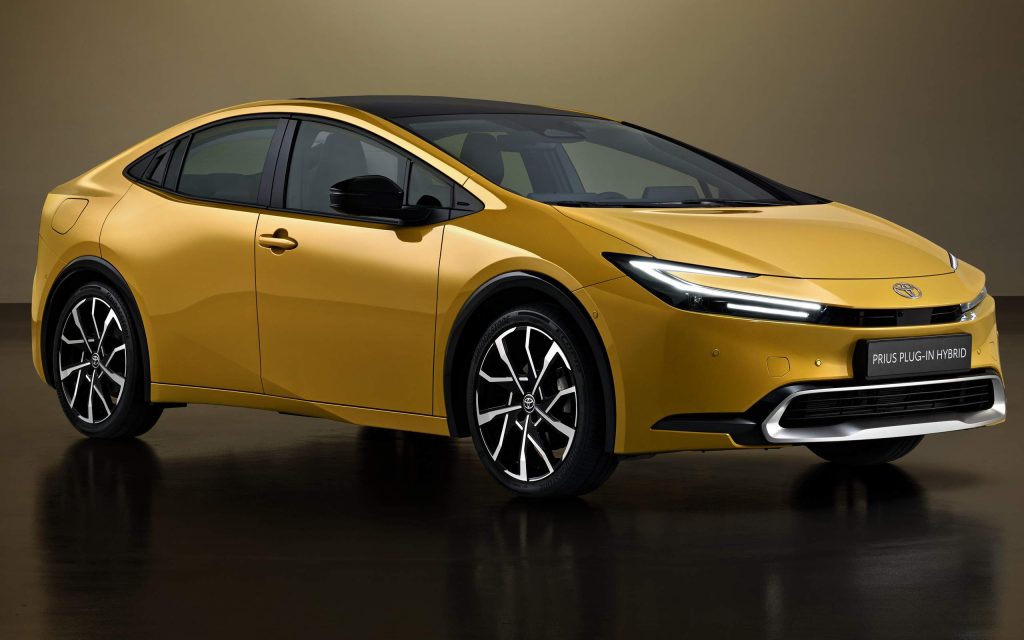
The Prius has another practical advantage in everyday use. It remains relatively compact and efficient, avoiding some of the added weight and aerodynamic compromises found in larger plug-in hybrids. Toyota also equips it with a 60/40 split-folding rear seat, giving the hatchback added flexibility when carrying passengers and cargo.
For drivers whose daily trips fall within its electric range but who occasionally take longer journeys, the Prius Plug-in Hybrid offers a useful balance. It can handle routine commuting on electric power while retaining a gasoline engine for extended road trips, providing flexibility that a fully electric vehicle cannot offer in the same way.
2. Toyota RAV4 Plug-in Hybrid
The Toyota RAV4 Plug-in Hybrid is aimed at buyers who want electric driving but need the practicality of a compact SUV. For 2026, Toyota completely redesigned the RAV4 lineup and increased the plug-in hybrid’s electric capability.
The new RAV4 Plug-in Hybrid can deliver an EPA-estimated 54 miles of all-electric range on the SE trim while producing 324 net combined horsepower.
That combination gives the RAV4 a useful advantage for households with mixed driving patterns. A driver can handle short trips, errands, and commuting primarily on battery power, then rely on the gasoline engine for a long interstate journey. There is no need to find a DC fast charger simply because the electric range has been exhausted.
Performance is another reason the RAV4 PHEV stands out. Toyota quotes a 5.4-second 0-to-60-mph time, which is quick for a compact family SUV. The 2026 lineup also expands the PHEV range with different versions, including the sport-oriented GR SPORT and the more rugged Woodland grade.
Charging is relatively straightforward as well. Toyota says a professionally installed Level 2 charger can replenish the battery in approximately 2.5 hours under ideal 240-volt, 32-amp conditions. That makes overnight or workplace charging practical without requiring the infrastructure associated with a full EV.
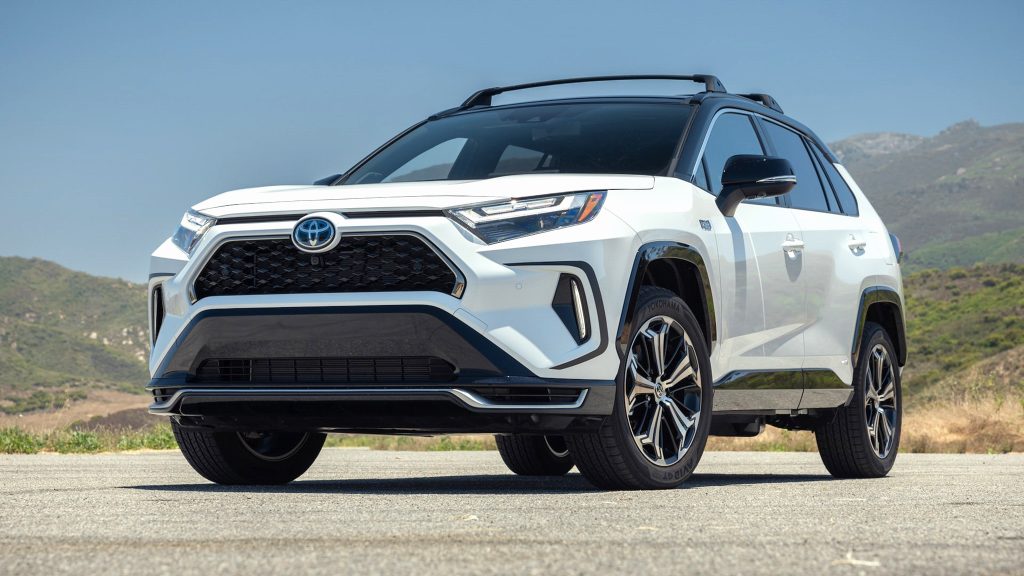
The RAV4 continues to offer the practical qualities that have made it popular with American families. It provides a comfortable SUV seating position, useful cargo capacity, and available all-wheel drive on select versions.
For households that want electric driving during the week but frequently travel to places where charging infrastructure is uncertain, that combination can remove much of the range-planning burden associated with a full EV.
3. Volvo XC60 T8 Plug-In Hybrid
The Volvo XC60 T8 makes a particularly strong argument for choosing a plug-in hybrid when daily driving is mostly short trips but longer journeys are common.
The 2026 U.S. XC60 T8 can travel up to 35 miles on electricity alone, according to Volvo’s EPA estimate, while its gasoline engine and hybrid system provide a combined range of up to 560 miles with a full tank and charged battery.
That combination removes one of the biggest concerns associated with switching completely to an EV. A driver can use electricity for commuting, shopping, and school runs, then simply continue driving on gasoline when the battery is depleted. There is no need to locate a fast charger during an interstate trip.
The T8 is also far more powerful than its efficiency-focused image suggests. Volvo lists 455 horsepower and 523 lb-ft of torque, while the all-wheel-drive SUV can accelerate from 0 to 60 mph in approximately 4.5 seconds. The 18.8-kWh battery can be recharged from empty to full in about five hours using Volvo’s specified AC charging setup.
For an American household that has a Level 2 charger at home, the XC60 can cover a large percentage of everyday driving electrically. Even when charging is inconvenient, the gasoline engine provides a fallback that a battery-only SUV cannot offer.
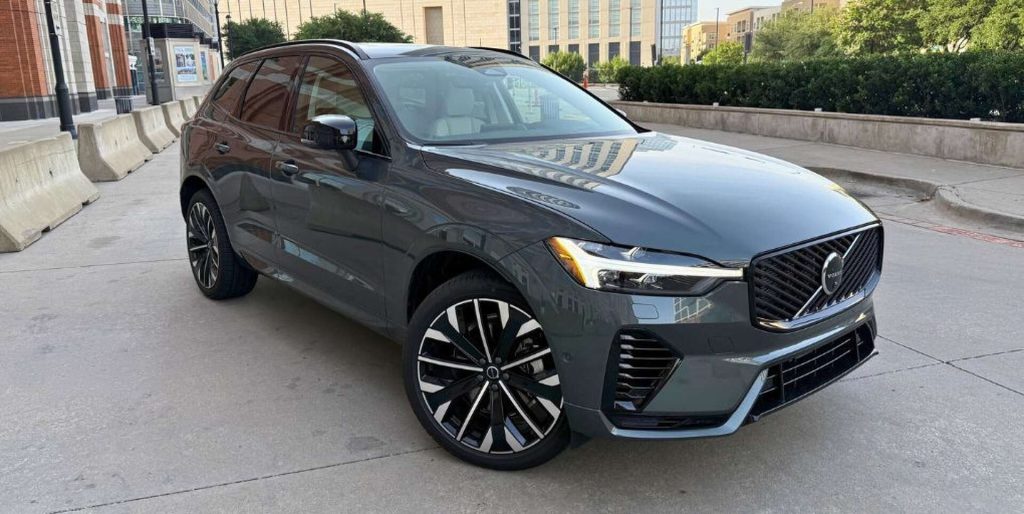
There is an important price consideration, though. The T8 carries a significant premium over less powerful XC60 versions, so its value depends heavily on how frequently the owner can take advantage of its electric range. It makes the most sense for drivers whose daily routine fits comfortably within those electric miles.
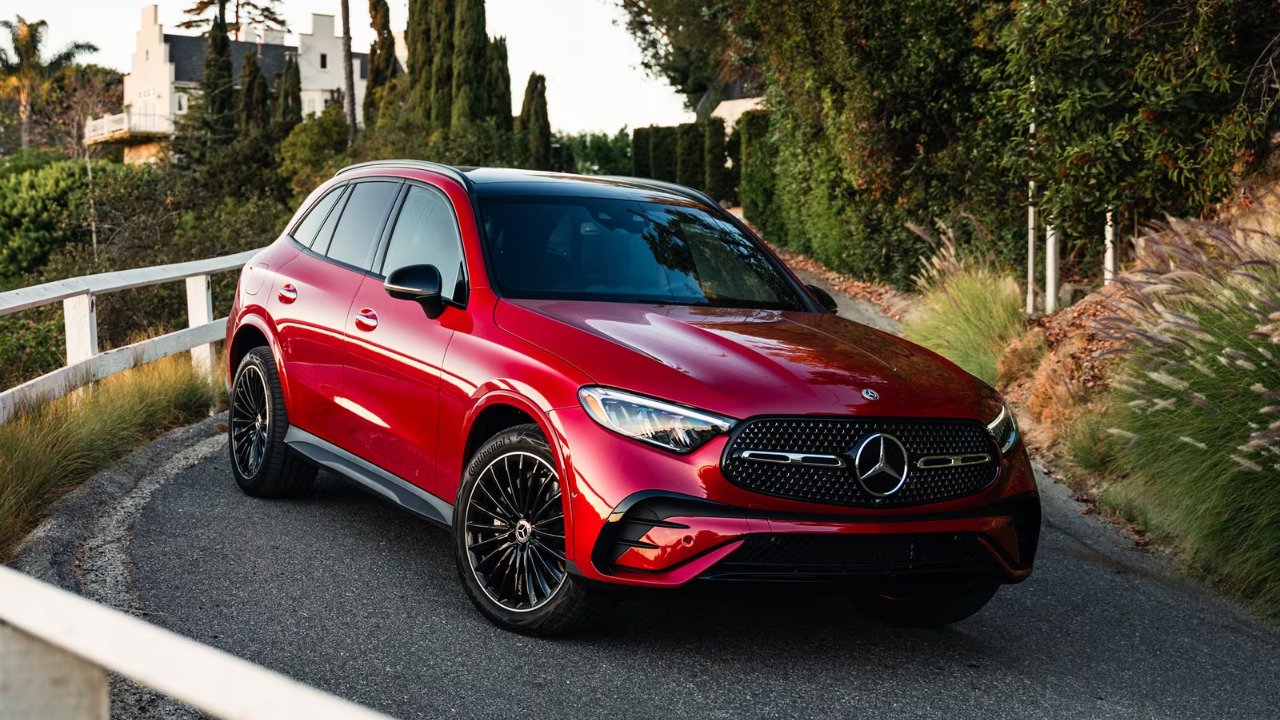
4. Mercedes-Benz GLC 350e 4MATIC
The Mercedes-Benz GLC 350e 4MATIC takes the plug-in-hybrid formula in a more luxurious direction while still providing enough electric range to handle many routine trips without gasoline.
The 2026 U.S. model is EPA-rated for 54 miles of electric range, which is unusually useful for a premium compact SUV. Edmunds lists a combined system output of 313 horsepower and 406 lb-ft of torque.
That electric range changes the ownership equation. Someone commuting 20 or 25 miles each way could potentially complete much of the workweek using electricity, provided the battery is recharged regularly. When the battery’s usable charge is exhausted, the 2.0-liter turbocharged engine continues operating as part of the hybrid system.
The GLC 350e also has a 17.4-gallon fuel tank, and Edmunds lists an EPA combined gasoline rating of 25 mpg when the battery is depleted. Its total gasoline-plus-electric driving capability gives owners considerably more flexibility than a battery-only vehicle on long trips.
Charging is straightforward rather than exceptionally fast. At 240 volts, Edmunds lists an estimated charging time of about three hours. That makes overnight charging practical for households with a Level 2 installation, while shorter charging opportunities during the day can add useful electric miles without requiring a lengthy stop.
The GLC is also rated to tow up to 3,500 pounds, adding another layer of versatility. That capability matters for American buyers who occasionally need to tow but do not want to give up electric commuting.
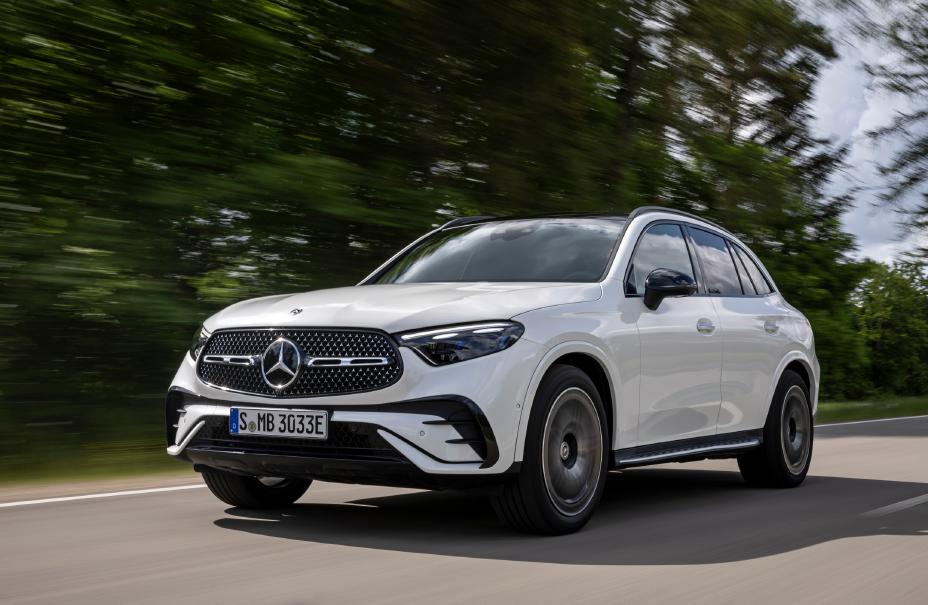
Its combination of 54 electric miles, gasoline backup, all-wheel drive, and luxury equipment demonstrates why a PHEV can fit a wider variety of driving patterns than a full EV.
5. Hyundai Tucson Plug-In Hybrid
The Hyundai Tucson Plug-In Hybrid is one of the more practical PHEVs for American households because it does not require drivers to make a major lifestyle change to benefit from electric driving.
The 2026 Tucson Plug-in Hybrid has an EPA-estimated 32 miles of all-electric range, followed by gasoline-powered hybrid operation when the battery’s usable charge is depleted. Hyundai also rates it at 35 mpg combined when operating as a gasoline hybrid and gives it a total estimated range of up to 388 miles.
That 32-mile figure will not replace a full EV for someone with a long commute, but it can cover a meaningful portion of daily driving. Short errands, school runs, and many commutes can be completed electrically, while longer journeys do not require a charging plan stretching across multiple states.
The Tucson is also useful because its plug-in system does not turn the SUV into a slow family vehicle. Hyundai lists 268 horsepower and 271 lb-ft of combined hybrid-system torque, with standard HTRAC all-wheel drive. The 1.6-liter turbocharged four-cylinder works with a 13.8-kWh lithium-ion battery and electric motor.
Charging is designed around ordinary AC equipment rather than depending on DC fast charging. Hyundai’s 2026 specifications show a 360-volt battery system, making overnight charging a straightforward way to replenish the battery for the following day’s shorter trips.
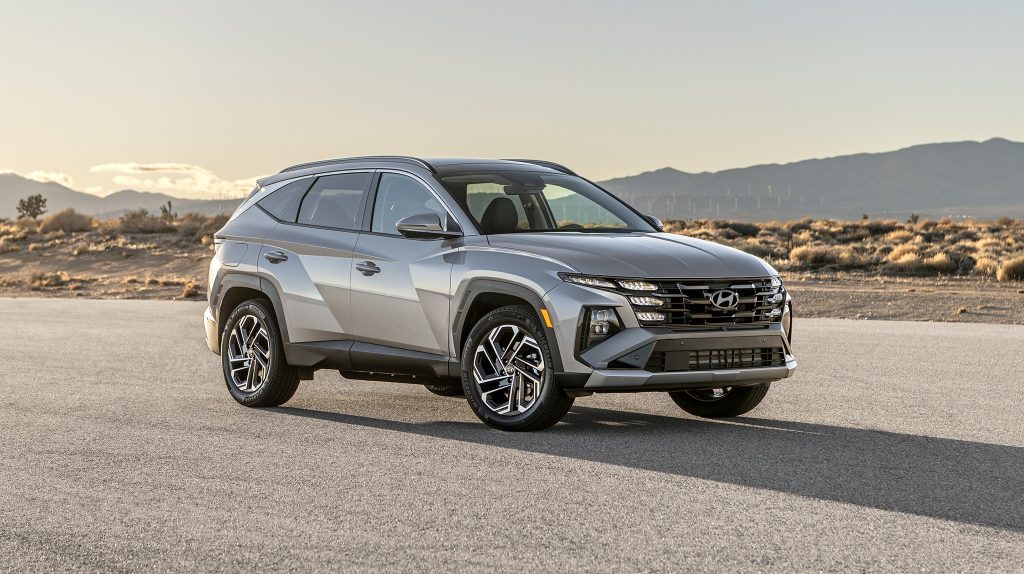
Once that electricity is used, the gasoline engine takes over without forcing the driver to stop at a charger.
That combination is especially useful for households that want electric commuting but still make frequent road trips. The Tucson PHEV does not ask owners to choose between gasoline freedom and electric driving. It simply uses each power source where it makes the most sense.
6. Mitsubishi Outlander Plug-In Hybrid
The Mitsubishi Outlander Plug-In Hybrid is an interesting alternative for buyers who want three-row SUV practicality without committing completely to battery-electric driving.
The 2026 model has an EPA-estimated 38 miles of electric range, according to the Plug In America 2026 vehicle guide, while its gasoline engine provides additional range once the battery is depleted.
That electric capability is useful because many American drivers do not travel hundreds of miles every day. Someone who can recharge at home can use the Outlander primarily as an EV for short trips, then rely on gasoline for longer journeys. The arrangement also eliminates the need to find a fast charger during an unexpected road trip.
The Outlander offers a practical advantage that some smaller PHEVs cannot match, with seating for up to seven people. Its plug-in hybrid setup can therefore suit larger families as well as smaller households. The combination of a gasoline engine and electric motors also enables all-wheel drive, adding versatility when driving on different types of roads and in changing conditions.
Mitsubishi’s PHEV system is distinctive because it can operate in several ways. The vehicle can drive using electric power, use the gasoline engine to generate electricity, or send gasoline-engine power directly to the wheels under suitable conditions. That flexibility allows the system to manage energy differently depending on speed and battery charge.
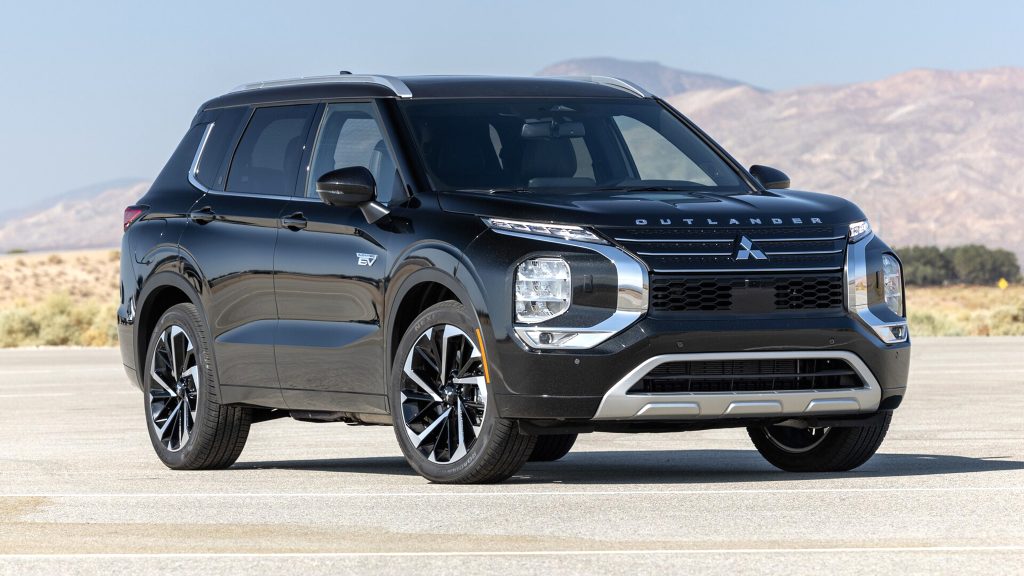
The 2026 Outlander PHEV is therefore less about achieving the longest possible electric commute and more about eliminating the limitations that come with depending entirely on battery power. It can handle short daily trips electrically while retaining the convenience of a gasoline engine when the journey becomes much longer.
For households that need SUV space but are not ready to make charging a central part of every road trip, that flexibility is the main attraction.
7. BMW X5 xDrive50e
The BMW X5 xDrive50e shows how a plug-in hybrid can deliver performance and long-distance flexibility without giving up electric driving. For the 2026 U.S. model, BMW lists up to 38 miles of all-electric range and 483 horsepower from its six-cylinder gasoline engine and electric motor combination.
That electric range is enough to cover many routine errands and shorter commutes before the gasoline engine becomes necessary.
Where the X5 becomes particularly interesting is what happens after those electric miles are used. Instead of requiring a charging stop, the vehicle continues using its gasoline powertrain, making it much easier to transition from local driving to an interstate journey.
For an American household that drives in very different patterns throughout the week, that flexibility can be more useful than having a much longer battery-only range that is not always needed.
Performance is another major advantage. BMW rates the X5 xDrive50e at 483 horsepower, with a manufacturer-listed 0-to-60-mph time of 4.6 seconds. The system combines a turbocharged 3.0-liter inline-six with BMW’s eDrive electric motor, giving the large SUV acceleration that would be difficult to associate with a fuel-saving vehicle.
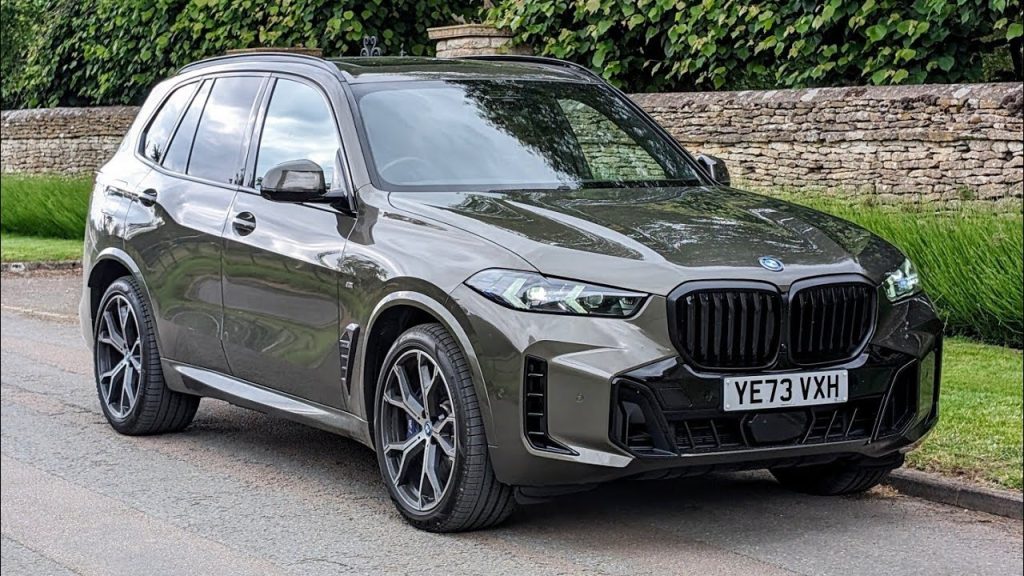
The X5 also retains the spacious cabin and utility expected from a midsize luxury SUV. That matters for families carrying luggage, sports equipment, or other bulky items, particularly on road trips where an EV’s charging schedule can become another consideration.
One caveat is that BMW’s published electric-range figure can vary by model year and certification status. For the 2026 U.S. X5 xDrive50e, BMW currently lists up to 38 miles, while newer upcoming versions have preliminary estimates that are higher.
8. Lexus NX 450h+
The Lexus NX 450h+ takes a different approach to plug-in-hybrid ownership. Rather than trying to match the acceleration or size of a large luxury SUV, it focuses on making electric driving practical in a compact package.
The 2026 U.S. NX 450h+ has an EPA-estimated 37 miles of electric range and an EPA-estimated 84 MPGe rating when operating with a full battery.
That 37-mile electric window can cover a significant amount of routine American driving. A driver with a short commute can potentially complete the trip without starting the gasoline engine, then recharge at home for the next day.
Once the battery charge is used, the NX transitions to its hybrid operation instead of leaving the driver dependent on a public charging network.
Lexus pairs the plug-in system with a 2.5-liter four-cylinder engine and electronically controlled all-wheel drive. The manufacturer estimates a 0-to-60-mph time of about six seconds, giving the NX enough performance for highway merging and everyday driving without turning it into a performance-focused SUV.
Charging is another area where the NX fits ordinary household routines. Lexus says the NX 450h+ can be fully charged in approximately three hours using a 240-volt connection and its 7-kW onboard charger under ideal conditions.
That means owners can replenish the battery during a normal evening at home rather than planning their schedules around public charging stations.
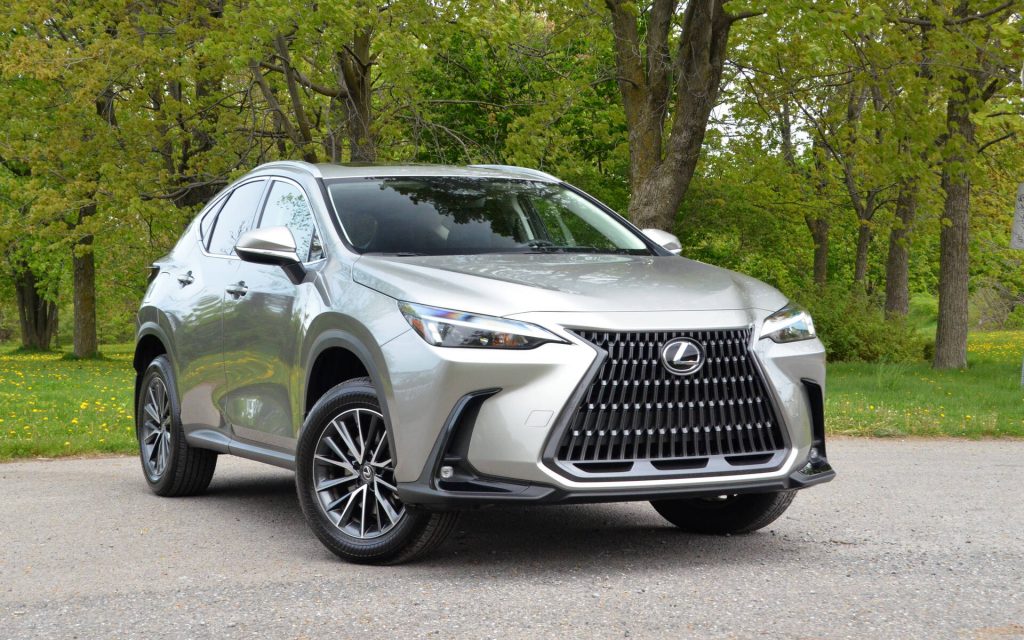
The NX also illustrates an important reason some buyers may choose a PHEV instead of a full EV. The owner can make frequent short trips using electricity while retaining the familiar convenience of gasoline for longer journeys.
For drivers whose daily mileage falls within the NX’s electric range, that can reduce fuel consumption without requiring an all-electric road-trip strategy.
9. Range Rover Sport PHEV
The Range Rover Sport PHEV demonstrates how far plug-in-hybrid technology can be taken in a large luxury SUV. Land Rover’s U.S. specifications for the Range Rover Sport PHEV have highlighted an electric driving range of up to 51 miles, giving it enough battery capability for many daily trips without starting the gasoline engine.
The powertrain combines a 3.0-liter turbocharged inline-six with an electric motor and produces 434 horsepower in the P440e configuration.
That electric range is especially significant considering the vehicle’s size and capability. A driver can use electric power for commuting and local errands, then retain the gasoline engine for longer interstate trips. This removes the need to plan every extended journey around charging stations while still allowing quiet, emissions-free driving around town.
Performance is not sacrificed in the process. Land Rover lists 619 lb-ft of torque for the P440e and a 0-to-60-mph time of approximately 5.5 seconds. The PHEV system therefore gives the Sport enough power for highway acceleration while retaining the smooth character expected from a luxury SUV.
Another unusual advantage is charging capability. Land Rover’s documentation lists support for 50-kW DC rapid charging, with an 80-percent charge possible in roughly 40 minutes under the specified conditions. That is considerably more flexibility than many traditional PHEVs provide.
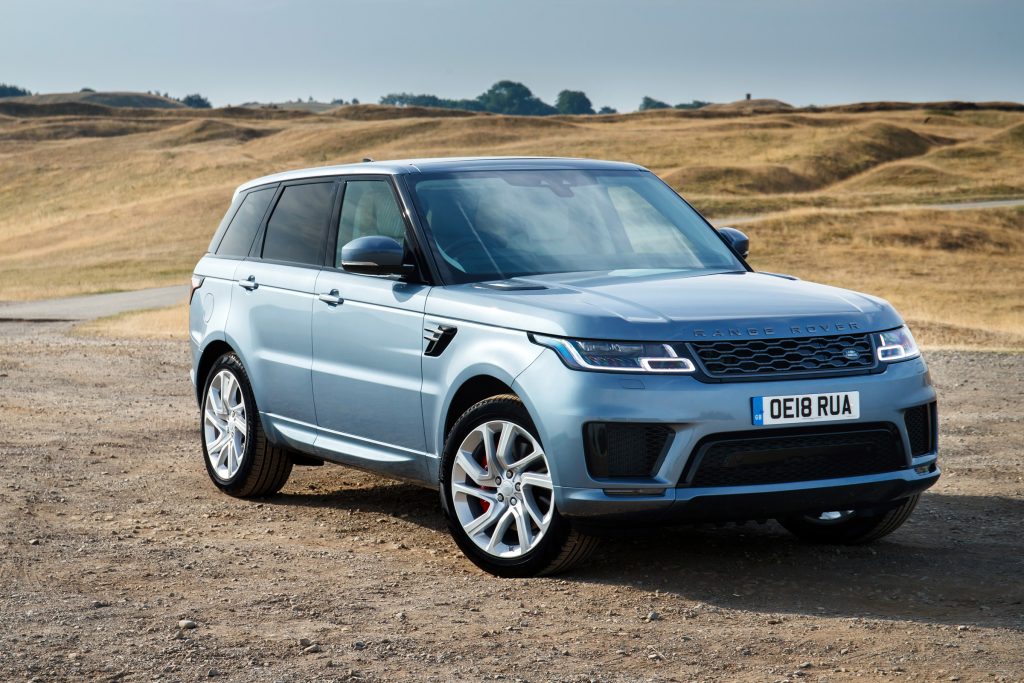
The Range Rover Sport PHEV is not an inexpensive choice, and its size makes it excessive for some households. But for buyers who need luxury, substantial road-trip capability, and useful electric driving in one vehicle, its plug-in system offers a combination that a smaller battery-only EV may not replicate.
10. Lexus TX 550h+ Plug-In Hybrid
For families, the Lexus TX 550h+ offers a combination that is uncommon among PHEVs. It pairs a genuinely spacious three-row cabin with plug-in hybrid capability, making it practical for larger households. The 2026 Lexus TX Plug-in Hybrid remains available in the U.S. lineup under the TX 550h+ name.
Its 3.5-liter V6 and plug-in-hybrid system produce 404 net combined horsepower, while the manufacturer estimates 33 miles of pure-electric driving.
Thirty-three electric miles may sound modest beside a modern full EV, but the purpose of the TX is different. Those miles can cover many school runs, shopping trips, and daily commutes without gasoline.
When the battery is depleted, the vehicle can continue operating in hybrid mode, allowing the same family to take a long road trip without having to depend entirely on public charging infrastructure.
The TX 550h+ also uses Lexus DIRECT4 all-wheel drive and an electronically controlled continuously variable transmission. Lexus lists a 5.9-second 0-to-60-mph time, which is strong for a large three-row family SUV. The model measures 203.1 inches long and 78.3 inches wide with the mirrors folded, giving it substantial cabin and cargo space.
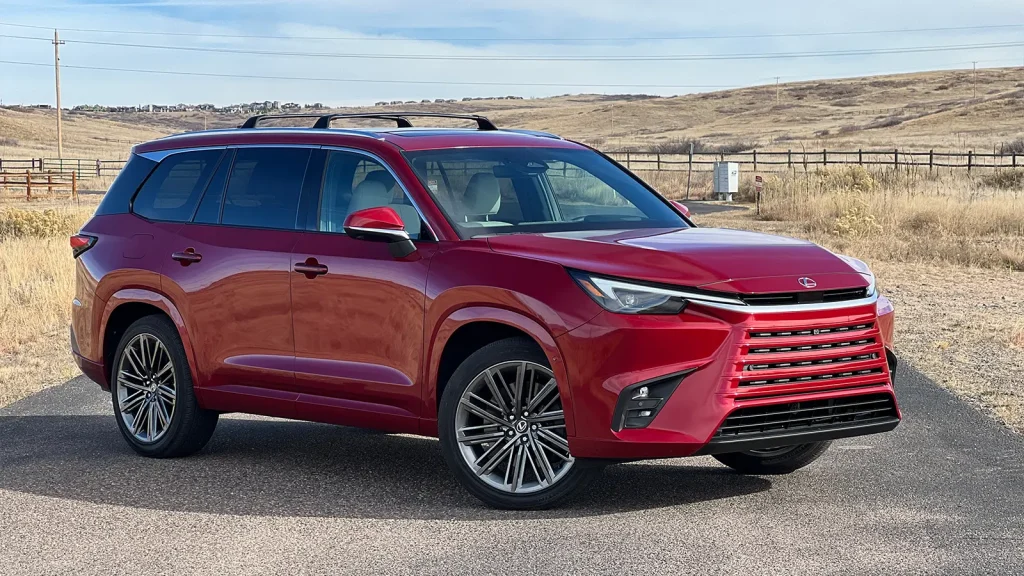
There is a practical advantage here that goes beyond the powertrain. Families often need one vehicle to perform several jobs, from weekday commuting to carrying multiple passengers and luggage on vacations.
The TX 550h+ can handle those different requirements without asking the owner to organize every long-distance trip around charging availability.
For buyers who want electrification but need three rows, the TX 550h+ demonstrates why a PHEV can occupy a useful middle ground between a conventional gasoline SUV and a full EV.