
Charging speed can matter just as much as battery range when an EV is used for long highway journeys. A vehicle with excellent range can still lose time if it needs a lengthy stop between cities, while newer 800-volt EVs can add substantial range during a short break.
This list focuses on U.S.-market EVs with particularly strong fast-charging performance, using independent testing and manufacturer data rather than peak charging numbers alone.
Edmunds measures charging by how many miles of range an EV can add per hour, providing a useful road-trip perspective. The results show how quickly modern EVs can turn charging stops into brief breaks.
1. Hyundai IONIQ 6
The Hyundai IONIQ 6 is particularly well suited to road trips because it combines strong charging performance with a highly efficient aerodynamic body. In Edmunds’ independent EV Charging Test, the IONIQ 6 Limited RWD recorded 926 miles of range added per charging hour, the highest figure in the test at the time of publication.
Edmunds also calculates charging performance by measuring how quickly usable driving range is added rather than simply looking at the vehicle’s maximum kilowatt rating.
That distinction makes the IONIQ 6 especially interesting. Hyundai’s 800-volt electrical architecture allows the car to take advantage of high-output DC fast chargers, while its efficiency means each unit of electricity translates into considerable driving range.
The 2026 U.S. IONIQ 6 Long Range RWD is rated for up to 342 miles of EPA-estimated range, giving drivers both substantial range between stops and rapid replenishment when they do need to charge.
The Long Range RWD version uses a single permanent-magnet synchronous motor producing 225 horsepower and 258 lb-ft of torque.
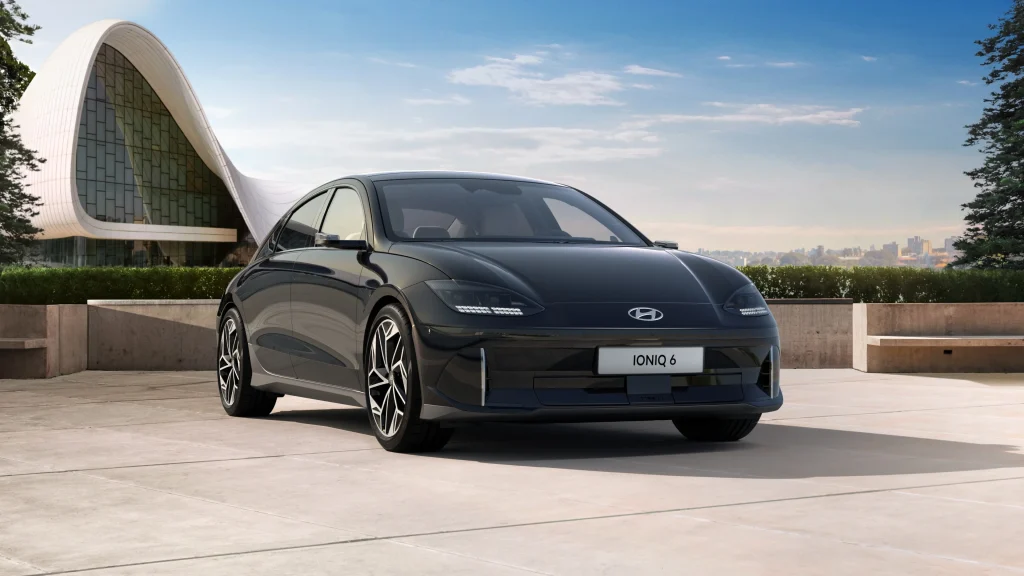
Hyundai lists a 77.4-kWh battery for the configuration represented in its specifications, while newer model-year configurations can differ. The IONIQ 6’s low 0.22 coefficient of drag also helps explain why it can add so many miles efficiently during a charging stop.
For a long highway journey, that combination matters more than a headline peak charging number. Less time connected to the charger means more time moving toward the destination.
2. Mercedes-Benz CLA 250+ With EQ Technology
The electric Mercedes-Benz CLA 250+ takes a different approach to fast road-trip charging. Its advantage comes from an 800-volt electrical architecture and charging capability of up to 320 kW.
Mercedes-Benz says the CLA 250+ can charge from 10% to 80% in as little as 22 minutes, while a compatible high-power charger can add up to 200 miles of range in approximately 10 minutes.
Those figures are particularly meaningful on a highway trip because most drivers do not need to charge an EV from nearly empty to full at every stop. A shorter session that adds enough range to reach the next destination or charger can be more useful than simply having a large battery.
The CLA also benefits from an aerodynamic body and a long-distance-oriented electric powertrain. Edmunds’ independent charging test placed the CLA 250+ near the top of its charging leaderboard, recording 833 miles of range added per charging hour.
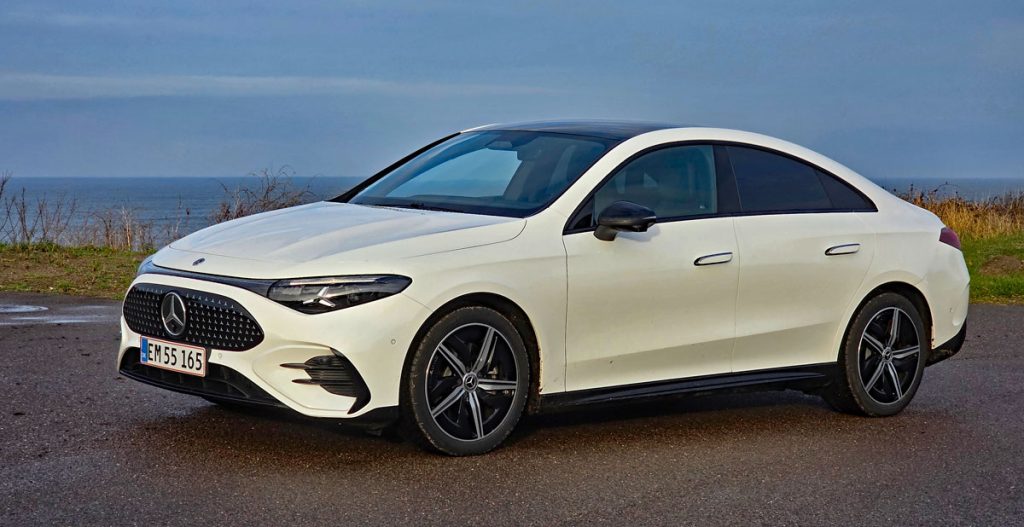
That measurement gives the Mercedes a strong road-trip profile because it accounts for both charging speed and how efficiently the vehicle converts stored electricity into driving range.
Mercedes also gives the CLA access to its MB.CHARGE Public system, which aggregates major charging networks. The company says the service provides access to more than 170,000 public charging stations across the United States.
The combination of high-voltage architecture, strong charging power, and efficient highway operation makes the CLA 250+ an interesting alternative to simply choosing an EV with the largest battery.
3. Porsche Taycan
The Porsche Taycan remains one of the strongest choices for a road trip when the goal is to minimize charging time. Edmunds recorded the Taycan Performance Battery Plus at 821 miles of range added per charging hour, placing it near the very top of its independent EV Charging Test.
The test also measured an average charging power of 253 kW, showing that the Taycan can sustain substantial power rather than simply producing a brief peak figure.
Porsche’s own specifications explain why. The Taycan uses an 800-volt electrical architecture and can accept up to 320 kW from a suitably powerful DC fast charger. Porsche lists an 18-minute 10-to-80-percent charging time for the Taycan 4S with its Performance Battery Plus under optimal conditions.
That matters on a highway journey because an EV does not need to reach 100 percent at every stop. A short break can put a substantial amount of usable energy back into the battery before the driver gets moving again.
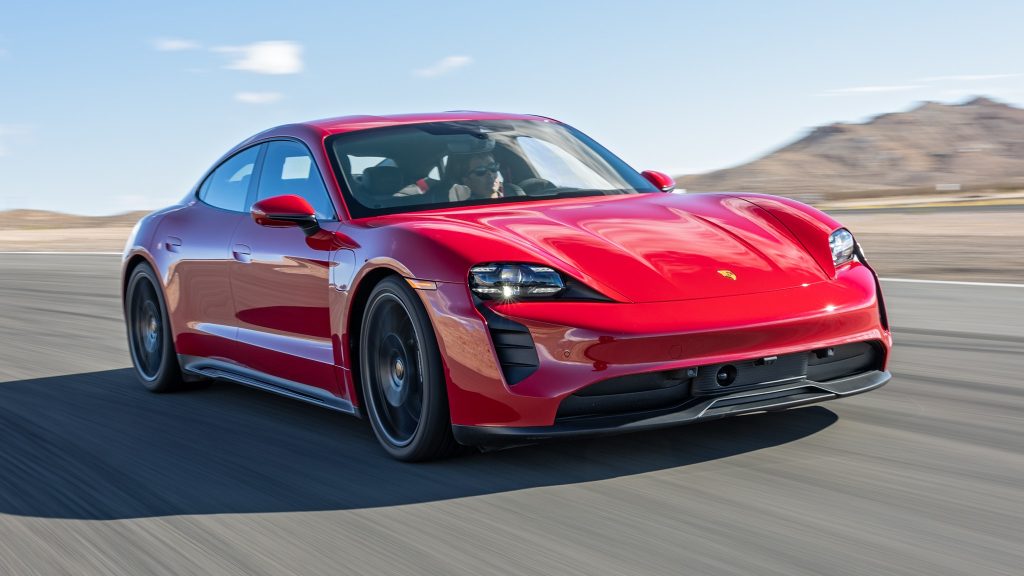
The Taycan 4S also offers up to 295 miles of EPA-estimated range, according to Porsche’s U.S. specifications. Its 105.0-kWh gross battery provides enough capacity for longer stretches between charging stations, while the fast-charging hardware reduces the time required when a stop becomes necessary.
The combination is particularly impressive because the Taycan is not a slow, efficiency-focused commuter. It is a high-performance sports sedan that can reach 60 mph in 3.5 seconds in 4S specification, yet its charging system remains exceptionally capable.
4. Audi A6 e-tron
The Audi A6 e-tron takes advantage of an 800-volt electrical system to make highway charging considerably quicker than what many conventional EVs can manage.
Audi’s A6 Sportback e-tron performance can accept up to 270 kW of DC charging power, and the company says a compatible high-power charger can take the battery from 10 to 80 percent in about 21 minutes.
Independent testing backs up that capability. Edmunds recorded 775 miles of range added per charging hour for the 2026 A6 e-tron, placing it among the quickest-charging EVs in its database. The same test recorded an average charging power of 204 kW.
The A6’s road-trip credentials do not depend entirely on charging speed. Its Sportback shape is highly aerodynamic, helping the vehicle use its stored electricity efficiently at highway speeds.
Audi’s technical data lists a usable battery capacity of 94.9 kWh and an EPA-equivalent range figure that varies by configuration and testing cycle. The performance version uses a single rear electric motor with 362-horsepower equivalent output and 417 lb-ft of torque.
Another useful feature is battery thermal management. Audi uses predictive thermal conditioning to prepare the battery for high-power charging, helping it reach the appropriate temperature before arriving at a fast charger. That preparation is important because charging performance can fall when the battery is too cold or too hot.
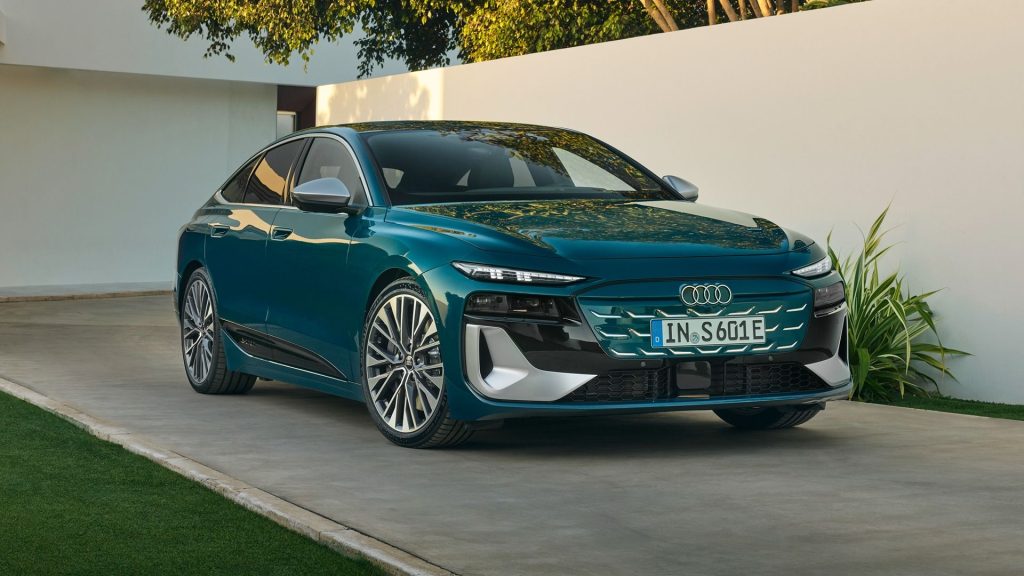
For road trips, the A6 e-tron’s strength is therefore a combination of efficient design, a large battery, 800-volt hardware, and strong charging performance. A brief stop can add a substantial amount of usable driving range without requiring the driver to spend a long portion of the journey parked at a charger.
5. Hyundai IONIQ 5
The Hyundai IONIQ 5 has become one of the most recognizable examples of an EV that can make a road-trip charging stop surprisingly short.
Its 800-volt electrical architecture allows the 2026 model to accept high-power DC fast charging, and Hyundai says the Long Range rear-wheel-drive version can add up to 178 miles of EPA-estimated range in approximately 15 minutes when connected to a 350-kW DC fast charger. The same setup can take the battery from 10% to 80% in as little as 20 minutes.
Independent testing gives the IONIQ 5 a useful real-world perspective. Edmunds recorded 696 miles of range added per charging hour for a 2022 IONIQ 5 AWD, demonstrating how effectively the platform can convert charging time into usable driving range. Newer models benefit from a larger 84-kWh battery and updated charging hardware.
Car and Driver’s recent testing of the 2026 IONIQ 5 AWD Limited also produced encouraging results. The vehicle reached a 260-kW peak and averaged 140 kW during its test, adding 150 miles of range in just 16 minutes.
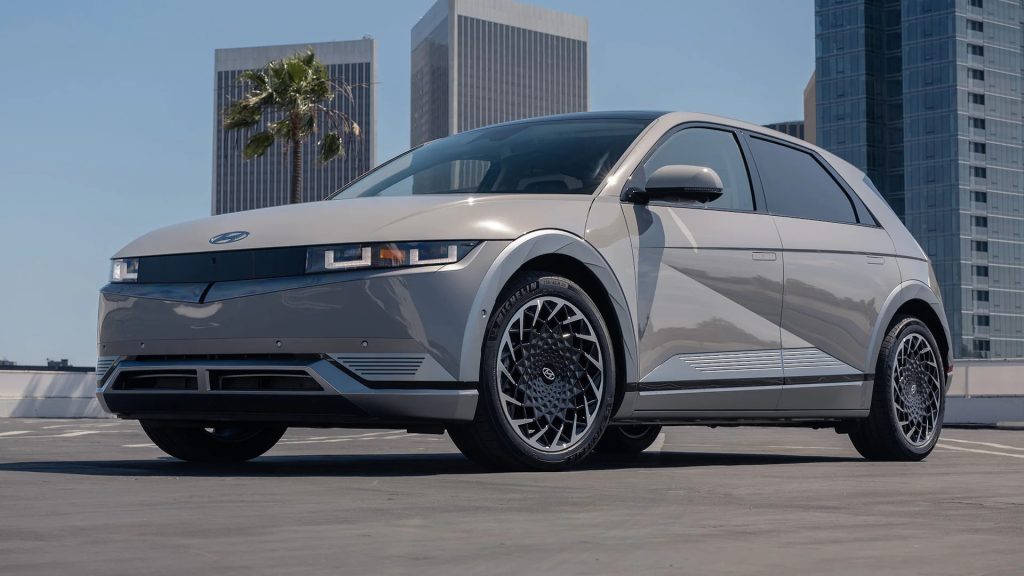
The 2026 IONIQ 5 also comes with a native NACS port, giving owners direct access to Tesla Superchargers without needing a separate adapter for those stations. Hyundai says the vehicle can access more than 25,000 Tesla Superchargers in the U.S. and Canada.
That combination of charging speed, efficiency, and charger availability makes the IONIQ 5 particularly practical when the destination is hundreds of miles away.
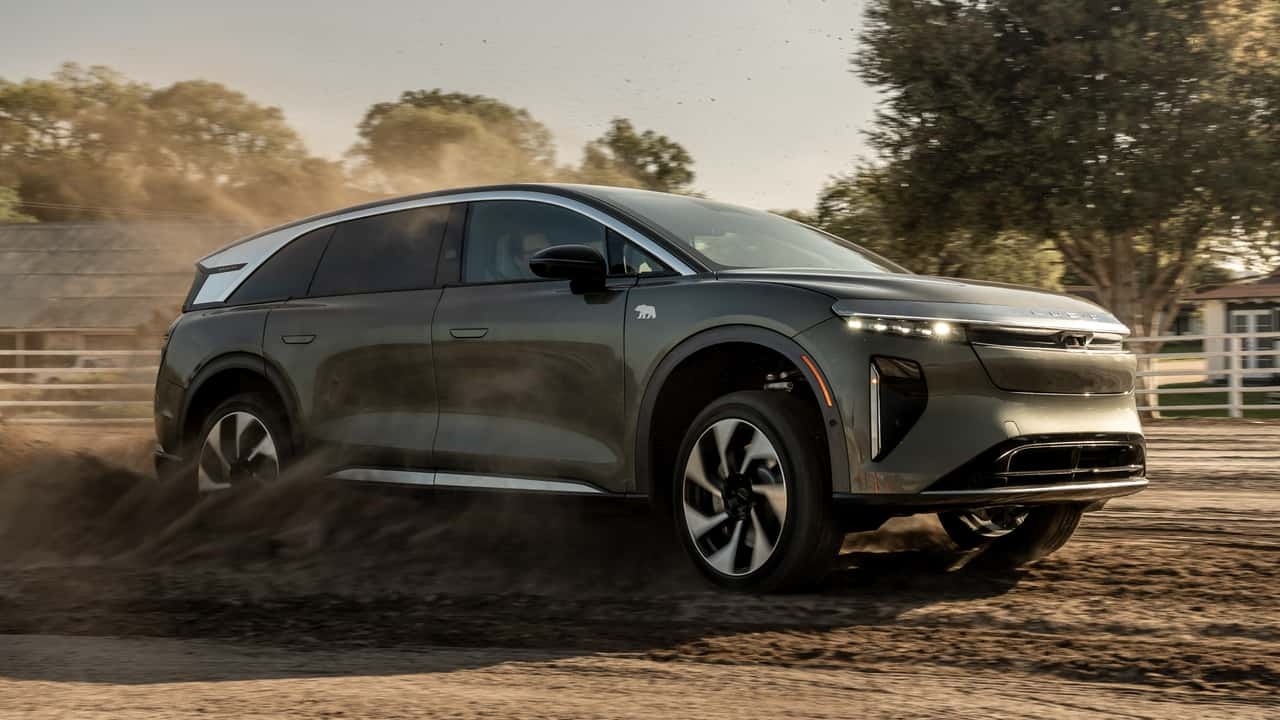
6. Lucid Gravity Grand Touring
The Lucid Gravity Grand Touring approaches road trip charging from a different angle. Instead of relying solely on a small battery or an exceptionally short charging window, Lucid combines a large battery, high efficiency, and a 400-kW maximum DC charging capability. The result is an electric SUV that can replenish a remarkable amount of range during a short stop.
Lucid says the Gravity Grand Touring has an EPA-estimated range of up to 450 miles, making it one of the longest-range electric SUVs sold in the United States. More importantly for highway travelers, the company says a compatible 400-kW DC charger can add up to 200 miles of range in under 11 minutes.
Edmunds’ independent charging database gives the Gravity Grand Touring a more conservative but useful real-world measurement.
A 2026 Grand Touring tested on all-season tires added 654 miles of range per charging hour, while another Grand Touring equipped with summer tires recorded 640 miles per charging hour. Those results demonstrate how tire choice and efficiency can influence actual charging performance.
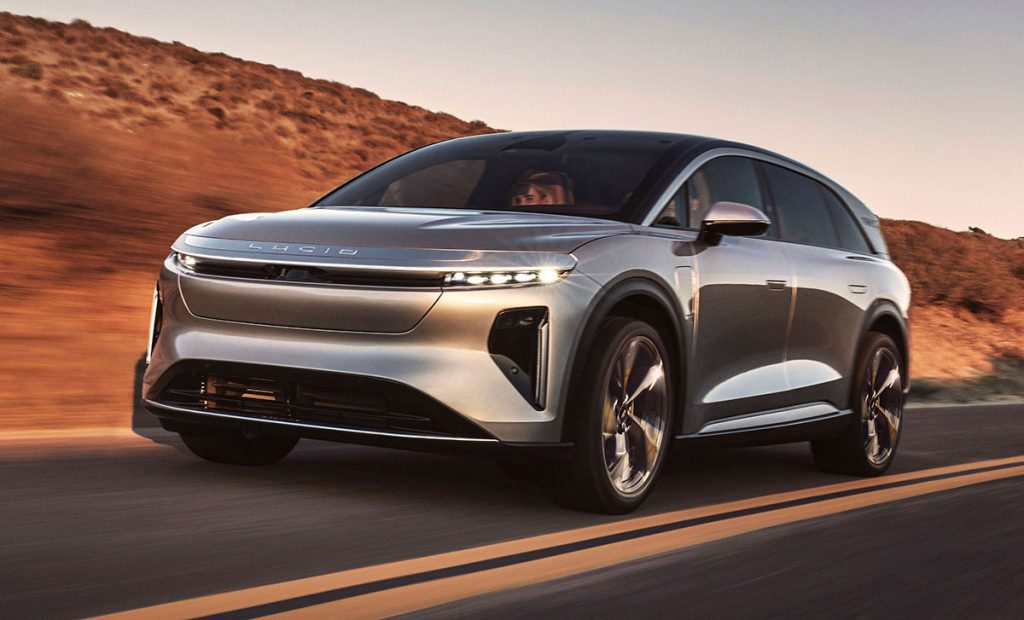
The Gravity is also designed around broad charging compatibility. Lucid says the SUV can use fast-charging networks, including Electrify America and Tesla Superchargers, with an approved adapter providing access to additional charging infrastructure.
This matters on a road trip because charging speed is only useful when the vehicle can find a compatible high-output station. The Gravity’s combination of long range and rapid charging means drivers can potentially make fewer stops while still spending less time connected during each stop.
7. Kia EV6
The Kia EV6 remains one of the most convincing road-trip EVs because its charging system can replenish a meaningful amount of range without requiring a long stop. The 2025 EV6 GT-Line with NACS was independently tested by Edmunds at 597 miles of range added per charging hour, equivalent to adding 100 miles of range in about 10 minutes.
An earlier EV6 Wind RWD recorded an even stronger 727 miles per charging hour in the same testing program, although that vehicle used the older charging-port configuration.
The underlying hardware is responsible for much of that performance. Kia’s E-GMP platform uses an 800-volt electrical architecture, allowing the EV6 to accept up to 235 kW of DC fast-charging power. The newer U.S. models also use a native NACS port, giving drivers direct access to Tesla Superchargers that are compatible with the vehicle.
For a road trip, the EV6’s charging curve is more important than its peak number alone. A charger may advertise a very high output, but what matters to the driver is how much power the vehicle can sustain while the battery is being replenished.
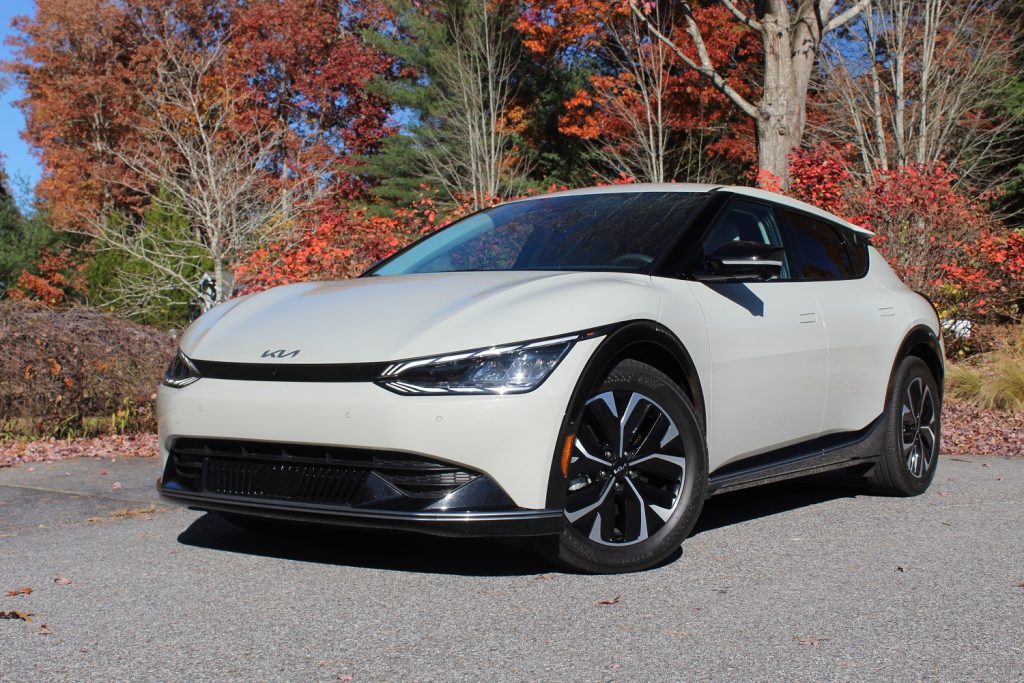
The EV6 has demonstrated strong performance in independent testing because it can maintain substantial charging power through a useful portion of the charging session.
The EV6 also has a relatively efficient body compared with larger electric SUVs, which means the energy added during a charging stop translates into a useful amount of highway travel.
That combination gives the EV6 an advantage on long journeys where several shorter charging stops are preferable to sitting at a charger for extended periods.
8. Porsche Macan Electric
The Porsche Macan Electric demonstrates that rapid charging is not limited to low-slung sedans. Edmunds recorded 716 miles of range added per charging hour for a 2024 Macan 4 Electric, putting the electric SUV ahead of many newer models in its independent charging database.
The test equated that performance to adding 100 miles of range in approximately 8 minutes and 23 seconds.
Porsche achieves this with an 800-volt electrical architecture and a maximum DC charging capability of up to 270 kW. The Macan’s battery system can therefore accept substantial power during a fast-charging session, while its aerodynamic shape helps convert that stored electricity into usable driving range.
The Macan 4 Electric is also designed to precondition its battery for charging. When the navigation system knows that a fast charger is the destination, the vehicle can prepare the battery for the charging session. This matters because battery temperature has a direct effect on how much power an EV can accept.
There is another clever element to the Macan’s charging hardware. Porsche’s 800-volt system can be adapted to 400-volt charging infrastructure, allowing the vehicle to remain compatible with chargers that do not provide an 800-volt supply. That flexibility is useful during interstate travel because not every charging location offers identical hardware.
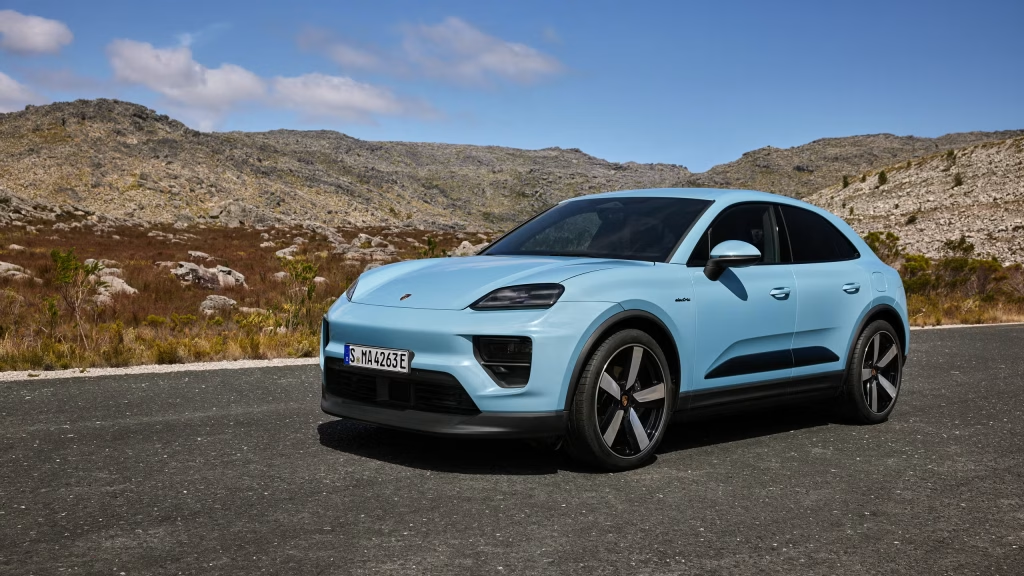
The Macan brings together several important qualities for long highway trips, including strong charging performance, useful driving range, and the ability to work with different charging networks. It also maintains the elevated seating position and practical design of a crossover, giving buyers those advantages without requiring them to switch to a lower sedan for better charging capability.
9. Audi S6 Sportback e-tron
The Audi S6 Sportback e-tron is a particularly strong road-trip EV because its charging performance does not come at the expense of range or performance.
In Edmunds’ independent charging test, the 2026 S6 e-tron added 707 miles of range per charging hour, which worked out to approximately 8 minutes and 29 seconds to add 100 miles of range. Edmunds measured an average charging power of 205 kW during its test.
Audi’s own charging figures are equally impressive. The S6 Sportback e-tron can accept up to 270 kW of DC fast-charging power, and Audi says a 10-to-80-percent charge can take about 21 minutes at a suitably powerful public charger. The battery also uses thermal management designed to maintain appropriate temperatures for fast charging and consistent performance.
That makes the S6 particularly interesting for interstate travel. A driver does not necessarily need to spend half an hour or more at every charging stop. A relatively short break for coffee, food, or a bathroom stop can add a meaningful amount of range.
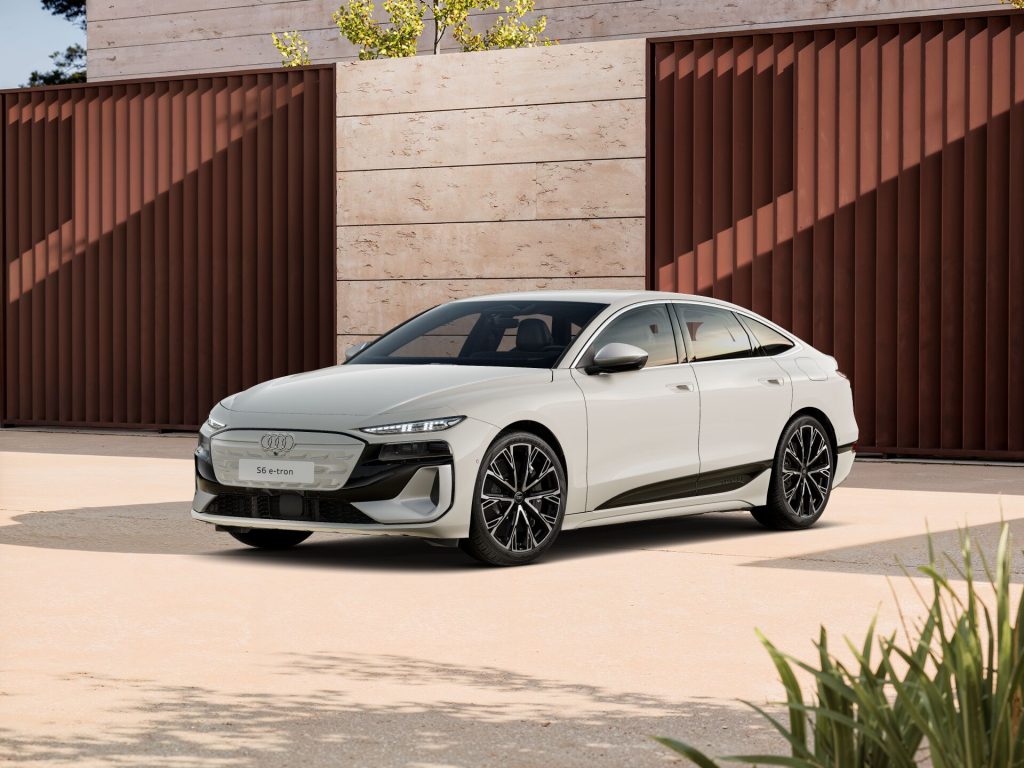
Performance is another part of the equation. Audi lists 543 horsepower with launch control and a 0-to-60-mph time of 3.7 seconds for the 2027 U.S. S6 Sportback e-tron. Its EPA-estimated range reaches 326 miles with 20-inch wheels.
The result is an EV that does not force road-trip buyers to choose between charging convenience and performance. It combines a fast-charging 800-volt platform with a low, aerodynamic Sportback body and serious acceleration.
10. Hyundai IONIQ 9
The Hyundai IONIQ 9 shows that fast charging is not limited to small sedans and sporty EVs. This three-row electric SUV can add substantial range during a road-trip charging stop despite weighing more than 5,500 pounds in its rear-wheel-drive configuration.
Edmunds recorded 642 miles of range added per charging hour for the 2026 IONIQ 9 SEL, equivalent to roughly 9 minutes and 21 seconds for 100 miles of added range.
Hyundai’s charging specifications explain much of that capability. The IONIQ 9 uses an 800-volt architecture and can charge from 10% to 80% in approximately 24 minutes when connected to a 350-kW DC fast charger. Battery preconditioning is standard, helping prepare the battery for faster charging when conditions require it.
The IONIQ 9 is also unusually useful for families because it does not sacrifice practicality to achieve its charging performance. It measures 199.2 inches long and 78 inches wide, offers three rows, and can provide up to 86.9 cubic feet of cargo capacity with the appropriate seating configuration.
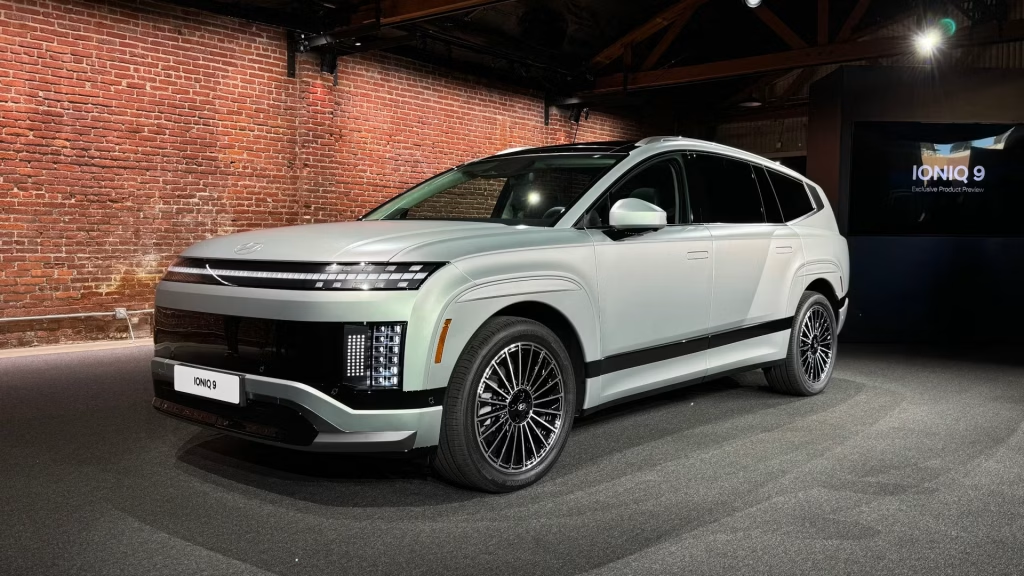
Power varies considerably by trim. The rear-wheel-drive S produces 215 horsepower and 258 lb-ft of torque, while the performance versions use dual motors to produce 422 horsepower and 516 lb-ft. The EPA range reaches 335 miles for the RWD S, while the higher-output AWD versions are rated at 311 miles.
That combination makes the IONIQ 9 an important road-trip option for families. It provides the space of a large SUV while retaining charging technology capable of keeping highway stops relatively short.
