
Real-world crash data can provide insight that laboratory testing cannot fully capture by showing what happens when everyday drivers use these vehicles on American roads. The latest Insurance Institute for Highway Safety study examined 2023 model-year vehicles and comparable earlier models, drawing on fatal crash data collected from 2021 through 2024.
Across all vehicles studied, the average driver death rate was 37 deaths per million registered vehicle years. Six models recorded zero driver deaths, while several others recorded only single-digit rates.
The results are dominated by SUVs, particularly midsize and luxury models, although vehicle size, driver behavior, and crash circumstances all influence the numbers.
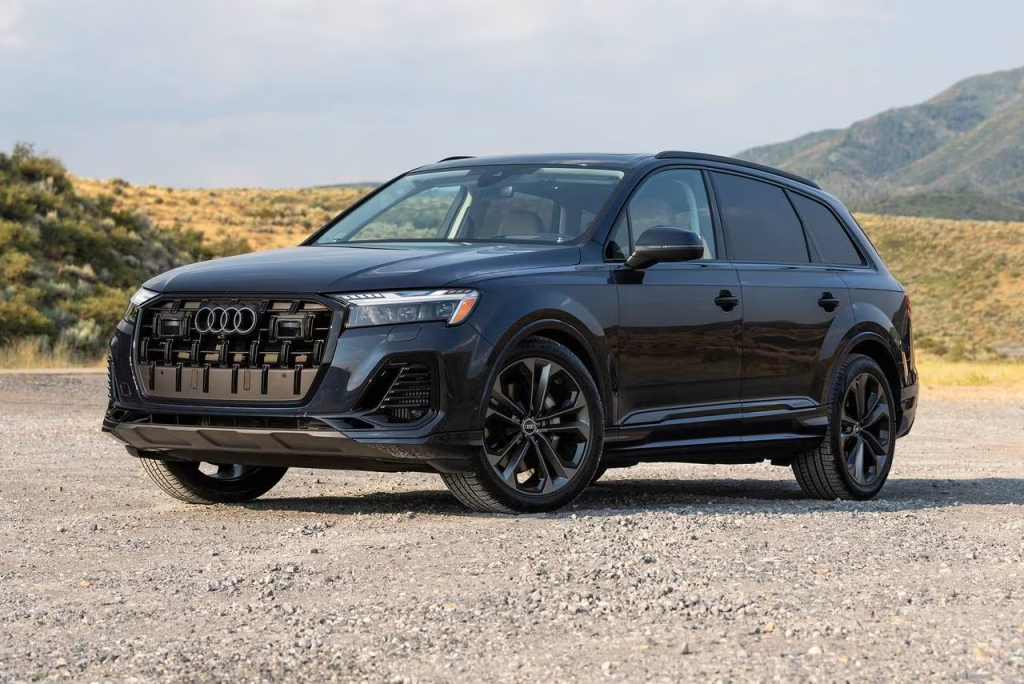
1. Audi Q7 4WD
The Audi Q7 4WD sits at the very top of the latest IIHS driver-death data with a recorded rate of zero driver deaths per million registered vehicle years. The result comes from the 2023 model year and equivalent earlier models during the 2021-24 study period.
It is important to understand what that number means. IIHS did not say that Q7S never crashed. Instead, no driver deaths were recorded within the fatal-crash data used to calculate the model’s rate.
The Q7 belongs to the large luxury SUV category, a group that had a much lower driver death rate than cars in the latest study. Across all large luxury SUVs, the average was 10 driver deaths per million registered vehicle years, compared with 67 for midsize cars and 79 for small cars.
That difference highlights the importance of vehicle size and crash compatibility. A larger SUV gives engineers more physical space for energy absorption and occupant protection, although IIHS cautions that size is only one factor affecting fatal-crash outcomes.
The Q7 also earned a 2025-26 IIHS Top Safety Pick+ designation, providing separate crash-test evidence alongside the real-world fatality data.
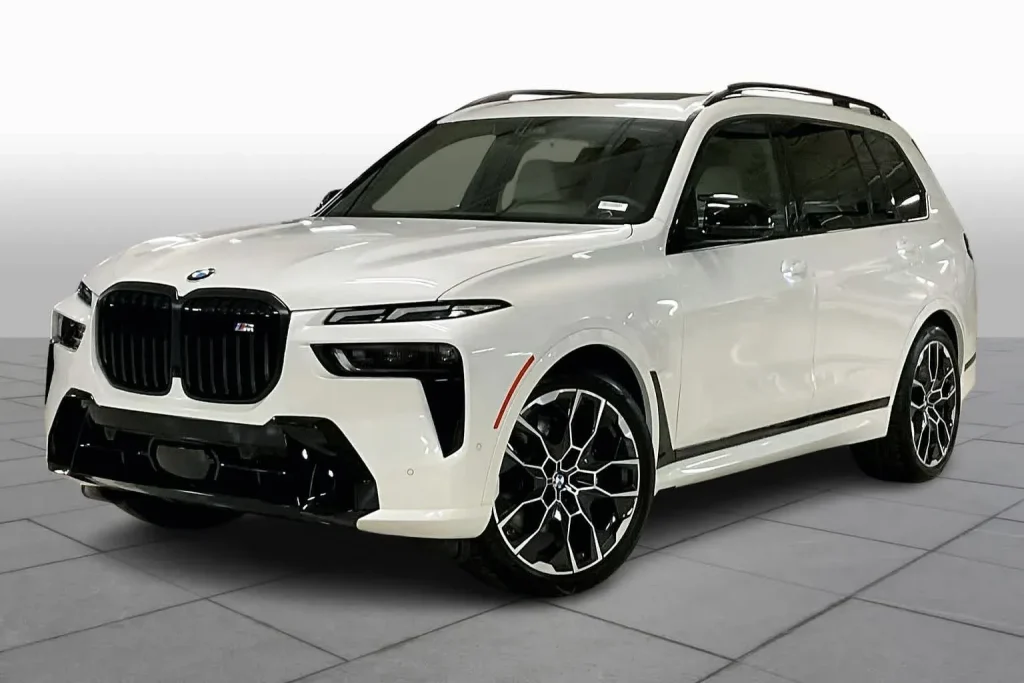
2. BMW X7 4WD
The BMW X7 4WD is another large luxury SUV that recorded zero driver deaths per million registered vehicle years in the latest IIHS study. The finding covers 2023 models and equivalent earlier vehicles during the 2021-24 period. That places the X7 among the six models in the study with a zero driver-death rate.
The result is particularly interesting because the X7 is one of the largest vehicles in BMW’s passenger lineup. IIHS found that large SUVs had an average driver death rate of 26 per million registered vehicle years, while large luxury SUVs performed considerably better at 10. Very large SUVs averaged 20.
The X7 also has substantial occupant-protection engineering and a broad suite of active safety equipment. Its size can provide an advantage in severe crashes, although the IIHS data should not be interpreted as proof that size alone caused the zero rate.
BMW’s flagship SUV also earned an IIHS Top Safety Pick+ designation for 2025-26. That gives buyers another independent data point, although crash-test ratings and real-world fatality rates measure different things.
The important distinction is that the zero figure applies to the specific study population and exposure period. It should not be converted into a guarantee about future crashes.
3. Chevrolet Tahoe 4WD
The Chevrolet Tahoe 4WD is the third vehicle in the latest IIHS group with a driver death rate of zero per million registered vehicle years. The figure covers 2023 models and equivalent earlier models involved in fatal crashes during 2021 through 2024.
It does not mean Tahoes avoided every crash. Rather, IIHS recorded no driver deaths in the fatal-crash data used to calculate the rate.
The Tahoe’s size is relevant to the bigger pattern in the study. IIHS found a driver death rate of 26 per million registered vehicle years for large SUVs, compared with 79 for small cars. Large SUVs also provide substantial occupant space and mass in crashes, although IIHS does not attribute the Tahoe’s zero rate to size alone.
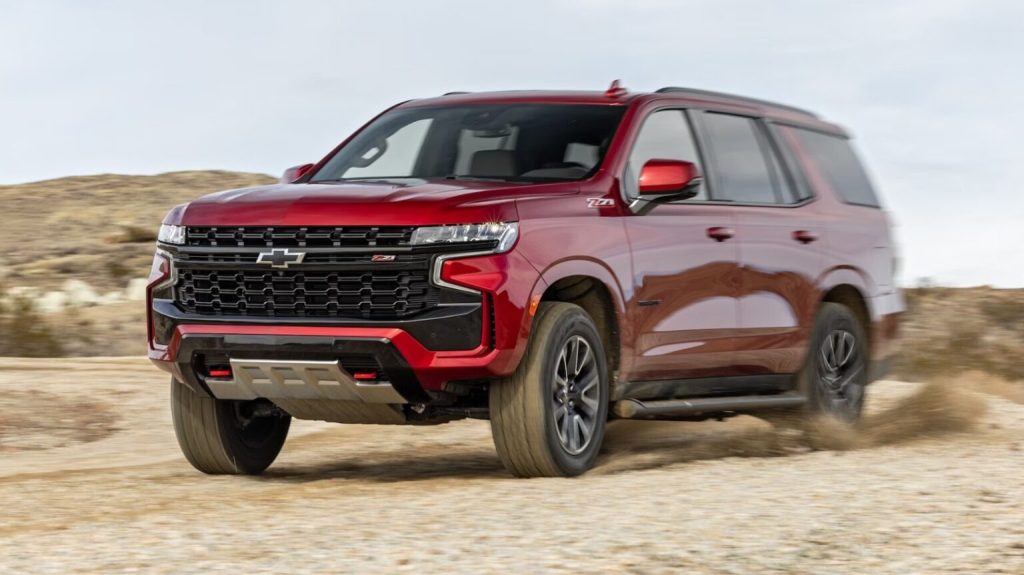
The current Tahoe is also available with several active-safety technologies, while its large cabin provides three rows of seating. The latest IIHS data should still be viewed as a historical statistical result rather than a guarantee for an individual driver.
4. Mercedes-Benz GLB-Class 4WD
The Mercedes-Benz GLB-Class 4WD stands out because it achieved the same zero driver deaths per million registered vehicle years despite being considerably smaller than the full-size SUVs at the top of the list. IIHS classified it as a small luxury SUV, and its zero rate comes from 2023 models and equivalent earlier vehicles during the 2021-24 study period.
That distinction makes the result particularly interesting. IIHS recorded an average driver death rate of 28 per million registered vehicle years for small luxury SUVs, yet the GLB recorded zero in this specific study population. The number is based on fatal-crash records and vehicle-registration exposure, not a count of every collision involving the model.
The GLB also combines its compact dimensions with Mercedes-Benz safety technology and available all-wheel drive. Its relatively upright body provides useful interior space without the footprint of a large SUV.
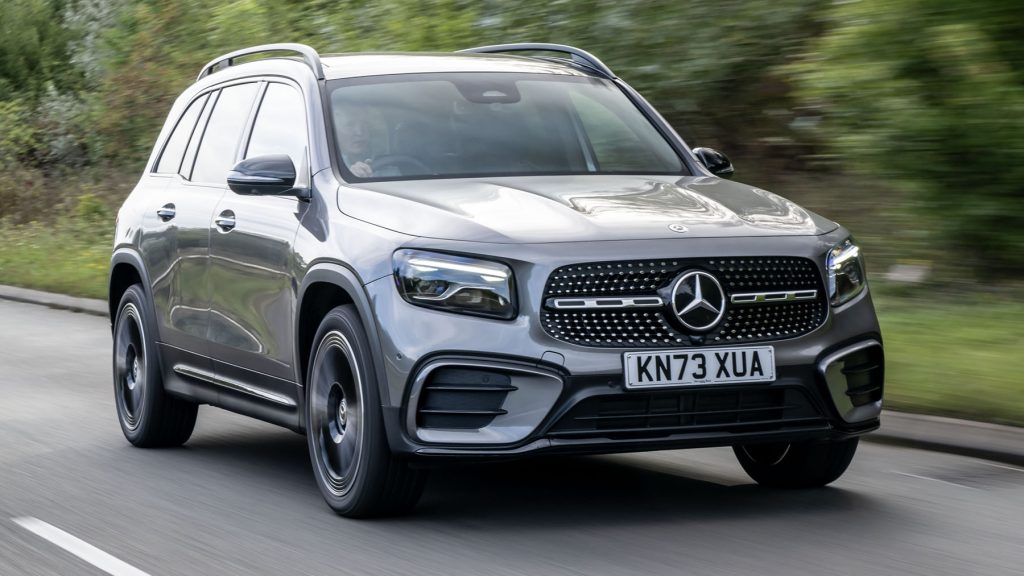
The result should not be interpreted as proof that every GLB occupant would survive a serious collision. It simply means that no driver deaths were recorded for the qualifying GLB vehicles in the IIHS dataset.
5. Mercedes-Benz GLE-Class 2WD
The Mercedes-Benz GLE-Class 2WD is the fifth vehicle in the latest IIHS study with a driver death rate of zero per million registered vehicle years.
The calculation covers 2023 model-year vehicles and equivalent earlier designs involved in fatal crashes from 2021 through 2024. IIHS emphasizes that this is a statistical rate based on registered vehicle exposure, not a claim that the GLE was never involved in a collision.
The GLE’s result is notable because it belongs to the midsize luxury SUV category, rather than the larger SUV classes that dominate much of the zero-rate group. The 2024 GLE also received an IIHS Top Safety Pick+ designation, with good ratings in the Institute’s small-overlap, moderate-overlap, and updated side crash tests.
Its safety equipment includes standard blind-spot detection and rear automatic braking, with additional driver-assistance technology available depending on configuration.
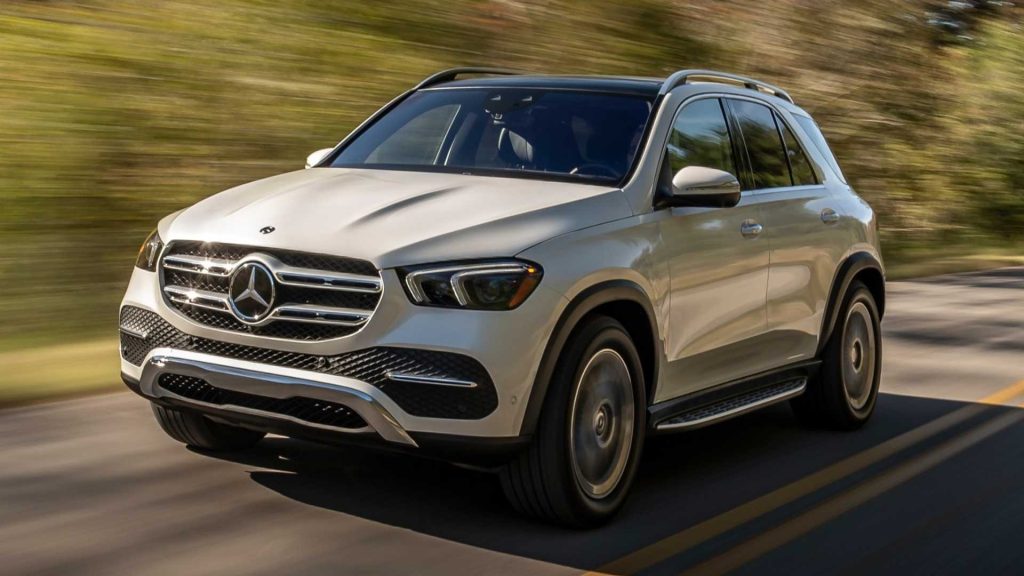
The zero figure should therefore be read alongside the vehicle’s crash-test performance and not as a guarantee of individual protection. The IIHS dataset simply found no driver deaths among the qualifying GLE vehicles during the study period.
6. Toyota Tundra CrewMax 4WD
The Toyota Tundra CrewMax 4WD is the only pickup in the latest IIHS group with a zero driver-death rate. Its figure was 0 deaths per million registered vehicle years for 2023 models and equivalent earlier vehicles during the 2021-24 period. That puts a full-size pickup alongside luxury SUVs in the study’s lowest-rate group.
The result is especially interesting because the Tundra serves a very different purpose from vehicles such as the Audi Q7 and BMW X7. Its body-on-frame construction, substantial dimensions, and available four-wheel drive make it a much larger and heavier vehicle than the typical family sedan.
Toyota also equips the Tundra with Toyota Safety Sense 2.5 on the relevant generation, including technologies designed to help prevent or reduce certain frontal and lane-related crashes. Those systems are supplementary to the vehicle’s structural protection and should not be treated as a substitute for attentive driving.
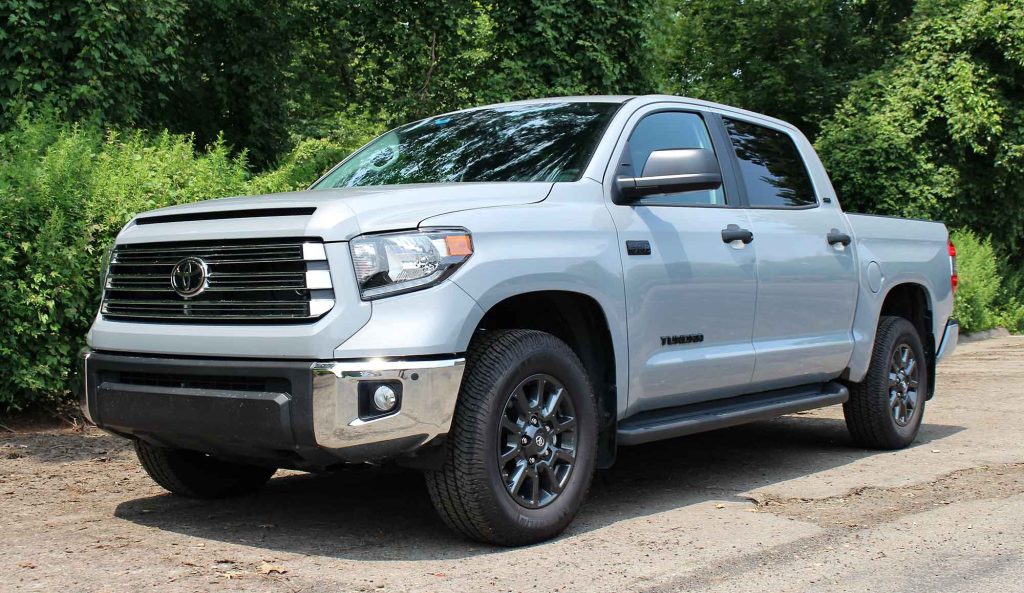
The IIHS number remains the key statistic here. It represents fatal crashes in the defined study population, not every accident involving a Tundra. IIHS also notes that individual model rates can be less statistically stable than larger class-level rates because the available exposure is smaller.
So while the Tundra’s zero rate is striking, it should be understood as a measurement from a specific four-year dataset rather than a prediction of what will happen in every future crash.
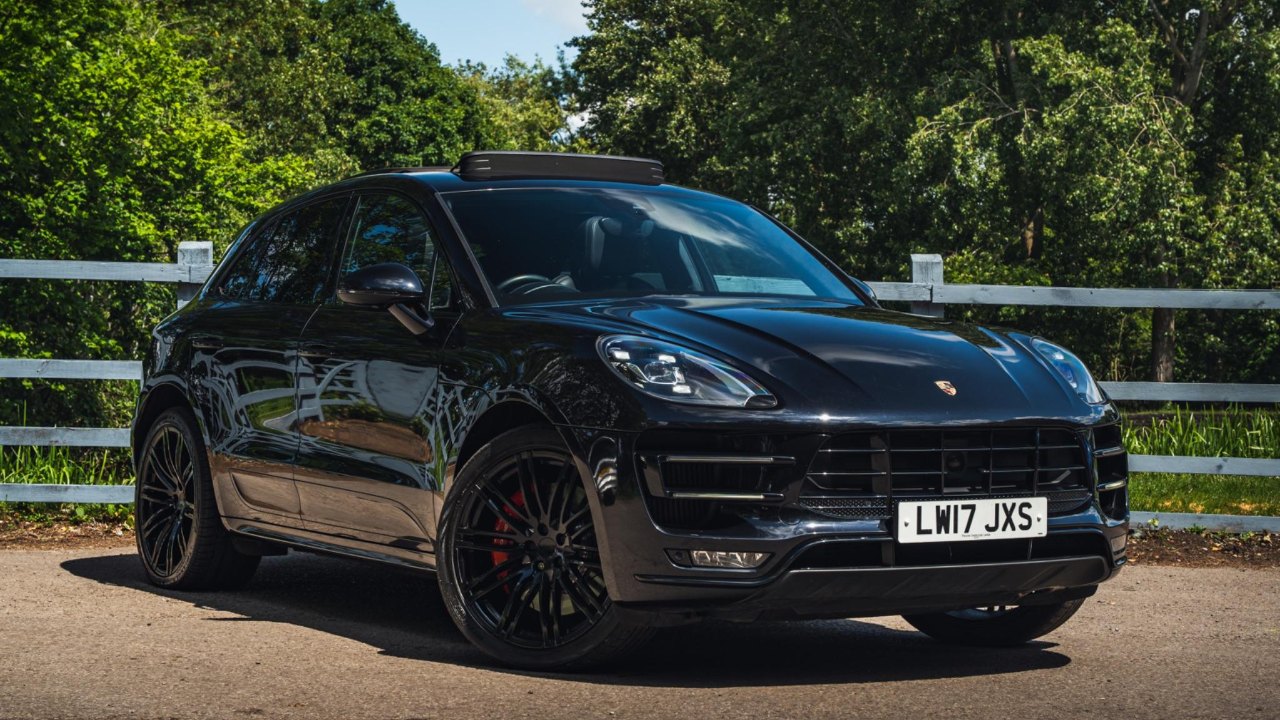
7. Porsche Macan 4WD
The Porsche Macan 4WD recorded just 4 driver deaths per million registered vehicle years, placing it immediately behind the six vehicles with zero deaths in the latest IIHS study.
The figure covers 2023 models and equivalent earlier vehicles involved in fatal crashes from 2021 through 2024. IIHS stresses that these figures are rates, not simple accident counts, and they are adjusted for driver age and gender.
The Macan’s result is notable because it was the lowest rate among the midsize luxury SUVs in the study. That class averaged 17 driver deaths per million registered vehicle years, meaning the Macan’s recorded rate was substantially below its class figure.
The 2023 Macan also combined a compact footprint with a strong safety structure and all-wheel drive. Its standard engine produced 261 horsepower and 295 lb-ft of torque, giving the SUV enough performance without relying on an especially powerful engine.
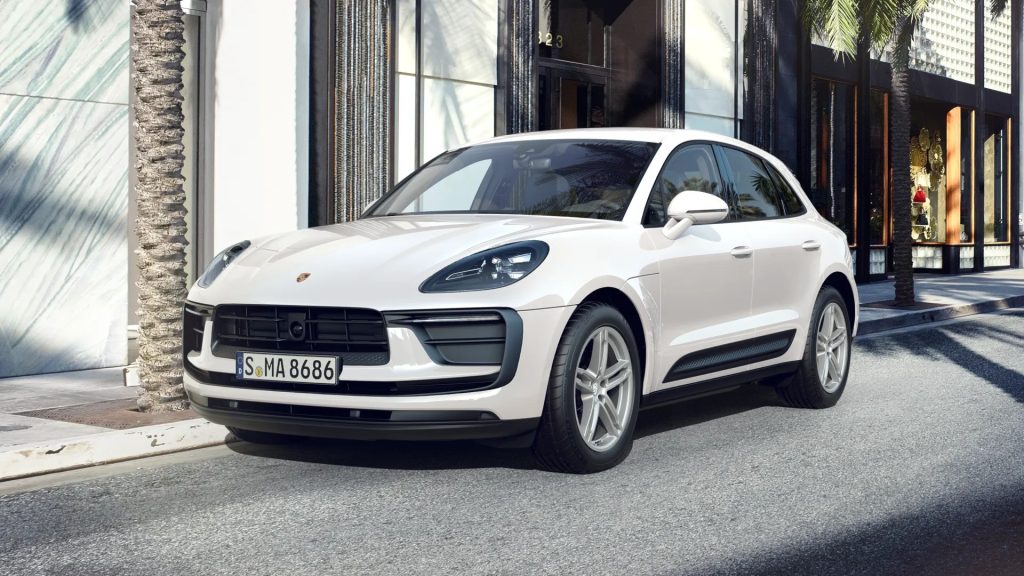
The key point is that the 4-death figure does not mean four people died in Macan crashes. It is a standardized rate calculated against vehicle exposure. That makes it useful for comparing models with different numbers of vehicles on American roads.
8. BMW X5 4WD
The BMW X5 4WD posted a 5-driver-deaths-per-million-registered-vehicle-years rate, putting it among the strongest performers in the 2023 model-year IIHS study. The data cover fatal crashes from 2021 through 2024 and include equivalent earlier X5 models where the design had not substantially changed.
That number is particularly significant when compared with the 37 deaths per million registered vehicle years recorded across all makes and models. The X5’s rate was therefore far below the study-wide figure. Its midsize luxury SUV class averaged 17.
The X5 also had substantial physical dimensions and a comparatively heavy construction. The 2023 xDrive40i measured 194.3 inches long and 78.9 inches wide, while its 3.0-liter turbocharged inline-six produced 335 horsepower and 331 lb-ft of torque.
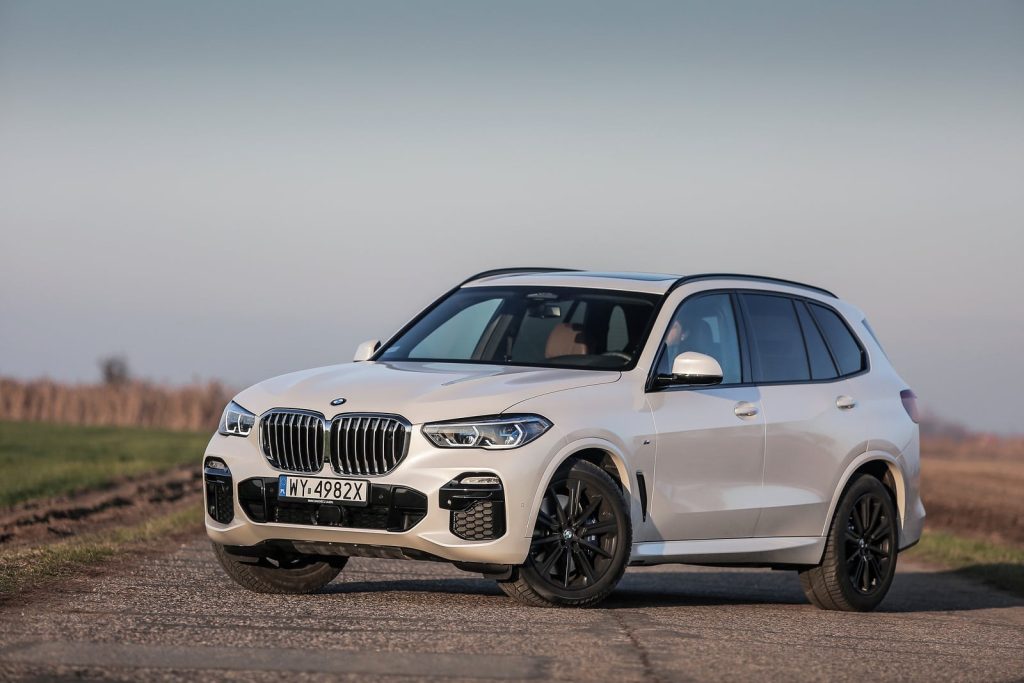
IIHS’s results should not be treated as proof that the X5 eliminates fatal-crash risk. Driver behavior, road conditions, speed, and the characteristics of another vehicle can all affect the outcome.
What the data do show is that, among vehicles with enough exposure for IIHS to calculate a reliable individual rate, the X5 4WD had a very low recorded driver-fatality rate.
9. Toyota RAV4 Prime 4WD
The Toyota RAV4 Prime 4WD recorded 5 driver deaths per million registered vehicle years in the latest IIHS study, putting it among the vehicles with the lowest measured driver-fatality rates.
The result covers 2023 models and equivalent earlier designs involved in fatal crashes from 2021 through 2024. Importantly, this is not a count of five deaths. It is a standardized rate based on vehicle registrations and exposure.
The RAV4 Prime’s result is notable because it is a compact SUV rather than a large luxury model. IIHS recorded an average driver death rate of 28 per million registered vehicle years for small SUVs, meaning the Prime’s rate was considerably lower than its broader vehicle class.
Its plug-in-hybrid powertrain also gives it strong performance for a family SUV, with 302 horsepower and standard all-wheel drive in the 2023 model. The combination of electric assistance, a gasoline engine, and Toyota’s safety technology made it a distinctive entry among the low-rate vehicles.
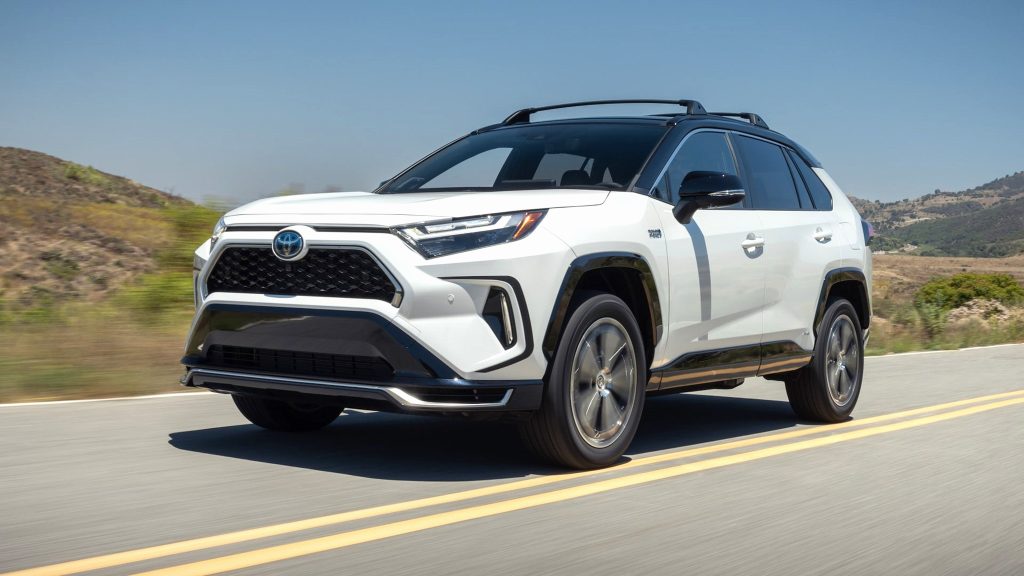
Still, IIHS cautions that individual model rates can be less statistically reliable than larger vehicle-class figures. A five-death rate should therefore be viewed as evidence from a defined population, not a guarantee of what happens in every crash.
10. Volkswagen Atlas 2WD
The Volkswagen Atlas 2WD also recorded 5 driver deaths per million registered vehicle years, matching the RAV4 Prime’s rate in the latest IIHS data. The calculation uses 2023 models and equivalent earlier vehicles and covers fatal crashes occurring between 2021 and 2024.
The Atlas is particularly interesting because it is a midsize three-row SUV rather than a luxury model. Its relatively large cabin and substantial exterior dimensions give it a very different safety profile from the small SUVs and cars that appear higher in the driver-death-rate rankings.
IIHS recorded an average driver death rate of 25 per million registered vehicle years for midsize SUVs, so the Atlas 2WD’s rate was substantially below that class figure. The Institute also stresses that vehicle size, power, crashworthiness, and crash-avoidance technology all contribute to differences between models.
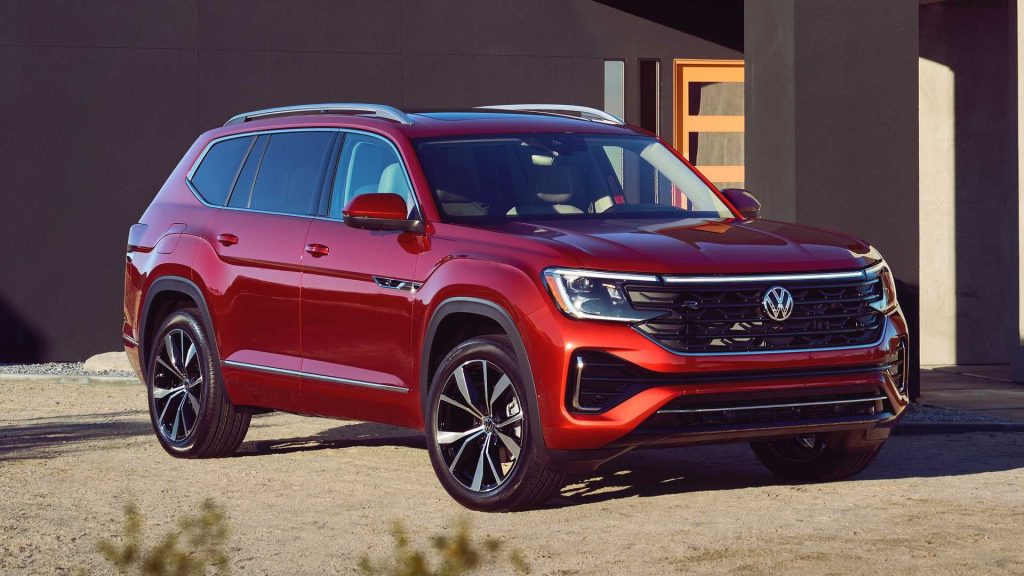
For the 2023 model year, the Atlas used a 3.6-liter V6 producing 276 horsepower and 266 lb-ft of torque. Its three-row configuration made it a family-oriented alternative to smaller SUVs, while its substantial dimensions provided considerable occupant space.
The five-death rate should not be treated as a prediction for a particular driver. It simply shows how the qualifying Atlas vehicles performed within the fatal-crash dataset.
11. Toyota Highlander 4WD
The Toyota Highlander 4WD recorded 7 driver deaths per million registered vehicle years in the latest IIHS study, placing it among the vehicles with the lowest measured driver-death rates.
The calculation covers 2023 models and equivalent earlier vehicles, using fatal crashes from 2021 through 2024. Importantly, the seven-per-million figure is a standardized rate, not a literal count of seven crashes or seven deaths.
The Highlander’s result is particularly notable because it comes from the midsize SUV category, which recorded an average driver death rate of 25 deaths per million registered vehicle years in the same study. The Highlander’s rate was therefore substantially below its class average.
Toyota’s Highlander also combines three-row practicality with a substantial body structure and available all-wheel drive. The 2023 Highlander used a 2.4-liter turbocharged four-cylinder engine in its standard configuration, producing 265 horsepower and 310 lb-ft of torque.
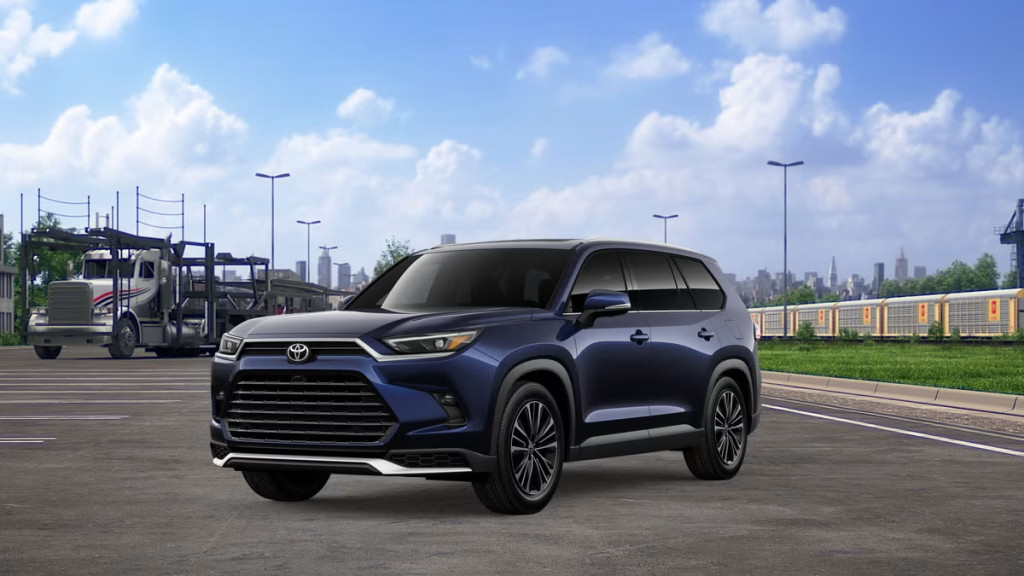
IIHS cautions that individual model rates are less statistically reliable than large class-level figures, and the result does not guarantee protection in every crash. It simply records the experience of the qualifying Highlander vehicles within the study period.
12. Chevrolet Suburban 1500 4WD
The Chevrolet Suburban 1500 4WD recorded 6 driver deaths per million registered vehicle years, putting this enormous three-row SUV among the lowest-rate vehicles in the IIHS study. The figure applies to 2023 models and equivalent earlier models involved in fatal crashes from 2021 through 2024.
The Suburban’s result fits an important pattern in the data. IIHS found a driver death rate of 20 per million registered vehicle years for very large SUVs, substantially below the 79 recorded for small cars. The Institute says vehicle size and weight matter but also points to crashworthiness, crash avoidance technology, and driver behavior as important factors.
The 2023 Suburban was exceptionally large, measuring 225.7 inches long and 81.1 inches wide. Its standard 5.3-liter V8 produced 355 horsepower and 383 lb-ft of torque, while available 4WD gave buyers additional capability.
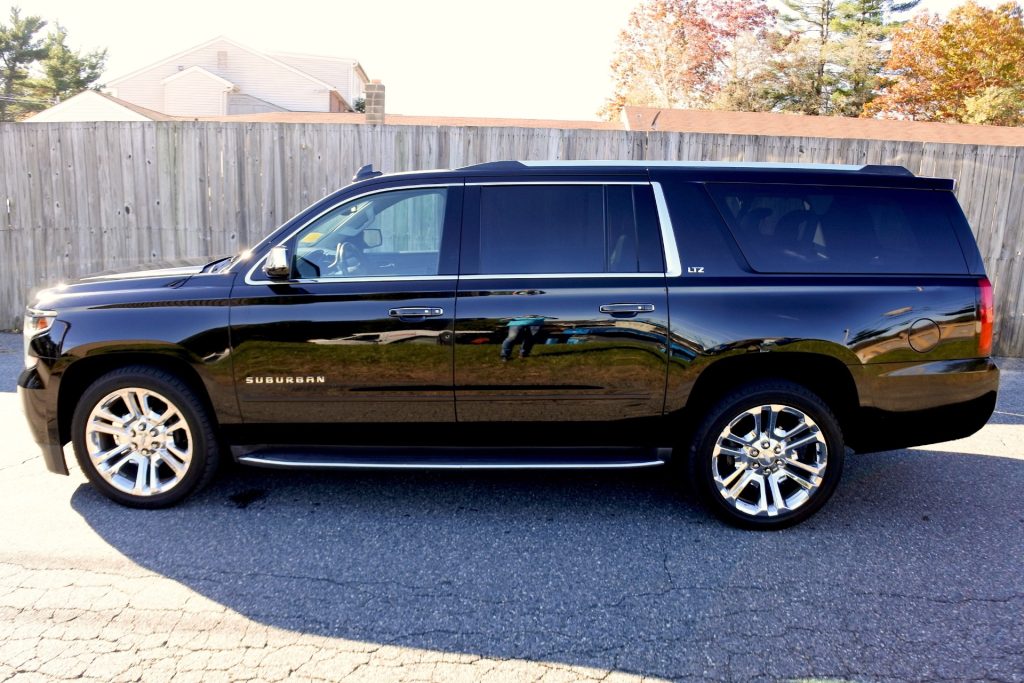
That size does not make the Suburban immune to crashes. Instead, the 6-per-million figure represents what happened within the defined study population.
IIHS requires sufficient registration exposure or fatal crashes before publishing an individual model rate, helping prevent extremely small samples from producing misleading comparisons.
13. Ford Escape Hybrid 4WD
The Ford Escape Hybrid 4WD recorded 6 driver deaths per million registered vehicle years in the latest IIHS study, putting it alongside the BMW X5 2WD and Chevrolet Suburban 1500 4WD among the lowest-rate vehicles. The figure covers 2023 models and equivalent earlier vehicles, with fatal crashes occurring between 2021 and 2024.
The result is especially noteworthy because the Escape is a compact SUV rather than a large luxury vehicle. IIHS recorded an average driver death rate of 28 per million registered vehicle years for small SUVs, making the Escape Hybrid’s 6-per-million result substantially lower than its class figure.
The hybrid version also combines a gasoline engine with electric assistance, producing 210 horsepower in the 2023 model year. Its four-wheel-drive system uses an electric motor to drive the rear wheels rather than a conventional mechanical driveshaft, giving the Escape a different drivetrain layout from many gasoline-powered SUVs.
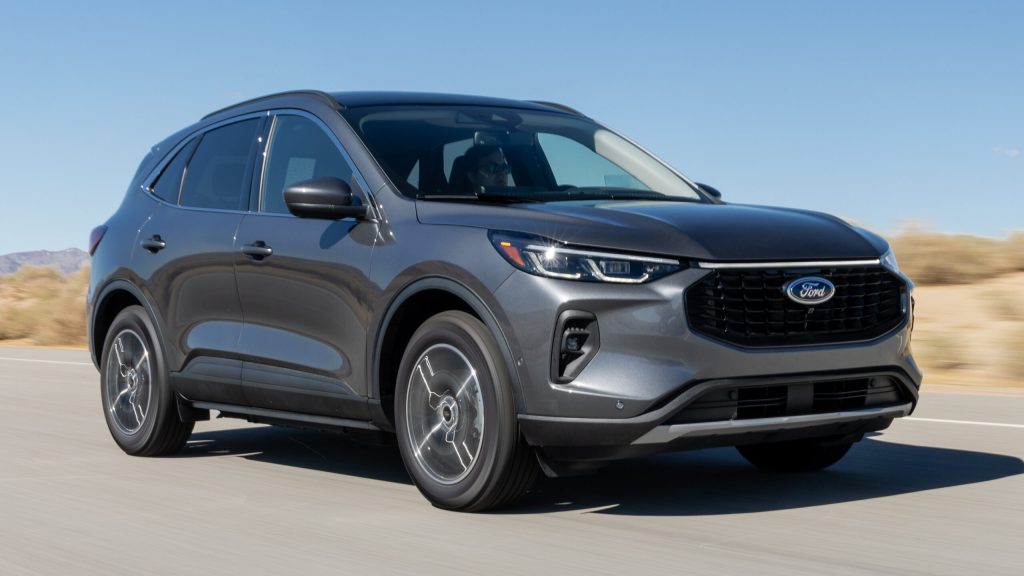
There is an important statistical limitation. IIHS requires at least 100,000 registered vehicle years or 20 deaths for an individual model to receive a published rate. The figures are also adjusted for driver age and gender.
14. Ford F-150 SuperCrew 2WD
The Ford F-150 SuperCrew 2WD recorded 7 driver deaths per million registered vehicle years in the IIHS study, making it one of the lowest-rate pickup configurations in the dataset. The figure represents 2023 models and equivalent earlier designs involved in fatal crashes from 2021 through 2024.
That number is particularly interesting because the F-150 is one of America’s most widely used vehicles, covering everything from family transportation to commercial work. IIHS reported a 26-per-million driver death rate for large pickups as a vehicle class, so the SuperCrew 2WD’s 7-per-million result was considerably lower than the category average.
The SuperCrew configuration provides four full-size doors and a large passenger compartment, while the F-150’s construction is designed around both occupant protection and truck utility. Depending on the 2023 configuration, buyers could choose engines ranging from a 2.7-liter EcoBoost V6 to a 5.0-liter V8 or 3.5-liter EcoBoost.
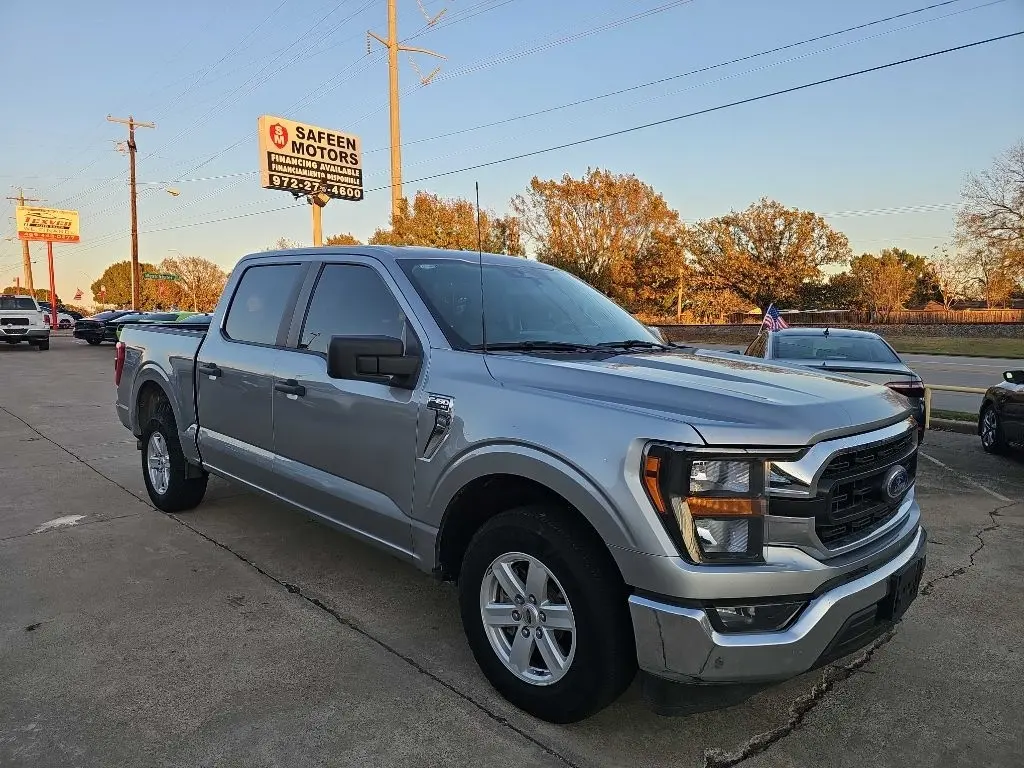
The statistic does not mean every F-150 crash is low-risk. Speed, impact direction, vehicle compatibility, and occupant behavior can dramatically change an individual crash outcome. The 7-per-million figure simply describes what IIHS observed in its defined U.S. fatal-crash dataset.
15. Hyundai Tucson Hybrid 4WD
The Hyundai Tucson Hybrid 4WD recorded 7 driver deaths per million registered vehicle years in the latest IIHS study. The figure covers 2023 models and equivalent earlier vehicles involved in fatal crashes between 2021 and 2024. That places the Tucson Hybrid among the lowest-rate vehicles in the entire study, even though it belongs to the small SUV category.
The comparison with its class is revealing. IIHS calculated an average driver death rate of 28 per million registered vehicle years for small SUVs, meaning the Tucson Hybrid’s rate was substantially below that figure. The Institute’s methodology uses NHTSA fatal-crash records and vehicle-registration data, with rates adjusted for driver age and gender.
The 2023 Tucson Hybrid combined a 1.6-liter turbocharged engine with electric assistance and standard all-wheel drive. Its powertrain produced 226 horsepower and 258 lb-ft of combined torque, while the SUV measured 182.3 inches long.
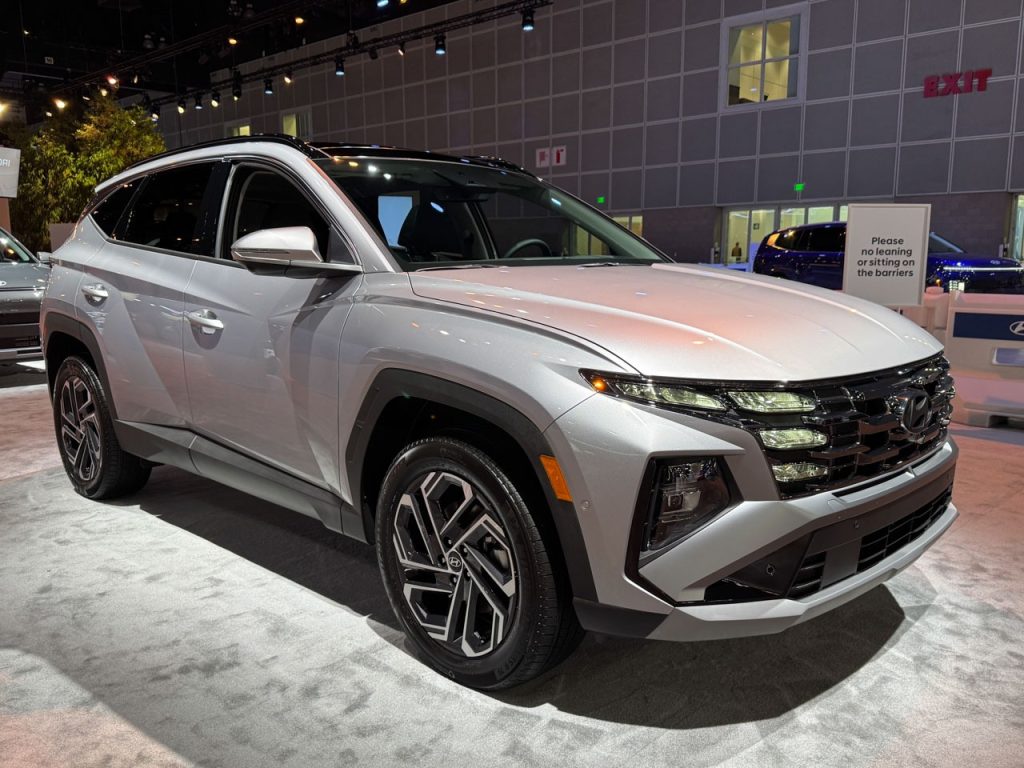
The seven-death figure should not be interpreted as a guarantee of safety in every collision. It is a statistical measurement from a defined U.S. population and study period.
16. Porsche Cayenne 4WD
The Porsche Cayenne 4WD recorded 7 driver deaths per million registered vehicle years, placing it among the lowest-rate vehicles in the latest IIHS study. The statistic covers 2023 models and equivalent earlier vehicles, with fatal crashes occurring from 2021 through 2024.
Its result is notable because the Cayenne belongs to the large luxury SUV category. IIHS found that this class had an average driver death rate of just 10 per million registered vehicle years, already well below the 37-per-million average across all vehicles in the study.
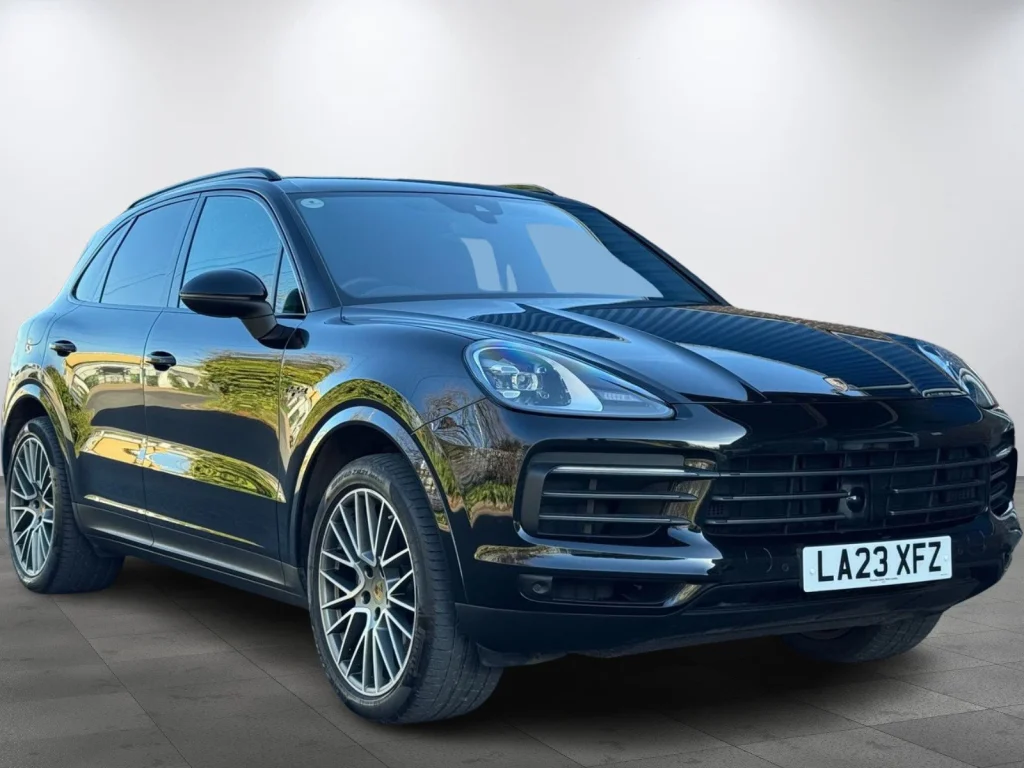
The 2023 Cayenne used a 3.0-liter turbocharged V6 in its standard configuration, producing 335 horsepower and 332 lb-ft of torque. Its substantial structure, four-wheel-drive system, and advanced safety equipment give it the characteristics of a modern luxury SUV designed for both performance and occupant protection.
As with every figure in this study, seven deaths per million is a rate rather than a literal count of seven fatalities. IIHS uses registered vehicle years to account for differences in how many vehicles are on American roads and how long they are exposed to risk.
