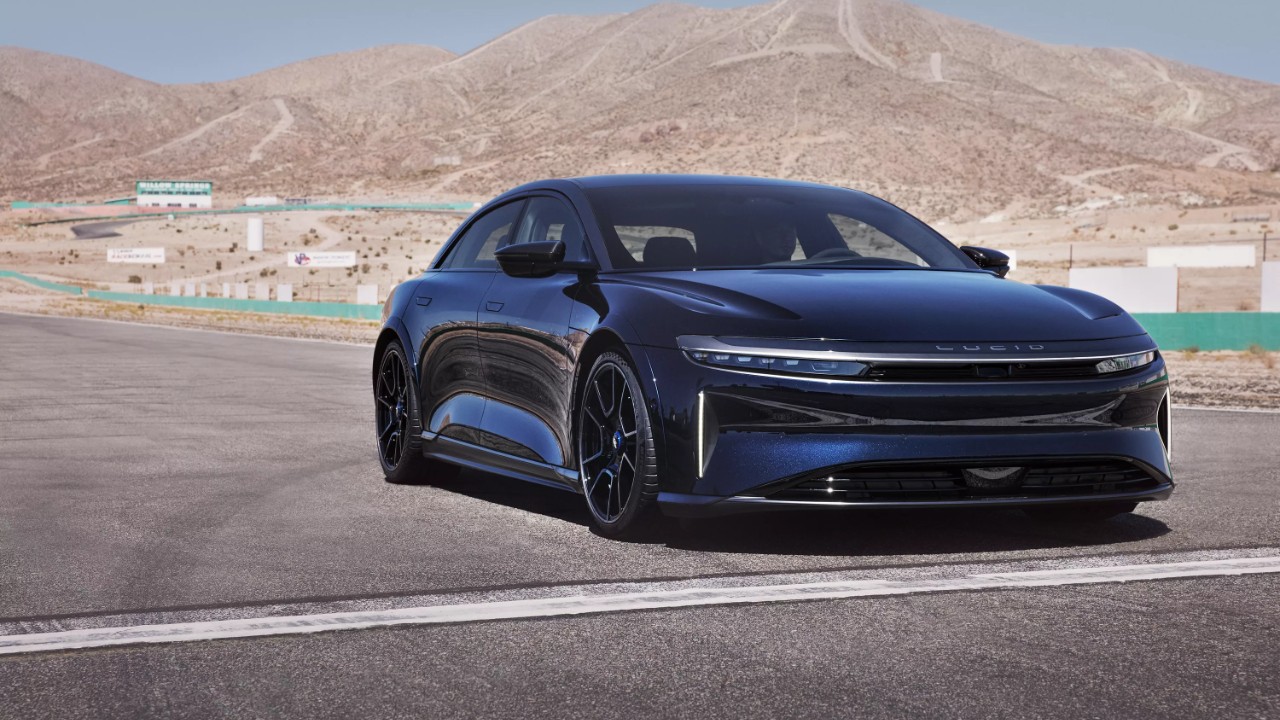
Lucid is expanding its ambitions in autonomous mobility through a new partnership with European shared-mobility company Bolt that could eventually put at least 25,000 fully autonomous Lucid vehicles into service across major European cities.
The companies announced the partnership on September 17, saying the vehicles will be based on Lucid’s upcoming Midsize platform and developed for SAE Level 4 autonomous operation. Bolt ultimately wants to build its autonomous fleet to 100,000 vehicles by 2035, making the Lucid agreement an important part of that longer-term target.
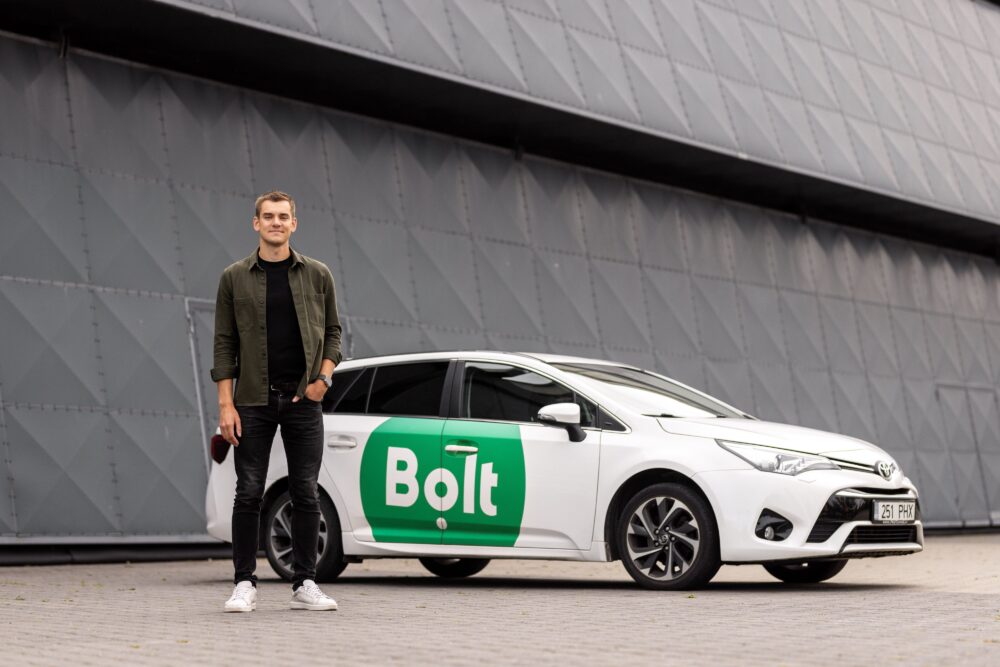
The partnership combines Lucid’s electric-vehicle engineering with Bolt’s existing mobility network and experience operating transportation services across Europe. Bolt says it operates in more than 850 cities across more than 50 countries, giving it an established platform through which autonomous vehicles could eventually be deployed.
However, the 25,000-vehicle figure is a target rather than an immediate order for vehicles already ready to enter service. The companies have not announced a specific launch schedule for the European robotaxi fleet, and the vehicles themselves are still being developed.
The agreement also comes as Lucid attempts to expand beyond its current luxury EV lineup and use its technology for commercial mobility applications.
Lucid’s Midsize EV Platform Becomes the Foundation
The planned robotaxis will use Lucid’s upcoming Midsize platform, which the company is developing as a smaller and more affordable architecture than its existing vehicles.
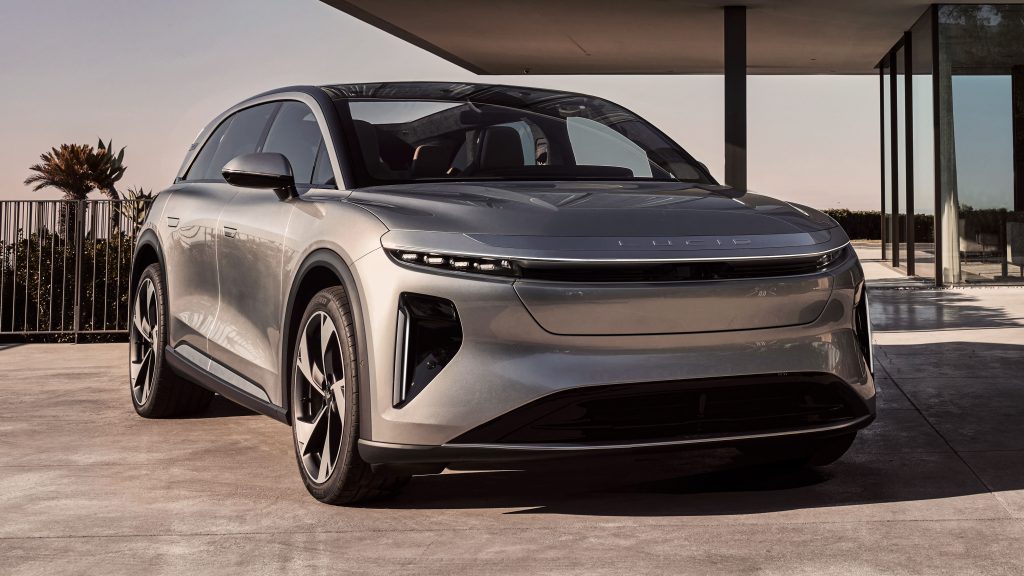
Lucid previously said the Midsize platform would underpin three models, including the Lucid Cosmos and Lucid Earth, while a purpose-built robotaxi concept called Lunar was also introduced as part of the company’s autonomous-mobility strategy.
For the Bolt program, Lucid and Bolt intend to work together from the early stages of development rather than simply adapting an existing passenger vehicle after production.
The resulting vehicle is planned as an autonomy-ready platform designed specifically for Level 4 operation. At Level 4, an automated driving system can perform the entire driving task within defined operating conditions and areas without requiring a human driver to continuously monitor the road.
That distinction is important because the European fleet will need to operate under local regulatory requirements that vary between countries and cities.
Bolt’s autonomous-driving division will participate in defining the vehicle’s requirements, including software, safety systems, and passenger experience. It will also develop the infrastructure and operating systems needed to manage the fleet.
Lucid, meanwhile, will provide the vehicle architecture and its electric-vehicle and software expertise. The company has recently created Lucid Technologies, bringing together its artificial intelligence, advanced driver assistance, autonomous driving, and digital technology operations.
The two companies also plan to work with technology partners, European regulators, and policymakers before the vehicles enter commercial operation.
This is significant because having a technically capable autonomous vehicle does not automatically mean it can be deployed commercially. Each market needs appropriate regulatory approval, operating permissions, and infrastructure.
Bolt CEO Markus Villig has emphasized that European autonomous mobility needs to be developed around European roads, regulations, and operating conditions rather than simply importing an autonomous-driving system designed for another market.
NVIDIA Hyperion Will Provide the Autonomous Technology Base
The Lucid-Bolt vehicles are expected to use NVIDIA Hyperion, a production-oriented autonomous-vehicle reference architecture that combines computing hardware and a standardized sensor configuration.
Rather than developing every component of an autonomous driving system independently, Hyperion provides a technology foundation that automakers and mobility companies can use to develop Level 4 systems.
Lucid has already established a relationship with NVIDIA around autonomous driving. In 2025, Lucid announced plans to integrate NVIDIA DRIVE AGX Thor and NVIDIA’s autonomous-driving technology into future midsize vehicles as part of its broader Level 4 roadmap. The Bolt partnership takes that technology direction into commercial shared mobility.
The planned robotaxis will need substantially more than cameras and computing power. A commercial Level 4 fleet requires redundant systems, continuous monitoring, fleet management, remote assistance capabilities, and procedures for situations in which the autonomous system reaches the limits of its operating conditions.
Bolt says its autonomous-driving unit will handle fleet infrastructure and operating systems while establishing partnerships with cities.
The company also intends to own and operate the fleet, rather than simply providing software or acting as a marketplace for independently owned autonomous vehicles.
That could give Bolt greater control over maintenance, charging, software updates, and deployment locations.
The company already has a large mobility platform. Bolt says more than 200 million customers use its services and more than 4.5 million drivers and couriers use its platform globally.
The autonomous fleet would therefore be added to an existing transportation ecosystem rather than launching as a completely separate service.
Europe Becomes Another Major Robotaxi Opportunity
The Lucid-Bolt agreement comes as autonomous ride-hailing companies are moving from limited pilot programs toward larger commercial deployments.
Waymo has expanded its commercial robotaxi operations across multiple U.S. cities, while other companies are developing autonomous fleets in Europe and China. Lucid itself is also pursuing a separate robotaxi partnership with Uber.
In April, Lucid and Uber expanded their agreement to at least 35,000 Lucid vehicles for Uber’s future global robotaxi service. That arrangement includes Lucid Gravity vehicles and future midsize models.
The Bolt agreement therefore gives Lucid another major potential customer for its autonomous-ready vehicles, this time focused specifically on Europe.
For Lucid, fleet sales can also provide a different business model from conventional luxury-vehicle sales. Instead of depending entirely on individual consumers buying expensive EVs, large mobility operators can potentially purchase vehicles in substantial volumes and use them for repeated commercial operations.
That could be particularly relevant to the Midsize platform because Lucid is developing it with manufacturing efficiency and lower costs in mind.
There are still significant hurdles before the 25,000-vehicle target becomes a real operating fleet.
European countries do not have a single uniform framework governing fully autonomous passenger services. Regulations, approval processes, and requirements for autonomous vehicles can differ between jurisdictions.
The companies will therefore need to work with national governments, transportation authorities, and city administrations before deploying vehicles commercially.
There is also the practical challenge of building enough charging and maintenance infrastructure to support thousands of electric robotaxis operating many hours per day.
The companies have not disclosed the total investment required for the program, the exact production schedule, or the first European cities that will receive the vehicles.
Those details will determine how quickly the partnership can move from development to commercial operation.
For now, the agreement establishes a large potential scale. Bolt aims for at least 25,000 autonomous Lucid vehicles across Europe, contributing toward its longer-term goal of 100,000 autonomous vehicles on its platform by 2035.
The first vehicles will be based on Lucid’s upcoming Midsize architecture and are expected to use NVIDIA Hyperion technology for Level 4 autonomous driving.
The project also gives Lucid another opportunity to use its electric-vehicle technology outside the traditional consumer-car market. Alongside its existing Uber robotaxi partnership, the Bolt deal could make autonomous fleets a much larger part of Lucid’s future business.
For Bolt, the partnership provides a path toward introducing autonomous ride-hailing while retaining control over the vehicles, operating infrastructure, and customer experience.
The 25,000-vehicle figure should therefore be viewed as a deployment target rather than a confirmed near-term fleet. The companies still need to complete vehicle development, validate the autonomous system, and obtain the necessary regulatory approvals across Europe.
If those steps progress as planned, the partnership could eventually become one of Europe’s larger planned autonomous mobility programs, combining Lucid’s midsize EV platform, NVIDIA’s autonomous-driving technology, and Bolt’s established European transportation network.