

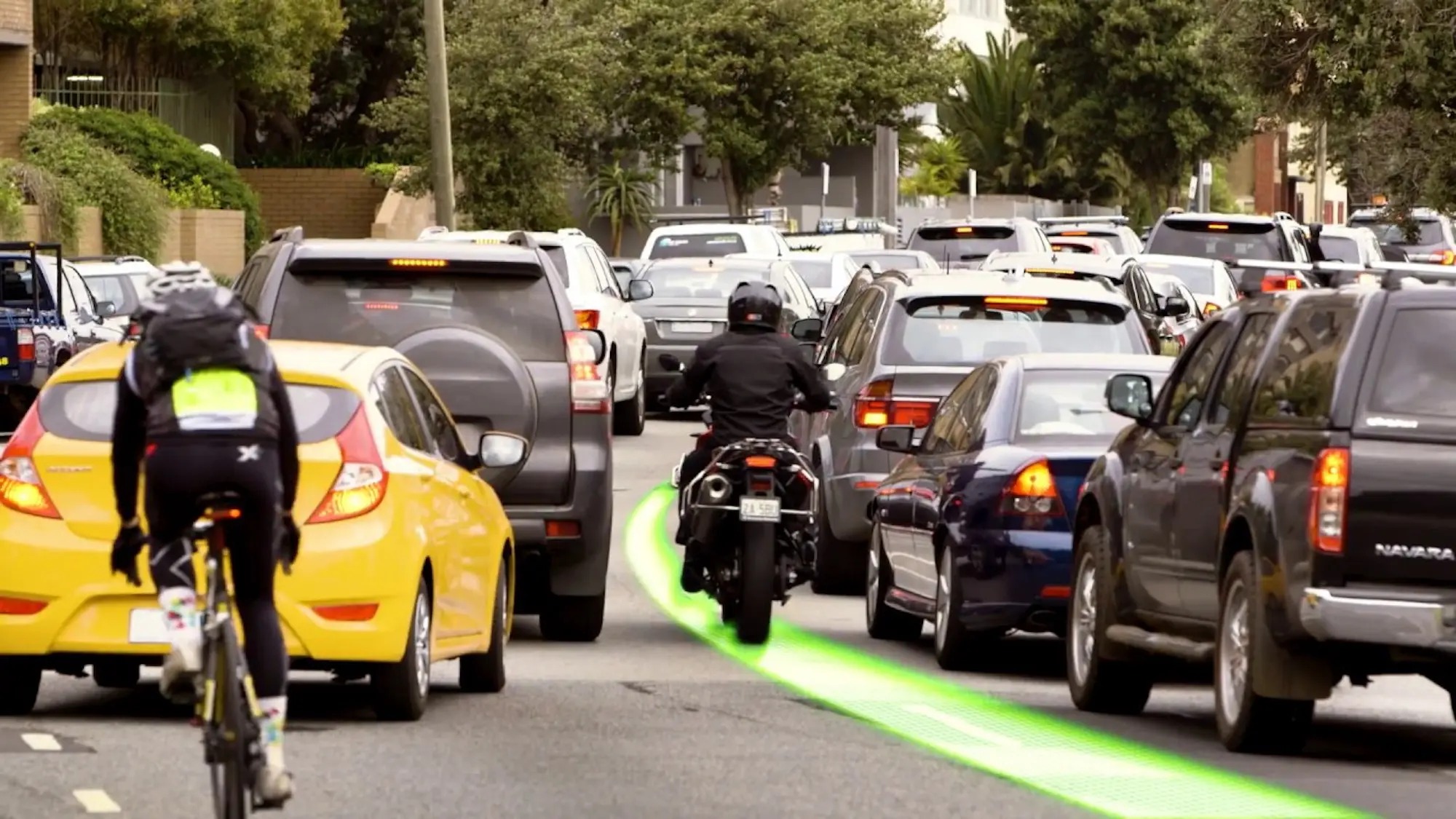
A motorcycle moving between stopped cars at a red light may look unusual to some drivers, but in Arizona, that maneuver can be legal when specific rules are followed. The important date is September 12, 2026. Arizona did not make lane filtering illegal. Instead, the state changed the consequences for riders who cross the line into prohibited motorcycle lane movements.
Under the new law, certain violations can be treated as reckless driving, turning what might once have been handled as a civil traffic matter into a criminal offense. For riders, the difference between filtering and splitting is now especially important. For drivers, understanding the rule can prevent confusion when a motorcycle moves between lanes at a stop.
Arizona’s New Lane Filtering Penalty
The legal change comes from House Bill 2941, approved during Arizona’s 2026 legislative session. Governor Katie Hobbs signed the measure on June 22, 2026, and it became effective September 12, the state’s general effective date for laws from that session.
The measure amended A.R.S. § 28-693 by stating that a person who operates a motorcycle in violation of A.R.S. § 28-903(B) or (C) is guilty of reckless driving. A conviction for reckless driving is a Class 2 misdemeanor.
The conduct covered by those subsections includes overtaking and passing a vehicle in the same lane and operating a motorcycle between lanes of traffic or between adjacent rows of vehicles when the statutory exception does not apply.
The change can also affect what happens after conviction. A judge may require surrender of a driver’s license and may order a suspension of driving privileges for up to 90 days.
A qualifying repeat conviction within 24 months can become a Class 1 misdemeanor, with at least 20 days in jail before eligibility for certain forms of release and a one-year license suspension.
For riders, the wording matters because the new law does not erase Arizona’s existing lane-filtering permission. It changes how certain illegal motorcycle movements are classified.
The Arizona Legislature’s fact sheet for HB 2941 specifically says the measure applies to motorcycle operators who overtake and pass in the same lane or operate between lanes, except when those actions are authorized by law.
That distinction keeps lawful filtering separate from conduct that can trigger the new penalty.
How Arizona’s Lane Filtering Rule Works
Arizona still permits lane filtering, but only inside a narrow set of conditions. A two-wheeled motorcycle may pass a vehicle that is stopped in the same direction and may move between lanes when the movement can be made safely.
The street must have at least two adjacent lanes traveling in the same direction, its posted speed limit must be no higher than 45 mph, and the motorcycle must travel at no more than 15 mph.
Think about a red traffic signal with two lanes of cars sitting still. A motorcycle can move slowly between those stopped vehicles if every statutory condition is satisfied.
That is lane filtering. It is not a blanket permission to ride between cars whenever traffic is crowded. The road, traffic, motorcycle speed, direction of travel, and safety requirements all matter. If even one required condition is missing, the rider cannot rely on the filtering exception.
Another important detail is that Arizona’s exception specifically applies to two-wheeled motorcycles. The law does not grant every type of motorcycle or motorized vehicle the right to travel between lanes.
The rider also has to move safely. So even when the posted speed limit is 45 mph or less and surrounding vehicles are stopped, the maneuver still has to satisfy the safety requirement written into the statute.
Why Lane Splitting Remains Illegal
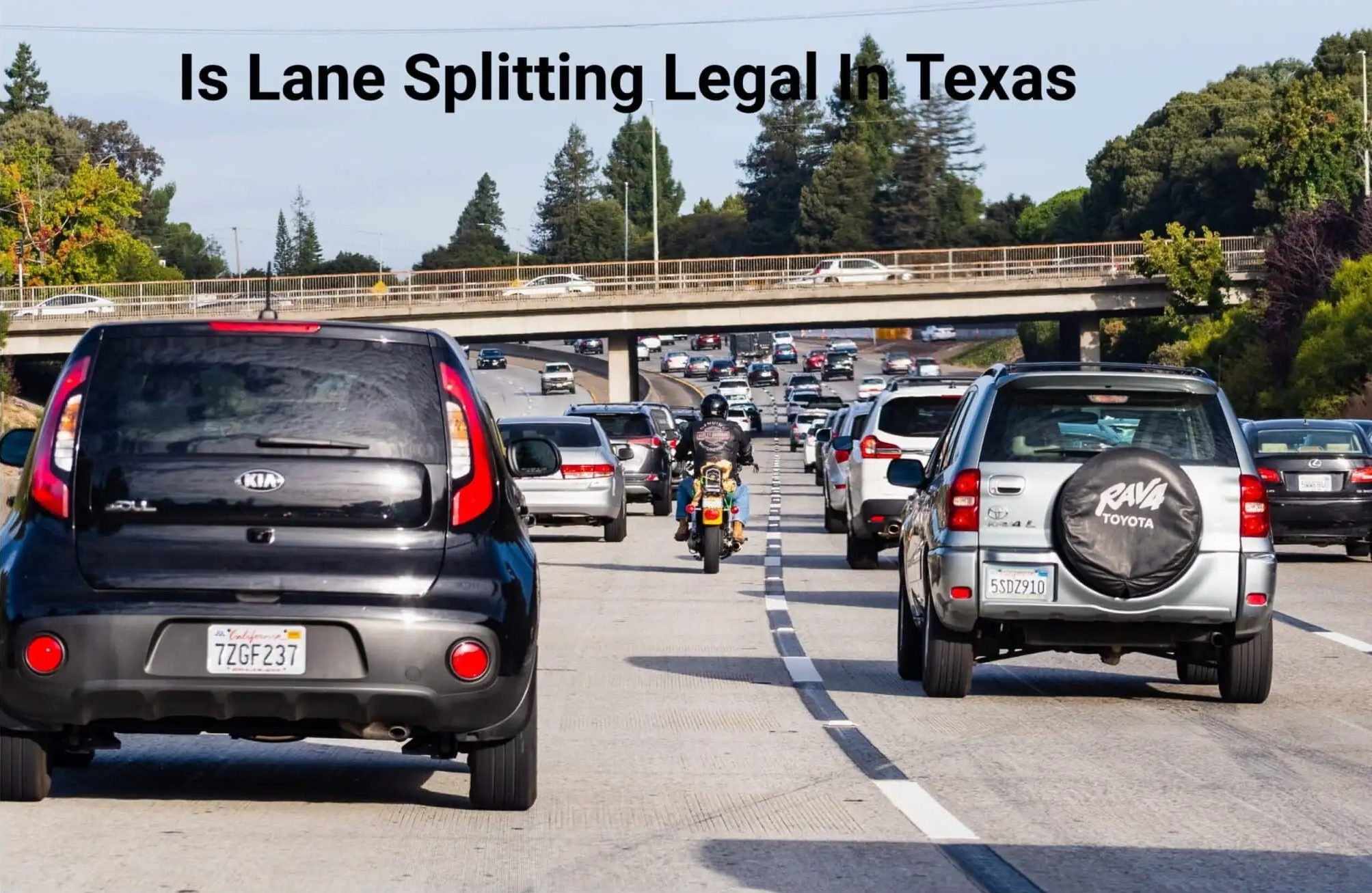
Lane filtering and lane splitting are often treated as interchangeable terms, but Arizona law draws a practical line between them. Lane filtering generally describes a motorcycle moving between stopped vehicles, often at a traffic signal. Lane splitting refers to riding between lanes while surrounding traffic is moving.
Arizona permits filtering under specified conditions, but the exception does not authorize travel between moving lanes of traffic. Signals AZ has also highlighted this distinction in its recent notice about the law.
Consider a rider approaching a red light. Cars in both lanes are stopped, so the rider filters through at 10 mph while following the other requirements. That movement can be lawful.
Then the light changes, the cars begin moving, and the rider continues between the lanes to get ahead. The situation has changed. The filtering exception no longer covers the movement, and an act prohibited by A.R.S. § 28-903(B) or (C) can support a reckless-driving charge under the amended law.
The difference is easy to overlook in heavy traffic. A rider might see vehicles moving only a few feet at a time and assume they are effectively stopped. Arizona’s statute, however, specifically describes the filtering exception around stopped vehicles.
Riders should therefore pay attention to what traffic is actually doing instead of relying only on the appearance of congestion. A slow-moving line of vehicles is not automatically the same thing as a stopped line.
Where Lane Filtering Is Legal
Arizona is one of a small group of states that allow some form of motorcycle lane filtering. A 2026 state-by-state review identifies Utah, Arizona, Montana, Colorado, and Minnesota as states where filtering is legal under individual state rules.
Their requirements differ. Montana, for example, permits filtering when surrounding traffic is moving at 10 mph or less and allows motorcycles to travel up to 20 mph. Minnesota and Colorado use different statutory conditions.
California uses a different approach by allowing full lane splitting between moving traffic under state law, subject to applicable rules and safety guidance. That permission should not be treated as an Arizona rule.
A motorcycle maneuver that is legal in California may still be prohibited in Arizona. The same distinction applies when comparing Arizona with Utah, Montana, Colorado, or Minnesota, since each state sets its own rules, speed limits, and traffic requirements.
Texas, Washington, Connecticut, and Virginia have seen proposals concerning lane filtering, but proposals are not the same as enacted law. A legislative proposal can attract attention without creating a legal right for riders to filter.
Anyone planning to ride in another state should therefore check the law actually in effect there rather than relying on a bill, news report, or discussion of a possible change.

What Riders Need to Know Now
For Arizona riders, the rule is straightforward. Lane filtering is permitted only when all legal requirements are met. The motorcycle must travel at 15 mph or less, the road must have a posted speed limit of 45 mph or below, and the traffic being passed must be stopped and traveling in the same direction. Riders must also complete the maneuver safely.
If traffic is moving, stay in the lane instead of treating the filtering exception as permission to split. The amended law does not prohibit lawful filtering, but it raises the stakes for conduct outside the statutory exception.
Since September 12, 2026, an illegal motorcycle lane movement covered by A.R.S. § 28-903(B) or (C) can support a reckless-driving charge, classified as a Class 2 misdemeanor.
For anyone sharing Arizona roads, knowing the difference can make traffic interactions easier to understand. A motorcycle moving between stopped vehicles is not automatically breaking the law.
At the same time, a motorcycle traveling between moving lanes is not protected simply because Arizona permits filtering. The law now draws a sharper line between those two situations, and riders have more reason to know exactly where that line sits.
