
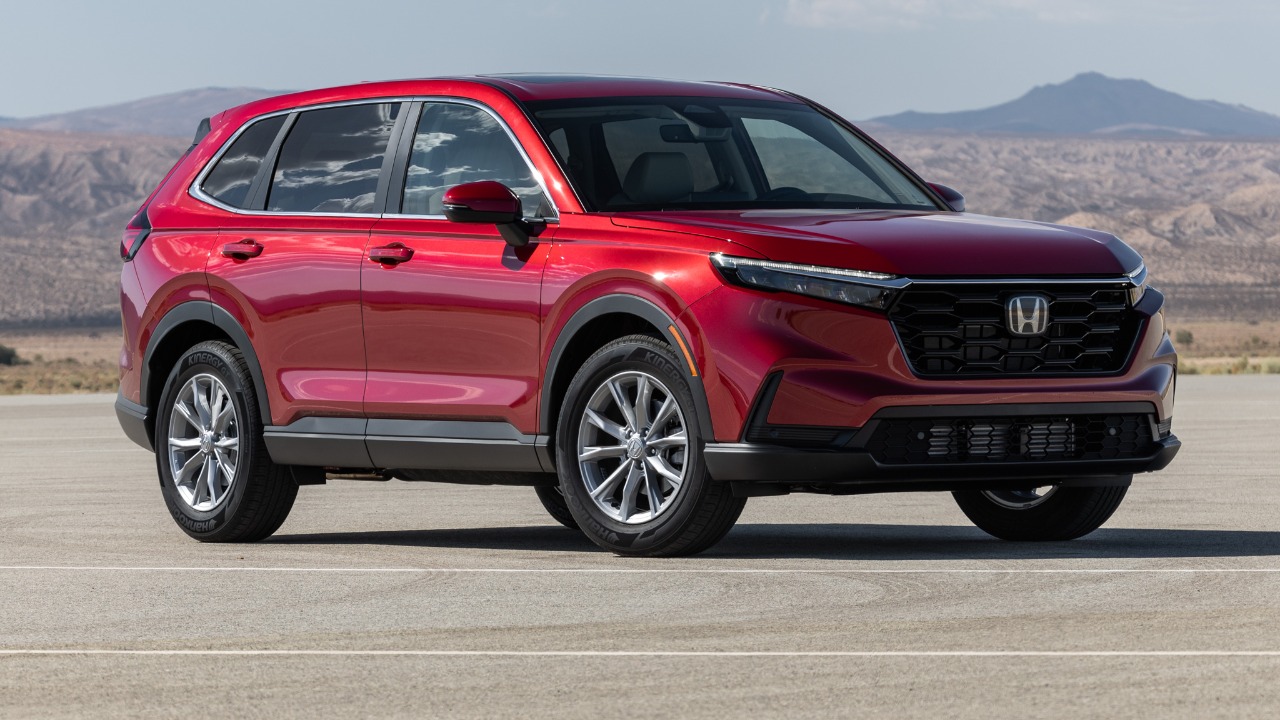
Honda is accelerating the arrival of its next-generation hybrid strategy in North America, bringing forward production of the next-generation CR-V Hybrid to early 2027.
The change comes as the automaker adjusts its product and manufacturing plans around stronger demand for hybrid vehicles in the United States and a more uncertain outlook for fully electric vehicles.
According to MarkLines, Honda is now preparing to build the next-generation CR-V Hybrid at three North American facilities beginning early next year.
Production is scheduled to start at Honda’s Alliston plant in Canada in February 2027, followed by the Indiana Auto Plant and East Liberty Auto Plant in Ohio in March. MarkLines reports that this timing could allow the new vehicles to reach U.S. dealerships before the summer selling season.
The accelerated schedule is part of a broader change in Honda’s electrification strategy. Rather than relying as heavily on battery-electric vehicles, Honda is directing more development and manufacturing resources toward hybrids, particularly in North America, where hybrid demand has strengthened considerably.
Honda Shifts Resources Toward Hybrids
Honda’s decision to move up CR-V Hybrid production is closely connected to a wider restructuring of its powertrain plans.
In May, Honda said it would reallocate development and production resources toward hybrid models because of strong customer demand.
The company said next-generation hybrid models would begin launching in 2027 and that it planned to introduce 15 next-generation hybrid models globally by the end of the fiscal year ending March 31, 2030, with North America serving as a primary region for those vehicles.
Honda also announced that excess capacity at its Ohio auto plants would be redirected toward internal-combustion and hybrid vehicles. The automaker said it intends to make all of its North American auto plants capable of producing hybrid models, giving the company greater flexibility to adjust production according to customer demand.
That manufacturing flexibility is becoming increasingly important. The U.S. market has experienced a noticeable increase in interest in hybrids as consumers look for better fuel economy without moving completely to battery-electric vehicles.
Nissan is bringing a new type of hybrid powertrain to one of its most important U.S. models. The automaker has introduced the 2027 Nissan Rogue Hybrid with its third-generation e-POWER system. This marks the first time Nissan will offer an e-POWER vehicle to American buyers.
Reuters reported in September that hybrids accounted for 19% of U.S. vehicle retail sales in August, with Honda and Toyota among the manufacturers benefiting from the increase.
Reuters also reported that Honda has been among the automakers gaining from the growing demand for hybrid vehicles, while General Motors has had a more limited hybrid presence in its lineup.
For Honda, the CR-V is particularly important because it is one of the company’s central products in the American market. Moving its next-generation hybrid production forward allows Honda to put newer hybrid technology into a high-volume vehicle category at a time when customers are showing stronger interest in fuel-efficient SUVs.
What the Next-Generation CR-V Hybrid Means
The next-generation CR-V Hybrid is expected to become one of the first major products representing Honda’s new hybrid direction in North America.
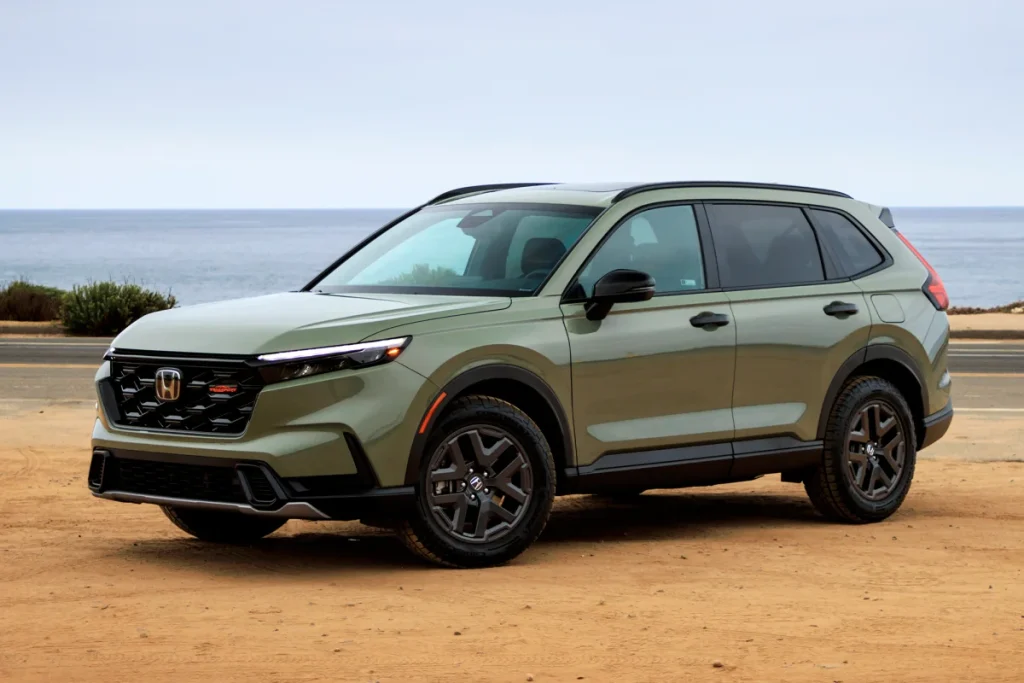
Honda has not yet released every production specification for the upcoming generation, so details such as final U.S. horsepower, fuel-economy ratings, pricing, and trim availability should not be treated as confirmed until the company makes an official product announcement.
What Honda has confirmed is that its next-generation hybrid system will use an all-new hybrid system and platform. The company says the technology is being developed to improve efficiency by expanding the engine’s high-efficiency operating range and increasing the drive efficiency of the hybrid system.
That represents an evolution from the current CR-V Hybrid rather than simply a minor update.
For reference, the current 2027 CR-V already uses Honda’s two-motor hybrid system in Sport Hybrid, TrailSport Hybrid, Sport-L Hybrid, and Sport Touring Hybrid trims. Honda lists the current system at 204 horsepower and 247 pound-feet of peak torque, while fuel economy varies by configuration.
The Sport Touring Hybrid, for example, is rated at 40 mpg city and 34 mpg highway, while Honda lists 43 city and 36 highway for other hybrid configurations.
The next generation is expected to build on this architecture while introducing Honda’s new hybrid system and vehicle platform.
The timing is also important because Honda is no longer treating hybrids simply as a transitional technology. The company’s May business briefing explicitly identified hybrids as a major area for resource allocation and product expansion.
Honda said its next-generation hybrid models would be launched primarily in priority markets such as North America, Japan, and India.
That makes the CR-V more than another new model launch. It is part of Honda’s attempt to align its product portfolio with the way the U.S. market is developing.
Production Across Canada and the U.S.
The decision to build the next-generation CR-V Hybrid across multiple North American facilities also allows Honda to spread production and respond more quickly to regional demand.
According to MarkLines, production at Honda’s Alliston, Ontario, plant is scheduled to begin in February 2027, while production at Honda’s Indiana and East Liberty plants is scheduled to start in March. MarkLines says the accelerated schedule could result in vehicles reaching U.S. dealers before summer.
The manufacturing footprint is significant because Honda has been investing in its North American operations for years, while the latest strategy puts more emphasis on using those facilities for hybrid production.
Honda’s decision comes after a period in which the company had invested heavily in electric vehicles. Earlier in 2026, Honda revised its EV plans as market conditions changed, while the company announced that it would put greater resources into hybrids.
Its current business strategy is therefore not a rejection of electrification but a shift in the balance between different types of electrified powertrains.
The change also reflects the broader U.S. auto industry’s response to EV demand. Reuters reported this month that several automakers have delayed, canceled, or converted EV manufacturing projects as demand has failed to develop as quickly as manufacturers had anticipated.
Honda is taking a different approach by increasing its ability to build hybrids at a time when customers are demonstrating strong interest in them.
The CR-V is well positioned for that strategy because compact SUVs remain a major part of the U.S. market. Customers buying vehicles in this category frequently prioritize fuel economy, practicality, cargo space, and long-distance usability.
A hybrid powertrain can provide improved fuel economy while preserving the conventional refueling experience, eliminating one of the barriers some buyers associate with fully electric vehicles.
The accelerated production schedule also places Honda in a stronger position to compete against manufacturers that have expanded their hybrid offerings. Toyota has built a particularly broad hybrid lineup, while other automakers are now adding hybrid versions of popular SUVs as demand grows.
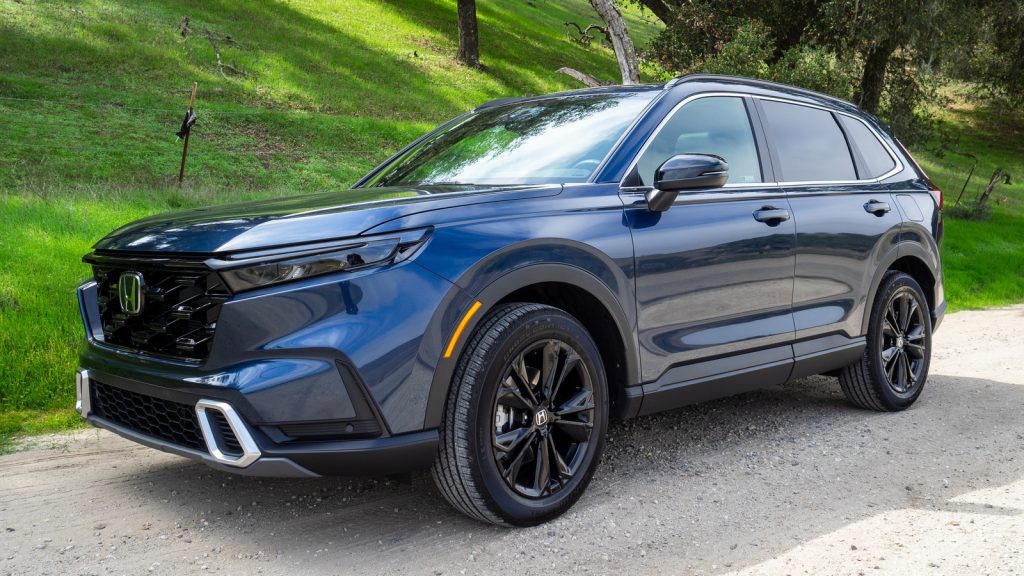
For Honda, getting the next-generation CR-V Hybrid into production earlier could therefore help close the gap between customer demand and available hybrid products.
The company still has several details to reveal before the new CR-V reaches American dealerships, including final specifications, pricing, and the complete model lineup.
MarkLines’ reported production schedule provides an important update on the timeline. The next-generation CR-V Hybrid is now expected to enter North American production in early 2027, moving the program forward from the later timing previously anticipated.
Honda’s broader strategy makes the reason for that acceleration clear. The automaker is preparing to introduce a new generation of hybrid technology while expanding hybrid manufacturing capacity throughout North America.
With U.S. buyers showing strong demand for hybrids, the CR-V will be one of the most important vehicles through which Honda puts that strategy into practice.
