
The benchmark for this list is the 2026 Chevrolet Corvette Stingray 1LT, which starts at $70,000 before destination charges, taxes, title, license, and dealer fees. The cars below are not simply expensive because they are old.
Their values are driven by rarity, factory performance equipment, documented history, and collector demand. Some were produced in tiny numbers, while others carried engines that became legends in their own right.
Using current U.S. collector-car data, these classics can command prices well beyond the entry price of a brand-new Corvette. Here are the first two cars, with their specifications and current market figures.
1. 1969 Chevrolet Camaro ZL1
Few American cars demonstrate the power of rarity quite like the 1969 Chevrolet Camaro ZL1. Chevrolet created the ZL1 around an all-aluminum 427-cubic-inch V8, and the factory rated it at 430 horsepower and 450 lb-ft of torque.
The engine was closely related to Chevrolet’s racing program, making the ZL1 fundamentally different from an ordinary Camaro wearing performance badges. MotorTrend documented the engine at 430 horsepower and 450 lb-ft of torque, along with a four-speed manual transmission and rear-wheel drive.
The production figure is what makes this Camaro especially remarkable. Only 69 ZL1 Camaros were built for the 1969 model year, according to Camaro production records. That tiny number places an original ZL1 in a completely different collector category from more commonly produced performance Camaros.
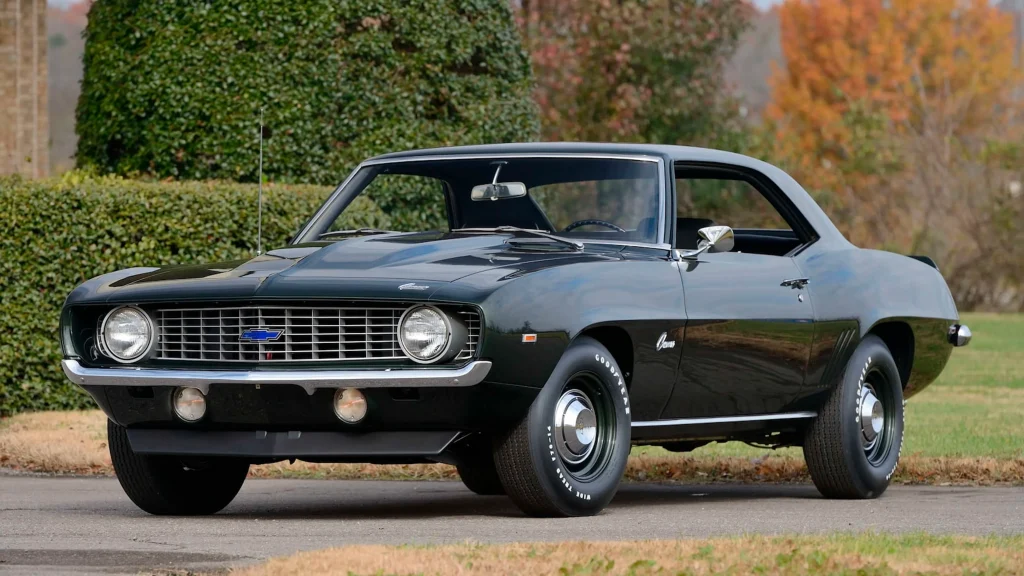
Current Hagerty valuation data makes the price gap with a new Corvette dramatic. Its July 2026 Price Guide places a #3 Good-condition ZL1 between $713,333 and $816,333, depending on the valuation range shown. That is more than ten times the $70,000 starting MSRP of a 2026 Corvette Stingray.
What collectors are buying here is not merely horsepower. Originality, documentation, and the correct aluminum 427 are crucial because replicas and modified cars cannot automatically command genuine ZL1 money. This Camaro represents one of the rarest factory-built performance Chevrolets of the muscle-car era.
2. 1969 Ford Mustang Boss 429
The 1969 Ford Mustang Boss 429 followed a very different path to collector greatness. Ford developed the enormous 429-cubic-inch V8 primarily around NASCAR homologation requirements, then had to fit the engine into the Mustang.
The result was a Mustang with a race-bred engine, extensive front-end modifications, and a very limited production run.
Ford rated the Boss 429 at 375 horsepower and 450 lb-ft of torque. MotorTrend’s historical specifications confirm those figures and list a four-speed manual transmission. The car measured 187.4 inches long and 71.7 inches wide.
The engine’s official rating also tells only part of the story. Period discussions frequently suggested considerably greater output, but those claims should not be presented as factory-certified horsepower. The documented figures remain the 375-horsepower and 450 lb-ft ratings.
Its rarity is reflected directly in today’s market. Hagerty’s July 2026 Price Guide places a 1969 Boss 429 in #3. Good condition is roughly $172,667 to $235,333, depending on the valuation range. That comfortably clears the $70,000 starting price of a new 2026 Corvette Stingray.
Recent transactions show just how widely prices can vary with condition and provenance. A Boss 429 sold for $319,000 at Mecum’s Kissimmee auction in January 2026, while another example was offered at $630,000 later in the year without selling.
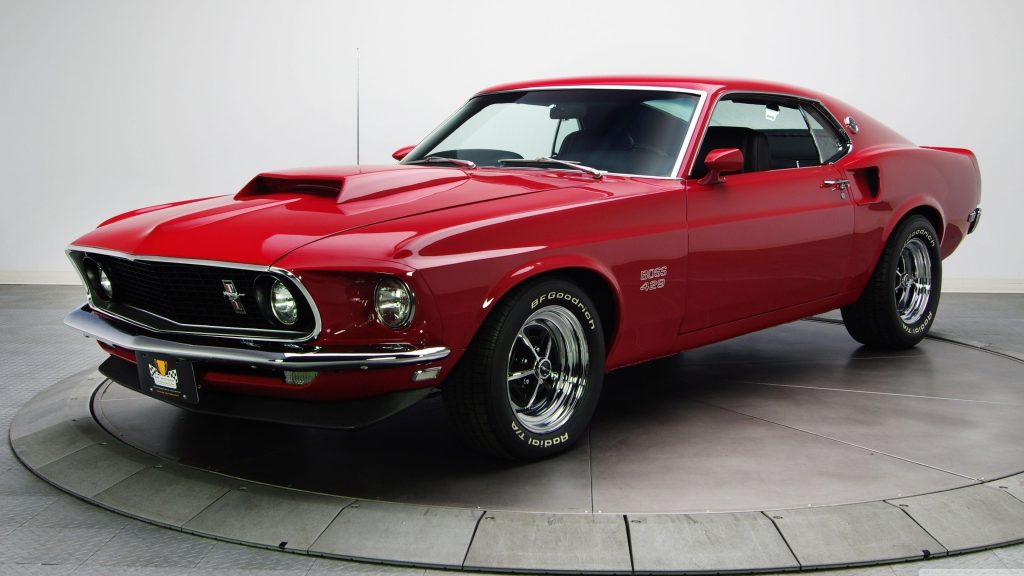
For collectors, the Boss 429 is therefore less about conventional performance-per-dollar and more about owning one of Ford’s most historically significant homologation-era Mustangs.
3. 1969 Pontiac GTO Judge
The Pontiac GTO Judge became one of the most recognizable muscle cars of the late 1960s, but certain versions have moved far beyond the price of a modern Corvette.
The Judge package added a distinctive appearance and performance-focused equipment to the GTO, while the available Ram Air engines gave buyers a serious reason to take the car beyond its visual appeal.
For 1969, the standard Judge engine was the 366-horsepower Ram Air III 400. The optional Ram Air IV increased the factory rating to 370 horsepower. Hagerty records 549 Ram Air IV Judge hardtops with manual transmissions and only 151 with automatics. The convertible was substantially rarer, with just 45 manual and 14 automatic Ram Air IV examples recorded.
That rarity becomes particularly important when looking at collector values. Hagerty’s July 2026 valuation for a 1969 GTO Judge Ram Air IV convertible in #3 Good condition reaches $484,000 to $528,000. That is several times the $70,000 starting price of a 2026 Corvette Stingray.
The judge’s appeal also comes from its period-correct character. Instead of trying to imitate a modern sports car, it delivered the proportions, sound, and mechanical personality that defined the American muscle era. A documented Ram Air IV car adds another level of desirability because the engine and factory configuration are central to its identity.
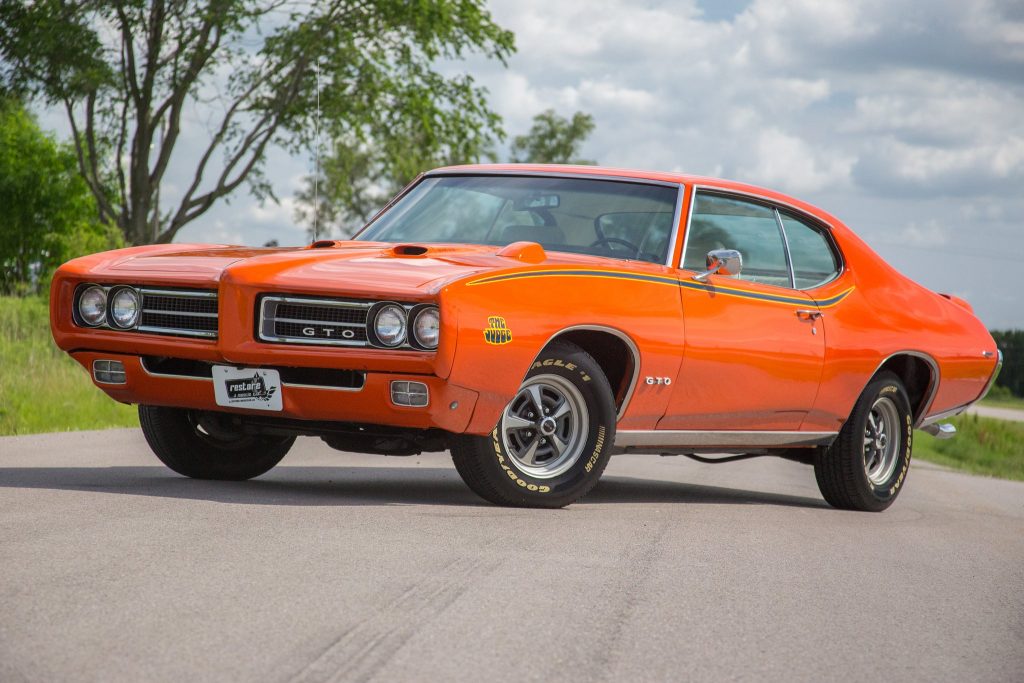
Collectors must be particularly careful with authenticity. Hagerty notes that VIN plates do not identify Judge models, and replicas exist. Factory documentation therefore matters considerably when determining whether a supposedly rare Judge is the real thing.
4. 1970 Chevrolet Chevelle SS 396
The 1970 Chevrolet Chevelle represents one of the defining moments of the American muscle-car era. Chevrolet gave the Chevelle a revised body for 1970 and offered a range of powerful V8S, including the famous 454 LS6.
Even though the car listed here carries the SS 396 designation, its collector value comes from the combination of big-block power, rarity, and period-correct specification.
Hagerty’s July 2026 guide values a 1970 Chevelle SS 396 convertible equipped with the 375-horsepower L78 at $108,267 to $123,333 in #3. Good condition. That puts this particular configuration comfortably above the $70,000 starting price of a new 2026 Corvette Stingray.
There is an important technical detail behind the name. Although Chevrolet continued using the 396 designation, the engine used in these later cars was actually 402 cubic inches. Hagerty identifies the L78 version as producing 375 horsepower, while the larger SS 454 LS6 was rated at 450 horsepower and 500 lb-ft of torque.
That distinction makes period documentation especially valuable. A genuine factory configuration is far more meaningful to collectors than simply installing a large-displacement engine into an ordinary Chevelle.
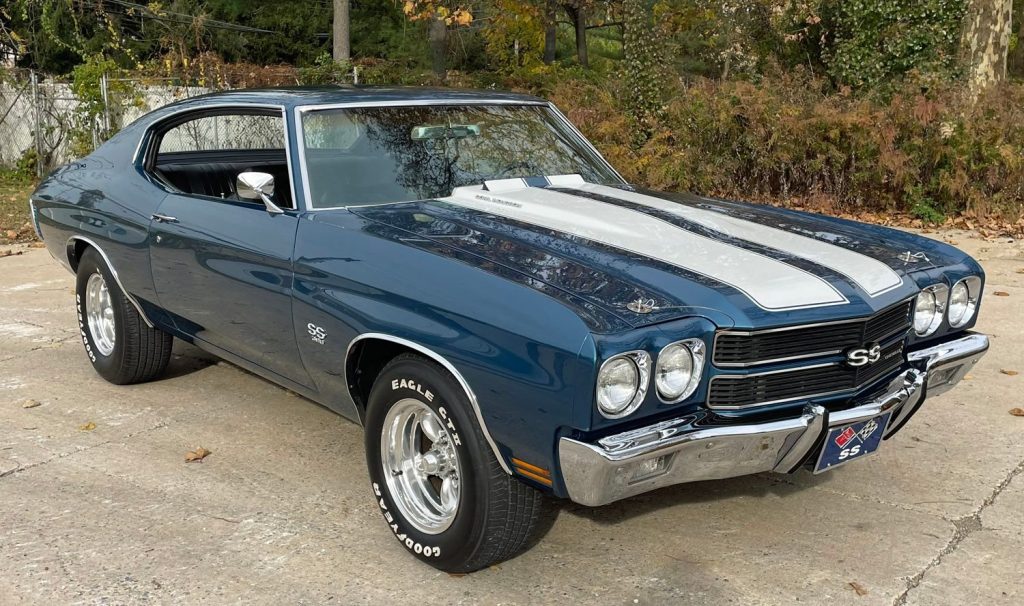
The 1970 model also benefits from its visual identity. The revised body, muscular proportions, and available performance equipment gave the Chevelle an unmistakable presence. Yet the numbers behind the car are what keep it relevant to the collector market decades later.
It is a good example of why not every expensive classic needs a six-figure production rarity. Sometimes the combination of a legendary model year, desirable engine, and correct factory specification is enough to push a muscle car beyond the cost of a modern Corvette.
5. 1970 Plymouth Hemi ’Cuda
The 1970 Plymouth Hemi ’Cuda occupies a special place in the muscle-car market because its value is tied to both extreme performance and extremely limited production.
The redesigned E-body ’Cuda arrived for 1970 with several V8 choices, but the 426 Hemi was the engine that transformed the car into a collector legend. Plymouth rated the Hemi at 425 horsepower, with the factory engine using two four-barrel carburetors.
The production numbers explain why surviving examples can command extraordinary prices. Hagerty records only 652 Hemi ’Cuda hardtops for 1970, while the convertible is dramatically scarcer at just 14 cars. That makes the Hemi ’Cuda convertible one of the rarest factory American muscle cars of the era.
Even the hardtop can exceed the cost of a new Corvette. Hagerty’s July 2026 Price Guide places a 1970 Hemi ’Cuda hardtop in #3 in good condition between $163,000 and $205,667. The valuation therefore starts at more than twice the $70,000 starting MSRP of a 2026 Corvette Stingray.
The mechanical package was substantial for its time. The 426-cubic-inch V8 produced 425 horsepower and 490 lb-ft of torque according to period specifications, while four-speed manual cars could deliver quarter-mile times in the low-13-second range.
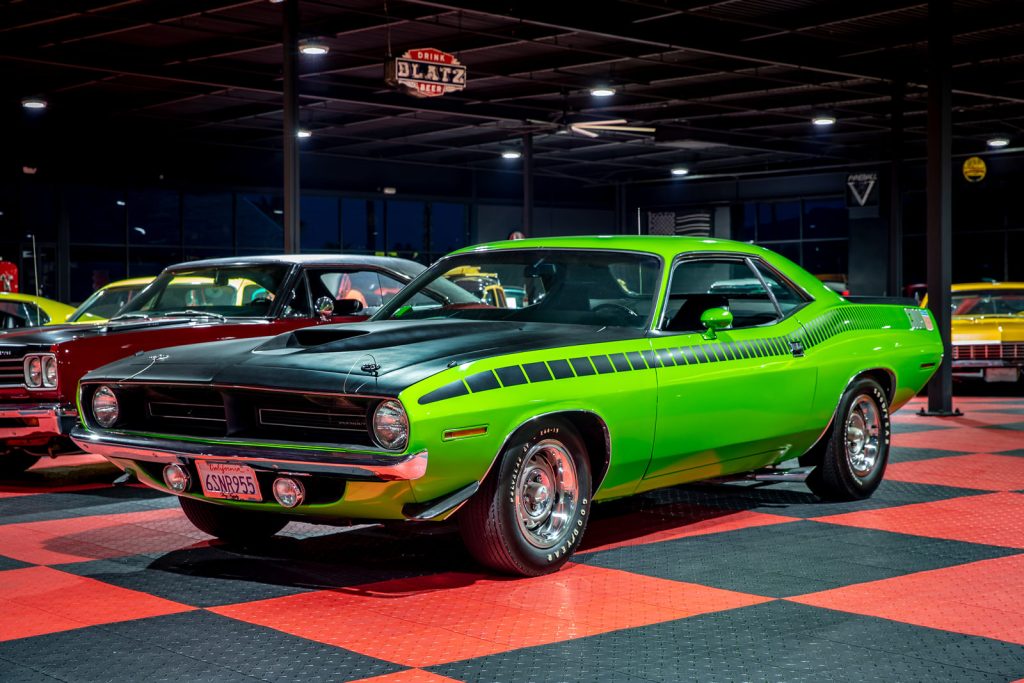
Yet horsepower is only part of the story. Collectors care intensely about matching numbers, factory documentation, original equipment, and correct trim. A genuine Hemi ’Cuda with verifiable provenance is fundamentally different from an ordinary Barracuda converted to Hemi specifications.
That combination of rarity and authenticity is why this Plymouth has moved into a price bracket that puts a new Corvette surprisingly far behind.
6. 1970 Dodge Challenger R/T 426 Hemi
The 1970 Dodge Challenger R/T arrived when the American muscle-car battle was approaching its peak. Dodge’s new E-body coupe offered an unusually broad engine range, but the 426 Hemi sat at the top of the hierarchy.
Rated at 425 horsepower and 490 lb-ft of torque, it gave the Challenger the kind of mechanical specification that would eventually make surviving examples highly desirable to collectors.
The Challenger itself was not rare in 1970. Dodge sold 83,032 Challengers that year, including 14,889 R/T hardtops and 1,070 R/T convertibles. The rarity emerges when the specific engine and equipment combination is considered.
The 426 Hemi was one of the most expensive and specialized choices in the range, making correctly documented Hemi cars much more significant today.
Period testing also demonstrated why the engine became famous. Car and Driver tested a 1970 Challenger R/T Hemi equipped with a three-speed automatic and recorded 5.8 seconds from 0 to 60 mph, along with a 14.1-second quarter-mile at 103 mph. The magazine listed a 146-mph estimated top speed.
The collector market, however, is heavily dependent on specification. Hagerty’s July 2026 guide shows a 1970 Challenger R/T equipped with the 390-horsepower 440 Six Pack at $64,333 to $82,067 in #3. Good condition, demonstrating that not every R/T automatically clears the Corvette benchmark.
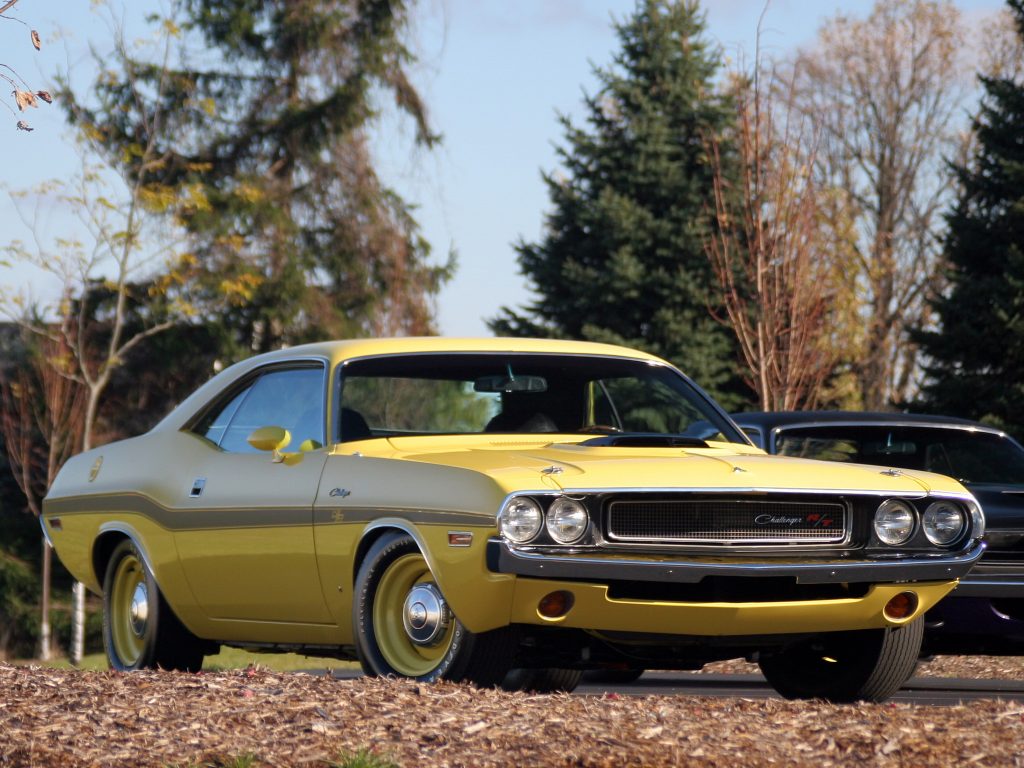
A documented 426 Hemi example belongs in a different conversation. Its combination of factory power, limited availability, and unmistakable E-body styling gives it a collector identity that survives long after the original muscle-car era ended.
7. 1970 Oldsmobile 4-4-2 W-30
The Oldsmobile 4-4-2 did not need the biggest engine in Detroit to establish its reputation. By 1970, the W-30 package had turned the 4-4-2 into one of Oldsmobile’s most serious muscle cars, combining a 455-cubic-inch V8 with a performance package that included specialized induction, suspension upgrades, and other hardware intended to make the car capable of handling its substantial power.
Hagerty lists the 1970 4-4-2 W-30 with a 455 V8 rated at 370 horsepower. Its July 2026 Price Guide places the hardtop’s #3 good-condition value between $69,467 and $88,667. That means a well-preserved example can cross the $70,000 starting price of a 2026 Corvette Stingray, although not every W-30 does so.
The convertible is considerably more valuable. Hagerty’s current valuation data puts a #3 Good-condition 1970 W-30 convertible at approximately $101,000, while a #2 The excellent example reaches about $140,000. A genuine W-30 convertible therefore sits comfortably above the price of a new Corvette.
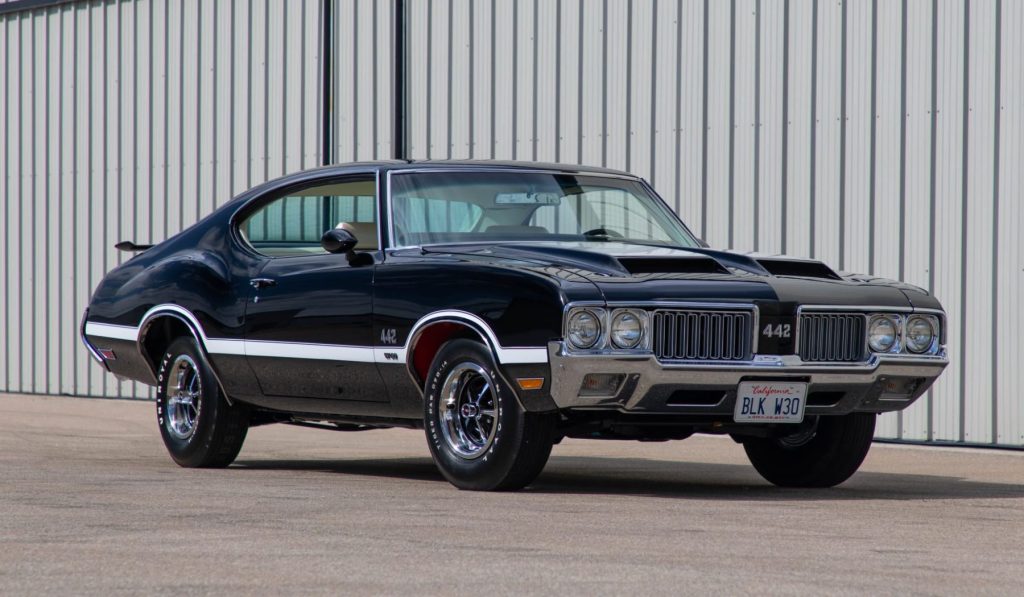
Recent U.S. auction activity illustrates the market in real terms. A 1970 4-4-2 W-30 convertible sold through Bring a Trailer for $82,889 in January 2026. That particular transaction also demonstrates why condition, originality and configuration matter so much when discussing classic-car values.
What separates the W-30 from an ordinary 4-4-2 is the combination of factory performance equipment and its place in Oldsmobile’s muscle-car history. For buyers today, the badge alone is not enough. Documentation confirming the correct engine and W-30 equipment can have a major influence on what the car is worth.
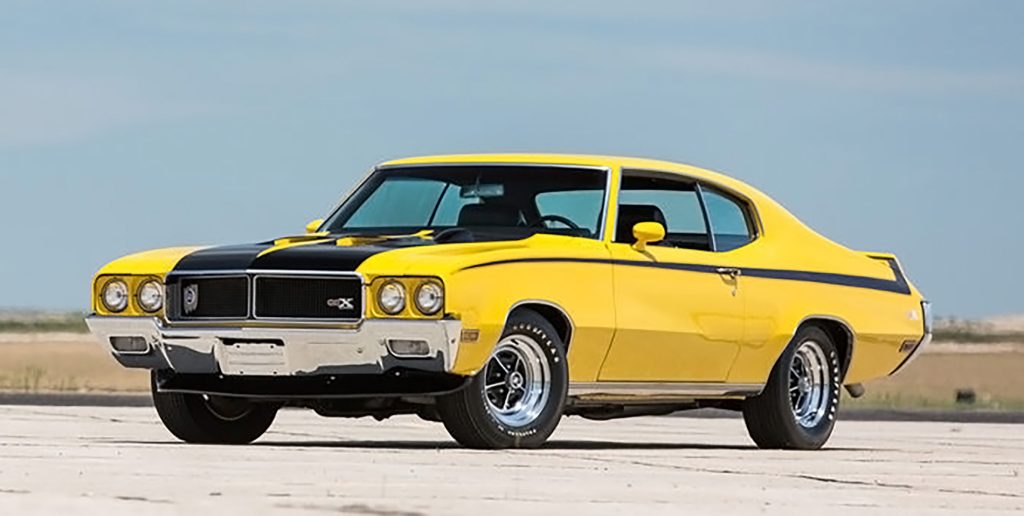
8. 1970 Buick GSX Stage 1
Buick’s GSX Stage 1 is easy to overlook when discussions turn toward famous American muscle cars, which is precisely what makes its modern collector status interesting.
It combined Buick’s traditional emphasis on comfort with a massive 455-cubic-inch V8 and a performance package designed to make the GSX considerably more aggressive than the brand’s luxury-oriented image might suggest.
For 1970, the GSX was offered with Buick’s 455, and the Stage 1 version received the more powerful configuration. Hagerty lists the Stage 1 at 360 horsepower and notes that Motor Trend recorded a 13.79-second quarter-mile run at 104.5 mph for a Stage 1 GS 455.
Production is where the story becomes particularly compelling. Only 678 GSX cars were sold in 1970, consisting of 491 finished in yellow and 187 in white. The GSX package also included equipment such as a hood-mounted tachometer, spoilers, performance suspension components, four-speed availability, and Positraction.
Hagerty’s July 2026 Price Guide places a 1970 GSX Stage 1 in #3. Good condition between $89,633 and $113,667. That range puts even a driver-quality example above the $70,000 starting price of a new Corvette Stingray.
The GSX’s appeal is therefore not based on a single spectacular specification. Its value comes from the unusual combination of limited production, big-block torque, distinctive factory equipment, and Buick’s place in the muscle-car market.
It is also a reminder that collector demand extends beyond the most frequently discussed Chevrolet, Ford, and Plymouth models.
For today’s buyer, authentic paperwork and factory-correct equipment remain important. With fewer than 700 sold in 1970, an original Stage 1 is substantially more unusual than a regular GS, making provenance an important part of the car’s value.
9. 1969 Dodge Charger Daytona
The 1969 Dodge Charger Daytona looks almost like a race car that accidentally received a license plate. Unlike most muscle cars of the period, its unusual shape was directly connected to NASCAR competition.
Dodge added an extended aerodynamic nose, a massive rear wing, and revised rear glass to improve high-speed performance, creating one of the most recognizable American cars ever built.
The Daytona was produced specifically to satisfy NASCAR homologation requirements. Hagerty notes that its design included a two-foot-long nose cone and a three-foot-high rear wing, while the model became the first NASCAR car to exceed 200 mph in testing. Its aerodynamic shape was radically different from the standard Charger.
Production numbers are a major part of the Daytona’s collector appeal. Just 503 examples were built for 1969, making the car considerably scarcer than ordinary performance Chargers. Buyers could choose between the 440 and the 426 Hemi, with the latter producing 425 horsepower and 490 lb-ft of torque.
The pricing reflects the Daytona’s unusual combination of racing heritage and limited production. According to Hagerty’s July 2026 Price Guide, a 440-powered Daytona in #3 Good condition is valued between $173,667 and $214,667. The Hemi-powered version commands a much higher valuation, reaching approximately $472,000 in the same condition category.
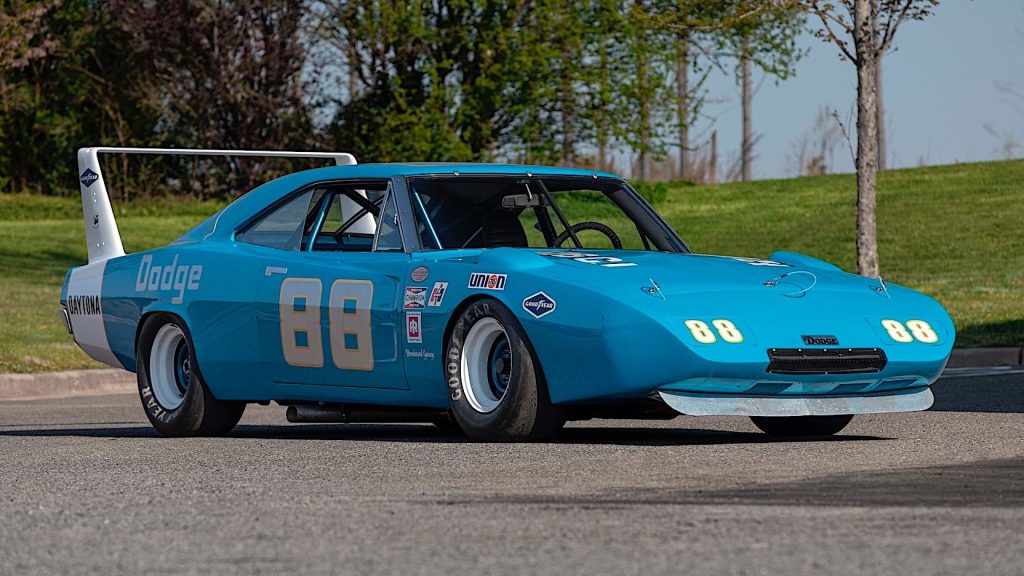
That puts even a standard 440 Daytona far beyond the $70,000 starting price of a 2026 Corvette Stingray. A genuine Hemi car occupies an entirely different collector bracket.
Its appeal is not simply that it is old or powerful. The Daytona represents a very specific moment when manufacturers were willing to build street cars around NASCAR homologation requirements. The enormous wing and pointed nose that once looked excessive have become some of the strongest visual signatures of the muscle-car era.
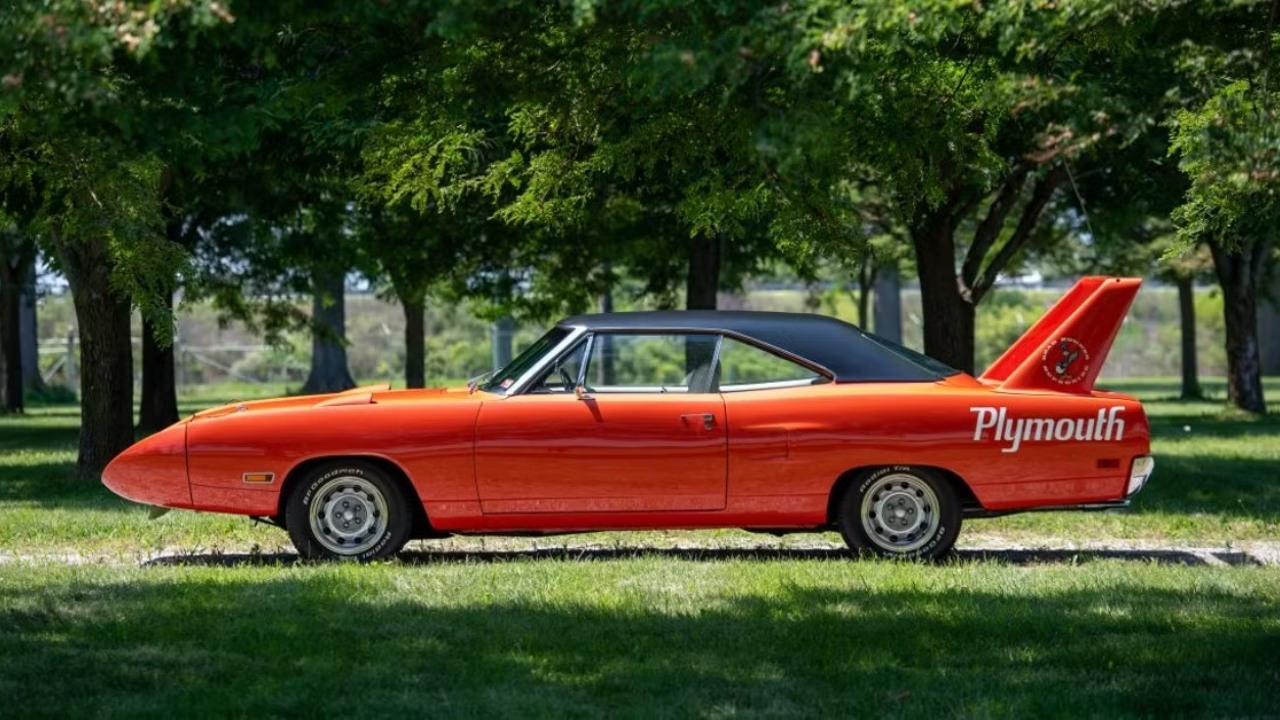
10. 1970 Plymouth Road Runner Superbird
The Plymouth Road Runner Superbird takes the idea behind the Charger Daytona and pushes it even further. Its giant rear wing, elongated nose, and aerodynamic body modifications made it one of the most visually extreme cars available from an American showroom in 1970.
Underneath the dramatic bodywork was a genuine high-performance muscle car built around Chrysler’s NASCAR ambitions.
Hagerty’s current valuation data lists the 440 Six Pack version with a 390-horsepower rating and a three-two-barrel carburetor setup. The model was based on the Road Runner but received extensive aerodynamic changes to make it suitable for NASCAR homologation.
The collector market has responded strongly to that combination. Hagerty’s July 2026 Price Guide values a 1970 Superbird with the 440 Six Pack at between $218,333 and $267,333 in #3. Good condition. That means a driver-quality example can be worth more than three times the $70,000 starting MSRP of a new Corvette Stingray.
The Superbird also illustrates why collector cars cannot be judged solely by horsepower. The 390-horsepower Six Pack was not the most powerful engine Chrysler offered in the Superbird.
Buyers could also specify the 426 Hemi, which produced 425 horsepower and 490 lb-ft of torque. The Hemi cars are considerably more valuable because of their rarity and performance credentials.
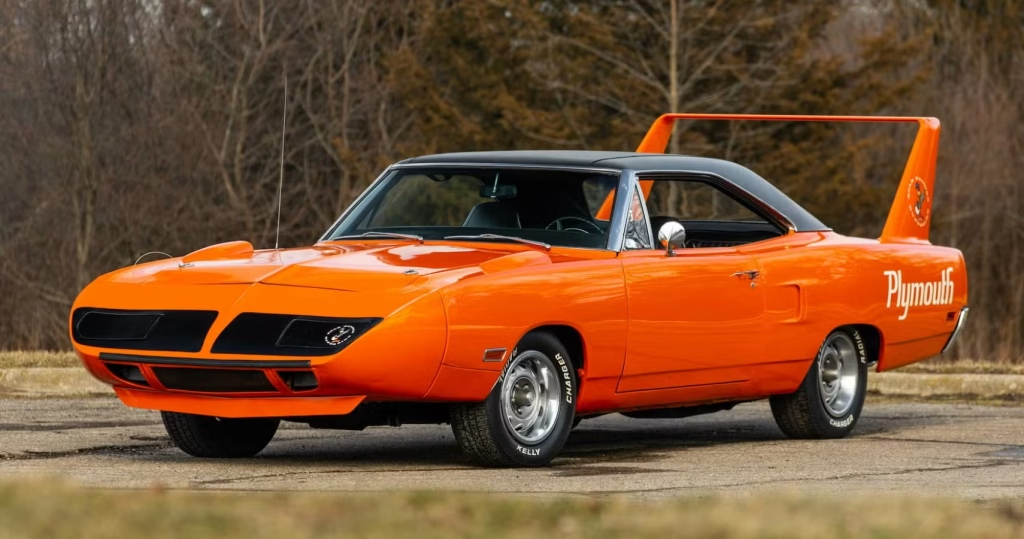
What makes the Superbird especially memorable is how closely its road-car identity remained connected to racing. The huge wing was not simply a styling experiment. It was part of the aerodynamic strategy that allowed Chrysler’s NASCAR program to compete at high speeds.
Decades later, that unusual engineering decision has become one of the car’s biggest selling points. A Superbird is instantly identifiable, historically significant, and substantially rarer than a conventional Road Runner, making it one of the classic muscle cars capable of commanding a price far beyond a modern Corvette.
