
The latest IIHS data shows that headlights have improved dramatically, but some new vehicles still struggle to provide strong nighttime visibility.
IIHS rates headlights for both illumination and glare, meaning a modern LED system can still receive a poor rating if it leaves important areas of the road inadequately lit or produces excessive glare.
For 2025 models, about half of the headlight systems tested earned a good rating, while 11% were still rated poor. The following vehicles received poor IIHS headlight ratings in recent U.S. testing, making them worth a closer look for drivers who frequently travel after dark.
1. Chevrolet Silverado 1500
The Chevrolet Silverado 1500 demonstrates that a large, expensive pickup can still have headlights that fall short in IIHS testing. For 2025, the Silverado’s tested LT, RST, and LT Trail Boss configurations with one headlight setup received a poor rating.
IIHS found the low beams provided only fair visibility on the straightaway and became inadequate on one of the left-hand curves. The low beams also produced excessive glare, which contributed to the poor result. High-beam assist helped compensate for some of those shortcomings, but it could not erase the low-beam problems.
The result is particularly interesting because the Silverado offers several sophisticated lighting and driver-assistance technologies. Its available headlight systems use LED projectors for the low beams and LED reflectors for the high beams, while high-beam assist can automatically switch between lighting modes.
IIHS, however, evaluates what the headlights actually illuminate rather than giving credit simply because the vehicle uses LED technology.
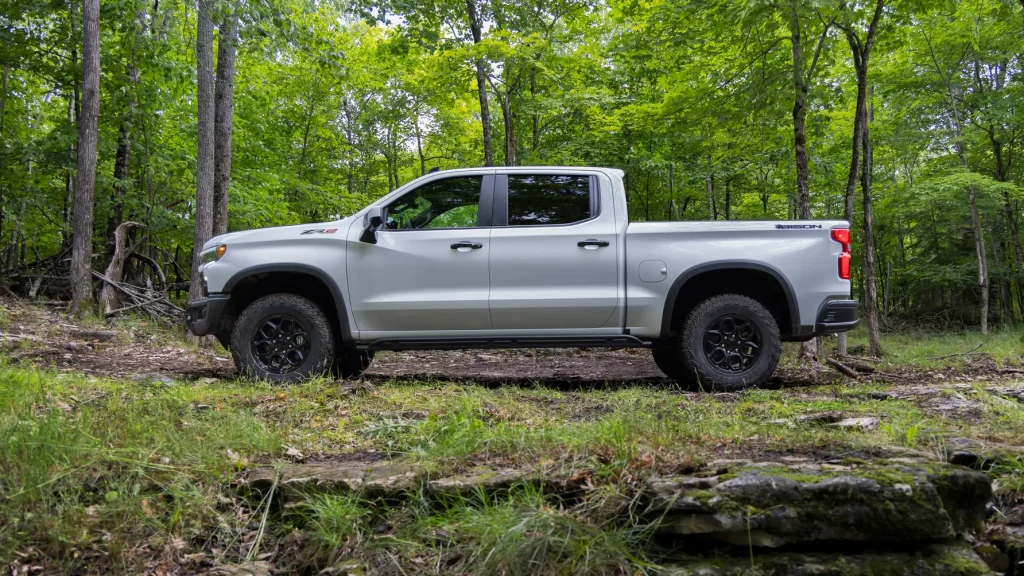
The Silverado’s different trims and equipment combinations also make the result worth reading carefully. A poor rating for one tested configuration does not automatically mean every headlight system available on every Silverado has identical performance. Buyers should check the specific trim and lighting configuration rather than treating the rating as universal.
Chevrolet offers the Silverado with several engines, including the 310-hp TurboMax, 355-hp 5.3-liter V8, 420-hp 6.2-liter V8, and 305-hp Duramax diesel. The truck’s performance credentials therefore remain separate from its IIHS headlight result.
2. Kia Seltos
The Kia Seltos is a much smaller vehicle than the Silverado, yet its headlights produced an even more consistent visibility problem in IIHS testing. The 2025 Seltos received a poor headlight rating for the tested halogen projector configuration.
IIHS reported inadequate low-beam visibility on both sides of the straightaway and inadequate illumination across all four curve evaluations. The high beams also remained inadequate in several areas, although high-beam assist helped compensate for some of the limitations.
One notable detail is that the headlights did not exceed the IIHS glare limits. In other words, the poor rating was not driven by excessive glare. The central problem was illumination.
The test measured the distance at which the lamps produced at least 5 lux of useful light, and the Seltos fell short across numerous portions of the roadway. Its low beams reached 72.6 meters on the straightaway’s right edge but only 33.6 meters on the left. On the tight left curve, useful illumination fell to 33.2 meters.
That makes the Seltos an interesting example of why a poor headlight rating does not necessarily mean a vehicle is dazzling other drivers. IIHS considers visibility and glare separately, and a vehicle can perform poorly because it simply does not illuminate enough of the road.
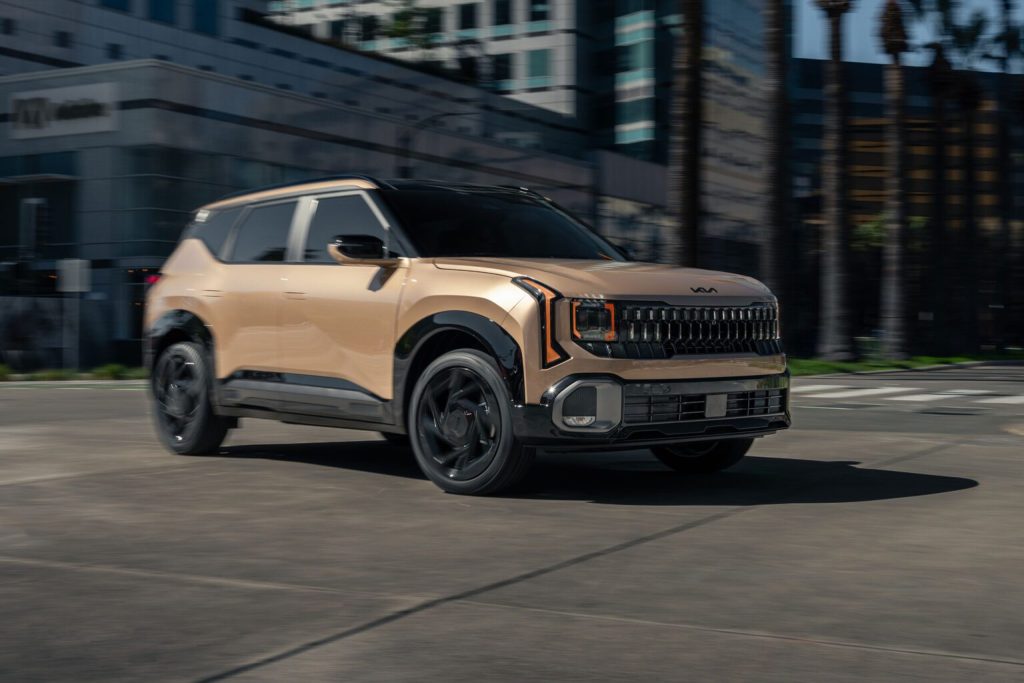
The tested Seltos used halogen projector lamps, while other versions of the model use different equipment. Kia offers the U.S. Seltos with either a 2.0-liter naturally aspirated engine or a 1.6-liter turbocharged engine depending on trim. The 2.0-liter version produces 146 horsepower and 132 lb-ft of torque.
3. Nissan Sentra
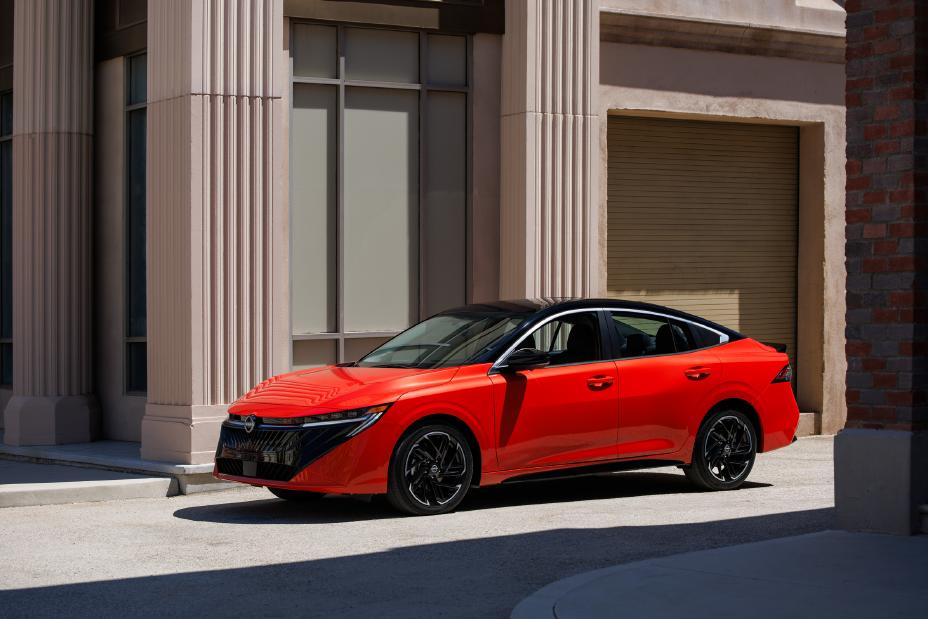
The Nissan Sentra shows just how severe a poor headlight result can become when illumination falls short across practically every part of the IIHS test course. The 2025 Sentra received a poor headlight rating for its SR trim, and the problem was not caused by excessive glare.
Instead, IIHS found the low beams inadequate on both sides of the straightaway and inadequate through all four curve evaluations. The high beams did not solve the problem either, with inadequate visibility recorded on both sides of the straightaway and on every curve.
The measured distances help put that result into perspective. With the low beams operating, the Sentra produced at least 5 lux of illumination for just 41.2 meters on the right side and 10.7 meters on the left side of the straightaway.
On the tighter curves, the measured useful illumination dropped to between 26.0 and 35.1 meters. Those figures show why the IIHS evaluation produced a poor rating even though the lamps did not exceed the organization’s glare limits.
High-beam performance was stronger than the low-beam measurements, but it still did not meet IIHS’s threshold for an acceptable result.
The high beams reached 110.7 meters on the right side and 82.3 meters on the left side of the straightaway, while curve measurements ranged from 39.2 to 49.8 meters. High-beam assist can compensate for some limitations, but it cannot change the underlying output of the lighting hardware.
The tested SR uses LED reflector headlights. That is a useful reminder that LED technology alone does not guarantee strong nighttime visibility. IIHS evaluates the amount and distribution of usable illumination rather than simply the type of bulb or lighting technology.
4. Chevrolet Trailblazer
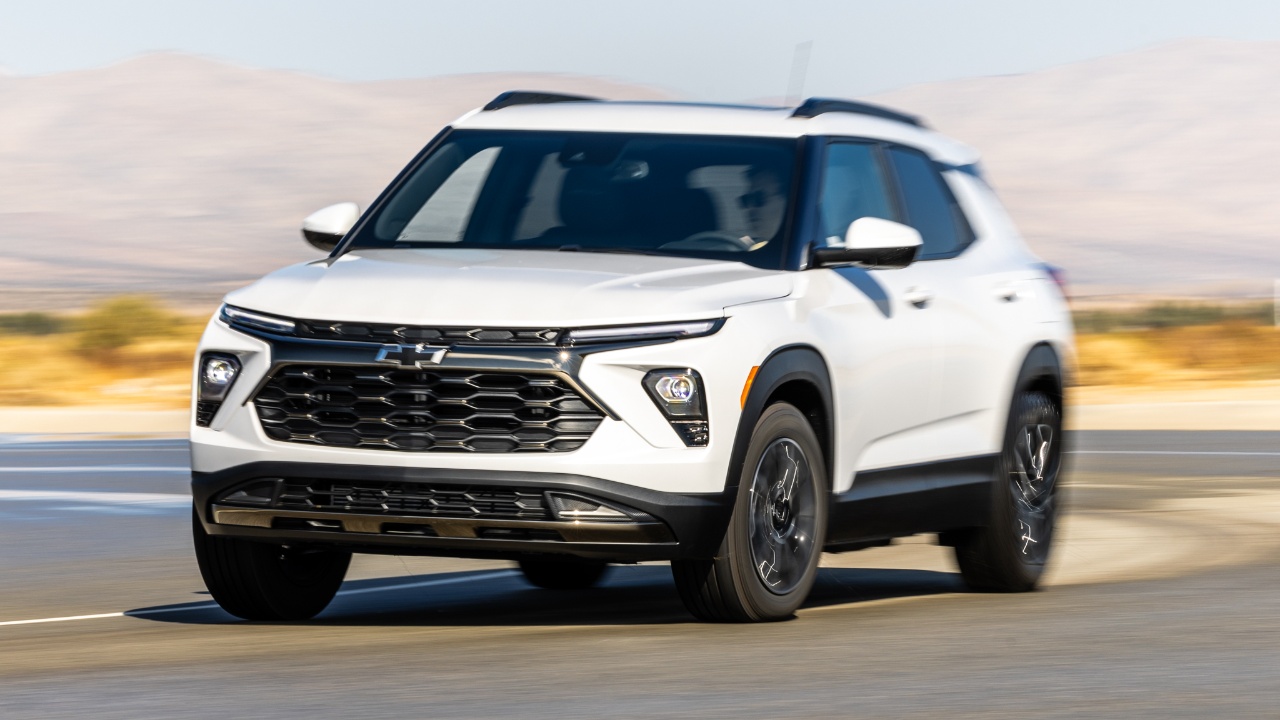
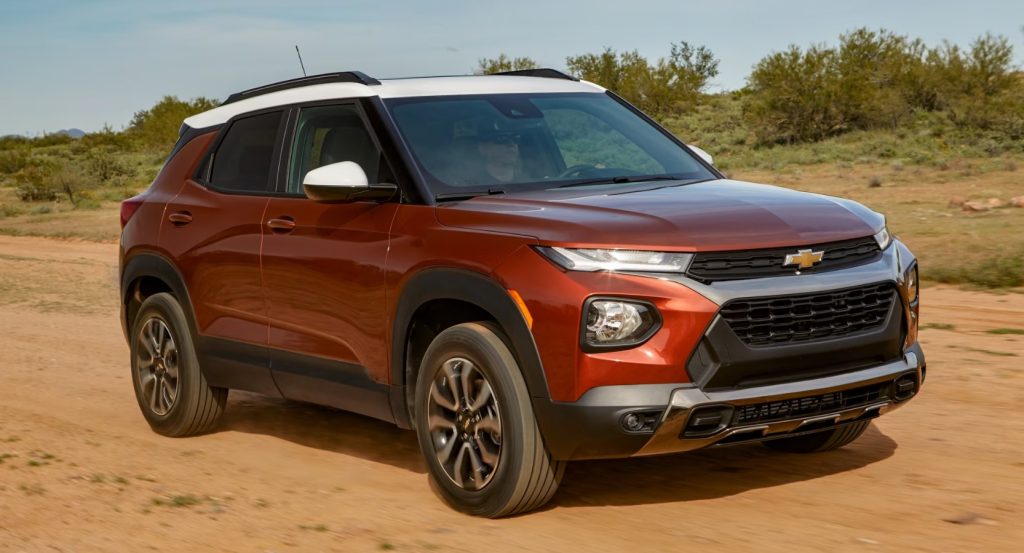
The Chevrolet Trailblazer takes a different path to a poor IIHS headlight rating. Its tested RS and ACTIV trims use LED projector headlights and high-beam assist, yet the system still received a poor rating because the low beams produced excessive glare.
The Trailblazer’s results are particularly notable because its headlights provided substantial illumination across several sections of the test course. However, their performance compared with other road users limited the system’s rating and kept it from scoring higher.
IIHS recorded good low-beam visibility on both sides of the straightaway, along with good performance on the gradual right curve and both left curves. The sharp right curve was rated fair. On paper, those visibility measurements sound much better than the Sentra’s results.
The problem was glare. The low beams exceeded IIHS’s glare limits substantially at several measurement points, including 96.9% above the threshold on both sides of the straightaway and 151.6% on the gradual left curve.
The high beams presented a mixed picture. Visibility was good on the right side of the straightaway but inadequate on the left. The sharp right curve was also inadequate, while the remaining curves ranged from fair to good.
High-beam assist was available to compensate for some of those limitations, but it does not eliminate the glare generated by the low-beam pattern.
This is an important distinction when discussing IIHS headlight results. A poor rating does not necessarily mean a driver cannot see far ahead. IIHS considers whether the system provides useful illumination while limiting the amount of light directed toward other drivers.
The Trailblazer demonstrates how a lighting system can deliver respectable visibility measurements and still receive a poor result because of glare.
5. Nissan Frontier
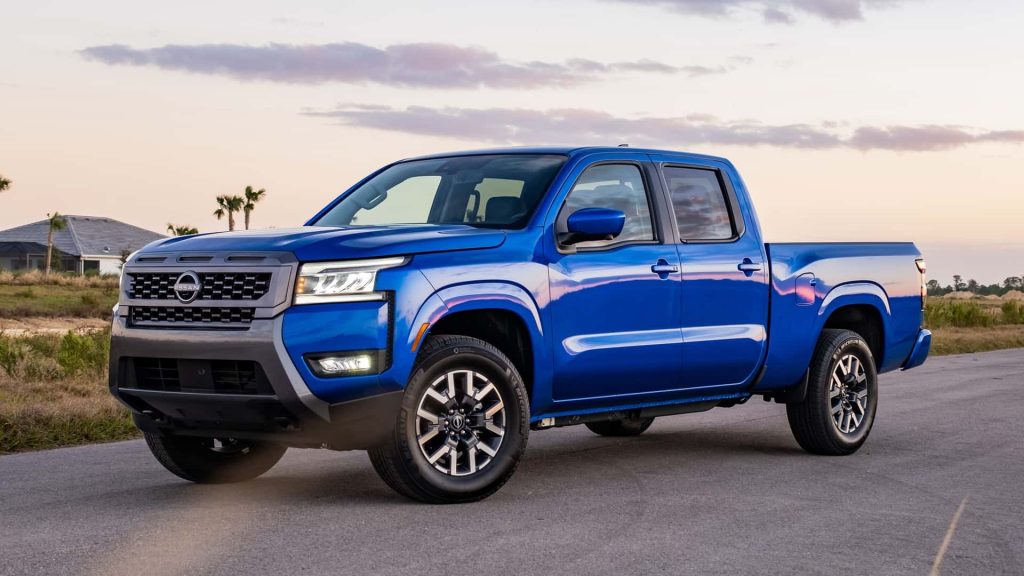
The 2024 Nissan Frontier shows why a modern truck can still have a headlight system that performs poorly at night. IIHS gave the tested Frontier configuration a poor headlight rating, with the main weakness coming from the halogen reflector setup available on the S and SV trims equipped with the Technology Package.
Low-beam visibility was inadequate on both sides of the straightaway and inadequate through all four curve evaluations. The high beams did not completely solve the problem, either. IIHS recorded inadequate high-beam visibility on both sides of the straightaway and across the curves tested.
There was also a glare issue, although it was less dramatic than on some other vehicles in this group. The low beams produced some glare while still failing to illuminate enough of the road.
That combination matters because IIHS does not judge headlights simply by brightness. Its testing considers how far the lamps provide at least 5 lux of illumination and whether the lighting pattern directs excessive light toward other road users.
The Frontier’s result is particularly notable because the truck itself has a substantial powertrain. Nissan equips it with a 3.8-liter V6 producing 310 horsepower and 281 lb-ft of torque, paired with a nine-speed automatic transmission.
Nissan also offers features such as high-beam assist, but that technology cannot turn a weak low-beam pattern into a stronger headlight system.
Buyers should also remember that the IIHS rating applies to the specific lighting configuration tested. Higher trims or different equipment can have different headlight hardware, so the rating should not automatically be applied to every Frontier.
6. Chevrolet Equinox
The Chevrolet Equinox delivers another example of a vehicle whose headlights looked technologically modern but still received a poor IIHS rating. The 2024 Equinox used LED reflector headlights with high-beam assist across its tested trims, yet IIHS rated the system poor.
Unlike the Nissan Frontier, the major problem was not simply a lack of illumination. The Equinox produced respectable visibility in several parts of the test course, but its low beams generated excessive glare.
IIHS measured good low-beam visibility on both sides of the straightaway. The gradual right curve was rated fair, as were the sharp left and both right curves, while the gradual left curve was inadequate.
Those measurements show that the Equinox could put a meaningful amount of light onto the road. The problem was that the lighting pattern also sent too much light toward other road users. At the straightaway measurement points, glare exceeded the IIHS threshold by 326.5%. On the curves, the excess ranged from 64.5% to 212.6%.
The high beams performed substantially better for illumination. They provided good visibility on the right side of the straightaway, although the left side was inadequate. Curve performance remained fair.
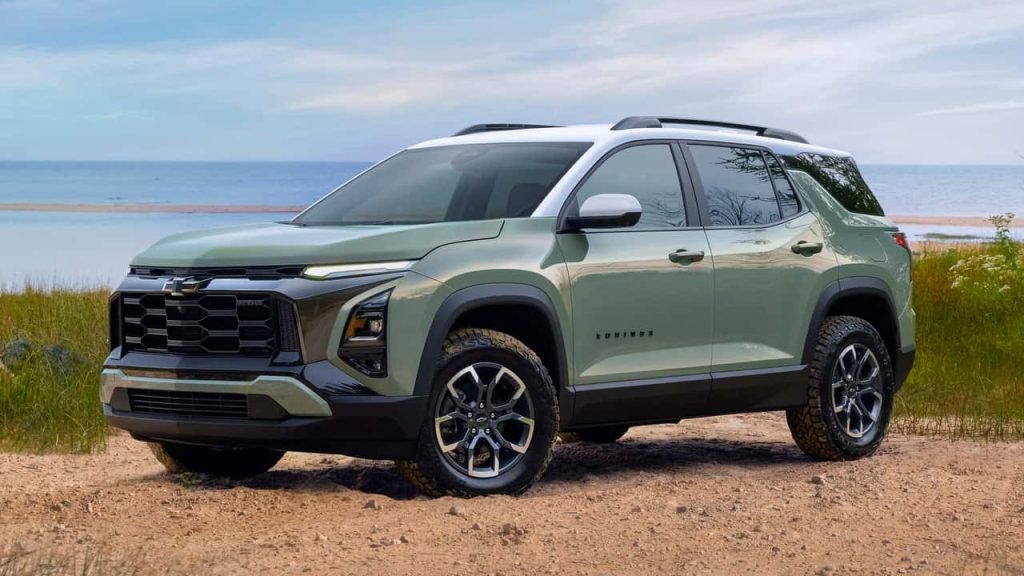
High-beam assist compensated for some of the low-beam limitations, but it could not remove the glare issue associated with the low beams.
The Equinox uses a 1.5-liter turbocharged four-cylinder engine in this generation. The 2024 version produces 175 horsepower and up to 203 lb-ft of torque, depending on drivetrain. Its 183.1-inch length places it firmly in the compact SUV category.
7. Tesla Cybertruck
The Tesla Cybertruck is one of the newest vehicles to receive a poor IIHS headlight rating, and its result is notable because the truck uses an advanced, all-electric platform with modern LED lighting.
In IIHS testing, the Cybertruck’s headlights received a poor rating, with excessive glare from the low beams being a major reason for the result. IIHS reported that the lighting system did not meet its requirements despite the vehicle’s high-tech design.
The result is a useful reminder that sophisticated vehicle technology does not automatically translate into a strong nighttime lighting evaluation.
IIHS specifically evaluates how well headlights illuminate the roadway while also checking whether the beam creates excessive glare for approaching drivers. The Cybertruck’s low-beam pattern created enough glare to prevent the system from receiving a higher rating.
This matters because headlight performance is separate from the Cybertruck’s other safety equipment. A vehicle can perform well in crashworthiness or driver-assistance evaluations while still receiving a poor result for nighttime illumination.
IIHS evaluates these systems independently, so one rating should not be interpreted as a judgment of the truck’s entire safety package.
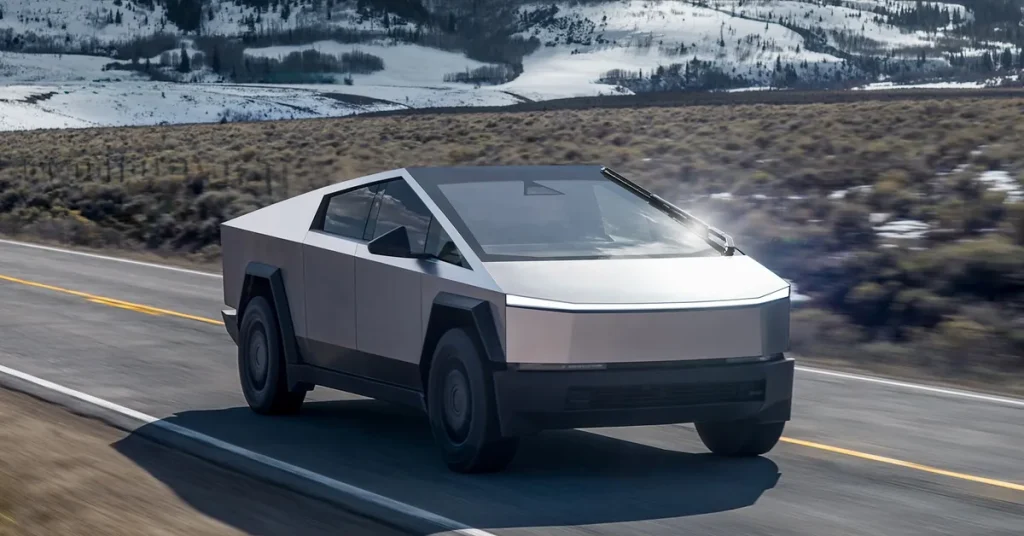
The Cybertruck’s unusual exterior design also makes its lighting arrangement visually distinctive, but IIHS testing focuses on measurable performance rather than styling. Its headlights are evaluated on the actual amount and distribution of useful light and the degree of glare they create.
For drivers considering a Cybertruck, the IIHS result is worth understanding before assuming that newer LED lighting automatically means superior nighttime visibility. The rating specifically identifies a limitation in the tested headlight system, particularly concerning glare.
8. BMW i4
The BMW i4 provides another example where the same vehicle can have substantially different headlight performance depending on configuration. IIHS tested two headlight systems for the i4, and the results ranged from marginal to poor.
The poor-rated system is offered on the eDrive35, eDrive40, and xDrive40 trims. IIHS found that neither of the i4’s tested systems provided adequate illumination on the high beam, while the poor-rated version also produced excessive low-beam glare.
That distinction is especially important when discussing the i4 because it would be inaccurate to say that every i4 has identical headlights. IIHS explicitly identifies two different lighting variations.
The poor-rated version has LED projector low beams and LED reflector high beams, with automatic high-beam functionality available as part of the system. The second system received a marginal rating rather than poor.
The high-beam limitation was one of the biggest concerns in testing. IIHS found that neither system provided adequate illumination when the high beams were activated. For the poor-rated system, the low beams also created excessive glare. That combination affected the final rating even though the i4 is equipped with sophisticated lighting technology.
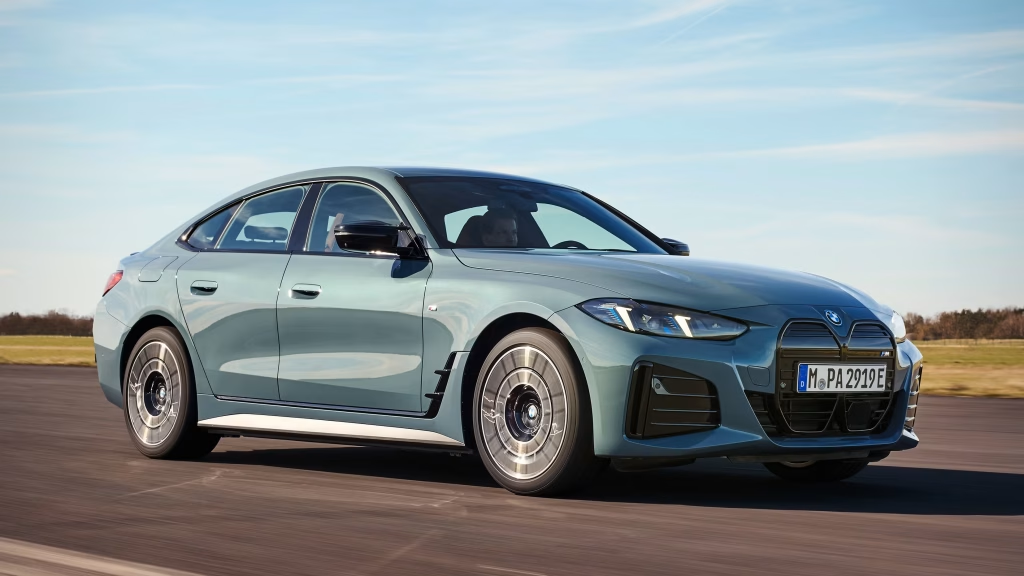
The i4 itself is a battery-electric four-door model based on BMW’s 4 Series Gran Coupe architecture. U.S. versions have been offered in multiple powertrain configurations, including rear-wheel-drive and all-wheel-drive variants. Performance therefore varies considerably depending on the chosen version.
For buyers, the important detail is to identify the exact i4 configuration rather than assuming the IIHS result applies equally to every car. The lighting system fitted to the specific vehicle can make a meaningful difference to its IIHS headlight rating.
9. Jeep Wrangler
The Jeep Wrangler is a particularly interesting case because its 2025 IIHS headlight evaluation covers four different lighting configurations, and not all of them received the same rating.
Two of the configurations received a poor rating, making the Wrangler one of the clearest examples of why buyers need to pay attention to trim and equipment rather than simply looking at the model name.
IIHS rated the Sport trim with the standard halogen reflector headlights poor, and the Sport and Rubicon versions equipped with certain LED projector systems also received poor ratings.
The standard Sport configuration is the weakest of the tested setups. Its halogen low beams produced inadequate visibility on both sides of the straightaway and on all four curves.
The high beams improved straightaway visibility on the right side to fair, but the left side and all four curves remained inadequate. There was no high-beam assist on this version, meaning the driver receives no automatic switching assistance to compensate for the limited lighting pattern.
The LED configuration does not automatically solve the problem. One LED projector setup received a poor rating despite having high-beam assist.
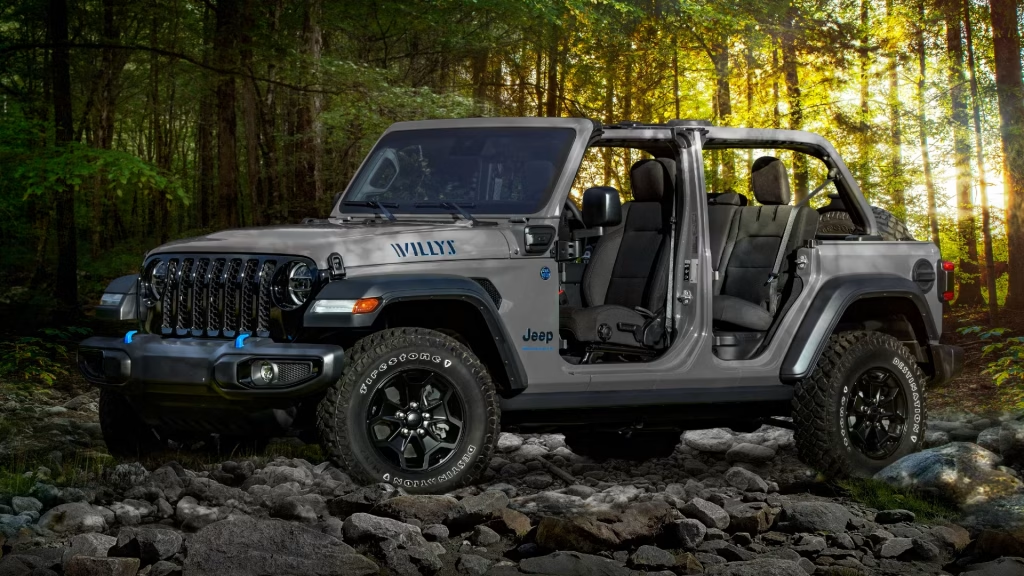
Its low beams were fair on the left side of the straightaway and inadequate on the right, while the gradual left curve was also inadequate. IIHS recorded some glare from the low beams. The high beams remained inadequate on both sides of the straightaway and on both left curves.
This makes the Wrangler an excellent example of why the phrase “LED headlights” should not be treated as proof of strong nighttime performance. Beam distribution, illumination distance, and glare all matter.
10. Cadillac Lyriq
The Cadillac Lyriq is a striking example of how advanced lighting technology does not automatically guarantee a strong IIHS headlight result. The 2025 Lyriq received a poor headlight rating, and the rating applies to all trims.
Cadillac uses LED projector headlights with high-beam assist, yet IIHS found that the low beams produced excessive glare while also leaving several curves less adequately illuminated than the straightaway.
The straightaway results were actually fairly strong. The low beams provided useful illumination for 95.4 meters on the right side and 75.5 meters on the left.
The situation changed on curves, where visibility was rated fair on the gradual right and both left curves and inadequate on the sharp right curve. The low beams also exceeded IIHS glare limits by 223.3% at both straightaway measurement points.
The Lyriq’s high beams delivered considerably more forward illumination. IIHS measured 170.0 meters on the right side and 177.3 meters on the left side of the straightaway. However, visibility remained inadequate on both sharp curves. High-beam assist helped compensate for some of the system’s limitations, particularly on the curves.
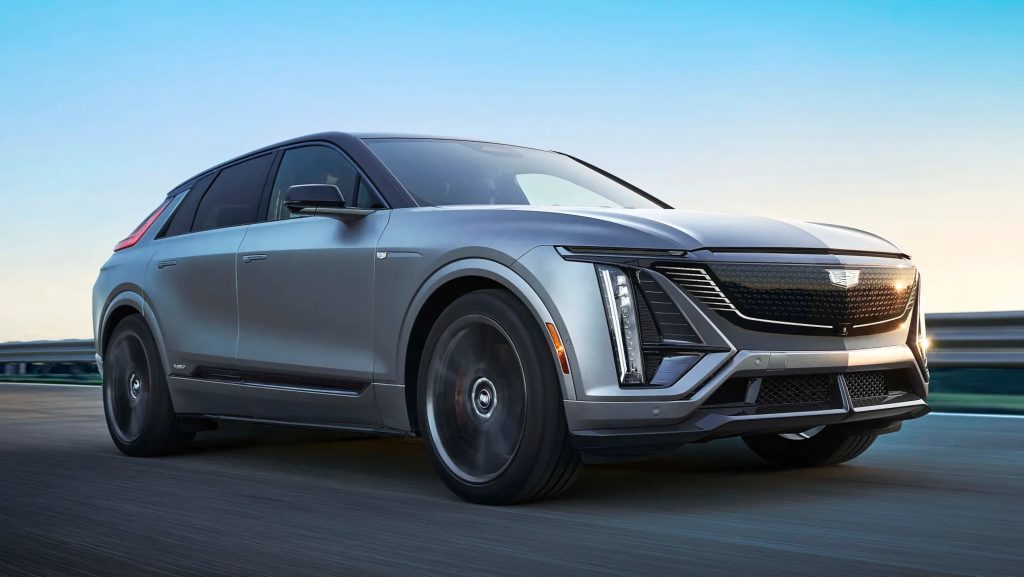
What makes the result especially notable is that this is an all-electric luxury SUV with sophisticated LED projector technology. The poor rating, therefore, cannot simply be attributed to an old-fashioned halogen lighting system.
IIHS evaluates the actual beam pattern, useful illumination, and glare rather than awarding a rating based on the technology used.
The 2025 Lyriq uses GM’s Ultium electric architecture and is available with rear-wheel drive or all-wheel drive. Its headlight rating is a separate safety evaluation and does not represent the vehicle’s crashworthiness, which received good ratings in several IIHS crash tests.
