
Li Auto is making a significant change to the way it develops and sources batteries, moving toward a model in which the automaker controls battery technology while outside manufacturers handle large-scale cell production.
The Chinese EV maker has selected Sunwoda and CALB to manufacture batteries based on Li Auto’s own designs, reducing its dependence on battery giant CATL.
The move is part of a broader strategy that could give Li Auto greater control over one of the most important components in an electric vehicle without requiring the company to build and operate massive battery-cell factories itself.
According to Caixin, Li Auto President and Chief Engineer Ma Donghui said on September 21 that all of the company’s products after 2026 will use batteries developed by Li Auto and produced through contract manufacturing partners.
That distinction is important. Li Auto is not simply switching from one battery supplier to two others. Instead, it is attempting to separate battery development from battery manufacturing, allowing the company to control specifications, materials, cell structure, and battery-management technology while using established battery producers to manufacture the finished cells.
Li Auto Wants Control of Battery Technology Without Building Huge Factories
For years, automakers have relied heavily on specialized battery manufacturers for both technology and production. Li Auto’s new approach changes that relationship. The company is developing its own battery technology but does not intend to take on all of the capital requirements associated with building large cell-production facilities.
Caixin reported that Sunwoda and CALB will manufacture Li Auto’s self-developed batteries. This allows Li Auto to retain control over the technical side of the battery while using suppliers with existing manufacturing capabilities and production infrastructure.
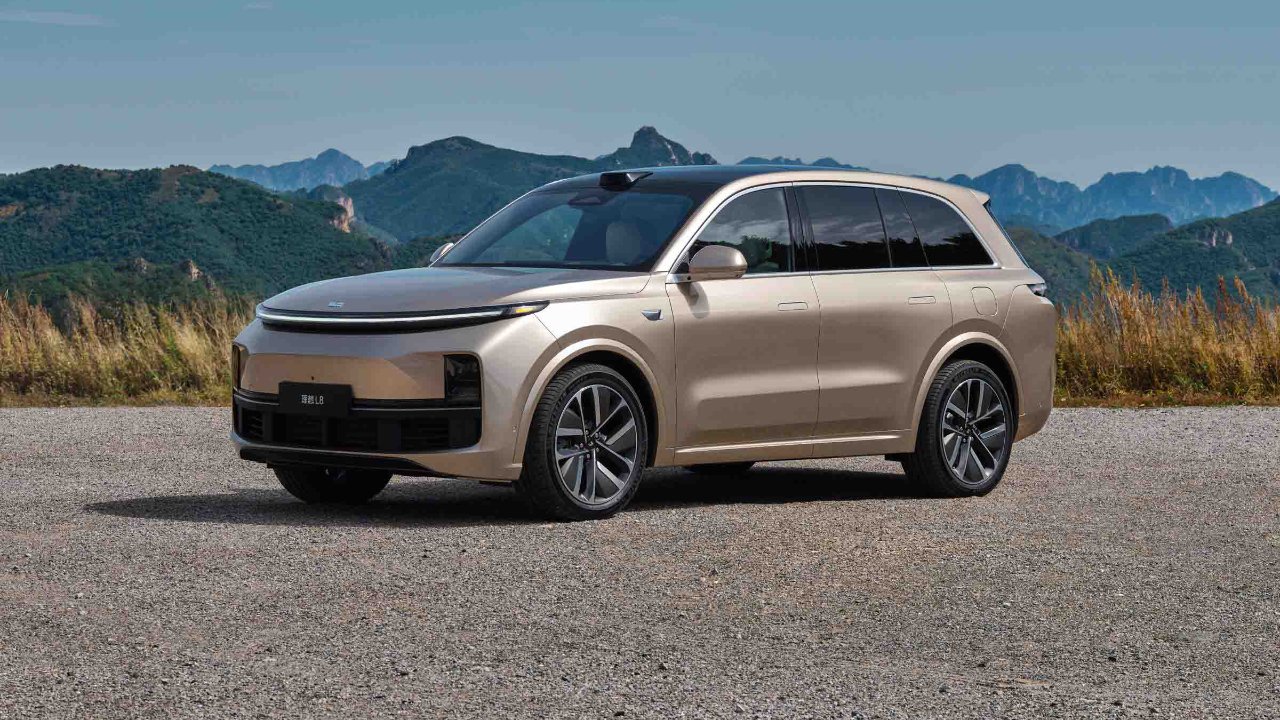
The strategy has already begun reaching production vehicles. Caixin reported that Li Auto’s self-developed battery technology was first introduced in June on the L8 range-extender SUV. The technology subsequently expanded to the L6 and the fully electric i8.
The transition is also moving into newer models. The recently launched MEGA facelift and i9 initially use CATL batteries in their first production batches, but Li Auto plans to transition them to its own battery technology as production capacity becomes available. The company’s i6 is also expected to use batteries produced under the new arrangement.
That gradual transition reflects a practical limitation. Developing a battery is one challenge, while producing enough cells to supply an entire vehicle lineup is another. By working with multiple manufacturing partners, Li Auto can increase production capacity without having to replicate the enormous industrial footprint of China’s major battery companies.
Sunwoda is particularly important to the strategy. Earlier in September, Li Auto announced plans to invest 2.65 billion yuan, approximately $390 million, in Sunwoda Electric Vehicle Battery. The transaction is expected to give Li Auto an 8.79% direct stake in the battery subsidiary, while Li Auto-related entities would hold a combined 11.17% stake.
The investment makes the relationship more than a conventional supplier arrangement. It gives Li Auto a financial connection to a company that will play a major role in producing its proprietary battery technology.
CATL Dependence Is Becoming a Smaller Part of the Strategy
The shift also marks a notable change in Li Auto’s relationship with CATL, one of the world’s largest EV battery manufacturers.
Li Auto has historically depended heavily on CATL for battery supply. Its decision to develop its own cells gives the automaker more control over battery characteristics and supply planning while potentially reducing its exposure to changes in a single supplier’s production capacity, pricing, or allocation decisions.
The change is happening at a time when Chinese automakers are increasingly looking for ways to differentiate themselves through battery technology. China’s battery industry remains dominated by CATL and BYD, but other manufacturers such as CALB and Sunwoda continue to hold meaningful positions in the market.
Data from the China Automotive Battery Innovation Alliance showed CATL held a 41.45% share of China’s power-battery installations in August 2026, followed by BYD at 20.98%. CALB accounted for 6.51%, while Sunwoda held 3.46%.
That means Li Auto is not turning to inexperienced manufacturers. Both companies already operate at significant scale, giving Li Auto access to established production capabilities while retaining responsibility for its own battery design.
The arrangement also allows Li Auto to optimize batteries specifically around its vehicles. Instead of selecting an off-the-shelf battery from a supplier’s existing portfolio, the automaker can establish the specifications it wants for energy density, charging performance, thermal management, packaging, and battery-management software.
Electrive reported earlier this month that Li Auto’s proprietary cells are already being introduced across its lineup and that Sunwoda is manufacturing the cells. The company also plans to extend the technology to the i6, which is expected to be marketed in Europe as the Li 6.
That could make the battery strategy particularly important as Li Auto expands beyond China. The company has built much of its business around range-extender vehicles in its domestic market, but its European strategy centers on fully electric models. Battery performance and charging capability therefore become increasingly important to its international ambitions.
A Supplier Model Could Give Li Auto More Flexibility
Li Auto’s decision does not mean it is becoming a conventional battery manufacturer. Instead, the company is taking a hybrid approach to vertical integration.
The automaker controls the technology, while Sunwoda and CALB provide the industrial capacity required to turn that technology into large volumes of cells. This can reduce the financial burden of building battery factories while still giving Li Auto greater influence over the product than it would have when purchasing standard cells from a supplier.
The arrangement may also allow Li Auto to use different manufacturing partners depending on capacity and vehicle requirements. That becomes increasingly valuable as the company expands its lineup and prepares for international growth.
Sunwoda’s existing scale provides another advantage. The company says its battery operations span consumer batteries, power batteries, and energy storage, while its power-battery business is focused on supplying major new-energy vehicle manufacturers.
CALB brings another established manufacturing option. Its position as China’s third-largest power-battery supplier by August installation share gives Li Auto another large-scale production partner rather than forcing the automaker to concentrate its proprietary battery production through one company.
There is also a longer-term technology component to the relationship. Li Auto has been developing solid-state battery technology with Sunwoda through a joint venture, and company executives have indicated that limited vehicle applications could arrive around 2027 or 2028, although mature mass production would take longer.
For Li Auto, the near-term goal is straightforward. The company wants to expand its proprietary battery technology across its vehicle lineup while maintaining a manufacturing process that can scale efficiently.
The transition will not happen overnight. Some newly launched vehicles will continue using CATL cells until Li Auto’s own battery production reaches the necessary volume. But the direction is clear. After 2026, Li Auto intends for its vehicles to rely on batteries designed by the automaker and manufactured by partners such as Sunwoda and CALB.
That strategy could become an important part of Li Auto’s competitive identity. Rather than competing only through vehicle design, software, or range-extender technology, the company is taking greater ownership of the battery technology that sits at the center of modern EV performance.
The result is a model that combines vertical control with outsourced manufacturing. Li Auto gets more influence over its battery technology and supply chain, while Sunwoda and CALB provide the factories and production expertise needed to turn those designs into batteries at an automotive scale.
