
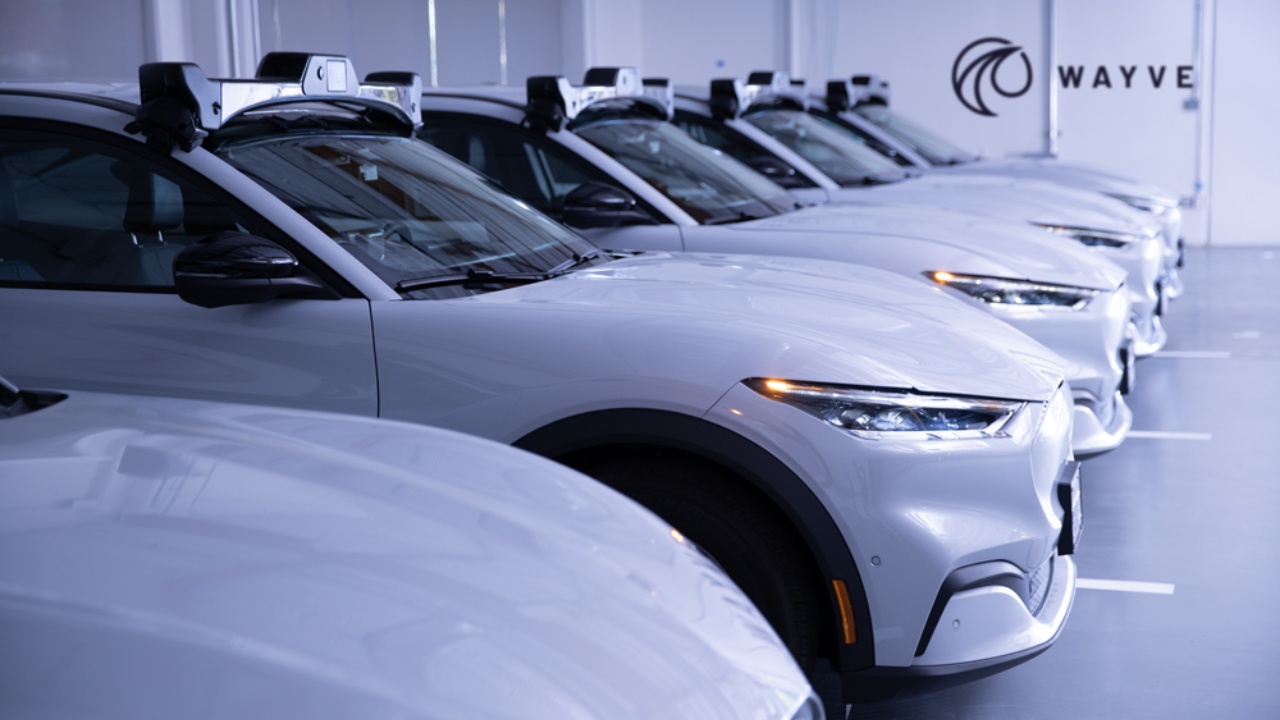
Mercedes-Benz is moving deeper into AI-powered driving assistance through a new production agreement with British autonomous-driving company Wayve. The two companies have signed a definitive agreement to integrate Wayve’s AI Driver into future Mercedes-Benz vehicles, with the first production applications expected to begin within the next two years.
The agreement represents a significant step beyond a technology demonstration. Instead of simply testing Wayve’s software in prototype vehicles, Mercedes-Benz is preparing to integrate the system into production cars that customers can buy.
The technology is intended to provide more advanced point-to-point driving assistance, particularly in complex urban environments.
According to MarkLines, the partnership will be rolled out worldwide and is designed to provide advanced urban point-to-point driving assistance beginning within the next two years.
Reuters reported that the agreement follows an existing relationship between Mercedes-Benz and Wayve and gives the German automaker access to Wayve’s approach to AI-based autonomous driving.
The timing is significant because Mercedes-Benz is already expanding its own assisted-driving capabilities while simultaneously increasing its use of AI throughout its vehicles.
The Wayve partnership gives the company another technology route as automakers compete to make advanced driving assistance more capable without immediately moving to fully autonomous consumer vehicles.
Wayve’s AI Driver Moves From Testing Toward Production
Wayve’s technology differs from traditional automated-driving systems in how it uses artificial intelligence to interpret the driving environment.
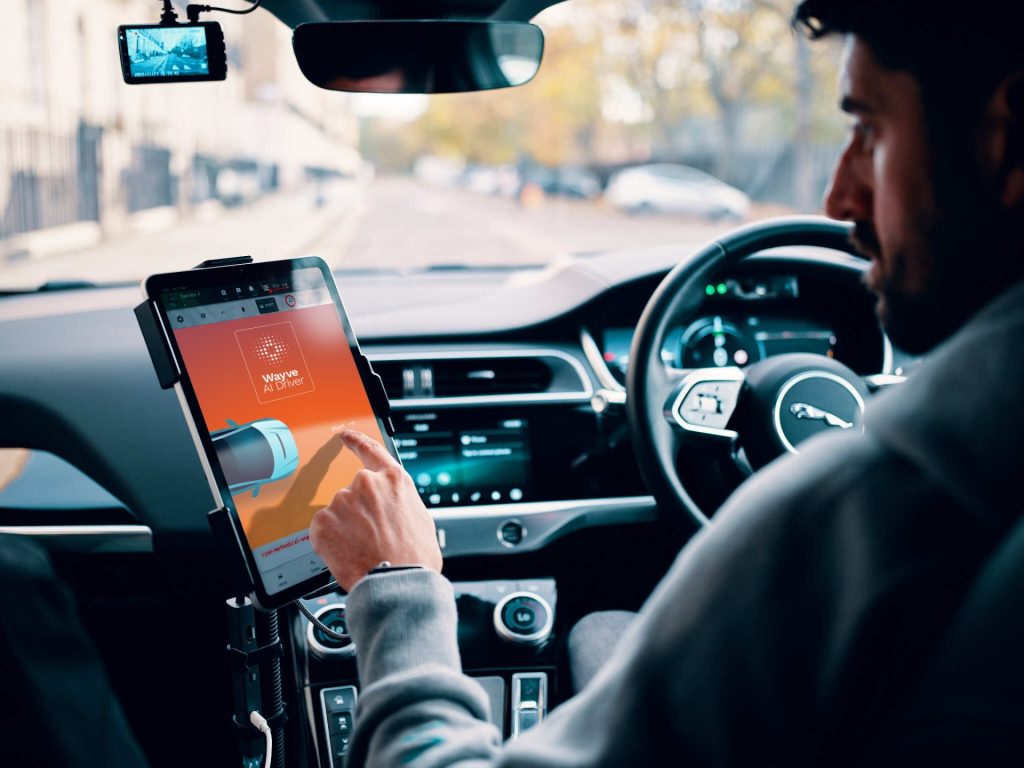
The company describes its AI Driver as an end-to-end system that can perceive, reason, and act based on real-world driving information. Rather than relying primarily on manually programmed rules for individual situations, Wayve says its system learns from real-world data and is designed to generalize across different roads, cities, and driving conditions.
That approach is particularly relevant to urban driving, where vehicles encounter an enormous variety of situations. Intersections can have unusual layouts, pedestrians can cross unexpectedly, cyclists can move between lanes, and road markings can become difficult to interpret.
Construction zones and temporary traffic restrictions can also change the environment from one day to another.
Wayve says its AI driver is designed to work with a vehicle’s existing sensor and computing architecture rather than requiring a unique hardware package. Its platform is described as sensor-agnostic, allowing automakers to adapt the system to their preferred hardware configuration.
That flexibility is important for Mercedes-Benz because the automaker has been developing its own software-defined vehicle architecture and driver-assistance systems. Integrating an external AI platform therefore requires the technology to work within Mercedes’ existing electronic and software environment.
The agreement also does not mean that Mercedes vehicles will suddenly become fully autonomous. Wayve’s product portfolio includes different levels of automated driving, including an advanced Level 2+ hands-free system and technology intended to support future Level 3 capabilities.
The distinction matters because Level 2 systems still require the driver to remain responsible for the driving task, even when the vehicle can perform steering, acceleration, and braking functions.
A future Level 3 system can permit the vehicle to take responsibility under defined conditions, but only within the operational limits specified by the manufacturer and regulators.
The initial Mercedes-Benz application is being described as advanced urban point-to-point driving assistance rather than unrestricted autonomous driving.
That means customers should expect a system designed to handle more of the driving environment while still operating within clearly defined conditions.
Mercedes-Benz already has experience with advanced point-to-point assistance. In its second-quarter 2026 report, the company said it was targeting the introduction of point-to-point assisted driving in the first German cities by the end of 2026.
The Wayve agreement could expand that technological direction further by bringing AI-based driving capabilities into future production models and markets.
Mercedes Is Building a Broader AI Strategy
The Wayve partnership is part of a much larger technology shift taking place inside Mercedes-Benz.
The company has been investing in AI across several areas of vehicle operation, including voice interaction, infotainment, and automated driving. Earlier in 2026, Mercedes-Benz announced a multi-year partnership with Liquid AI to bring more advanced AI capabilities directly into vehicles equipped with its newer MBUX generations.
That partnership focuses on embedded, on-device AI for speech, language understanding, and reasoning. Mercedes said the technology is intended to operate locally in the vehicle, reducing dependence on cloud connectivity and improving response times.
The company targeted its first production deployment of the Liquid AI technology for the second half of 2026.
Wayve’s role is different. Its AI driver is focused specifically on interpreting the driving environment and controlling the vehicle’s driving functions.
Together, these partnerships illustrate how Mercedes is treating AI as a foundational technology rather than a single infotainment feature.
The company is also continuing to develop its own vehicle operating architecture. Mercedes-Benz has been moving toward software-defined vehicles in which software can control and update a growing range of functions after the vehicle leaves the factory.
That creates a potential advantage for advanced driving systems because capabilities can be improved through software development rather than requiring a completely new vehicle generation for every technological improvement.
Wayve’s software platform is similarly designed around continuous development. The company says its cloud infrastructure supports software release management, OEM customization, and fleet management, while the AI driver itself runs using onboard computing and vehicle sensors.
This approach is particularly relevant as autonomous-driving companies attempt to move away from expensive, highly specialized vehicle hardware.
Wayve has also been expanding its real-world operations. Earlier this month, Uber and Wayve launched autonomous ride services in London, marking another practical deployment of Wayve’s technology in a complex urban environment.
Reuters reported that London became the second European city where Uber offers autonomous rides using Wayve technology, following Zagreb.
That experience could provide additional real-world data and operational knowledge as Wayve prepares to bring its technology into mass-produced passenger vehicles.
For Mercedes-Benz, the production agreement also arrives as the company faces intense competition in automotive software.
Chinese automakers and technology companies are rapidly developing driver-assistance systems, while companies such as Tesla, Waymo, and other autonomous-driving developers continue advancing their own approaches.
Mercedes therefore needs technology that can operate across different road environments and regulatory markets rather than being limited to a small number of highly controlled areas.
The companies say the Wayve system will eventually be rolled out worldwide, although the precise Mercedes models, markets, and regulatory conditions for the initial production launch have not yet been detailed.
The two-year timeframe should also not be interpreted as a promise that every future Mercedes model will receive the technology simultaneously. Production integration will depend on vehicle architecture, validation, regulatory approval, and market-specific requirements.
Safety validation will be particularly important. An AI driving system must be tested across a huge range of road conditions before it can be deployed at scale, and the regulatory requirements vary between countries.
Mercedes-Benz’s existing driver-assistance programs provide a foundation, while Wayve brings a different AI architecture designed to generalize across environments.
The agreement ultimately signals a change in how advanced driving technology is reaching consumers. Automakers are no longer relying exclusively on internally developed systems.
Partnerships with specialized AI companies allow manufacturers to combine their vehicle engineering, safety validation, and production expertise with software companies focused specifically on machine-learning-based driving.
For Wayve, getting its AI driver into Mercedes-Benz production vehicles would represent a major step from startup technology to large-scale automotive deployment. For Mercedes, it provides another route toward more capable urban driving assistance while the company continues developing its own software-defined vehicle architecture.
The first production applications are expected within the next two years. Until Mercedes and Wayve provide details about the specific models, launch markets, and final capabilities, the agreement should be viewed as the beginning of a production program rather than the arrival of a fully autonomous Mercedes.
What is already clear is that AI is becoming a much larger part of Mercedes-Benz’s vehicle strategy.
With Wayve handling advanced driving intelligence, Liquid AI working on embedded in-car intelligence, and Mercedes continuing to develop its own software architecture, the company is building a technology ecosystem in which software increasingly determines what its vehicles can do.
