
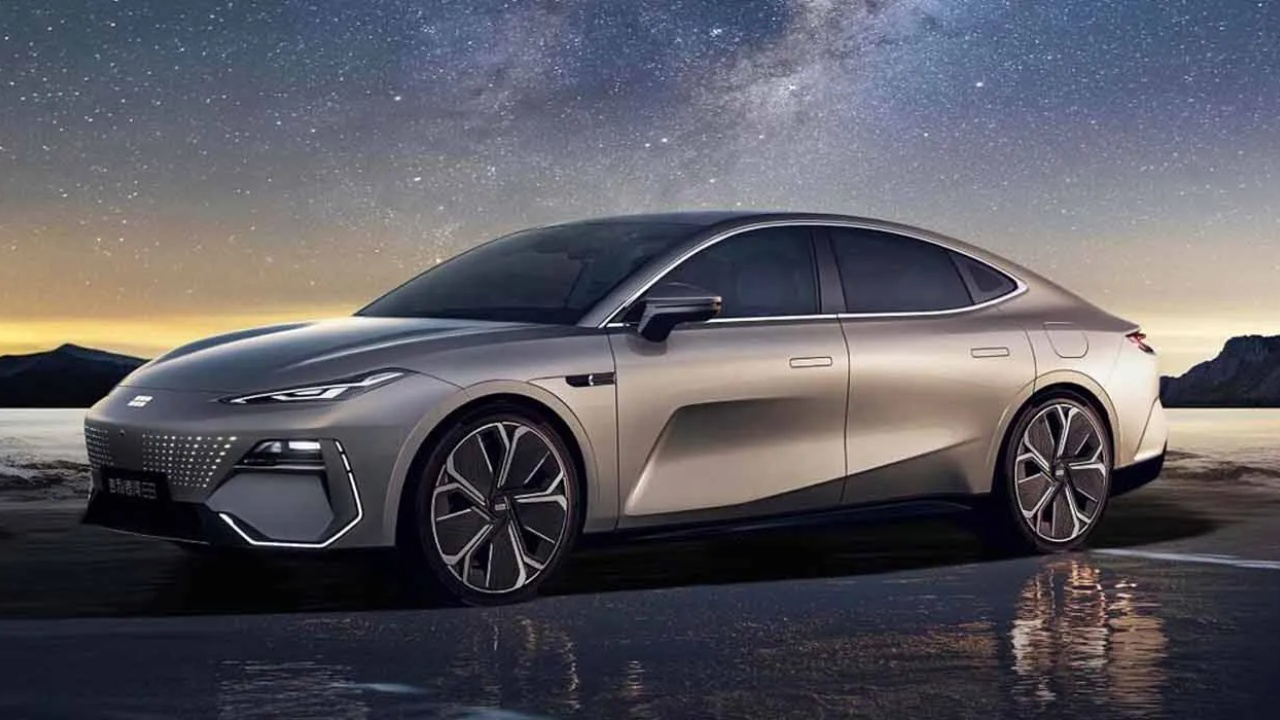
Geely is taking another step in the electric-vehicle charging race with a new system that the automaker says can charge a compatible EV from 10% to 70% in just 4.5 minutes.
The Chinese automaker’s latest technology combines a high-power charging system, a new-generation battery, and artificial intelligence designed to manage the extreme temperatures and energy flows involved in megawatt-level charging.
The announcement, made on September 23, comes as Chinese automakers increasingly compete on charging speed, driving range, and intelligent vehicle technology rather than simply on price.
Geely’s move also directly follows BYD’s expansion of its own ultra-fast charging technology, putting two of China’s largest EV manufacturers into an increasingly visible race to reduce charging times.
According to Reuters, Geely’s new system uses charging infrastructure capable of delivering 2.2 megawatts and a high-rate battery. Under normal ambient temperatures, Geely says a compatible vehicle can charge from 10% to 70% in 4.5 minutes and from 10% to 97% in 8 minutes and 40 seconds.
Those figures are based on Geely’s own testing and represent specific battery and charging conditions. They should not be interpreted as the time required for every Geely EV to charge at every station.
Geely Pushes Charging Technology Toward the Physical Limit
The headline number is the four-minute charging target, but the more important development is the technology required to deliver it.
Charging an EV at more than 2 megawatts creates enormous thermal and electrical-management challenges. The battery must accept extremely high currents while remaining within safe temperature limits. The charging station, cables, connectors, and vehicle electronics also have to handle the power without excessive heat generation.
Geely says it is addressing those challenges with artificial intelligence operating both in cloud systems and directly inside the vehicle. According to Reuters, the system uses cloud-based digital-twin simulations together with deep-learning models installed in the EV to monitor battery health, control temperatures, and predict potential hazards.
That means AI is not being used simply as an infotainment feature. In this application, Geely is using it as part of the battery management and charging process.
The company says the system can anticipate battery conditions and adjust charging behavior accordingly. That becomes increasingly important as charging power rises because the difference between a battery operating within its intended temperature range and one exposed to excessive heat can have implications for charging speed, durability, and safety.
Geely executive Zhang Dewang told Reuters that current charging speeds are already approaching physical limits, suggesting that future improvements may increasingly come from optimization rather than simply adding more power.
That is an important point for the industry’s next stage. Doubling charging power does not automatically halve charging time because charging curves change as the battery approaches a high state of charge. Batteries can accept extremely high power at certain points, but the system generally reduces power as the battery fills to protect the cells.
Geely’s claimed 10% to 70% time of 4.5 minutes is therefore particularly relevant because it focuses on the portion of charging most useful to drivers during a short stop.
The company’s 10% to 97% figure of 8 minutes and 40 seconds provides a second measure, but real-world charging times will depend on battery temperature, starting state of charge, station capability, and other conditions.
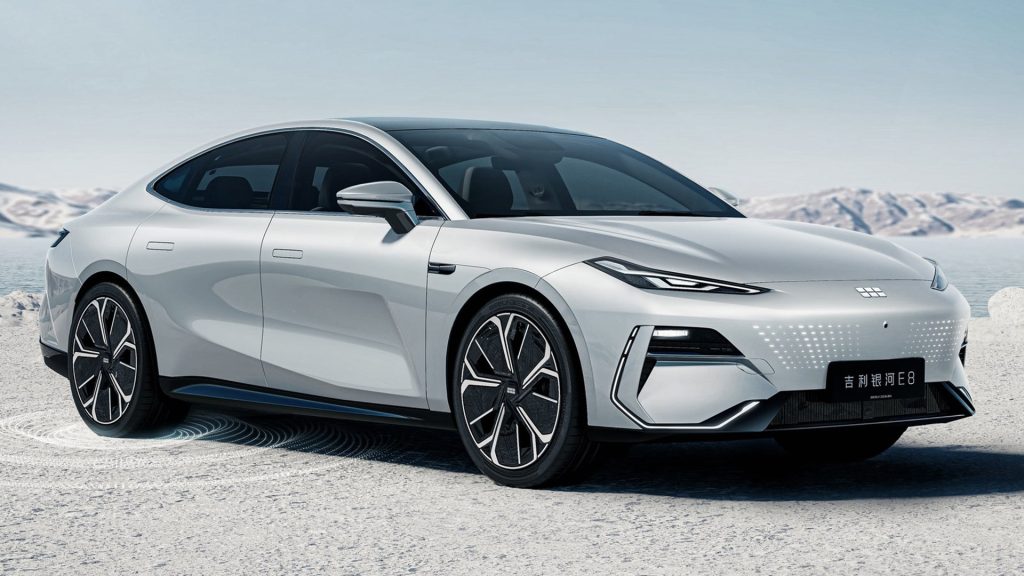
Geely also introduced a new-generation EV battery alongside the charging system. The battery is designed to support the high-rate charging architecture, while the upgraded Galaxy E5 electric SUV serves as another application for the automaker’s broader EV technology program.
Reuters reported that the company is introducing these products as it seeks to strengthen sales in China, where EV sales declined for 11 consecutive months through August.
That makes the charging announcement about more than infrastructure. Geely is attempting to connect faster charging, new battery technology, and vehicle products into a single competitive package.
BYD and Geely Are Turning Charging Into a Competitive Weapon
The latest development also makes sense when viewed against BYD’s recent charging push. BYD introduced its own next-generation flash-charging system earlier this year, with Reuters reporting that it can charge a battery from 10% to 97% in nine minutes.
Deutsche Bank, citing a meeting with BYD management, said the company plans to build 90,000 charging stations by 2028.
Geely’s new system therefore arrives in a market where charging speed has become a major technology battleground.
For years, EV manufacturers competed heavily on battery capacity and driving range. A vehicle capable of traveling several hundred miles between charges could reduce the number of stops required on a long journey, but larger batteries add weight, cost, and material requirements.
Ultra-fast charging offers another solution. Instead of carrying an extremely large battery to maximize range, manufacturers can potentially focus on making charging stops shorter and more convenient.
The concept is similar to the experience of filling a gasoline vehicle, although the infrastructure and energy requirements are very different. A driver who can add a substantial amount of range during a brief stop may have less reason to treat charging time as a major inconvenience.
Geely executive Zhang told Reuters that future charging infrastructure could resemble traditional gasoline stations, with multiple brands using a broader charging ecosystem. He also said cooperation among different parties could accelerate the global expansion of fast-charging networks.
That point highlights a major issue facing ultra-fast charging. A vehicle capable of accepting megawatt-level power is only useful if compatible chargers are available.
Building a 2.2-megawatt charging network requires substantial electrical infrastructure. It also requires suitable charging hardware, grid connections, cooling systems, and locations capable of supporting the equipment. The cost and complexity of installing such stations could limit how quickly the technology spreads outside major markets.
The charging race also raises questions about how frequently drivers actually need the maximum charging rate. Most EV owners charge at home or at lower-power public chargers, where overnight or longer charging sessions are sufficient.
Megawatt-level charging is more relevant to long-distance travel, commercial vehicles, and drivers who need to recover substantial range in a short period. Geely’s technology could eventually make the biggest difference in those situations.
The company’s strategy is also broader than charging. Geely has been expanding its international operations and technology portfolio. The company reported that its first-half 2026 exports reached 474,000 vehicles, a 158% increase from a year earlier, and subsequently raised its 2026 export target from 640,000 to 920,000 vehicles.
That international expansion gives Geely another reason to develop technologies that can differentiate its vehicles as Chinese automakers increasingly compete outside their home market.
The company is also investing heavily in AI-based vehicle systems. Geely has described its Full-Domain AI 2.0 architecture as a unified system connecting functions such as the cockpit, chassis, safety, and driving systems. Its G-ASD technology is being developed for higher levels of automated driving.
The combination of AI and charging technology therefore fits into a larger technology strategy rather than representing an isolated battery announcement.
The key question now is how quickly the technology can move from demonstrations and controlled testing into a widespread consumer charging network. A four-minute charging stop is only meaningful if the vehicle, battery, and charger can consistently deliver the claimed performance under real-world conditions.
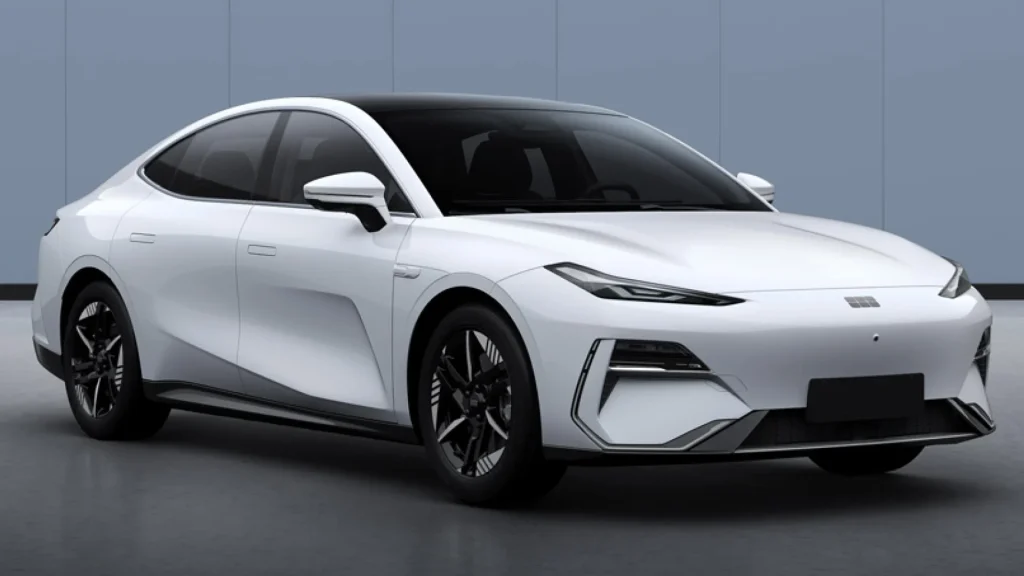
For Geely, the announcement nevertheless establishes a new benchmark in China’s increasingly competitive EV market. Its system is designed to charge from 10% to 70% in 4.5 minutes and from 10% to 97% in 8 minutes and 40 seconds under normal ambient conditions, supported by 2.2-megawatt charging infrastructure.
BYD is pursuing a similarly aggressive path, while other Chinese manufacturers are also investing in high-voltage architectures, larger charging networks, and increasingly sophisticated battery management.
The result is a shift in what EV manufacturers are competing to deliver. Range remains important, but charging time is becoming a separate performance metric. Geely’s latest system shows just how far manufacturers are willing to push battery technology and charging infrastructure to reduce the time an EV spends connected to a charger.
If these systems can be deployed reliably and at sufficient scale, the biggest change may not be a vehicle that travels farther on a single charge. It could be an EV that needs less time to recover the range it has already used.
