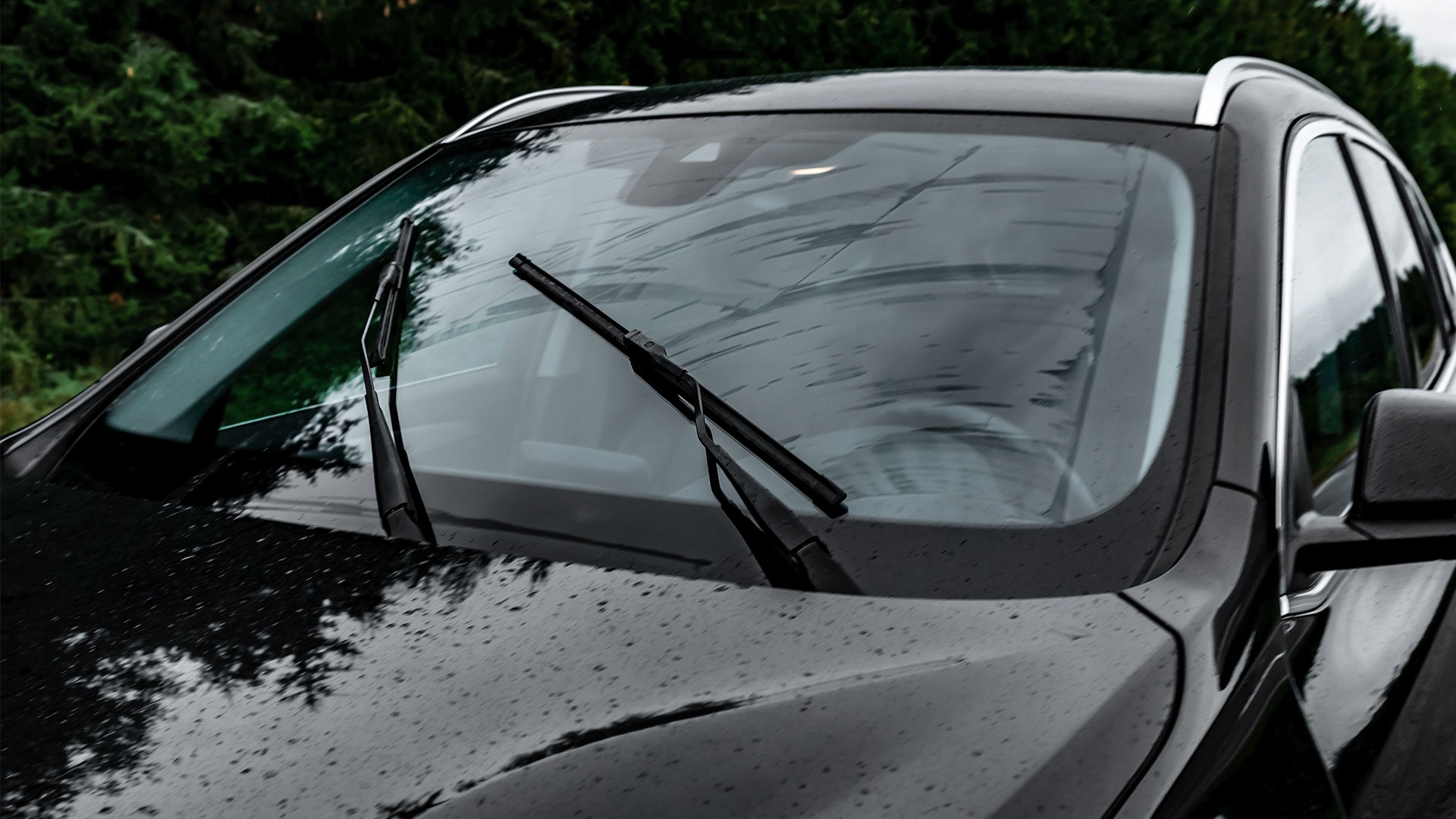
A windshield can look like one simple sheet of glass, but there is much more happening around and inside it than most drivers realize. Those tiny black dots, dark borders, layered construction, and hidden mounting areas all serve practical purposes. Some help protect the adhesive that keeps the glass attached to the vehicle. Others improve visibility, reduce optical distortion, support crash protection, or make room for cameras and sensors.
Even the manufacturing process involves carefully controlled heat, pressure, shaping, and bonding. Once you know what to look for, an ordinary windshield starts to look less like a piece of glass and more like a carefully engineered vehicle component. Here are 10 details worth noticing the next time you sit behind the wheel.
1. Black Frit Bands
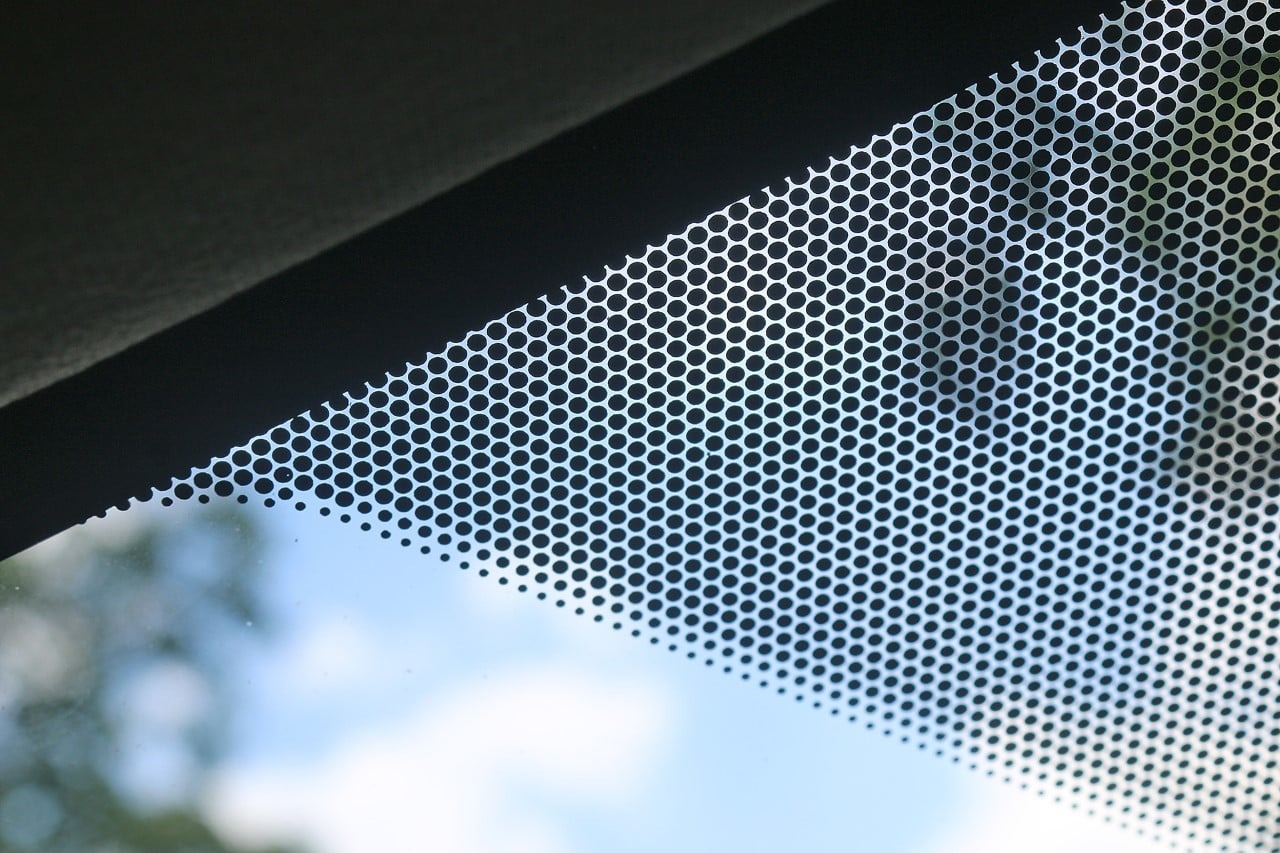
That black border running around the edge of your windshield isn’t decoration, and it isn’t there to hide anything unattractive underneath.
It’s a ceramic frit band baked directly into the glass during manufacturing, and it serves two very specific purposes that most drivers never think to ask about.
First, it creates a rough, textured surface that gives the urethane adhesive something reliable to grip during installation. Smooth glass alone wouldn’t bond nearly as well, so this band acts as the foundation holding your windshield firmly attached to the car’s frame.
Second, that black band blocks ultraviolet radiation from breaking down the adhesive underneath it. Urethane, like many materials, degrades when exposed to constant sun exposure, and a weakened bond around the edge of a windshield is exactly the kind of problem you don’t want during a crash.
By shielding that adhesive from UV rays, the frit band helps the bond stay strong for years, quietly protecting something drivers rarely think about until something goes wrong.
There’s a structural benefit too. The dark ceramic material helps manage heat buildup at the edge of the glass, an area where temperature differences between the hot black band and the surrounding clear glass could otherwise create stress.
Without that buffer, repeated heating and cooling cycles could eventually cause cracking right at the border where the glass meets the frame.
2. Tiny Frit Dots
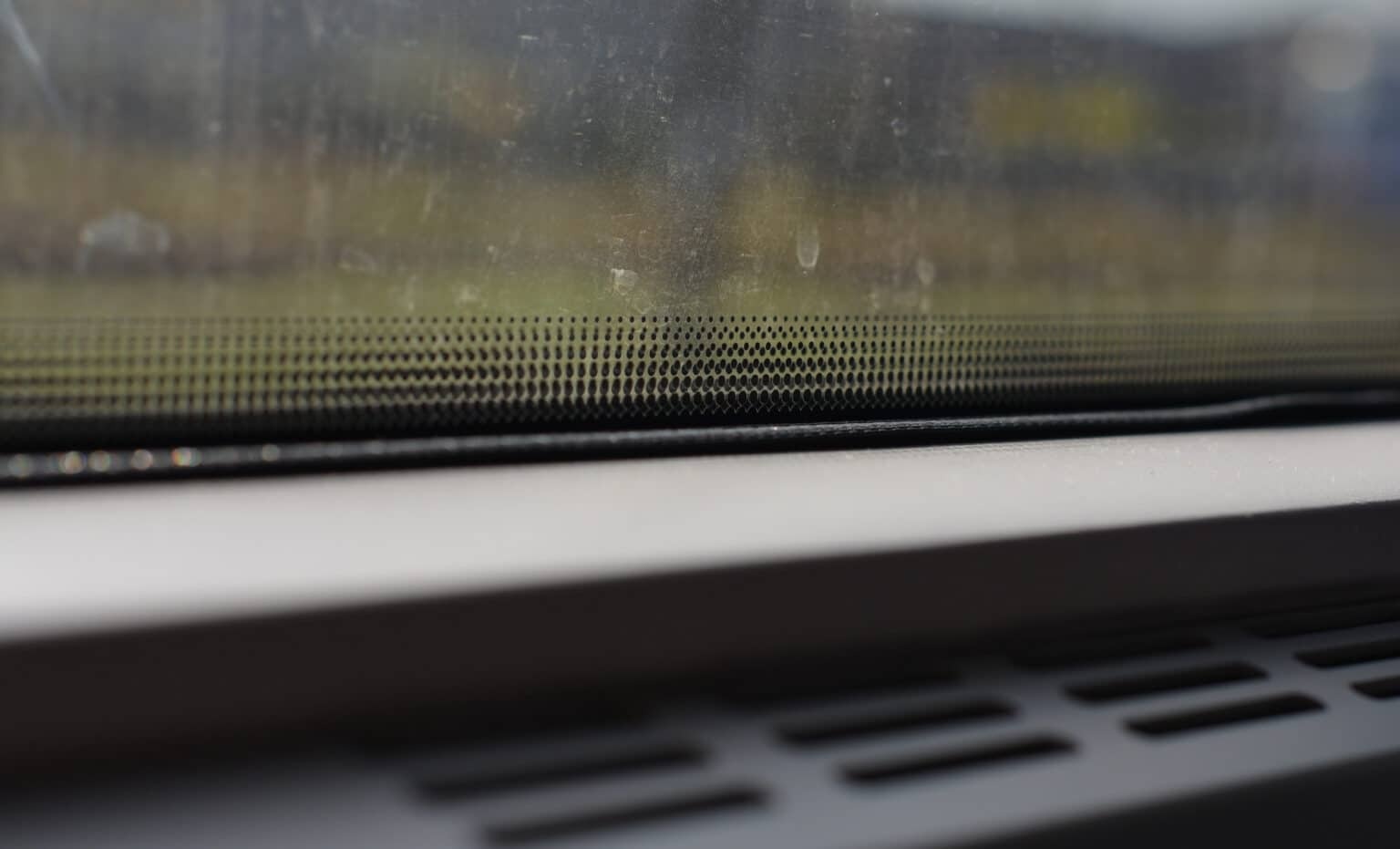
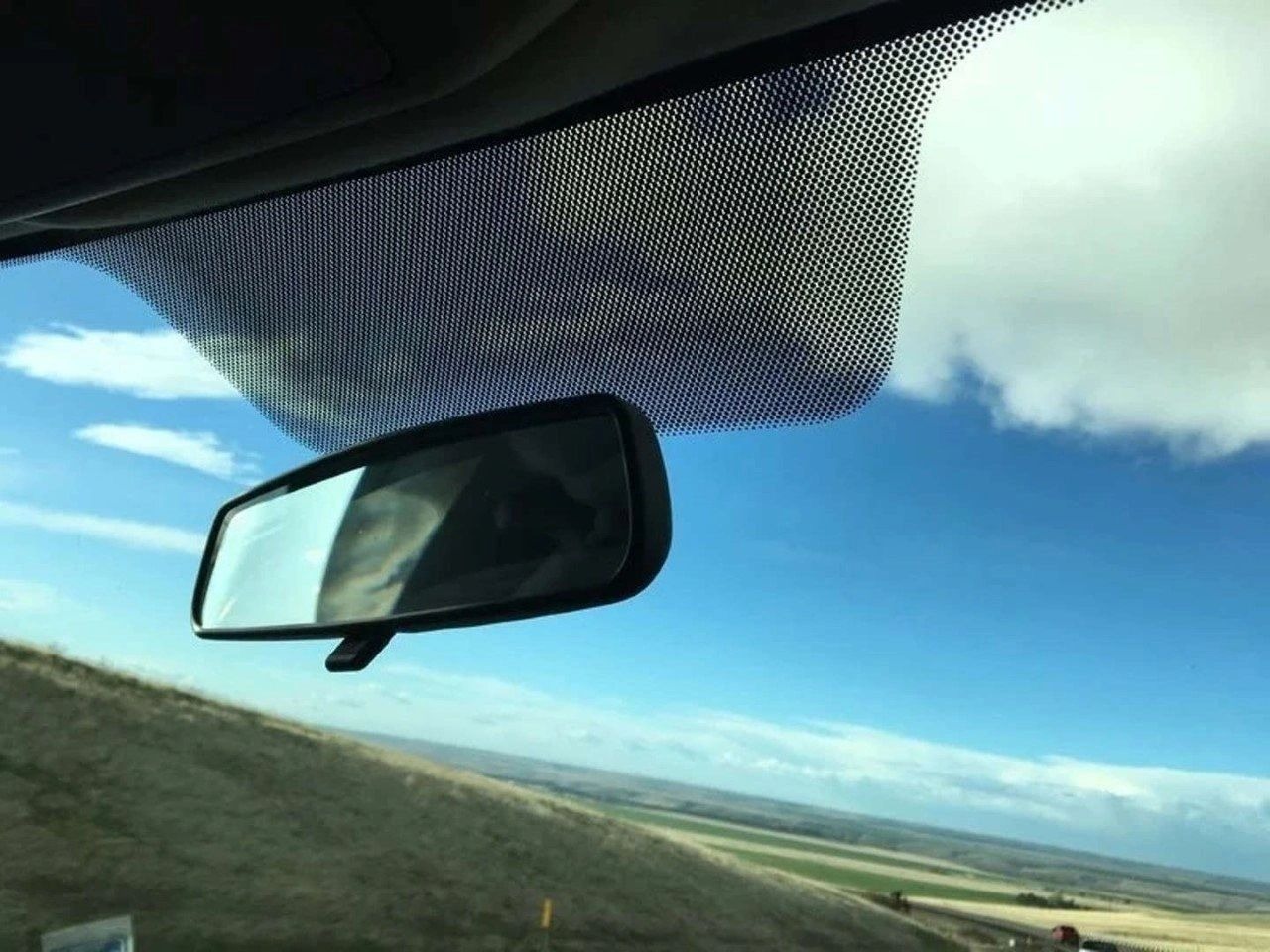
Look closely at the black border, and you may notice that it does not always stop with a sharp line. Instead, many windshields have rows of small black dots that gradually become smaller as they approach the clear glass.
The pattern can look decorative, but it has a practical purpose tied to how automotive glass is manufactured. A windshield is exposed to substantial temperature changes during production.
The dark frit absorbs heat differently from the surrounding clear glass. A sudden transition from a heavily printed black area to completely clear glass could produce uneven heating and cooling across the surface.
The dot pattern creates a more gradual visual and thermal transition between the dense frit area and the transparent portion. This helps manage the change across the glass and can reduce optical effects associated with uneven heating during production.
There is also a visual benefit. A gradual dot pattern is less visually abrupt than a solid black edge, which helps the border appear smoother from inside the vehicle.
Those tiny circles are therefore part of the windshield’s manufacturing design. They are easy to ignore because they are so small, yet they help connect the dark frit area with the clear viewing area in a carefully controlled way.
3. Laminated Safety Construction
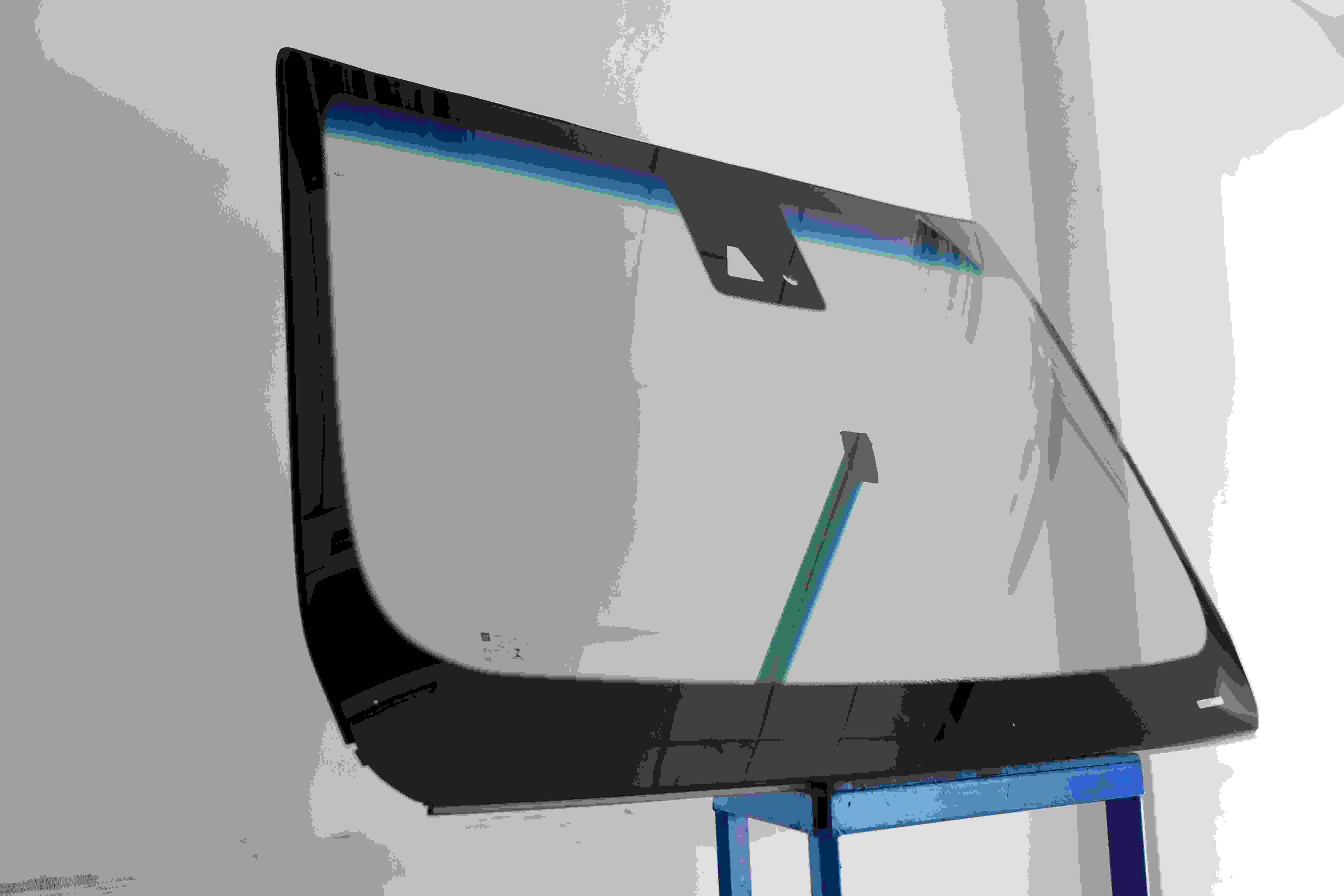
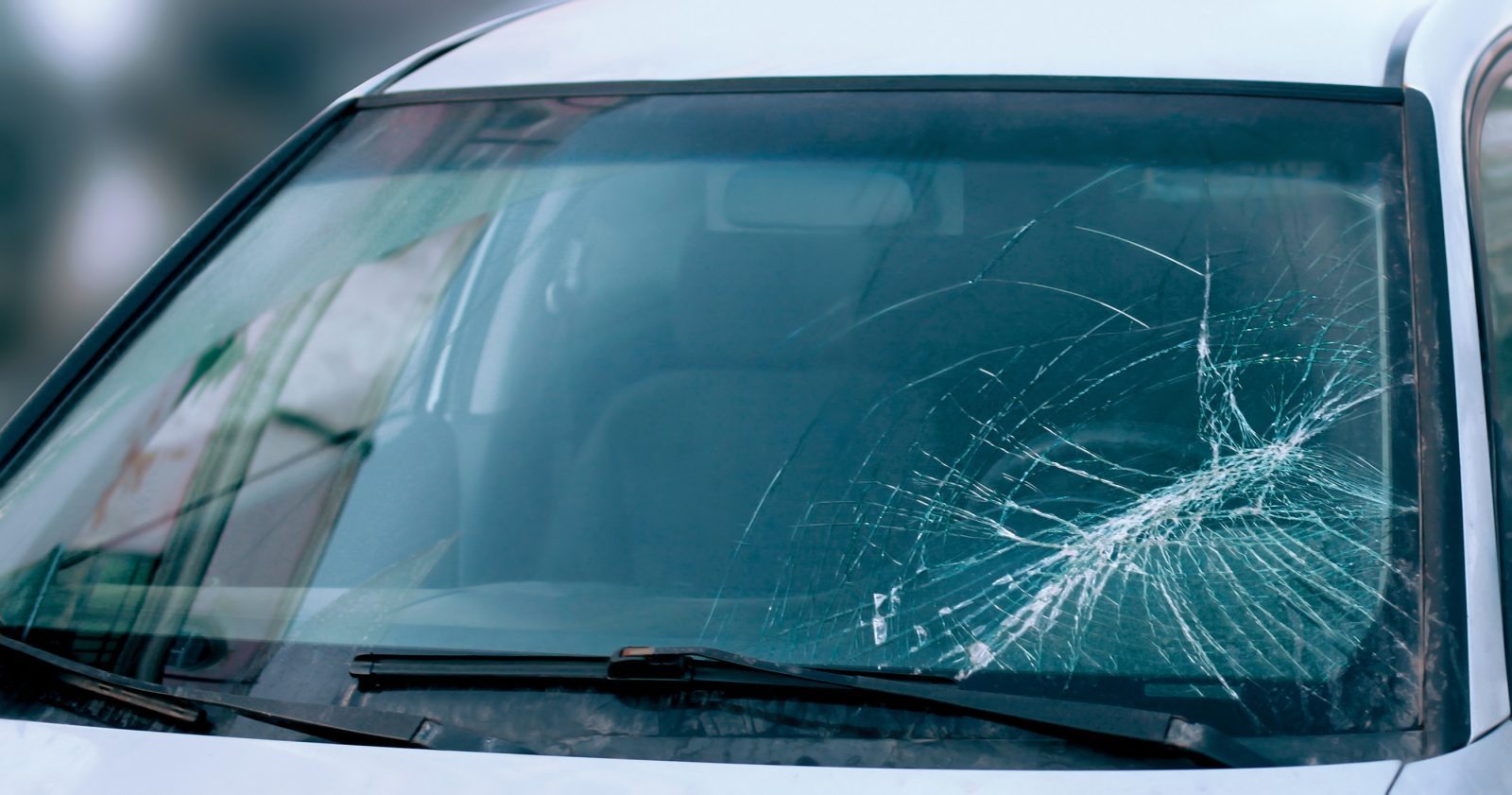
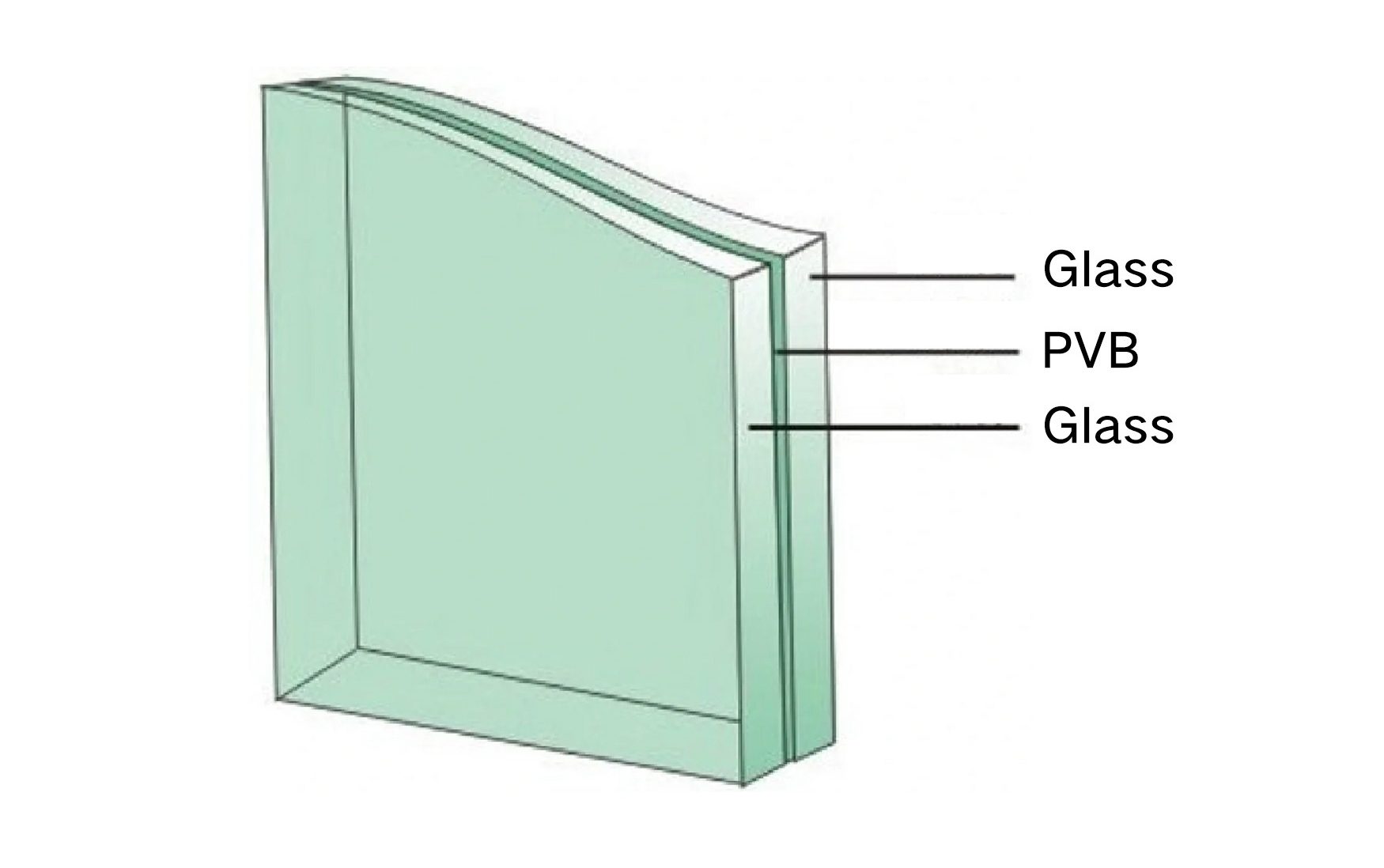
A windshield is not normally made from one thick piece of ordinary glass. Instead, it uses laminated safety glass, generally consisting of two glass plies with a plastic interlayer between them. This construction changes how the windshield behaves when damaged.
The plastic interlayer, commonly PVB, sits between the glass layers. During manufacturing, the layers are bonded together under controlled conditions.
If the outer glass is struck by a stone or suffers more serious damage, the interlayer helps hold pieces in place rather than allowing the glass to break apart like a typical single pane of brittle glass.
That distinction matters inside a vehicle. A damaged laminated windshield may develop cracks or a web of broken areas, but the interlayer helps keep the assembly together.
The windshield can therefore continue serving as a connected component instead of simply becoming a collection of loose glass fragments.
The construction also gives manufacturers a way to add other properties to the glass system. Depending on the interlayer and windshield design, the laminate can contribute to acoustic performance, energy absorption, and other functions.
So the next time you see a crack spreading across a windshield, remember that you are seeing only part of a multilayer safety assembly. The transparent sheet is actually a carefully bonded combination of materials.
4. The Windshield Is Part of the Safety Structure
Many drivers think of the windshield mainly as a barrier against rain, insects, dust, and flying road debris. It also has a structural role. Because the windshield is bonded directly to the vehicle body, its installation and retention can matter during a collision.
Federal Motor Vehicle Safety Standard 212 addresses windshield mounting and retention in certain crash conditions. NHTSA testing requirements specify how much of the windshield periphery must remain retained following a prescribed frontal barrier impact.
That means the way the windshield is mounted is not simply a matter of keeping water outside the cabin. The adhesive bond is part of this system.
Modern vehicles commonly use urethane adhesives specifically designed for automotive glass bonding. Manufacturers and glass technicians follow installation procedures involving appropriate surfaces, primers, adhesives, and curing requirements.
This is one reason a windshield replacement should not be treated like an ordinary piece of glass replacement. The correct glass, adhesive system, preparation, and installation procedure all matter.
There is an important takeaway for drivers as well. A windshield may appear completely normal from the outside while still having installation issues that are difficult to detect without a closer inspection.
Proper fit and bonding are important because the windshield is integrated into the vehicle rather than simply sitting inside the body opening.
5. PVB Does More Than Hold Glass Together
The plastic layer between the glass plies deserves more attention than it usually gets. This material, commonly polyvinyl butyral, or PVB, is not simply a sheet placed there to stop broken glass from scattering.
It is an engineered interlayer that contributes several properties to laminated automotive glazing. When the glass breaks, the interlayer helps retain the fragments and keeps the laminate together.
That behavior is one of the defining advantages of laminated safety glass. The interlayer can also contribute to energy absorption and acoustic performance, depending on its formulation and the specific windshield design.
This last point is worth emphasizing because not every laminated windshield has exactly the same performance. Different interlayer types can be engineered for particular purposes, so claims about noise reduction or ultraviolet protection should not automatically be applied to every windshield.
The interlayer also has an important manufacturing role. During production, it must bond properly with both glass plies. The finished assembly needs to remain optically clear and structurally sound after processing.
From the driver’s seat, all of this is almost impossible to see. The PVB is hidden inside the windshield, yet it helps determine how the glass behaves when damaged and contributes to the characteristics of the finished glazing.
That invisible middle layer is one of the reasons a windshield is better understood as a laminated safety component than as ordinary glass.

6. Windshields Are Precisely Formed
Flat glass doesn’t curve to match the shape of a modern car hood and roofline on its own, which means every windshield starts as a flat sheet before undergoing a precise shaping process inside a manufacturing facility.
Glass makers like Pilkington describe heating glass to temperatures around 620 degrees Celsius, hot enough to make the material pliable without melting it completely, then forming it into the curved shape required for that specific vehicle model.
This process demands remarkable precision. Two glass sheets destined to become a single laminated windshield need to curve in exactly matching shapes, since any mismatch between the two layers would create visible distortion or gaps once the PVB interlayer gets sandwiched between them.
Manufacturers use molds custom-shaped to each vehicle platform, meaning a windshield designed for one car model generally won’t fit properly on a different model without adjustments to that shaping mold.
After the glass reaches its curved shape, controlled cooling follows immediately. Cooling too quickly could introduce stress points or even cause cracking, while cooling too slowly would slow down production without adding any real benefit.
Manufacturers calibrate this cooling phase carefully, balancing production speed against the glass’s structural integrity once it reaches room temperature and moves toward the lamination stage. Optical clarity depends heavily on getting this shaping process right.
Any warping or inconsistency introduced during heating and forming would create visible distortion for the driver looking through the finished windshield, turning a minor manufacturing shortcut into a genuine visibility hazard on the road.
That’s why this stage receives such careful attention despite happening long before the glass ever reaches a dealership lot.
7. Lamination Uses Heat, Vacuum and Pressure
The windshield’s layered construction does not happen simply by placing two sheets of glass around a plastic film. The materials must go through a carefully controlled bonding process so the finished assembly becomes clear, strong, and properly integrated.
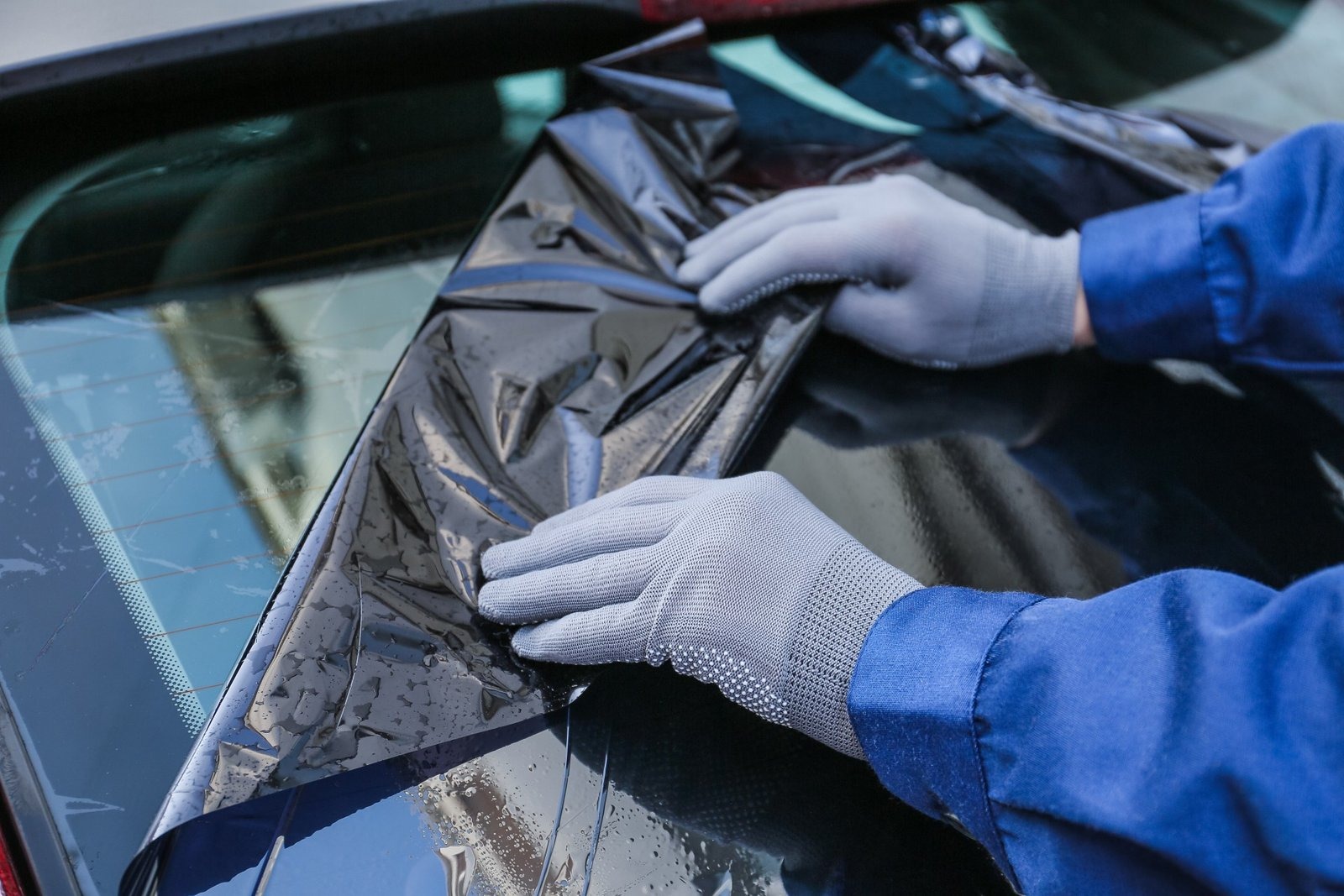
After the glass plies have been shaped and cooled, the PVB interlayer is positioned between them. At this stage, the interlayer is not yet in its finished transparent state. Air trapped between the layers must be removed before the final bonding stage.
Pilkington describes mechanical or vacuum squeezing to remove trapped air, followed by processing in an autoclave. The windshield is heated to about 140°C while pressure of roughly 10 to 15 kg/cm² is applied. This process completes the bonding of the glass plies and interlayer.
That combination of heat and pressure helps produce the clear laminated assembly drivers see every day. It also illustrates why windshield production requires much tighter process control than many people might expect from a piece of automotive glass.
The finished windshield may look completely simple, but its appearance hides a carefully controlled manufacturing sequence. Glass forming, interlayer placement, air removal, heating, and pressure processing all contribute to the final product.
So when a windshield appears perfectly clear and uniformly curved, that result is the product of several manufacturing stages working together.
8. The “Third Visor”
Sun visors flip down on both sides of your rearview mirror, but there’s a gap directly behind that mirror where sunlight can still sneak through at certain angles, particularly during sunrise and sunset drives when the sun sits low on the horizon.
Many windshields address this gap with a concentrated frit pattern positioned directly behind the mirror mount, an area sometimes nicknamed the third visor by people in the auto glass industry.
This patch of frit typically appears as a solid or semi-solid black shape, distinct from the thin banding running along the windshield’s outer edge. Its placement isn’t random.
Engineers position it specifically to block the narrow band of sunlight that would otherwise pass through that small gap between the two conventional visors, reducing glare exactly where drivers need clear vision the most during those tricky lighting conditions.
Beyond blocking sunlight, this concentrated frit area also serves as a mounting zone. Many rearview mirrors, along with the sensors and cameras increasingly built into that same area, attach directly to the glass through this frit patch.
The ceramic material provides a stable, opaque surface that hides mounting hardware from view while giving adhesives something reliable to bond against, similar to how the perimeter frit band functions around the windshield’s outer edge.
Drivers rarely notice this patch consciously, mostly because it blends into the general area around the mirror without drawing attention.
Its function, though, remains genuinely useful, quietly reducing glare during exactly the driving conditions when visibility already feels more challenging than usual.
9. Windshields Can Carry Electronics
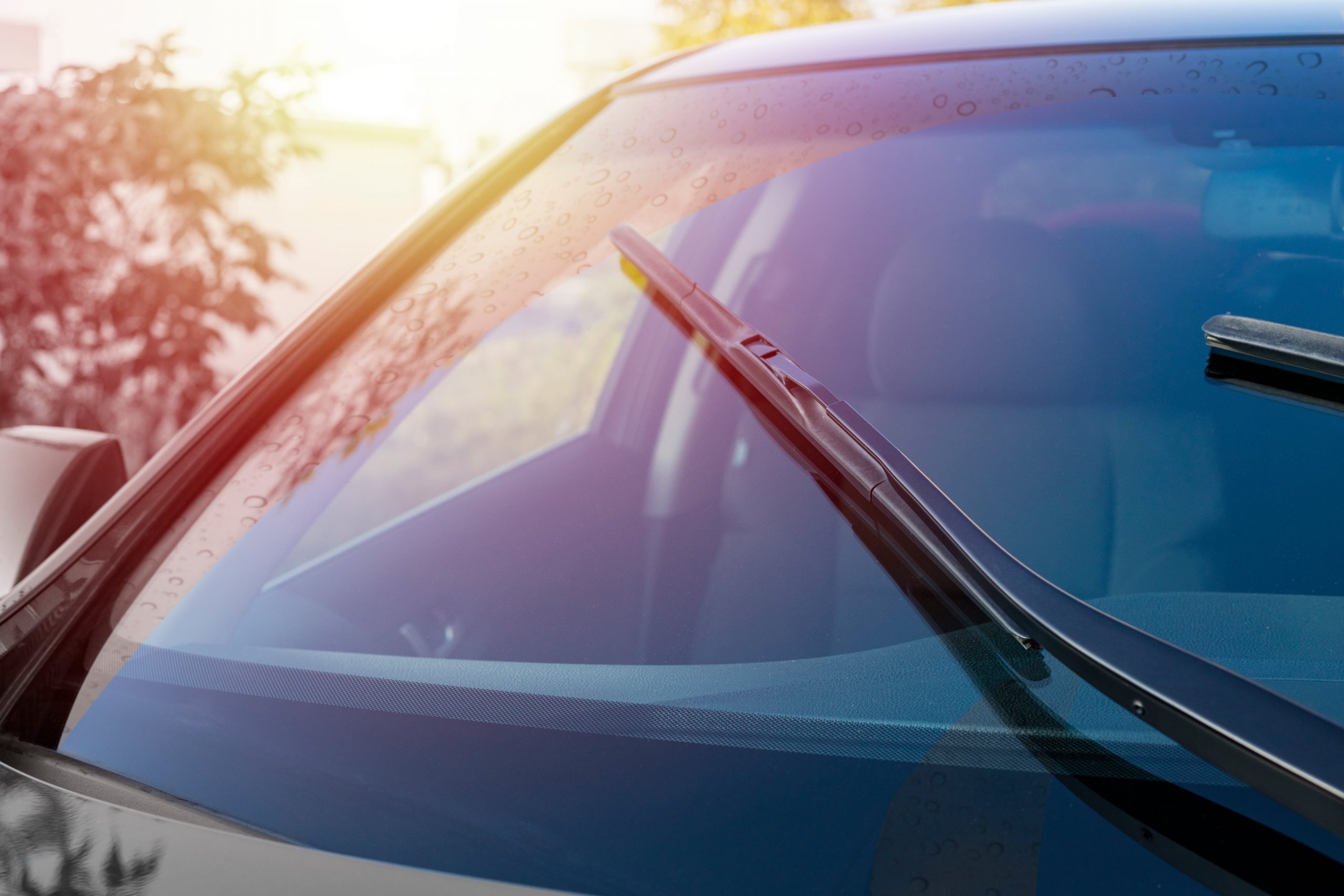
Some modern windshields are doing electronic work that is completely invisible to someone sitting behind the wheel. The glass can be designed to accommodate equipment or conductive elements associated with systems such as antennas, rain and light sensors, heads-up displays, and advanced driver-assistance cameras.
NHTSA documentation describes glazing conductors as elements used for functions including antennas, special sensors, lighting, and systems that help remove moisture, ice, or snow from glazing.
The windshield can also provide a carefully defined optical area for cameras mounted near the rear-view mirror. That creates an important consideration when the glass needs replacement.
The replacement part may need the correct shape, mounting provisions, sensor areas, coatings, and other specifications for that particular vehicle. On vehicles equipped with driver-assistance features, replacing the windshield can also involve camera calibration.
The explanation is straightforward. Even a slight change in the glass’s position or optical properties can affect how a camera detects and interprets lane markings, vehicles, road signs, and other objects.
This makes windshield replacement more involved than choosing a piece that physically fits the opening. A windshield can therefore be part of the vehicle’s electronic system as well as its safety and visibility system.
Much of that technology is hidden until something needs to be repaired, replaced, or calibrated.
10. Windshield Replacement Is a Safety Procedure
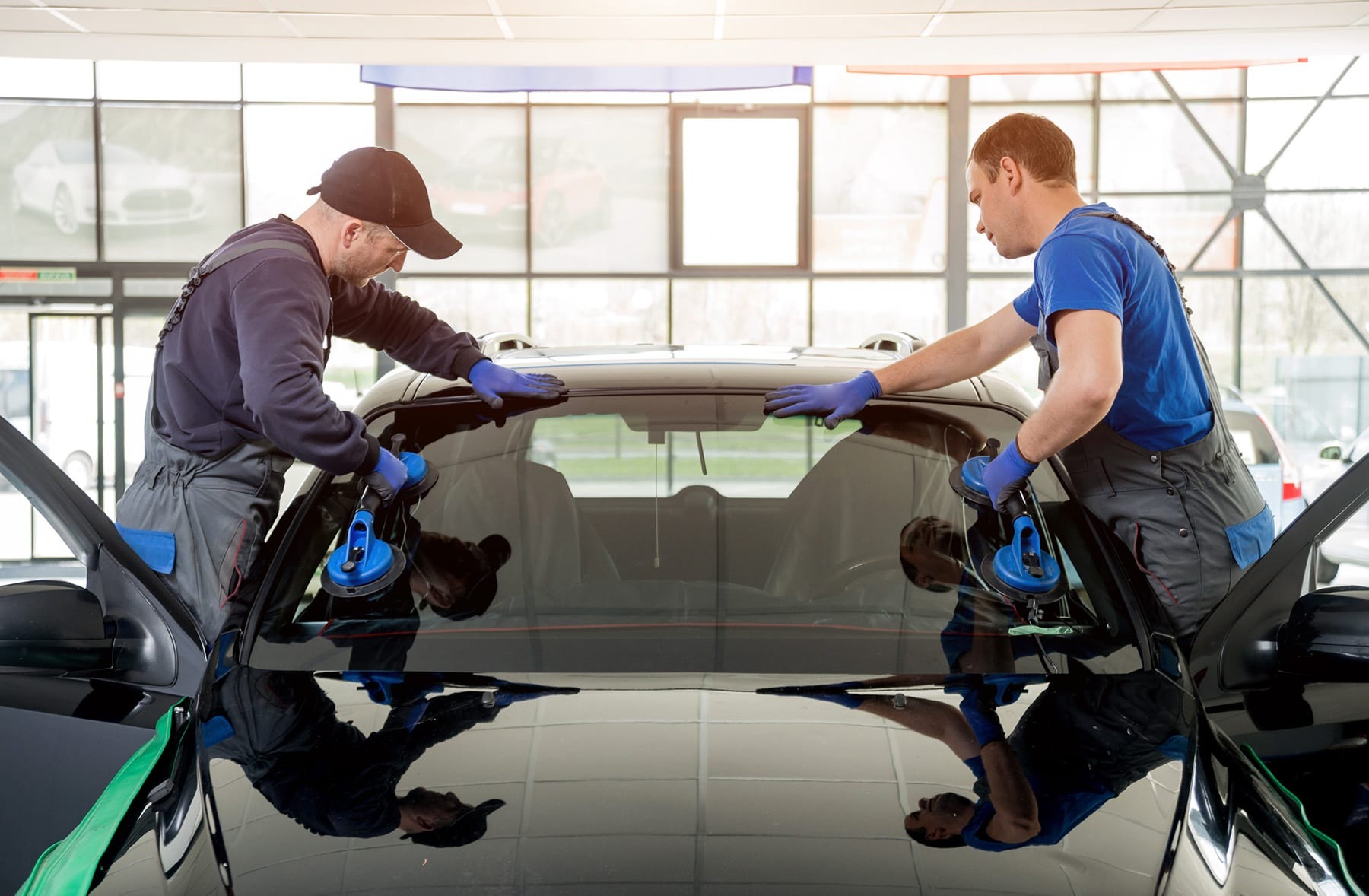
Replacing a windshield may look like a straightforward repair, but the quality of the installation matters because the glass is bonded to the vehicle body.
The adhesive does more than keep water from entering the vehicle. It also helps hold the windshield securely in place. A proper replacement begins with using glass that is specifically suited to the vehicle.
The technician may also need to prepare the bonding surface, use an appropriate primer, apply the specified urethane, position the glass correctly, and allow the adhesive to cure according to the product and vehicle requirements.
3M provides dedicated procedures covering windshield removal and installation, including surface preparation, primer, and urethane application.
The condition of the frit and bonding area matters as well. Damage or contamination in the bonding region can affect adhesion. Using an unsuitable adhesive or ignoring manufacturer instructions can create problems that may not be visible immediately.
Vehicles with cameras, sensors, antennas, or heads-up displays add another layer of requirements. The replacement glass may need to match the original specifications, and some systems may require calibration after installation.
For that reason, a windshield should not be treated like a cosmetic component. Its glass layers, adhesive bond, mounting area, and electronic features can all contribute to vehicle performance and occupant protection.
The next time you see a windshield, remember that almost every part of it has a job.