
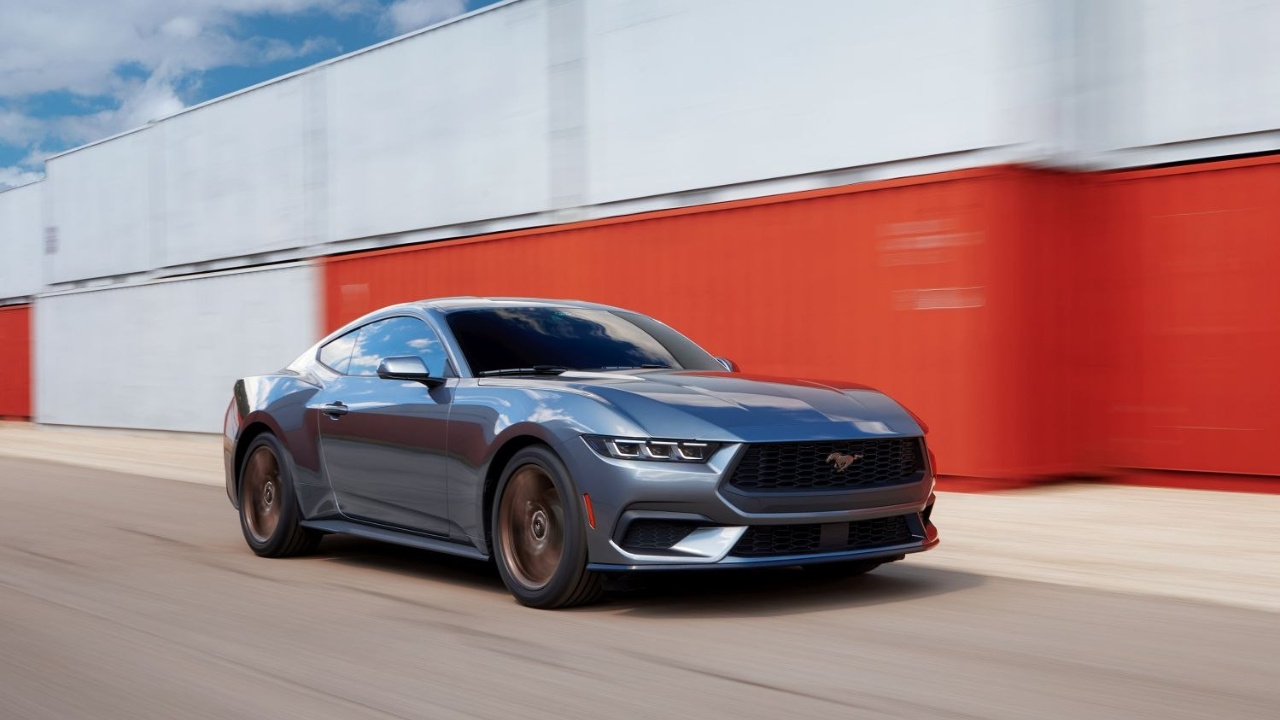
General Motors and Ford are losing more ground in the U.S. new-vehicle market than other major automakers tracked in the latest industry forecast, as buyers increasingly gravitate toward hybrids, fuel-efficient vehicles, and brands with broader offerings in those categories.
The shift is significant because the traditional Detroit automakers have historically held a substantial portion of the American market. But according to a September 24 forecast from Cox Automotive, the combined share of the Detroit Three, GM, Ford, and Stellantis, is expected to fall to about 36% in the third quarter, the lowest level in the company’s data.
GM remains the largest U.S. automaker by sales in the forecast, but its lead is being challenged as Toyota and several Asian brands gain ground. Ford, meanwhile, is dealing with weaker sales and a lineup that has fewer compact fuel-efficient choices than some competitors.
The market itself is not collapsing. Cox Automotive actually raised its full-year 2026 U.S. new-vehicle sales forecast to 16.1 million units from 15.8 million. The issue is increasingly about which automakers are capturing that demand.
GM and Ford Are Losing Share as Hybrids Gain Ground
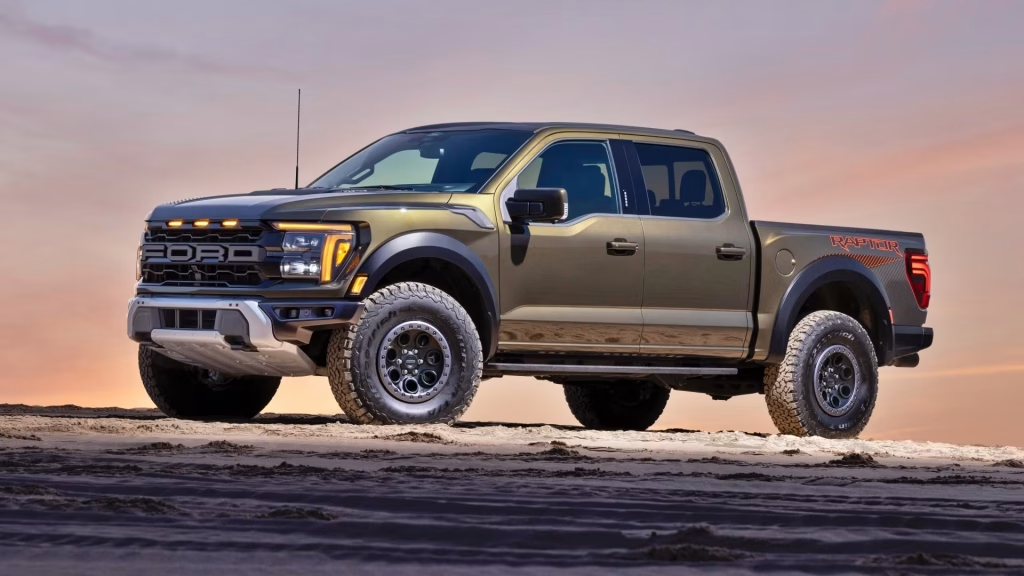
Cox Automotive projects Ford’s U.S. vehicle sales will decline 8.8% through the first three quarters of 2026. That would reduce Ford’s market share to approximately 12.5%, nearly a full percentage point below its position a year earlier.
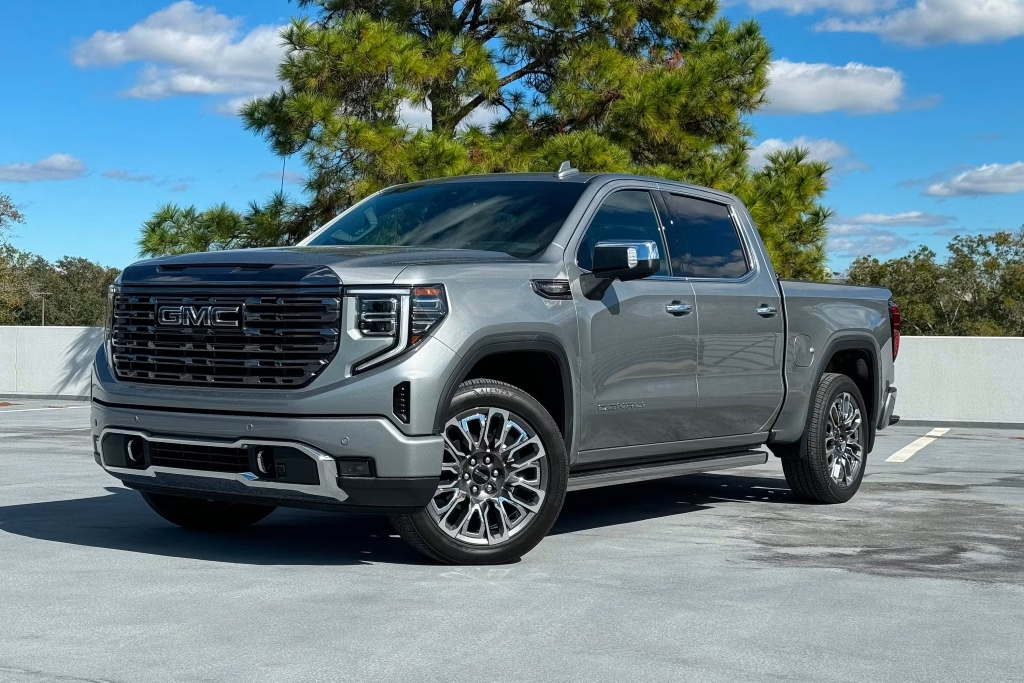
GM is also expected to post weaker sales. Cox projects its U.S. sales pace will decline 6.2% year to date through September 30, while its third-quarter market share is expected to reach 16.7%, compared with 17.4% during the same period in 2025.
Reuters reported that those represent the two largest market-share declines among the 13 automakers included in Cox’s quarterly forecast. The underlying issue is closely connected to powertrain choices.
Gasoline prices have remained elevated, increasing the appeal of vehicles that can deliver better fuel economy. Hybrid vehicles are particularly relevant because they allow consumers to retain a gasoline engine while using electric motors and a battery to reduce fuel consumption.
Toyota has built a particularly strong position in that market. Cox expects Toyota’s sales to increase 1.1% through the first three quarters of 2026. Honda is projected to perform even better, with sales expected to rise 5.6%. That contrast illustrates the challenge facing GM and Ford.
GM’s U.S. lineup has historically been heavily concentrated around pickups, SUVs, and crossovers, but the company has not offered conventional hybrid versions across much of its lineup. GM dealers have told Reuters that some customers have moved to competing brands because the automaker does not have hybrid alternatives for certain vehicles.
Ford has had hybrid products, including hybrid versions of its popular trucks and SUVs, but the company also discontinued the Escape compact SUV, which had been one of its more fuel-efficient offerings.
Ford’s sales have also been affected by production problems. Reuters reported that a fire at an aluminum supplier reduced pickup-truck production, creating another constraint for the automaker during the year.
The result is a market in which fuel economy has become an increasingly important competitive factor.
Asian Automakers Are Capturing More of the Market
The shift is not limited to Toyota. Cox Automotive expects Asian brands to account for more than half of U.S. new-vehicle sales in the third quarter for the second consecutive quarter. The company said their combined share is approaching record levels, while the Detroit Three are projected to fall to just over 36%.
Hyundai and Kia are particularly notable in the latest forecast. Cox projects that the two Korean automakers combined will sell more vehicles than Ford during the third quarter. If the forecast is realized, it would mark the first quarter in which Hyundai and Kia together outsold Ford.
Ford disputed the significance of that comparison in a statement to Reuters, pointing out that Hyundai and Kia are separate companies. Ford also said it remained ahead of the two brands combined on a year-to-date basis and maintained a much larger revenue gap.
That distinction is important when interpreting the data. Combining two independent automakers is not the same as comparing one company’s performance with another company’s performance.
Even so, the underlying sales trend is significant. Hyundai and Kia have built extensive hybrid offerings across several vehicle segments, giving buyers alternatives as fuel prices influence purchasing decisions.
Toyota has an even longer history with hybrids and remains the U.S. market leader in hybrid sales, according to Cox.
Cox senior economist Charlie Chesbrough said the broader market shift is being driven substantially by Asian automakers, particularly because of their hybrid portfolios.
The trend also shows why market share cannot be viewed simply as a measure of brand popularity. Product availability matters.
If a consumer wants a midsize SUV with a hybrid powertrain, the number of available choices from each automaker can directly influence where that buyer shops. Manufacturers that have invested heavily in hybrids therefore have more products positioned to capture demand when gasoline costs rise.
That creates a difficult situation for GM and Ford because changing a product lineup takes years. A new hybrid powertrain cannot simply be added to every vehicle immediately. Engineering, supplier contracts, manufacturing equipment, and certification all have to be aligned before a new model reaches dealerships.
The U.S. Market Is Still Selling Millions of Vehicles
Despite the market-share pressure facing GM and Ford, the broader U.S. auto industry is not experiencing a collapse in demand.
Cox raised its full-year new-vehicle sales forecast to 16.1 million units, up from its previous projection of 15.8 million. The company said stronger-than-expected summer sales, improved access to credit, and sustained demand contributed to the revision.
September’s seasonally adjusted annual rate is expected to reach approximately 16.3 million vehicles. That would be below the 16.6 million pace recorded in September 2025 and the 16.8 million pace expected for August, but still within the relatively stable range that has characterized much of 2026.
Cox expects September sales volume itself to increase 6.5% from a year earlier, although calendar differences make direct month-to-month comparisons more complicated. The stronger market makes the market-share changes even more noteworthy.
GM and Ford are not simply losing sales because Americans have stopped buying vehicles. Other automakers are capturing a larger portion of the available demand.
Affordability remains an important factor as well. Cox’s September inventory analysis showed an average new-vehicle listing price of $49,486, with 2.68 million vehicles available and 73 days of supply. The company said inventory has declined for three consecutive months as sales improved.
Cox’s dealer survey also found that affordability, inflation, interest rates, and economic uncertainty remain significant concerns for dealers. Its third-quarter Dealer Sentiment Index fell to 50, the neutral threshold, from 53 in the second quarter and 58 a year earlier.
That environment makes product positioning increasingly important. GM and Ford still have major strengths in trucks, large SUVs, and commercial vehicles. Those segments remain important sources of sales and revenue.
Stellantis, meanwhile, is projected to gain market share during the third quarter even as the combined Detroit Three share reaches its lowest level in Cox’s historical data.
The bigger question is whether the current shift toward hybrids and more fuel-efficient vehicles continues.
If it does, automakers with broad hybrid lineups will have more opportunities to capture customers looking to reduce fuel consumption without moving entirely to battery-electric vehicles.
For GM and Ford, the response is likely to involve more powertrain flexibility rather than simply abandoning gasoline vehicles. Both companies have continued investing in hybrids and other electrified technologies, but product timing will determine how quickly those investments appear in showrooms.
The latest Cox forecast provides a snapshot of that transition. GM remains the largest U.S. automaker by sales, Ford remains a major force in trucks and SUVs, and the American market is still tracking toward more than 16 million new-vehicle sales this year. But the distribution of those sales is changing.
Cox expects Toyota to continue narrowing the gap with GM, Hyundai, and Kia to have a particularly strong quarter, and Asian brands collectively to hold more than half of the U.S. market. At the same time, GM and Ford are projected to record the largest market-share declines among the automakers Cox tracks.
For consumers, the shift means a wider selection of hybrid and fuel-efficient vehicles. For Detroit manufacturers, it highlights the importance of having competitive products in the segments where buyers are increasingly shopping.
The U.S. auto market is still moving substantial volumes of vehicles. What is changing is where those vehicles are coming from and which powertrains buyers are choosing.
