
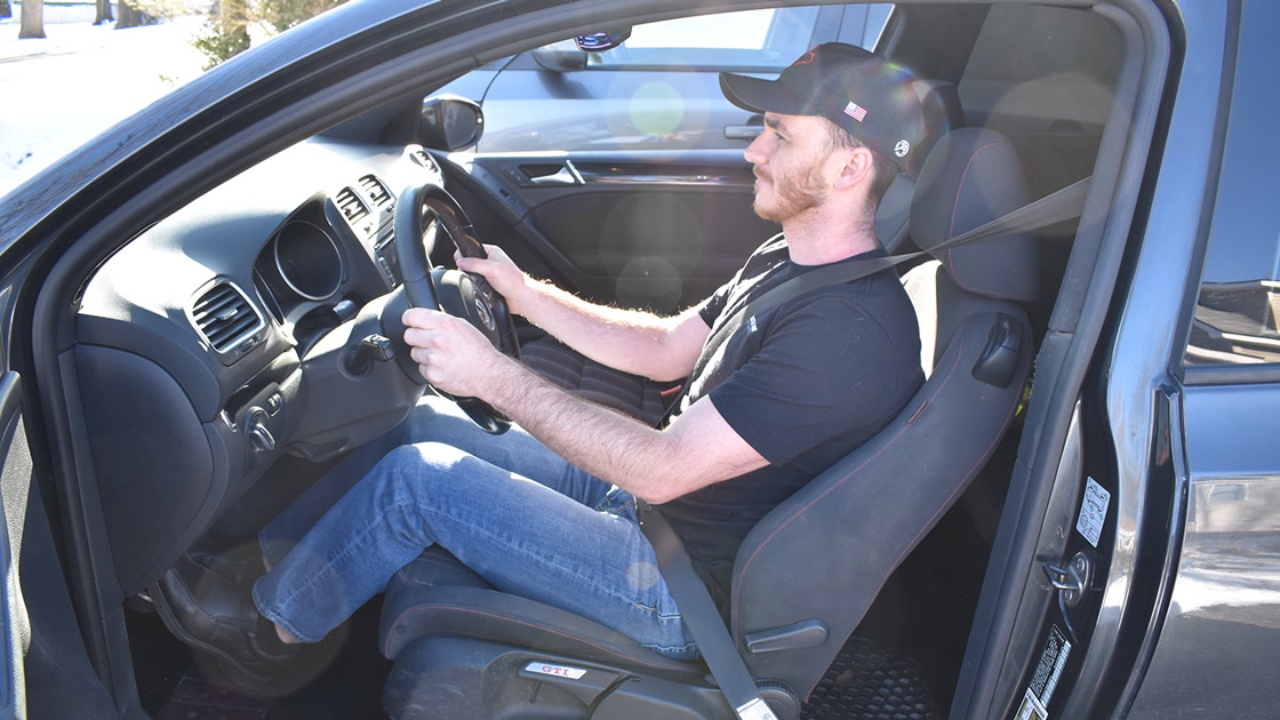
Modern cars are designed around a surprisingly specific occupant position. Move your body a few inches, recline too far, sit too close to the wheel, or place a child where an airbag is deploying, and the restraint system may no longer interact with you as intended.
NHTSA says frontal airbags inflate in less than 1/20th of a second and warns that occupants who are too close can suffer serious or fatal injuries. Seat belts, airbags, seats, and steering wheels are engineered to work together, not independently.
The safest seating position is therefore not simply the most comfortable one. It is the position that keeps you properly restrained and correctly positioned.
1. Sitting Too Close to the Steering Wheel
For drivers, distance from the steering wheel is one of the most important seating-position measurements in the vehicle. NHTSA recommends maintaining at least 10 inches between the center of the steering-wheel airbag cover and the driver’s breastbone. That recommendation remains applicable even in vehicles equipped with advanced frontal airbags.
The reason becomes obvious when considering how quickly the system operates. NHTSA says a frontal airbag can inflate in less than 1/20th of a second. It is designed to deploy extremely rapidly because the occupant is already moving forward during a crash.
If the driver is sitting unusually close, there is less space between the body and the inflating airbag. NHTSA warns that being too close to an airbag or coming into direct contact with it as it begins deploying can cause serious or fatal injury.
Shorter drivers sometimes move the seat forward to reach the pedals, but moving the seat toward the steering wheel should not be the only solution.
NHTSA recommends moving the seat rearward as far as practical while still allowing comfortable access to the pedals. Adjustable steering wheels and pedals, where available, can help establish a better fit between the driver and vehicle.
If the 10-inch distance is difficult to achieve, NHTSA’s guidance discusses adjustments such as moving the seat rearward and appropriately adjusting the steering wheel and seatback. The objective is to create adequate separation while preserving control and visibility.
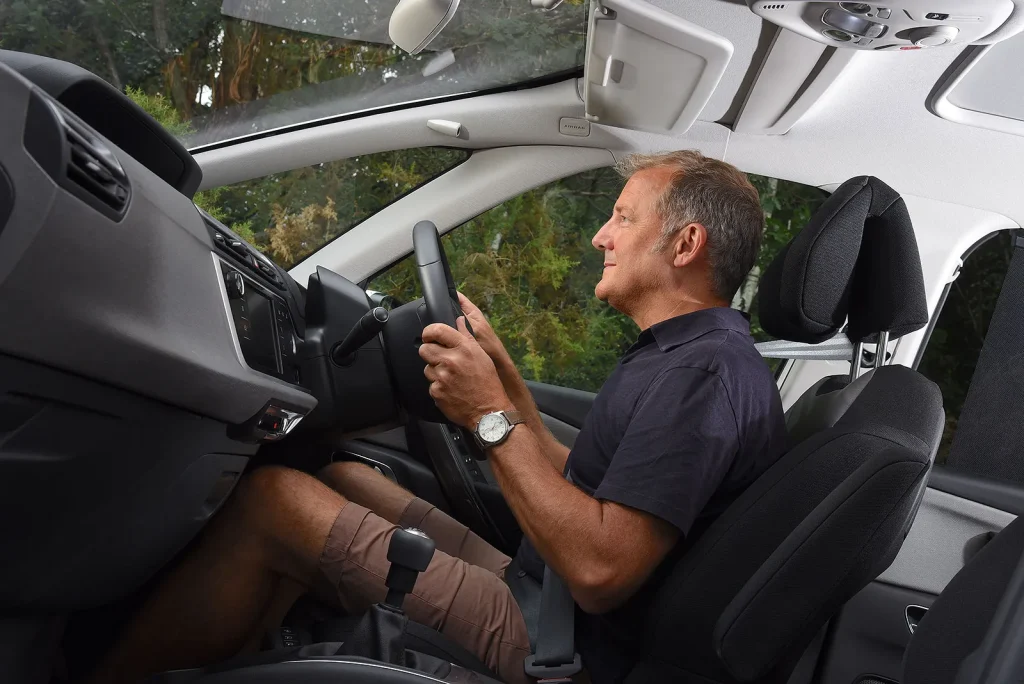
The important measurement is from the breastbone to the center of the airbag cover, not from the driver’s knees to the dashboard. A properly positioned driver gives the restraint system the space it was designed to use.
2. Reclining the Seat Too Far Back
A heavily reclined driver’s or front passenger’s seat may feel comfortable on a long trip, but excessive recline changes the relationship between the occupant, seat belt, and airbags.
The seat belt is designed to restrain the body in a particular seating position, and moving far away from that position can affect how the restraint engages the occupant during a crash.
NHTSA specifically recommends an upright, comfortable seating position. Its seat-belt guidance tells occupants to adjust the seat to a comfortable upright position and avoid reclining more than necessary.
For drivers, the agency also says the steering wheel and pedals should remain comfortably reachable while maintaining as much distance as possible from the steering wheel.
There is a practical reason for that advice. A three-point seat belt works best when its shoulder portion crosses the chest, and the lap portion sits low across the hips and pelvic area.
If the seatback is reclined excessively, the occupant’s body can sit in a different relationship to the belt system. That can reduce the ability of the belt to maintain the intended position during the violent movements of a crash.
The same concern applies to front passengers. A passenger should not treat the seat like a lounge chair while the vehicle is moving. NHTSA’s airbag guidance emphasizes that occupants should be properly seated and as far back from the dashboard as practical because frontal airbags deploy extremely rapidly.
Drivers should also consider how seat position affects vehicle control. Reclining the seat too far can change steering-wheel reach, pedal control, and visibility. The driver should be positioned so the controls remain easy to reach without having to stretch forward.
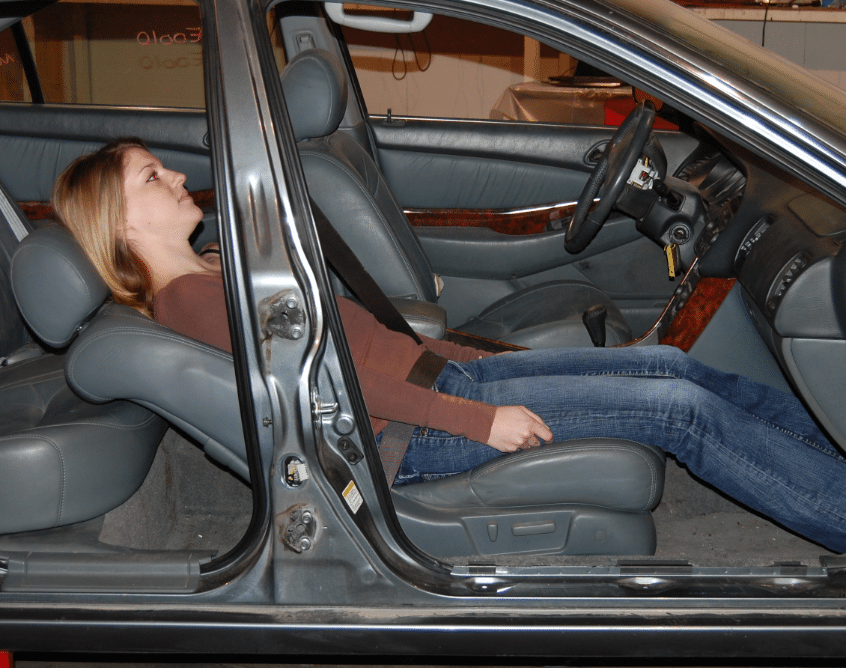
The ideal position is therefore not necessarily perfectly vertical. It is an upright, controlled posture that allows the occupant to maintain proper belt placement, reach the controls comfortably, and preserve appropriate distance from the airbag.
3. Slouching Down in the Driver’s Seat
Slouching behind the wheel can feel harmless because it often happens gradually. A driver lowers the seat, slides the hips forward, relaxes the back, and suddenly finds a comfortable position that is very different from the one intended by the vehicle’s restraint system.
The problem is that seat belts and airbags are designed around a properly positioned occupant, not someone sitting several inches lower and farther forward.
NHTSA says occupants should be properly seated and maintain as much distance as possible from a deploying frontal airbag. The agency continues to recommend at least 10 inches between the center of the steering-wheel airbag cover and the driver’s breastbone.
Slouching can also change where the lap belt rests. Instead of sitting low across the strong pelvic region, the belt may ride higher on the abdomen. NHTSA specifically instructs occupants to position the lap belt across the hips, not the stomach, because the pelvis is better suited to withstand crash forces.
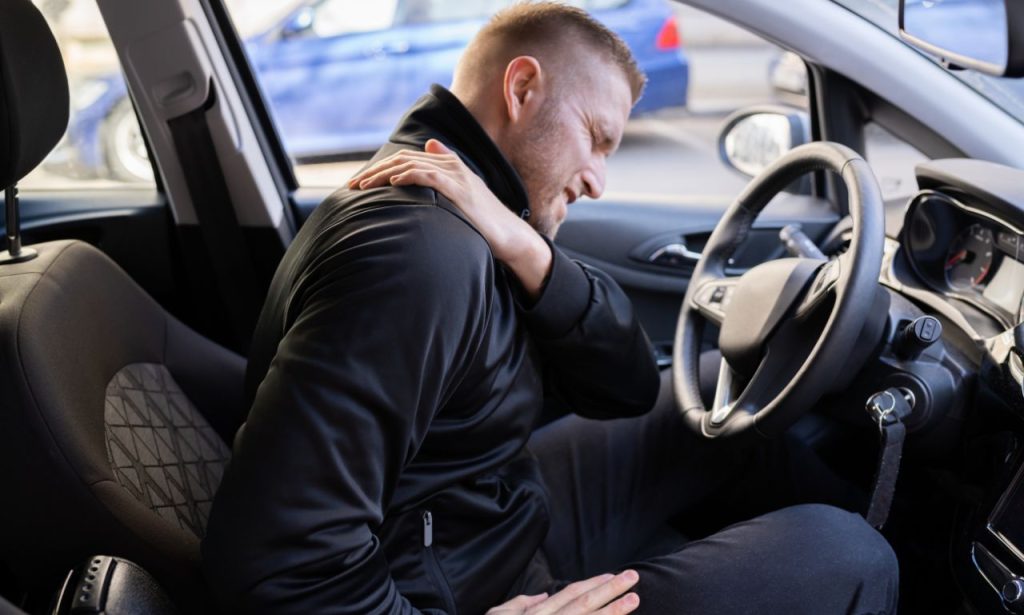
The shoulder portion should likewise remain across the middle of the chest and shoulder. A slouched posture can create slack or change the belt’s path across the torso, reducing the quality of the intended restraint. NHTSA warns that improper seat-belt positioning can cause serious injury or death in a crash.
There is a practical fix. Sit back against the seatback, position the pelvis properly in the seat, keep both feet where they can control the vehicle, and adjust the seat rather than sliding your body forward to find comfort.
A good seating position should let you operate the controls without sacrificing proper belt placement or the recommended airbag distance.
4. Sitting With Your Body Turned Away From the Steering Wheel
Some driving habits make the driver’s seat look more like a lounge chair than a workstation. Turning the torso sideways, sitting with one hip pushed toward the center console, or leaning substantially toward the door can alter how the seat belt crosses the body.
That matters because the three-point belt is intended to restrain the occupant across specific parts of the body.
NHTSA recommends that the shoulder belt lie across the middle of the chest and shoulder while the lap belt rests low across the hips. The agency specifically warns against putting the shoulder belt behind the back or under an arm. These recommendations are designed to keep crash forces distributed across stronger areas of the body.
A driver who sits sideways can also end up with the shoulder belt closer to the neck or edge of the shoulder instead of across the chest. If the pelvis is rotated away from the seatback, the lap portion can also move away from its intended position. The result is not simply a matter of comfort. The occupant’s relationship with the restraint system has changed.
Airbag positioning adds another consideration. NHTSA says frontal airbags deploy extremely rapidly and can cause serious or fatal injuries if an occupant is too close to the airbag or directly contacts it during initial deployment. Proper seating helps maintain the intended relationship between the occupant and the airbag module.
This does not mean a driver must remain perfectly rigid. Normal movement is unavoidable and harmless. The concern is maintaining a consistently proper driving position rather than deliberately sitting at an angle for long periods.
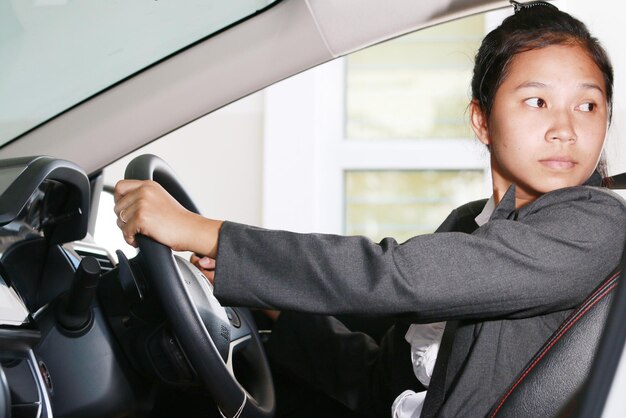
For everyday driving, the proper seating position is straightforward. Keep your back against the seatback, face forward, sit squarely in the seat, and make sure the seat belt rests correctly across your chest and hips. If the position feels uncomfortable, adjust the seat rather than changing your body position to compensate.
5. Putting Your Feet on the Dashboard
Few seating habits look as relaxed as putting your feet on the dashboard, but the position can become extremely dangerous in a frontal crash. The passenger may appear comfortably seated, yet the posture places the legs directly in front of the passenger airbag and moves the body away from the position for which the restraint system was designed.
NHTSA has specifically warned passengers not to put their feet on the dashboard. The agency explains that airbags deploy very rapidly and are designed to work with occupants who are sitting properly and wearing their seat belts.
A passenger with raised legs can be struck by the deploying airbag, while the legs can also be forced backward toward the face and upper body during the crash.
The danger does not require a high-speed collision. Airbags are designed to deploy during certain moderate-to-severe crashes, and deployment occurs in a fraction of a second. NHTSA says a frontal airbag can inflate in less than 1/20th of a second. That leaves virtually no opportunity for a passenger to move their legs after the crash begins.

There is also a seat-belt issue. When a passenger sits normally, the lap belt remains low across the hips and the shoulder belt crosses the chest. Raising the legs and changing the body position can alter how the occupant interacts with both portions of the restraint.
The safer position is straightforward. Keep both feet on the floor, sit upright against the seatback, and remain properly restrained. The passenger-side dashboard may seem like a convenient place to rest your feet, but it also houses an important part of the vehicle’s restraint system.
6. Leaning Forward Toward the Dashboard
Leaning forward in the front passenger seat can create a deceptively vulnerable position. Passengers sometimes move toward the dashboard to look at a phone, adjust a control, talk to someone in another row, or reach for an object.
The problem is that a frontal crash can happen without warning, and an occupant who has moved forward is no longer sitting at the distance assumed by the airbag system.
NHTSA advises front-seat occupants to sit as far back from the dashboard as practical. This is particularly important because passenger frontal airbags are mounted in the dashboard and deploy toward the occupant. NHTSA states that frontal airbags can inflate in less than 1/20th of a second.
Moving closer to the dashboard reduces the space available between the passenger and the deploying airbag. NHTSA warns that occupants who are too close to a deploying airbag can suffer serious or fatal injuries. The agency therefore recommends maintaining a proper seating position rather than treating the dashboard area as an ordinary workspace.
The seat belt becomes another factor. When the passenger sits normally, the shoulder belt should cross the middle of the chest and the lap belt should remain low across the hips. Leaning substantially forward can introduce slack or change the belt’s position.
NHTSA says seat belts and airbags are designed to work together, making proper belt use and seating position important parts of the same protection system.

A passenger should therefore adjust the seat rather than leaning forward for extended periods. If an object needs to be reached, waiting until the vehicle is safely stopped is the better choice.
During normal travel, keeping the back against the seatback and the body properly positioned gives the restraint system the geometry it was designed around.
7. Wearing the Shoulder Belt Under Your Arm
It can be tempting to move the shoulder portion of the seat belt under your arm because the belt feels uncomfortable against the neck or shoulder. That small adjustment, however, changes where the restraint loads the body during a crash. NHTSA explicitly says the shoulder belt should never be placed under the arm or behind the back.
The correct position is across the middle of the chest and shoulder, while the lap portion should sit low across the hips. NHTSA explains that the pelvis and rib cage are better able to withstand crash forces than other parts of the body. Moving the shoulder strap under the arm removes it from that intended path and can increase the risk of serious injury.
This becomes particularly important when an airbag is involved. Airbags are supplemental restraints rather than replacements for seat belts. NHTSA says an occupant who is not properly restrained can be thrown into a rapidly opening frontal airbag, where the force can cause serious or fatal injury.
Children and teenagers can be especially prone to this habit when the belt feels uncomfortable. NHTSA’s guidance for children emphasizes that the shoulder belt should remain across the shoulder and chest rather than behind the back or under the arm. The agency also recommends using a booster seat until an adult seat belt fits properly.
If the belt rubs the neck, the solution is not to change its path. Instead, adjust the seat belt height if the vehicle provides an adjustable upper anchor, sit in the correct position, or use a properly designed manufacturer-approved adjustment solution. NHTSA specifically recommends checking belt fit and asking about available seat-belt adjusters.
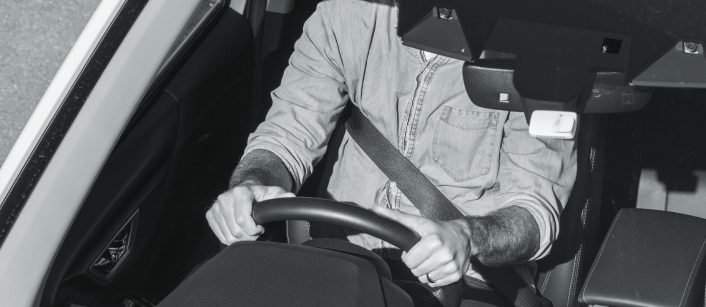
A properly positioned belt may feel less relaxed than an improperly worn one, but that restraint is precisely what keeps the occupant positioned where the vehicle’s safety systems expect them to be.
8. Sitting With Your Back or Shoulder Away From the Seat Belt
A seat belt cannot protect an occupant properly if the occupant deliberately moves away from it. Leaning toward the center console, curling sideways against the door, or sitting with the shoulder rotated away from the belt can change the relationship between the body and the restraint system.
NHTSA specifically advises occupants to sit upright, well back in the seat, and remain in that position throughout the trip.
The agency’s guidance is unusually direct on this point. NHTSA states that slouching and leaning can reduce the effectiveness of the belt and increase the chance of serious injury in a crash. That makes posture more than a matter of driving comfort. It is part of how the restraint system manages occupant movement.
The shoulder belt should cross the middle of the chest and remain away from the neck, while the lap belt should sit across the hips rather than the stomach. When an occupant leans away from the seatback, the belt can develop additional slack or move away from its intended position.
This becomes especially relevant during a sudden impact because the occupant does not have time to correct posture after the crash begins. Airbags also depend on proper positioning. NHTSA says frontal airbags deploy in less than 1/20th of a second and recommends proper seating plus sufficient distance from the steering wheel or dashboard.
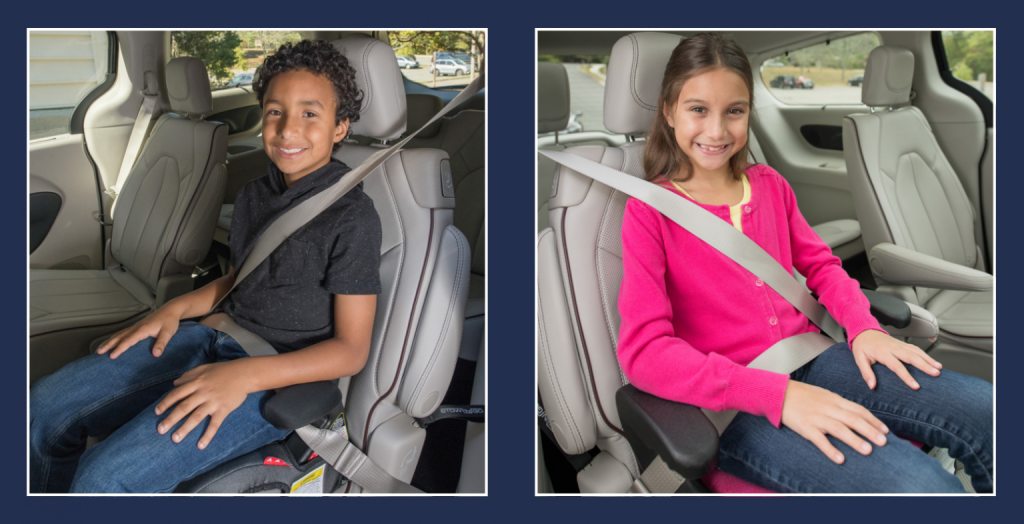
The best position is therefore not complicated. Sit squarely against the seatback, keep the pelvis properly positioned, allow the belt to cross the hips and chest naturally, and avoid deliberately leaning away from the restraint.
For drivers, this also keeps the controls within comfortable reach. For passengers, it maintains the position anticipated by the vehicle’s restraint system. The seat belt is designed to move with you to a limited degree, not to compensate for a radically altered seating posture.
