
Some vehicles stand out because they are faster, more affordable, or more luxurious than their competitors. A smaller group makes a bigger impact by showing buyers that a vehicle can fill a role that had not been clearly defined before.
The Ford Mustang helped establish the American pony car formula, while Chrysler’s 1984 minivans created a new family-hauling category. Later, the Toyota RAV4 helped establish the modern crossover template, and the BMW X5 introduced the sports activity vehicle concept.
These vehicles did not necessarily invent every individual feature they contained. Their significance came from combining familiar ideas in a package that manufacturers and customers could recognize as something new.
1. Ford Mustang
When the Ford Mustang debuted in 1964, the American market already offered compact cars, full-size sedans, station wagons, sports cars, and powerful V8 coupes. What was missing was the formula Ford introduced with the Mustang, combining an affordable price, relatively compact dimensions, sporty styling, optional performance equipment, and enough practicality for everyday driving.
Ford’s own historical records show how deliberately the company developed the Mustang around a growing group of younger buyers.
Ford saw an opportunity as American families began adding second cars and younger buyers looked for something stylish and enjoyable that cost less than a traditional sports car. That idea became public on April 17, 1964, when the Mustang made its debut at the New York World’s Fair.
The response was extraordinary. Ford says more than 418,000 Mustangs were sold during the first year, establishing an industry sales record for a new car. The model’s success helped give rise to what became known as the pony-car segment, a category built around sporty proportions, accessible pricing, and broad customization.
That formula proved remarkably durable. Buyers could choose a six-cylinder engine for affordability or move into V8-powered versions for substantially more performance. They could also select different body styles and equipment combinations, allowing one basic vehicle to appeal to very different customers.
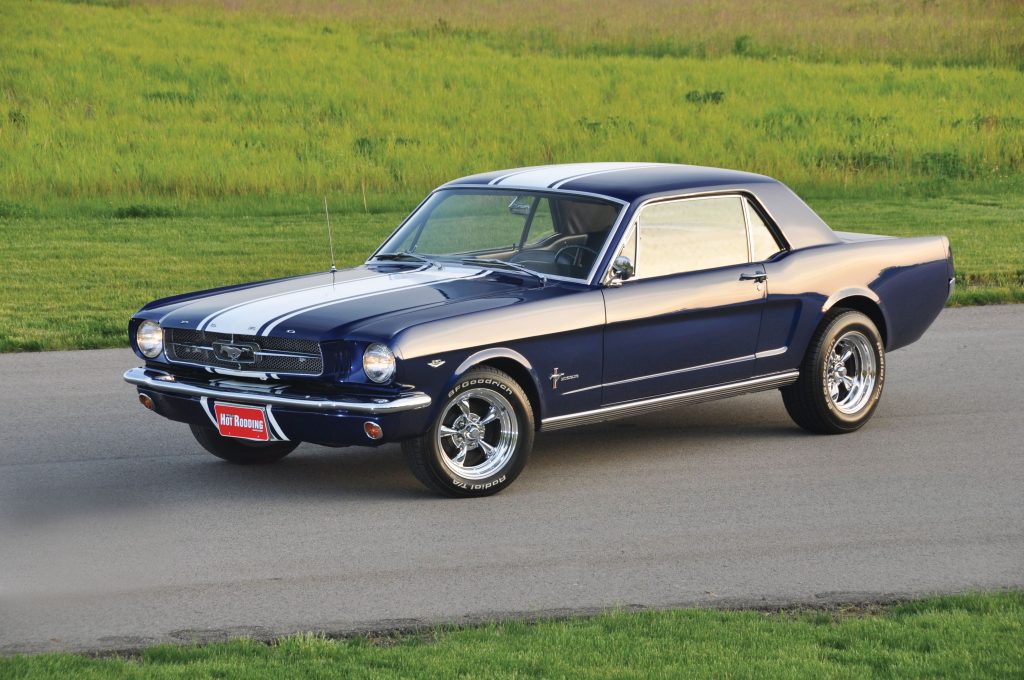
The Mustang therefore changed more than Ford’s product lineup. It demonstrated that a manufacturer could turn youthful styling and performance into a mass-market formula.
Ford’s historical material confirms the Mustang’s 1964 launch and its extraordinary first-year sales performance.
2. Chrysler Plymouth Voyager
Before 1984, American families had station wagons and full-size vans, but Chrysler saw an opportunity between those two worlds. The result was the Plymouth Voyager, introduced for the 1984 model year alongside its Dodge counterpart.
Instead of asking families to choose between a car-like wagon and a commercial-style van, Chrysler created a vehicle with front-wheel drive, a relatively low floor, and a tall passenger compartment designed specifically around family transportation.
Chrysler now describes the 1984 launch as the creation of the minivan segment. The company’s historical timeline identifies 1984 as the beginning of the industry’s first minivan segment, while Stellantis describes the original Chrysler invention as creating the MPV category.
The engineering concept was particularly important. A transverse engine and front-wheel-drive layout allowed Chrysler to package considerable passenger space without requiring the traditional long hood and rear-drive architecture of many vans.
The vehicle could carry a family and substantial cargo while remaining substantially less intimidating than a full-size van.
The formula caught on because it addressed an everyday problem rather than chasing performance numbers. Sliding side doors made access easier in parking lots, multiple seating rows accommodated families, and the boxy body created useful interior volume.
Chrysler continued developing the concept through successive generations, adding features such as more sophisticated seating systems and increasingly car-like driving characteristics.
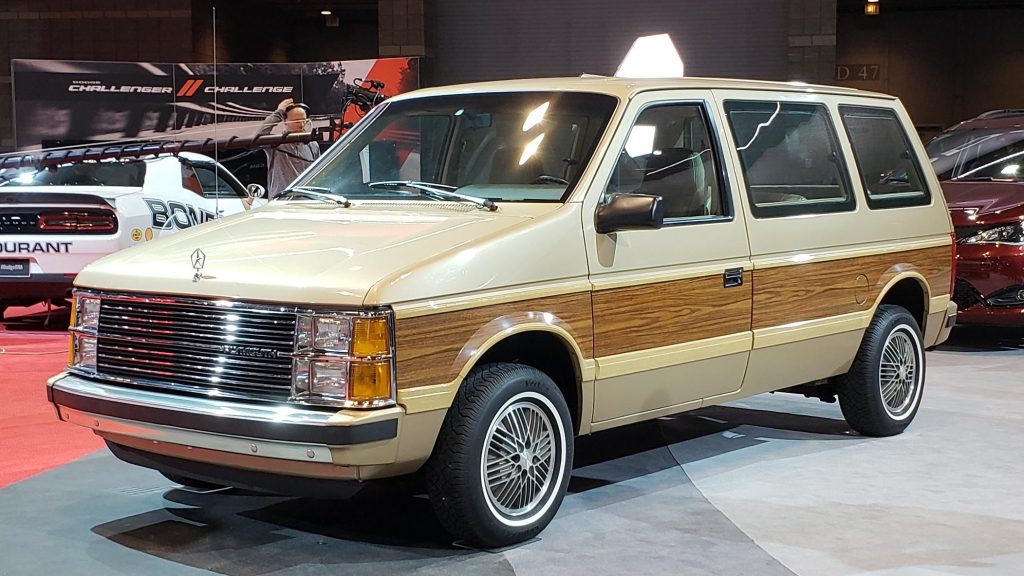
The original Voyager was not designed to impress with acceleration. Its significance came from packaging. Chrysler demonstrated that a vehicle designed specifically around family logistics could become an important mainstream category.
That idea became so successful that virtually every major automaker eventually developed its own interpretation of the minivan.
3. Toyota RAV4
The Toyota RAV4 did not simply make a smaller SUV. It changed what buyers could reasonably expect an SUV to be. When the first-generation RAV4 reached U.S. showrooms for the 1996 model year, traditional SUVs were still strongly associated with truck-based construction, ruggedness, and compromises in everyday road manners.
Toyota approached the problem from the opposite direction, building a compact unibody vehicle that combined a higher seating position and available all-wheel drive with the dimensions and driving character of a small passenger car. Toyota later described the original model as the vehicle that essentially created the template for the modern crossover.
Its proportions were a major part of the idea. The popular four-door version measured only 162 inches long and 66.7 inches wide, making it dramatically smaller than many SUVs of the period. Yet it provided seating for five and useful cargo capacity.
Buyers could select front-wheel drive or all-wheel drive, while a 2.0-liter four-cylinder produced 120 horsepower. The combination gave customers something that conventional SUV buyers had not previously been offered in such a compact package.
The idea first took shape as a concept at the 1989 Tokyo Motor Show, where Toyota introduced the RAV4 before moving ahead with production. According to Toyota’s global history, the first-generation model established a new vehicle category by combining off-road capability with the style and practicality suited to urban driving.
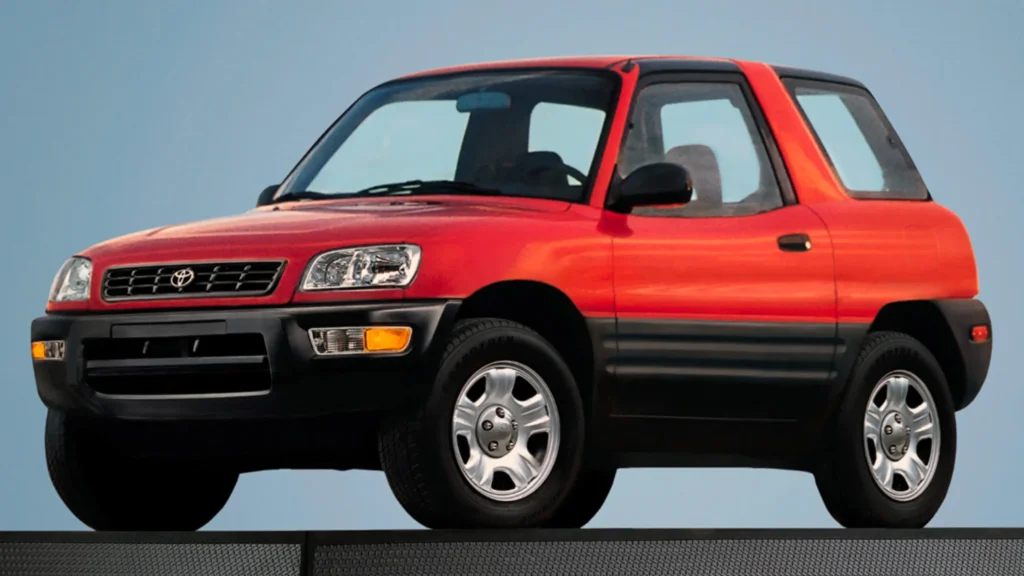
That distinction became increasingly important as consumers began favoring vehicles that could handle commuting during the week and recreational activities on weekends.
The RAV4 offered enough ground clearance and traction for outdoor use without requiring buyers to accept the size, weight, and road manners traditionally associated with truck-based SUVs.
4. BMW X5
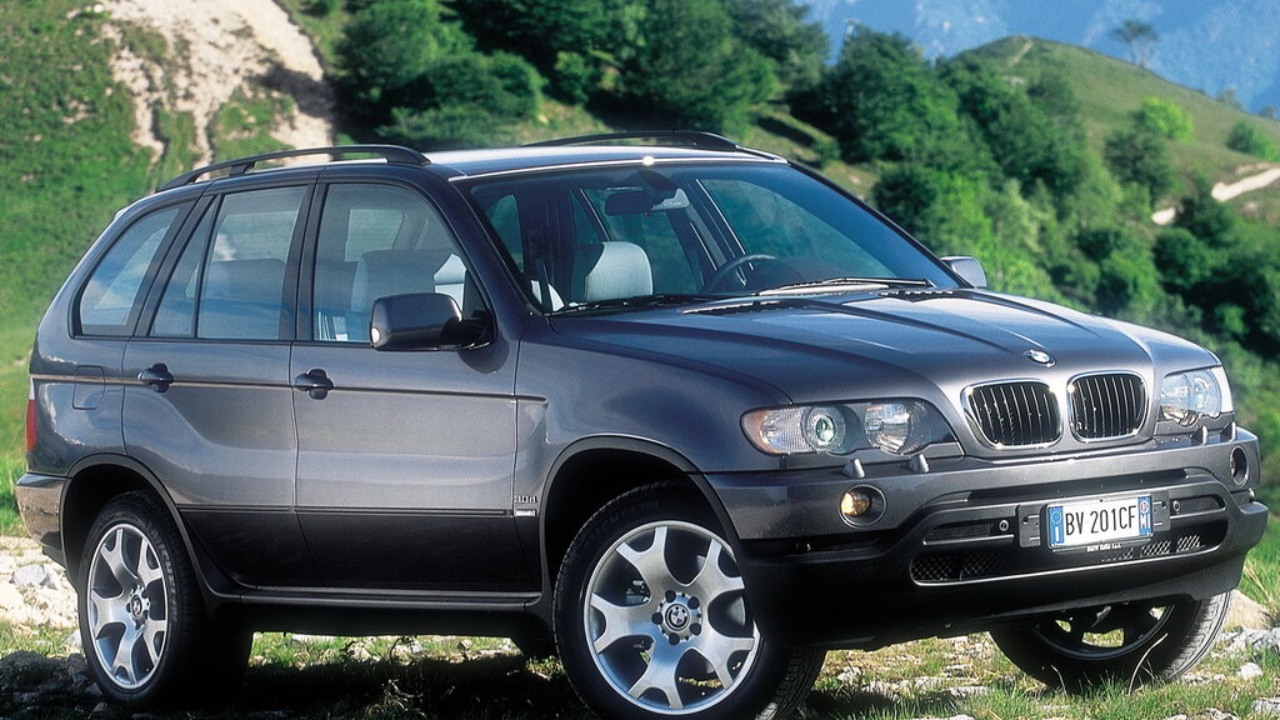
BMW entered the SUV market in a way that seemed almost contradictory at the time. Instead of simply building a conventional off-road utility vehicle, the company created something it called a sports activity vehicle.
The first BMW X5 arrived in 1999 and combined the elevated seating and all-wheel-drive capability associated with an SUV with the road-focused dynamics expected from a BMW.
BMW describes the X5 as the model that introduced its Sports Activity Vehicle concept. At the 1999 Detroit Auto Show, the company presented the X5 as a different take on the four-wheel-drive vehicle, combining all-terrain capability with strong driving dynamics, everyday practicality, and long-distance comfort.
The mechanical specification reinforced that mission. The U.S.-market X5 4.4i used a 4.4-liter V8 producing 282 horsepower and 324 lb-ft of torque.
The vehicle measured about 183.7 inches long and 73.7 inches wide, giving it substantially more road presence than the compact RAV4 while retaining proportions designed for passenger use rather than commercial hauling.
What made the X5 significant was not simply the addition of luxury equipment to an SUV. BMW positioned performance as a fundamental part of the vehicle’s identity. The company later described the X5 as combining the presence of a large vehicle with BMW driving dynamics, practicality, and long-distance comfort.
That formula helped establish a new direction for premium SUVs. Instead of treating an SUV as a compromise for buyers who needed utility, manufacturers could market a high-riding vehicle as a desirable performance and luxury product in its own right.
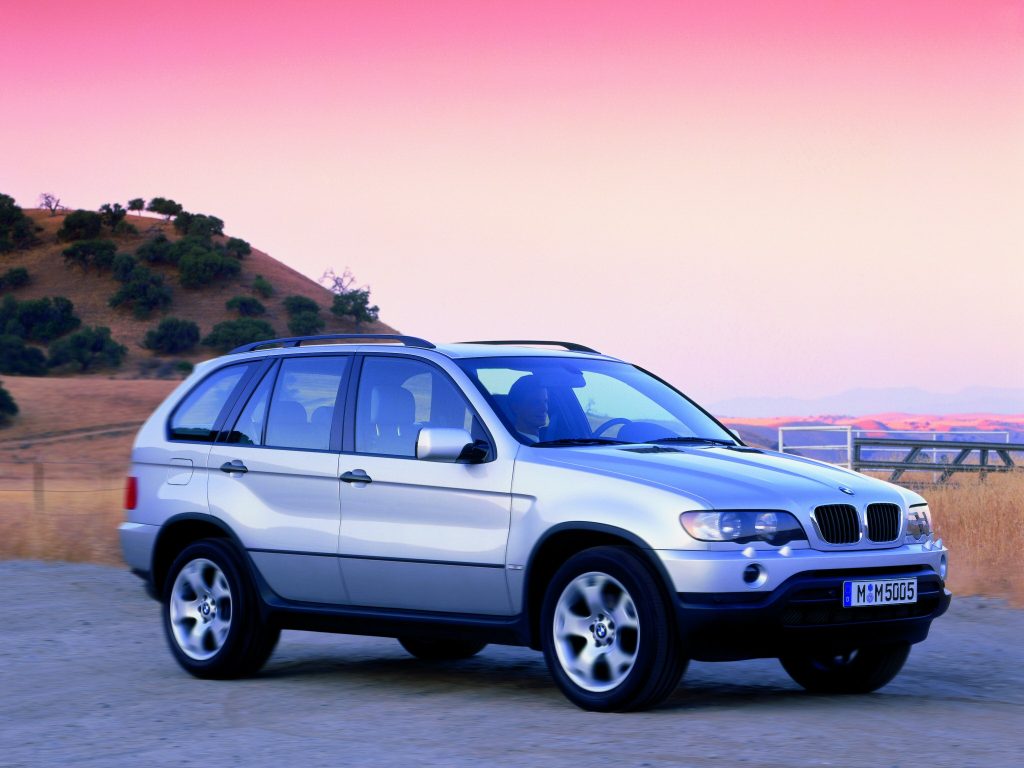
The X5 consequently became the foundation for BMW’s expanding X family and helped establish the premium performance-SUV market that now spans nearly every luxury manufacturer.
BMW’s historical and U.S. technical material documents the 1999 X5’s introduction and its original V8 specifications.
5. Honda CR-V
The Honda CR-V arrived in the United States for the 1997 model year at a time when the traditional SUV was still largely defined by truck-based engineering. Honda took a different route.
The CR-V used a car-based platform and combined a raised driving position, available four-wheel drive, generous interior space, and passenger-car-like road manners. Honda’s own history now describes the first-generation CR-V as establishing a new genre of “urban SUV,” with U.S. sales beginning in 1997.
That distinction matters because the CR-V helped define what consumers would eventually call the compact crossover. The vehicle was not intended to compete with a heavy-duty off-road SUV. Instead, it offered enough capability for bad weather and light-duty recreation while retaining the convenience of a family car.
Its interior packaging was particularly clever. Honda fitted the first-generation CR-V with a built-in folding picnic table that also served as part of the cargo-floor system.
The rear seating could be folded to create a substantial load area, giving the vehicle a practical advantage without requiring a large exterior footprint. Honda specifically developed the model around spaciousness and passenger-car-like drivability.
The American market eventually embraced this formula on a massive scale. Honda’s U.S. model history records more than 7 million CR-V sales in the country through July 2025. That number illustrates how far the concept traveled from its origins as an unusual alternative to conventional SUVs.
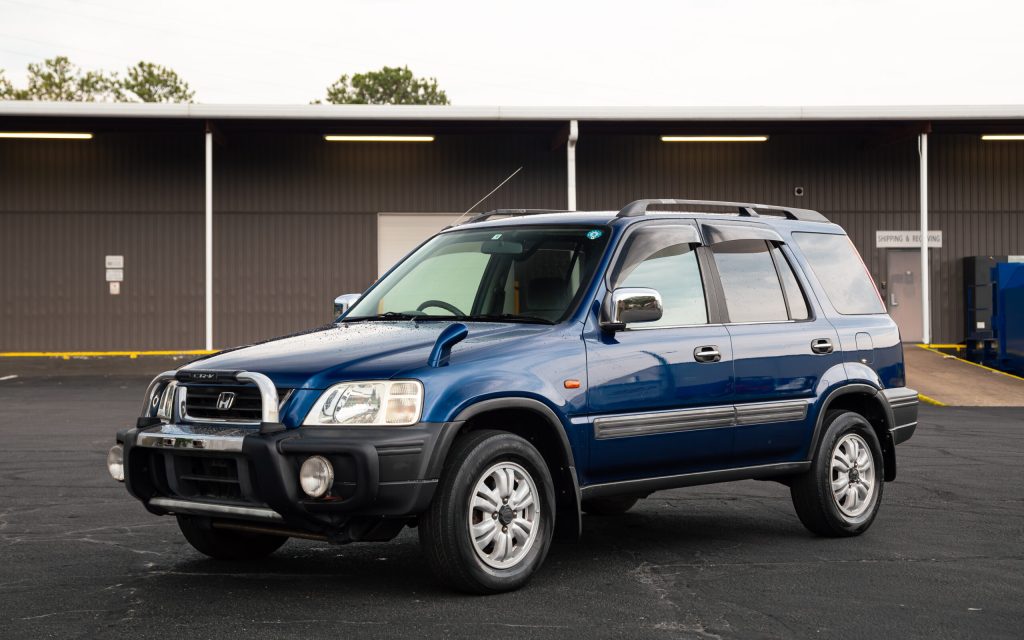
The CR-V did not invent every ingredient individually. Its importance came from putting those ingredients together in a package that made sense for everyday American drivers. The modern compact crossover market owes much of its basic architecture to this approach.
Honda’s historical documentation confirms the first-generation CR-V’s U.S. launch and its urban-SUV concept.
6. Subaru Outback
The Subaru Outback took a vehicle that already existed and transformed it into something much more influential. Introduced in the United States in 1994, the Outback combined the basic shape and road manners of a passenger wagon with increased ground clearance, rugged body protection, and Subaru’s all-wheel-drive system.
Subaru later described it as a pioneering crossover vehicle and referred to the concept as a “Sport Utility Wagon.”
The timing was important. Americans were becoming increasingly interested in SUVs, but not every buyer wanted the size, weight, or driving characteristics of a traditional truck-based model. The Outback provided another answer.
It retained the lower, wagon-like body while giving drivers a more adventurous image and additional capability for snow, gravel roads, and outdoor recreation.
Subaru’s formula was especially distinctive because all-wheel drive was central to the vehicle rather than merely an optional luxury. The company’s horizontally opposed Boxer engine architecture and symmetrical all-wheel-drive system became important parts of the Outback’s identity in the U.S. market.
Subaru says the model’s combination of passenger-car comfort and SUV-like versatility became a major contributor to its American sales.
The Outback’s influence can be seen in how manufacturers subsequently blurred the boundaries between wagons and SUVs. Raised ride height, protective cladding, and standard or available all-wheel drive became increasingly common ways of giving ordinary passenger vehicles an outdoors-oriented identity.
What makes the Outback particularly interesting is that it did not require abandoning the wagon. Instead, Subaru altered the wagon formula enough to create a vehicle that appealed to customers who wanted utility and adventure without necessarily moving into a conventional SUV.

That approach became a durable niche in the American market, and the Outback continued evolving through multiple generations rather than disappearing when crossovers became mainstream.
Subaru’s historical material confirms the Outback’s 1994 U.S. debut and its positioning as a crossover vehicle combining passenger-car characteristics with SUV-style versatility.
7. Ford Ranchero
The Ford Ranchero began with a simple idea: could a passenger car also function as a pickup? Ford put that concept into production in 1957, creating one of America’s earliest mass-market car-based utility vehicles.
Ford’s own historical record describes the Ranchero as a car-based truck that delivered car-like amenities while providing the utility of a light-duty pickup. Its advertising even captured the unusual proposition with the phrase “More Than a Car! More Than a Truck!”
That positioning mattered because traditional pickups were becoming increasingly capable, but they did not necessarily provide the driving experience or appearance of a passenger car. The Ranchero approached utility from the opposite direction.
Rather than making a truck more car-like, Ford started with a passenger-car platform and created an open cargo bed behind the cabin.
The result was an unusual vehicle that appealed to people who wanted something more versatile than a sedan without committing to a conventional pickup. The ranchero could handle everyday transportation while also carrying equipment, supplies, and other loads.
Ford’s 1957 model was based on the full-size Ford passenger-car architecture, giving it proportions and road manners that separated it from conventional trucks.
The idea was not entirely unprecedented globally. Similar utility vehicles had existed in Australia for decades, but the Ranchero helped establish the concept as a recognizable American market category.
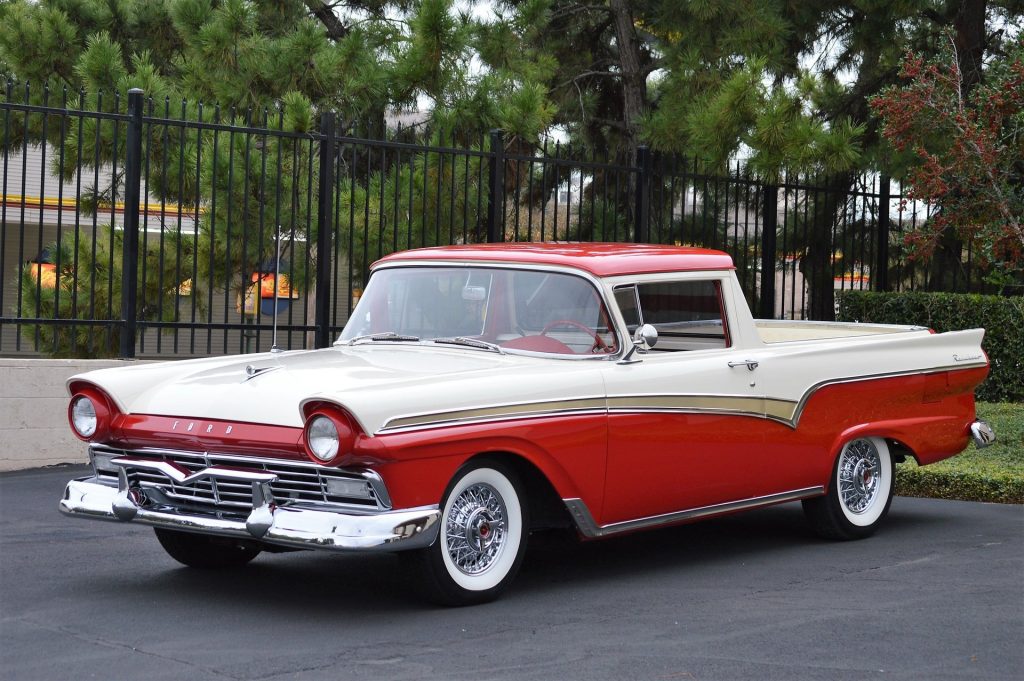
Ford sold 21,705 Rancheros during the 1957 model year, demonstrating that there was a genuine audience for a vehicle positioned between a car and a truck.
Chevrolet soon followed with the El Camino, but Ford had already demonstrated the commercial potential of the American car-truck formula.
Ford’s historical documentation confirms the Ranchero’s 1957 introduction and its car-based truck concept.
8. BMW X6
The BMW X6 took an idea that had already become successful in the SUV market and deliberately made it less practical, more dramatic, and more performance-oriented.
That sounds like an odd recipe for a new vehicle category, but BMW believed there was a customer for a vehicle that combined the elevated driving position and utility of an SUV with the visual character of a large coupe.
The first X6 appeared in 2008, and BMW explicitly called it the world’s first Sports Activity Coupe. The company described the formula as a combination of the seating position and versatility of its sports activity vehicles with the styling and sporting character of a large BMW coupe.
The important distinction was the roofline. Instead of using the traditional tall, upright SUV profile, BMW gave the X6 a dramatically sloping rear section. Yet it retained four doors, a raised driving position, and substantial cargo space. It was neither a conventional coupe nor a conventional SUV.
The U.S. launch also made the performance angle unmistakable. The X6 xDrive35i used a twin-turbocharged 3.0-liter inline-six producing 300 horsepower and 300 lb-ft of torque.
Buyers seeking substantially more output could choose the xDrive50i, whose twin-turbo 4.4-liter V8 produced 400 horsepower and 450 lb-ft of torque. BMW presented both versions as evidence that the new body style was about more than appearance.
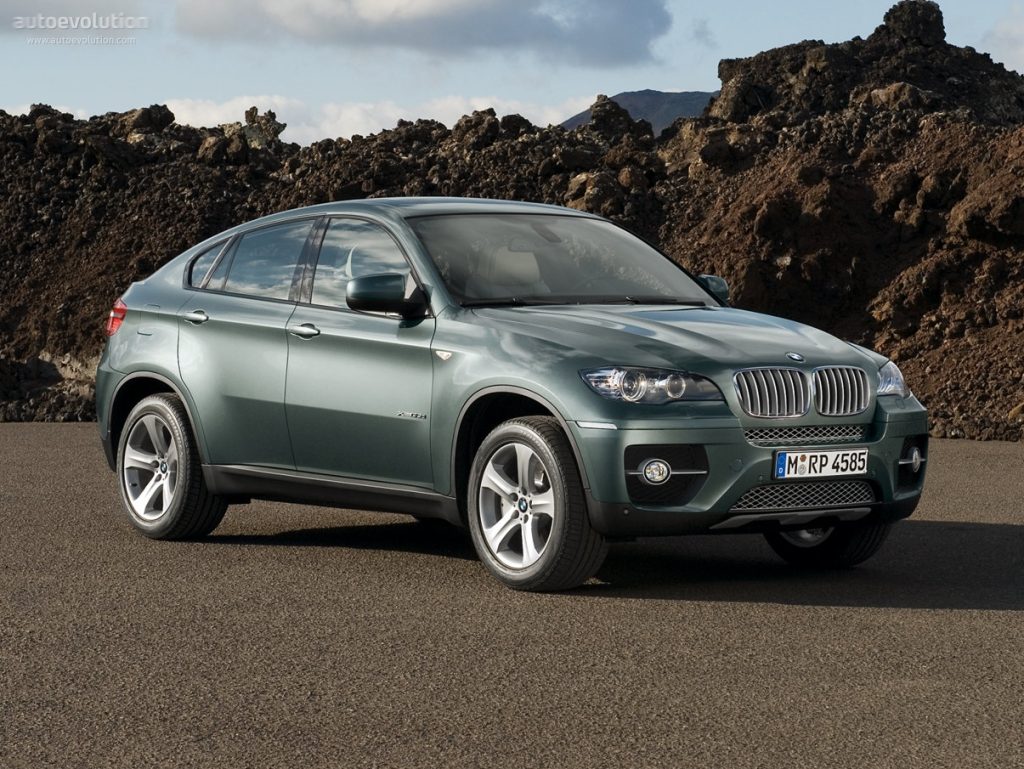
The concept subsequently spread throughout the luxury industry. Other manufacturers began producing SUV-like vehicles with dramatically lowered or coupe-style rooflines, creating an entire family of vehicles that would have been difficult to classify before the X6.
BMW did not simply redesign an SUV. It gave manufacturers another way to divide the premium market.
BMW’s U.S. launch material identifies the X6 as the first Sports Activity Coupe and documents the original U.S.-market engine outputs.
9. Toyota Prius
The Toyota Prius changed the automotive market by making the hybrid powertrain itself the reason to buy a car. Hybrid technology existed before the Prius reached American dealerships, but Toyota turned gasoline-electric propulsion into a mass-market product with a recognizable identity.
The first-generation Prius was launched in Japan in 1997 as the world’s first mass-produced hybrid passenger car, then arrived in North America in July 2000. Toyota says the U.S. Prius was introduced as an affordable gasoline-electric vehicle at a time when hybrid technology was still far from mainstream.
That timing is important. The Prius did not require drivers to plug into an electrical outlet, change their daily routine, or accept the limited range associated with early electric vehicles.
It combined a gasoline engine with electric motors and a battery, allowing the vehicle to use regenerative braking and electric assistance while retaining the convenience of conventional refueling.
Toyota’s first U.S. generation produced 97 combined horsepower and achieved an EPA-estimated 41 mpg combined. Those figures were modest by modern standards, but the significance went beyond acceleration or outright fuel economy.
Toyota says the Prius helped establish hybrid vehicles as a legitimate mass-market technology and eventually influenced the company’s decision to spread hybrid systems across other models.
The market response grew dramatically after the second-generation Prius arrived for 2004. Its distinctive liftback body, increased interior room, and improved hybrid system made the concept easier for American buyers to understand. By 2007, Toyota had sold 500,000 Prius models in the United States since the vehicle’s 2000 arrival.
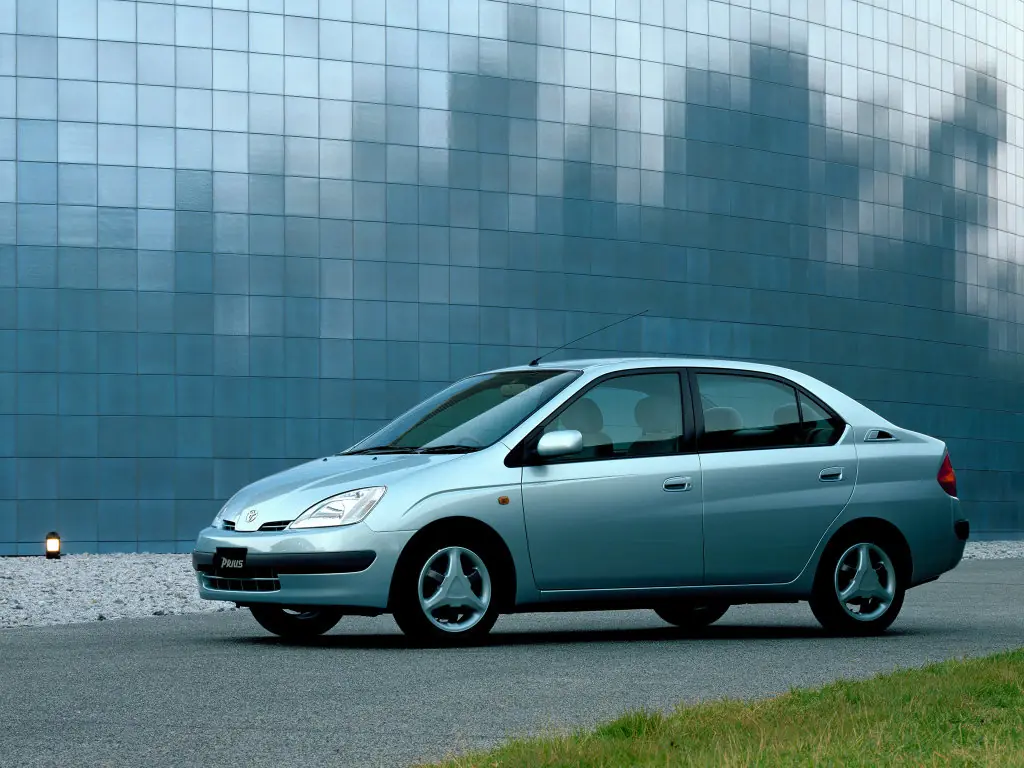
The Prius therefore created more than another model line. It helped establish the modern hybrid as a distinct automotive category and demonstrated that electrification could become a mainstream selling point rather than an engineering experiment.
Toyota’s U.S. historical material confirms the first-generation Prius’ 97-hp combined output and 41-mpg combined EPA rating.
10. Jeep Grand Cherokee
The Jeep Grand Cherokee created a different kind of breakthrough. When the first-generation model debuted for 1993, Jeep was already synonymous with four-wheel-drive vehicles, but the Grand Cherokee pushed the brand into a more refined and family-oriented direction.
It combined genuine off-road hardware with a more comfortable interior and road-focused driving experience, helping establish the premium midsize SUV formula that would become enormously important in the United States.
Its debut was deliberately dramatic. Jeep introduced the Grand Cherokee by driving one through a plate-glass window at Detroit’s North American International Auto Show in January 1992 before launching the vehicle for the 1993 model year.
The event underscored Chrysler’s intention to position the Grand Cherokee as a major new product rather than simply another variation of the existing Cherokee.
The vehicle also represented a major packaging shift. The Grand Cherokee used unibody construction rather than the traditional body-on-frame architecture common among many large SUVs of the period. That helped give it a more car-like driving character while retaining four-wheel-drive capability and substantial ground clearance.
The available 5.2-liter V8 made the formula even more distinctive. Jeep’s early Grand Cherokee could provide strong straight-line performance while remaining capable away from paved roads.
That combination helped attract buyers who wanted an SUV for daily commuting but did not want to abandon the rugged capability associated with the Jeep name.
The model arrived at a crucial moment in the American market. SUVs were beginning to move beyond specialized utility roles and become mainstream family transportation. The Grand Cherokee demonstrated that an SUV could occupy a more upscale position without completely abandoning its off-road identity.
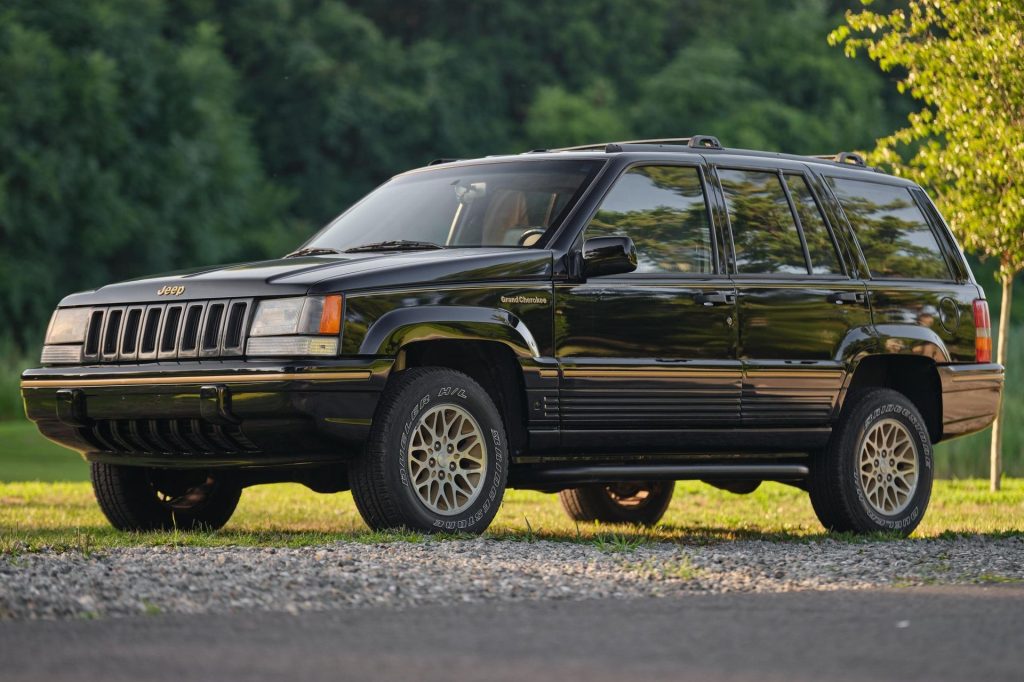
Its influence can be seen in the modern midsize SUV market, where manufacturers routinely combine premium interiors, powerful engines, four-wheel drive, and everyday road manners in a single vehicle.
The first-generation Grand Cherokee’s 5.2-liter V8 was rated at 220 horsepower and 285 lb-ft of torque in the U.S. market. Its unibody architecture also distinguished it from many traditional truck-based SUVs of the period.
