
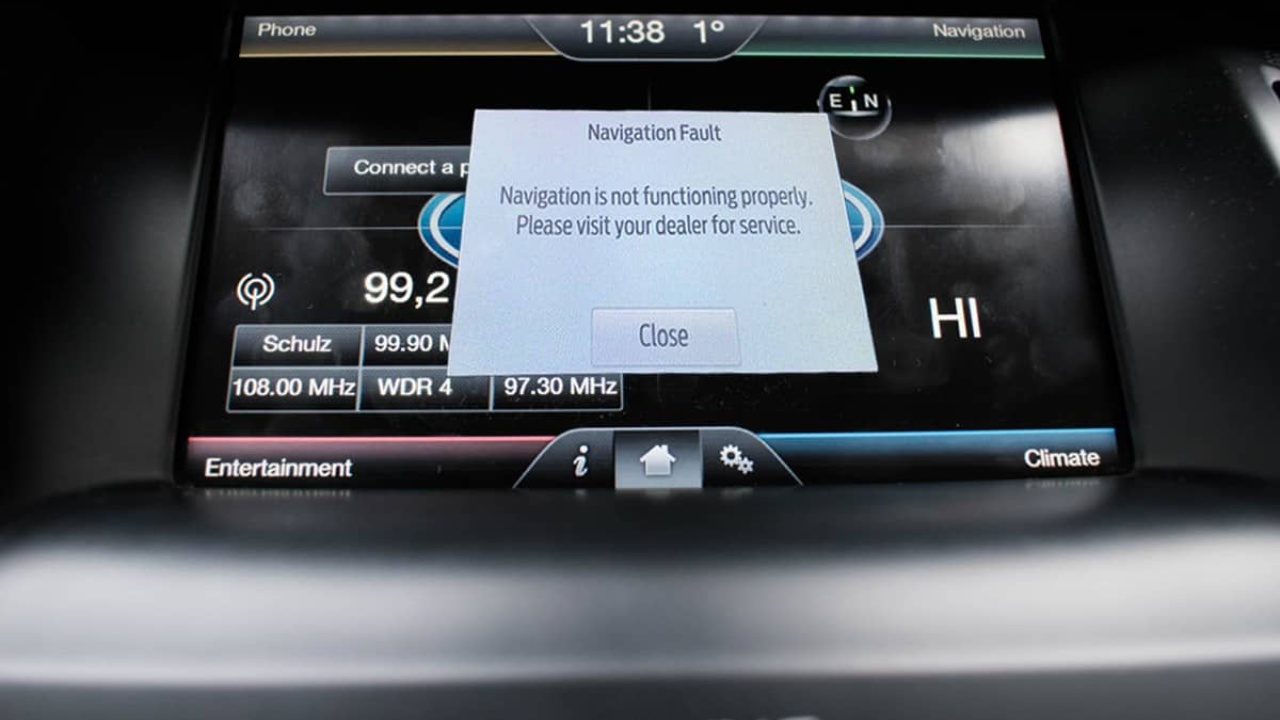
Modern vehicles increasingly depend on software, touchscreens, smartphone integration, and connected services, and those systems are creating a new class of ownership problems.
The 2026 J.D. Power U.S. Vehicle Dependability Study found that infotainment was the most problematic category after three years of ownership, recording 56.7 problems per 100 vehicles, compared with 27.5 for exterior problems.
The study covered 2023 model-year vehicles and surveyed owners after three years of ownership. The findings show that today’s most frustrating vehicle faults are often not mechanical failures at all.
They can involve connectivity, displays, controls, navigation, and software that make a perfectly drivable vehicle surprisingly difficult to use.
1. Apple CarPlay and Android Auto Connection Failures
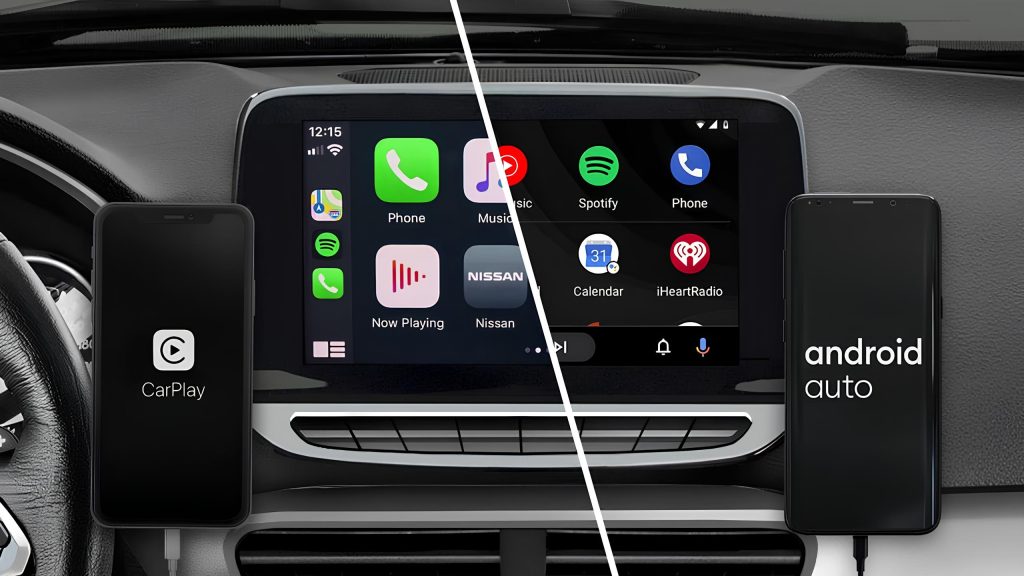
One of the most common infotainment frustrations is also one of the simplest. The phone just refuses to connect properly. Drivers increasingly expect Apple CarPlay or Android Auto to work without much effort, yet J.D. Power’s latest U.S. research indicates that smartphone integration remains a notable source of problems.
The 2026 U.S. Vehicle Dependability Study found infotainment to be the most problematic category at 56.7 problems per 100 vehicles. J.D. Power specifically highlighted mobile phone integration as an ongoing source of owner complaints, with problems involving connectivity continuing to affect the long-term ownership experience.
The problem can take several forms. A phone may connect successfully one day but fail to reconnect automatically the next. Wireless CarPlay or Android Auto can disappear from the screen, while a wired connection may work normally. Some drivers may see the phone listed in the vehicle’s Bluetooth menu but still be unable to launch the smartphone interface.
These faults can be especially irritating because the vehicle itself may have no mechanical problem whatsoever. The engine, transmission, brakes, and suspension can operate normally while the driver’s most frequently used digital feature becomes unreliable.
J.D. Power’s 2026 Initial Quality Study provides another indication of the problem. Among new vehicles, infotainment was the only category that worsened year over year, with Apple CarPlay and Android Auto connectivity accounting for a 1.4 PP100 increase in reported problems.
The study was based on responses from 78,514 owners and lessees of 2026 model-year vehicles after 90 days of ownership.
Smartphone integration has become an important part of the ownership experience. A feature meant to make driving more convenient can quickly become a source of frustration when the vehicle’s software fails to work consistently.
2. Touchscreen Freezing and Display Problems
The giant center screen has become the command center of many modern vehicles, but putting so many functions behind one display creates another potential failure point. When the touchscreen freezes, becomes unresponsive, or temporarily goes blank, the problem can affect far more than entertainment.
J.D. Power’s 2025 U.S. Multimedia Quality and Satisfaction study found that touchscreen and digital-display problems increased from 4.0 to 4.2 problems per 100 vehicles. The study also found that five of the 10 most frequently cited multimedia issues involved multimedia systems.
The problem is not necessarily a defective physical screen. Modern infotainment displays depend on processors, operating systems, communication networks, and software applications. A fault in any one of those areas can make the display behave incorrectly even when the panel itself is physically intact.
A frozen screen can leave drivers waiting for the system to restart before they can change settings or access navigation. In vehicles that place climate controls, camera functions, or other controls inside the touchscreen interface, the inconvenience can extend beyond music and navigation.
J.D. Power’s 2026 research adds an important safety dimension. Among owners who reported a distracted-driving-related problem, 46% identified the infotainment system or touchscreen as the source of the distraction. Driver-assistance alerts accounted for 18%.
That does not mean every touchscreen fault creates a safety hazard, but it demonstrates how heavily drivers interact with these systems.
The contrast with traditional mechanical problems is striking. A mechanical failure generally has a recognizable physical component that can be inspected and repaired. A frozen infotainment display may require a software reset, firmware update, replacement module, or diagnostic procedure.
As automakers continue moving physical controls into screens, touchscreen reliability becomes increasingly important. The screen is no longer simply an entertainment accessory. In many vehicles, it has become part of the basic interface between the driver and the automobile.
3. Bluetooth Pairing and Phone Recognition Problems
Bluetooth is supposed to make getting into a vehicle effortless. In practice, pairing problems remain a recurring source of frustration.
A phone may appear in the vehicle’s device list but fail to connect automatically, or the system may connect for calls while refusing to play audio. These issues can be particularly annoying because the underlying vehicle can be mechanically perfect.
J.D. Power’s 2026 U.S. Vehicle Dependability Study found built-in Bluetooth system problems at 5.5 PP100, making Bluetooth one of the four phone-integration problems that together accounted for 24.2 PP100. Apple CarPlay and Android Auto connectivity was the largest individual problem at 8.9 PP100.
The problem is not necessarily limited to the Bluetooth hardware. Modern vehicles have to coordinate the phone’s operating system, the vehicle’s infotainment software, Bluetooth protocols, contact synchronization, and other connected functions. A software update on either side can potentially alter how those systems interact.
J.D. Power’s earlier research illustrates how persistent this category has been. Its 2014 multimedia study found Bluetooth pairing and connectivity at 5.7 PP100, with the vehicle failing to recognize a phone and failing to reconnect automatically among the common complaints.
That long history makes the problem particularly interesting. Bluetooth is mature technology, yet vehicle implementations can still produce compatibility issues.
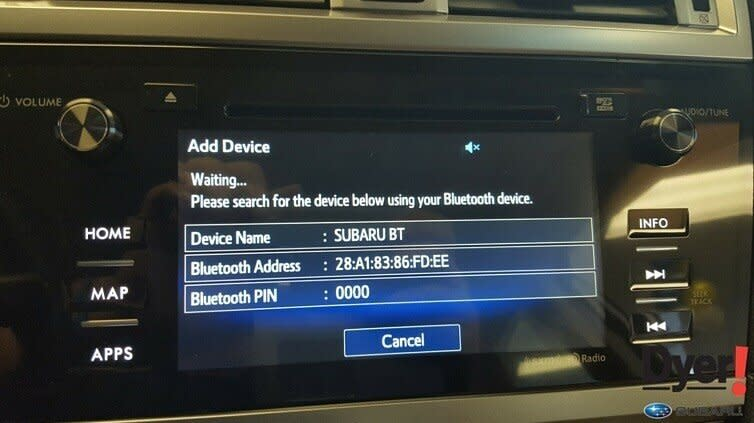
For owners, troubleshooting can involve deleting the phone from the vehicle, removing the vehicle from the phone’s Bluetooth settings, restarting both devices, and pairing them again. Software updates can also change the behavior of the system.
The important point is that a Bluetooth problem rarely means the car’s mechanical systems are failing. It is a modern example of how vehicle dependability increasingly includes the interaction between a car and the technology people bring into it.
4. Wireless Charging Pads That Do Not Charge Reliably
Wireless phone charging seems like a straightforward feature. Place the smartphone on the designated pad and the vehicle charges it without requiring a cable. Despite its simplicity, J.D. Power’s latest dependability research identifies wireless charging as one of the infotainment features associated with reported problems.
The 2026 U.S. Vehicle Dependability Study recorded wireless charging-pad problems at 5.1 PP100. J.D. Power grouped wireless charging with Android Auto and Apple CarPlay connectivity, built-in Bluetooth, and OEM app connectivity among the major mobile-phone-related problems. Together, those four categories represented 24.2 PP100 within infotainment.
The difficulty with wireless charging is that it depends on more than the charging pad itself. The phone must be positioned correctly over the charging coil, and the vehicle must maintain an appropriate connection while the phone is moving or heating up. Phone cases can also affect charging performance, particularly when they are thick or contain additional hardware.
Heat can become another complication. Wireless charging naturally produces some heat, and a phone running navigation, cellular data, and other applications simultaneously may already be warm. The charging system may reduce output or stop charging if temperatures rise.
The physical location of the pad matters too. If it is positioned where the phone can slide during acceleration or cornering, charging can become intermittent.
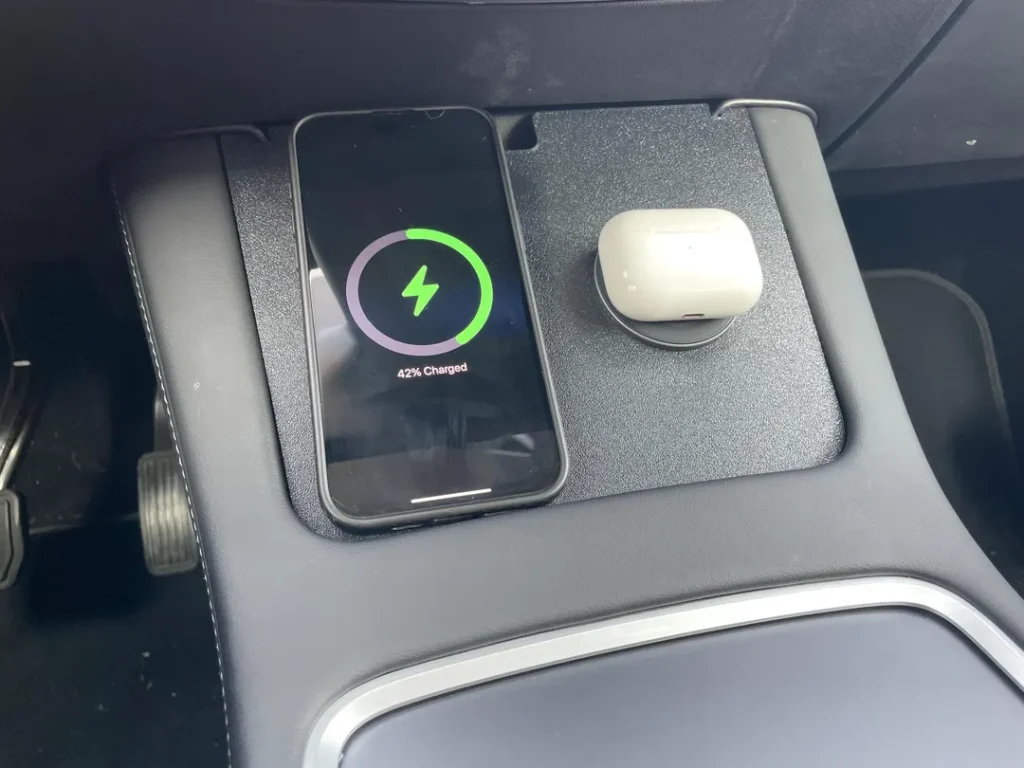
Unlike an engine problem, these faults may be difficult for an owner to diagnose because the feature can appear to work while charging inconsistently.
The J.D. Power data is significant because it shows that relatively small convenience features can contribute substantially to modern vehicle problem counts. A vehicle can have a dependable powertrain while its wireless charging pad becomes one of the owner’s most frequently noticed technology complaints.
As manufacturers add more connected functions, seemingly minor features such as wireless charging become part of the perceived quality of the vehicle.
5. Voice Recognition That Misunderstands Drivers
Voice controls were supposed to make infotainment safer and easier by allowing drivers to keep their hands on the wheel. Yet voice-recognition problems have remained one of the recurring weaknesses in vehicle technology.
J.D. Power has repeatedly identified built-in voice recognition among the most frequently reported infotainment complaints in its U.S. research. In its 2024 Vehicle Dependability Study, voice-recognition problems reached 6.1 PP100, just behind smartphone connectivity at 6.3 PP100.
The difficulty can be surprisingly basic. A driver may ask the system to call a contact, change the radio station, or enter a destination, only for the software to misunderstand the command. Background noise, pronunciation, road noise, and the system’s interpretation of natural language can all affect the result.
This becomes more noticeable because modern vehicles increasingly advertise voice control as a convenient alternative to manually operating the touchscreen. When the system repeatedly misunderstands commands, drivers may simply return to physical buttons or their smartphones.
J.D. Power’s research has shown that infotainment problems are not confined to one type of technology. In its 2026 U.S. Vehicle Dependability Study, infotainment reached 56.7 PP100, more than twice the 27.5 PP100 recorded for exterior problems.
The significance is that voice recognition can create frustration without producing a conventional mechanical failure. Nothing is broken under the hood, yet a basic request can become a sequence of repeated commands.
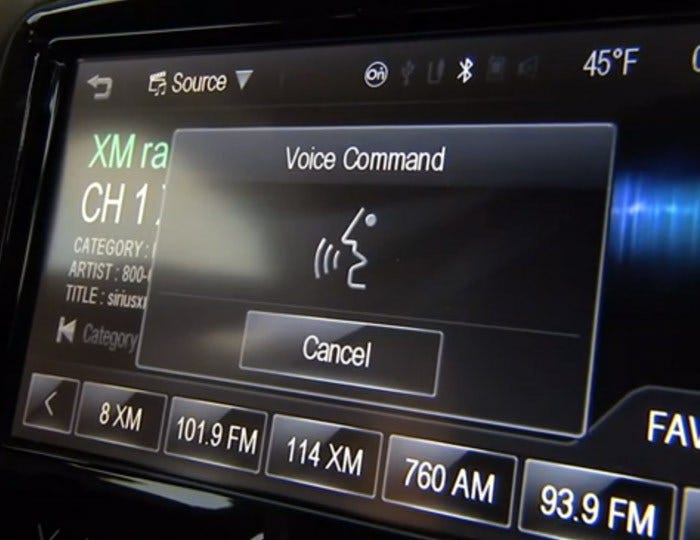
For automakers, improving voice recognition therefore involves software development, microphone performance, and natural-language processing rather than replacing conventional mechanical components.
6. Navigation Systems With Outdated or Inaccurate Information
Built-in navigation can become problematic when the software no longer reflects the roads and businesses drivers encounter in the real world. J.D. Power has previously identified both difficult-to-use navigation systems and inaccurate or outdated maps among the most frequently reported infotainment problems.
Unlike a mechanical fault, an outdated navigation database does not necessarily prevent the system from operating. The screen may display a route perfectly while relying on information that is no longer current. New roads, changed intersections, relocated businesses, and altered traffic patterns can all make an otherwise functional system less useful.
This issue has become more noticeable as smartphone navigation services have become deeply integrated into modern driving. Applications such as Google Maps and Apple Maps can receive frequent data updates, while a vehicle’s built-in navigation database may depend on manufacturer updates that occur less frequently.
J.D. Power’s 2026 research reinforces the broader problem. Infotainment recorded 56.7 PP100 in the three-year-old vehicles measured by the study, making it the most problematic of the nine categories examined.
The frustration is not simply about getting lost. Navigation is increasingly connected to other vehicle functions, including traffic information, charging locations, points of interest, and route planning. If the underlying database is outdated, several connected features can become less useful.
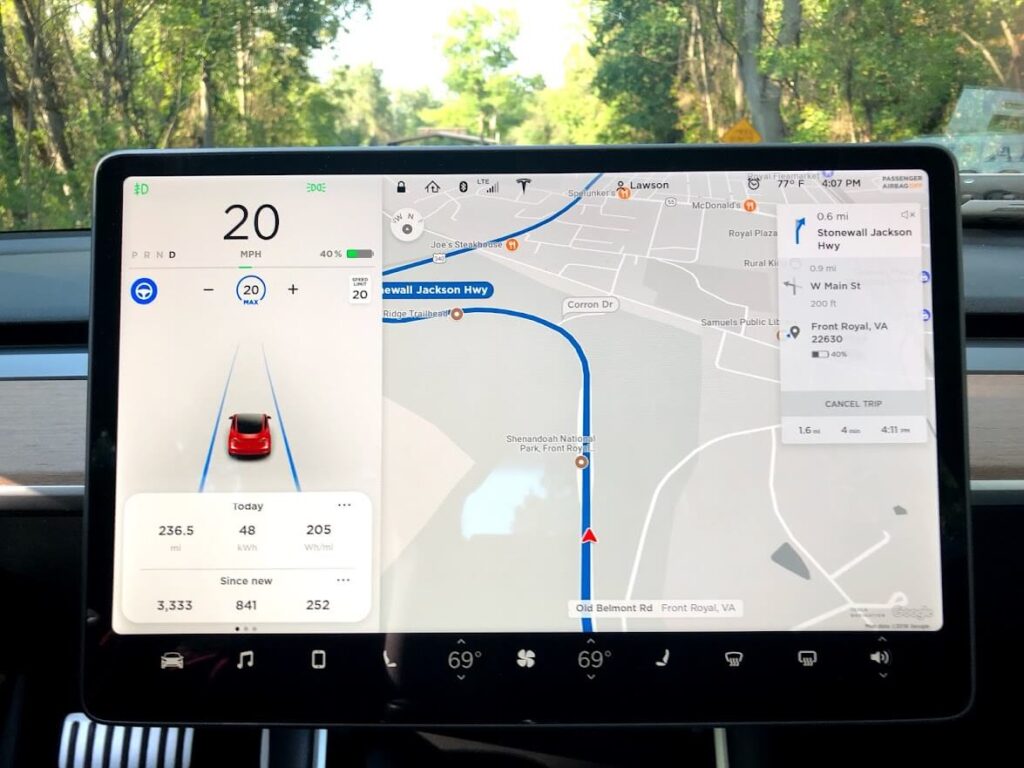
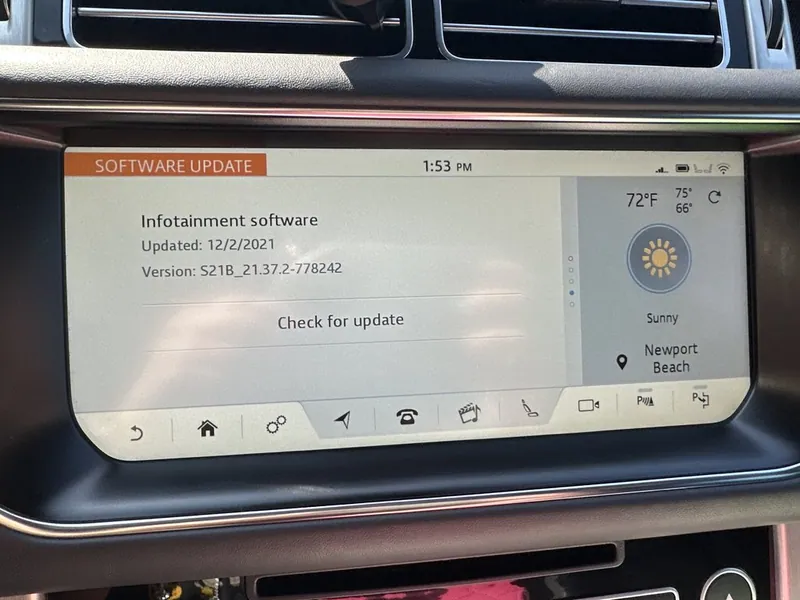
Manufacturers have tried to simplify software updates through over-the-air updates and connected navigation services. These systems can reduce the need for dealership visits when new software becomes available, but they also depend on a reliable data connection and supporting software infrastructure.
For owners, the result can be strange. A navigation system may look sophisticated, respond quickly, and display a large, high-resolution map, yet still provide inferior information because its underlying data is not current.
7. Over-the-Air Updates That Create New Problems
Over-the-air updates are intended to make vehicles better without requiring a dealership visit, but software updates do not always deliver the improvement owners expect. J.D. Power’s 2026 U.S.
The Vehicle Dependability Study found that infotainment remained the most problematic vehicle category at 56.7 problems per 100 vehicles, and the organization specifically identified weak perceived benefits from some software updates as a continuing concern.
The problem can take several forms. An update might change menu layouts, alter how a phone connects, modify voice controls, or introduce unexpected behavior elsewhere in the system. Even when an update fixes one issue, owners may have to relearn how certain functions work.
J.D. Power also found that owners who received an OTA update did not necessarily report fewer problems afterward. The study noted continuing mobile-phone integration issues and limited perceived benefits from some updates.
This creates a distinctly modern dependability problem. A traditional mechanical component generally does not change its operating behavior overnight because the manufacturer released a new code. A connected vehicle can.
The technology itself is not inherently unreliable, but the sheer number of software-controlled functions creates more opportunities for unexpected interactions. Navigation, Bluetooth, smartphone integration, voice recognition, and vehicle settings can all depend on the same underlying software architecture.
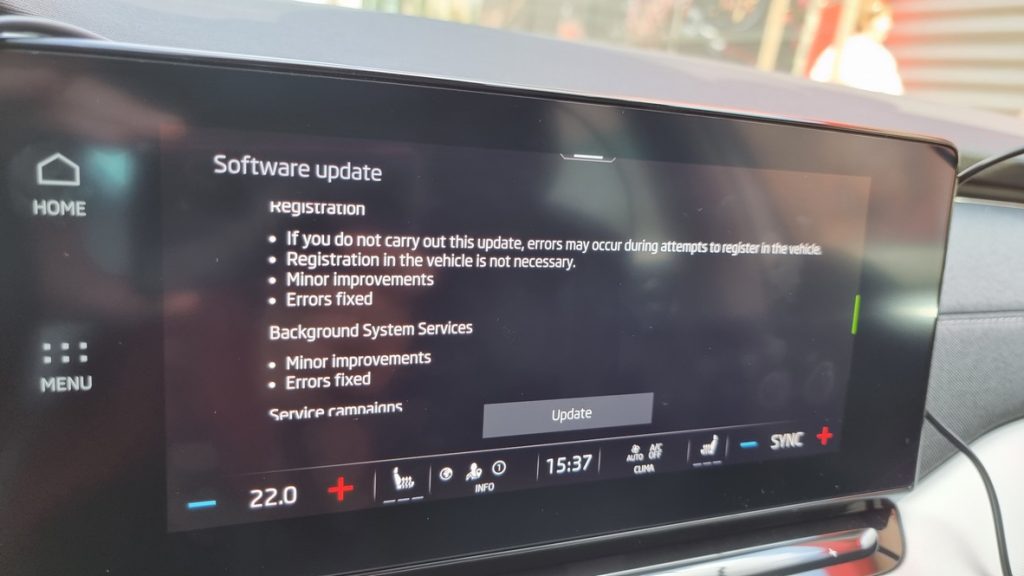
For owners, an OTA update can create a difficult trade-off. Installing it may resolve a known problem, but there is no guarantee that the new software will not affect another function of the vehicle.
That is why software quality has become part of long-term vehicle dependability rather than simply a convenience feature.
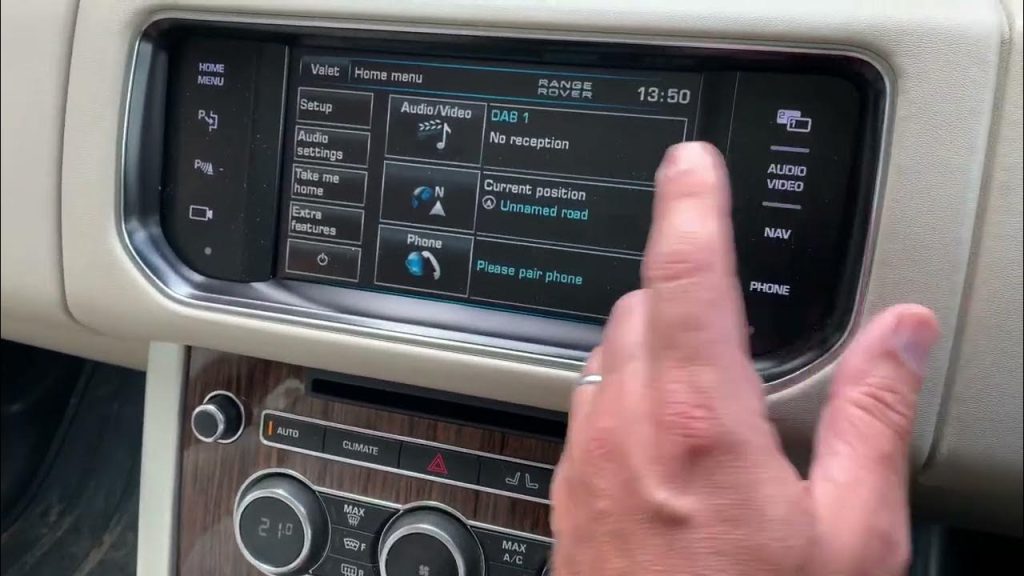
8. Unresponsive Controls and Complicated Infotainment Menus
The final issue is perhaps the easiest to understand. The system may work as intended, yet using it can still be frustrating. Touch controls may require several taps, menus can be difficult to navigate, and important functions may be buried beneath multiple layers of screens.
J.D. Power’s research has repeatedly identified unresponsive touchscreens and difficult infotainment interfaces among major owner complaints.
Its 2024 Vehicle Dependability Study identified unresponsive touchscreens, Bluetooth pairing problems, voice-command recognition, Wi-Fi connectivity, and inaccurate navigation among the leading infotainment issues.
The 2026 data shows how significant the category has become. Infotainment reached 56.7 PP100, more than twice the 27.5 PP100 recorded for exterior problems.
The difficulty is partly created by the modern dashboard itself. Manufacturers increasingly use one large display to control navigation, audio, vehicle settings, and other functions. That approach can reduce physical buttons and create a cleaner dashboard, but it also concentrates many tasks into a single interface.
A delayed touchscreen response can therefore become more than an annoyance. If a driver must repeatedly tap a display to accomplish a simple task, the interaction takes longer and demands more visual attention.
J.D. Power’s 2026 Initial Quality Study found infotainment was the only one of its 10 categories to worsen year over year, with connectivity problems driving much of the deterioration. The study recorded 1.4 additional PP100 specifically from Apple CarPlay and Android Auto connectivity problems.
That makes the lesson from modern infotainment fairly clear. A vehicle does not need a failed engine component to develop a significant ownership problem. A screen that responds slowly, a menu that is unnecessarily complicated, or software that makes routine functions difficult can become a daily source of frustration.
As cars become increasingly digital, ease of use and software stability are becoming just as important to the ownership experience as traditional mechanical durability.
