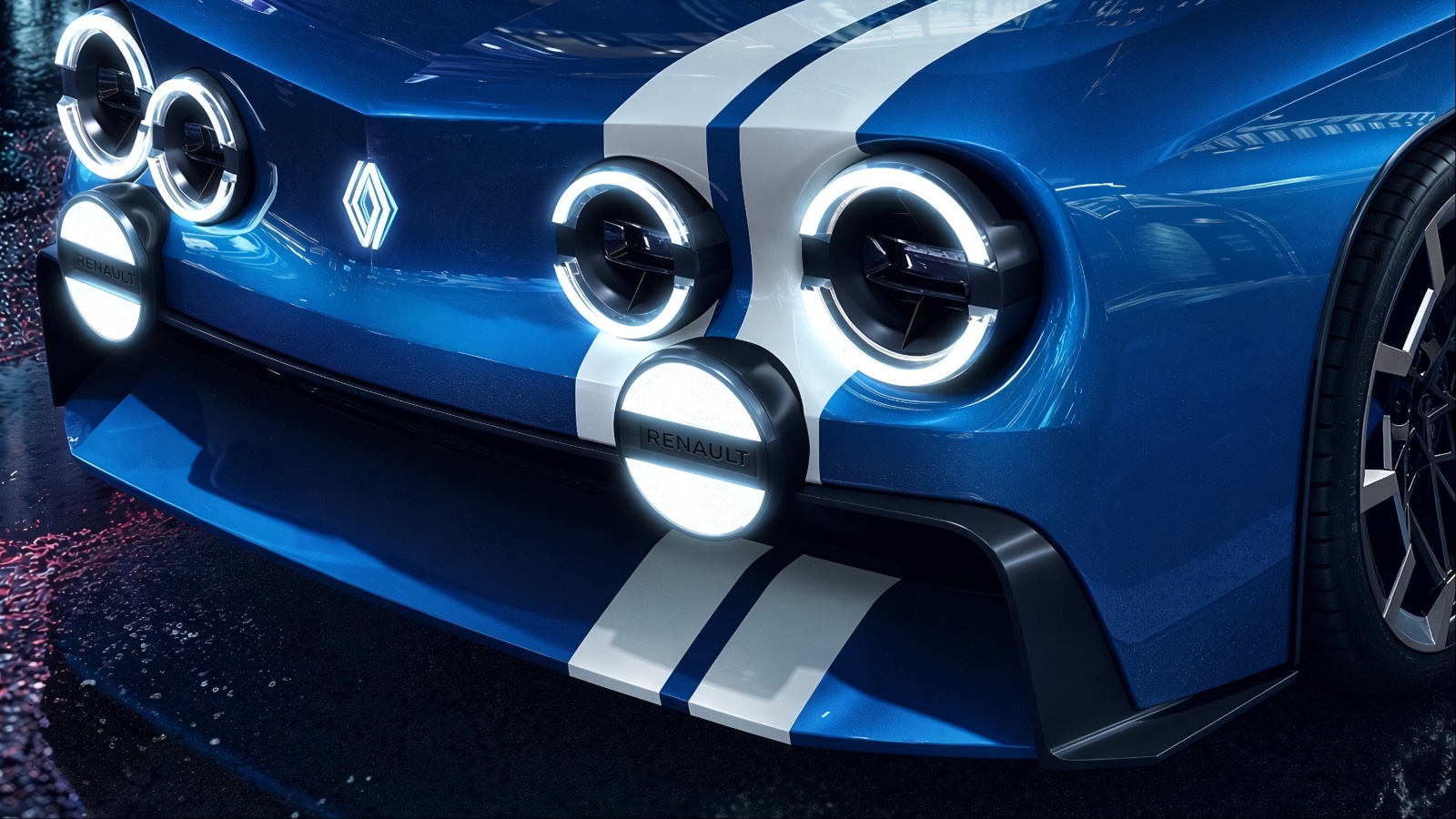
Renault is bringing one of its most recognizable performance names into the electric era. The French automaker plans to introduce a new Renault 8 Gordini electric concept at the Paris Motor Show, reviving a badge long associated with lightweight performance cars and motorsport heritage.
The concept is expected to reinterpret the classic Renault 8 Gordini for a modern electric age rather than serve as a direct production replacement for the original.
According to Renault, the project is intended to demonstrate how the brand can use historic design and performance references while developing its next generation of electric vehicles. MarkLines reported on September 25 that Renault plans to present the concept at the Paris Motor Show.
The decision is significant because the Gordini name has a long connection with Renault’s sporting heritage. Bringing it back on an electric concept allows Renault to connect that history with the company’s current push toward electrification.
The original Renault 8 Gordini became particularly famous for offering performance in a relatively compact and affordable package. The new concept is expected to reinterpret that philosophy rather than simply reproduce the styling of the 1960s car.
Why the Renault 8 Gordini Name Still Matters
The original Renault 8 was launched in 1962 as a rear-engine compact family car. Its sporting transformation came through Amedee Gordini, the Italian-born French engineer and racing specialist whose work with Renault produced some of the company’s most memorable performance models.
The Renault 8 Gordini arrived in 1964 with a 1.1-liter engine producing about 95 horsepower. A more powerful 1.3-liter version followed in 1966, producing approximately 110 horsepower.
At a time when compact European cars were generally focused on practicality rather than performance, the Gordini gave drivers a relatively accessible route into motorsport-inspired driving.
The car’s rear-engine, rear-wheel-drive layout also gave it distinctive handling characteristics. Renault positioned the Gordini as a performance-oriented version that could be used both on the road and in competition.
Its motorsport connection became particularly important to the car’s reputation. The Renault 8 Gordini Cup, launched in 1966, created a one-make racing series that helped establish a pathway for young drivers and strengthened the model’s sporting identity.
Renault has repeatedly returned to its historical performance heritage through modern products and concepts. The new Gordini concept follows that same philosophy but changes the mechanical formula completely.
Instead of a small gasoline engine driving the rear wheels, the new concept will use electric propulsion.
That creates an interesting opportunity for Renault. Electric motors can provide instant torque and strong acceleration without requiring a high-revving combustion engine.
At the same time, an electric vehicle can be engineered around a low center of gravity because its battery pack is mounted low in the vehicle. The challenge is making an EV feel as light and agile as the original Gordini.
An Electric Interpretation Rather Than a Simple Retro Car
Renault has not yet released complete technical specifications for the new Renault 8 Gordini concept, so claims about battery capacity, power output, range, or acceleration should not be treated as confirmed.
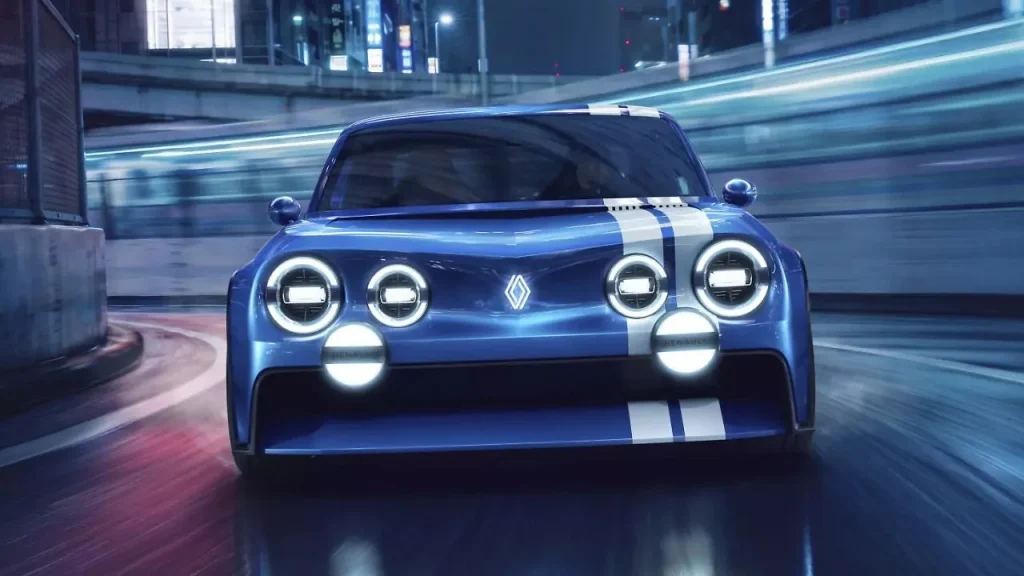
Renault has confirmed the concept’s broader purpose, using the Gordini name to signal its future approach to design and performance.
That approach is consistent with Renault’s recent use of historic names and shapes to generate interest around its electric strategy.
The company has already demonstrated that it sees its heritage as a useful design resource. The Renault 5 E-Tech electric brought the basic identity of the classic Renault 5 into a modern battery-electric vehicle, while the Renault 4 E-Tech electric similarly transformed another historic name into a contemporary crossover.
The Renault 8 presents a different opportunity because of its performance history. Rather than emphasizing nostalgia alone, Renault can use the Gordini identity to communicate that electrification does not necessarily mean giving up driving excitement.
That message is becoming increasingly important as automakers attempt to make electric vehicles appealing beyond their efficiency benefits.
Renault’s Alpine brand already occupies the company’s dedicated performance position, with the Alpine A110 continuing to represent lightweight sports-car engineering while the brand develops electric models. Gordini could potentially occupy a different space, linking Renault’s mainstream lineup with its historical performance culture.
However, Renault has not announced that the concept will lead directly to a production Gordini model.
That distinction is important. Automakers frequently use concept cars to test design ideas, demonstrate technology, and gauge public reaction without committing to immediate production.
The Paris presentation should therefore provide a clearer indication of what Renault is considering for the name.
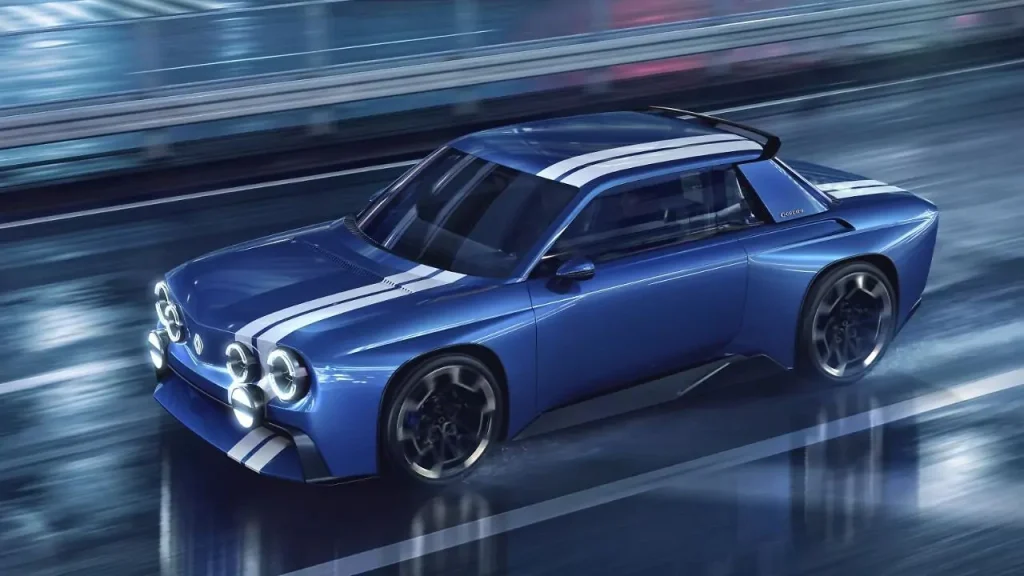
The design will be another major part of the story. The original Renault 8 had a simple three-box shape, a compact footprint, and a distinctive rear-engine layout. Reproducing those proportions on a modern EV would be difficult because today’s vehicles require different crash structures, battery packaging, and aerodynamic considerations.
Renault can instead borrow recognizable elements without reproducing the original dimensions.
That could include the four-headlamp theme, compact proportions, simple geometric surfaces, and motorsport-inspired details associated with the Gordini name.
The company will need to balance those historical references with the aerodynamic requirements of an electric vehicle.
For an EV, aerodynamic efficiency directly affects energy consumption and range. A highly retro design can therefore create engineering compromises if its shape produces excessive aerodynamic drag.
The concept offers Renault an opportunity to experiment with that balance before deciding whether any of its design elements should appear on future production vehicles.
Renault’s Broader Electric Strategy
The Gordini concept arrives while Renault is expanding its electric vehicle portfolio across Europe.
The company has been investing heavily in its Ampere electric-vehicle business, which was established to accelerate development of EVs and software-defined vehicles. Renault has also been increasing the number of electric models offered under its main brand.
The Renault 5 E-Tech electric and Renault 4 E-Tech electric are central examples of the company’s strategy of combining recognizable historical names with modern electric technology.
Renault has said its future electric vehicles will increasingly use common platforms and software technologies to reduce development costs and shorten product cycles.
The company is also using its historical design language to differentiate its EVs from competitors.
That is particularly important in Europe’s crowded electric-car market, where specifications such as range and charging speed are increasingly becoming less distinctive. Design, brand identity, and driving character can provide automakers with additional ways to differentiate their products.
The Gordini name could therefore become useful if Renault decides to extend it beyond a single concept.
Historically, Gordini represented more than appearance. It was associated with improved engines, competition, and driver-focused engineering. Renault would need to preserve some of that meaning if it eventually puts the name on a production EV.
That could involve a more powerful electric motor, revised suspension, sharper steering, reduced weight, or other chassis changes.
At this stage, however, Renault has not confirmed a production version or announced the concept’s final specifications. The Paris Motor Show reveal should answer some of those questions.
The timing also gives Renault an opportunity to show that its electric strategy is not limited to practical hatchbacks and crossovers. A performance-oriented concept can demonstrate how the company sees electric propulsion evolving into a broader range of vehicle types.
The original Renault 8 Gordini succeeded because it made performance accessible in a compact package. More than half a century later, Renault is attempting to reinterpret that idea for a market where electric power is becoming increasingly important.
Whether the concept eventually reaches production remains uncertain. Even so, reviving the Gordini name signals that Renault’s electric future can encompass more than efficiency and practicality, with design and performance also playing an important role.
The new Renault 8 Gordini concept will instead attempt to connect the instant response of electric propulsion with one of Renault’s most enduring performance identities.
For now, the concept itself is the important development. Its eventual production prospects, technical specifications, and positioning will depend on Renault’s response to the public and market reaction after its Paris debut.