

Suzuki Motor Corporation is planning a major overhaul of the way it develops and builds vehicles, with the Japanese automaker targeting a 50% reduction in new-model development time and a 50% improvement in manufacturing efficiency by around 2030.
The strategy was announced on September 25 as part of Suzuki’s Technology Strategy 2026, a long-term plan covering the next decade.
According to Suzuki, the company wants to respond more quickly to changing customer requirements, regulations, technology, and market conditions while continuing to offer different powertrain technologies for different regions.
Reuters reported that Suzuki aims to halve new-vehicle development time compared with fiscal 2020 levels. The company is also targeting a 30% improvement in development efficiency and a 50% increase in production efficiency.
The targets are ambitious because Suzuki is not simply trying to build vehicles faster. It wants to change the development and manufacturing processes behind them, using greater digitalization, modularization, and closer cooperation between engineering and manufacturing teams.
At the same time, the company is preparing to expand production capacity in India, which it sees as one of the central manufacturing and export hubs for its global business.
Suzuki Wants to Cut Development Time in Half
The most striking part of Suzuki’s strategy is its goal of reducing the time required to develop a new vehicle by 50% by 2030.
Suzuki’s official Technology Strategy 2026 says the company will cut new-vehicle development lead time in half while improving development efficiency by 30% and manufacturing efficiency by 50%.
The company believes the traditional separation between vehicle engineering and manufacturing development can be reduced through greater concurrent development.
In practical terms, that means engineers responsible for designing a vehicle and teams responsible for producing it can work together earlier instead of treating manufacturing as a later stage of the program. Suzuki also plans to increase its use of digital engineering.
Digital tools can allow engineers to simulate components, manufacturing processes, and vehicle systems before physical prototypes are built. That can reduce the amount of time required for certain development stages and allow problems to be identified earlier.
Modularization is another major part of the strategy. Rather than designing every component specifically for one model, Suzuki wants to increase the number of technologies and components that can be shared across different vehicles.
The company says this approach will allow products to be adapted to individual markets while retaining common underlying technologies.
That is particularly important for Suzuki because it operates across markets with very different customer requirements.
A small vehicle designed for India may have very different requirements from one sold in Japan or Europe, but some of the underlying engineering, manufacturing processes, and components can potentially be shared.
Suzuki calls this approach part of its “Just-Right” philosophy, under which it intends to provide vehicles and technologies suited to individual markets rather than applying the same solution everywhere. The strategy also covers more than battery-electric vehicles.
Suzuki says it will continue pursuing a multi-pathway approach that includes different electrified and combustion technologies depending on local energy availability, infrastructure, and customer requirements.
Its planned technology portfolio includes series-hybrid electric vehicles, a new hybrid system called Super Ene Charge, newly developed direct-injection turbo engines, and lightweight technologies.

That means the faster development process will need to support several types of vehicles instead of being designed exclusively around EVs.
India Becomes Even More Important to Suzuki’s Global Manufacturing
Suzuki’s production strategy is closely connected to its plans for India. The automaker intends to strengthen India as a manufacturing and export hub, with annual production capacity targeted at approximately 4 million vehicles in fiscal 2030 and beyond.
Reuters reported that Suzuki’s broader target could reach between 4 million and 4.99 million units of annual capacity during the period. India currently plays an important role in Suzuki’s global operations through Maruti Suzuki.
Suzuki’s official strategy specifically identifies Japan and India as the two centers of its global business foundation. Technologies developed in Japan are expected to be shared with India and adapted for individual markets, while India’s manufacturing base will be expanded to serve both domestic customers and export markets.
The scale of the planned expansion is significant. The Economic Times reported that Suzuki currently has approximately 2.9 million units of annual production capacity in India and is targeting 4 million units from fiscal 2030.
That additional capacity would give Suzuki considerably more room to supply growing demand in India while also increasing the country’s role in exports.
Suzuki has already identified India as a major part of its future growth strategy. The company expects production capacity there to expand while new technologies developed for different markets can be integrated into vehicles manufactured locally.
The strategy also fits Suzuki’s wider investment plans. The company says it intends to make approximately 2 trillion yen in capital investments and spend another 2 trillion yen on research and development through fiscal 2030.
Of the planned capital expenditure, about 1.2 trillion yen is related to India, while approximately 1.35 trillion yen of R&D spending is directed toward technologies designed to minimize energy consumption.
That level of investment indicates that Suzuki’s manufacturing transformation is not simply an efficiency exercise. The company is simultaneously expanding its capacity and attempting to make that larger production network more productive.
Faster Production Is Becoming Essential for Automakers
Suzuki’s targets reflect a broader change taking place across the global automotive industry. Vehicle technology is changing more rapidly than it did during much of the previous decade. Automakers now have to respond to electrification, software, stricter safety requirements, changing emissions regulations, and rapidly evolving consumer preferences.
Long development cycles can make it difficult for a manufacturer to respond quickly when those conditions change.
Suzuki’s plan is designed to address that problem by shortening the period between the beginning of a vehicle program and the start of production.
The company says its goal is to “deliver more products to more markets more quickly” while maintaining its multi-pathway technology strategy. The 50% production-efficiency target is equally important.
Increasing manufacturing efficiency does not necessarily mean simply asking workers to build vehicles faster. It can involve reducing production complexity, improving factory layouts, sharing components between models, increasing automation, and using digital tools to identify bottlenecks.
Suzuki’s strategy also emphasizes “Team Suzuki,” its approach to having engineering and manufacturing teams cooperate across organizational and geographic boundaries.
The company says this approach has already contributed to development work on technologies such as its eSKY electric vehicle technology, where engineers optimized different elements together rather than treating them as independent systems.
If Suzuki can achieve its 2030 targets, the potential benefit goes beyond getting new vehicles to dealerships sooner.
A shorter development cycle could allow the company to respond more quickly to local market demand. A more modular engineering approach could reduce duplication between models. Higher factory efficiency could allow Suzuki to increase production without requiring an equivalent increase in manufacturing resources.
The challenge will be executing all of those changes simultaneously. Suzuki must maintain quality and safety while reducing development time. Faster product cycles cannot come at the expense of reliability, regulatory compliance, or manufacturing consistency.
The company’s strategy also has to work across several markets with different requirements. Its decision to maintain multiple powertrain technologies means the development system must be flexible enough to support hybrids, combustion engines, EVs, and other technologies.
That is why Suzuki’s announcement is more significant than a simple production target. The company is attempting to redesign the way it develops and manufactures vehicles at the same time that it expands its global production network.
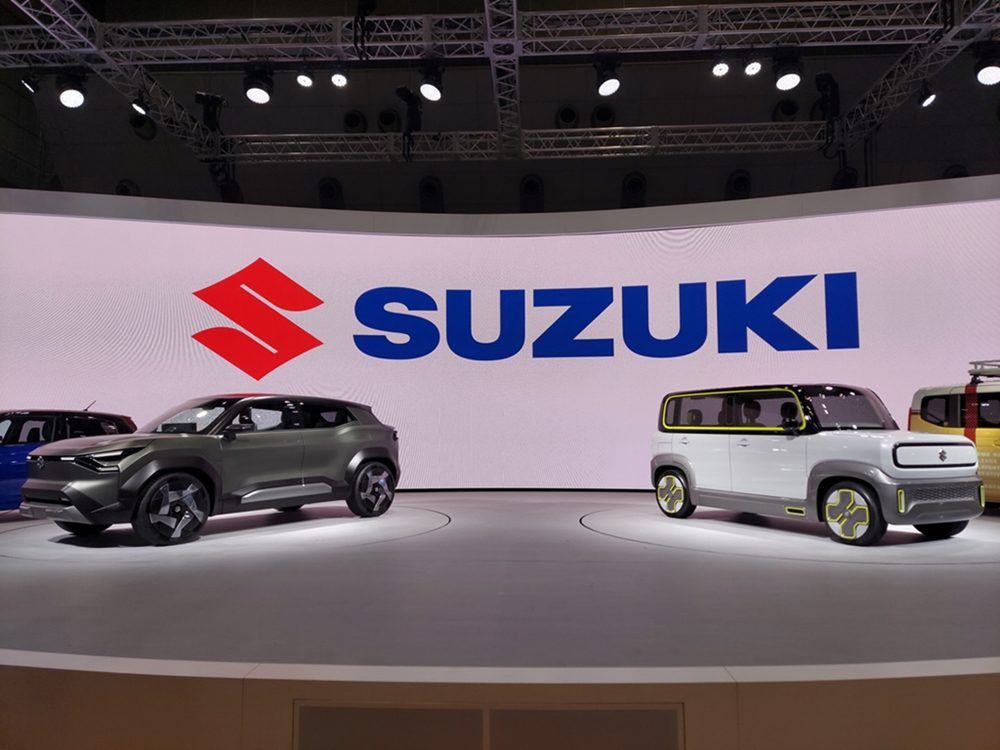
By around 2030, Suzuki wants new vehicles to take half as long to develop compared with fiscal 2020, while development efficiency improves 30% and manufacturing efficiency rises 50%.
India will play a particularly important role in that transformation, with Suzuki targeting approximately 4 million vehicles of annual production capacity there from fiscal 2030 onward.
If the plan succeeds, Suzuki could have a manufacturing system capable of producing vehicles faster, adapting shared technologies across markets and responding more quickly to changing demand.
For an automaker competing in an industry where product cycles and technology are changing rapidly, that ability could become just as important as any individual engine, battery, or vehicle platform.
