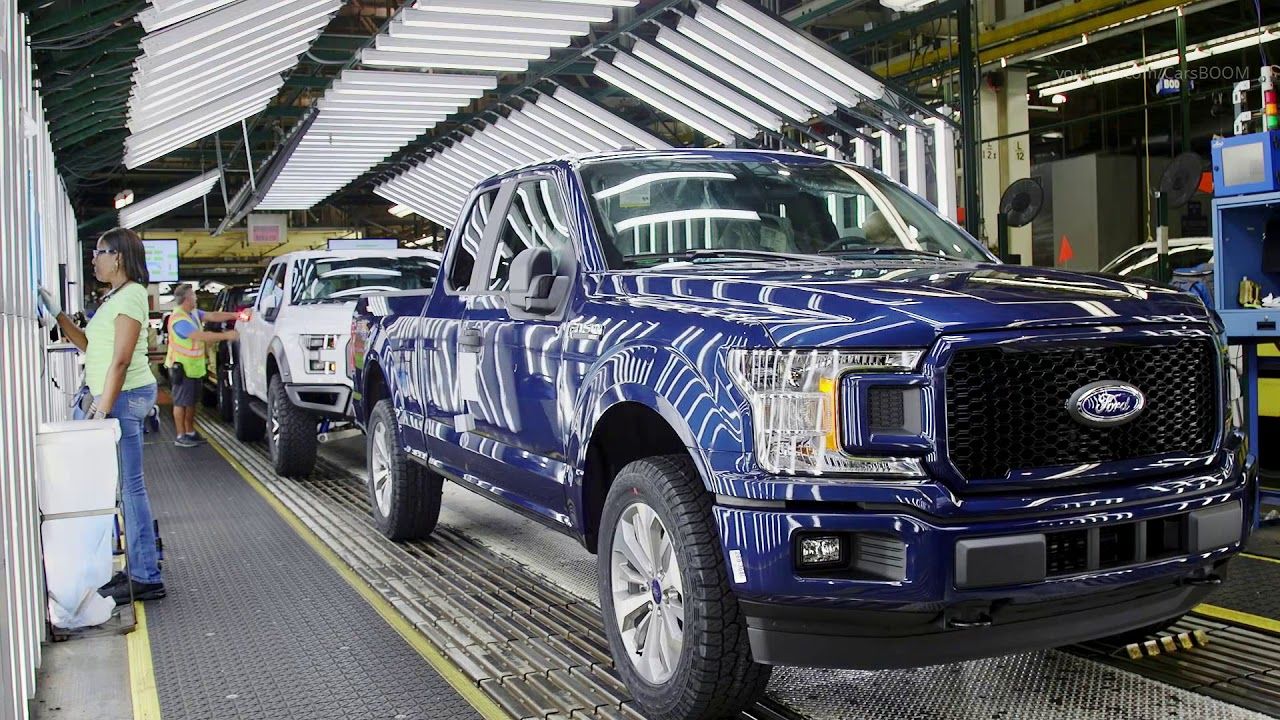
Ford has temporarily halted production of its best-selling F-150 pickup at the Dearborn Truck Plant in Michigan after a supply problem disrupted operations, creating another setback for an automaker that has been working to rebuild F-Series production.
According to a September 25 Reuters report, all production crews at the Dearborn Truck Plant were canceled beginning Thursday, September 24, with the suspension scheduled to continue through Tuesday, September 29.
A person familiar with the situation told Reuters that the disruption was caused by a supplier problem, although the specific part or supplier involved has not been identified.
The disruption extends beyond Dearborn. Ford’s Kansas City Assembly Plant also canceled some shifts during the week because of the same supply issue, while the Kentucky Truck Plant near Louisville increased truck production in an effort to offset some of the lost output.
For Ford, the timing is particularly significant because the F-Series remains the company’s most important vehicle family and a critical source of revenue.
Another Supply Problem Hits F-Series Production
The latest shutdown is not connected to the aluminum shortage that previously disrupted Ford’s truck production.
Ford has been dealing with the consequences of a September 2025 fire at an aluminum supplier’s facility in Oswego, New York. That incident affected the availability of aluminum used for F-Series production and forced Ford to make significant adjustments to its manufacturing schedule.
The automaker subsequently announced plans to increase F-150 and Super Duty production by more than 50,000 trucks during 2026 as it attempted to recover the lost output. Ford also planned to add up to 1,000 jobs across its Michigan and Kentucky truck operations. The current supply problem is separate from that disruption.
Reuters reported that the person familiar with the latest situation specifically said the new supplier issue was unrelated to the earlier aluminum shortage. Reuters was unable to determine which supplier or component was responsible for the latest production changes.
That lack of detail makes it difficult to determine how long the broader supply problem could last beyond the currently scheduled production cancellations.
For now, the immediate impact is clear. Dearborn’s F-150 production has effectively lost several production days, while Kansas City has also sacrificed shifts.
Ford is attempting to compensate by increasing output at its Kentucky Truck Plant. That strategy can reduce some of the overall production loss, but it cannot eliminate the impact of shutting down a major F-150 assembly operation.
The F-150 is built at both the Dearborn Truck Plant and Kansas City Assembly Plant, while the Kentucky Truck Plant produces larger F-Series Super Duty models. Increasing production at Kentucky therefore provides additional truck capacity but does not simply replace every F-150 that would have been produced in Michigan.
The situation demonstrates how dependent modern vehicle production remains on a complex supplier network.
Even when an automaker has demand for a vehicle and available assembly capacity, production can stop if a relatively small number of critical components are unavailable. That is especially costly for high-volume vehicles such as the F-150.
Ford Is Already Under Pressure to Recover Truck Sales
The production interruption comes at a difficult time for Ford’s U.S. business. Reuters reported that Ford’s vehicle sales were down about 10% year over year through August, while F-Series sales were down 11%.
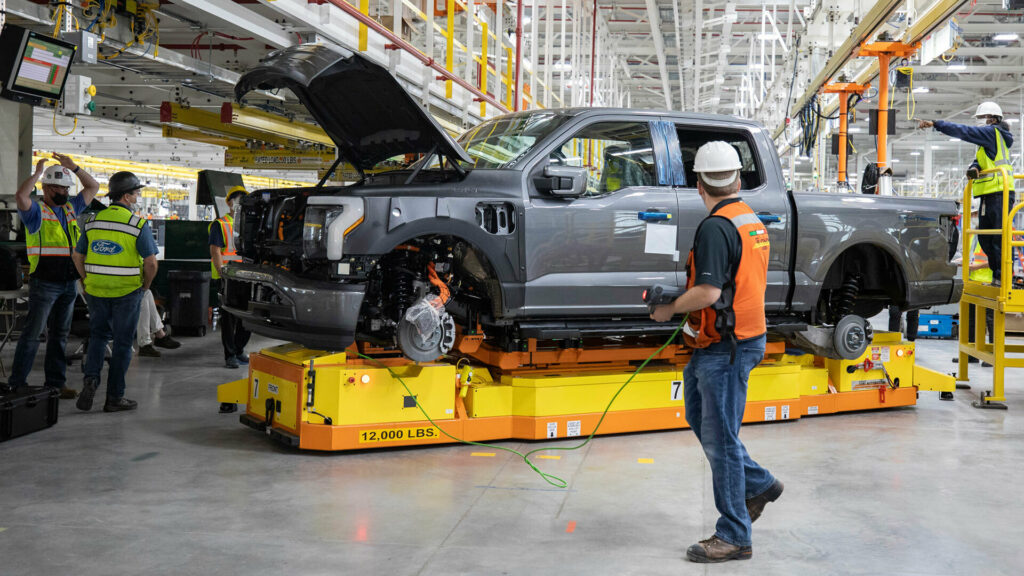
The F-Series remains America’s best-selling vehicle line, but maintaining that position depends heavily on Ford’s ability to keep trucks moving from factories to dealerships.
The company has already been trying to rebuild production following the earlier aluminum-supply disruption.
In October 2025, Ford announced that it would add a third production crew at the Dearborn Truck Plant and increase F-Series production at its Kentucky facility. The company expected the additional production to add more than 50,000 F-Series trucks during 2026, with more than 45,000 additional F-150 gas and hybrid trucks targeted from Dearborn alone.
That makes the latest interruption particularly frustrating. Ford had been adding capacity and workers to increase production, only to encounter another supply-related problem that temporarily removes that capacity from operation. The consequences can also reach dealerships.
Lower production can reduce the number of trucks available for customers and potentially increase pressure on dealer inventory if the disruption lasts longer than expected. Ford Authority reported that F-Series inventory had been running below Ford’s preferred 55-to-65-day supply range, with inventory previously around 52 days.
That does not necessarily mean customers will immediately encounter shortages. Dealers across the country still have vehicles in stock, and production at other facilities continues.
However, the timing leaves Ford with less room for error. The company is also facing broader market-share pressure. Cox Automotive has projected that GM and Ford will experience larger U.S. market-share losses through the first three quarters of 2026 than the other major automakers it tracks.
Cox also expects Hyundai and Kia’s combined sales to surpass Ford’s sales during the third quarter. That makes protecting F-Series production especially important.
Ford Has Limited Room for Another Major Disruption
The F-Series has been America’s best-selling vehicle for decades, giving Ford an enormous competitive advantage in the truck market. But its scale also makes production interruptions unusually expensive.
Reuters noted that even one lost production day can be costly for Ford, particularly when the affected vehicle is the F-Series.
A single factory shutdown does not automatically translate into the same number of lost sales. Ford can shift some production between facilities, use existing inventory, and adjust production schedules later. The Kentucky Truck Plant’s increased output demonstrates that the company is already attempting to use those options.
Still, lost production cannot always be recovered completely. Assembly plants operate according to tightly planned schedules involving workers, suppliers, transportation, and downstream manufacturing operations.
Once a production day is lost, simply adding an equivalent number of vehicles later can require additional shifts or overtime, and those changes depend on parts availability and factory capacity.
Ford’s decision to boost Kentucky production suggests that the company is trying to limit the effect before it becomes a larger problem. The bigger question is what happens after September 29.
If Dearborn returns to its normal schedule as planned and Kansas City resumes the affected shifts, the disruption could remain a relatively contained production setback. If the supply problem continues, however, Ford could face additional pressure at a time when it is already attempting to rebuild F-Series inventory and recover lost sales.
The company has not publicly identified the supplier involved, so there is currently no reliable basis for predicting whether the issue will extend beyond the announced production cancellations.
For consumers, the immediate effect is likely to be limited unless the disruption becomes prolonged. Customers shopping for an F-150 may still find vehicles available through Ford’s dealer network, but a longer production interruption could gradually tighten inventory, particularly for popular configurations.
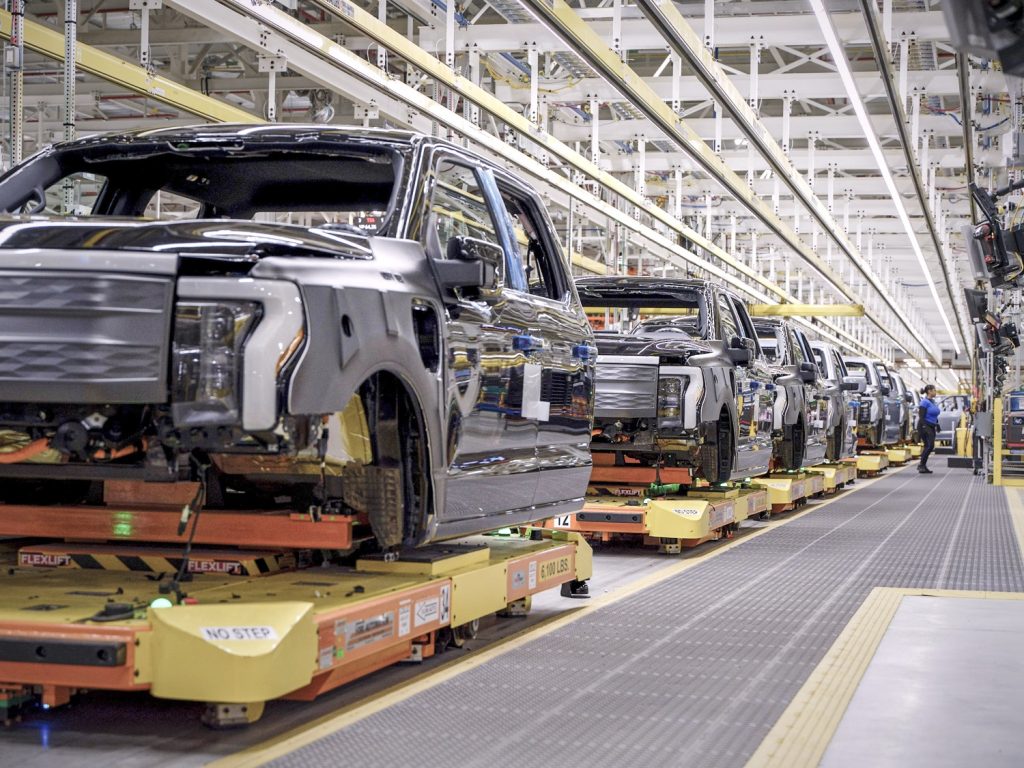
For Ford, the incident is another reminder of how important supply-chain stability has become.
The company has invested heavily in increasing F-Series production, adding workers and expanding output after the earlier aluminum crisis. Yet the latest interruption shows that even after one supply problem is resolved, another can quickly affect the same high-volume vehicle line.
The F-150 remains central to Ford’s business, which makes maintaining uninterrupted production a priority. For now, the company is relying on higher output elsewhere to soften the impact of the Dearborn shutdown.
Whether that is enough will depend largely on how quickly the unidentified supply problem is resolved and whether production at Dearborn and Kansas City can return to normal after the current schedule ends on September 29.