
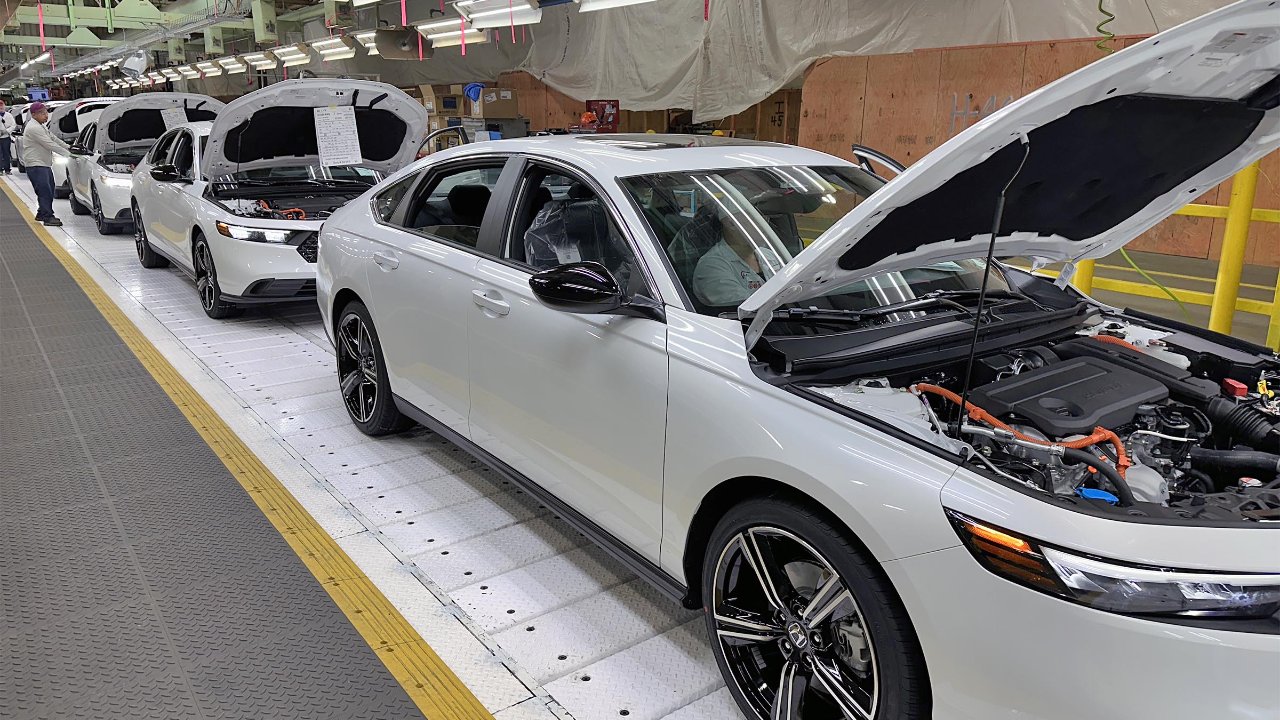
Honda is considering Ohio as the leading location for a new U.S. vehicle assembly plant focused on hybrid models, a move that would represent another major shift in the automaker’s North American manufacturing strategy.
According to MarkLines, citing sources reported by the Nikkei business daily, Ohio has emerged as the front-runner for the proposed facility. Honda is reportedly considering an investment of roughly 300 billion to 400 billion yen, equivalent to about $1.9 billion to $2.5 billion, with production potentially beginning around 2030.
The project has not yet been formally confirmed by Honda as a final investment decision. Reuters reported that Honda was in the final stages of preparing the project, while the company said no decision had been made on a new U.S. plant.
That distinction is important because the reported investment and production plans remain subject to Honda’s final approval.
If the facility moves forward, however, it would give Honda additional U.S. capacity precisely when the company is placing much greater emphasis on hybrids.
Honda Is Shifting More Production Toward Hybrids
Honda’s potential Ohio investment comes after the company substantially revised its electrification strategy.
In its May 2026 business briefing, Honda said it would reallocate more development and production resources toward hybrid vehicles because of stronger-than-expected demand. The company plans to introduce 15 next-generation hybrid models globally by the end of the fiscal year ending March 2030, with North America identified as one of its priority markets.
Honda also plans to launch larger hybrid models in North America beginning in 2029. The company has said these vehicles will occupy the D-segment and above, placing them in the larger crossover and SUV categories that are particularly important in the U.S. market.
That product strategy helps explain why Honda could need additional assembly capacity. The automaker already operates a substantial manufacturing network in Ohio.
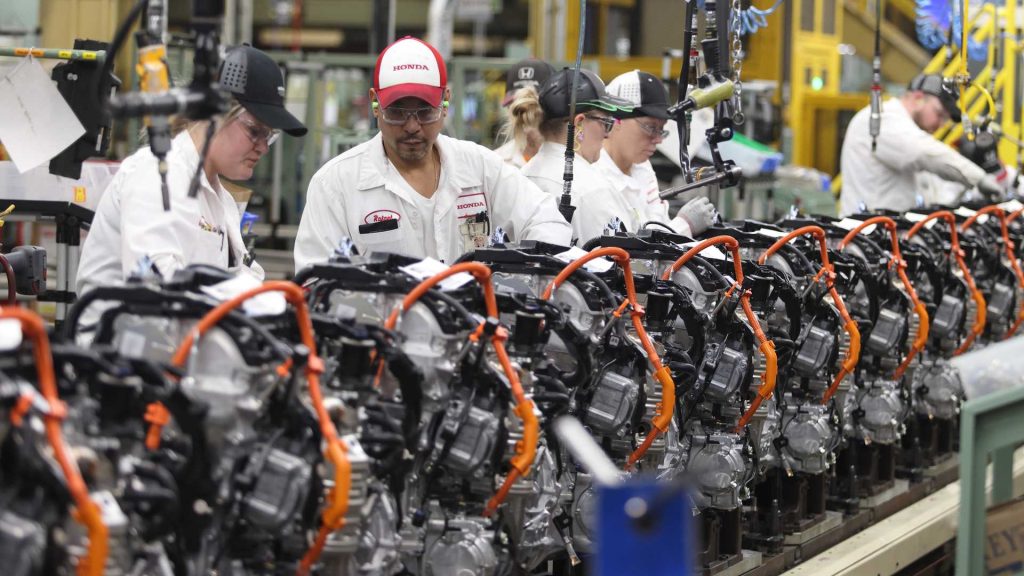
Its existing facilities include vehicle production in Marysville and East Liberty, engine production in Anna, and transmission operations in Russells Point. Instead of abandoning those facilities as its powertrain strategy changes, Honda has been adapting them for greater hybrid production.
Honda said in May that it would reallocate excess capacity at its Ohio auto plants to gasoline and hybrid vehicles. It also intends to make all of its North American auto plants capable of producing hybrid models.
That means the potential new factory would complement an existing manufacturing transformation rather than replace Honda’s current Ohio operations.
The company is also changing its battery supply strategy. Honda and LG Energy Solution are converting part of the production lines at their L-H Battery Company joint venture to manufacture batteries for hybrids.
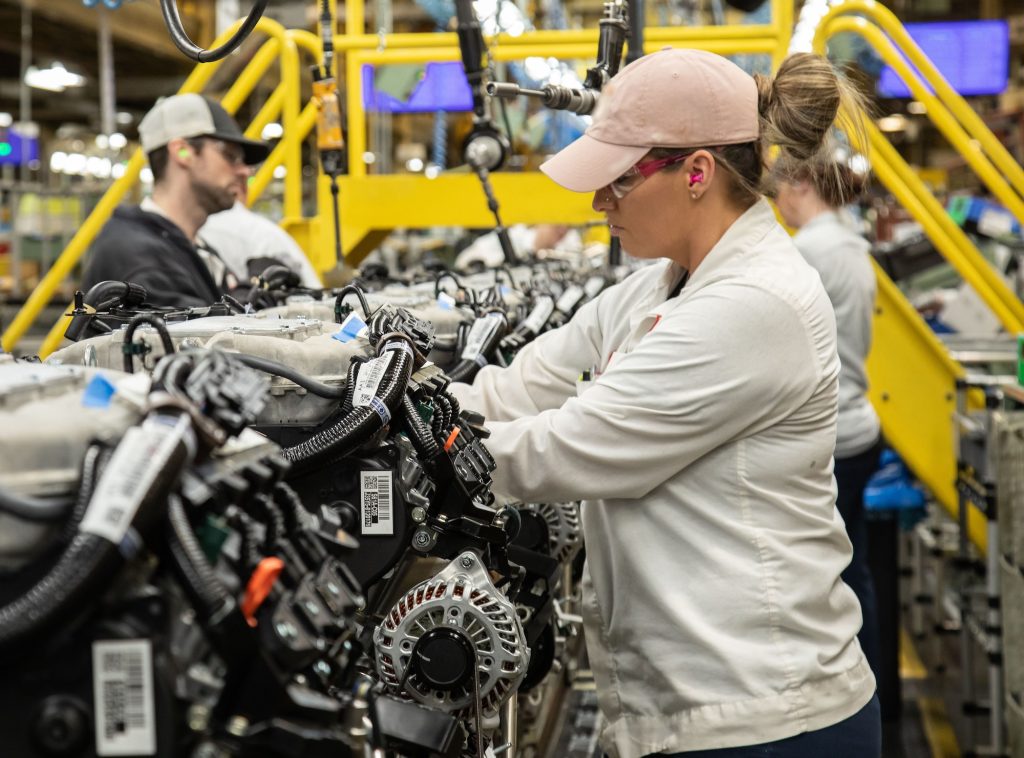
Honda has said it will also increase local content for motor and inverter assemblies and components by more than four times its current level as it expands hybrid production.
The objective is straightforward: build more of the components needed for hybrids in North America while reducing supply risks and limiting the impact of tariffs.
A New Plant Could Support Larger Honda and Acura SUVs
The potential factory could become particularly important for larger crossovers and SUVs. Reports have suggested that Honda and Acura are considering larger three-row vehicles for the North American market, with the proposed plant potentially serving models positioned above some of the automaker’s existing products.
Car and Driver reported that the facility could potentially build a larger Honda crossover and an Acura model, although those product assignments have not been officially confirmed.
Honda itself has confirmed that larger hybrid models are part of its North American product plan, but it has not publicly tied specific production models to the proposed Ohio facility. That distinction is important because product planning can change before a factory receives final approval.
The need for larger hybrids is nevertheless easy to understand. Three-row crossovers and larger SUVs remain important segments in the U.S. market, where consumers often prioritize passenger capacity, cargo space, and towing capability.
A hybrid powertrain allows automakers to improve fuel economy without requiring customers to move entirely to a battery-electric vehicle. Honda’s next-generation hybrid system is designed specifically with those priorities in mind.
The company says its next-generation hybrid system should cost more than 30% less than the system introduced in 2023. When combined with its next-generation vehicle platform and a newly developed electric all-wheel-drive system, Honda expects the new hybrid models to deliver more than a 10% improvement in fuel economy.
Those improvements could become particularly valuable in larger vehicles, where fuel consumption is generally higher.
Honda’s existing U.S. hybrid lineup already includes popular models such as the CR-V and Accord. The company is now preparing to extend hybrid technology deeper into its SUV range rather than treating hybrids as a limited portion of its lineup.
That strategy represents a significant change from Honda’s earlier emphasis on preparing dedicated EV manufacturing capacity.
Honda previously planned a major EV and battery manufacturing complex in Canada, but in May 2026 the company said it would indefinitely suspend that comprehensive EV value-chain project. Honda also said it would reassess its EV investments according to future demand while increasing resources devoted to hybrids.
The potential Ohio plant therefore fits into a much broader rebalancing of Honda’s investment priorities.
Ohio Could Become Honda’s Hybrid Manufacturing Hub
If approved, the new facility would further strengthen Ohio’s position within Honda’s North American manufacturing system.
The state is already central to Honda’s operations, and the company has invested heavily in making its Ohio plants flexible enough to support different powertrains. Honda previously developed Ohio as an important part of its North American electrification plans, but the company’s latest strategy gives hybrids a much larger role.
Honda’s 2026 business plan calls for improving production efficiency by approximately 20% over the next five years. The automaker is also targeting major reductions in vehicle development costs, development time, and workload as it restructures its automobile business.
A new assembly plant would therefore need to fit into a strategy focused on efficiency as well as capacity.
The reported investment of up to $2.5 billion would make the project a substantial commitment, particularly because Honda is simultaneously modifying existing facilities and its battery supply chain.
Production is reportedly targeted for around 2030, although the exact timing could change if Honda has not yet finalized the project. Reuters reported that the investment could range from approximately $1.9 billion to $2.53 billion, based on the reported 300 billion to 400 billion yen plan.
For Honda, building additional hybrid capacity in the United States could provide several advantages.
It would allow the company to manufacture more vehicles close to its largest North American customer base, strengthen domestic supply chains, and provide greater flexibility as trade policies change. It could also help Honda respond more quickly if demand for hybrids continues to outpace expectations.
The timing is especially important because Honda expects its next-generation hybrid offensive to accelerate from 2027 onward. By 2029, the company expects larger hybrid models to begin arriving in North America, potentially creating a need for additional assembly capacity just as the new plant could be approaching production.
For consumers, the potential factory could eventually mean more domestically built Honda and Acura hybrids, particularly in larger SUV segments.
For Honda, it represents something more strategic: a bet that hybrids will remain an important part of the U.S. market well into the next decade.
The company has not abandoned EV development. Honda says it will continue preparing EV technology and all-solid-state batteries while monitoring market demand. But its immediate investment priorities have shifted toward hybrids, gasoline vehicles, and flexible manufacturing.
That makes the proposed Ohio facility an important indicator of where Honda believes the American market is heading.
If the automaker gives the project its final approval, Ohio could gain another major vehicle assembly operation by the end of the decade. More importantly, the plant would give Honda additional capacity to produce the hybrid models it increasingly views as central to its North American strategy.
