
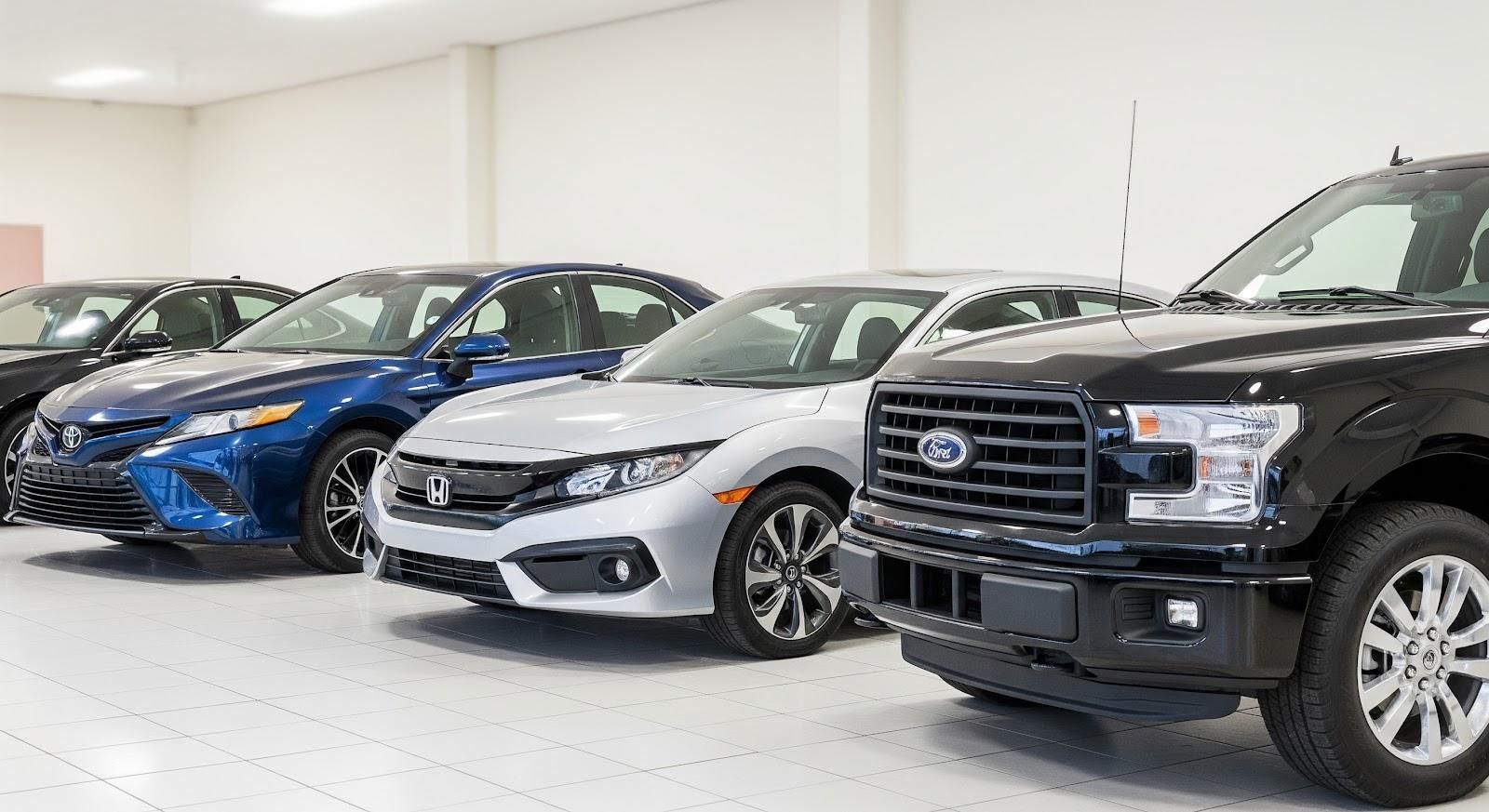
Used cars dominate the American auto market. More used vehicles change hands each year than new ones sold at dealerships. Behind that huge market sits a small handful of brands. Just five nameplates Ford, Chevrolet, Toyota, Honda, and Nissan account for roughly half of every used vehicle bought and sold today.
That concentration isn’t an accident. These brands built millions of vehicles over decades, and many of those vehicles are still on the road. Reliability, parts availability, and resale value all reinforce each other. A brand known for durability keeps selling well used, which keeps demand high, which keeps prices stable.
This piece looks at the ten brands that dominate used-vehicle sales in the United States. Together they represent well over 70% of every used car, truck, and SUV sold.
We’ll cover Ford, Chevrolet, Toyota, Honda, Nissan, Ram/Dodge, Jeep, GMC, Hyundai, and Subaru. Each section explains why the brand holds its position, what models drive its used sales, and where it’s headed.
The data draws from S&P Global Mobility vehicle registrations and manufacturer sales reports. No two sources agree exactly. But the pattern is unmistakable, and it hasn’t changed much in years.
1. Ford
Ford is the most common vehicle brand on American roads today. It holds roughly a 14–15% share of all registered vehicles in the U.S. That dominance comes from one source above all others. The F-Series pickup has been America’s best-selling vehicle for over 40 straight years.
Used F-150s move in huge volume every month. Data shows the F-150 alone captures nearly 3% of all used vehicle sales nationwide. Ford’s used-car strength isn’t just trucks, though.
The Explorer, Escape, and Edge all rank among the most-sold used SUVs in the country. Fleet sales help explain part of this. Ford sells enormous numbers of trucks and vans to businesses and government fleets.
Those vehicles eventually re-enter the used market. Rental companies also cycle through Ford vehicles quickly, feeding steady supply into used lots.
Ford’s reputation for truck durability keeps resale values relatively strong. A used F-150 with high mileage still commands respectable money compared to competitors.
The brand isn’t without weak spots. Some Ford sedans and older EcoBoost engines have drawn reliability complaints over the years. Still, the core truck and SUV lineup remains a used-market powerhouse. Ford’s sheer volume of vehicles built keeps supply flowing for years.
Regional dealers report that used Ford trucks often sell within days of arriving on a lot. That kind of turnover speaks to sustained buyer demand. Looking ahead, Ford’s shift toward hybrid powertrains in trucks may reshape used demand. Hybrid F-150 models are just beginning to enter the used pipeline in meaningful numbers.
2. Chevrolet
Chevrolet sits in second place, close behind Ford. It holds around 13% of vehicles registered on U.S. roads. Like Ford, Chevrolet’s strength comes from trucks and SUVs. The Silverado 1500 is consistently the second best-selling used vehicle in America.
The Chevrolet Equinox has become a surprise used-market star recently. It regularly ranks among the top four used vehicles sold nationally. Interestingly, the Chevrolet Malibu jumped sharply in used-sales rankings in 2025.
Production of the sedan ended, pushing rental fleets to release large numbers into the used market. That pattern is common across the industry. When a model gets discontinued, fleet operators dump inventory, temporarily boosting used sales.
Chevrolet also benefits from GM’s massive dealer network. Wide availability of parts and service keeps used Chevrolets attractive to budget-conscious buyers.
The brand’s SUV lineup, including the Traverse and Tahoe, holds steady demand in the used market. Family buyers gravitate toward these larger, affordable options.
Chevrolet’s electric push through the Bolt has had a bumpier ride. Production was paused, then restarted, creating gaps in used EV supply. Despite that hiccup, Chevrolet’s used volume remains massive. GM builds enough Chevrolets each year to keep the used pipeline full for a decade.
Buyers often cross-shop Chevrolet against Ford directly. The two brands compete on nearly identical truck and SUV segments. That rivalry keeps both brands pricing competitively in the used space. It’s good news for anyone shopping a used truck on a budget.
3. Toyota
Toyota holds roughly a 13% share of vehicles on American roads. But its real strength shows up in resale value, not just volume. Toyota vehicles consistently hold their value better than almost any competitor. A used Toyota often costs more than an equivalent-age Ford or Chevrolet.
That’s because Toyota’s reputation for reliability is exceptionally strong. Owners keep Toyotas running well past 200,000 miles without major issues.
The Camry remains America’s best-selling passenger car for nearly three decades running. It’s also one of the most popular used sedans on the market.
The RAV4 and Corolla round out Toyota’s used-market strength. Both rank consistently in the top ten most-sold used vehicles nationally. Toyota Tacoma resale values are particularly notable. Used Tacomas often sell for prices that shock first-time truck shoppers.
That strong resale value cuts both ways for buyers. Toyotas cost more used, but they also tend to need fewer repairs down the road. Toyota’s hybrid technology gives it another advantage. The brand pioneered mainstream hybrids with the Prius and now offers hybrid versions across its lineup.
Used hybrid Toyotas are in high demand as fuel prices fluctuate. Buyers see them as a safer bet than unfamiliar EV technology. Toyota also benefits from strong international manufacturing reliability standards. Quality control issues are relatively rare compared to some domestic brands.
Going forward, Toyota’s slow and cautious EV rollout may actually help its used-market position. Buyers wary of EV depreciation often default back to trusted hybrid Toyotas instead.
4. Honda
Honda ranks fourth among U.S. brands, holding around 8–9% of vehicles on the road. That’s a notable drop from the top three, but still substantial.
Honda’s used-car reputation rivals Toyota’s for reliability. Civic and Accord owners routinely report vehicles lasting well beyond 200,000 miles. The Honda Civic remains one of the most popular used cars among younger buyers. It’s affordable, fuel-efficient, and cheap to maintain.
The CR-V has become Honda’s used-SUV workhorse. It consistently ranks in the top 15 most-sold used vehicles nationwide. Honda doesn’t compete heavily in trucks, which limits its volume. The brand has no direct pickup competitor to the F-150 or Silverado.
That absence caps Honda’s total market share compared to Ford or Chevrolet. Trucks simply sell in higher numbers than compact cars. Still, Honda’s efficiency focus pays off in a different way. Used Hondas tend to have lower operating costs than larger trucks and SUVs.
That appeals strongly to budget shoppers and first-time car buyers. Insurance and fuel costs run lower on most Honda models too. Honda’s Acura luxury division adds modest additional used volume. The RDX and MDX have loyal followings in the used premium SUV space.
Supply chain issues in recent years slowed new Honda production somewhat. That tightened used Honda inventory and pushed resale prices upward temporarily. Honda’s steady, unglamorous approach continues to pay dividends. Consistency, not flash, is what keeps buyers coming back to used Hondas.
5. Nissan
Nissan rounds out the top five brands, holding close to 6% of vehicles on U.S. roads. It’s the smallest of the “big five” but still commands serious used volume.
The Nissan Rogue has quietly become one of the most popular used SUVs in America. It ranked fifth on the most recent used-vehicle list. The Altima also performs well in used sedan sales. It competes directly against the Camry and Accord in that shrinking but still active segment.
Nissan’s used-market position has weakened somewhat in recent years. Sales data shows the brand declining while rivals like Hyundai gain ground.
Part of that comes from Nissan’s financial struggles as a company. Renault-Nissan alliance troubles have affected new vehicle output and dealer inventory.
Fewer new Nissans sold today means fewer will enter the used pipeline in coming years. That’s a long-term concern for the brand’s used-market presence. Nissan’s reputation for reliability is decent but not top-tier. CVT transmission issues in some models have hurt resale confidence among buyers.
Despite that, Nissan vehicles remain attractively priced on the used market. Buyers looking for value often find Nissans cheaper than comparable Toyotas or Hondas.
The Nissan Titan never gained serious traction against the F-150 or Silverado. That absence in the truck segment limits Nissan’s ceiling, similar to Honda.
Nissan’s Leaf was an early EV pioneer but has faded in relevance. Used Leaf values dropped sharply as newer EVs with better range entered the market.
Nissan still holds a loyal customer base, particularly for its SUVs. That loyalty keeps used Rogues and Muranos moving steadily through dealer lots.
6. Ram / Dodge
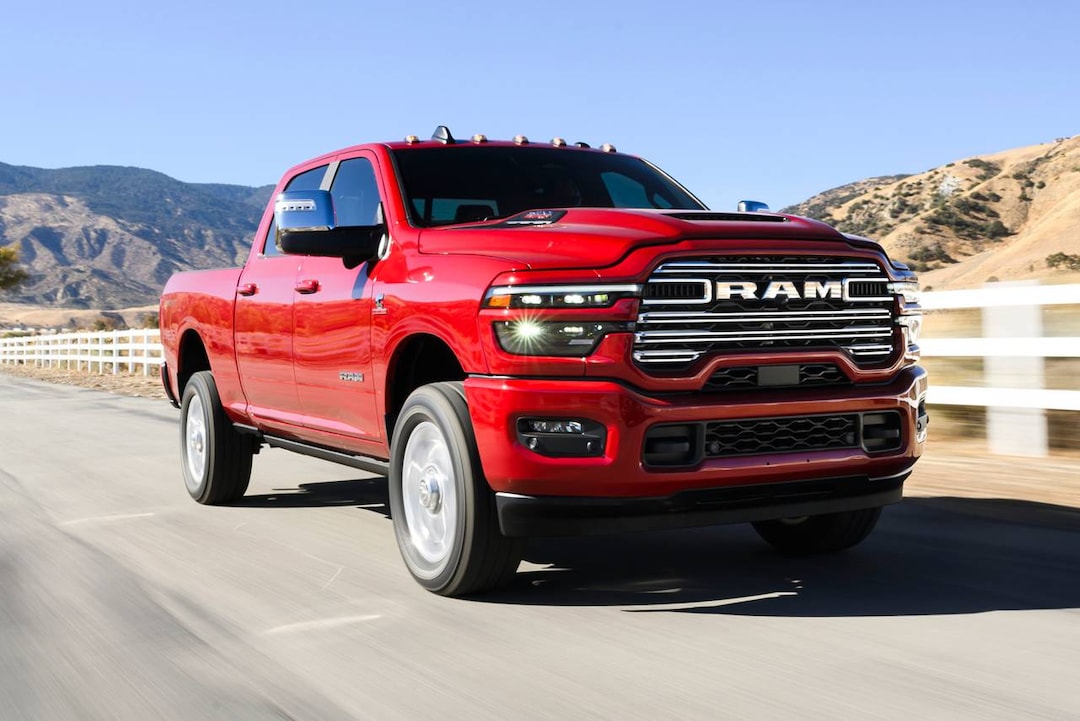
Ram, now often tracked alongside Dodge, holds close to 5.5–6% share of U.S. road vehicles. Its strength comes almost entirely from one vehicle line.
The Ram 1500 is consistently the third best-selling vehicle in America, new or used. It trails only the F-150 and Silverado in volume. Ram trucks earned a strong reputation for ride comfort and interior quality. Many truck buyers cross-shop Ram specifically for that reason.
The Dodge side of the brand contributes less used volume today. Sedan and muscle car production has shrunk considerably in recent years. The Dodge Charger and Challenger still have dedicated used-market followings.
Performance buyers seek these out specifically for their V8 engine options. Ram’s Cummins diesel engine option adds another loyal customer segment. Heavy-duty Ram trucks with diesel power hold value exceptionally well used.
Stellantis, Ram’s parent company, has faced financial and sales struggles broadly. That’s shown up as declining brand performance in recent reports.
Despite corporate troubles, Ram truck demand has stayed relatively resilient. Trucks are less exposed to the sedan sales decline hurting other Stellantis brands.
Used Ram trucks typically sell close to asking price when properly maintained. Truck buyers are less price-sensitive than sedan or hatchback shoppers generally.
Ram’s future used-market strength depends heavily on continued truck sales momentum. Any slowdown in new truck production would eventually tighten used supply.
7. Jeep
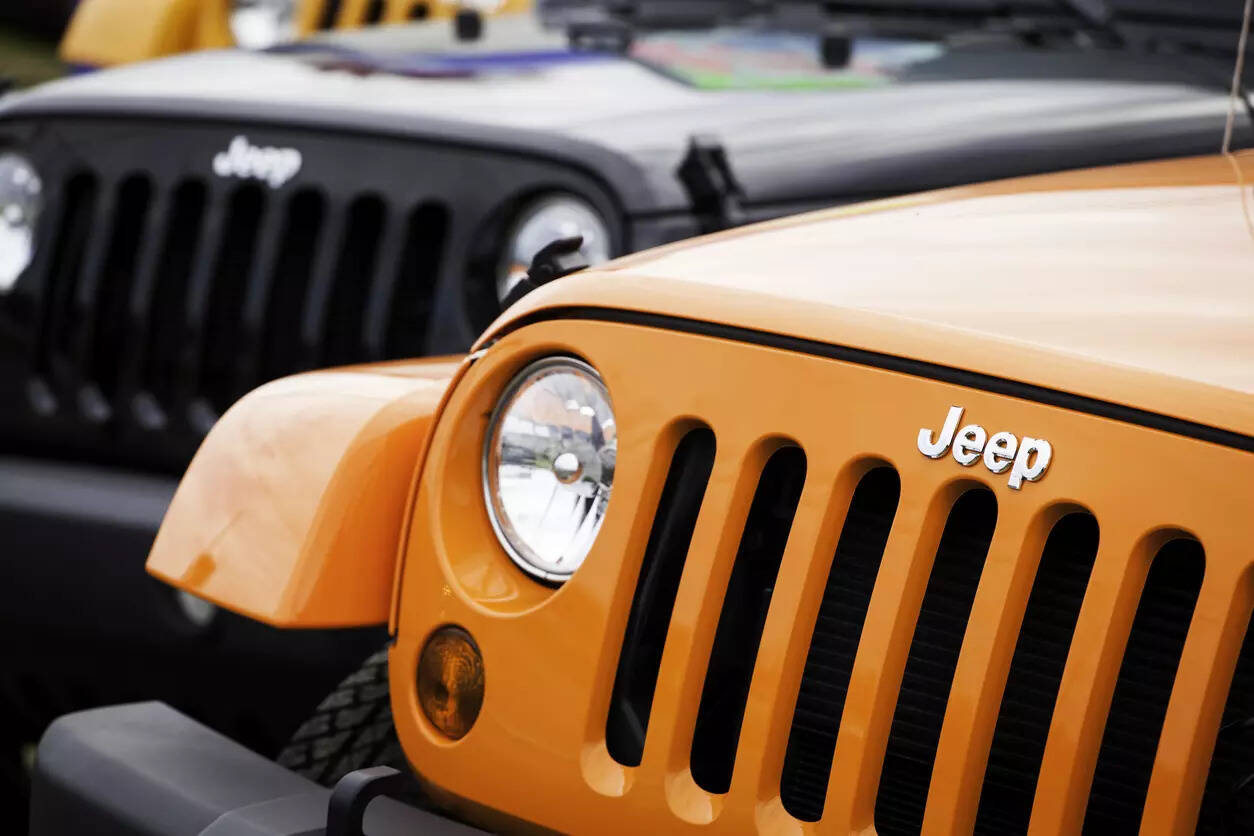
Jeep holds around 4% share of vehicles on U.S. roads. Its identity is built entirely around off-road capability and rugged styling. The Grand Cherokee is Jeep’s used-market anchor. It regularly appears among the top 15 most-sold used SUVs nationally.
The Wrangler holds a nearly cult-like following among off-road enthusiasts. Used Wranglers often retain value better than typical SUVs due to that demand.
Jeep buyers tend to be brand-loyal in a way few other manufacturers match. Many owners trade one Jeep for another repeatedly over decades. That loyalty helps sustain used Jeep prices even as reliability concerns persist. Jeep has had more recall and quality issues than Toyota or Honda historically.
The Cherokee and Compass fill out Jeep’s smaller SUV lineup. Both sell steadily used, though with less enthusiasm than the Grand Cherokee or Wrangler.
Jeep’s parent company Stellantis has faced broader sales declines recently. That’s put some pressure on new Jeep production and, by extension, future used supply.
Still, Jeep’s off-road brand identity is hard to replicate. Competitors like the Ford Bronco have entered the space, but Jeep remains the category leader.
Used Wrangler and Gladiator pickup values remain notably strong. Buyers specifically seeking open-air, off-road-capable vehicles have few true alternatives. Jeep’s used-market future looks stable if not spectacular. Its niche appeal protects it from broader sedan-market declines affecting other brands.
8. GMC
GMC holds close to 3.5–4% of U.S. road vehicles. It operates as General Motors’ upscale truck and SUV division. The GMC Sierra shares its platform with the Chevrolet Silverado. But GMC markets it toward buyers wanting more premium features and styling.
Used Sierra trucks consistently rank among the top 15 most-sold used vehicles. That’s a strong showing for what’s essentially a badge-engineered Silverado.
GMC’s Yukon and Acadia SUVs also perform well in the used market. Family buyers seeking three-row seating often consider these alongside the Chevrolet Tahoe.
The brand’s positioning as “premium GM” lets it command higher used prices. Buyers pay a bit more for GMC badging versus an equivalent Chevrolet.
GMC’s Denali trim level has become a status symbol in truck culture. Used Denali-trim trucks hold value notably better than base-trim equivalents.
Because GMC shares engineering with Chevrolet, reliability tracks closely between the two brands. Neither is dramatically better or worse than the other mechanically.
GMC’s smaller dealer footprint compared to Chevrolet limits its volume somewhat. Fewer dealers means fewer total vehicles sold new and eventually used.
Still, GMC’s loyal truck-buyer base keeps demand steady. Many buyers specifically seek GMC’s exterior styling over Chevrolet’s more common look.
GMC’s future used-market position looks tied closely to GM’s broader truck strategy. Any major shift in Silverado production would likely mirror in Sierra volume too.
9. Hyundai
Hyundai holds roughly 3.5% of U.S. road vehicles, and its share has been climbing steadily. It’s the fastest-rising brand among the top ten. The Hyundai Tucson has become a genuine used-market success story. It jumped significantly in used-vehicle rankings over the past year.
Hyundai’s warranty reputation helped build early trust with American buyers. A long factory warranty made new Hyundais feel like a safer bet years ago.
That trust has carried forward into the used market as those vehicles age. Buyers increasingly view Hyundai as comparable to Honda or Toyota in reliability.
The Elantra and Sonata still sell steadily used, though sedan demand has softened. SUVs like the Tucson and Santa Fe now drive most of Hyundai’s volume. Hyundai’s design language has also matured considerably. Modern Hyundais look more distinctive and premium than earlier generations did.
That improved styling helps used resale appeal beyond just mechanical reliability. Buyers are drawn in by appearance, then stay for the value proposition.
Hyundai’s Ioniq electric lineup has performed well in the used EV segment specifically. The Ioniq 5 jumped notably in used EV market share recently.
Hyundai’s South Korean manufacturing has scaled up significantly in recent years. More new vehicles built means more used supply arriving over the next several years.
Analysts expect Hyundai’s used-market share to keep growing. Its combination of value, reliability, and improving design gives it real momentum.
10. Subaru
Subaru rounds out the top ten, holding roughly 3% of U.S. road vehicles. It’s a smaller brand but punches above its weight in loyalty. Subaru’s all-wheel-drive standard equipment sets it apart from most competitors. Nearly every Subaru model comes with AWD as a base feature.
That makes Subaru especially popular in snowy or mountainous regions. Buyers in the Northeast, Pacific Northwest, and Mountain West favor the brand heavily.
The Outback and Forester are Subaru’s used-market workhorses. Both hold strong resale value thanks to consistent demand from outdoor-oriented buyers.
Subaru owners are famously brand-loyal, often repeat buyers for decades. That loyalty keeps used Subarus in steady demand even as the lineup stays relatively unchanged.
Reliability has generally been solid, though not quite at Toyota or Honda’s level. Some Subaru engines have had head gasket issues in older model years.
Despite that, resale values remain notably strong across the lineup. A used Outback often costs more than buyers initially expect for its age and mileage.
Subaru’s smaller dealer network limits its total sales volume compared to bigger brands. It simply can’t match Ford or Toyota in raw unit numbers.
Still, its niche dominance in AWD-focused regions secures a stable used-market position. Subaru doesn’t need to be everywhere to sell well where it matters.
The brand’s straightforward, function-first approach continues to resonate with practical buyers. Subaru isn’t chasing trends, and that consistency is exactly its appeal.
