An EV battery is among the most expensive components in any electric vehicle, making its warranty one of the most important ownership protections to understand.
Most manufacturers provide substantial high-voltage battery coverage, but the details differ considerably. Some go beyond the common eight-year or 100,000-mile benchmark, while others stay close to that standard.
Capacity guarantees can also change the value of a warranty because protecting against excessive degradation is different from covering only manufacturing defects.
The following comparison focuses on U.S.-market warranty terms published by manufacturers, with particular attention to duration, mileage limits, and battery-capacity protection.
5 EVs With Strong Battery Warranty Terms
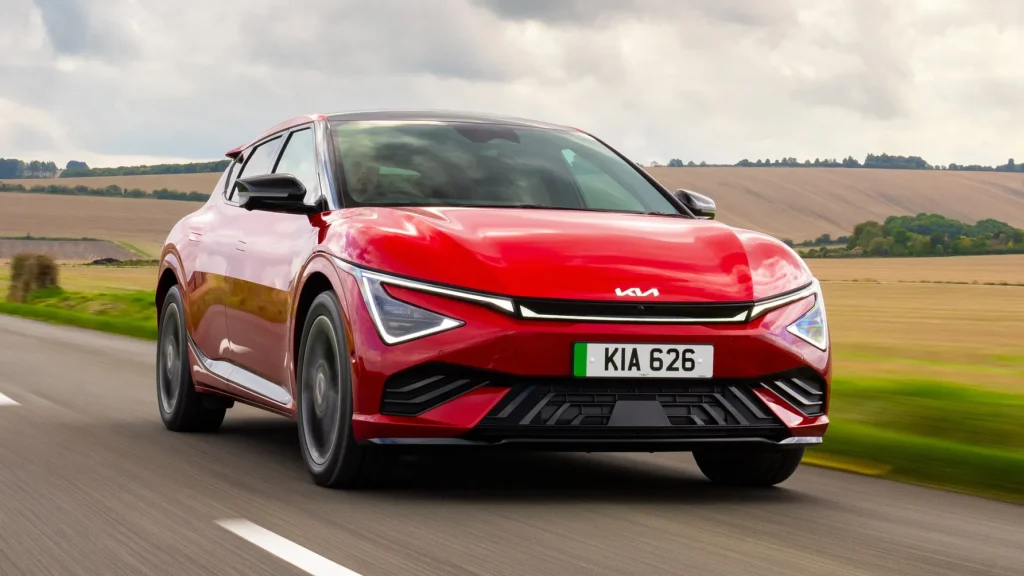
1. Kia EV6
The Kia EV6 is one of the clearest examples of an EV with battery protection that goes beyond the common U.S. eight-year benchmark. Kia currently lists a 10-year/100,000-mile EV battery warranty, and its battery coverage specifically addresses capacity loss below 70 percent of the battery’s original capacity.
If the battery falls below that threshold during the covered period, Kia says repairs or replacement will restore the battery to at least 70 percent capacity.
That second part is important. A battery can continue powering a vehicle while holding substantially less energy than when new. A defect-only warranty may not help if the battery is simply losing capacity through degradation.
Kia’s published 70-percent threshold gives owners a defined point at which capacity degradation becomes a warranty matter.
The EV6 also receives 10-year/100,000-mile coverage for the broader EV system, including the electric motor, high-voltage battery, electric power control unit, and onboard charger.
For someone considering long-term ownership, that creates a useful combination. The warranty does not merely protect the battery pack from a sudden failure. It also recognizes significant capacity loss.
There are still conditions and exclusions, so buyers should read the warranty applicable to their exact model year and vehicle status. Warranty terms can change, and coverage can differ for commercial use or other circumstances.
The EV6 therefore earns its position because its battery protection combines a 10-year duration with 100,000 miles and a specific 70-percent capacity threshold. That is a stronger proposition than simply advertising a long warranty without explaining how degradation is handled.
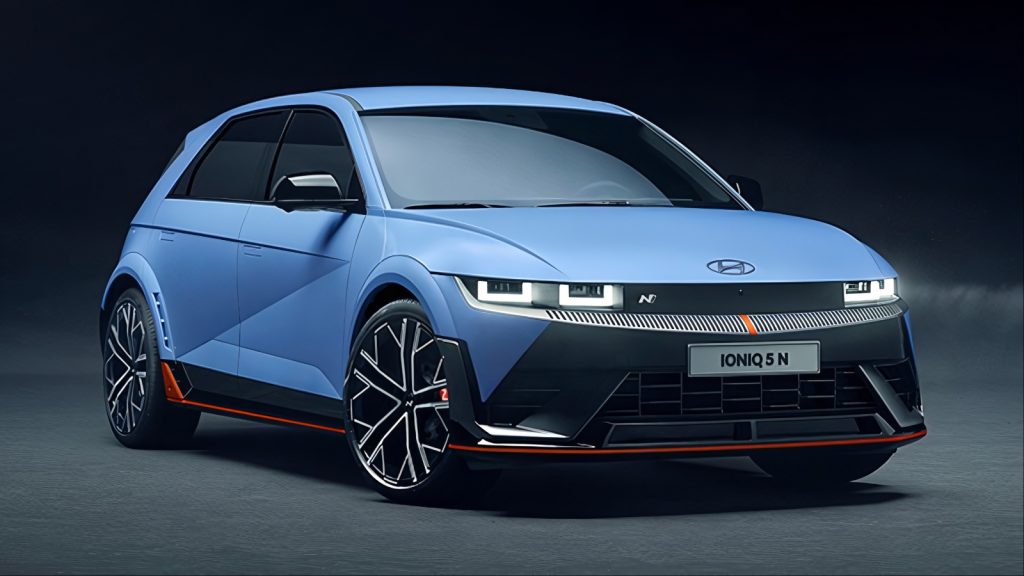
2. Hyundai IONIQ 5
Hyundai gives the IONIQ 5 one of the most generous mainstream EV battery warranties in the U.S. The company provides a 10-year/100,000-mile hybrid/electric limited battery warranty covering defects in factory workmanship or materials. Hyundai also states that the high-voltage battery warranty applies to IONIQ 5 vehicles and is transferable to subsequent owners.
Transferability is particularly relevant for the used market. A battery warranty that remains attached to the vehicle can increase confidence for a second owner because the protection does not necessarily disappear when the original buyer sells the EV.
The 10-year term also gives the IONIQ 5 an advantage over vehicles that stop battery coverage after eight years. For someone intending to keep an EV well into its second half of the decade, those additional two years can matter.
Hyundai’s published warranty language focuses on defects in materials and workmanship. That means buyers should not automatically interpret the 10-year figure as a blanket promise that every form of battery degradation will be covered. The exact conditions in the warranty documentation remain important.
The distinction is worth making because battery warranties can sound similar while providing different protections.
The IONIQ 5 nevertheless belongs in the stronger group because Hyundai combines a 10-year term with a 100,000-mile limit and makes the battery warranty transferable to subsequent owners.
For used buyers, that transferability can be just as significant as the extra two years. A three- or four-year-old IONIQ 5 may still have substantial factory battery coverage remaining, assuming the vehicle meets the warranty’s conditions.
That makes the IONIQ 5 particularly interesting for buyers who want a modern EV while keeping battery-replacement risk farther away.
3. Tesla Model X
Tesla takes a different approach from Hyundai and Kia. The Model X battery warranty lasts eight years, but Tesla provides coverage up to 150,000 miles, whichever comes first. Tesla also specifies a minimum 70-percent battery-capacity retention during the warranty period.
The mileage allowance is the key reason this vehicle belongs among the stronger warranty offerings. Eight years is not longer than the standard period used by many manufacturers, but 150,000 miles gives high-mileage owners more protection than the common 100,000-mile ceiling.
That distinction matters for drivers who accumulate miles quickly. A person commuting long distances can reach 100,000 miles well before eight years, so a warranty with a 150,000-mile ceiling provides a larger mileage window.
The 70-percent capacity requirement is equally significant. Tesla is not simply promising that the battery will continue operating. Its published terms establish a minimum capacity-retention level during the warranty period.
The warranty also has exclusions. Tesla notes that damage associated with accidents, intentional actions, and certain unauthorized servicing can affect coverage. The exact terms therefore need to be considered before assuming a battery problem automatically qualifies.
Still, the combination of 150,000 miles and a 70-percent capacity threshold gives the Model X a meaningful advantage for high-mileage owners.
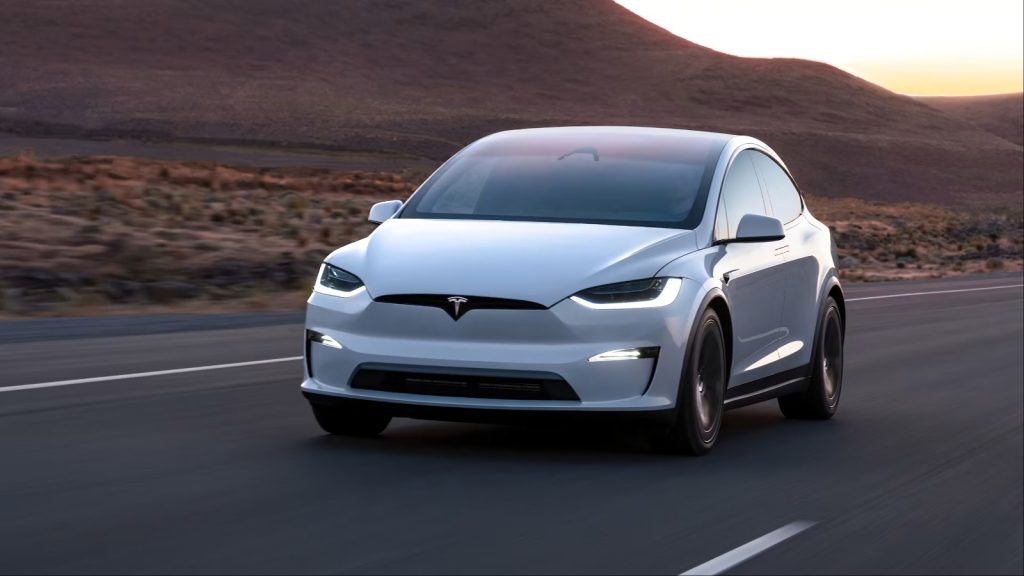
Its eight-year duration does not beat the 10-year coverage offered by Kia and Hyundai, but the additional 50,000 miles can be valuable to drivers who use an EV heavily.
For that reason, the Model X demonstrates why warranty comparisons should not focus on years alone. Mileage limits and capacity guarantees can materially change the protection an owner receives.
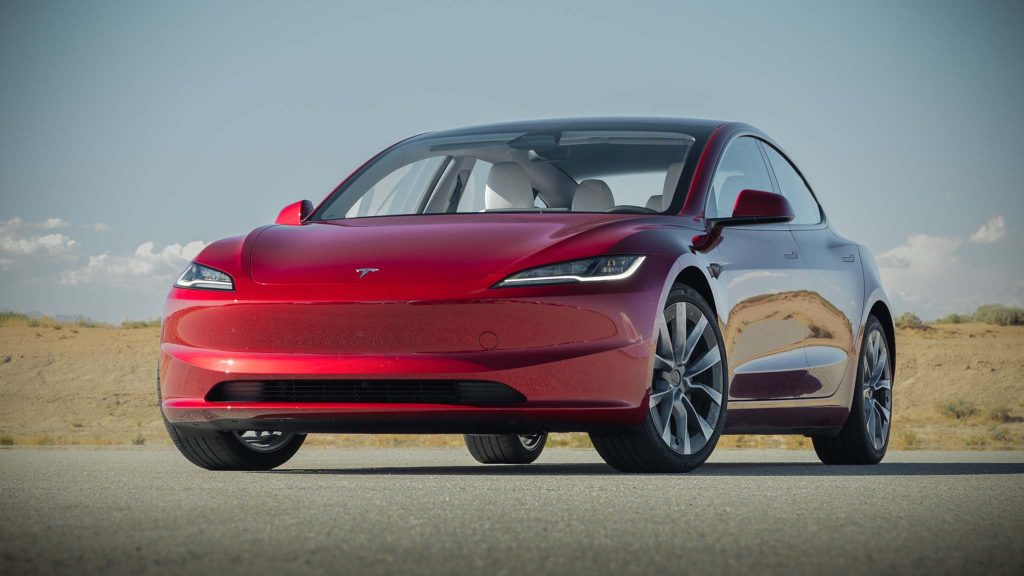
4. Tesla Model 3 Long Range
Several Tesla Model 3 versions receive eight-year/120,000-mile battery coverage with a minimum 70-percent capacity retention requirement. Tesla’s current warranty information lists the Model 3 Premium RWD, Premium AWD, and Performance AWD among versions receiving the 120,000-mile limit.
The long-range configuration has historically been particularly relevant because Tesla has offered extended battery mileage coverage on versions using larger-capacity packs. Tesla’s published warranty documentation for the Model 3 Long Range likewise specifies eight years or 120,000 miles, whichever comes first, with at least 70 percent capacity retention.
That 120,000-mile ceiling places it between the standard 100,000-mile coverage common among manufacturers and Tesla’s 150,000-mile coverage for vehicles such as the Model X.
More importantly, Tesla explicitly addresses capacity. The 70-percent threshold provides a measurable point at which degradation can become a warranty issue.
This matters because battery degradation is different from a complete battery failure. An EV can remain perfectly drivable while its usable range gradually declines. A warranty that says nothing about capacity can leave owners with fewer options if the battery still functions but has lost substantial energy storage.
The Model 3’s warranty does not make degradation risk disappear, and warranty claims remain subject to Tesla’s terms and conditions. Buyers of used examples should also verify the exact battery warranty applicable to the vehicle identification number and model configuration.
Still, eight years and 120,000 miles with a 70-percent capacity requirement is a strong combination.
The Model 3 therefore earns its place because Tesla adds meaningful mileage beyond the common 100,000-mile benchmark while providing an explicit capacity-retention threshold.
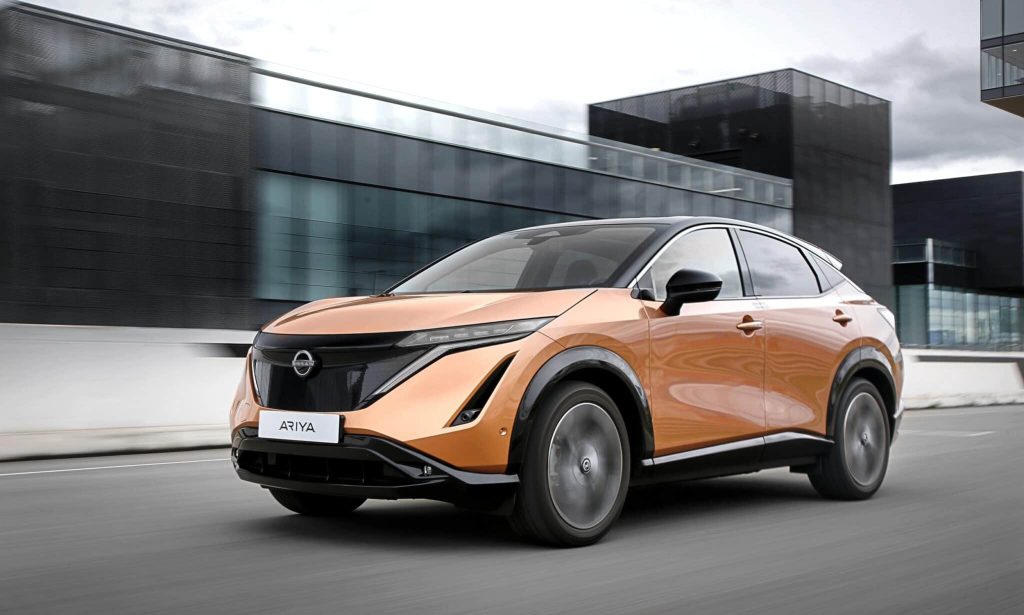
5. Nissan Ariya
The Nissan Ariya has an eight-year/100,000-mile lithium-ion battery warranty, but its published warranty terms make the model more interesting than a basic defect-only warranty.
Nissan provides coverage for battery defects in materials or workmanship and separately includes capacity protection against dropping below nine segments on the vehicle’s battery-capacity gauge during the same eight-year/100,000-mile period.
That capacity provision gives buyers a concrete degradation benchmark. Nissan explains that if the battery falls below the specified capacity threshold, the company can repair or replace battery components as necessary to restore capacity to the required level.
This distinction makes the Ariya particularly useful as a comparison point. Its duration and mileage are not greater than the common 8-year/100,000-mile formula, but its capacity language adds meaningful protection.
The vehicle therefore demonstrates that warranty strength cannot be judged exclusively by the headline duration.
A buyer shopping a used Ariya should confirm the exact warranty status and inspect the battery-capacity information available from the vehicle. The warranty is also subject to exclusions and conditions described in Nissan’s warranty documentation.
For long-term ownership, the capacity provision can offer peace of mind by addressing one of the main concerns buyers often have when purchasing a used EV, whether the battery has lost too much of its usable capacity.
Nissan’s current U.S. Ariya information also advertises an eight-year/100,000-mile battery warranty with EV multi-point health checks.
The Ariya therefore earns its place among the stronger offerings because Nissan does more than state a battery warranty duration. It establishes a capacity-related threshold and explains the remedy available when that threshold is reached.
5 EVs With Minimum Coverage
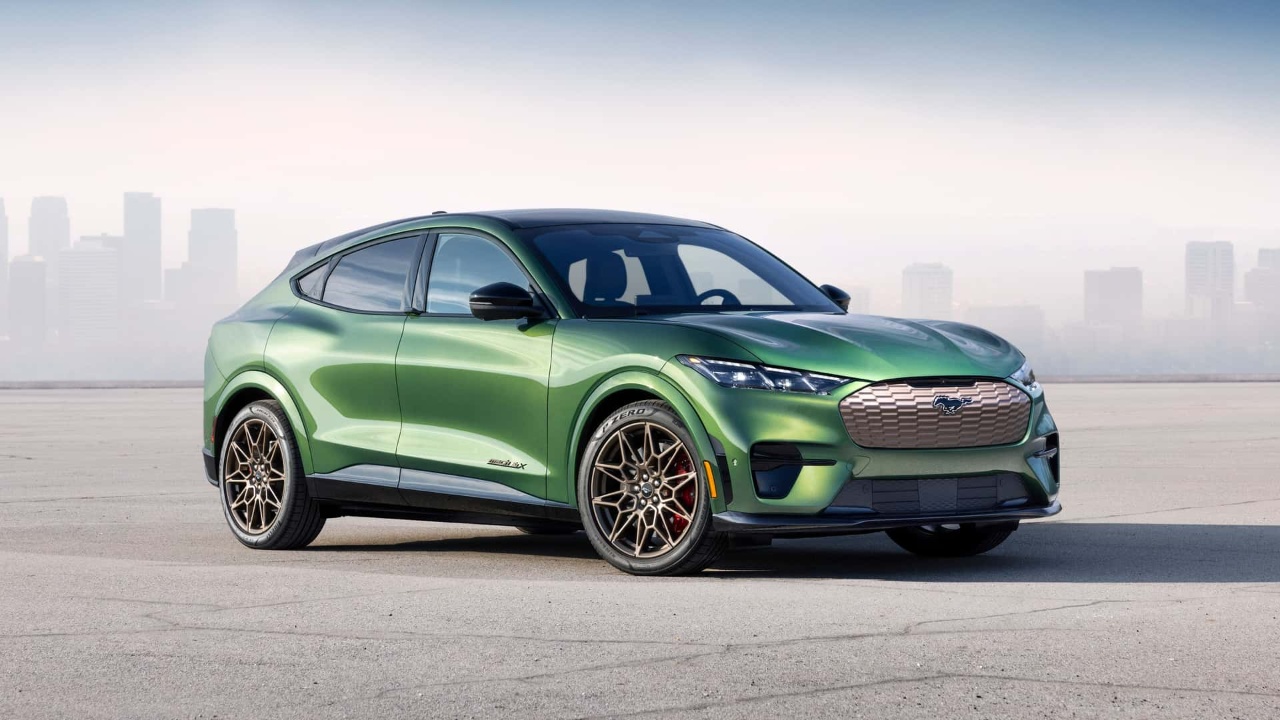
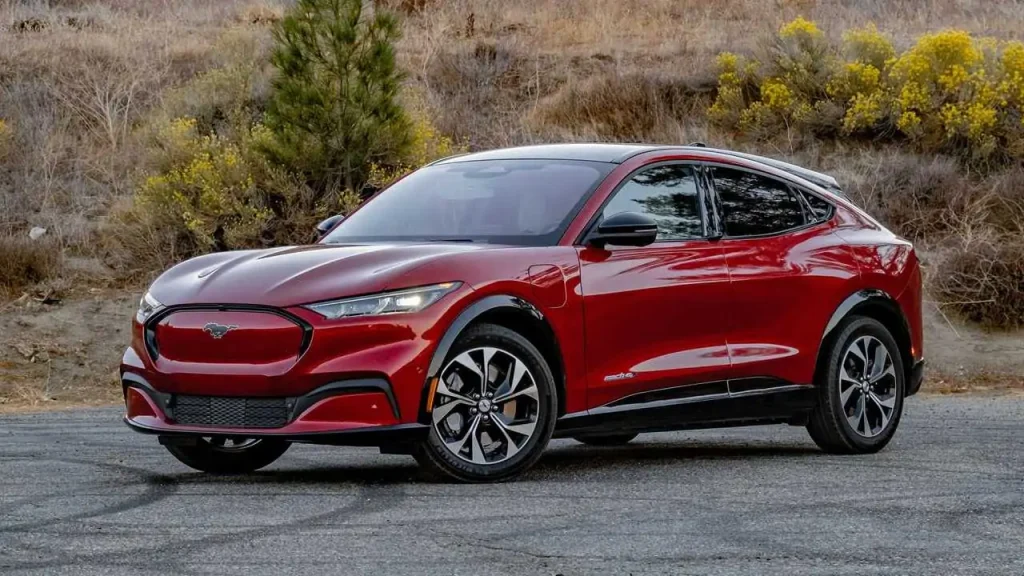
1. Ford Mustang Mach-E
The Ford Mustang Mach-E uses an eight-year/100,000-mile high-voltage battery warranty, with Ford stating that the battery is covered for that period while retaining at least 70 percent of its original capacity.
That 70-percent provision is useful because it establishes a specific capacity threshold. Ford is therefore offering more than a simple defect warranty. The battery must retain a specified minimum level of its original capacity during the warranty period.
However, the Mach-E remains in the standard group because the warranty stops at eight years or 100,000 miles. There is no extra two-year extension comparable to the 10-year battery warranties offered by Hyundai and Kia.
The mileage ceiling is particularly important for drivers who use their EV heavily. A driver covering 20,000 miles annually could reach 100,000 miles in approximately five years, meaning the warranty could expire by mileage considerably earlier than the eight-year time limit.
That does not make the Mach-E’s warranty poor. It simply demonstrates why buyers need to consider their personal driving pattern.
A used Mach-E buyer should establish the original in-service date and current mileage before placing much value on the remaining warranty. The exact battery configuration should also be confirmed because warranty language can differ by model year and market.
Ford’s current EV warranty information provides a straightforward eight-year/100,000-mile high-voltage battery promise with 70-percent capacity retention.
That is solid mainstream protection, but it remains close to the standard benchmark rather than exceeding it substantially.
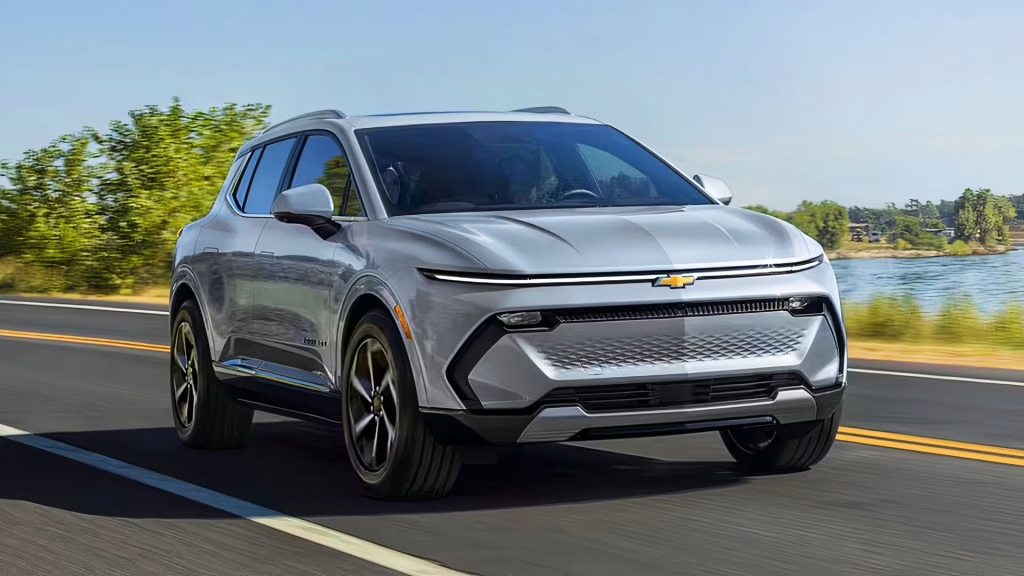
2. Chevrolet Equinox EV
The Chevrolet Equinox EV is another example of a vehicle using the common eight-year/100,000-mile battery warranty formula. Chevrolet states that its EV battery is covered for eight years or 100,000 miles, whichever comes first.
The company applies the same basic battery coverage philosophy across its electric lineup, making the Equinox EV part of a broader GM warranty strategy.
The advantage for buyers is simplicity. The coverage period is long enough to protect the vehicle through much of the early ownership cycle, while the 100,000-mile limit gives the owner a substantial mileage window.
The limitation becomes apparent when the Equinox EV is compared with vehicles carrying 10-year/100,000-mile coverage. The mileage allowance is identical, but the time protection is shorter.
That difference can matter for owners who drive relatively few miles each year. Someone covering only 8,000 miles annually could still reach the eight-year limit with relatively modest mileage on the odometer.
The Equinox EV’s warranty should therefore be understood in relation to how the vehicle is used.
Buyers should also examine the specific warranty documentation for their model year rather than assuming every GM EV has identical terms. Chevrolet’s published information states that certain electric propulsion components, including the high-voltage battery, receive eight-year/100,000-mile coverage.
The battery warranty is not an indication of expected battery life. A manufacturer can provide eight years of coverage while the battery continues operating for considerably longer.
That distinction is important because warranty duration represents the manufacturer’s contractual protection, not a prediction that the battery will fail immediately after coverage ends.
The Equinox EV belongs here because its battery warranty is substantial but stays within the common eight-year/100,000-mile range.
3. Cadillac LYRIQ
The Cadillac LYRIQ carries an eight-year/100,000-mile battery warranty in the U.S. Cadillac states that its standard battery warranty covers the LYRIQ for that period.
For a luxury EV, the warranty figure may initially look conservative when compared with Hyundai and Kia’s 10-year terms. Cadillac nevertheless provides a meaningful period of high-voltage battery protection.
The LYRIQ is an interesting example because its premium positioning does not automatically translate into a longer battery warranty. Buyers should therefore avoid assuming that a higher-priced EV necessarily comes with superior battery coverage.
Cadillac’s broader EV support package includes other warranty and roadside-assistance provisions, but the battery itself remains within the eight-year/100,000-mile category.
For used buyers, the remaining coverage can be more important than the original headline. A four-year-old LYRIQ with relatively low mileage could still have several years of battery protection remaining, while a high-mileage example could be approaching the mileage limit.
The vehicle’s battery health should therefore be assessed separately from the warranty. Warranty coverage is valuable, but a healthy battery with a shorter remaining warranty can be preferable to a questionable battery with more time left.
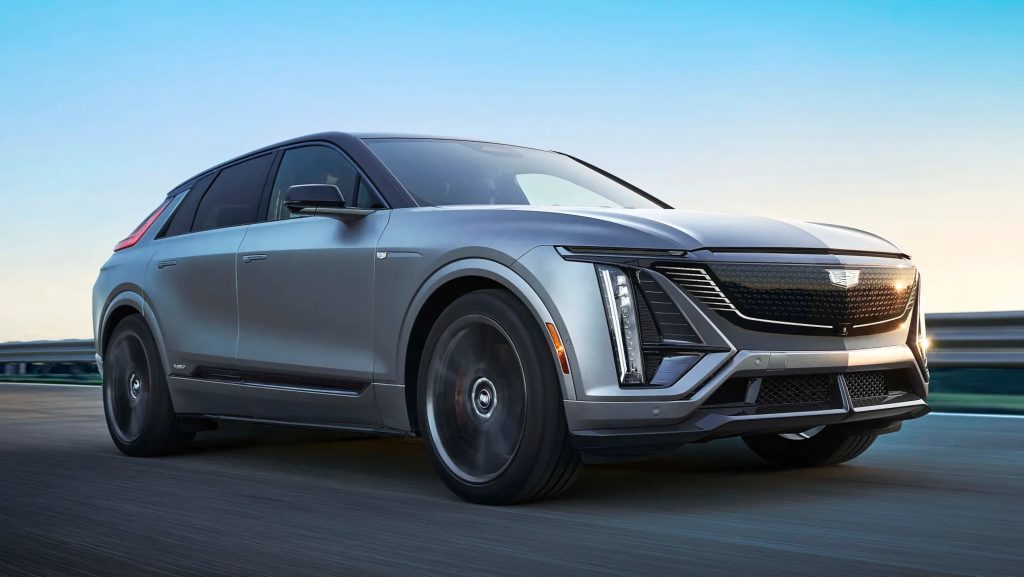
Cadillac also advises that charging to 80 percent or less for daily use can help promote battery health and performance over time.
The LYRIQ earns its place in this category because its eight-year/100,000-mile battery warranty represents the mainstream coverage level. It is substantial protection, but it does not extend beyond the standard duration and mileage used by many competing EV manufacturers.
4. Subaru Solterra
The Subaru Solterra’s battery and electric drive unit warranty is eight years or 100,000 miles, whichever comes first. Subaru’s published warranty material for the 2023 Solterra confirms that coverage period. That puts the Solterra directly into the standard battery-warranty category.
The eight-year duration is still meaningful for an EV buyer. It covers the vehicle through a large portion of its early life and provides protection against covered battery and electric-drive-unit problems that might otherwise create significant repair bills.
What keeps it from the stronger group is the absence of a longer 10-year term or a higher mileage ceiling in the cited warranty. Kia and Hyundai, for example, extend battery coverage to 10 years while retaining the 100,000-mile limit. Tesla goes farther in mileage on certain models.
The Solterra therefore provides a useful illustration of why warranty comparisons should distinguish between adequate and exceptional coverage.
Used buyers should also remember that the battery warranty and the vehicle’s other warranties are separate provisions. The Solterra’s published material lists different periods for the basic vehicle warranty, battery and electric drive unit, wear items and roadside assistance.
A prospective owner should establish the original delivery date and current mileage before deciding how much warranty protection remains.
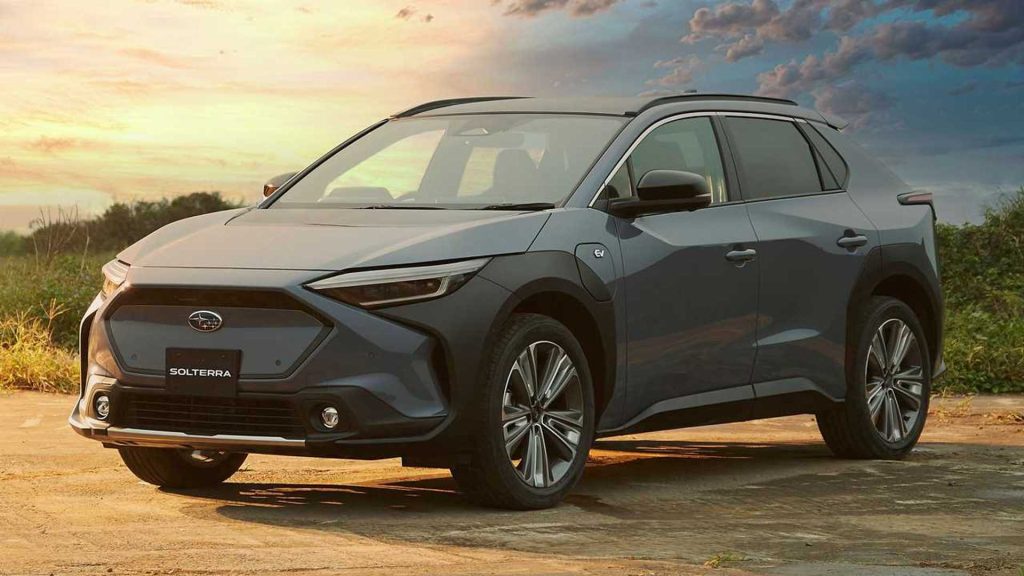
The battery’s actual condition should also be considered. A warranty is a financial safety net, not proof of battery health.
The Solterra remains a reasonable example of mainstream EV battery protection. Its eight-year/100,000-mile coverage is significant, but it does not provide the extra time or mileage that moves some competing EVs into the stronger category.
5. Tesla Model Y RWD
The Tesla Model Y RWD is another example where the battery warranty reaches the common eight-year/100,000-mile level. Tesla’s current warranty information lists Model Y RWD and Model Y AWD among vehicles covered for eight years or 100,000 miles, with minimum 70-percent battery-capacity retention during the warranty period.
The 70-percent threshold is a meaningful feature. It gives the owner a measurable capacity standard instead of relying solely on whether the battery continues functioning.
However, the Model Y RWD remains in the standard group because its mileage limit is 100,000 miles and its time limit is eight years. Certain higher-specification Model Y versions receive 120,000 miles, but that additional coverage does not apply universally across the lineup.
This is an important detail for used buyers. Two Model Y vehicles from similar years can have different remaining battery warranty coverage depending on their configuration.
The warranty also has conditions concerning damage and servicing, so a buyer should verify the exact terms attached to the individual vehicle.
For someone who drives moderate annual mileage, eight years can still represent substantial protection. For a high-mileage driver, the 100,000-mile ceiling may arrive much sooner.
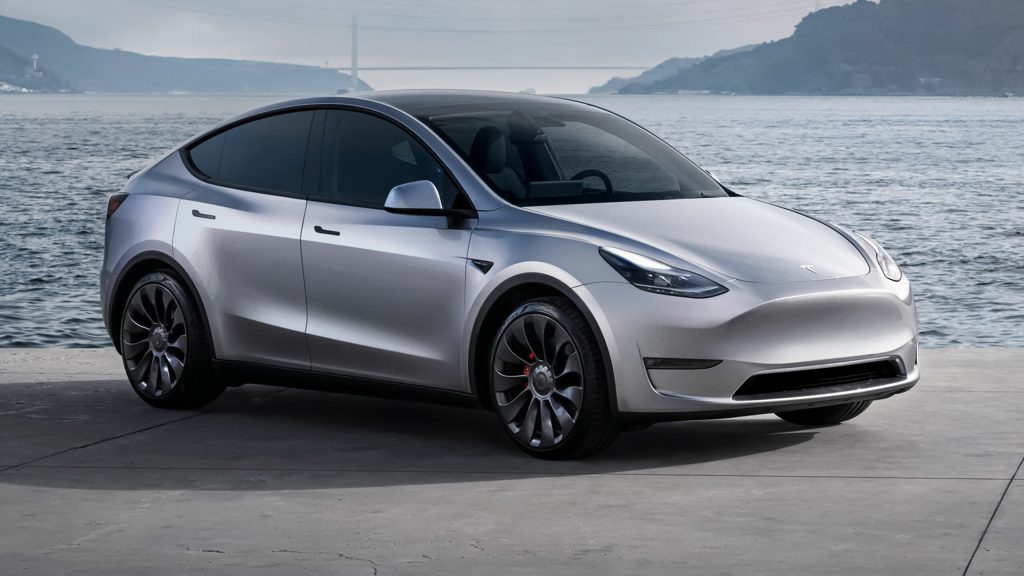
That is why the Model Y RWD illustrates the difference between a strong standard warranty and an unusually generous one.
Tesla’s explicit 70-percent capacity requirement gives the Model Y useful protection against excessive degradation, but the 100,000-mile ceiling keeps it within the mainstream category.
The vehicle is therefore not a poor choice from a warranty perspective. It simply does not offer the extended time or mileage found on the strongest examples in this comparison.