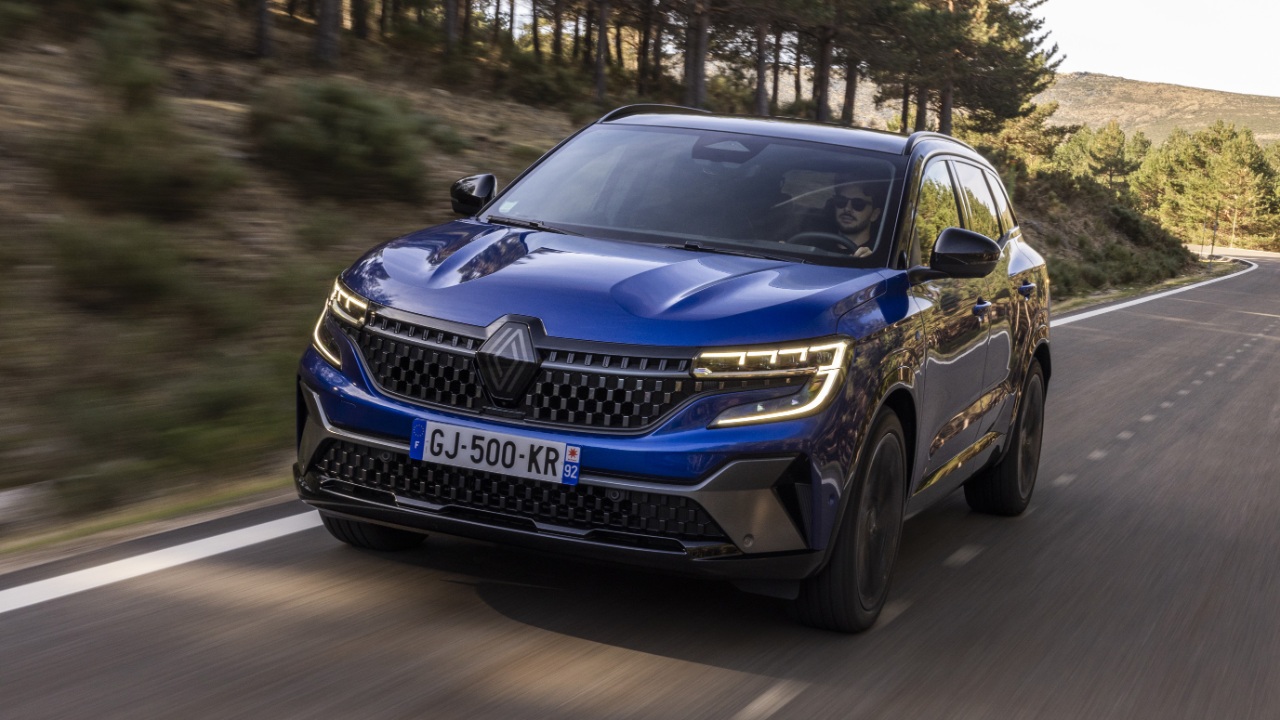
Renault Group is committing about €600 million, roughly $700 million, through 2030 to transform its manufacturing operations in Spain, preparing plants in Valladolid and Palencia to build a new generation of vehicles that will include fully electric models.
The investment represents one of Renault’s most significant commitments to its Spanish industrial network in years. According to Reuters, the company said on September 24 that the money will support production of five new vehicle models, including two medium-sized electric vehicles, while also funding a new battery assembly line at the Valladolid facility.
The announcement is important because Spain is not simply receiving an upgrade to existing production. Renault is preparing the country to become part of its European electric-vehicle manufacturing network in a more substantial way.
According to MarkLines, Renault Group Spain will invest €600 million between 2026 and 2030 under its future strategy. The program is intended to improve the competitiveness of the Valladolid and Palencia plants, modernize operations, and prepare them for electrification and new technologies.
The investment also comes at a complicated moment for Europe’s automotive industry. Manufacturers are under pressure to reduce production costs while investing in electric vehicles, software, and batteries.
At the same time, EV demand has not developed uniformly across Europe, making factory utilization and flexibility increasingly important.
Renault’s approach in Spain is therefore about more than adding capacity. It is about making existing plants capable of producing the vehicles the company expects to sell during the next stage of the industry’s transition.
Five New Models and Renault’s First Spanish-Built EVs
One of the most important parts of the investment is the decision to industrialize five new models across the Valladolid and Palencia facilities.
Renault has confirmed that two of those vehicles will be C-segment electric models. According to information published by Renault representatives and reported by MarkLines and electrive, the Spanish plants will manufacture electric vehicles for the first time in Renault Group’s history in Spain.
That represents a significant change for the country’s role within Renault’s production network.
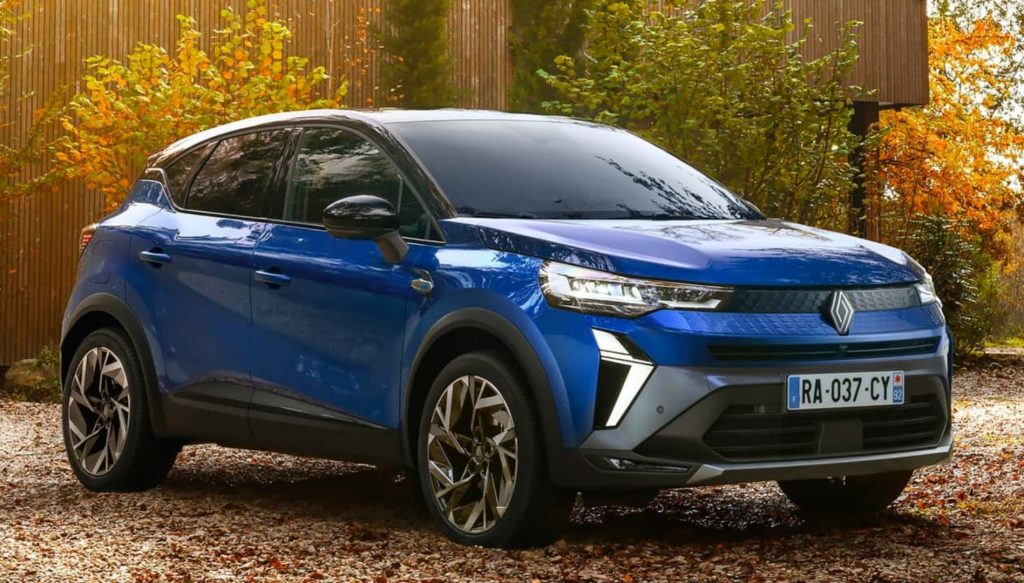
Valladolid has traditionally been an important manufacturing location for Renault, producing models such as the Captur and supporting powertrain and battery-related activities. Palencia has focused heavily on larger vehicles, including the Austral, Espace, and Rafale.
The new investment will allow those operations to move further toward electrification without requiring Renault to abandon its existing industrial base.
Palencia is particularly important because it will receive Renault’s new RGEV Medium 2.0 EV-native platform. According to Electrive, the platform uses an 800-volt electrical architecture and is designed for vehicles ranging from the B+ to D segments.
Renault’s stated targets include up to 750 kilometers of WLTP range, while extended-range versions could reach as much as 1,400 kilometers.
The platform is also designed around rapid charging. Renault says the architecture can support charging that adds substantial range in approximately 10 minutes under suitable conditions.
These developments suggest that Renault is doing more than modifying an existing combustion-engine production line to build entry-level electric vehicles. The company is also preparing its Spanish facilities to produce vehicles based on newer electric platforms. Valladolid will play another important role in this effort with the addition of a new battery assembly line.
That matters because batteries represent one of the most important components of an electric vehicle. Establishing battery assembly closer to vehicle production can reduce logistical complexity and strengthen Renault’s control over the local EV manufacturing process. It also helps create a more integrated production ecosystem.
Instead of importing every major electric powertrain component from elsewhere, Renault will increasingly be able to perform more of the manufacturing process within Spain.
The investment is supported by Renault’s own resources as well as national and regional public funding for industrial transformation and sustainable mobility, according to Reuters.
Spain Becomes More Important to Renault’s EV Strategy
The investment also has a major employment dimension. Renault says the new industrial plan helps secure the future of more than 6,000 direct jobs at its Spanish operations. Reuters reported that the decision followed a new collective bargaining agreement covering the 2026-2028 period.
That agreement provides an important foundation for Renault’s investment because vehicle manufacturing is increasingly dependent on productivity and cost competitiveness.
European automakers face intense competition not only from other established manufacturers but also from newer EV companies that can sometimes produce vehicles at lower costs.
Renault therefore needs its European factories to remain competitive while adapting them to new technologies. Spain offers several advantages in that regard.
The country already has a large automotive manufacturing base, established suppliers, and a skilled industrial workforce. The Spanish government is also actively supporting vehicle electrification and industrial investment.
Earlier in 2026, Spain approved the €400 million Auto+ program to support purchases of electric and electrified vehicles, while the government has described automotive manufacturing and electrification as strategic priorities.
Those policies can help create a stronger domestic market for electrified vehicles while supporting the manufacturers producing them.
For Renault, that makes Spain more than a low-cost production location. It can become an important part of the company’s European industrial transformation.
The timing is particularly interesting because Renault’s Spanish factories are currently dealing with changing market conditions.
MarkLines reported that the Palencia plant is scheduled for a temporary production halt from October 1 to October 19, 2026, as Renault adjusts output to market demand. The plant had already been operating on one shift since June, as production of the Austral, Espace, and Rafale was adjusted. That makes the €600 million investment more significant.
Renault is simultaneously reducing production when demand requires it and investing in the next generation of vehicles. The company is essentially trying to make the factories more flexible and competitive rather than simply producing more of the current models.
That strategy could become increasingly important as European vehicle demand changes. The five new models planned for Valladolid and Palencia give Renault a longer-term production pipeline. The two electric models will also help the company establish a manufacturing presence in Spain that previously focused more heavily on combustion and hybrid vehicles.
The new battery assembly line should further strengthen that transition. For workers and suppliers, the investment provides greater visibility beyond the current generation of vehicles. For Renault, it protects manufacturing capacity that might otherwise become less competitive as the industry shifts toward electric vehicles.
The company’s commitment also demonstrates that European manufacturing remains important to its long-term strategy.
Renault has been developing dedicated EV production capabilities in France and other European locations, but adding Spain to that network gives the company greater flexibility in where different vehicles are produced.
The investment in Spain also highlights the challenge automakers face as they balance two priorities. They must continue supporting existing manufacturing facilities while also preparing those plants for an evolving electric vehicle market.
Rather than building an entirely new industrial network, Renault is using established plants and upgrading them for newer technologies.
That approach can reduce the risks associated with electrification because the company already has workers, suppliers, and manufacturing expertise in place.
The €600 million investment through 2030 is therefore more than a spending announcement. It is a commitment to keeping Valladolid and Palencia relevant as Renault’s product lineup changes.
The two electric models, the RGEV Medium 2.0 platform and the new battery assembly line, could eventually transform the role of the Spanish plants within Renault’s European network.
For Spain, the project reinforces the country’s position as one of Europe’s major automotive manufacturing centers. For Renault, it provides an opportunity to modernize existing operations while controlling the cost and complexity of its electric transition.
The success of the strategy will ultimately depend on whether the new vehicles generate sufficient demand and whether the upgraded factories can produce them competitively.
But Renault has already made its direction clear. The company is investing heavily in Spain rather than retreating from the country’s manufacturing sector.
By 2030, Valladolid and Palencia are expected to be producing a broader mix of vehicles, including Renault’s first electric vehicles manufactured in Spain, while the Valladolid battery assembly line should bring another important part of the EV supply chain into the country.
At a time when European automakers are reconsidering factory capacity and investment schedules, Renault’s decision stands out as a long-term vote of confidence in Spanish manufacturing.
The challenge now is turning that investment into competitive vehicles that can succeed in Europe’s rapidly changing market.