
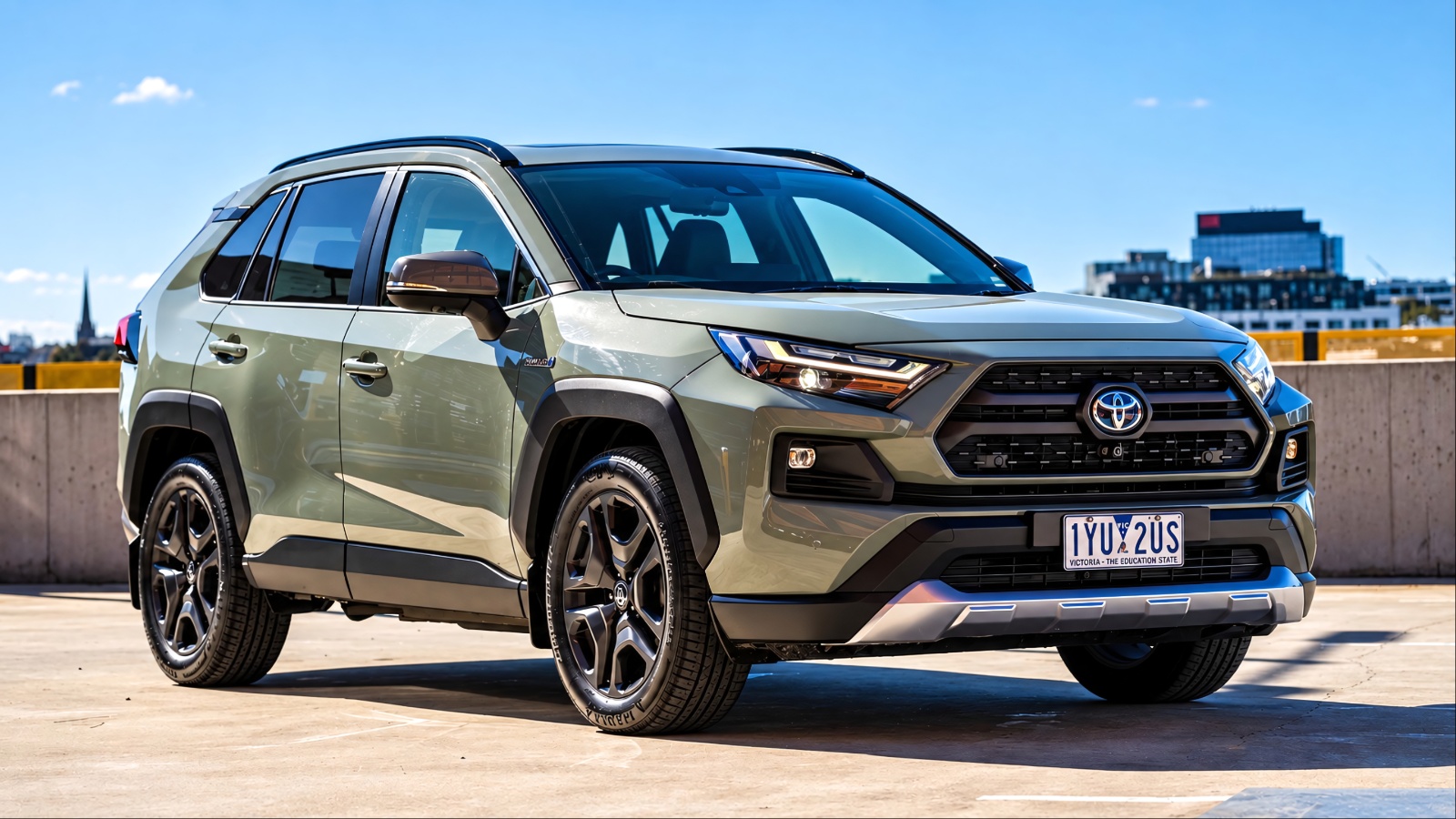
A flat tire can turn an ordinary road trip into a serious inconvenience, and the equipment stored in an SUV determines how quickly that problem can be handled.
Some SUVs still carry a full-size spare that can replace a damaged tire and continue the journey with fewer limitations. Others save weight and cargo space by supplying a compressor and sealant kit instead.
Neither approach is automatically better for every driver. The difference matters most for people who travel long distances, drive on rough roads, tow trailers, or frequently venture far from tire shops. Manufacturer specifications show just how different these strategies can be.
5 SUVs With a Full-Size Spare
1. Toyota 4Runner
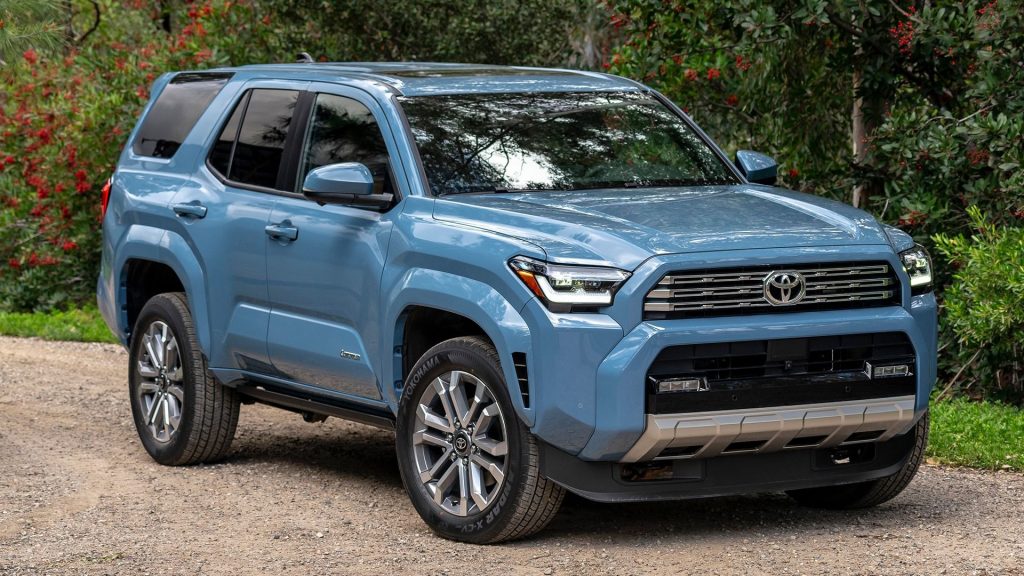
The Toyota 4Runner has preserved a feature that remains especially valuable for drivers who use an SUV for serious utility and off-road driving, a full-size spare tire. Toyota has included a full-size spare throughout the 4Runner’s generations, and the latest model continues the tradition. With its body-on-frame design and off-road capability, having a matching spare can be particularly useful when dealing with a damaged tire away from paved roads.
The value becomes obvious when the vehicle leaves paved roads. A temporary spare can have speed and distance restrictions, while a full-size spare provides a tire much closer to the dimensions and capability of those already fitted. That matters when a puncture occurs several miles down a dirt road instead of near a tire shop.
A full-size spare can also be rotated into service if maintained appropriately and if the vehicle’s tire strategy permits it. That can prevent the spare from becoming an old, neglected tire stored underneath the vehicle for years.
Owners still need to check its pressure, tread, and age because a spare loses pressure, and its rubber ages even when it is not driven.
For camping, towing, rural driving, or trail access, the 4Runner’s full-size spare is more than a specification. It can make a major difference when a puncture happens far from assistance.
2. Ford Bronco
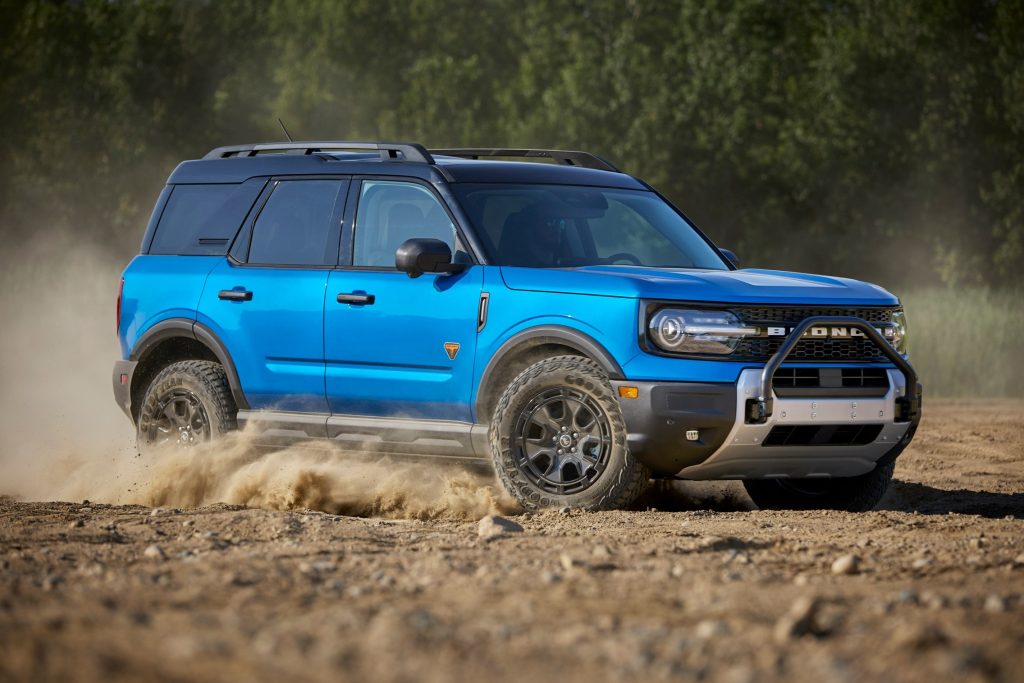
The Ford Bronco takes the full-size-spare concept even further because the spare is an obvious part of its off-road design. Ford lists a full-size spare with individual tire-pressure monitoring as standard equipment on the Bronco.
That matters because the Bronco is designed for conditions where tire damage is more likely than on a typical urban crossover. Available tire sizes range from 30-inch equipment to much larger configurations, including 35-inch and 37-inch tires on higher-performance versions.
A full-size spare is particularly useful when specialized off-road tires are fitted. Finding an identical replacement at a small-town tire shop may be difficult, especially when the damage occurs far from major roads.
A mobility kit can handle certain punctures, but it cannot repair a destroyed sidewall or badly damaged wheel. The Bronco avoids that limitation by carrying a complete replacement tire.
The spare is mounted externally at the rear, freeing interior cargo space. The tradeoff is additional weight and the effect of carrying a large tire on the rear of the vehicle.
Ford also integrates tire-pressure monitoring with the spare, reinforcing the fact that it requires maintenance just like the tires on the road.
For Bronco owners who regularly leave paved roads, the full-size spare is closely aligned with the vehicle’s purpose and reduces dependence on towing or nearby repair shops.
3. Jeep Wrangler
The Jeep Wrangler has long treated the spare tire as part of the vehicle’s identity, and modern versions continue that approach. Jeep states that vehicles, including the Wrangler, come with full-size spare tires.
The reason is practical. The Wrangler is designed around off-road use, where tire damage can happen far from roadside assistance. A full-size spare gives the driver a direct way to replace a damaged tire instead of depending on sealant.
The 2026 Wrangler is available with different tire configurations, including large tires on off-road-focused versions. Jeep’s lineup includes models such as the Willys and Rubicon, with available 35-inch tire packages.
That makes the spare especially useful on trails. An inflator kit can add air to a tire, but it cannot replace a missing section of sidewall or repair a severely damaged wheel. Sealant also has limitations when damage occurs outside the tread area.
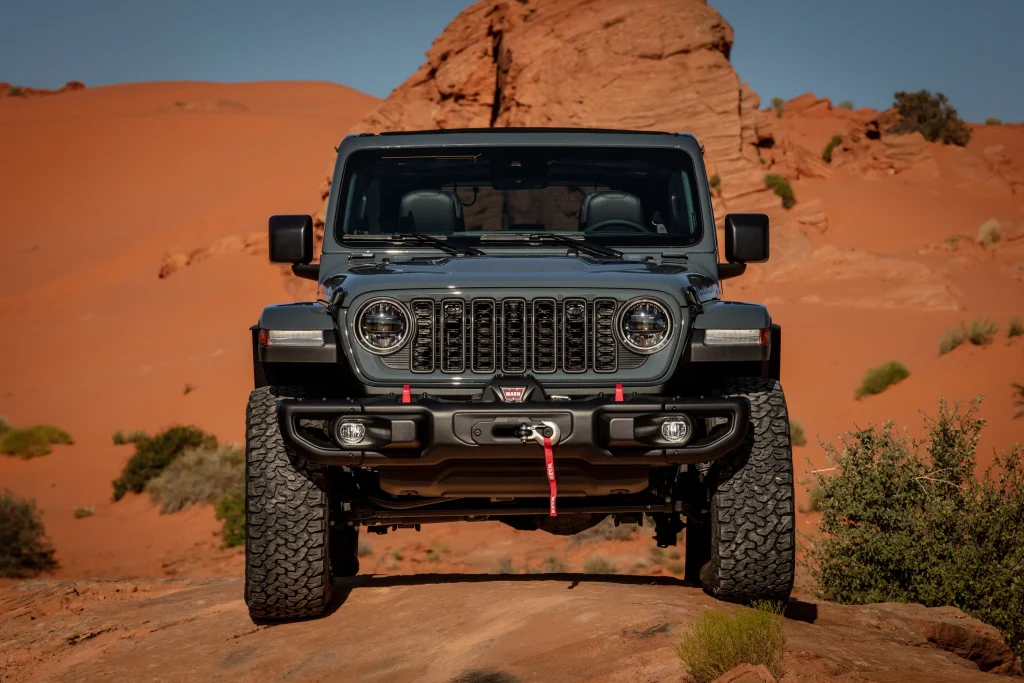
The Wrangler’s external spare also preserves interior cargo space. The compromise is added weight and the effect of the tire on rear-door operation.
For a Wrangler owner heading into remote terrain, the spare is more than emergency equipment. It is a genuine recovery tool that can allow the vehicle to continue when a tire is badly damaged.
4. Toyota Land Cruiser
The Toyota Land Cruiser has traditionally emphasized long-distance durability and off-road serviceability, and its spare-tire strategy reflects that philosophy. Toyota’s documentation for the current Land Cruiser confirms that the vehicle is equipped with a spare tire and provides instructions for lowering and replacing it.
The spare is stored beneath the vehicle and can be lowered using the supplied jack-handle components. Toyota’s owner’s manual describes how to remove, install, and secure the tire.
That matters because the Land Cruiser is intended to handle difficult terrain and long-distance travel where access to a tire shop can be limited.
Toyota has specified substantial tires for the Land Cruiser, including P285/60R18 mud-and-snow-rated tires on certain versions, with a full-size spare monitored by the vehicle’s direct tire-pressure system.
A matching spare is particularly valuable on a four-wheel-drive vehicle because maintaining compatible tire dimensions can matter to driveline components and electronic systems. A full-size replacement reduces the concerns associated with using a significantly smaller temporary tire.
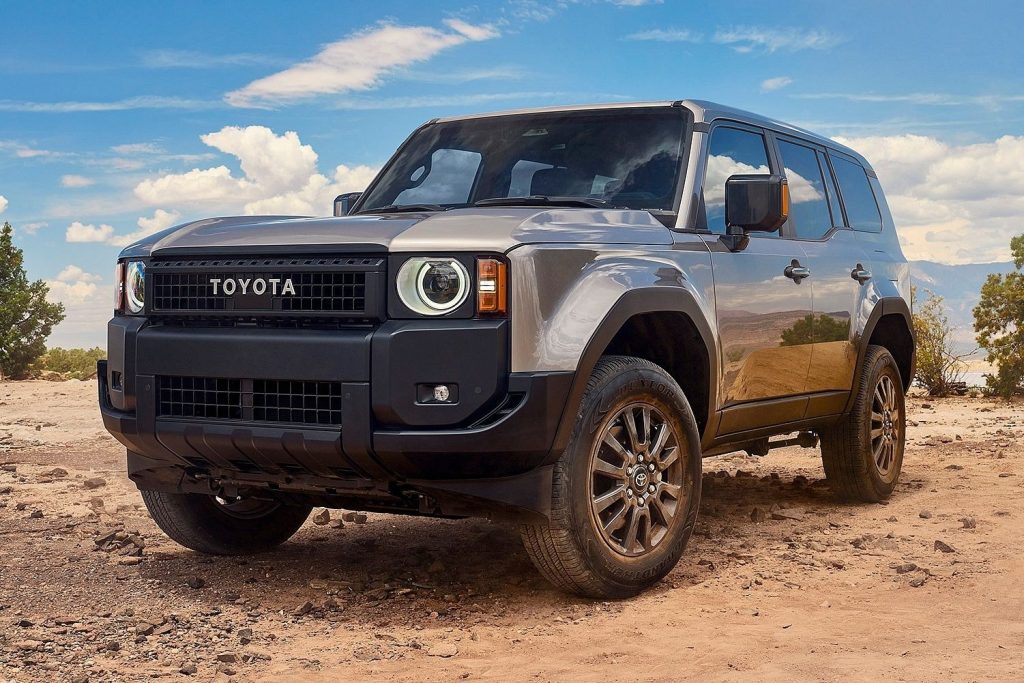
The underbody location does require some effort, and the heavy tire must be handled safely. The spare also needs regular inspection and proper securing.
For people who buy the Land Cruiser specifically for remote travel, the full-size spare is one of its most practical pieces of equipment.
5. Lexus LX
The Lexus LX combines luxury equipment with a body-on-frame architecture intended to preserve serious off-road ability. Lexus states that a full-size spare tire is standard across the LX lineup.
That is notable because many premium SUVs prioritize cargo packaging and road-focused equipment. The LX instead retains a genuine spare despite the additional weight and packaging requirements.
The decision makes sense given its capabilities. The LX is designed to handle terrain where a simple puncture can become a major problem, particularly when the vehicle is being used for long-distance or remote travel.
For owners who primarily drive on pavement, the spare may remain untouched for years. Even then, its presence provides redundancy that a sealant kit cannot match.
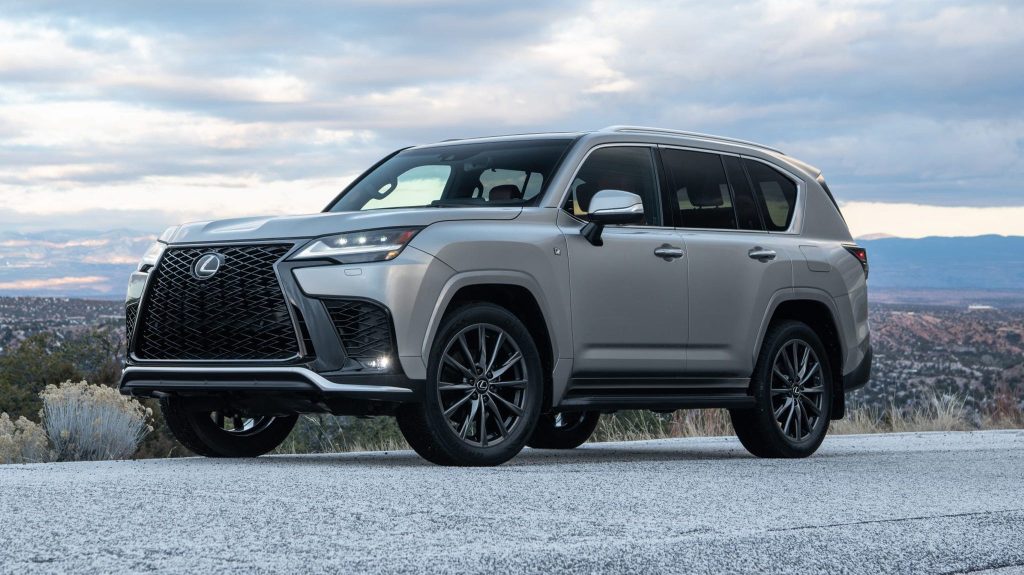
A puncture late at night in an area where the nearest tire store is closed illustrates the advantage. Sealant may handle a small tread puncture, but it cannot help when a tire is shredded or the wheel is damaged.
The tradeoff is weight and packaging, but for buyers seeking a luxury SUV without giving up remote-travel practicality, the LX demonstrates why a full-size spare remains valuable.
5 SUVs With Only an Inflator Kit
1. Hyundai Tucson
The Hyundai Tucson demonstrates the packaging advantages of replacing a traditional spare with a tire mobility kit. Hyundai’s U.S. specifications identify a Tire Mobility Kit as standard on the Tucson Hybrid and show the kit replacing the spare tire. The same approach appears on the Tucson Plug-in Hybrid.
For a compact crossover, this makes practical packaging sense. Hyundai can reduce the space dedicated to emergency equipment while avoiding the weight of a complete wheel and tire.
The kit is intended to handle a specific type of tire damage, allowing certain punctures to be temporarily sealed. It can be particularly useful for common tread punctures caused by nails or screws.
But it is not equivalent to carrying another tire. A large sidewall cut, bent wheel, or major structural failure cannot be solved with sealant.
That limitation matters for drivers who frequently travel over rough roads. A sharp pothole can damage both the wheel and tire, creating exactly the type of failure a mobility kit cannot address.
The kit also requires maintenance. Sealant has an expiration date, while the compressor should be checked periodically.
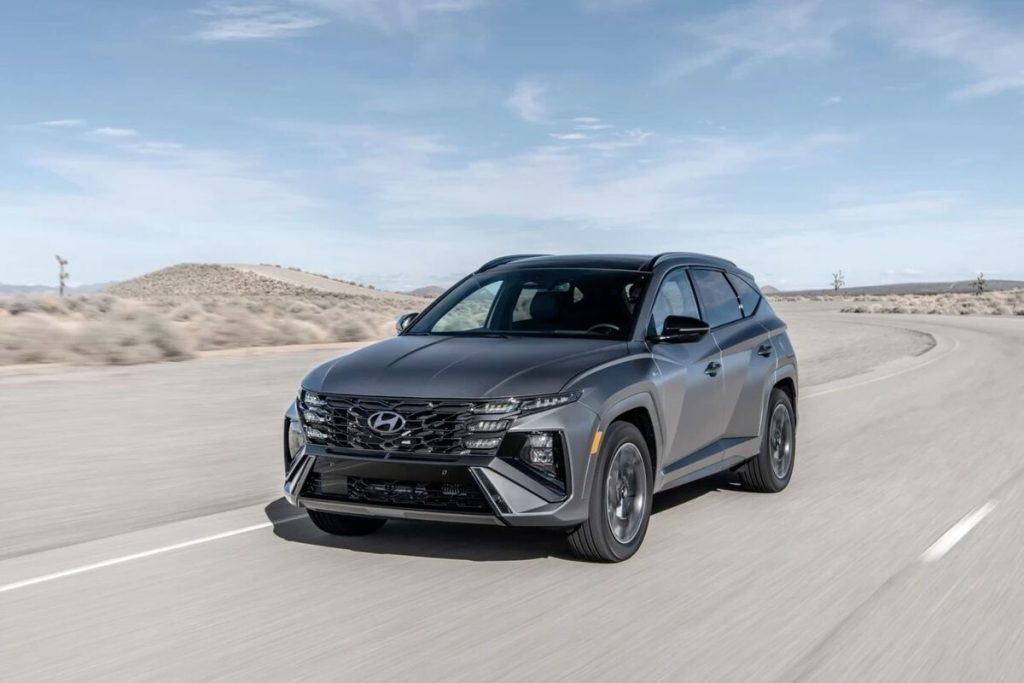
The Tucson’s setup therefore makes the most sense for drivers who primarily travel on paved roads and have reasonable access to roadside assistance. It saves space and weight but provides less independence after serious tire damage.
Buyers should check the exact powertrain because equipment varies between Tucson versions.
2. Toyota RAV4
The Toyota RAV4 provides another clear example of a vehicle that can use a tire mobility kit instead of a spare. Toyota’s owner information states that certain RAV4 vehicles without a spare are equipped with an emergency tire puncture repair kit containing sealant and a compressor.
The system is intended to temporarily repair a puncture caused by something such as a nail or screw passing through the tread. Toyota specifically states that it should not be used for sidewall damage, a damaged wheel, multiple punctures, a large cut, or damage caused by driving with insufficient pressure.
That makes the distinction between a repair kit and a spare particularly important. A spare replaces the damaged tire, while the RAV4’s kit attempts to make the existing tire usable long enough to reach professional assistance.
Toyota’s instructions involve connecting the compressor and sealant, restoring pressure, and then driving carefully so the sealant can distribute inside the tire. Toyota specifies driving below 50 mph after the repair and reaching a repair facility within the stated distance limitation.
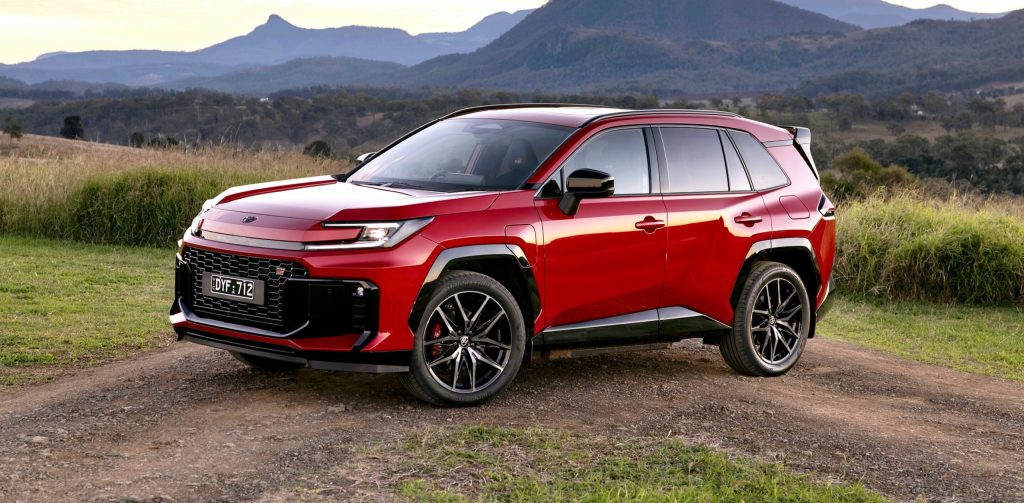
The arrangement frees cargo space and avoids carrying a complete spare wheel and tire. For many RAV4 drivers, the system may work for years because small tread punctures are common. However, owners should check the sealant’s expiration date and ensure the compressor is present and functional.
The RAV4 reflects the priorities of modern crossover design. Its approach favors lighter and more compact equipment, even if that means having fewer options available in an emergency.
3. Hyundai Santa Fe
The Hyundai Santa Fe presents an interesting case because tire equipment varies by configuration. Hyundai’s current specifications show certain versions equipped with a temporary spare while others use a tire mobility kit.
For versions using the mobility kit, the system combines inflation equipment and puncture-repair capability. Hyundai lists the kit as standard on applicable configurations rather than treating it as a dealer-installed accessory.
A mobility kit can make sense for an SUV primarily used for commuting and highway travel. Many ordinary tire punctures are relatively small, and temporarily restoring pressure can allow the driver to reach a repair shop. The limitations remain. A large cut or damaged wheel cannot be fixed with sealant.
That distinction becomes more important for drivers who regularly travel with a full passenger load or venture far from assistance. A family SUV carrying several passengers and luggage can become inconvenient to recover when no replacement tire is available.
The advantage is packaging. A mobility kit takes much less room than a complete wheel and tire, leaving more cargo space.
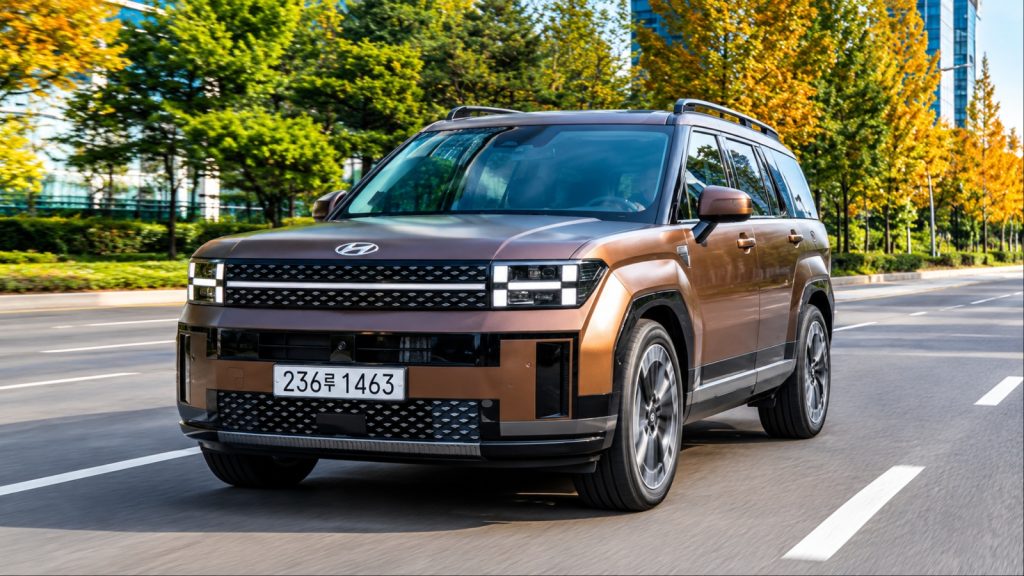
The Santa Fe therefore demonstrates the compromise manufacturers make in this segment. Some versions retain a spare, while others prioritize compact repair equipment.
Anyone shopping for a particular Santa Fe should inspect the actual vehicle’s equipment instead of assuming every version has the same roadside solution.
4. Subaru Forester Hybrid
The Subaru Forester Hybrid illustrates how electrified powertrains can influence tire-storage decisions. Subaru’s documentation for the Forester Hybrid identifies a flat-tire repair kit containing a sealant bottle and air compressor.
The setup differs from some gasoline Forester configurations. Subaru has offered different combinations of temporary spares, full-size spares and repair kits depending on trim, so the exact version matters.
For the hybrid, the repair kit saves space and avoids carrying a conventional spare wheel and tire. That can be useful when packaging the hybrid system into a compact SUV.
The kit is not intended to permanently repair the tire. It is an emergency solution designed to help the driver reach assistance. A simple tread puncture may be manageable, but a sidewall failure or damaged wheel is another matter.
This is particularly relevant for drivers who travel in remote areas. Subaru’s all-weather and all-wheel-drive characteristics can encourage travel on roads where tire damage is more possible, making it important to understand the emergency equipment before heading out.
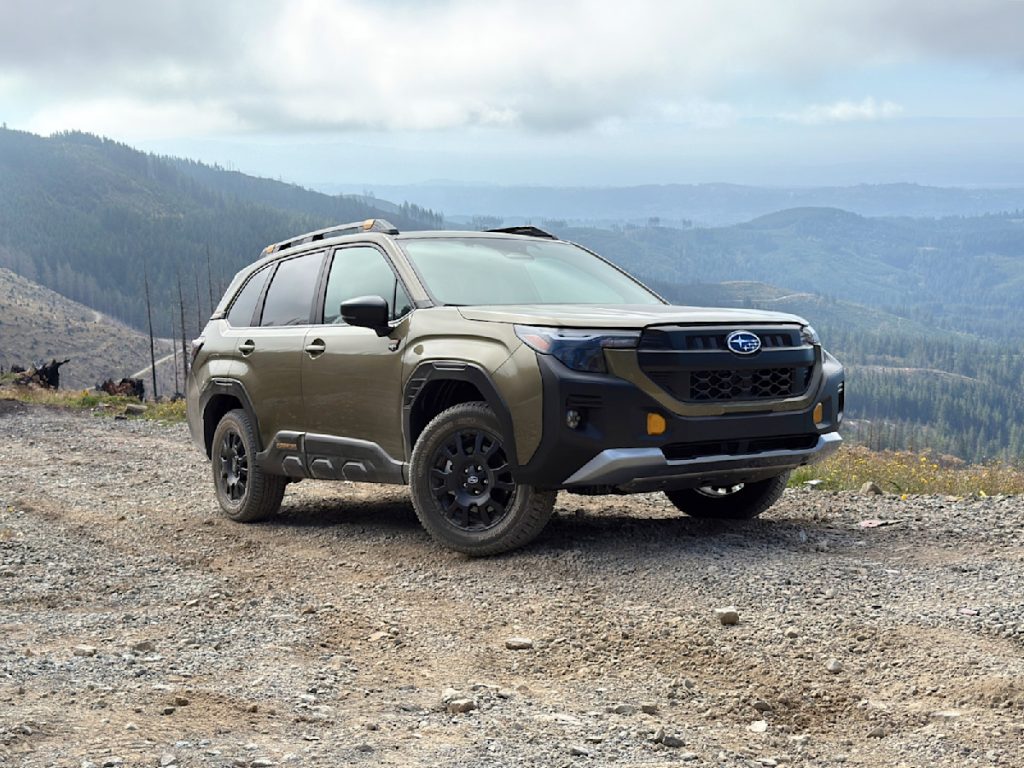
Owners should make sure the compressor is present, the sealant remains within its service life and the instructions are accessible.
The benefit is packaging efficiency and flexible cargo space. The tradeoff is losing the immediate replacement capability provided by a spare.
Forester Hybrid buyers should therefore check the exact model and trim rather than assuming every Forester uses the same tire solution.
5. Kia Sportage
The Kia Sportage shows how manufacturers can make tire-mobility equipment the default while retaining a spare as an option on selected versions. Kia’s current Sportage specifications identify a Tire Mobility Kit on applicable configurations, while a compact spare can be available on certain trims.
That means saying the Sportage has no spare across the entire lineup would be too broad. Equipment depends on the exact trim and drivetrain.
For a Sportage equipped with the mobility kit, the system combines a compressor and sealant rather than a conventional replacement wheel. Kia’s owner information describes the kit as a temporary solution for certain types of tire damage.
Kia warns that the system should not be used for sidewall damage and that the sealant is intended for one tire. The company also limits vehicle speed following a temporary repair. Those restrictions explain why a mobility kit cannot be considered equivalent to a spare.
The system does provide everyday benefits. There is no heavy wheel and tire to lift, no spare pressure to maintain and no large circular object occupying cargo-floor space.
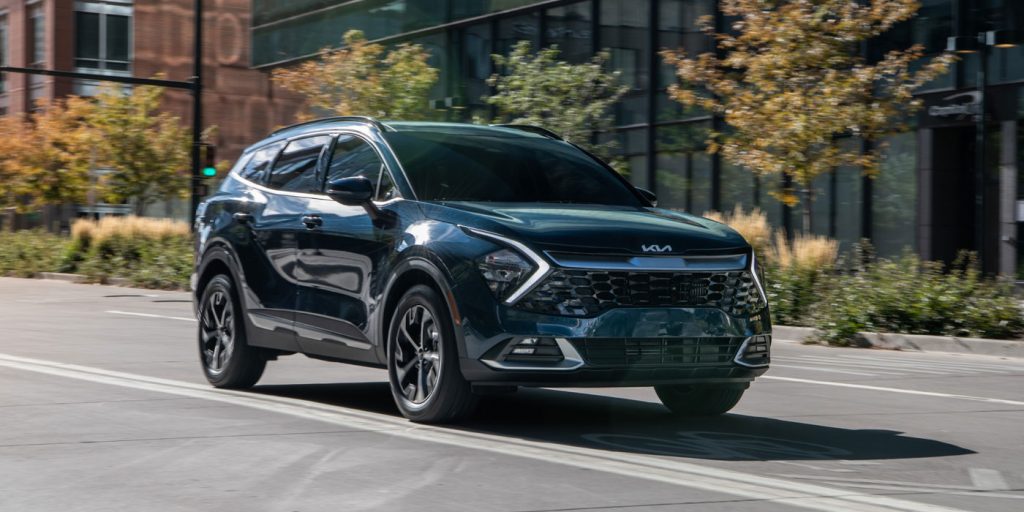
For city and suburban drivers, that may be an acceptable compromise. A nail puncture can potentially be sealed, the tire inflated, and the vehicle driven to a repair facility.
For people who regularly travel long distances through remote areas, the limitations deserve more attention. A damaged sidewall or badly bent wheel could require towing.
The Sportage demonstrates that the choice is not necessarily permanent across the lineup. Buyers who specifically want a spare can look for a trim that offers one, while those prioritizing packaging may prefer the mobility-kit configuration.
