The 1990s changed how European buyers judged vehicle safety. When Euro NCAP published its first results in 1997, consumers finally had independent, comparable crash-test information rather than relying mainly on manufacturers or basic regulatory approval.
The original system awarded up to four stars for adult occupant protection, so earning four stars represented the highest possible result under that early protocol.
The achievement was particularly meaningful because Euro NCAP deliberately introduced demanding offset and side-impact testing that exposed differences between competing vehicles.
Several 1990s models responded with stronger passenger cells, improved restraint systems, and increasingly sophisticated airbags. These six cars became notable examples of that rapid safety transition.
1. 1997 Volvo S40 – 4 stars
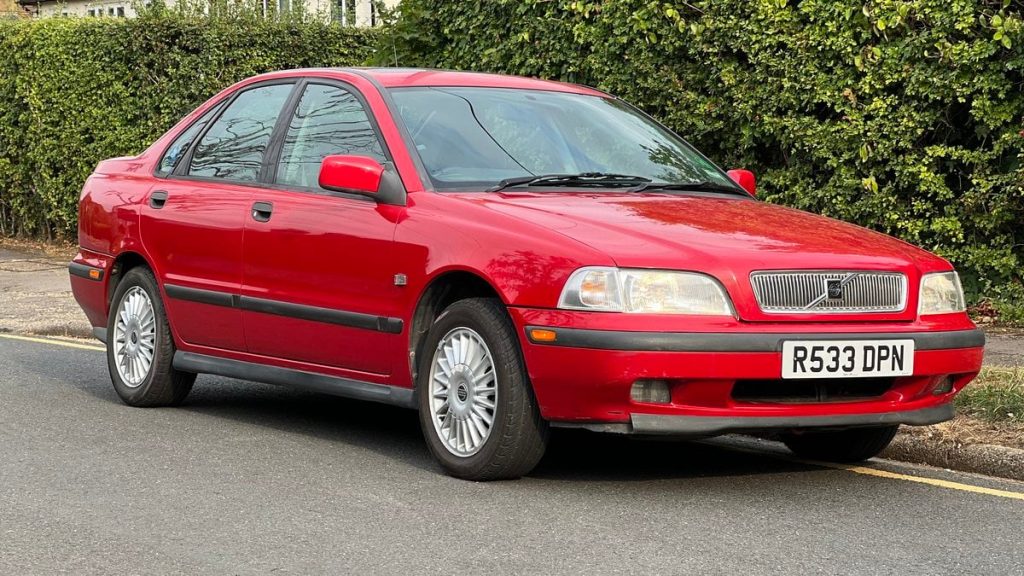
The 1997 Volvo S40 occupies a unique position in Euro NCAP history because it became the first car to achieve four stars for adult occupant protection.
Its result came during Euro NCAP’s early testing program, when four stars represented the maximum possible adult occupant rating.
The achievement demonstrated that manufacturers could design a production family car capable of performing strongly in the organization’s demanding offset crash assessment.
The S40’s passenger compartment maintained its integrity during the frontal impact, an important factor in protecting occupants because limiting cabin deformation helps preserve survival space.
Euro NCAP’s assessment recorded good head protection for the driver in the side impact, with the seat-mounted side airbag deploying effectively. Protection for the chest, abdomen, and pelvis was assessed as adequate.
Its performance was not perfect. The test identified weaknesses around the footwell and noted that the driver’s feet and ankles could be exposed to injury from structural intrusion. Child protection also revealed limitations, particularly in the side-impact assessment involving the rear-facing child restraint.
Pedestrian protection was another weak point, with several bonnet and leading-edge areas performing poorly against the proposed criteria.
That combination makes the S40 particularly interesting today. Four stars should not be interpreted as equivalent to four stars under today’s Euro NCAP system.
Euro NCAP has repeatedly changed its testing requirements, adding new crash scenarios, vulnerable-road-user assessments, and active safety technologies. The organization specifically warns that ratings from different testing eras cannot be directly compared.
Still, the S40’s 1997 result marked an important moment. It showed that structural strength and restraint technology could turn a relatively conventional family sedan into one of the safety leaders of its generation.
2. 1998 Saab 9-5 – 4 stars
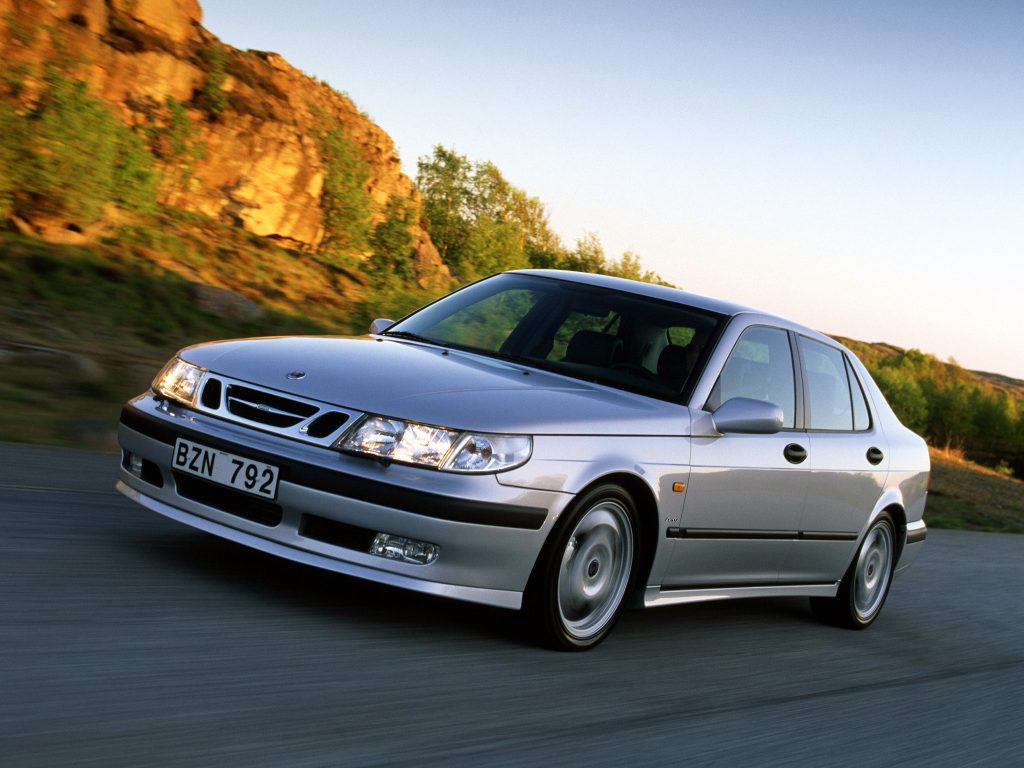
The Saab 9-5 brought a different approach to the same safety challenge. Tested in 1998, the 9-5 earned four stars for adult occupant protection and was described by Euro NCAP as the best-performing car in its group at the time. The official assessment recorded particularly strong performance in the frontal test and a full score for the side-impact test.
Saab’s engineering philosophy was evident in the restraint technology fitted to the car. The 9-5 featured a head-protecting side airbag integrated into the seat. Euro NCAP’s report explains that the system used an upper chamber intended to improve protection for the head while also providing thorax protection.
Saab had introduced this equipment as standard safety technology from August 1997, giving the 9-5 an advantage in lateral protection.
The structure also performed impressively. Euro NCAP found that the passenger compartment remained stable during the frontal crash, although there were small signs of movement around the door frame.
A knee bolster helped distribute loads around the driver’s knees, although it did not eliminate the possibility of high loads to the upper legs around the steering column.
The result did not mean the Saab was protected from every weakness. Euro NCAP reported unusually high chest acceleration for the child restraint used in the side-impact test, indicating injury risk. Pedestrian protection was also only average, with particular concern about potential lower-leg injuries.
Even with those shortcomings, the 9-5 demonstrated how quickly passive safety technology was advancing. Its combination of a stable passenger cell and sophisticated side protection helped make it one of the standout performers of Euro NCAP’s early years.
3. 1998 Renault Mégane – 4 stars
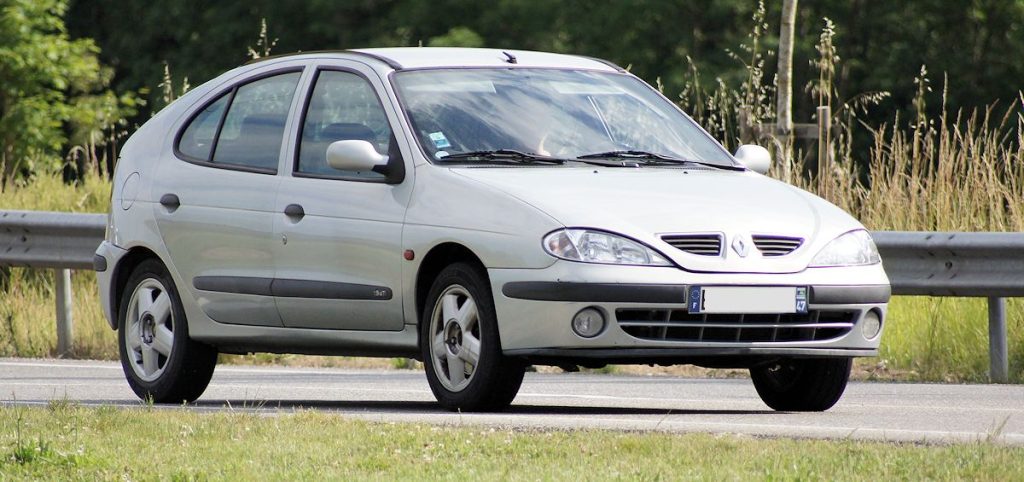
The first-generation Renault Mégane became another major safety story of the late 1990s. When it was first tested in 1998, the compact hatchback earned four stars for adult occupant protection and was described by Euro NCAP as the best-performing car in its group.
Renault’s strategy was particularly notable because safety was becoming a central selling point rather than simply a feature mentioned in the equipment list.
The Mégane’s protection came from a combination of structural engineering and restraint technology. Renault used its System for Restraint and Protection approach, including front seatbelt pretensioners and load limiters.
The tested version also had a driver airbag and side body and head airbags. Euro NCAP’s later assessment of the car recorded 30 points for adult occupant protection, including 12 points from the frontal assessment, 16 from the side assessment, and two from the pole test.
One of the Mégane’s strongest characteristics was its passenger compartment. Euro NCAP reported that the structure maintained stability during the frontal crash. The organization also noted that the car’s later side-airbag improvements allowed it to retain its four-star rating while delivering stronger protection in a serious side impact.
Yet the test also exposed areas needing improvement. Driver chest protection in the side impact was initially weak, while the child restraints allowed excessive forward head movement in certain conditions. Pedestrian protection was particularly poor, earning only one star under the assessment system used.
The Mégane therefore represented an important transition. Its four-star result showed that a mainstream compact hatchback could compete with larger and more expensive cars in crash protection, while its later safety improvements illustrated how manufacturers were already responding to the detailed information generated by Euro NCAP testing.
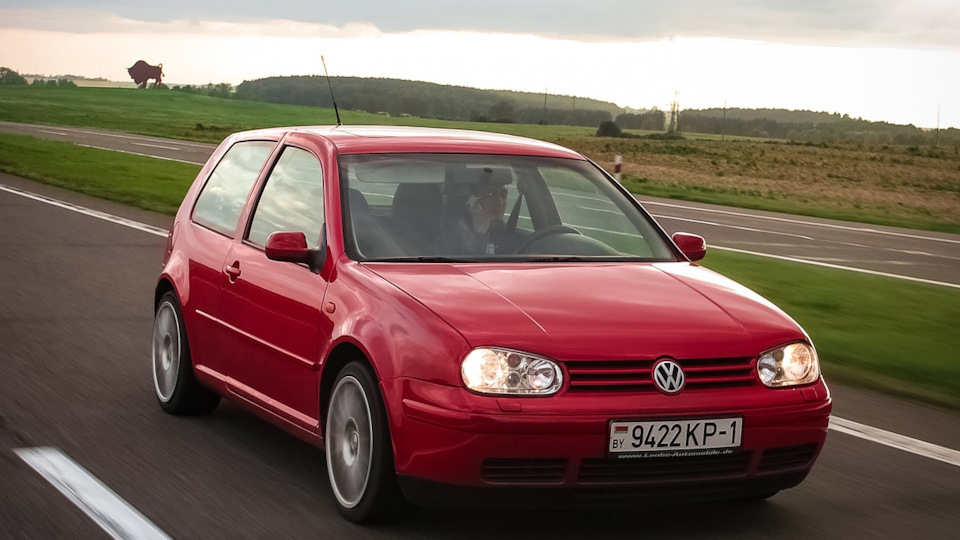
4. 1998 Volkswagen Golf MK4 – 4 stars
The Volkswagen Golf Mk4 was among the small family cars that achieved four stars when Euro NCAP tested this class in 1998.
Its result mattered because the Golf was one of Europe’s most important mainstream hatchbacks, making the safety advances incorporated into the car relevant to a huge number of ordinary buyers rather than only customers shopping at the premium end of the market.
The Golf’s crash performance centered on a strong passenger compartment. Euro NCAP reported that the structure remained stable in the frontal offset test.
The driver’s and front passenger’s knees and femurs were well protected according to the dummy readings, while the full-width rigid barrier test produced good protection for critical body regions for the driver and at least adequate protection for the rear passenger.
Side protection was another strength. The Golf achieved maximum points in the side-barrier test, showing how effective its structure and restraint systems were against lateral intrusion under the protocol used at the time. The picture was less positive in the more severe side-pole assessment, where chest protection was rated weak.
The car also illustrates why historical ratings need context. Modern Euro NCAP testing examines considerably more than the crashworthiness areas emphasized in the late 1990s.
Today’s system includes sophisticated assessments of accident avoidance, vulnerable road users, and post-crash safety, while historical tests were much more focused on occupant protection.
The Mk4 Golf’s four stars, therefore, should be viewed as an achievement against the requirements of its era. Its strong passenger-cell performance and side-impact result helped demonstrate that safety engineering was becoming a fundamental part of mainstream hatchback development.
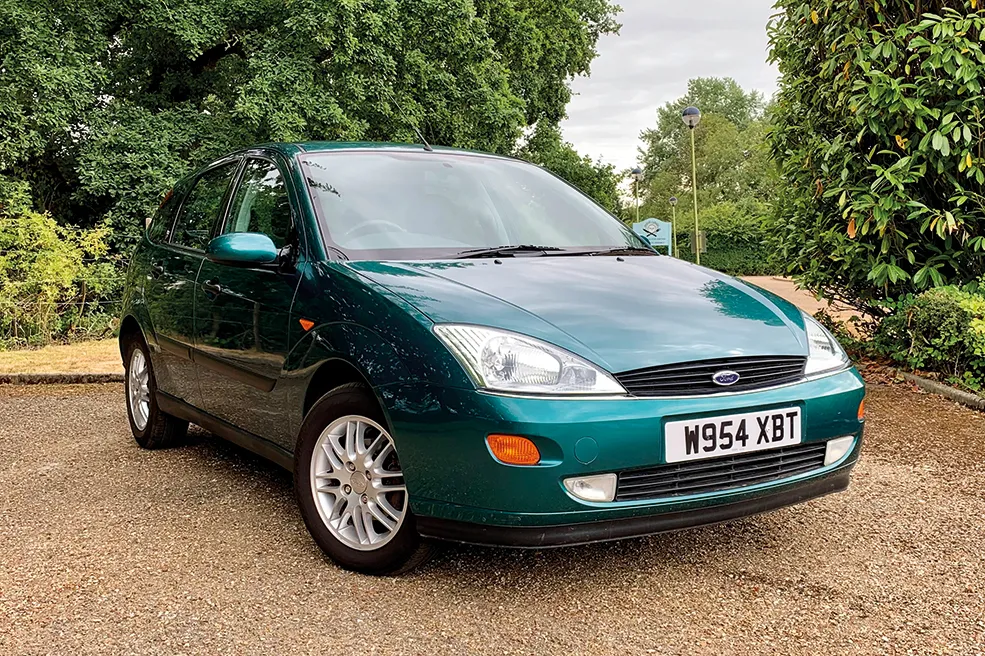
5. 1999 Ford Focus Mk1 – 4 stars
The first-generation Ford Focus entered Euro NCAP testing at an important point in the late 1990s, when manufacturers were rapidly adapting to the organization’s demanding crash assessments.
Tested in 1999, the Focus achieved four stars for adult occupant protection. Its result helped reinforce the idea that a practical family hatchback could combine dynamic handling with substantial crash protection.
The Focus performed particularly well structurally. Euro NCAP’s assessment found that the passenger compartment remained stable in the frontal offset test.
Dummy readings showed good protection for the knees and femurs of both front occupants, while the organization also found that occupants of different sizes and seating positions could receive a similar level of protection.
The side-impact result was another strong point. The Focus achieved maximum points in the side-barrier test. That was important because lateral crashes leave less structural distance between an occupant and the striking object, making the effectiveness of the door structure, side-impact protection, and restraint system particularly important.
The test was not without criticism. Euro NCAP highlighted a warning problem involving the front passenger airbag and rear-facing child restraints.
The passenger airbag was standard, but the warning system was considered inadequate for preventing a dangerous installation involving a child restraint. Ford subsequently indicated that clearer warnings would be introduced. The assessment also found limitations in pedestrian protection.
The Focus is therefore an excellent example of what the early Euro NCAP program was designed to accomplish. It did not simply reward a strong crash-test score. It exposed specific weaknesses that manufacturers could address in later production. That feedback loop became one of Euro NCAP’s most important contributions to vehicle safety.
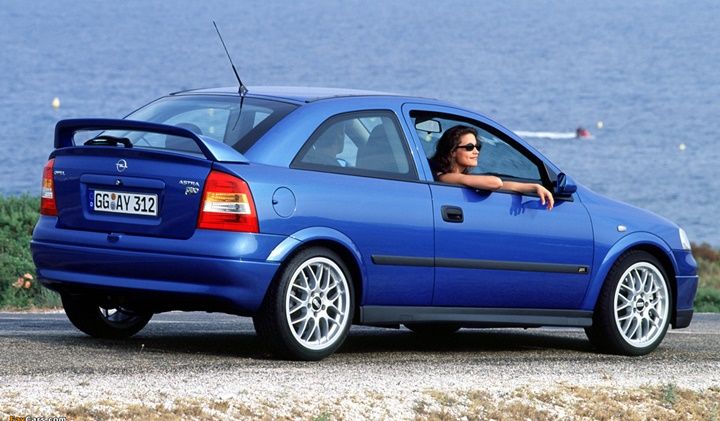
6. 1999 Opel/Vauxhall Astra G – 4 stars
The Opel Astra G, sold as the Vauxhall Astra in the United Kingdom, rounded out a remarkable period for European compact-car safety.
It achieved four stars in Euro NCAP’s 1999 testing, placing it among the strongest performers of its class under the rating system of the period. Its result came at a time when manufacturers were paying increasing attention to passenger-cell integrity, restraint technology and crash energy management.
One of the Astra’s notable engineering features was its approach to reducing cabin intrusion. The structure was designed to manage crash forces while keeping critical areas of the passenger compartment intact.
Its pedal-release arrangement also formed part of the safety strategy, helping reduce the possibility of severe lower-leg injuries when the front structure deformed during a crash.
The four-star adult occupant rating nevertheless came with an important qualification. Pedestrian protection was substantially weaker than occupant protection, receiving only one star in the assessment cited for the vehicle.
This contrast reflects a key feature of 1990s safety engineering. Much of the focus was on protecting occupants during a crash, while technologies and design approaches aimed at reducing injuries to pedestrians were still in their early stages.
The Astra’s achievement is best understood within Euro NCAP’s historical context. The organization had only begun publishing consumer crash-test results in 1997, and its early program was already pushing manufacturers toward stronger crash structures and more effective restraint systems.
Euro NCAP later expanded its protocols substantially, meaning that a four-star result from 1999 cannot be treated as equivalent to a four-star rating awarded under today’s system.
That distinction does not diminish the Astra’s achievement. Along with the S40, 9-5, Mégane, Golf and Focus, it represents a generation of cars that helped establish independent crash testing as an important part of the European car-buying decision.