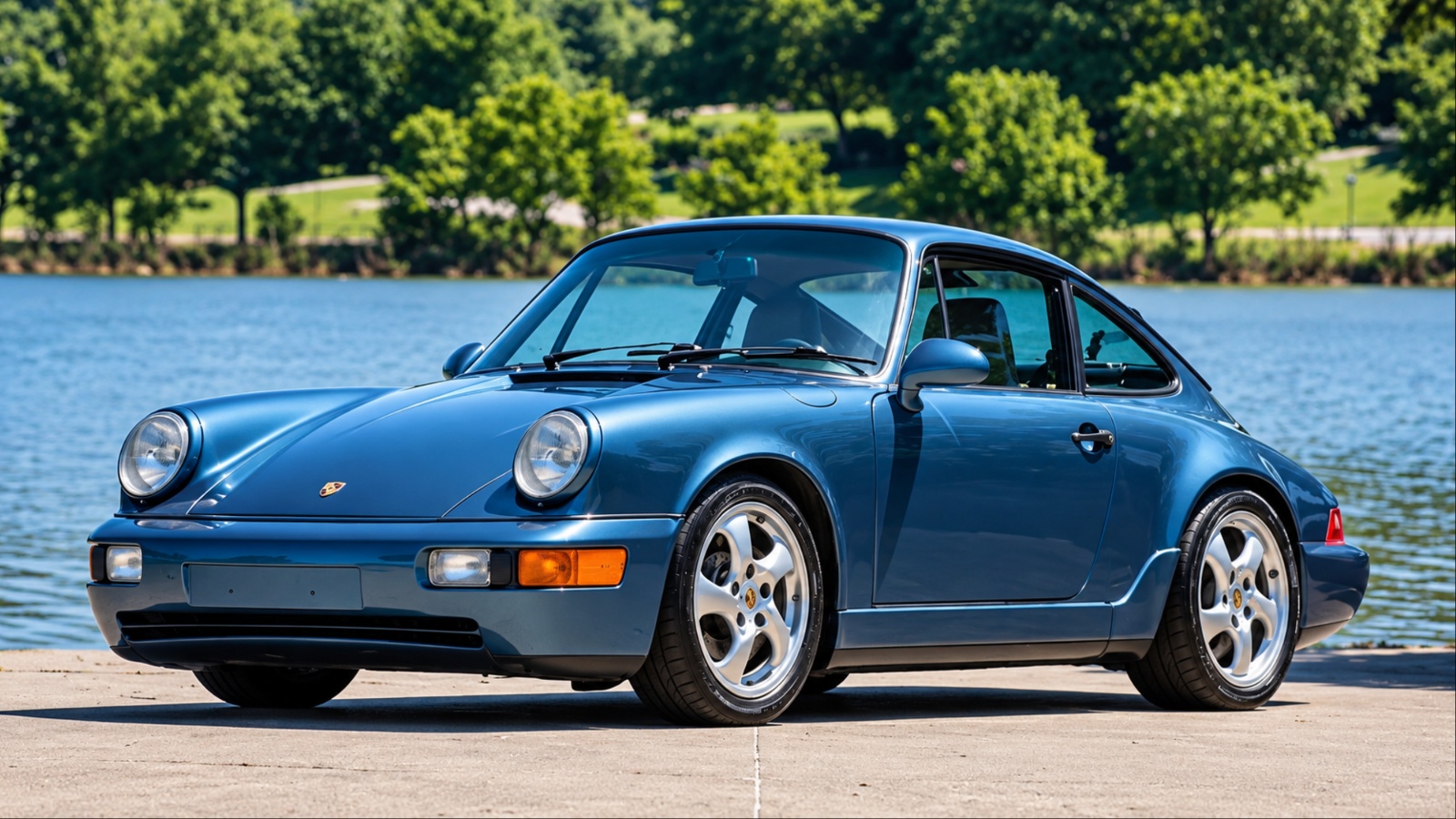
The 1990s produced cars that were supposed to represent the future, yet some of them have aged remarkably well. While many vehicles from the decade are instantly recognizable by their boxy shapes, plastic-heavy cabins, and dated lighting, a handful used clean proportions and carefully controlled details that still work today.
Some of these cars also introduced styling ideas that would eventually become widespread throughout the industry. The models featured below were sold in the United States and chosen because their proportions, exterior details, overall shapes, or design philosophies continue to look convincing decades after their original debuts.
None needs modern styling tricks to look interesting, which is precisely what makes these 1990s designs so impressive.
1. Audi TT
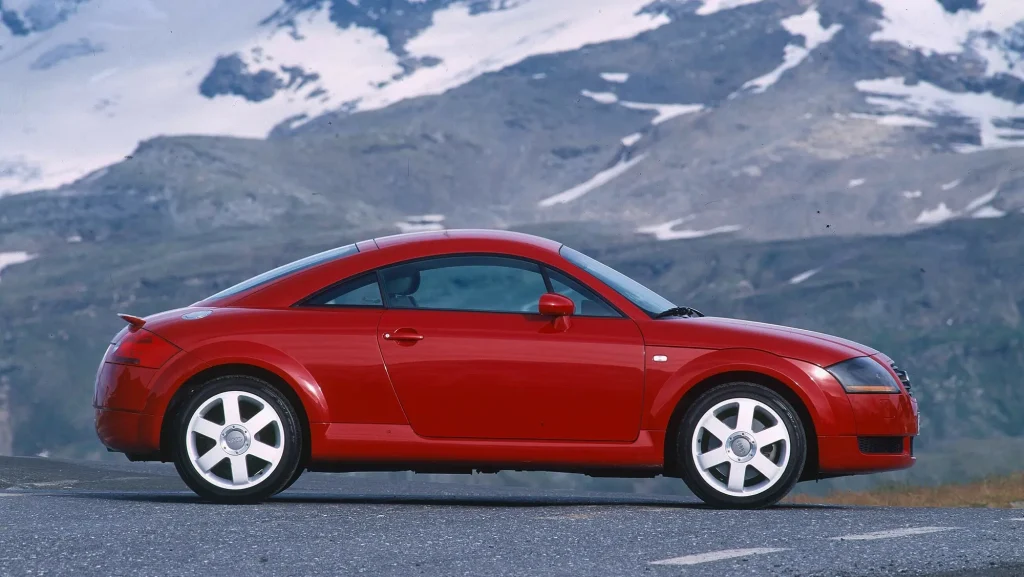
Few cars from the 1990s made such a direct prediction about the future as the first-generation Audi TT. The production coupe arrived for the 1999 model year in the United States after Audi had shown the original concept in 1995.
What makes it remarkable today is not simply that the TT still looks attractive. It is that Audi resisted the temptation to dilute the concept’s distinctive shape when moving from show car to production vehicle.
Audi says the production TT differed only insignificantly from the concept displayed in 1995. That was an extraordinary decision at a time when dramatic concept-car styling was frequently softened before reaching dealerships.
The TT instead retained its rounded roof, short overhangs, circular design themes, and almost geometric bodywork. Audi describes the circle as the central motif of the car, appearing in areas ranging from the roof and front end to the rear and interior details.
That simplicity is a major reason the TT has avoided becoming visually trapped in its decade. There are no enormous decorative grilles, excessive creases, or complicated character lines that immediately announce its age. Its proportions are easy to understand at a glance.
The cabin followed the same philosophy. Audi used exposed aluminum elements, a short spherical gear knob, and carefully coordinated circular details. Even the exhaust outlets and wheel designs contributed to the same visual language. The result was a sports car that looked coherent rather than overloaded.
The first-generation TT was also technologically interesting for its time. Audi offered turbocharged four-cylinder engines ranging from 150 horsepower to 225 horsepower, with the range eventually expanding further. Audi also introduced its dual-clutch transmission concept to production applications through the TT’s S tronic system.
More than 178,000 first-generation TT coupes were produced before production ended in 2006.
The TT’s production numbers helped establish its influence, but its lasting appeal comes from the strength of its original design. Even today, it can sit alongside a modern compact sports coupe without looking noticeably dated. For a shape that first appeared more than three decades ago, that is a remarkable achievement.
2. BMW Z8
The BMW Z8 arrived at the very end of the 1990s, and its timing is important. Rather than trying to predict what sports cars would look like in the new millennium through aggressive futuristic styling, BMW took a different approach. It imagined what its legendary 507 roadster might have become if the original car had continued evolving for four decades.
BMW introduced the Z8 at the 1999 Frankfurt Motor Show after first previewing the car through the Z07 concept, which debuted at the 1997 Tokyo Motor Show before appearing at the 1998 Detroit auto show. BMW described the Z8 as a modern interpretation of the 507, rather than a direct reproduction of the classic roadster.
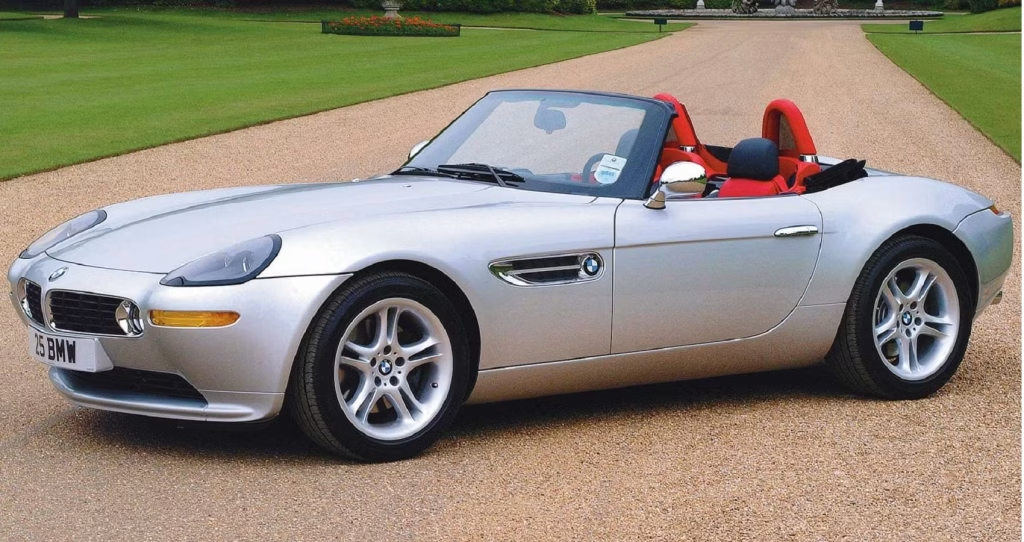
That distinction explains why the Z8 continues to look fresh. It uses classic sports-car proportions without becoming a retro caricature. The long hood, short rear section, low body, and wide stance are immediately recognizable, but the surfaces remain clean enough to work beside much newer vehicles.
The side air vents are particularly effective. Instead of covering the body with decorative styling, BMW used a small number of recognizable elements to give the Z8 character. The kidney grille and round headlights also preserve BMW identity without relying on the oversized grilles that appeared on some later products.
The headlights themselves are another reason the Z8 has aged well. Their compact circular forms sit beneath clear covers, creating a simple appearance rather than the complicated lighting signatures common on newer cars.
The interior follows the same restrained philosophy. BMW placed the gauges in a central arrangement and used a metallic dashboard treatment that gave the cabin a technical appearance without covering it in screens. Today, that simplicity can actually make the Z8 feel more special than some newer luxury cars.
Underneath the styling was serious engineering. BMW developed an aluminum space-frame structure and aluminum outer body panels. BMW’s technical documentation says the space-frame structure used an extensive network of extruded aluminum sections and was designed to combine rigidity with low weight.
The American-market Z8 used a 400-horsepower V8 and six-speed manual transmission. BMW quoted acceleration to 60 mph in less than five seconds and an electronically limited 155 mph top speed.
The Z8 therefore succeeds on two fronts. It looks timeless because its proportions are rooted in classic roadster design, while its technical execution was advanced enough to prevent it from feeling like an old-fashioned sports car.
3. Porsche 911 Carrera (996)
The fifth-generation Porsche 911 is one of the more controversial cars on this list, but controversy is not the same thing as aging badly. The 996-generation 911 arrived in the late 1990s and represented one of the biggest changes in the history of Porsche’s iconic sports car.
The new 911 was presented in 1997, with the 1998 model reaching the market. Porsche says the generation was longer, wider, and lighter than its predecessor, while its styling and assistance systems were completely new. More importantly, it became the first series-production 911 to use water cooling.
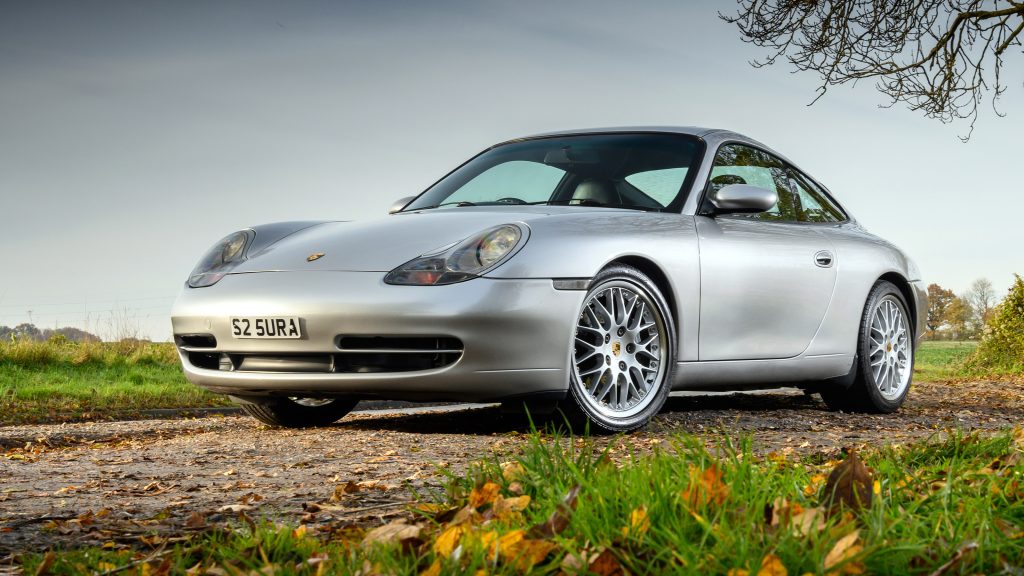
The design was unusual because Porsche attempted to modernize the familiar 911 shape without abandoning its essential proportions. The roofline remained recognizable, the front hood retained the classic slope, and the rear still carried the unmistakable 911 silhouette.
Then came the headlights.
The 996 used headlights with integrated turn signals, producing an oval-shaped assembly that differed dramatically from the traditional round headlights used on previous generations. Porsche acknowledges that the design was initially controversial. Yet the company also notes that the concept was subsequently copied by other manufacturers.
That is an important clue to why the 996 can look surprisingly modern today. The design was not merely following the trends of 1997. It introduced a visual treatment that influenced later automotive styling.
The interior also moved forward. Porsche created more space and a more modern dashboard arrangement while retaining the familiar five-gauge instrument cluster. Rather than filling the cabin with unnecessary decoration, the designers used a clean horizontal structure and circular instruments.
The technical changes were even more significant. Porsche developed the 996 around a new platform shared in part with the Boxster program. The standard engine produced 300 PS, while the generation eventually expanded to much more powerful Turbo, GT3 and GT2 versions.
Porsche built 175,262 examples of the 996 between 1998 and 2005. Today, the 996 benefits from its relatively simple proportions. Modern sports cars often use increasingly complicated aerodynamic surfaces and enormous lighting elements.
The 996 has neither. Its smooth body and compact visual footprint make it surprisingly easy to imagine in a modern showroom.
The controversial headlights may remain divisive, but they are no longer enough to make the car look old. In fact, they are now part of what gives the 996 its distinctive character.
4. Toyota Supra A80
The fourth-generation Toyota Supra is one of the strongest examples of a 1990s car that managed to look futuristic without becoming visually tied to a particular decade. Introduced for the U.S. market in 1993, the A80 Supra represented a dramatic change from the previous generation.
Toyota’s own historical account describes the fourth-generation car as a bold statement in both design and performance. The company wanted a vehicle capable of combining supercar performance with refinement and Toyota quality.
The shape was significantly more rounded than the previous Supra. Instead of sharp edges and rectangular details, Toyota used smooth curves, a low roofline, wide rear haunches, and a compact cabin. The famous rear wing added drama, but the underlying body still worked without it.
That is one reason the A80 has aged so well. Its visual identity comes from proportions rather than fashionable details.
The front end is relatively simple. The headlights sit low and wide, while the hood rises smoothly toward the windshield. There is no enormous grille dominating the nose. From the side, the roof flows almost continuously toward the rear, creating the compact silhouette expected from a modern performance coupe.
Toyota also paid considerable attention to weight. The company says the Turbo model weighed about 3,450 pounds, roughly 125 pounds less than its predecessor, with savings coming from features including an aluminum hood and roof. Even the carpeting was engineered with weight reduction in mind.
The American market received naturally aspirated and turbocharged versions. The naturally aspirated model used the 3.0-liter 2JZ-GE inline-six, producing 220 horsepower and 210 lb-ft of torque in the 1993 U.S. specification.
The Turbo became the legend. Toyota’s U.S. historical material lists 320 horsepower, a sub-five-second 0 to 60 mph capability, and an electronically limited 155 mph top speed.
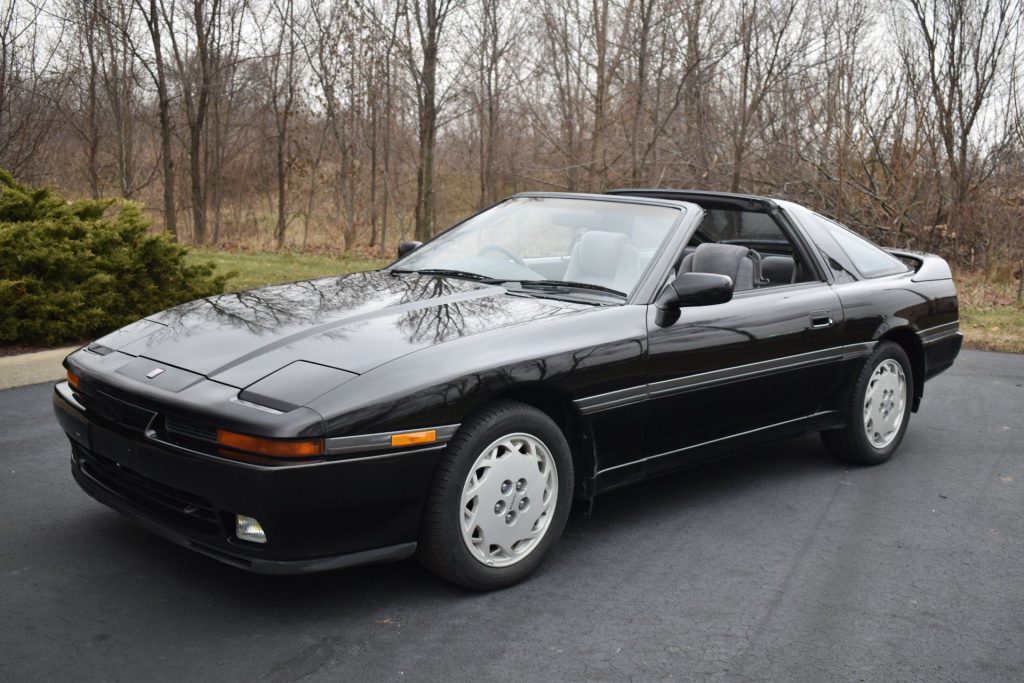
The mechanical reputation certainly helped the Supra remain famous, but mechanical fame alone does not explain its appearance. The A80’s smooth body, low stance, and rounded surfaces remain easy to recognize without looking old-fashioned.
Modern performance cars have become increasingly complex, yet the Supra’s design is still readable from every angle. That clarity is exactly what many newer cars struggle to maintain.
5. BMW 5 Series E39
Not every timeless 1990s car needed to be a supercar or exotic roadster. The BMW E39 5 Series proves that an ordinary luxury sedan could also get the proportions right.
Introduced in 1995, the E39 was designed by Joji Nagashima. BMW Group Classic describes its profile as having a coupe-like appearance, with aerodynamically optimized contours and the familiar BMW double-headlight arrangement positioned behind a single glass cover. Production ran from 1995 through 2003.
The E39’s visual success comes from restraint. It does not try to look aggressive from every possible angle. Instead, the body has a long, balanced profile, a relatively narrow glasshouse, and carefully proportioned front and rear sections.
That design language has survived remarkably well because it does not depend heavily on styling trends.
Look at the side profile, and the formula is still familiar on modern luxury sedans. The hood is long, the roofline gently slopes toward the rear, the greenhouse is proportionally compact, and the wheels sit naturally within the body. There is no visual clutter competing for attention.
The front end is equally disciplined. BMW’s kidney grille is modest in size, while the paired headlamps provide the unmistakable identity. Later generations of BMW became much more adventurous with grilles and lighting, which ironically makes the E39’s simple face look increasingly elegant by comparison.
The interior is similarly restrained. The dashboard is angled toward the driver, with controls arranged in a logical manner instead of being dominated by one enormous display. Modern buyers accustomed to screens may notice how little visual information the E39 needs to communicate its purpose.
That simplicity can make an old E39 appear more contemporary than newer cars filled with decorative trim.
The car was also engineered during an important transition period for BMW. Its development emphasized aerodynamics, rigidity, refinement, and technology without abandoning traditional rear-wheel-drive proportions.
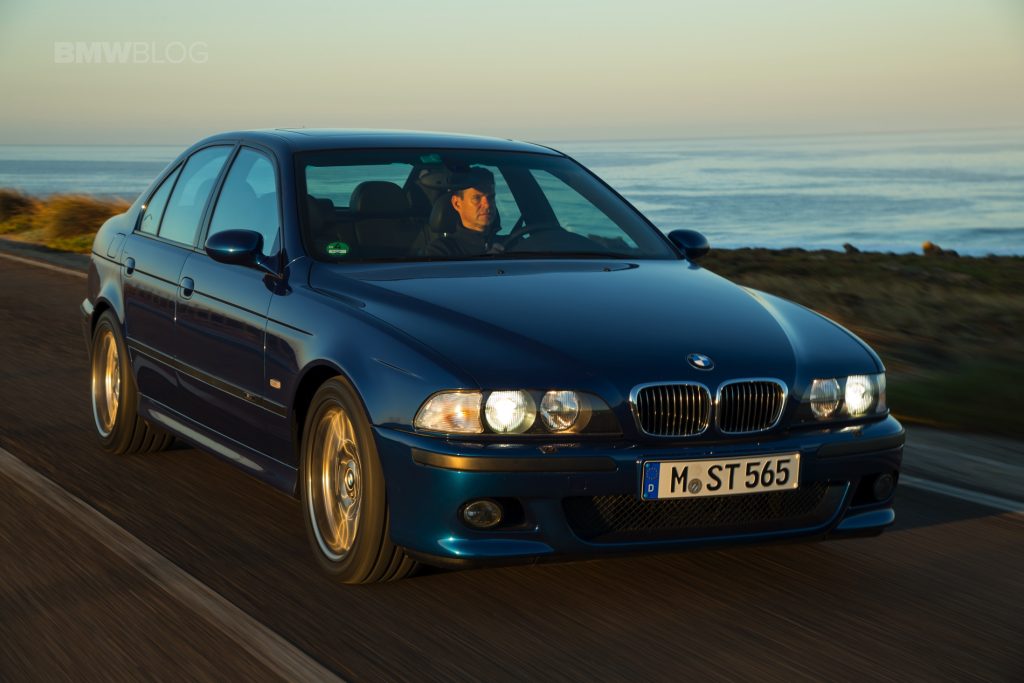
The E39 also continues to look modern because its proportions closely resemble those found in today’s luxury sedans. Although powertrains, electronics, and safety systems have evolved dramatically, the fundamental design of a premium sport sedan has remained surprisingly consistent.
The E39 therefore earns its place not because it looks futuristic, but because its designers understood that good proportions can survive changing fashion.
6. Mercedes-Benz SLK-Class R170
The first-generation Mercedes-Benz SLK is another late-1990s design that still has a surprisingly contemporary visual identity. The R170 debuted in 1996, and its most famous feature was not simply its styling. It was the folding metal roof that allowed the car to change from a closed coupe-like vehicle into an open roadster.
Mercedes-Benz says the SLK marked the beginning of a new era for the company’s traditional open-top vehicles when it launched in 1996. The company also notes that the roof design became a model for other open-top vehicles.
That mechanical feature alone makes the SLK historically significant, but the exterior design deserves equal attention.
The R170 has compact dimensions and a clean silhouette. Its front end is unmistakably late-1990s Mercedes, yet it avoids many of the ornamental details that would have made it age rapidly. The body has relatively simple surfaces, while the cabin sits toward the rear in classic roadster fashion.
Its proportions are particularly important. A long hood, short rear deck, and compact passenger compartment are almost impossible to make look completely outdated because they are fundamental sports-car proportions rather than temporary styling trends.
Mercedes also gave the SLK enough visual character to distinguish it from larger models without filling the body with unnecessary lines. The roof mechanism allowed designers to maintain a smooth silhouette whether the car was open or closed.
That feature helped make the SLK feel advanced in the 1990s. It was not simply a small convertible with a fabric top. The hardtop could fold away, giving owners two distinct body configurations from one vehicle.
The model became a significant commercial success. Mercedes-Benz says more than 710,000 vehicles from the SLK and later SLC family have been sold worldwide since the 1996 launch.
The R170 also benefited from a design period in which Mercedes was beginning to move away from the extremely formal shapes associated with some of its earlier products. The SLK was compact, sporty, and deliberately youthful.
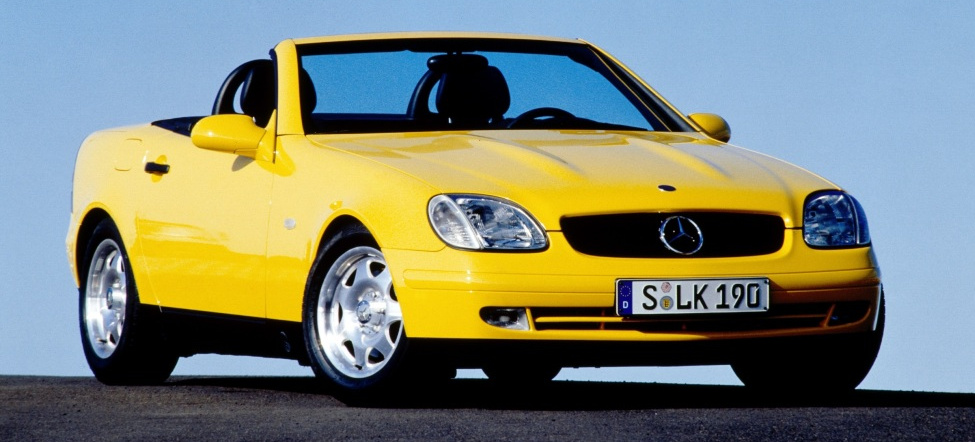
Today, its biggest advantage is that the basic concept still makes sense. A small two-seat roadster with a retractable hardtop remains an appealing idea, and the R170’s proportions still communicate that purpose instantly.
It looks old enough to be interesting, but not so old that its shape feels disconnected from today’s sports-car design.
7. Nissan 300ZX Z32
The Nissan 300ZX Z32 may be the most convincing example on this list of a Japanese performance car that anticipated modern design language. The fourth-generation Z32 was launched in 1989, but it was sold throughout the early 1990s in the United States, making it a legitimate 1990s-era choice for American enthusiasts.
Nissan’s own history describes the Z32 as a complete departure from earlier Z cars, with fresh styling and high performance intended to compete with the world’s best sports cars. The company offered both two-seat and 2+2 versions, along with naturally aspirated and twin-turbocharged V6 engines.
The shape remains striking because it is so low and clean. The hood is long and relatively flat, the windshield is steeply raked, and the roof flows smoothly into the rear bodywork. There are few unnecessary creases.
The front fascia is especially effective. Instead of using a huge grille, Nissan gave the 300ZX a low nose with compact lamps and smooth surfaces. That makes the car surprisingly compatible with modern sports-car proportions.
The rear is equally restrained. The taillights are horizontal and integrated into the body, while the broad rear stance gives the car a planted appearance without requiring excessive visual aggression.
Nissan also introduced sophisticated chassis engineering. The company says the Z32 used a four-wheel multi-link suspension system, a major technical feature for its time.
The U.S. version was also substantially more powerful than many ordinary sports cars of the period. The twin-turbocharged model was rated at 300 horsepower in the American market, while the naturally aspirated version produced 222 horsepower for U.S. buyers.
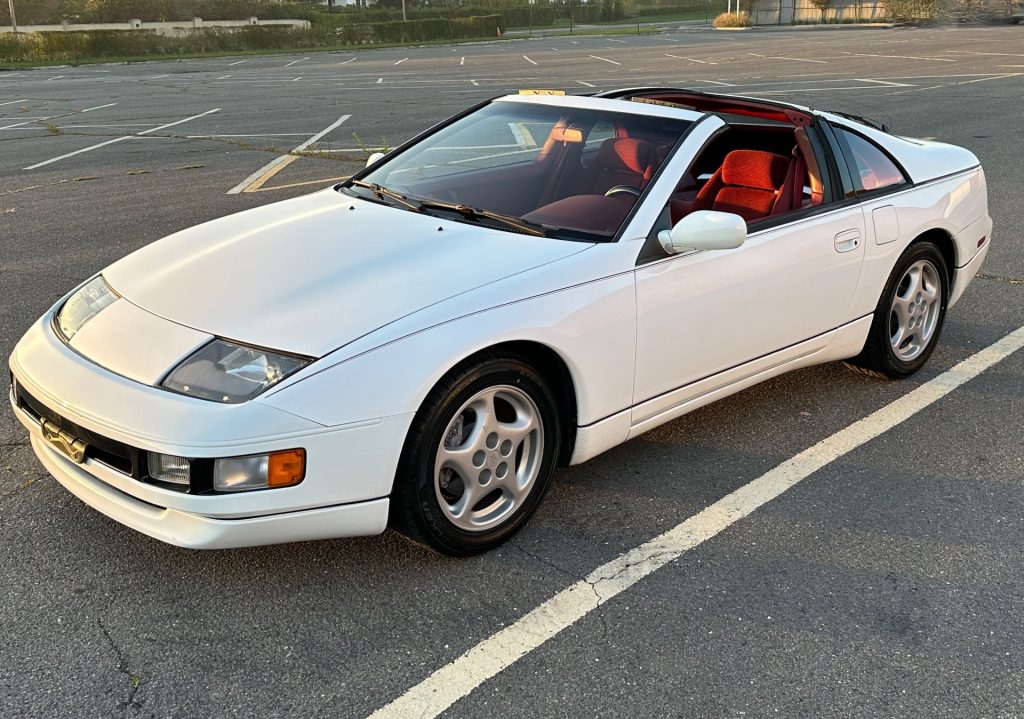
The car’s design was successful enough to win important recognition in America. Nissan’s corporate history records the 300ZX Turbo winning Motor Trend’s 1990 Import Car of the Year award, while the company’s heritage records show the Z32’s launch and technical specifications.
What makes the Z32 particularly interesting today is the absence of exaggerated retro styling. It does not look modern because designers deliberately copied today’s cars. It looks modern because Nissan’s designers created a smooth, aerodynamic sports-car shape that has remained understandable for more than three decades.
The Z32 is also a reminder that the 1990s were not merely an era of boxy sedans and conservative family cars. Some manufacturers were already experimenting with shapes that would become commonplace much later.