
Car safety did not improve because of one invention. It advanced through a long chain of breakthroughs that changed how vehicles prevent crashes, absorb energy, and protect people when collisions occur.
Some technologies became mandatory after years of research, while others were pushed forward by independent crash testing and consumer demand. NHTSA says seat belts alone saved 329,715 lives in the United States from 1960 through 2012, more than any other vehicle technology.
More recently, IIHS estimates its crash-testing program contributed to 48,352 lives being saved from 1999 through 2024. The following technologies are ranked by their historical impact on American road safety.
1. Three-Point Seat Belts
No safety feature has a stronger historical claim to the top position than the three-point seat belt. Unlike the older lap-only belt, the three-point design restrains the upper body as well as the pelvis, helping prevent occupants from striking the steering wheel, dashboard, windshield, or other parts of the cabin during a crash.
NHTSA describes the seat belt as the single most effective safety technology in automobile history. Its research found that seat belts saved 329,715 lives in the United States between 1960 and 2012, more than all other vehicle technologies included in that study combined.
The importance of the belt goes beyond simply keeping someone inside the vehicle. A properly positioned belt distributes crash forces across stronger areas of the body and works together with airbags, pretensioners, and load limiters.
IIHS research says lap and shoulder belts reduce the risk of fatal injury by 45 percent for occupants in passenger cars and by 60 percent for occupants of SUVs, vans, and pickups.
The technology also transformed vehicle design. Modern restraint systems tighten the belt when sensors detect a serious crash, reducing slack before the occupant moves forward. Today, three-point belts are standard equipment in new vehicles sold in the United States.
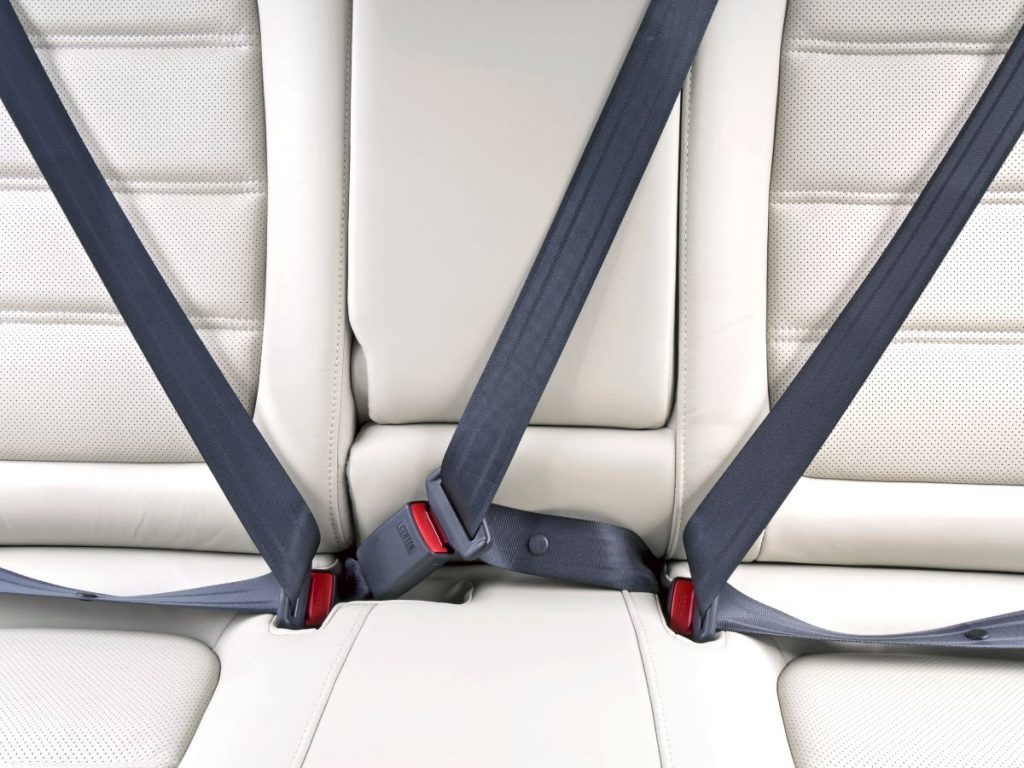
Yet the technology only works when occupants use it. In 2025, observed front-seat belt use reached 92 percent for drivers and 90 percent for right-front passengers in the United States. Rear-seat use was considerably lower at 84 percent.
That combination of enormous historical impact, low complexity, and continued effectiveness makes the three-point seat belt the most important safety feature in automotive history.
2. Airbags
Airbags transformed what happens inside a vehicle after a collision has already begun. Seat belts restrain occupants, but airbags provide another layer of protection by cushioning the body and reducing contact with hard interior structures.
Their development was complicated because an airbag has to inflate extremely quickly while avoiding excessive forces that could themselves cause injuries.
NHTSA says frontal airbags were widely adopted by 1987 and have since saved more than 50,000 lives in the United States. The technology subsequently expanded far beyond the driver’s steering-wheel airbag and front-passenger dashboard unit.
Modern vehicles can use side airbags, curtain airbags, knee airbags, and other supplemental restraint systems designed around specific collision directions.
Federal requirements accelerated the technology’s spread. NHTSA’s historical record shows that dual frontal airbags became required in passenger cars beginning with the 1999 model year. That meant the technology moved from being an expensive option or premium feature into standard equipment across the American new-car market.
The combination of airbags and belts is particularly important. An airbag is not intended to replace a seat belt. The belt helps position the occupant correctly while the airbag provides additional cushioning and protection during the crash sequence.
Airbags also illustrate how safety technology has become more sophisticated. Early systems were relatively simple, while modern restraints use crash sensors, occupant information, and sophisticated deployment strategies to adjust how protection is delivered.
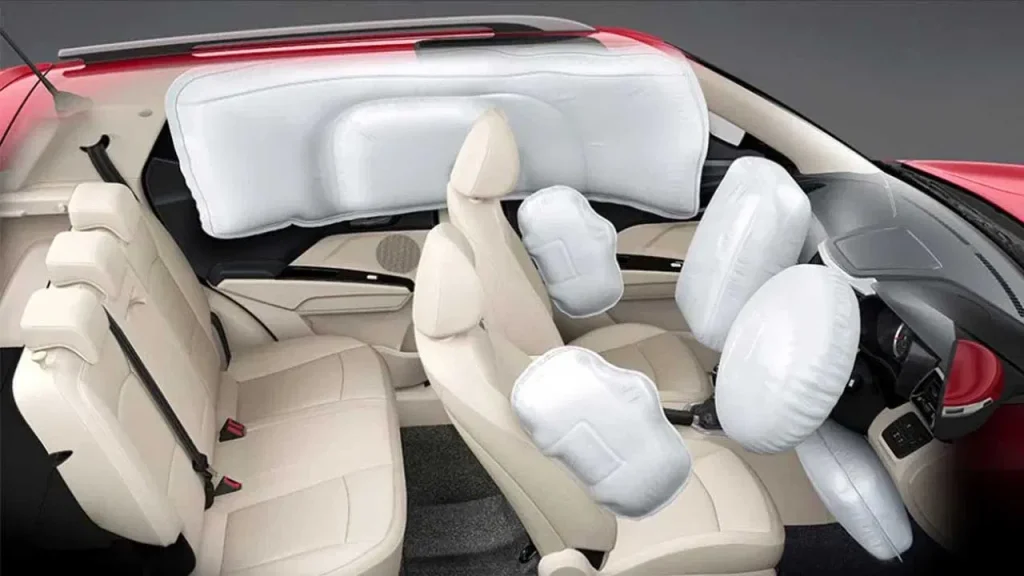
IIHS research has found frontal airbags reduce driver fatality risk in relevant frontal and front-angle crashes, although the effectiveness depends on the circumstances and the presence of proper belt use.
For turning violent deceleration into a more controlled interaction between the occupant and vehicle, airbags rank just behind seat belts.
3. Electronic Stability Control
Electronic stability control marked a major shift in vehicle safety because it addressed something seat belts and airbags could not. Instead of only protecting occupants after a collision, the system was designed to help prevent the crash from occurring in the first place.
The system monitors factors such as steering input, vehicle movement, and wheel behavior. If the computer detects that the vehicle is beginning to deviate from the driver’s intended path, it can automatically apply individual brakes and reduce engine power to help restore control.
That makes ESC particularly valuable during sudden maneuvers, slippery conditions, and situations in which a driver begins to lose directional control.
NHTSA required electronic stability control on new passenger cars, multipurpose passenger vehicles, trucks, and buses with a gross vehicle weight rating of 10,000 pounds or less beginning with the 2009 model year, with full compliance required by September 1, 2011.
The technology is especially significant because it can intervene before a collision. A seat belt or airbag becomes useful after the vehicle has already experienced a crash sequence. ESC attempts to keep the vehicle from reaching that point.
NHTSA places ESC among the major safety developments of the modern automotive era, alongside seat belts, airbags, and other electronic systems.
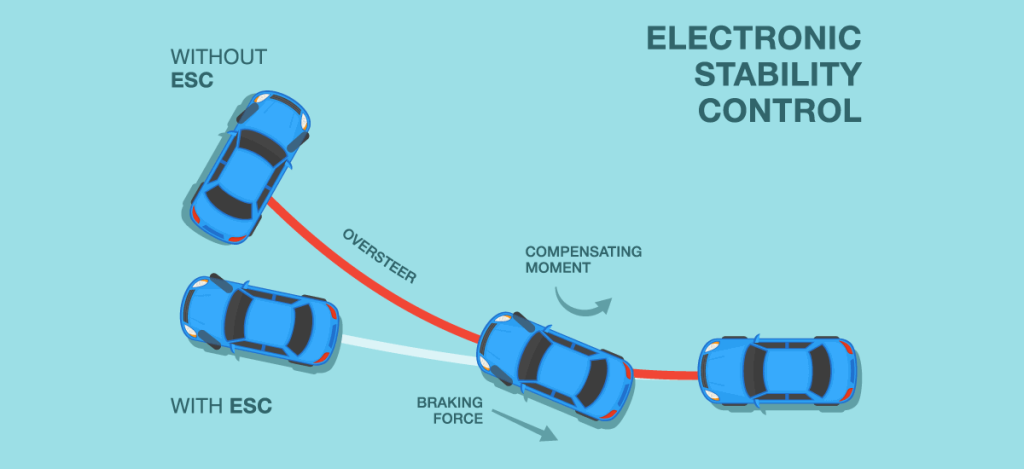
The importance of stability control is also connected to vehicle rollover risk. SUVs and other tall vehicles can experience significant changes in body motion during emergency maneuvers. Maintaining directional control can help prevent situations from developing into loss-of-control events.
ESC is now so widespread that many drivers barely notice it working. That is precisely what makes it powerful. Instead of being something occupants consciously operate, it functions in the background and intervenes within fractions of a second when necessary.
Its ability to prevent certain crashes rather than merely reduce injuries makes electronic stability control one of the most consequential developments in modern vehicle safety.
4. Crumple Zones and Crashworthy Vehicle Structures
A modern vehicle is designed to deform in a crash deliberately. That idea may seem counterintuitive because consumers naturally associate strength with safety, but a completely rigid passenger compartment would not necessarily provide the best protection.
The vehicle needs controlled areas that absorb crash energy while preserving the space occupied by the people inside.
This concept led to the widespread development of crumple zones and stronger occupant compartments. During a severe collision, front and rear structures can deform progressively, converting some of the vehicle’s kinetic energy into structural deformation rather than allowing all of it to be transmitted directly to occupants.
The technology became increasingly sophisticated as engineers learned more about crash dynamics. Instead of simply making every part of a car stronger, manufacturers began designing different structural areas to behave differently. Some sections absorb energy, while the passenger compartment is engineered to resist intrusion.
Crash testing played a major role in accelerating these improvements. IIHS began its crashworthiness testing program in 1995, and its latest research estimates that improvements made in response to its front, side, and roof-strength tests saved 48,352 lives between 1999 and 2024.
The importance of structural engineering is especially clear because occupants can suffer severe injuries when the passenger compartment collapses or when the vehicle allows excessive intrusion into the seating area.
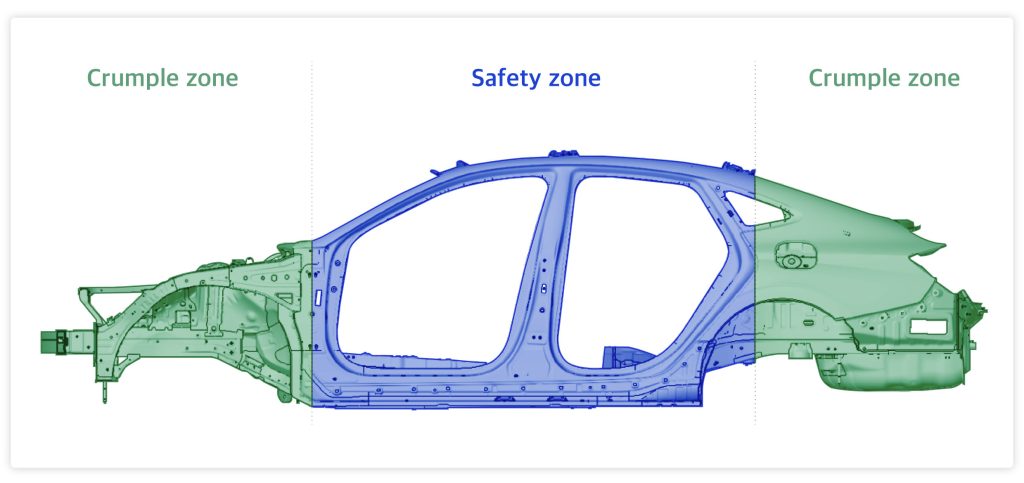
Modern crash structures reflect a major departure from the older belief that safety depended primarily on making vehicles heavy and rigid. Today’s designs take a more controlled approach by absorbing energy, directing crash forces, and preserving a protective space around the occupants.
That engineering philosophy has become fundamental to every modern passenger vehicle and is one of the reasons today’s vehicles perform dramatically better in serious crashes than many vehicles built decades ago.
5. Side-Impact Protection
Frontal crashes historically received enormous attention, but side collisions present a different challenge. There is considerably less material between an occupant and the striking vehicle or object. A side-impact crash can therefore bring the collision force close to the passenger compartment within a very short distance.
This led manufacturers and regulators to improve side-impact structures, stronger door beams, reinforced pillars, and side airbags. Curtain airbags also became an important part of the strategy because they can provide protection for occupants’ heads during side crashes and certain rollover events.
The scale of the problem remains significant. According to IIHS’s analysis of 2024 U.S. fatality data, side impacts accounted for 22 percent of passenger-vehicle occupant deaths, making them the second-largest major impact category after frontal crashes.
Federal requirements have also become more demanding. NHTSA’s historical record shows that the agency upgraded side-impact crash-protection requirements for vehicles beginning with the 2010 model year.
Independent testing pushed manufacturers even further. IIHS introduced increasingly demanding side-impact evaluations designed to reflect the characteristics of crashes involving larger vehicles and greater impact energy. Manufacturers have consequently strengthened pillars, doors, and other structures while expanding the use of side and curtain airbags.
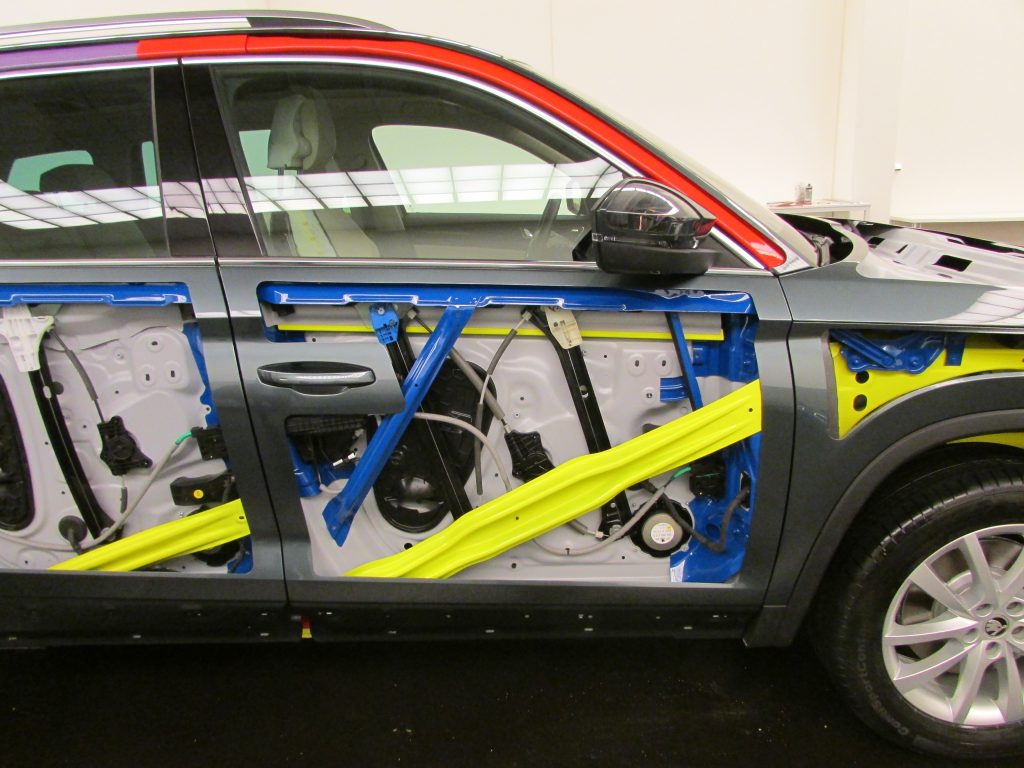
Side protection is particularly important in the United States because the vehicle fleet includes large pickups and SUVs that can have substantial differences in height and mass compared with passenger cars.
The modern side-impact protection system is therefore not one component. It is a coordinated package involving vehicle structure, airbags, seats, restraints and increasingly electronic crash-prevention technology.
Its historical importance comes from addressing a crash direction that cannot be protected with frontal-crash engineering alone.
6. Anti-Lock Braking Systems
Anti-lock braking systems, commonly called ABS, helped transform the driver’s relationship with emergency braking. Before ABS became widespread, locking the wheels during hard braking could cause the driver to lose steering control while the vehicle slid forward.
ABS works by monitoring wheel rotation and rapidly adjusting brake pressure when a wheel approaches lockup. The system can repeat this process many times per second, allowing the tires to continue rotating while the vehicle decelerates.
That distinction is important. Braking and steering are not separate problems during an emergency. A driver may need to slow down while simultaneously steering around another vehicle, pedestrian or obstacle. A locked tire has limited ability to generate useful lateral force, whereas a rotating tire can continue contributing to steering control.
ABS eventually became a foundation for several other safety technologies. Electronic stability control uses wheel-speed information and braking control, while traction-control systems also rely on similar electronic monitoring and intervention.
NHTSA places anti-lock brakes among the important safety technologies developed during the earlier era of modern automotive safety. Its historical safety timeline identifies the period from 1950 to 2000 as the era in which technologies such as seat belts, cruise control and anti-lock brakes became established.
ABS does not guarantee a shorter stopping distance in every road condition. Its major advantage is helping the driver maintain control during hard braking, especially when avoiding an obstacle.
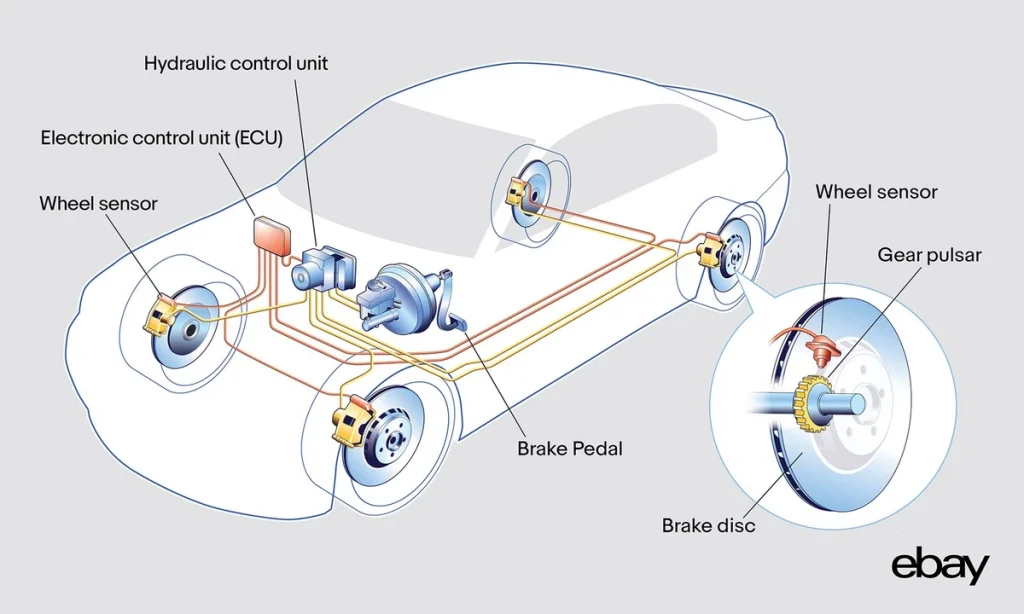
That makes it fundamentally different from a passive restraint. A seat belt protects an occupant when a collision occurs. ABS can help the driver maintain enough control to avoid the collision altogether.
Its influence also paved the way for the electronic integration that defines modern vehicle safety systems.
7. Child Restraint Systems and LATCH
Protecting children required more than simply shrinking adult safety equipment. Children have different body proportions, different seating requirements, and different injury risks. That led to the development of dedicated child restraints and standardized attachment systems.
Modern child seats can use a combination of seat belts and dedicated lower anchors and top tethers. In the United States, the LATCH system helped simplify the process of attaching compatible child restraints by providing standardized hardware in vehicles and corresponding connectors on child seats.
The importance of proper restraint is enormous because an adult seat belt is not necessarily positioned correctly on a small child. If the belt crosses the neck or abdomen instead of the appropriate areas of the body, its effectiveness can be compromised.
Child restraints therefore represent a different philosophy from many other safety technologies. The vehicle itself cannot simply be engineered to accommodate every occupant size equally. The restraint system has to adapt the vehicle’s protective environment to the passenger.
Modern child safety also depends heavily on correct installation. A sophisticated child seat cannot provide its intended protection if it is improperly secured or used for a child outside its specified size or weight range.
This technology has also encouraged manufacturers to design rear seating areas around child restraint compatibility, attachment points, and access.
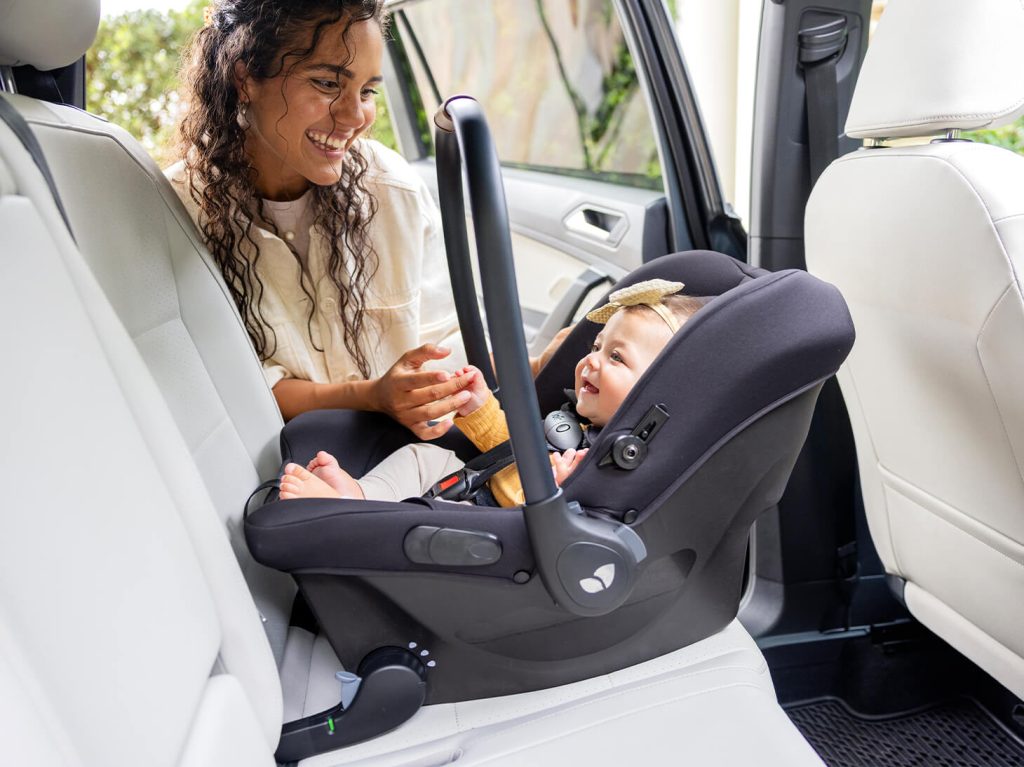
Its place near the top of automotive safety history comes from addressing one of the most vulnerable groups inside a vehicle. A safety system that protects an adult effectively may not provide the same protection to a young child, making dedicated restraint technology essential rather than optional.
The result is a safety system that combines vehicle engineering, standardized attachment hardware, and age-appropriate restraint design.
8. Rearview Cameras
The rearview camera addressed a long-standing limitation in vehicle design by giving drivers a clearer view of the area directly behind the vehicle.
Large SUVs, pickups and vans can have substantial blind areas behind them. A child, pedestrian, bicycle, or other object can be difficult or impossible to see through conventional mirrors alone.
NHTSA finalized a rule requiring rear visibility technology in new light vehicles, with compliance required for vehicles manufactured beginning May 1, 2018. The agency’s historical safety record identifies the technology as a response to backover crashes and notes that modern systems provide a wider field of view behind the vehicle.
The technology is particularly important because it addresses a problem that is difficult to solve through driver attention alone. Even a careful driver cannot see an object that sits outside the vehicle’s available mirror and window views.
Modern systems have gone beyond a basic camera image. Many vehicles combine the rear camera with dynamic guidelines, multiple camera views, parking sensors, and rear cross-traffic alerts. Some systems provide a nearly panoramic representation of the area around the vehicle.
Still, a camera is an aid rather than a substitute for checking the surroundings. Drivers need to understand that cameras have limitations, including dirt, weather, darkness, and areas outside the camera’s field of view.
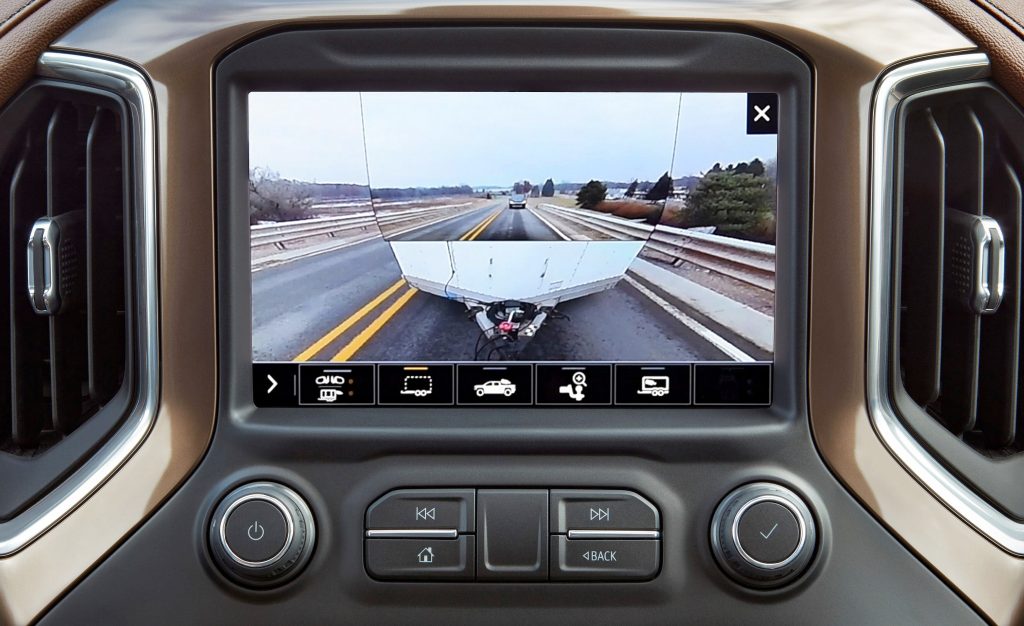
Its historical significance comes from making an invisible area visible. Unlike airbags or structural reinforcement, the rearview camera does not protect occupants during a collision. Instead, it tries to prevent a particularly tragic category of crash before impact occurs.
That shift from protecting people after a crash to helping drivers avoid the crash became increasingly important as vehicles grew larger and more complex.
9. Automatic Emergency Braking
Automatic emergency braking represents one of the biggest changes in the history of vehicle safety because it gives the vehicle the ability to intervene when the driver fails to react in time.
The basic concept is straightforward. Sensors monitor the road ahead and identify situations in which a collision with another vehicle, pedestrian, or other road user may be imminent. Depending on the system, the vehicle can warn the driver and automatically apply the brakes if the driver does not respond.
NHTSA places automatic emergency braking among the major advanced safety technologies that emerged during the 2010 to 2016 period, alongside pedestrian emergency braking, rear automatic braking, rear cross-traffic alert and lane-centering systems.
Its importance is connected to human reaction time. A driver may be distracted, look away for a moment, or fail to recognize how quickly another vehicle is slowing. Electronic systems can continuously monitor the road without the same visual limitations.
Modern AEB has also become more sophisticated. Systems can recognize pedestrians and cyclists in addition to vehicles, although performance varies significantly among vehicles and operating conditions.
The technology is not perfect. Weather, visibility, road geometry, sensor limitations, and unusual objects can affect performance. Drivers remain responsible for operating the vehicle.
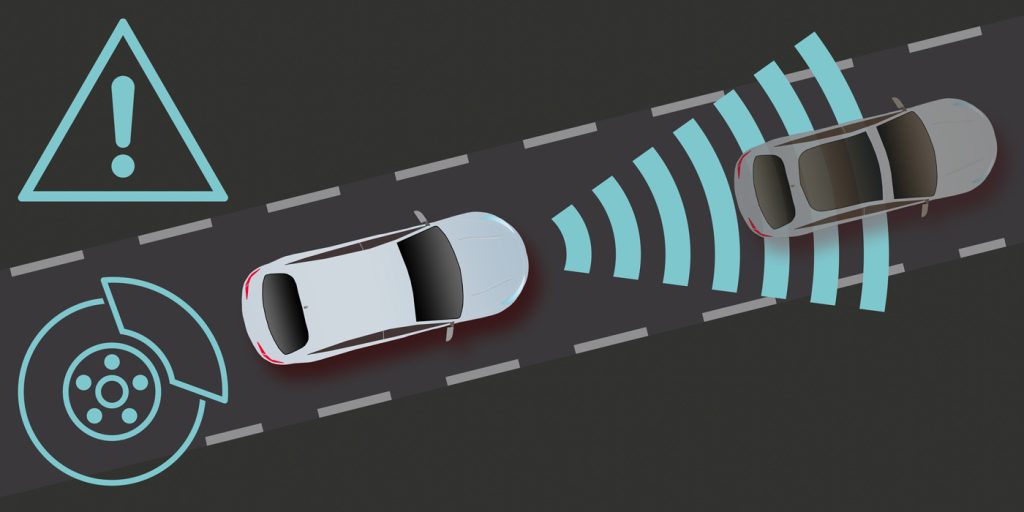
Even with those limitations, AEB represents a fundamental change in vehicle safety philosophy. Earlier systems primarily protected people once a collision became unavoidable. AEB attempts to interrupt the crash sequence before impact.
That preventive capability is why automatic emergency braking has become one of the defining safety technologies of the modern automobile.
10. Blind-Spot Monitoring and Rear Cross-Traffic Alert
Blind-spot monitoring and rear cross-traffic alert complete this list because they address two areas that are difficult for drivers to monitor continuously.
Blind-spot monitoring uses sensors or cameras to identify vehicles traveling alongside or behind the vehicle in areas that may not be visible through conventional mirrors. The system can provide a visual warning, often in or near the side mirror, when another vehicle occupies the adjacent lane.
Rear cross-traffic alert addresses a different situation. When a driver reverses out of a parking space or driveway, another vehicle may approach from the side outside the driver’s direct field of vision. The system can detect approaching traffic and issue a warning.
NHTSA identifies blind-spot warning as a technology developed to address crashes in which drivers failed to see vehicles next to them. The agency notes that the system can use cameras or sensors to monitor adjacent areas.
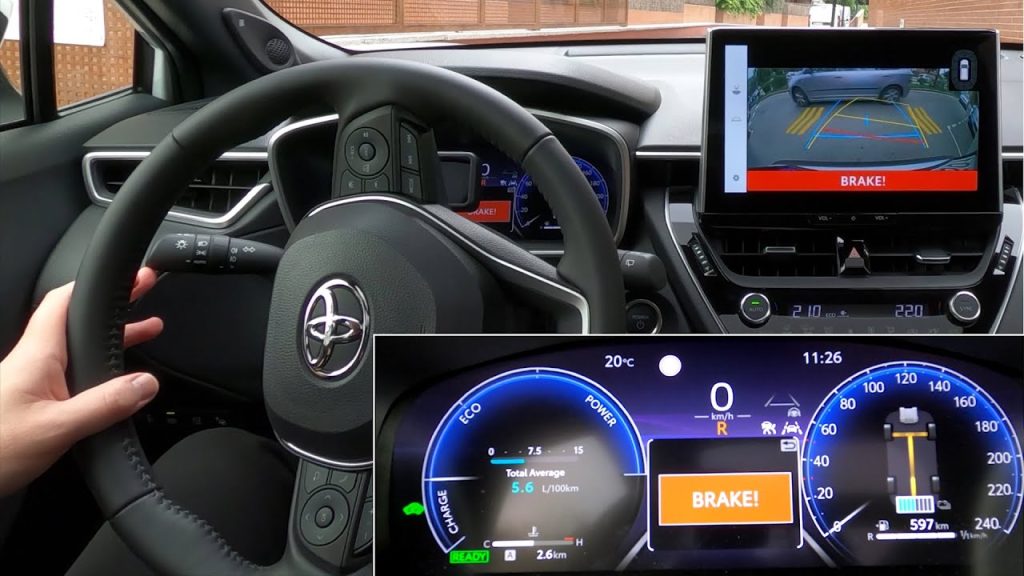
These systems became increasingly valuable as vehicles grew wider and taller. Large SUVs and pickups can create substantial blind areas, while modern vehicle designs can restrict rearward visibility through bodywork, headrests, and thick structural pillars.
Unlike AEB, these systems generally function as driver aids rather than taking complete control of the vehicle. They are intended to make the driver aware of a potential hazard that might otherwise remain unnoticed.
Their historical importance lies in expanding the driver’s awareness beyond what human vision and conventional mirrors can provide.