
Buying an affordable new car does not mean buyers have to compromise on crash protection. NHTSA’s 5-Star Safety Ratings program evaluates vehicles in frontal, side, and rollover tests, then assigns a star rating based on the potential risk of injury to occupants.
A five-star result is the agency’s highest rating. For this list, the ranking uses 2025 U.S.-market vehicles with a verified five-star NHTSA rating, ranked by their base MSRP before destination, taxes, registration, and options.
This avoids confusing vehicles merely selected for testing with vehicles that actually received five stars. NHTSA’s database confirms that ratings are specific to model year and tested configuration.
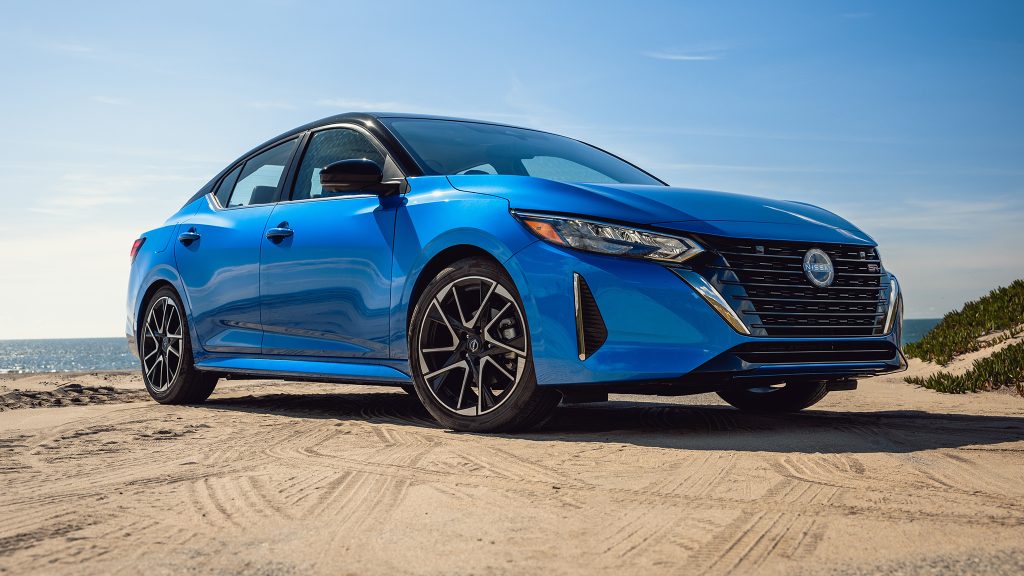
1. Nissan Sentra
The Nissan Sentra takes the top spot because its $21,590 starting MSRP made it the least expensive car in this group, while its 2025 U.S. specification earned a five-star NHTSA safety rating.
Nissan itself confirms the five-star result, while NHTSA data shows the tested front-wheel-drive sedan received four stars for frontal crash protection, five for side protection and five for rollover resistance.
That combination gives the Sentra a particularly strong value proposition. The car does not require buyers to move into a more expensive crossover to obtain a five-star government safety result. It remains a traditional compact sedan with a five-passenger cabin and a conventional gasoline powertrain.
The 2025 Sentra S uses a 2.0-liter four-cylinder producing 149 horsepower and 146 lb-ft of torque. Nissan pairs it with a continuously variable transmission, while fuel economy reaches 30 mpg in the city and 40 mpg on the highway for the S and SV versions.
Nissan also made its Safety Shield 360 suite standard across the range, adding technologies such as automatic emergency braking with pedestrian detection, blind-spot warning, and rear cross-traffic alert.
The starting price excludes Nissan’s $1,245 destination and handling charge, so buyers should not confuse the $21,590 figure with the final amount paid at the dealership. Even so, the base MSRP places the Sentra firmly among the most accessible new vehicles carrying a verified five-star NHTSA rating.
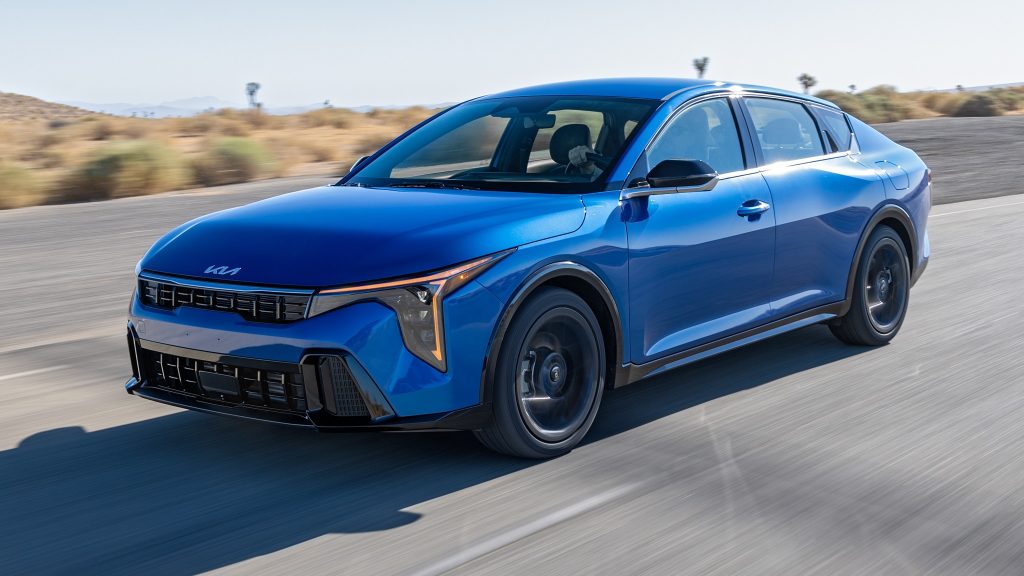
2. Kia K4
Kia’s K4 arrives just behind the Sentra, with a 2025 starting MSRP of $21,990. More importantly, the compact sedan earned a five-star NHTSA safety rating for its tested front-wheel-drive configuration. NHTSA’s recorded results give the K4 four stars in frontal crash testing, five stars for side protection, and five stars for rollover resistance.
The K4 was new to the U.S. market for 2025, replacing the Forte in Kia’s lineup. Its low price is therefore not tied to an old platform or stripped-down equipment list.
Kia gave the base LX a surprisingly substantial collection of standard driver-assistance features, including automatic emergency braking with pedestrian and cyclist detection, lane-keeping and lane-following technology, high-beam assist, and smart cruise control with stop and go.
The standard engine is a 2.0-liter four-cylinder producing 147 horsepower and 132 lb-ft of torque. It works with Kia’s intelligent variable transmission and sends power to the front wheels. The K4 also provides a relatively generous interior for the compact class, with Kia highlighting its rear-seat legroom as a major advantage.
Kia’s original pricing announcement lists the LX at $21,990 before a $1,155 destination charge. That makes the car slightly more expensive than the Sentra at the sticker-price level, but it remains below $22,000 before destination.
For buyers comparing inexpensive sedans, the K4’s five-star result is particularly significant because its entry price remains close to the absolute bottom of the new-car market.
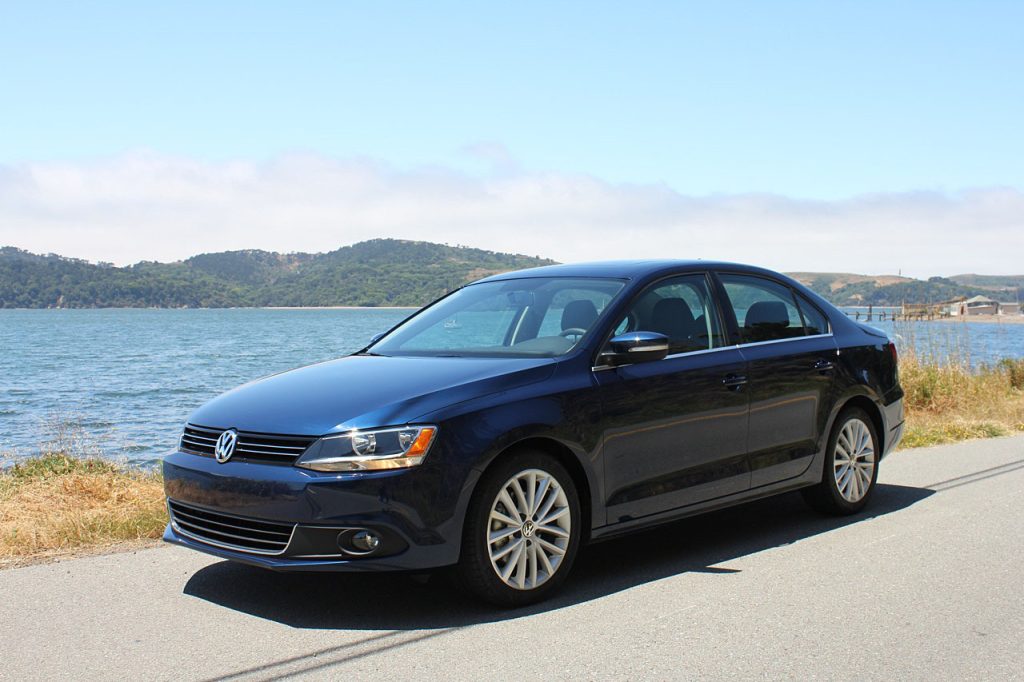
3. Volkswagen Jetta
The Volkswagen Jetta occupies the third position with a 2025 starting MSRP of $21,995. That makes it only $5 more expensive than the K4’s base price, while its tested 2025 configurations received five stars from NHTSA.
The standard Jetta and Jetta GLI both received five stars for the vehicle rating in the available NHTSA data, although their individual frontal, side, and rollover scores were not identical across categories.
The Jetta’s appeal is different from that of the Sentra or K4. Volkswagen has traditionally positioned the sedan around a more European driving character, and the 2025 update brought revisions to the cabin, exterior styling, powertrain, and driver-assistance equipment.
The base car uses a turbocharged 1.5-liter four-cylinder engine producing 158 horsepower and 184 lb-ft of torque.
Volkswagen’s pricing also makes the Jetta unusually competitive. Its $21,995 MSRP excludes destination, with 2025 pricing information listing a $1,225 destination charge. The standard Jetta lineup continued with several trims above the base S, but the entry model is the one relevant to this affordability ranking.
The five-star result is not simply an assumption based on the Jetta’s reputation. NHTSA-derived data lists the 2025 Jetta as five stars with four stars for frontal crash protection, five for side protection, and four for rollover resistance.
That distinction is worth mentioning because a five-star vehicle does not have to earn five stars in every individual testing category.
With a starting price just below $22,000, the Jetta offers another route into a new compact sedan with a verified five-star government safety rating.
4. Hyundai Elantra
The Hyundai Elantra costs $22,025 in its least expensive 2025 SE configuration, putting it only $35 above the Jetta. Its price is attractive by itself, but the stronger reason for its inclusion is its verified five-star NHTSA safety rating.
The tested gasoline Elantra received four stars for frontal crash protection, five stars for side protection, and five stars for rollover resistance.
The Elantra’s safety result also applies to its hybrid configuration, which earned the same five-star vehicle rating in NHTSA’s data.
The high-performance Elantra N, however, should not be treated as having the same complete rating because NHTSA did not rate that variant in the same way. That model-year-specific distinction is important when presenting the safety result accurately.
For this ranking, the base gasoline SE is the relevant vehicle. It uses a naturally aspirated 2.0-liter four-cylinder engine making 147 horsepower and 132 lb-ft of torque, paired with a continuously variable transmission and front-wheel drive.
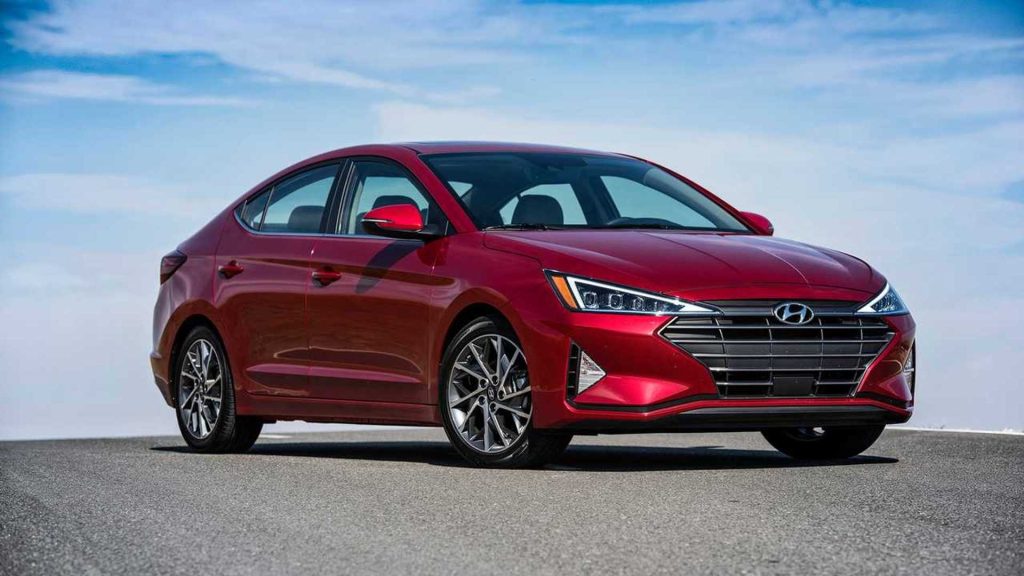
Hyundai’s compact sedan also provides a useful alternative to buyers who want a modern interior and extensive standard driver-assistance technology without paying for a higher trim. Its $22,025 MSRP excludes the $1,195 destination charge, meaning the actual window-sticker figure is higher, but the same pricing convention applies to the other vehicles ranked here.
The Elantra’s position shows how closely manufacturers compete in this part of the market. The difference between the first four cars is only $435 in base MSRP, yet all four provide a five-star NHTSA result for their relevant tested configurations.
5. Toyota Corolla
The Toyota Corolla is fifth on the price list, starting at $22,325 for the 2025 LE. Toyota’s compact sedan also has one of the broadest five-star records in this group.
NHTSA data shows five stars for the tested Corolla sedan, hatchback, and hybrid configurations, with the gasoline sedan receiving five stars for frontal crash protection, five for side protection, and four for rollover resistance.
That gives the Corolla an interesting position. It costs more than the Sentra, K4, Jetta, and Elantra, but the difference remains modest.
The base LE was priced at $22,325 before applicable destination charges, making it one of the least expensive ways to buy a Toyota with a documented five-star NHTSA rating. Toyota’s U.S. pricing data confirms the LE’s $22,325 base MSRP.
Under the hood, the Corolla LE uses a 2.0-liter four-cylinder producing 169 horsepower and 151 lb-ft of torque. Power is sent to the front wheels through a continuously variable transmission. Its compact dimensions and relatively strong fuel economy also make it well suited to buyers who want lower day-to-day operating costs rather than a larger SUV.
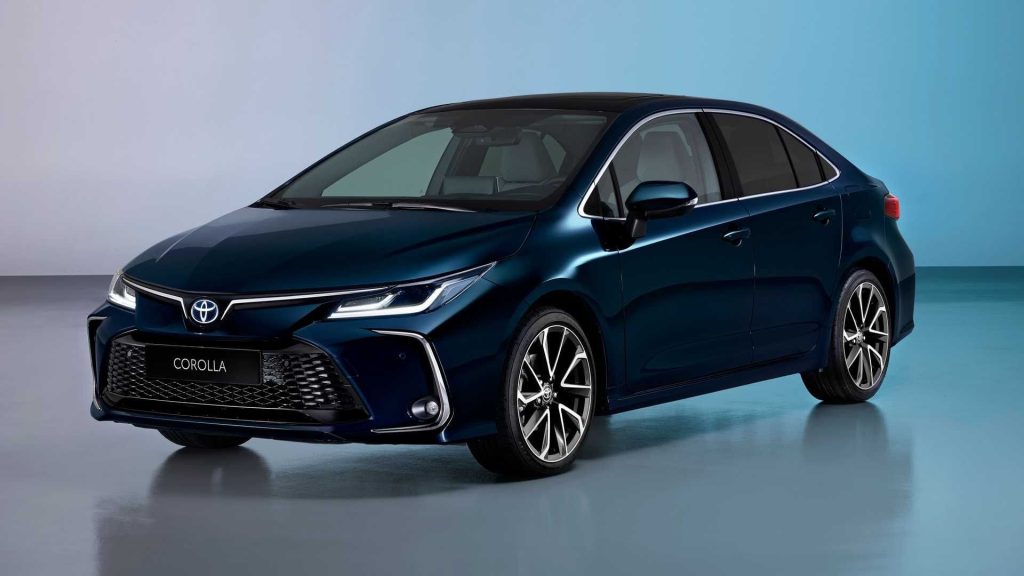
The Corolla’s safety credentials are not based on a single crash category. NHTSA’s five-star system combines results from frontal and side crash testing with rollover resistance when calculating the vehicle score.
The agency also warns that frontal and vehicle-level scores are most appropriately compared with vehicles in the same class and within the relevant weight range.
For a buyer shopping around $22,000, the Corolla therefore offers a particularly familiar name, strong resale-market recognition, and a verified five-star government crash-test result.
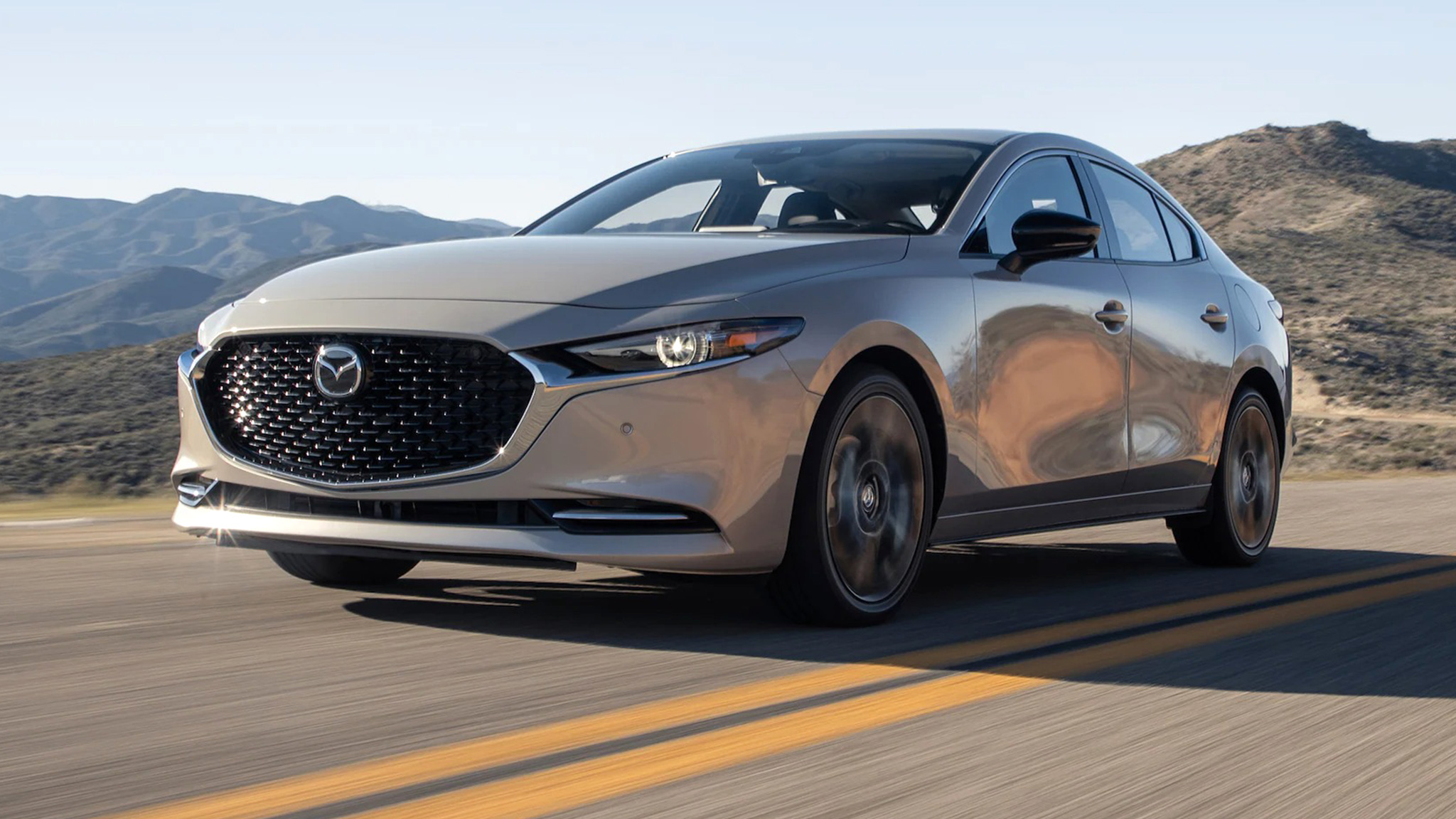
6. Mazda3
The Mazda3 moves this list into a slightly more expensive part of the compact-car market, with the 2025 sedan starting at $24,150. That additional money brings a more premium-oriented interior and driving character, but the important statistic for this article is its five-star NHTSA safety rating.
NHTSA-derived data shows five stars for the tested Mazda3 sedan and hatchback configurations, including both front-wheel-drive and all-wheel-drive versions.
The Mazda3 also stands out because its five-star result was exceptionally consistent across the tested configurations. The sedan and hatchback variants listed in the NHTSA data all received five stars for frontal crash, side crash, and rollover testing. That gives the model one of the strongest rating profiles among the cars in this group.
The least expensive 2025 Mazda3 uses a naturally aspirated 2.5-liter four-cylinder engine. Mazda’s 2.5 S powertrain produces 191 horsepower and 186 lb-ft of torque, giving it noticeably more output than the entry-level engines in several cheaper cars on this list.
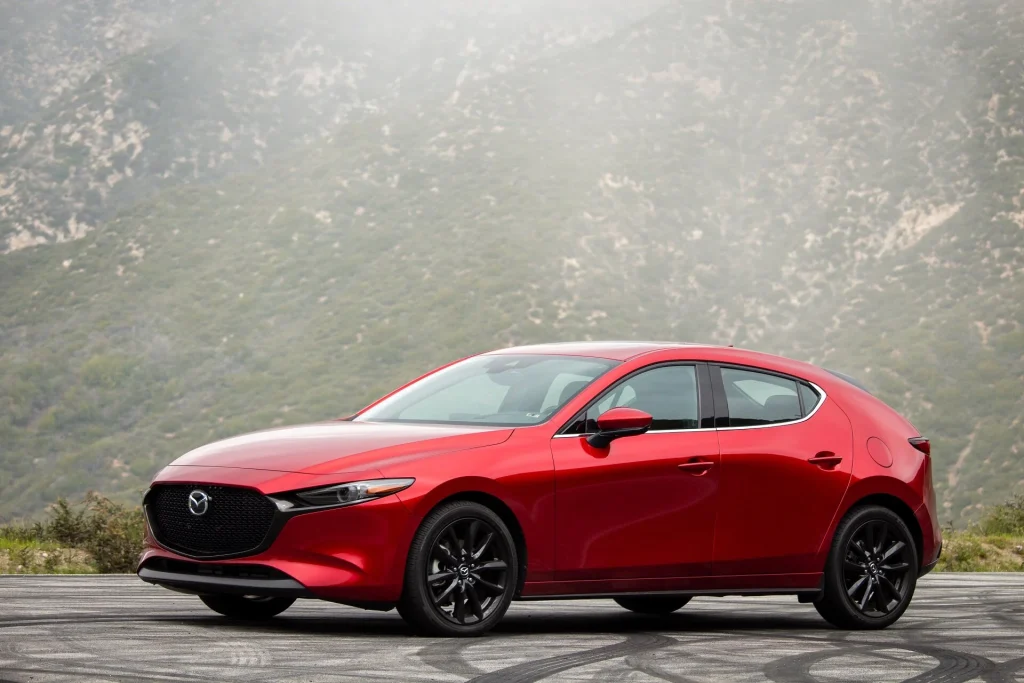
Mazda’s U.S. pricing information lists the sedan at $24,150, with the hatchback starting at a higher price. The sedan can also be equipped with all-wheel drive as the lineup moves upward, although those versions naturally cost more.
The Mazda3 is consequently not the cheapest car here, but it may be one of the more compelling choices for someone willing to spend a couple thousand dollars beyond the least expensive entries. It combines a five-star government safety rating with stronger performance and a more upscale cabin than its price might suggest.
7. Honda Civic
The Honda Civic enters at $24,250 for the 2025 LX sedan, placing it just $100 above the Mazda3’s base MSRP. Its five-star NHTSA rating makes the Civic particularly attractive because the result applies across several tested configurations.
NHTSA-derived data lists five stars for the sedan, sedan hybrid, hatchback and hatchback hybrid, while the Civic Si also received five stars. The Type R did not receive a complete vehicle rating in the same dataset.
The standard Civic sedan is powered by a 2.0-liter four-cylinder producing 150 horsepower and 133 lb-ft of torque. It uses front-wheel drive and a continuously variable transmission in the base LX.
Buyers who want greater efficiency can move to the hybrid models, while the performance-focused Si and Type R sit considerably higher in price.
The Civic’s NHTSA results are worth examining rather than simply quoting the five-star headline. The tested 2025 configurations received four stars for frontal crash protection, five stars for side protection and five stars for rollover resistance. The combined result still reaches five stars under NHTSA’s scoring system.
Honda’s compact sedan offers another advantage for value-conscious buyers. Its long-standing reputation and widespread availability make it relatively easy to find examples at dealerships, giving shoppers more opportunities to compare different vehicles and configurations.
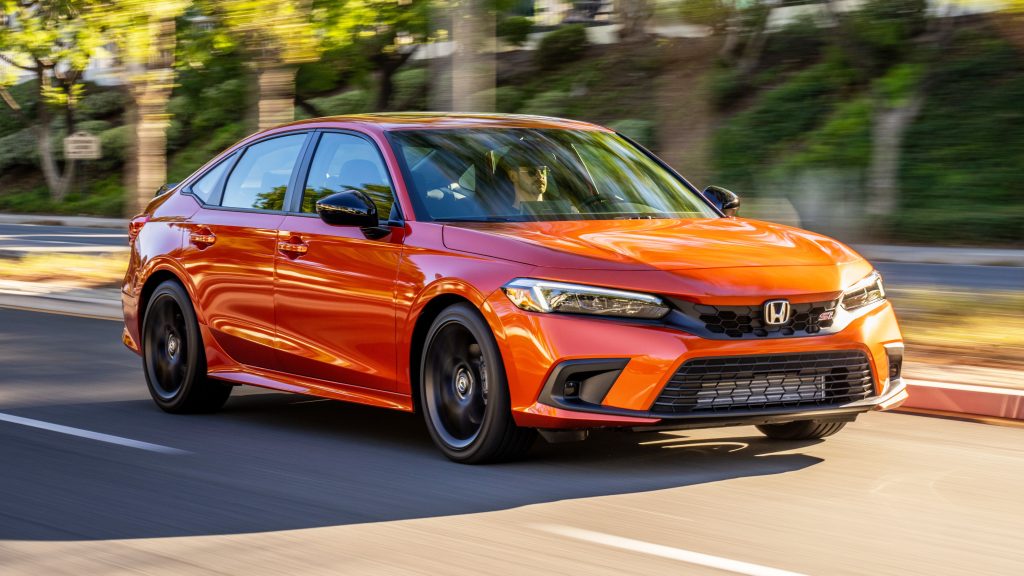
The $24,250 figure represents the base MSRP before destination, taxes and other charges, so it should be treated as the starting point rather than a guaranteed transaction price.
For someone willing to move beyond the $22,000 range, the Civic brings a five-star safety rating together with a mature compact-car platform and a wide range of configurations.
8. Subaru Impreza
The Subaru Impreza rounds out the list at a 2025 starting MSRP of $24,360. It is the most expensive car included here, but its standard all-wheel-drive system gives it a distinctive advantage that most of the less expensive front-wheel-drive sedans cannot match.
Subaru confirms that every 2025 Impreza comes with Symmetrical All-Wheel Drive and EyeSight driver-assistance technology.
More importantly for this ranking, the 2025 Impreza received a five-star NHTSA vehicle rating. NHTSA-derived records show the tested Impreza wagon received five stars for frontal crash protection, side protection and rollover resistance, resulting in five stars for the vehicle rating.
The base Impreza uses a naturally aspirated 2.0-liter boxer four-cylinder producing 152 horsepower and 145 lb-ft of torque.
A continuously variable transmission is standard, while the standard all-wheel-drive system gives the hatchback a different ownership proposition from the compact sedans that dominate the cheaper end of this list.
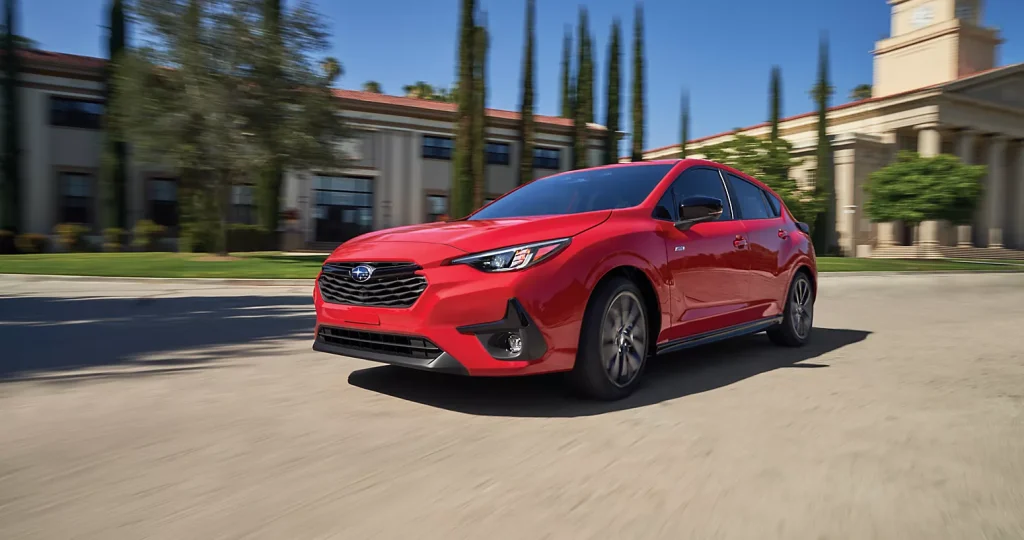
Pricing starts at $24,360 before destination charges. Subaru also offers Sport and RS versions, but the base model is the one that qualifies for this affordability comparison. The hatchback body gives the Impreza another practical advantage, with 20.4 cubic feet of cargo space behind the rear seats.
The Impreza stands out for the combination of features it brings to the table rather than simply having the lowest price. It pairs a five-star NHTSA safety rating with standard all-wheel drive and the added versatility of a hatchback body style.
