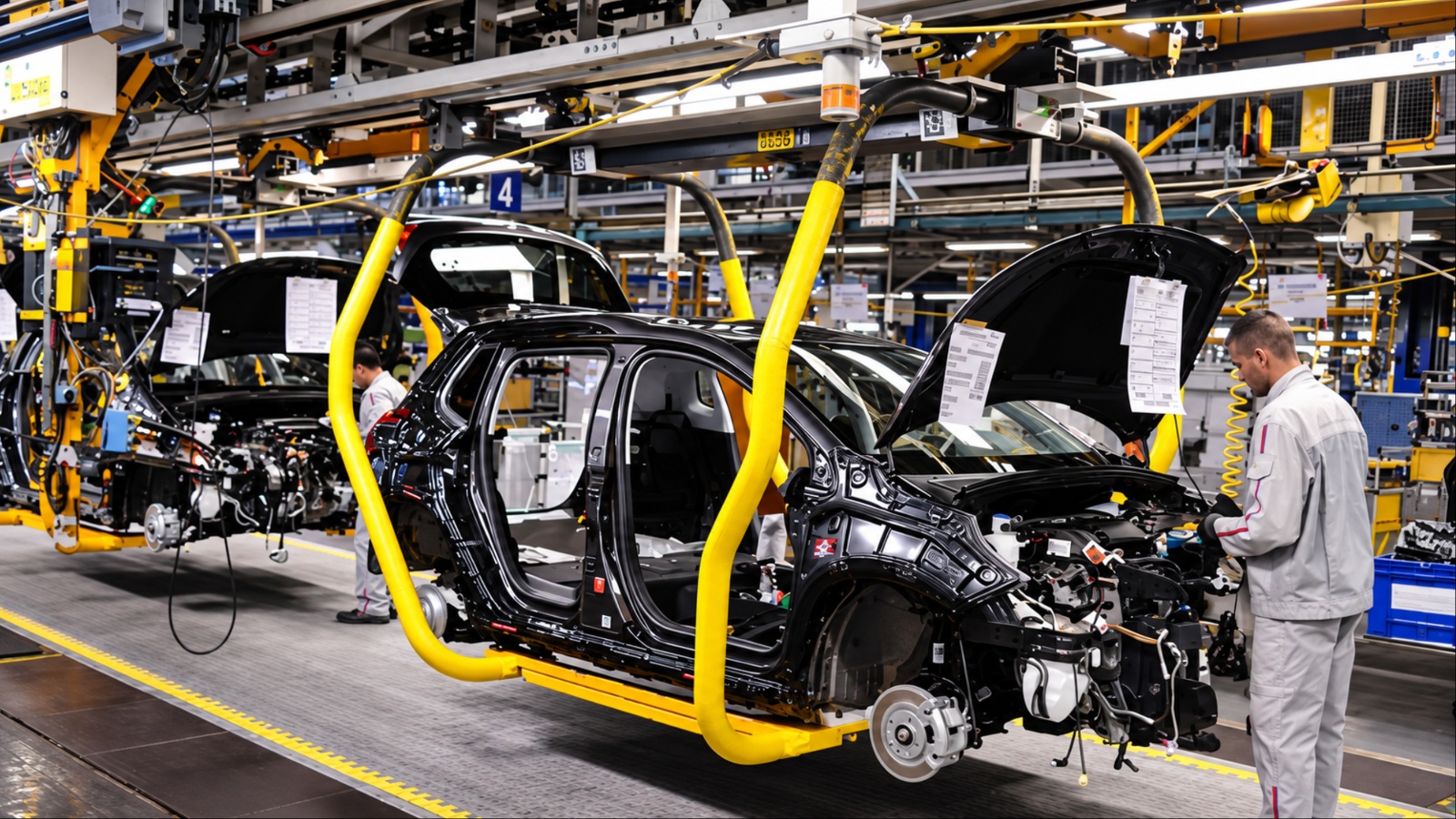
Stellantis is preparing to temporarily halt production at three French factories, with a shortage of batteries for electric vehicles contributing to the disruption. The decision highlights a new challenge for Europe’s automotive industry as manufacturers increase EV production while trying to secure enough batteries to keep factories running at planned capacity.
According to Reuters, Stellantis will pause production at its Sochaux, Rennes, and Mulhouse plants during October. Sochaux is scheduled to stop production from October 23 to October 30, while Rennes will suspend operations from October 22 to October 30.
Mulhouse is also expected to stop for part of the month, although its shutdown is linked to a separate industrial issue rather than the battery shortage.
The affected facilities are important parts of Stellantis’ French manufacturing network. Sochaux produces the Peugeot 3008 and 5008, while Rennes builds the Citroën C5 Aircross. Both vehicle lines include electrified versions, making battery availability increasingly important to production schedules.
The stoppages are temporary rather than permanent closures, but they reveal how dependent modern EV manufacturing has become on a reliable supply of high-capacity batteries.
Battery Availability Becomes a Production Problem
The battery shortage is connected to Automotive Cells Company, or ACC, the battery manufacturer jointly established by Stellantis, Mercedes-Benz, and TotalEnergies.
ACC has been increasing production in Europe, but its current output is not sufficient to provide Stellantis with all the batteries needed for certain long-range electric vehicles.
Reuters reported that battery-module production at ACC was approaching its 2025 level during September, yet Stellantis still faced shortages affecting its vehicle production plans.
This is an important distinction. The problem does not mean Europe has suddenly run out of batteries. Instead, Stellantis needs specific battery systems for specific electric vehicles, and those batteries must arrive in sufficient quantities to match assembly schedules.
Modern EV batteries are highly integrated into vehicle platforms. Their capacity, physical dimensions, chemistry, cooling systems, and electronic architecture are designed around individual vehicles. A manufacturer cannot necessarily replace a missing battery pack with another type simply because both are intended for electric vehicles.
That makes battery supply different from many conventional vehicle components. A shortage of a particular battery system can stop an assembly line even when other battery products remain available.
Stellantis has spent years preparing for this transition. Its partnership with ACC was intended to establish a European battery supply chain and reduce dependence on imported batteries. The current disruption demonstrates that local production alone does not guarantee uninterrupted supply.
Battery factories must reach high production volumes, maintain quality, and deliver packs according to precise schedules. Any problem during cell production, module assembly, or logistics can eventually reach the vehicle assembly line.
The timing is particularly interesting because demand for some electric vehicles has strengthened.
Reuters reported that higher fuel prices connected to the war in Iran have contributed to stronger interest in EVs, particularly among business customers. That means the production interruptions are occurring at a time when demand for some electric vehicles may be improving rather than collapsing.
For Stellantis, this creates an awkward situation. The company needs to respond to stronger demand while simultaneously dealing with insufficient battery availability.
Sochaux and Rennes Are Central to Stellantis’ EV Strategy
The Sochaux plant is one of Stellantis’ most important French facilities. It produces the Peugeot 3008 and 5008, two SUVs that play an important role in Peugeot’s product strategy. Both models are available with electrified powertrains, including fully electric versions.
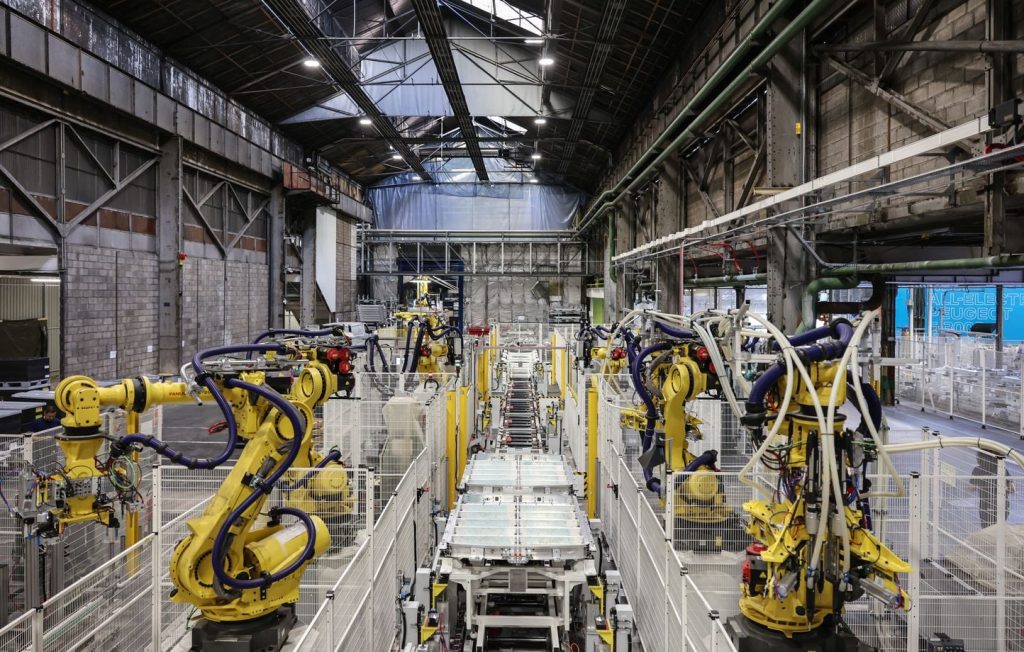
Stellantis has invested heavily in preparing Sochaux for electric vehicle production. The plant is part of the company’s wider effort to manufacture vehicles based on the STLA Medium platform, which was designed to support multiple powertrain configurations.
The Peugeot 3008 is particularly significant because it represents Peugeot’s attempt to compete in one of Europe’s most important SUV segments while offering customers a choice between different electrified powertrains.
The Peugeot 5008 extends that approach to larger family buyers. Rennes is also becoming increasingly connected to electrification.
The factory produces the Citroën C5 Aircross, another model offered with electrified powertrains. Stellantis has previously identified Rennes as an important facility within its future European production strategy.
The fact that both facilities are affected by the current situation demonstrates how battery supply has become closely connected to mainstream vehicle production.
EVs are no longer niche products built in isolated facilities. Electric versions of popular SUVs and family vehicles are increasingly produced alongside conventional and hybrid models. As a result, disruptions in battery supply can affect factories that were historically built around internal-combustion vehicles.
The impact can extend beyond Stellantis. When a major factory stops, suppliers can also be affected. Parts manufacturers, logistics companies, and other businesses depend on predictable production schedules. Temporary shutdowns can therefore create a wider ripple effect throughout the industrial network.
Stellantis remains one of France’s largest vehicle manufacturers. The company reported that it held a 28.5% share of the French passenger-car and light-commercial-vehicle market during the first eight months of 2026. Its market share for conventional hybrids was 34.4%, while conventional and plug-in hybrids combined represented a 31.8% share.
That scale makes factory utilization particularly important. Stellantis cannot afford to leave production capacity unused for extended periods, especially while the company is attempting to improve its financial performance and compete against increasingly aggressive rivals.
The current stoppages are therefore likely to be closely watched by both investors and suppliers.
Europe’s Battery Strategy Faces a Major Test
The Stellantis shutdowns also raise broader questions about Europe’s strategy for building its own EV battery industry.
European governments and automakers have invested billions of euros in domestic battery production because relying heavily on Asian suppliers was considered a strategic weakness.
Local battery factories are intended to give European automakers greater control over costs, supply, and production planning. But battery manufacturing is difficult to scale.
Building a factory is only the first step. Companies must establish stable production, secure raw materials, improve yields, and reach the volumes required to supply millions of vehicles.
ACC is still working through that process. The company is developing battery production in Europe, but Stellantis’ current shortage shows that capacity is not yet completely aligned with the automaker’s requirements.
That issue could become more important as European EV production increases. The more electric vehicles manufacturers build, the more batteries they require. A shortage that affects one model today could become a larger industrial problem if several manufacturers increase EV output simultaneously without enough battery capacity available.
Stellantis is also dealing with other production challenges. Reuters reported that its Mirafiori plant in Turin, Italy, will experience another production stoppage because of shortages of engine components and weak demand for the Fiat 500.
That situation is different from the battery shortage in France, but both demonstrate the difficulty automakers face in balancing supply and demand. The industry is undergoing several changes at once.
Manufacturers are shifting toward electric and hybrid vehicles, adjusting factory capacity, managing supply chains, and attempting to compete with Chinese automakers that have expanded rapidly across Europe.
For Stellantis, the challenge is particularly complicated because it operates numerous brands, factories, and vehicle platforms across several countries.
The company needs to ensure that investment in electrification does not create production bottlenecks. The French battery shortage is therefore an important warning.
European automakers can develop attractive electric vehicles, invest in factories, and encourage customers to switch to EVs, but those efforts can still be undermined if battery production does not grow at the same pace.
At the same time, the temporary nature of the Stellantis shutdowns is important. The company is not announcing permanent closures at Sochaux or Rennes. The plants are expected to resume production after the planned pauses.
That suggests Stellantis views the current problem as a supply and production-management issue rather than evidence that it has abandoned its electric vehicle strategy.
In fact, if demand continues strengthening, the company may need to secure even more batteries. That places pressure on ACC to increase output and improve the reliability of its European manufacturing operations.
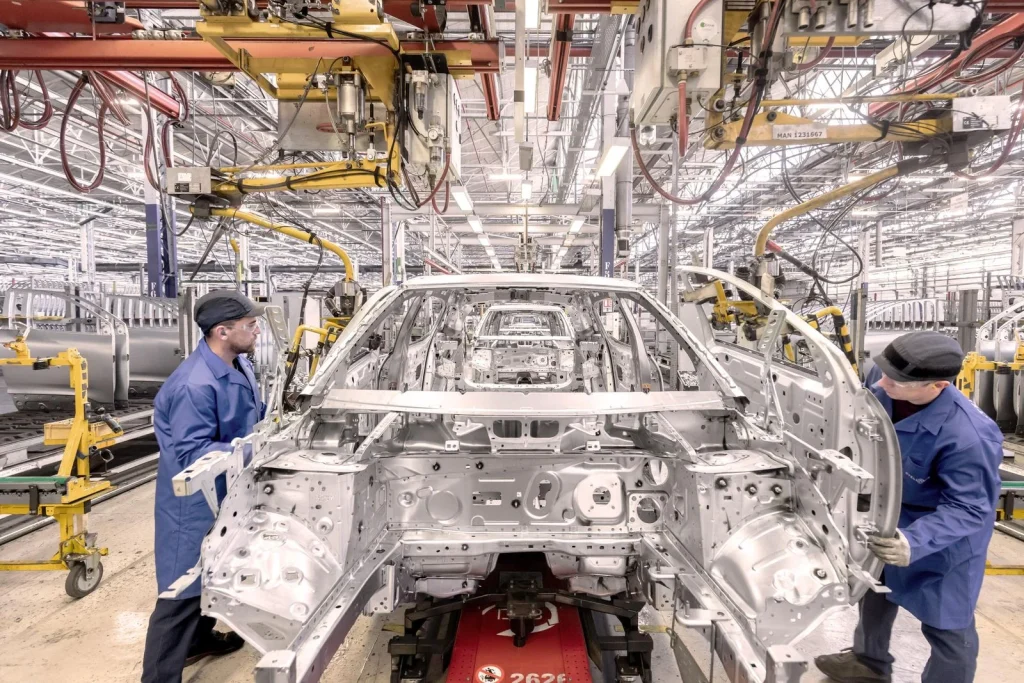
It also highlights why battery production has become one of the most strategically important parts of the modern automotive industry.
For decades, engine and transmission plants were among the most important facilities in vehicle manufacturing. As electrification accelerates, battery plants are increasingly taking on that role.
The shutdowns at Sochaux and Rennes show what happens when battery supply cannot keep pace with vehicle assembly.
For Stellantis, the immediate goal will be to restore stable production and secure enough batteries for its electric models. For Europe, the bigger challenge is making sure its rapidly expanding battery industry can support the continent’s automotive manufacturing base.
The transition to electric vehicles is therefore not simply about building more EVs. It requires an entire supply chain capable of producing batteries at the right scale, with the right technology and at the right time.
Stellantis’ temporary French factory shutdowns offer a clear reminder that Europe’s EV transition still has significant supply-chain challenges to overcome.