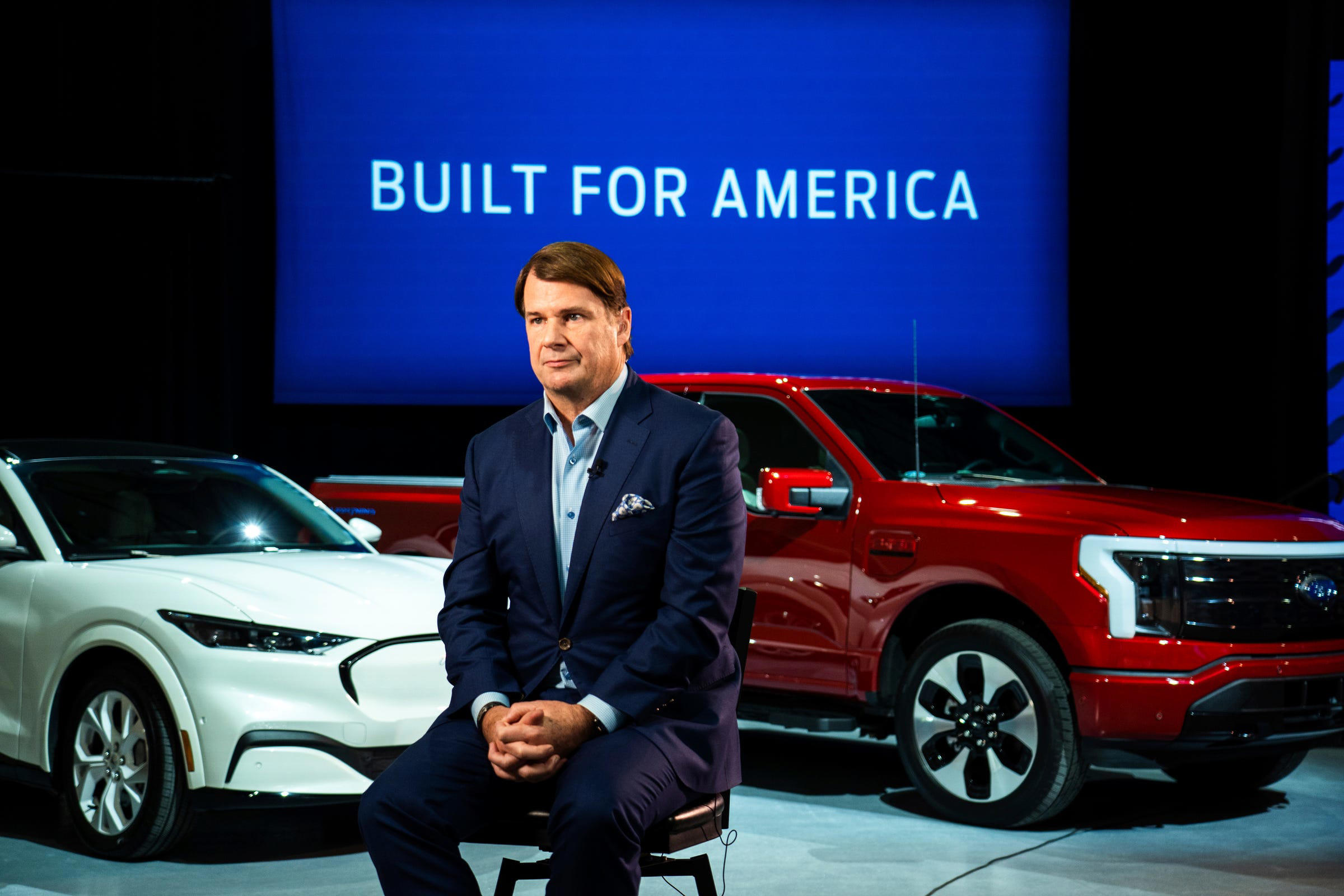
Ford CEO Jim Farley is warning U.S. policymakers to move cautiously when considering whether Chinese automakers should gain greater access to the American market, pointing to Europe’s experience as a lesson in what can happen when Chinese brands establish themselves before traditional automakers and governments fully respond.
Speaking at an Automotive News conference in Detroit on September 29, Farley argued that the United States should be “extremely careful” about how Chinese automakers enter the country.
His warning comes as Chinese manufacturers continue expanding internationally, particularly in electric vehicles, while established automakers in Europe face growing pressure from lower-cost and technology-focused competitors. Reuters reported that Farley believes Europe has already reached a point where reversing the trend will be difficult.
The comments are notable because Ford itself has increasingly worked with Chinese companies in areas where Farley believes cooperation can provide a competitive advantage. That creates a complicated position for the automaker.
Ford wants to protect its U.S. manufacturing base from Chinese competition while simultaneously using Chinese technology, supply chains, and partnerships where they can reduce costs or accelerate development.
Farley’s argument is therefore not simply for a blanket rejection of Chinese companies. Instead, he is calling for the United States to carefully determine the conditions under which Chinese automakers and technology companies can participate in the American automotive industry.
Europe Shows How Quickly Chinese Automakers Can Expand
Farley’s primary warning centers on what he sees happening in Europe. Chinese automakers have moved aggressively into European markets, particularly with electric vehicles, giving them access to customers who previously had relatively few choices from Chinese brands.
Reuters reported that Chinese automakers’ share of the European market had reached around 12% by August. Farley said Europe had allowed Chinese companies to establish a significant presence and suggested that European countries now have limited room to respond effectively.
The speed of that expansion is important because Chinese automakers are approaching the European market differently from many traditional manufacturers. Companies such as BYD, Geely, SAIC, and others have been able to introduce competitively priced electric vehicles while offering technology and features that appeal to European consumers.
Chinese manufacturers also benefit from an extensive domestic EV supply chain. China has developed substantial battery production capacity, electric powertrain expertise, and manufacturing scale over the past decade. That ecosystem can give its automakers advantages in cost and development speed.
The pressure is particularly significant for European manufacturers because they must finance the transition from combustion engines to electric vehicles while maintaining large existing operations. They also face high labor and energy costs and increasingly demanding emissions regulations.
Farley’s concern is that allowing Chinese automakers into the United States without a carefully developed strategy could eventually create similar competitive pressures.
The U.S. market is substantially larger and structurally different from Europe, but the basic concern remains. Once foreign manufacturers establish factories, dealerships, supply chains, and a customer base, it becomes considerably harder for policymakers and domestic competitors to respond without significant economic consequences.
Ford’s Own China Partnerships Complicate the Picture
Farley’s comments also came with an important clarification. Ford is not ruling out partnerships or business relationships with Chinese companies.
The automaker has already established several relationships with Chinese businesses. One of the most significant involves CATL, with Ford using the Chinese battery company’s technology at its Michigan battery operation.
Ford has defended the arrangement as a way to build batteries domestically while using technology that can help make electric vehicles more competitive.
Ford has also formed a partnership with Geely in Europe. In July, the two companies announced plans to establish a joint venture at Ford’s Valencia manufacturing facility in Spain. The partnership is expected to manufacture Ford and Geely vehicles for European customers, with production of new models scheduled to begin in 2028.
The Valencia agreement illustrates exactly why Farley’s position is more nuanced than simply opposing Chinese involvement.
Ford says the partnership will help reduce vehicle production costs, improve utilization of the Spanish plant, and respond to intense competition in Europe. The joint venture is expected to produce an all-new multi-energy crossover for Ford, a new Bronco-family vehicle, and two electric Geely SUVs.
From Ford’s perspective, cooperation can therefore be useful when it helps the company compete against the same Chinese manufacturers that Farley is warning about.
The distinction is between collaboration and unrestricted market access. Ford can use Chinese expertise, technology, and manufacturing scale while still arguing that the U.S. government should carefully regulate direct Chinese vehicle competition in America. That distinction has become increasingly politically sensitive.
Ford has faced criticism from U.S. officials over its Chinese partnerships, particularly as Washington continues to treat China’s automotive industry as both an economic and strategic challenge.
Reuters previously reported that tensions between Ford and the Trump administration intensified in September over the company’s relationships with Chinese businesses.
Ford has defended its approach by emphasizing its commitment to American manufacturing. The company says its Michigan battery facility is producing batteries domestically with American workers and represents billions of dollars in investment.
U.S. Automakers Face a Difficult Competitive Calculation
The larger issue behind Farley’s warning is that Chinese automakers are no longer simply competing within China’s borders.
China is expected to export around 12 million vehicles in 2026, compared with roughly 3 million in 2022, according to Reuters. That enormous increase demonstrates how quickly Chinese manufacturers have expanded their international ambitions.
Electric vehicles are a particularly important part of that expansion because Chinese companies have developed strong positions in batteries, electric powertrains, and vehicle software.
For U.S. automakers, the situation presents a difficult calculation. Restricting Chinese vehicle imports can give domestic manufacturers more time to develop competitive products and protect American factories. But excessively broad restrictions could also limit access to technologies and supply chains that U.S. companies may need to remain competitive globally.
Farley appears to favor a middle ground in which the United States takes more time to understand the potential consequences before opening the market further.
The U.S. already maintains significant barriers against Chinese vehicles. Chinese-made EVs face tariffs exceeding 100%, while Washington has also introduced restrictions targeting connected-vehicle software and hardware from China and other countries viewed as security risks.
Those measures have effectively prevented Chinese automakers from establishing a major direct passenger-vehicle presence in the United States. But Farley’s comments suggest that he does not believe current restrictions alone should determine the long-term strategy.
He is concerned about what could happen if those protections are eventually weakened. For Ford, the stakes are especially high because the company competes directly in many of the segments where Chinese manufacturers are becoming stronger.
Ford must simultaneously invest in EVs, improve manufacturing efficiency, and protect its traditional truck and SUV businesses.
The company is also attempting to reduce costs to compete more effectively with manufacturers that can develop vehicles at lower prices.
Farley’s comments point to a broader concern among Western automakers. Chinese companies may have built significant advantages in technology and manufacturing, meaning that restricting their access to a single market may not address the wider competitive challenge.
The industry may instead need to become more efficient and faster at developing products. That is why Ford’s willingness to partner with Chinese companies is significant.
The company is effectively acknowledging that Chinese technology and manufacturing expertise can be valuable even while it argues that direct Chinese competition in the U.S. should be approached cautiously.
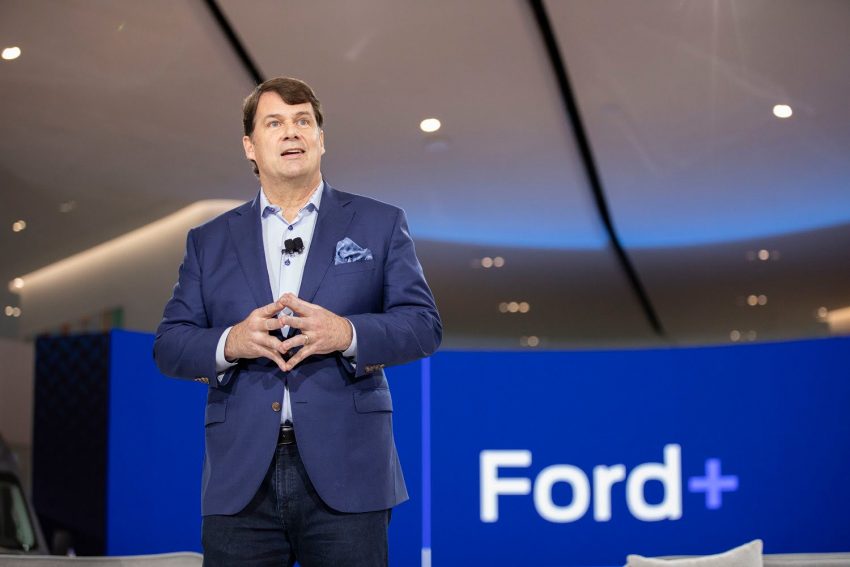
For American policymakers, the question is becoming increasingly complicated. Keeping Chinese automakers out can protect domestic manufacturers in the short term, but the companies will continue developing products and expanding elsewhere. Europe has already become a major proving ground for that strategy.
Farley believes the United States still has an opportunity to learn from Europe’s experience before Chinese brands establish a comparable position in America.
Whether the U.S. chooses tighter restrictions, selective partnerships or a combination of both will have consequences well beyond vehicle imports. The decision could influence battery manufacturing, automotive software, supply chains, factory investment, and the future competitiveness of American automakers.
For now, Farley’s message is straightforward. The United States should not assume that China’s rapidly expanding automotive industry can be easily pushed back once its companies establish a stronger presence in international markets.
Ford may continue working with Chinese companies where the business case makes sense, but its CEO believes Washington needs to be far more deliberate about allowing Chinese automakers themselves to gain a foothold in the American market. Europe, in his view, provides a warning of what can happen when that decision is made too late.