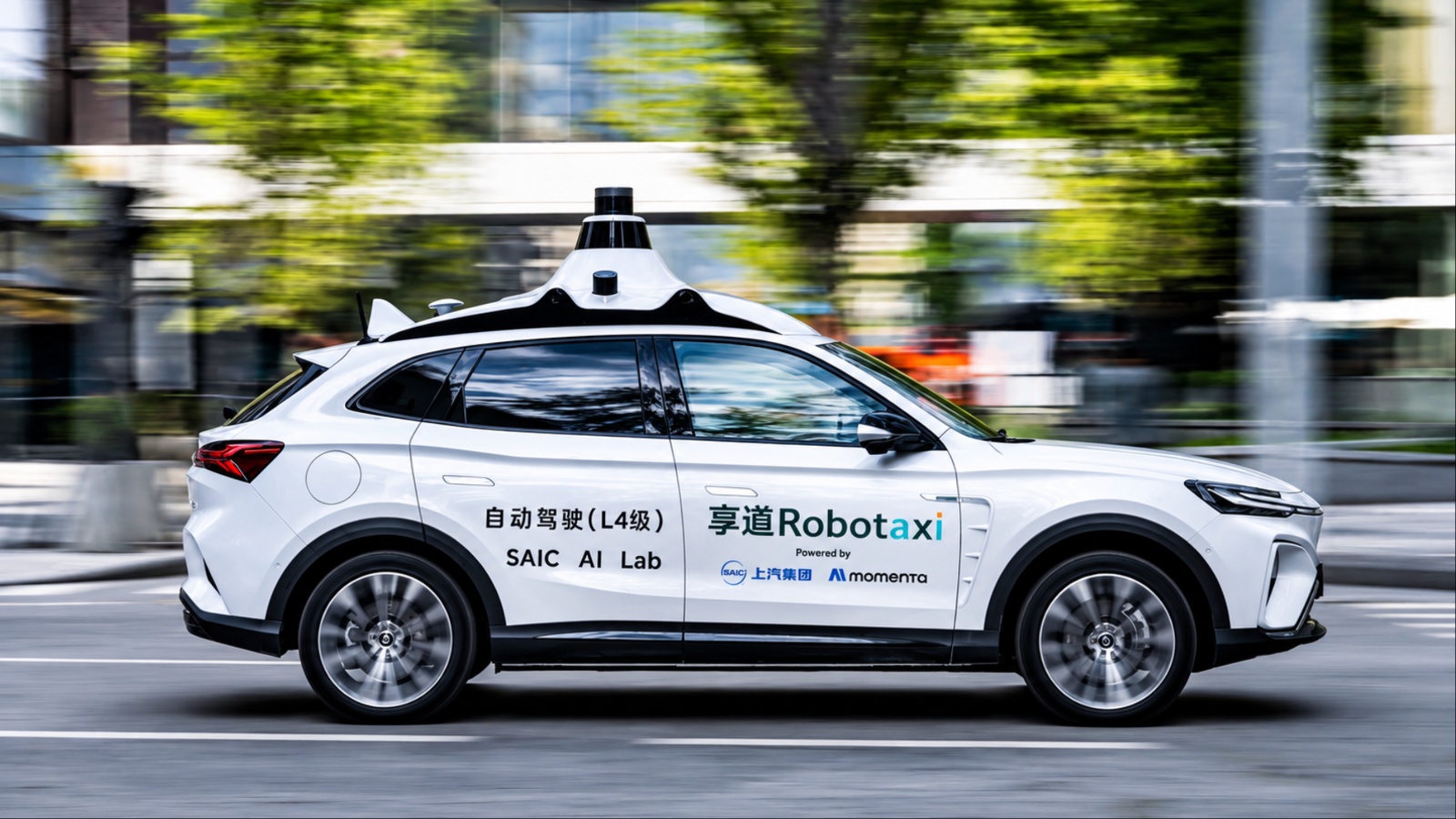
Chinese autonomous-driving company Momenta is preparing to take its robotaxi ambitions beyond its current operating markets, with Dubai and additional European cities emerging as key targets for its international expansion.
The company, backed by major automotive names including Mercedes-Benz, Toyota, and BYD, is seeking to rapidly increase the number of autonomous vehicles on the road as competition in the global robotaxi industry intensifies.
Momenta currently operates more than 100 robotaxis across three countries, according to Reuters. The company is conducting trials in five Chinese cities as well as Munich and Abu Dhabi, giving it a growing presence across both Asian and international markets.
Its robotaxi division now plans to expand into Dubai and other European locations, while Japan is also among its priority markets.
The company has set an ambitious target for the next two years. Momenta wants its robotaxi fleet to grow into the hundreds by the end of 2026 and reach thousands of vehicles by the end of 2027.
Achieving that goal would represent a significant increase from its current fleet and put the company into more direct competition with established autonomous mobility operators.
Dubai Becomes a Key Target for Momenta
Dubai is becoming an increasingly important market for autonomous transportation companies, making it a natural target for Momenta’s international expansion. The company plans to deploy robotaxis in the city in 2027, according to Reuters, as part of a broader push to establish its technology outside China.
The United Arab Emirates has been actively pursuing autonomous transportation technology, with Dubai in particular positioning itself as a major testing ground for driverless mobility.
Momenta already has an operational presence in the UAE through Abu Dhabi, where it is conducting robotaxi trials. The company’s website lists offices in Abu Dhabi, alongside locations in China, Germany, and Japan.
Moving from Abu Dhabi trials toward a planned Dubai operation would give Momenta experience in another Gulf market with a different urban environment and operating conditions.
For a robotaxi developer, that kind of international deployment is valuable because autonomous-driving systems must cope with variations in road layouts, traffic behavior, regulations, weather, and mapping requirements.
Momenta’s expansion also comes at a time when robotaxi companies are increasingly looking beyond controlled pilot programs. The industry is shifting toward larger commercial fleets, with companies seeking to demonstrate that autonomous vehicles can operate reliably and economically at scale.
That transition is considerably more difficult than running a limited test fleet. A company deploying hundreds or thousands of vehicles must address vehicle availability, remote assistance, maintenance, charging or fueling, fleet management, passenger support, and regulatory compliance in addition to the autonomous-driving technology itself.
Momenta’s strategy suggests it believes its existing technology and partnerships provide a foundation for making that transition.
Europe Is Becoming an Important Part of the Strategy
Europe is another major focus for Momenta. The company already has operations and testing activity in Germany, including Munich, and received Germany-wide Level 4 testing approval from the country’s Federal Motor Transport Authority, or KBA, in July.
Momenta said the approval allows it to test its Level 4 autonomous-driving technology across urban environments throughout Germany.
The regulatory approval could become an important asset as Momenta considers additional European cities. Level 4 autonomous driving is designed to allow the vehicle to perform the driving task within defined operational conditions without requiring the human occupant to continuously control the vehicle.
Momenta has not publicly identified every European city it intends to enter under its latest expansion plan. Reuters reported that the company is targeting additional European cities beyond its existing testing activities.
Its European ambitions are also supported by relationships with major automakers. Mercedes-Benz has been one of Momenta’s most important international partners. The German automaker became the first international automaker to invest in Momenta in 2017, and the companies have continued expanding their cooperation.
In February 2026, Mercedes-Benz and Momenta announced an upgraded cooperation agreement covering intelligent driving technology. Momenta’s systems are being integrated into several Mercedes-Benz models in China, including technology designed to support urban and highway driving scenarios.
Momenta’s automotive relationships extend beyond Mercedes-Benz. Its current partners include Toyota and other major manufacturers, while the company recently announced a strategic agreement with Dongfeng Stellantis Automotive Technology to jointly develop advanced driver assistance systems for future Peugeot and Jeep models.
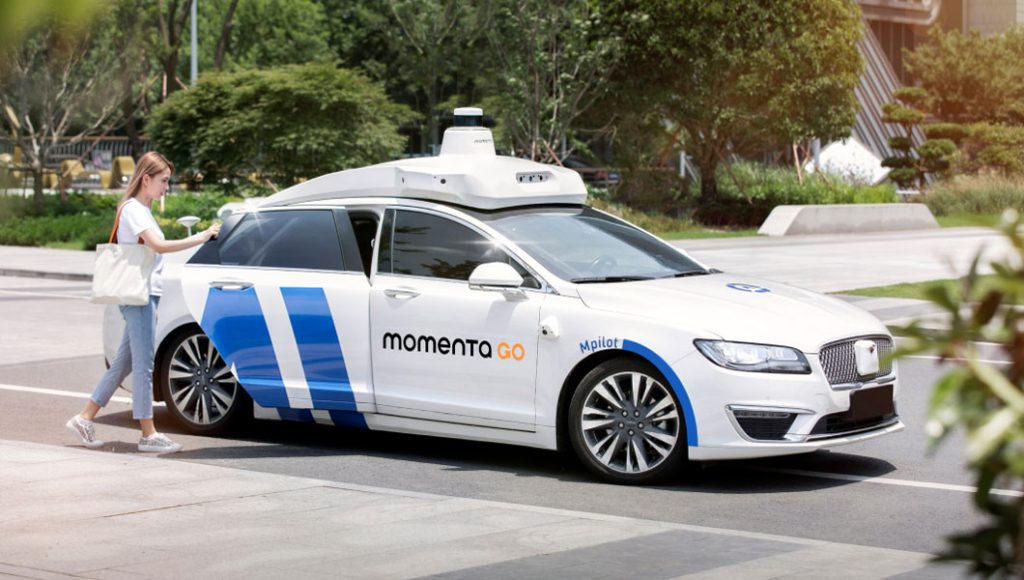
Those systems are intended for China, Europe, and other global markets. The breadth of these relationships could give Momenta an advantage as it seeks to move autonomous-driving technology between markets.
Momenta Wants to Scale While Competition Intensifies
Momenta’s push comes as the global robotaxi market becomes increasingly competitive. Alphabet’s Waymo has been expanding its commercial robotaxi operations in the United States, while Chinese companies such as Pony.ai and other autonomous-driving developers are pursuing larger deployments in China and overseas markets.
For Momenta, the challenge is not simply proving that its technology can drive without a human operator. It needs to show that its autonomous system can be deployed safely, consistently, and economically across multiple cities.
The company is developing its robotaxi business under what it describes as a scalable autonomous-driving strategy. Its technology portfolio includes robotaxis and robovans, while the company is also developing solutions for other commercial autonomous applications.
Momenta’s technology development has also increasingly focused on artificial intelligence. Reuters reported that the company is working with chipmaker XHeart on custom chips designed to reduce the cost of autonomous-driving systems. The company expects future robotaxis to use its next-generation X9 chips.
Reducing hardware costs could become critical if Momenta reaches its planned fleet size. Thousands of autonomous vehicles require substantially more computing hardware, sensors, and supporting infrastructure than a small pilot fleet. Any reduction in per-vehicle technology costs could therefore improve the economics of large-scale deployment.
However, Momenta remains unprofitable and continues to invest heavily in research and development. The company raised approximately $751 million through its Hong Kong IPO in July, but its shares have since fallen sharply amid broader investor caution toward artificial intelligence stocks, according to Reuters.
That financial backdrop highlights the pressure behind the company’s expansion plans. Robotaxi development requires substantial capital before large fleets can potentially generate meaningful revenue. Expanding into multiple countries simultaneously increases those demands because every market brings different regulatory and operational requirements.
Momenta’s goal of reaching thousands of robotaxis by the end of 2027 is therefore an aggressive one. The company must first move from more than 100 vehicles today to hundreds within months, then multiply that fleet again while securing approvals and operating partnerships in new markets.
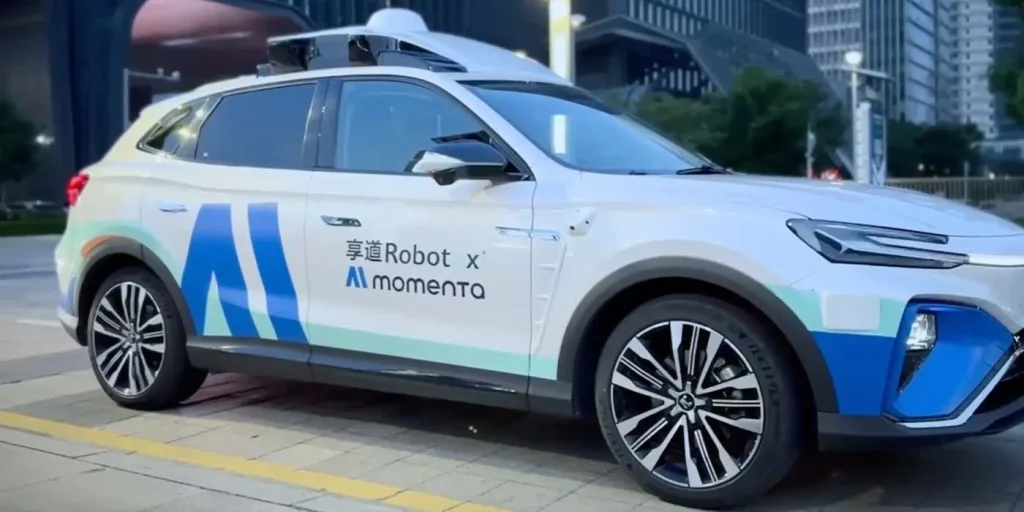
If the expansion proceeds as planned, Dubai could become one of Momenta’s most visible international robotaxi operations, while Europe could provide a much larger testing ground for the company’s autonomous technology. Japan could add another major market to the strategy.
The significance of the plan extends beyond Momenta itself. Chinese autonomous-driving companies are increasingly seeking opportunities outside their domestic market, while global automakers are forming partnerships with software specialists to accelerate the development of advanced driving systems.
Momenta’s relationship with Mercedes-Benz places it at the center of that shift. The company is no longer focused solely on developing autonomous-driving technology for Chinese roads.
Its growing international footprint suggests that the next stage of competition will be about proving whether these systems can work across different countries, regulations, and driving environments.
For now, Momenta’s target is ambitious rather than guaranteed. But with Dubai planned for 2027, additional European cities under consideration and thousands of robotaxis targeted by the end of next year, the company is clearly preparing for a much larger role in the global autonomous mobility market.