
Some of the most familiar features in American cars did not begin with a carefully planned automotive program. In several cases, an accident, injury, failed experiment, or unexpected discovery gave an inventor the idea that eventually changed automobiles.
The stories are rarely as simple as saying one person accidentally invented a modern feature overnight. Most required years of engineering before the idea became practical in production.
The eight examples in this article focus on documented incidents and discoveries that directly influenced technologies now associated with everyday driving. Where the popular version of a story is disputed, that distinction is made clear rather than presenting automotive folklore as fact.
1. The Electric Starter
Before the electric starter, starting a gasoline car could be an exhausting and dangerous task. Drivers had to stand in front of the vehicle and manually crank the engine, and a kickback could send the handle violently in the opposite direction.
The development of the electric starter is often connected to a serious cranking accident in Detroit, although the commonly repeated details of the story are not completely reliable.
The traditional account says an automotive executive named Byron J. Carter stopped to help a woman whose Cadillac had stalled on Belle Isle. When he attempted to crank the engine, the handle reportedly kicked back and injured him.
Carter later died from pneumonia. The story says Cadillac founder Henry Leland was deeply affected and ordered his engineers to find a safer way to start an automobile.
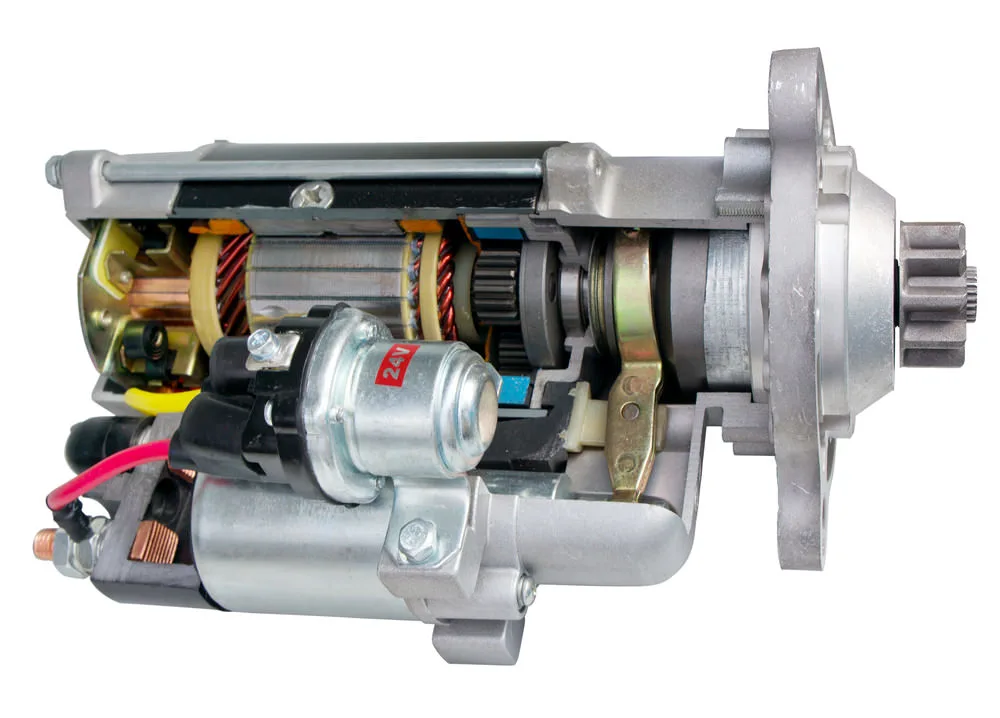
The National Museum of American History confirms that Charles Kettering developed the electric self-starter in 1911 and that Henry Leland encouraged its development. The system became available on Cadillac automobiles in 1912.
There is an important historical qualification. The exact Carter story is disputed. Contemporary evidence indicates that Byron Carter died in 1908, before the accident traditionally attributed to him, while another Carter, Howard O. Carter, was injured in a hand-cranking accident in 1907.
Historians therefore question the identity and timing of the incident, even though accounts from Kettering and Leland both connect a serious cranking accident with the decision to pursue an electric starter.
What is firmly established is the technological result. Kettering’s electric starter was installed on the 1912 Cadillac Model Thirty, eliminating the need for routine hand cranking. The accident story may contain errors, but the danger of hand starting was very real, and it helped push the industry toward a much safer method.
2. Laminated Safety Glass
One of the most important materials ever added to an automobile began with a laboratory accident rather than an automotive engineering project.
In 1903, French chemist Édouard Bénédictus accidentally dropped a glass flask that had previously contained cellulose nitrate. Instead of breaking into separate pieces and scattering across the floor, the glass remained held together by the thin plastic film left inside it.
Bénédictus recognized that the unexpected behavior could have practical value. He subsequently developed laminated safety glass by placing a transparent layer between sheets of glass.
The concept eventually found an important application in automobiles, where ordinary glass could shatter into dangerous fragments during a collision. Research published on automotive glazing history records Bénédictus’s 1903 observation and notes that some Ford Model T cars were using laminated safety glass by 1919.
Ford later became particularly important in bringing safety glass into mainstream American production. Ford states that in 1927 it became the first manufacturer to install safety glass as standard equipment across all of its vehicles.
The distinction between those dates matters. The 1919 Model T represents an early application of the technology, while 1927 marks Ford’s company-wide standardization.
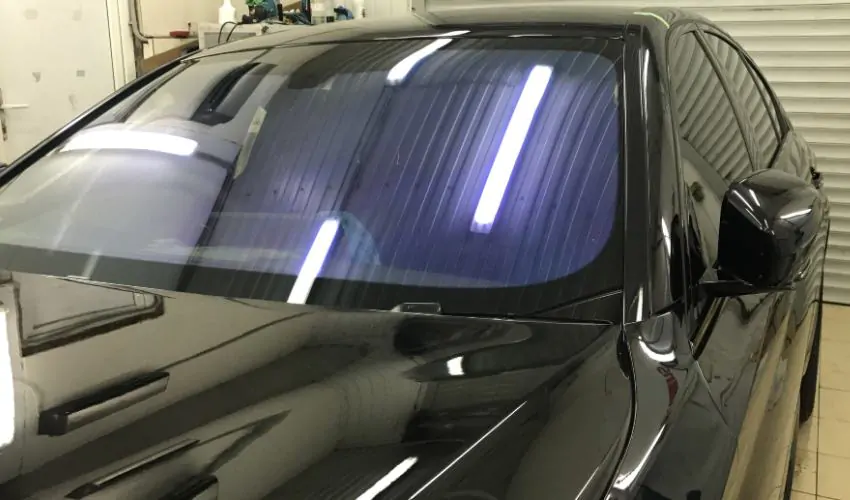
The accidental discovery therefore did not instantly create the modern windshield. It provided the fundamental idea that glass could break while remaining attached to a flexible interlayer. Manufacturing technology, materials, and automotive requirements subsequently had to develop around it.
Today, laminated glass is central to windshield construction in American vehicles because it helps keep broken glass together rather than allowing a windshield to disintegrate into loose shards. A laboratory mishap involving a dropped flask ultimately contributed to a material that became an important part of automotive occupant protection.
3. Intermittent Windshield Wipers
The intermittent windshield wiper is one of the best documented examples of an automotive feature that grew from an unexpected personal experience. Engineer Robert Kearns had suffered permanent vision damage after a champagne cork struck his left eye on his wedding night in 1953.
More than a decade later, while driving in light rain, he became frustrated by conventional wipers that moved continuously across a windshield even when only occasional wiping was necessary.
Kearns reportedly began thinking about the human eyelid. An eye does not remain in constant motion.
It blinks, pauses, then blinks again. He reasoned that a windshield wiper could operate according to a similar principle, clearing the glass and then stopping until another sweep was needed.
He developed a prototype using electronic components and filed a U.S. patent application in 1964 for an intermittent windshield wiper system.
Kearns demonstrated the technology to Ford, but the relationship eventually collapsed after the automaker chose not to purchase his system. Ford later introduced intermittent wipers, prompting Kearns to begin a lengthy patent battle.
The legal dispute lasted for decades. Kearns eventually won infringement judgments against Ford and Chrysler, with awards reported at approximately $30 million combined.

There is an important historical distinction to make. Kearns did not invent the windshield wiper itself. Mary Anderson had patented a manually operated windshield-cleaning device in 1903. Kearns’s contribution was the development of an intermittent wiping system, which made windshield wipers more practical in light rain and mist.
His story shows how an everyday annoyance, intensified by a personal injury, became a feature now found on countless vehicles.
4. Turn Signals
The modern turn signal has a surprisingly theatrical origin. Florence Lawrence, a Canadian-born actress who became one of early Hollywood’s most recognizable performers, is credited by the Lemelson-MIT Program with developing an early mechanical turn-indicator concept along with a separate brake-activated stop signal.
She was neither an automotive engineer nor a manufacturer. Lawrence’s idea came from recognizing a simple communication problem on early roads. Drivers had few reliable ways to tell other motorists what they intended to do.
Her proposed system used a signaling arm mounted toward the rear of the vehicle. Controls near the driver could raise the appropriate indicator to communicate a left or right turn.
She also developed a separate signal connected to the vehicle’s brake system. Pressing the foot brake could activate a rear-mounted sign to indicate that the vehicle was slowing or stopping. Together, these inventions addressed two problems that remain fundamental to road safety, signaling changes in direction and warning following traffic when a vehicle is decelerating.
Lawrence never patented the inventions, meaning she did not receive the financial rewards that later automotive inventors could obtain from intellectual property protection.
The Lemelson-MIT Program notes that improved versions subsequently appeared on vehicles and that Buick eventually made electrical turn signals standard across its cars in 1939.
The exact claim that Lawrence invented the modern electrical turn signal should therefore be treated carefully. Her device was an early mechanical signaling system, not the electrically flashing amber indicator used on modern American vehicles.

The significance of her contribution is that the basic communication idea existed remarkably early. Long before turn signals became standard equipment, an actress had already recognized that cars needed a dedicated way to tell other road users where they were going.
Today, the flashing indicator seems so fundamental that it is easy to forget how primitive vehicle communication once was. Lawrence’s experiment was an early step toward solving that problem.
5. Rearview Mirror
The rearview mirror has one of the clearest accidental origins in automotive history. At the inaugural Indianapolis 500 in 1911, Marmon engineer and driver Ray Harroun faced an unusual challenge. He wanted to race the Marmon Wasp without the riding mechanic who was normally required to occupy the second seat.
That mechanic served an important purpose. Besides helping with tasks during the race, the passenger could look behind the car and warn the driver about competitors approaching from the rear. Removing him reduced weight, but it also created a serious visibility problem.
Harroun’s solution was remarkably simple. He mounted a mirror so he could see what was happening behind the car without needing another person aboard.
The Library of Congress identifies Harroun’s device as the first documented use of a rearview mirror on an automobile, while Marmon’s historical account says the mirror allowed him to replace the rear-facing passenger.
The experiment worked. Harroun and the Marmon Wasp won the inaugural Indianapolis 500, completing the 500-mile race in approximately 6 hours, 42 minutes. The victory gave the new device enormous visibility.
It is worth being precise about the claim. Harroun did not invent the concept of seeing behind a vehicle from nothing, and mirrors had been used in other transportation applications. His achievement was applying a mirror specifically as a practical substitute for the race car’s rearward-looking riding mechanic.
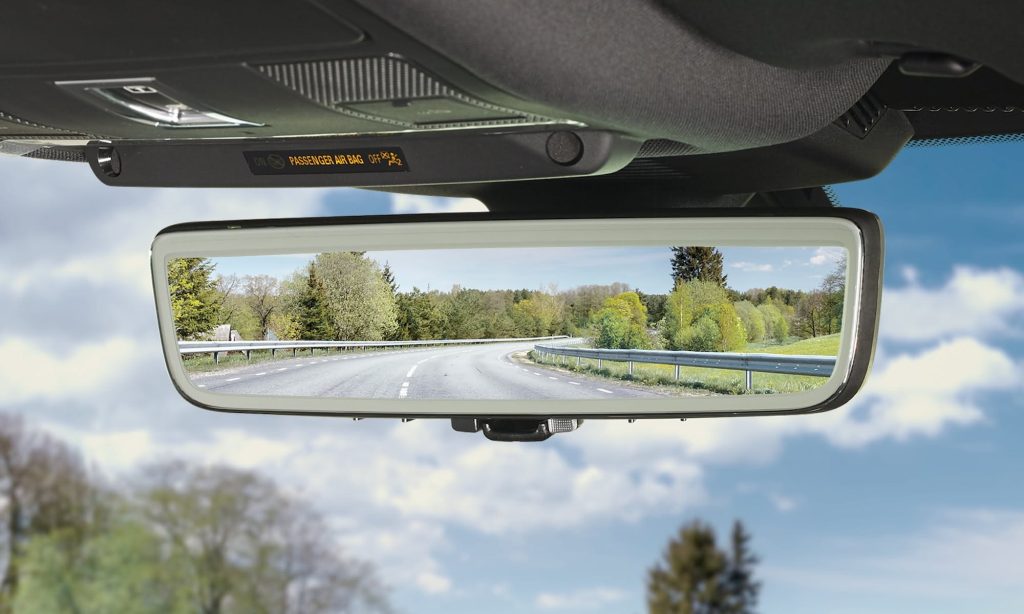
What began as a solution to a racing problem eventually became fundamental road equipment. Interior rearview mirrors are now so familiar that driving without one feels incomplete.
Harroun’s decision to remove a passenger and replace that person’s function with a mirror helped establish a feature that would become standard on American automobiles.
6. Three-Point Seat Belt
The modern three-point seat belt was not created because of a random mechanical accident, but its development was strongly influenced by an unexpected transfer of technology from aviation.
Nils Bohlin, the Volvo engineer responsible for the system, had previously worked for Saab on aircraft ejection seats. That experience shaped his understanding of how restraint systems needed to control the human body during extreme deceleration.
When Bohlin joined Volvo in 1958, ordinary automobile belts were generally much simpler. Lap belts could hold an occupant in place, but they did not adequately restrain the upper body. Bohlin’s goal was to create something both safer and simple enough for ordinary motorists to use correctly.
His solution combined a lap belt with a diagonal shoulder belt. The geometry formed a V across the occupant’s body, with the lower attachment positioned near the hip. Bohlin patented the design in 1958, and Volvo introduced it as standard equipment in 1959.
The connection to aircraft engineering was crucial. Bohlin applied lessons from pilot restraint systems to the very different environment of passenger cars, concentrating on how the belt could control both the upper and lower portions of the body during a crash.
Volvo then made an extraordinary decision. Rather than keeping the patent exclusively for itself, the company made the design available to other automakers.
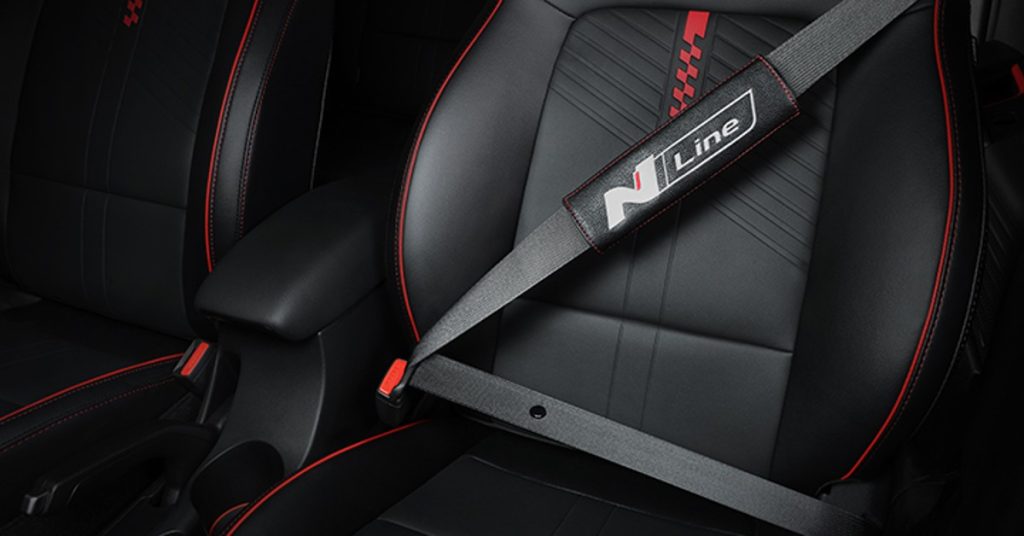
The technology subsequently became a fundamental part of vehicle safety. Volvo says the three-point belt has saved more than one million lives, while its historical accident analysis found substantial reductions in injuries among occupants using the system.
The three-point belt therefore was not an accidental invention in the literal sense. Its unusual origin lies in the transfer of aircraft ejection-seat knowledge into passenger-car safety, producing a design that permanently changed how occupants are protected.
7. Heated Seats
Heated seats were not created by someone randomly discovering that a car seat could become warm. The feature came from an unexpectedly long gap between invention and production.
General Motors engineer Robert P. Ballard filed a U.S. patent application for an automobile seat heater on April 30, 1951. The patent describes heating elements positioned within an automobile seat and controlled electrically. It was eventually granted as U.S. Patent No. 2,698,893 in 1955.
The technology then sat ahead of the market for more than a decade. According to automotive-history research, Cadillac eventually introduced heated seats as a production option on the 1966 Cadillac DeVille. Contemporary Cadillac documentation confirms a factory-installed “seat warmer” option for the 1966 model year.
That timeline is what makes the story unusual. Ballard’s invention existed in patent form in the early 1950s, but the automotive industry needed years to turn the concept into a commercially viable luxury feature.
The first production application was not a mainstream economy car. Cadillac used it as a premium comfort feature aimed at buyers willing to pay for additional convenience.
The technology was relatively simple in principle. Electrical resistance generated heat through elements incorporated into the seat, allowing warmth to reach the occupant without heating the entire passenger compartment first.
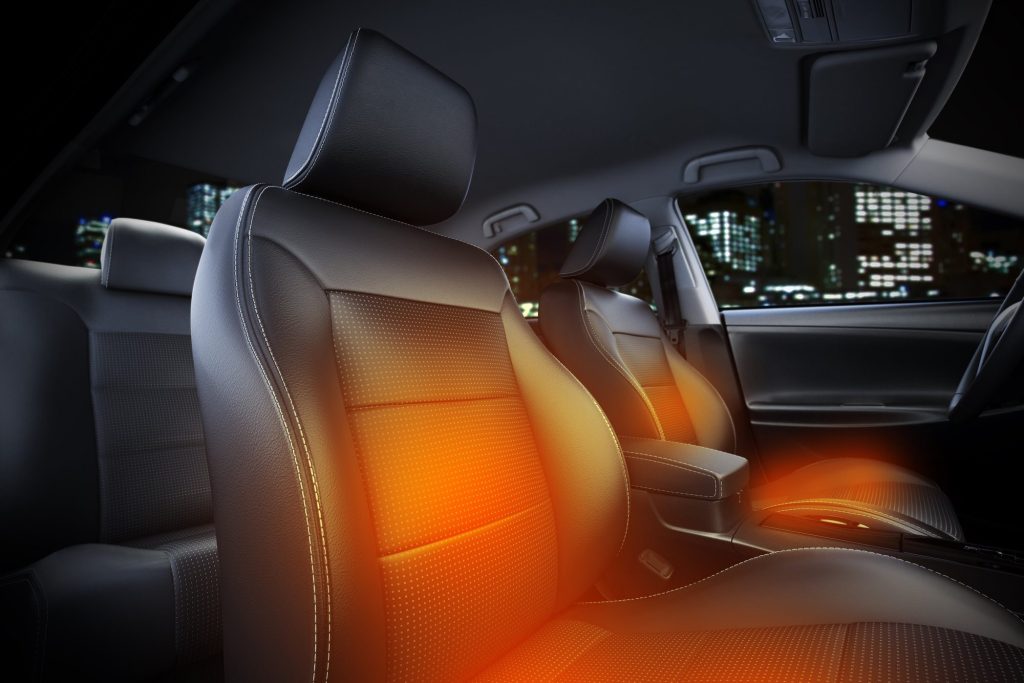
Heated seats eventually moved far beyond luxury cars. They became common in vehicles across increasingly broad price ranges, particularly in colder parts of the United States.
So the accidental element here is less about a sudden laboratory mishap and more about an idea arriving before the market was ready. A GM engineer patented the concept in 1951, yet it took approximately 15 years before Cadillac offered it in production.
8. Backup Camera
The backup camera story begins with a vehicle that was never intended for normal showroom sales. At the 1956 General Motors Motorama, Buick displayed the Centurion concept, a futuristic experimental car that used a rear-mounted television camera to show the area behind the vehicle on a dashboard screen.
The camera effectively replaced the conventional rearview mirror. The reason was the Centurion’s radical design. Its futuristic body and unusual rear visibility made a conventional mirror arrangement difficult, so Buick’s engineers demonstrated a camera-based solution instead.
The setup was extraordinarily advanced for the period because tiny solid-state automotive cameras did not exist. The system relied on television technology and displayed the image on a screen mounted in the cabin.
The Centurion did not put backup cameras into American driveways. The technology remained a concept for decades.
Production applications eventually appeared elsewhere, with the Toyota Soarer becoming an early production vehicle to use a rear camera system in Japan. In the United States, Infiniti introduced a rearview camera system on the 2002 Q45.
The American market then moved steadily toward wider adoption. Federal regulations eventually required rear visibility technology on new passenger vehicles and light trucks.
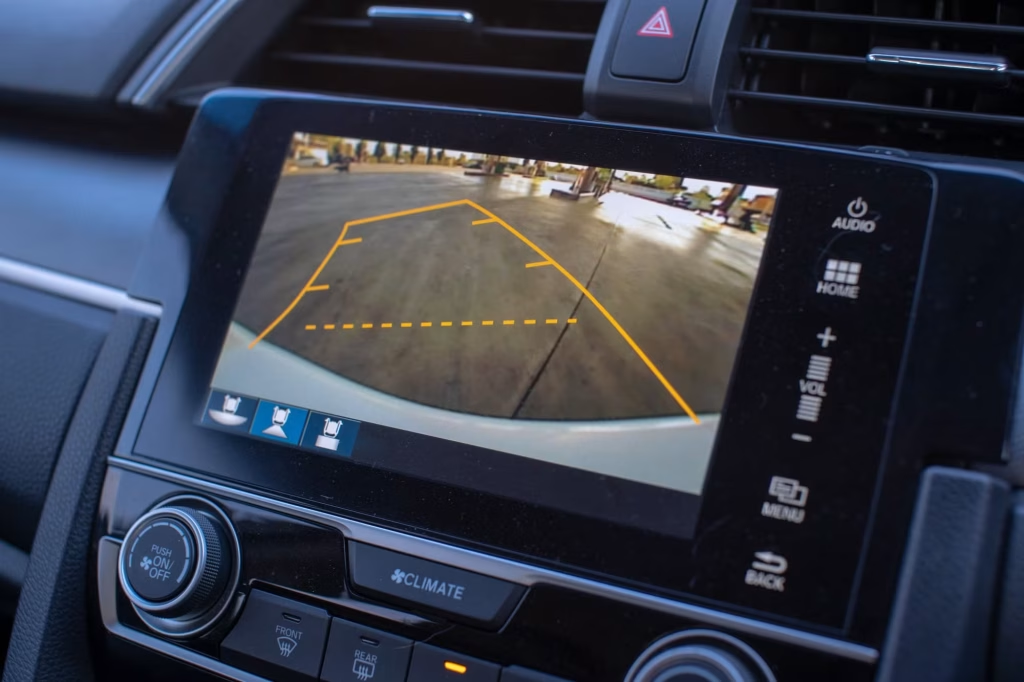
The National Highway Traffic Safety Administration’s rule resulted in rear visibility systems becoming mandatory for vehicles manufactured from May 1, 2018, with the requirement covering vehicles under 10,000 pounds.
The Centurion therefore was not the first production backup camera, and calling it one would be inaccurate. It was the early documented demonstration that a camera and screen could solve a fundamental visibility problem.
What began as a solution for an exotic concept car ultimately became standard safety equipment on virtually every new vehicle sold in America.