
The history of the automobile is filled with engineers and professional stylists, but some of the most memorable cars came from unexpected creative backgrounds. Industrial designers, sculptors, yacht designers, and even people who began their careers far outside mainstream automotive styling occasionally left their mark on production cars.
Their different training often produced unusual proportions, fresh solutions, and designs that conventional automotive studios might not have pursued.
The stories behind these vehicles are just as interesting as their shapes. In several cases, the designer had to work through an established automotive team, while in others, the car became famous only after the designer’s contribution was finally recognized.
1. Studebaker Avanti
Raymond Loewy is one of the clearest examples of an outsider who changed automotive design without beginning his career as a conventional automobile stylist. He was primarily an industrial designer, and his portfolio stretched across household products, transportation, packaging, and corporate identities.
The Industrial Designers Society of America identifies his early work with products such as the Gestetner duplicating machine and later credits him with designs ranging from locomotives and buses to refrigerators and Studebaker automobiles.
His relationship with the automobile industry eventually became substantial, but his reputation was built on industrial design rather than a traditional Detroit styling career.
The Studebaker Avanti emerged from that broader design philosophy. In 1961, Studebaker president Sherwood Egbert wanted a dramatic new car capable of attracting younger buyers and strengthening the company’s image.
He commissioned Loewy, who assembled a small team in Palm Springs. The group worked from a rented two-room house, with John Ebstein overseeing the project, Robert Andrews contributing sketching and clay modeling, and Art Center student Tom Kellogg handling important design work. Loewy acted as creative director.
The deadline was remarkably short. The team developed the basic concept in roughly 40 days, producing sketches and a scale model before moving toward a full-size clay model. Loewy’s instructions emphasized minimal decoration, a wedge-like silhouette, aerodynamic thinking, a low hood, and a short, tucked rear section.
The result became the 1963 Studebaker Avanti, a fiberglass-bodied coupe whose design looked dramatically different from many American cars of its era.
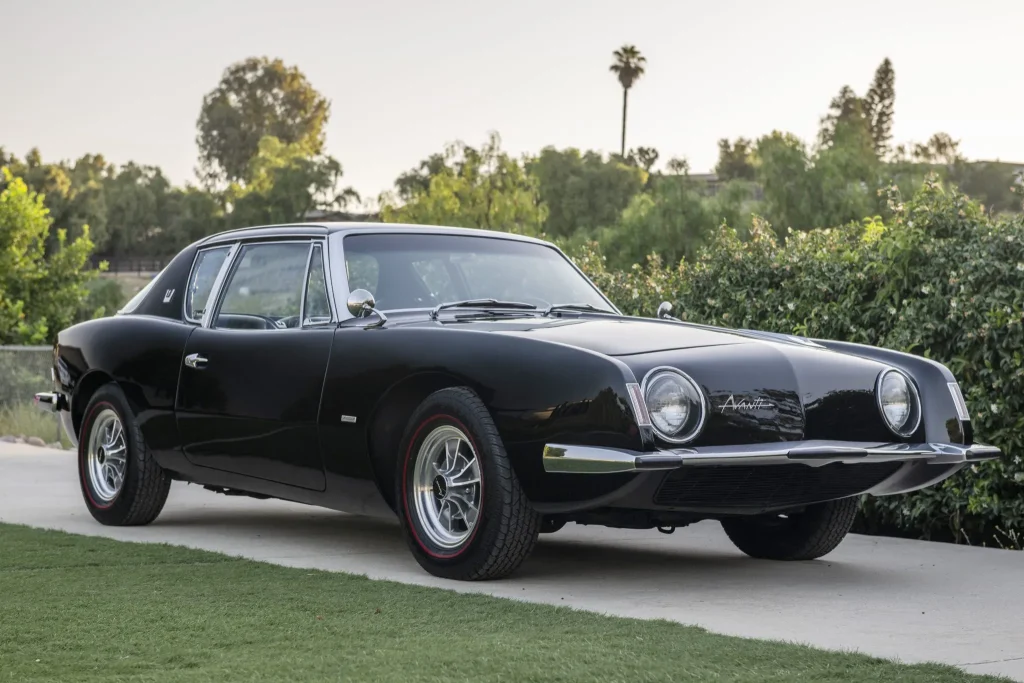
The Los Angeles County Museum of Art records the Avanti as designed in 1961 and manufactured by Studebaker in 1963, while describing Loewy as an industrial designer responsible for some of the era’s most recognizable products.
The important distinction is that Loewy was not an automotive beginner. By 1961, he had already worked extensively on cars.
What makes the Avanti fit this list is that its creator came from the broader industrial-design world, bringing a philosophy shaped by everything from locomotives to consumer products into a car project.
2. Jeep Wagoneer
The original Jeep Wagoneer demonstrates what can happen when an industrial designer approaches a vehicle as a complete product rather than simply a piece of automotive styling. Brooks Stevens studied architecture at Cornell University before establishing an industrial-design practice in Milwaukee.
His professional portfolio extended well beyond automobiles, covering household products, appliances, graphic design, motorcycles, and transportation.
PBS Wisconsin describes him primarily as an industrial designer and highlights his work on products ranging from the Jeep Wagoneer to the Oscar Mayer Wienermobile and Harley-Davidson motorcycles.
Willys needed something very different from its aging station wagon. The company faced increasing competition from vehicles that combined utility with more passenger-friendly features.
According to historical accounts, the new program was approved around 1961, with engineering handled separately while Stevens and Jeep’s small styling staff were responsible for the vehicle’s appearance.
Stevens’ solution was not simply to make an existing Jeep wagon look newer. The 1963 Wagoneer was conceived as a much more refined four-wheel-drive vehicle, combining passenger-car styling and comfort with genuine off-road capability. Jeep itself describes it as the father of the luxury 4×4 SUV category and credits Stevens with its styling.
That combination became the important part of the design story. Instead of treating four-wheel drive as something exclusively associated with work and rough terrain, the Wagoneer presented it in a package that could serve family transportation as well.
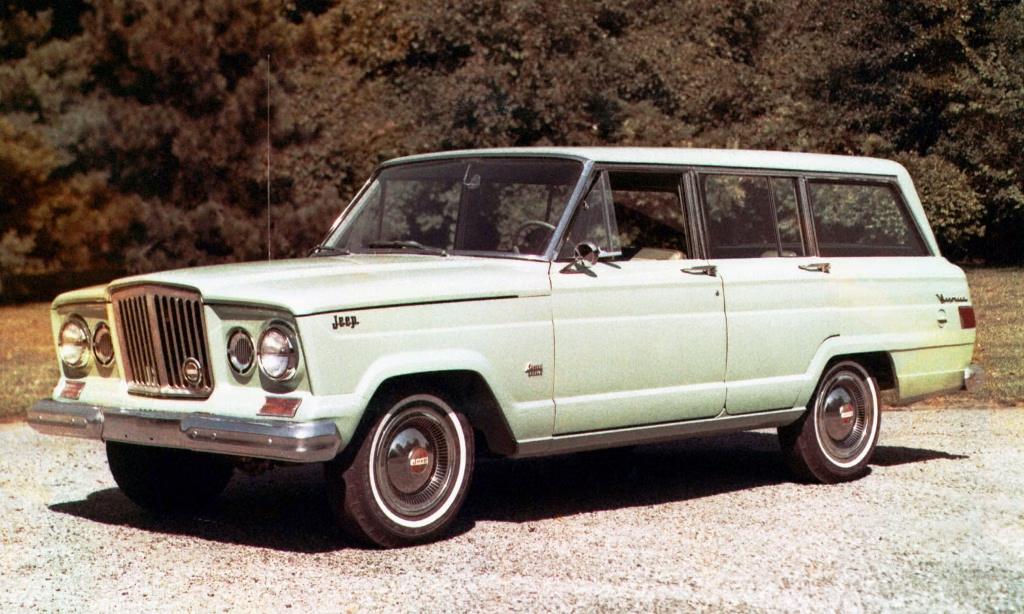
Its influence lasted far beyond the original launch. The SJ Wagoneer remained in production from 1963 through 1991, passing through Willys, Kaiser Jeep, AMC, and eventually Chrysler ownership without requiring a completely new basic body design.
That longevity provides some of the strongest evidence for Stevens’ success. He was not merely creating an attractive shape. His industrial-design background helped produce a practical package that could remain recognizable for nearly three decades while the technology and ownership behind it changed.
3. Jeep Cherokee XJ
The Jeep Cherokee XJ is an unusual case because its breakthrough design came from American Motors Corporation’s engineering and design team rather than a single celebrity automotive stylist.
The person most closely associated with the XJ’s exterior styling was Dick Teague, AMC’s vice president of product design.
Teague was an experienced automotive designer by the time the Cherokee arrived, but the story becomes unusual because the vehicle’s compact proportions were driven heavily by engineers seeking a radically more space-efficient 4×4.
AMC faced a straightforward challenge. It needed to create a four-wheel-drive vehicle that was significantly lighter and more compact than traditional body-on-frame utility vehicles.
The company developed what became known internally as the XJ program, using a unibody construction method that was still unusual for a serious off-road vehicle. Jeep’s own historical material identifies the 1984 Cherokee as the first Jeep to use unibody construction.
The design team’s solution eliminated much of the bulky structure associated with conventional SUVs. The Cherokee became shorter and narrower than the full-size SJ models while providing surprisingly useful interior space.
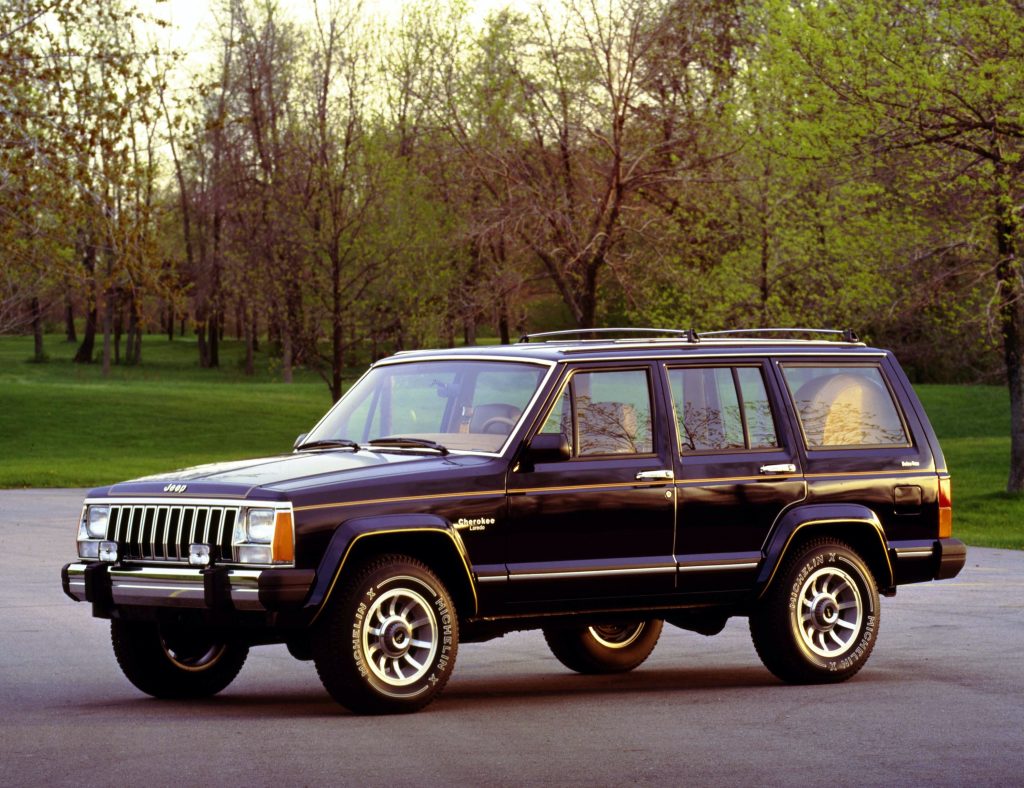
That engineering-led approach directly influenced the styling. Teague’s team had to work around the compact architecture rather than simply drawing an aggressive exterior first and asking engineers to make it work afterward.
When the 1984 Cherokee arrived, it helped establish the compact SUV formula that would become enormously important in the American market. Its upright greenhouse, squared proportions, and relatively efficient footprint looked purposeful rather than ornamental.
The proof of its importance is its longevity. The XJ remained in production in various markets until 2001, making it one of Jeep’s most enduring designs. Its combination of compact dimensions, four-wheel drive, and usable interior helped establish a template that later SUV manufacturers would repeatedly adapt.
4. Citroën DS
The Citroën DS was created by people who were certainly involved in automotive design, but its appearance was strongly shaped by a man whose background was sculpture rather than conventional car styling.
Italian sculptor Flaminio Bertoni became Citroën’s chief stylist and brought an artistic approach to automobile design that was unusual even by the standards of postwar Europe.
Bertoni had studied art and sculpture before working in automotive design. Citroën’s own historical material credits him with the DS’s exterior form, while the company’s technical team, led by André Lefèbvre, developed the car’s advanced engineering.
The distinction matters because the DS was never simply a conventional automobile with futuristic decoration. Bertoni’s sculptural instincts shaped the entire body.
The car’s tapered rear, extremely smooth surfaces, and distinctive roofline produced an appearance that seemed dramatically different from the boxier cars surrounding it when it debuted at the 1955 Paris Motor Show.
The response demonstrated how radical the design was. Citroën received thousands of orders during the first day of the show, according to the company. The DS also introduced sophisticated technology, including hydropneumatic suspension, which allowed the body to maintain ride height and contributed to its remarkable ride quality.
Bertoni’s contribution was therefore more than styling a grille or reshaping fenders. He treated the automobile almost like a large sculpture, while Lefèbvre’s engineering team created the mechanical architecture needed to make that shape practical.
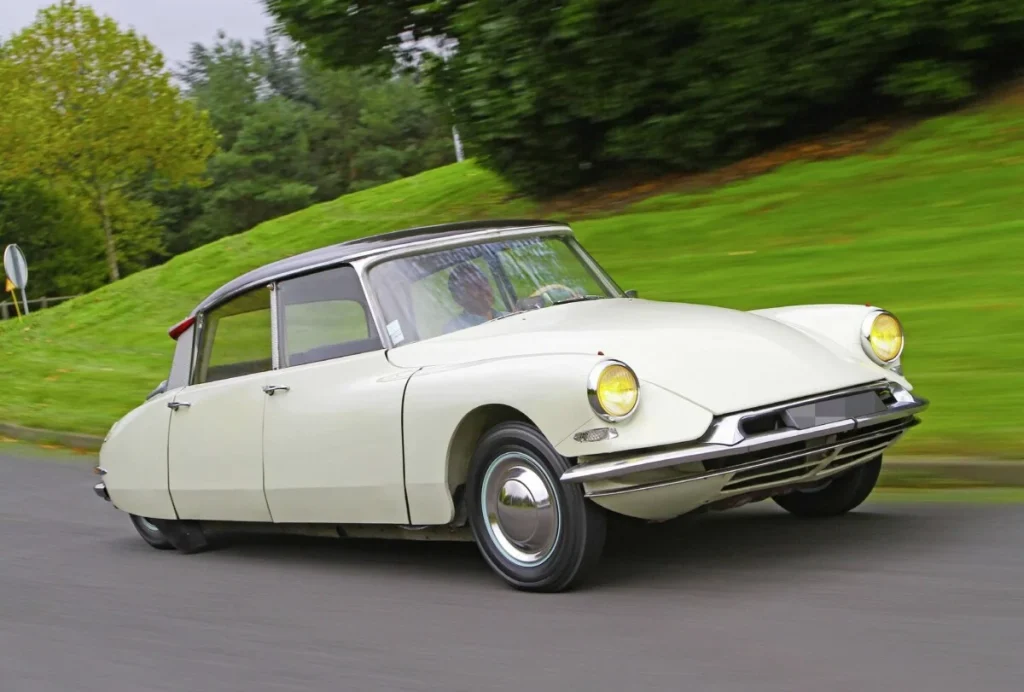
The DS remained in production from 1955 to 1975, becoming one of the most influential European automobiles of the twentieth century. Its significance was eventually recognized far beyond the automotive industry. The DS is now part of major museum collections, including the Museum of Modern Art’s automotive design holdings.
Bertoni’s story is compelling precisely because his artistic training was not a side note. It was central to why the DS looked unlike almost anything else on the road.
5. BMW 700
The BMW 700 is an interesting example of a car shaped by someone whose career was not rooted in conventional automotive styling. Its exterior was created by Giovanni Michelotti, an Italian designer whose independent studio became one of Europe’s important sources of vehicle design.
Michelotti worked across many manufacturers, but the BMW 700 was significant because its styling helped give BMW a much-needed new direction during a financially difficult period.
The story began when Austrian businessman and racing driver Wolfgang von Trips encouraged BMW to consider a small sports-oriented car based on the company’s existing compact platform. BMW eventually commissioned Michelotti to develop the body.
The designer’s proposal transformed the small mechanical package into a clean, modern coupe with proportions that differed sharply from BMW’s larger cars of the period.
BMW introduced the 700 in 1959, initially as a coupe and later in sedan and convertible forms. The company used a rear-mounted, air-cooled two-cylinder engine derived from BMW’s motorcycle technology, while the lightweight body helped deliver useful performance despite its modest power.
BMW’s historical records credit the 700 with becoming an important commercial success. More than 188,000 examples were produced between 1959 and 1965, giving the company valuable sales during a period when its larger luxury models were struggling.
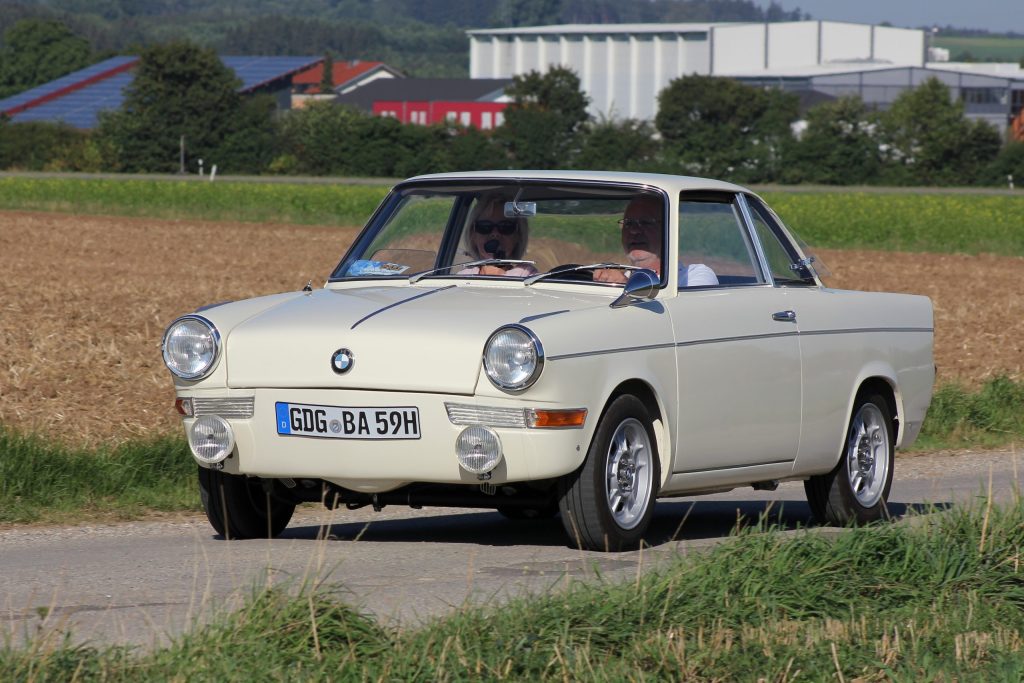
Michelotti’s importance was not that he lacked design experience. Rather, he approached BMW as an independent Italian designer, bringing a different visual language to a German manufacturer.
The resulting car helped BMW survive a difficult period and became an important step toward the company’s later transformation into a major premium automaker.
6. Chevrolet Corvette C2
The second-generation Chevrolet Corvette is closely associated with Larry Shinoda, but his path to the project was not that of a traditional European-style automotive stylist.
Shinoda was an American designer who joined General Motors after working in automotive design and became an important member of the team responsible for one of America’s most recognizable sports cars.
The C2 story began when Chevrolet wanted to replace the original Corvette with something more sophisticated and competitive. Shinoda worked under GM design chief Bill Mitchell, while the engineering side was led by Zora Arkus-Duntov. The result was the 1963 Corvette Sting Ray.
Shinoda’s contribution was particularly important to the exterior identity. The car introduced a sharply sculpted body, hidden headlights, pronounced fenders and, on the 1963 coupe, the famous split rear window.
The design drew inspiration from both racing machinery and marine forms, producing a shape that looked radically different from the first-generation Corvette.
GM introduced the C2 for the 1963 model year, and Chevrolet offered both coupe and convertible versions. The new independent rear suspension was a major engineering change, while the available V8 engines gave the Corvette the performance expected from an American sports car.
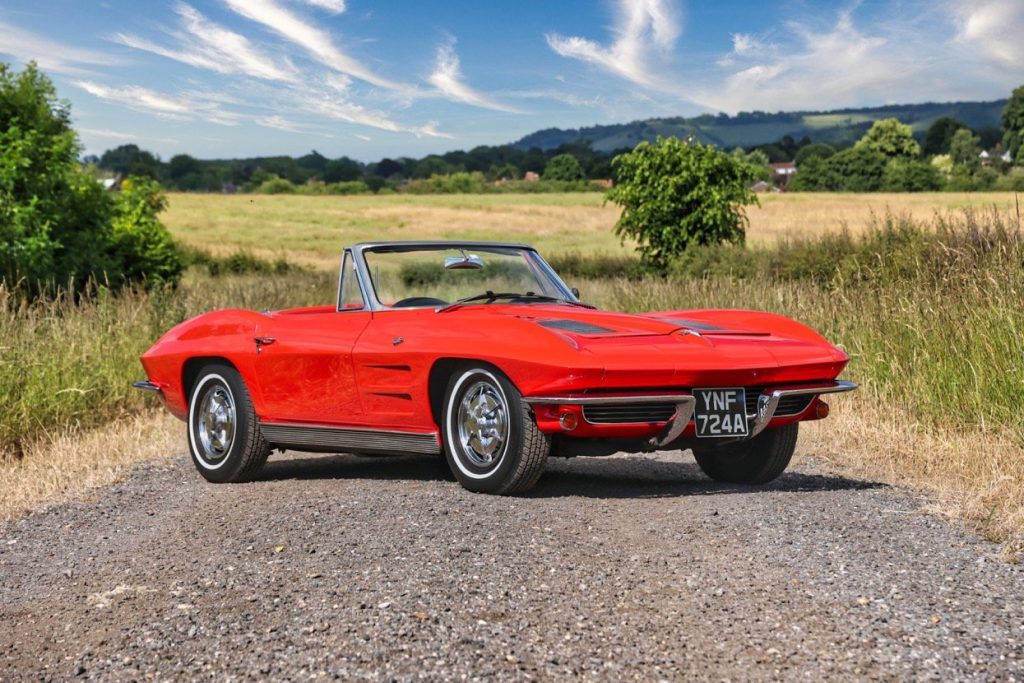
The split-window coupe became one of the most recognizable Corvette designs ever produced. Chevrolet built 21,513 Corvettes for 1963, according to GM’s historical production information, although the split-window treatment lasted only that model year.
Shinoda’s achievement demonstrates how an individual designer working within a large corporate studio could still produce a vehicle whose appearance became more famous than the design bureaucracy behind it. The C2 established a visual direction that helped turn the Corvette into a global performance-car icon.
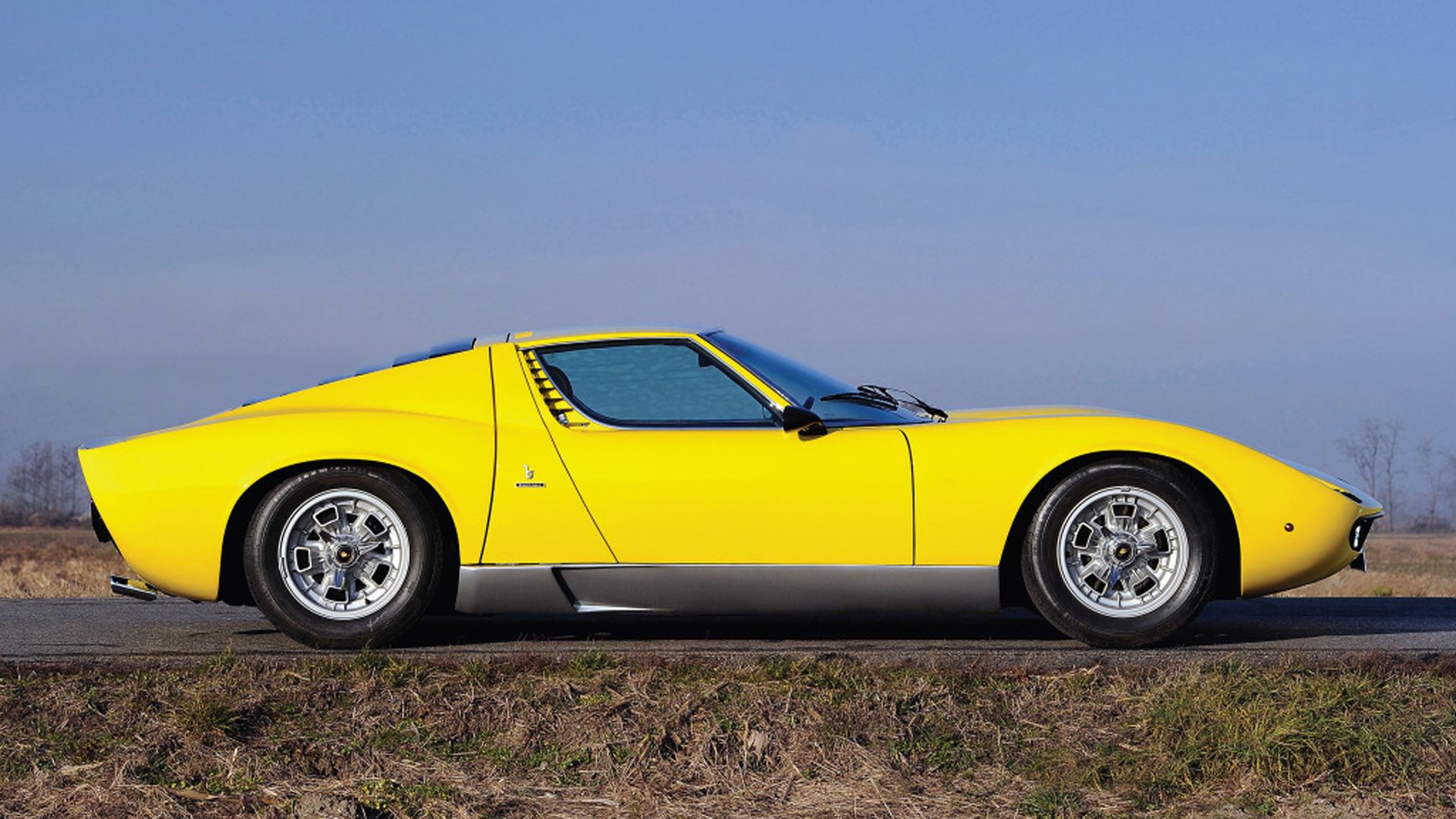
7. Lamborghini Miura
The Lamborghini Miura is one of the strongest examples of a car whose revolutionary appearance came from a designer whose career extended well beyond conventional automobile styling.
Marcello Gandini was not yet a famous automotive designer when he joined Bertone, but he quickly demonstrated an ability to create forms that challenged established ideas about how a performance car should look.
Gandini became head of Bertone’s design department in 1965 after succeeding Giorgetto Giugiaro. His first major project for Lamborghini was the Miura, developed around a revolutionary engineering concept created by Lamborghini engineers Gian Paolo Dallara, Paolo Stanzani and test driver Bob Wallace.
The transverse, mid-mounted V12 layout was the foundation, but Gandini gave that mechanical package its unforgettable visual identity.
Lamborghini unveiled the Miura at the 1966 Geneva Motor Show. Its extremely low nose, sweeping roof, rising rear haunches and distinctive eyelashes around the headlights made it unlike the front-engine grand tourers that dominated the era.
Lamborghini’s historical material identifies Gandini as the designer and notes that the production Miura entered the market in 1967. The company eventually produced 764 examples across the P400, S and SV versions.
The fascinating part is how little conventional practicality influenced the shape. Gandini designed around the car’s central mechanical idea, producing proportions that visually communicated the mid-engine layout even to people who knew nothing about engineering.
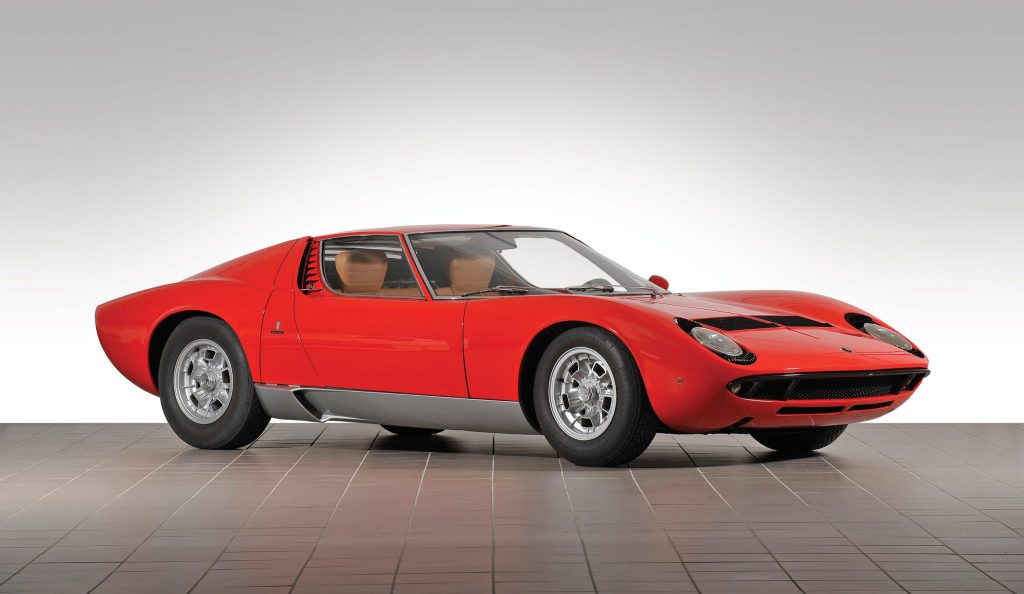
The Miura subsequently became one of the cars most closely associated with the birth of the modern supercar. Its influence reached far beyond Lamborghini, demonstrating that a road car could use racing-inspired mechanical architecture while presenting it with an almost sculptural body.
Gandini’s background at Bertone gave him access to automotive projects, but the Miura was evidence that an independent design house could fundamentally alter the visual language of high-performance cars.
8. Ford Mustang
The original Ford Mustang is sometimes presented as the product of a single designer, but its creation was actually a corporate project involving executives, engineers, marketers and several designers. One particularly important figure was Joe Oros, who led Ford’s design team responsible for turning the Mustang concept into a production vehicle.
Oros had an extensive automotive design career, but the Mustang’s development illustrates how Ford’s design process differed from the image of a lone stylist sketching an entire car. Ford product planner Donald Frey and Lee Iacocca pushed the program forward, while designers under Oros competed to establish the car’s appearance.
The winning design emerged from Ford’s design studios in 1962. Oros later described the team effort behind the Mustang, with David Ash and John Oros among the designers involved in developing the successful proposal.
The production Mustang arrived in April 1964 and was based heavily on the compact Falcon’s architecture. That allowed Ford to keep development and manufacturing costs under control while giving the new model a dramatically different identity.
Ford’s historical records show how quickly the formula caught on. The Mustang sold more than 400,000 units in its first full year, far exceeding Ford’s initial expectations.
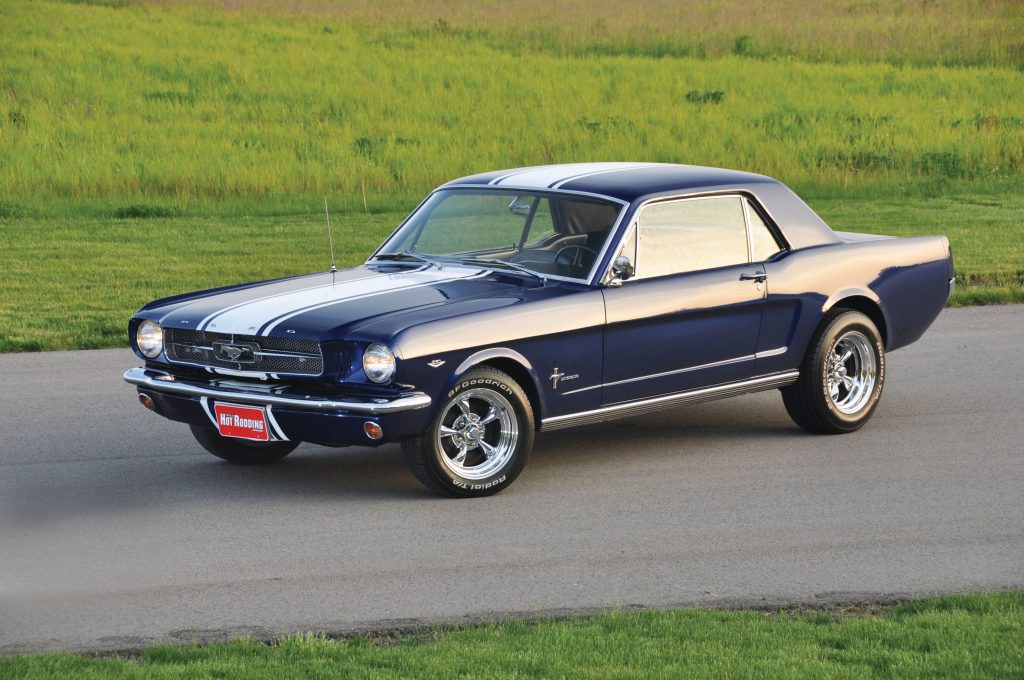
The significance of the Mustang’s design was its balance. It looked sporty without requiring the price or mechanical complexity of an exotic sports car. A long hood, short rear deck, sculpted sides and compact dimensions created an entirely new visual category for American buyers.
Oros therefore represents a different kind of outsider story. He was not a sculptor or industrial designer suddenly creating a car. Instead, his achievement was leading a multidisciplinary design process that transformed an ordinary compact-car platform into one of the most influential American automotive designs ever produced.
