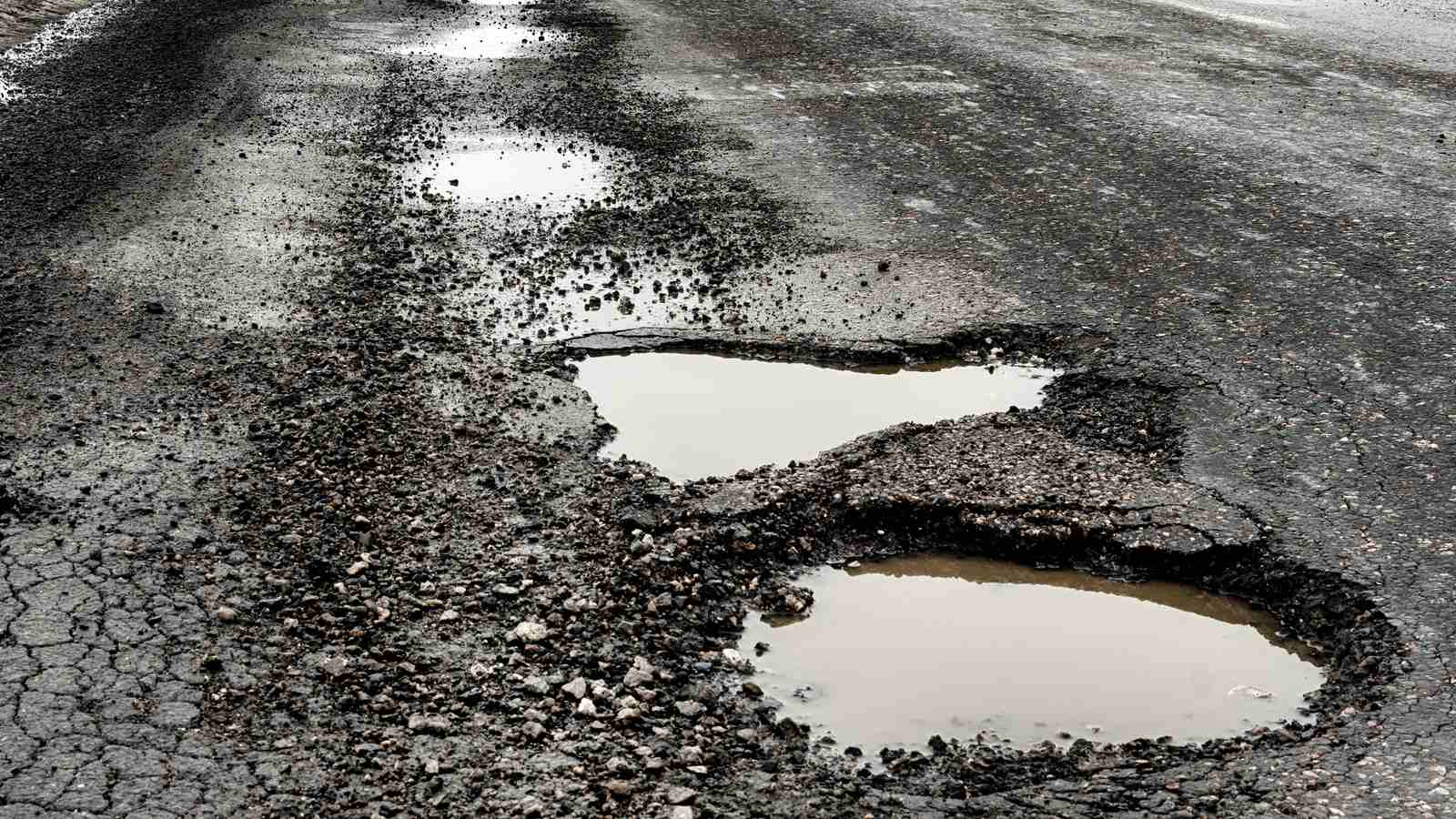
America’s roads may look like a routine part of daily life, but deteriorating pavement and congestion are creating a substantial financial burden for motorists.
According to the American Society of Civil Engineers’ 2025 Report Card for America’s Infrastructure, driving on deteriorated and congested roads costs the typical U.S. driver more than $1,400 a year through vehicle operating expenses and lost time.
The problem is spread across the country’s enormous transportation network. The United States has more than 4.1 million miles of public roadways, connecting communities, supporting freight movement, and carrying millions of people to work, school, and other destinations every day.
Yet ASCE gave America’s roads a D+ grade, indicating that significant portions of the system remain in poor condition and require substantial attention.
The 2025 assessment found that 39% of major U.S. roads are in poor or mediocre condition, an improvement from 43% in 2020. That progress shows that recent infrastructure investment has produced some results, but ASCE says the improvement has not eliminated the underlying funding and maintenance problem.
For motorists, the consequences are tangible. Damaged pavement contributes to repairs and tire wear, while congested roads consume valuable hours that could otherwise be spent working, with family, or doing other activities.
Repairs, Tires, and Lost Time Add Up Quickly
One of the clearest costs identified by ASCE comes directly from the condition of the pavement. Deteriorated roads increase vehicle operating expenses because drivers encounter potholes, rough surfaces, and other defects that can accelerate wear on tires and components.
ASCE calculated that additional vehicle operating costs associated with deteriorated roads reached $725 per motorist in 2023.
That figure represents money motorists would not necessarily have to spend if roads were consistently maintained in better condition. A rough roadway can increase tire wear and contribute to damage involving suspension components, wheels, and other parts of a vehicle.
The effects can be particularly frustrating because drivers have little control over the condition of the roads they use. A motorist can maintain a vehicle properly, check tire pressures, and follow recommended service intervals, yet still encounter road conditions capable of shortening the life of components.
The financial burden becomes even more significant when congestion is added. ASCE found that the typical U.S. driver lost 43 hours to traffic congestion in 2024, up from 42 hours in 2023. The organization valued that lost time at $771 per driver, compared with $733 the previous year.
Those 43 hours amount to more than five standard eight-hour workdays. In other words, the average motorist effectively spends more than a workweek each year sitting in traffic rather than moving efficiently toward a destination.
When the $725 in additional vehicle operating costs and $771 in congestion-related lost time are considered together, the figures add up to $1,496. ASCE summarizes the combined burden as more than $1,400 per driver annually.
The precise components come from different measurement years, with vehicle operating costs based on 2023 data and congestion losses based on 2024 data, so they should not be treated as a single-year accounting total. Still, the calculation illustrates the scale of the problem facing American motorists.
Nearly Four in 10 Major Roads Need Attention
The condition of America’s road network is not uniformly poor. Some major routes receive substantial investment because they carry large volumes of traffic, while other roads receive less attention.
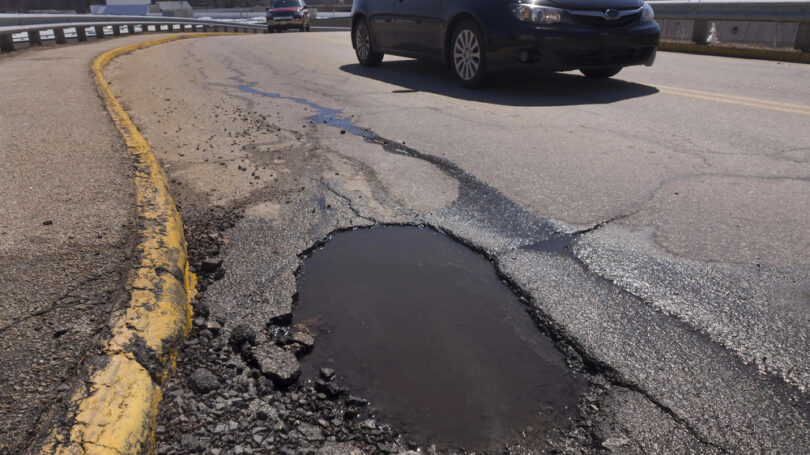
ASCE found that 39% of major roads are rated poor or mediocre, down from 43% in 2020. That improvement is significant, but it still means a large portion of the country’s major roadway network is operating below desirable conditions.
The organization also reported that the share of federally eligible highway pavement rated as having poor ride quality rose from 15.8% in 2008 to 22.6% in 2018. During the same period, the portion rated as good increased from 40.7% to 47.2%. The figures show that road conditions can improve in some areas while other sections continue to deteriorate, reflecting the uneven results of infrastructure investment.
Road condition is also connected to vehicle trends. Modern vehicles have become heavier over the past several decades, and electric vehicles are generally heavier still because of their large battery packs. ASCE notes that vehicle weight affects pavement, particularly when multiplied across millions of vehicles and heavy commercial trucks.
Freight traffic creates another challenge. Trucks are essential to the U.S. economy, but their weight places significant demands on pavement.
ASCE expects freight moved by truck to increase by 53% by weight and 91% by value between 2022 and 2050. That means roads will have to support an enormous amount of economic activity while also dealing with aging infrastructure.
Weather adds another layer of difficulty. Extreme weather events can accelerate deterioration and complicate maintenance schedules, making it more expensive and difficult for transportation agencies to keep roads in good condition.
America’s Road Funding Gap Remains Enormous
Perhaps the biggest challenge identified by ASCE is not simply the condition of roads today, but whether enough money will be available to maintain them in the future.
The organization estimates that the U.S. roadway system needs approximately $2.233 trillion in investment between 2024 and 2033 to reach a state of good repair. If current federal investment levels continue, ASCE estimates a $684 billion funding gap over the next decade.
The gap exists despite the massive federal infrastructure spending approved in recent years. ASCE says more than $591 billion has been directed toward transportation projects through the Infrastructure Investment and Jobs Act since late 2021.
The organization considers that investment a positive development but says additional and sustained funding will be necessary.
The problem becomes even more complicated because the traditional mechanism used to finance federal road infrastructure is losing purchasing power.
The federal gasoline tax has remained at 18.4 cents per gallon since 1993, while the diesel tax has remained at 24.4 cents per gallon. Because construction costs have increased and vehicles have become more fuel-efficient, ASCE estimates that the federal gas tax has lost 80% of its purchasing power since it was last raised in 1993.
That creates a structural problem. Americans are driving vehicles that generally consume less fuel per mile, meaning fewer gallons are purchased for the same amount of travel. At the same time, the cost of labor, materials, and construction has risen. The traditional funding model therefore faces pressure from both directions.
States have begun experimenting with alternatives. ASCE notes that 34 states adjusted or approved motor fuel tax increases between 2013 and 2024. Some have also examined electric-vehicle registration fees, charging-related taxes and fees, and road-usage charges as potential sources of transportation revenue.
The rise of EVs makes this issue particularly important. Electric vehicles do not pay the federal gasoline tax because they do not consume gasoline, yet they still use the same roads.
As EV adoption increases, transportation authorities face growing pressure to develop funding systems that are not dependent almost entirely on gasoline consumption.
Poor Roads Also Create a Safety Problem
The financial costs are only one part of the concern. Road condition also intersects with public safety.
ASCE reported 40,990 roadway deaths in 2023, while noting that 47% of roadway fatalities occur in rural areas, even though rural areas account for only about 19% of the U.S. population.
Roadway safety depends on much more than pavement quality. Lane design, visibility, intersections, lighting, barriers, signage, and traffic management all play important roles. But deteriorating surfaces can create additional hazards, particularly when drivers encounter potholes or damaged pavement unexpectedly.
ASCE’s recommendations therefore extend beyond simply building more roads. The organization emphasizes maintaining existing infrastructure, improving road operations, incorporating safety-oriented designs, and ensuring that transportation investment supports multiple modes.
That approach matters because adding road capacity alone does not necessarily eliminate congestion. If existing roads are poorly maintained, new lanes can provide additional capacity while leaving the underlying maintenance problem unresolved.
America’s transportation challenge is ultimately a question of maintaining what already exists while preparing for future demand.
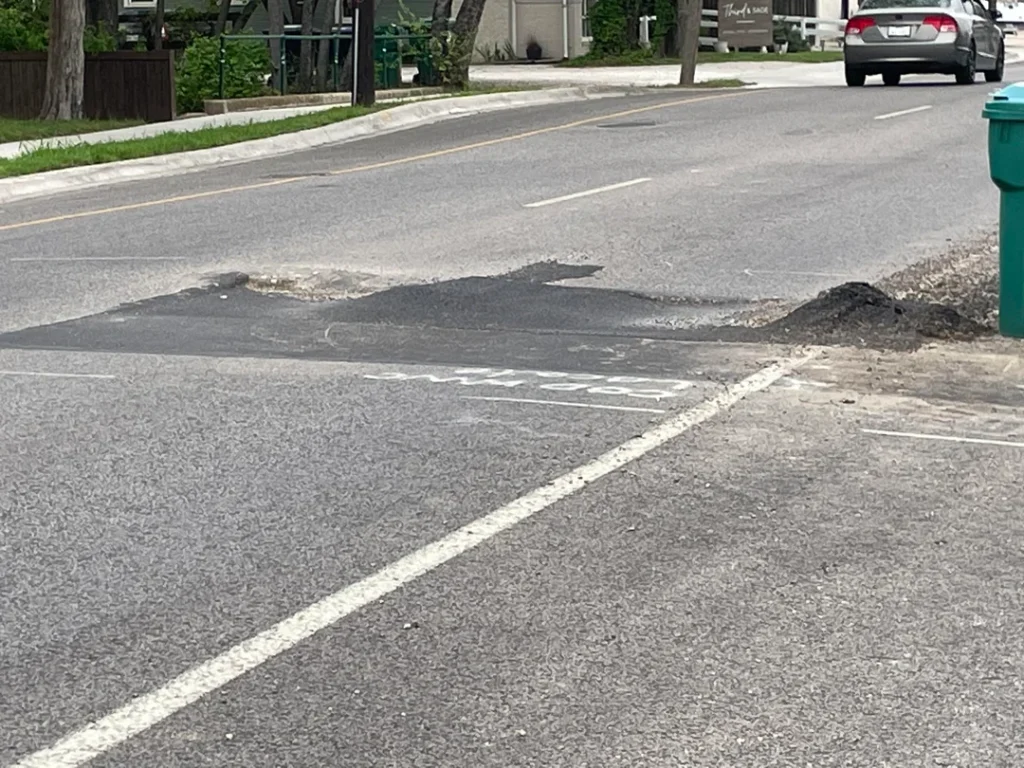
The D+ road grade, the finding that 39% of major roads are in poor or mediocre condition, the 43 hours drivers lose to congestion, and the projected $684 billion funding gap all highlight the same issue. Maintaining the country’s roadway network requires consistent, long-term investment rather than waiting until deteriorating roads require major repairs.
For individual motorists, the consequences are already visible in repair bills, tire replacement, longer commutes, and wasted hours. For the wider economy, unreliable roads can slow freight, increase transportation costs, and make travel less predictable.
The 2025 ASCE report therefore provides a reminder that the cost of bad roads extends far beyond potholes. Every damaged surface and congested highway can transfer part of the infrastructure problem directly to drivers.
Unless funding keeps pace with maintenance needs, that burden could become more expensive in the years ahead.