World War II forced automakers to think about vehicles in completely different ways. Factories shifted toward military production, engineers worked with scarce materials, and some civilian projects continued quietly despite the enormous industrial demands of war.
Several of those wartime ideas eventually became civilian cars with lives far removed from their original purpose. Some were created specifically for military work and later adapted for farms and families.
Others were secretly engineered as economical postwar cars while production was focused elsewhere. This article looks at eight documented examples, explaining why each was created during wartime and how it eventually became a civilian classic, while deliberately excluding the Volkswagen Beetle.
1. Jeep CJ-2A
The Jeep CJ-2A is perhaps the clearest example of a wartime vehicle becoming a civilian icon. Its story began with the U.S. Army’s search for a lightweight reconnaissance vehicle in 1940.
The Army asked manufacturers for a compact four-wheel-drive machine capable of carrying personnel, equipment, and supplies across difficult terrain.
Willys-Overland, Bantam, and Ford developed vehicles for the program, eventually leading to the standardized Willys MB and Ford GPW used extensively by American and Allied forces. Jeep’s historical records state that the original military Jeep program was created specifically for the Army’s 1/4-ton reconnaissance requirement.
What made the later civilian version interesting is that Willys was thinking about peacetime applications before World War II had even ended. The company realized that the vehicle’s combination of four-wheel drive, compact dimensions, and mechanical simplicity could be valuable outside the military.
Tests of military Jeeps for agricultural work began during the war, helping reveal what needed to change for civilian customers.
The result was the 1945 CJ-2A, with “CJ” meaning Civilian Jeep. Willys modified the military machine with features such as a tailgate, side-mounted spare tire, larger headlights, and revised gearing and equipment intended for farming and industrial work.
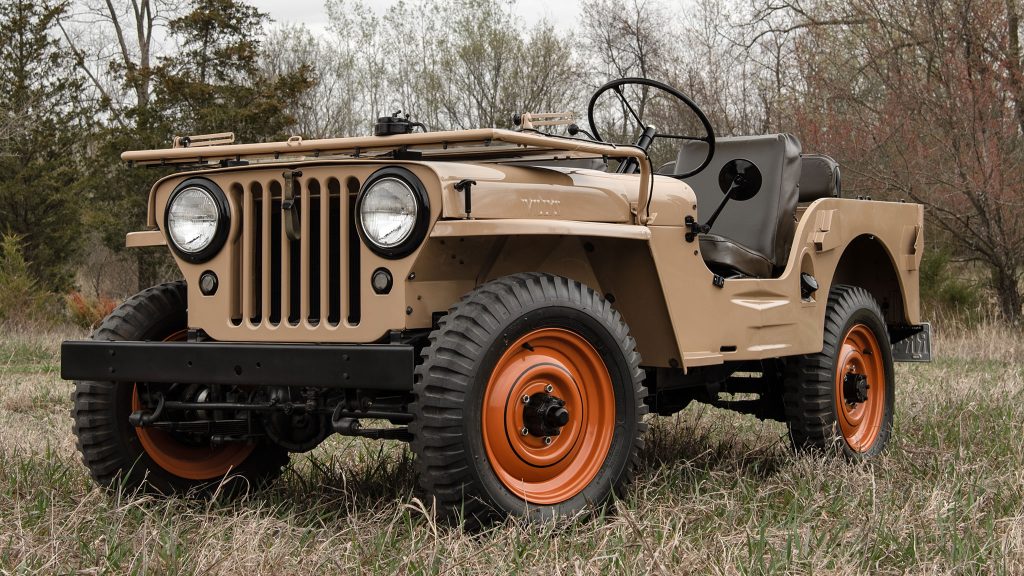
Willys marketed it heavily as a farm workhorse at a time when millions of American farms lacked tractors or trucks. The transition worked. More than 200,000 CJ-2As were produced before the model gave way to the CJ-3A.
The remarkable part is that a vehicle born from an urgent wartime military specification became the foundation for America’s civilian Jeep culture.
2. Aston Martin 2-Litre Sports
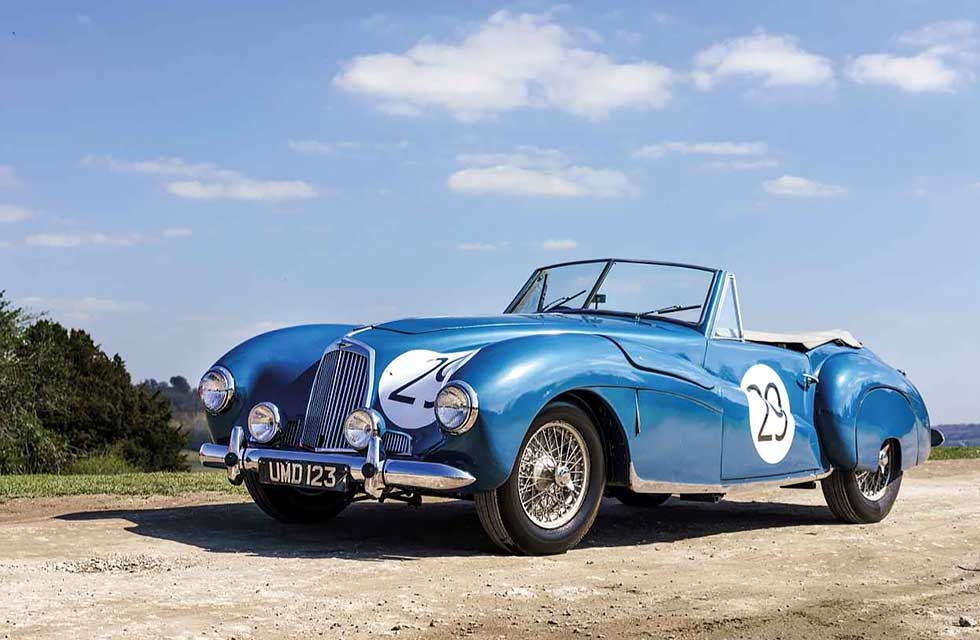
The Aston Martin 2-Litre Sports, later retrospectively known as the DB1, has a far less obvious wartime origin. Unlike a military Jeep, this car was conceived as a sports car project while Britain was still at war. The foundation was the Aston Martin Atom, an experimental car developed during World War II by engineer Claude Hill.
The Atom was an ambitious attempt to investigate new automotive construction techniques at a time when civilian automobile production in Britain had largely stopped.
Hill developed a lightweight tubular chassis and a 2.0-liter four-cylinder engine, creating a technologically interesting prototype despite the extraordinary limitations imposed by wartime Britain.
Historical records from the Society of Automotive Historians note that the Atom project began during the war and later provided the basis for Aston Martin’s first postwar production car.
When businessman David Brown purchased Aston Martin in 1947, he inherited the opportunity to turn the Atom’s engineering into something customers could actually buy. The company updated the prototype and prepared it for production. The resulting Aston Martin 2-Litre Sports debuted at the 1948 London Motor Show.
It was not a mass-market vehicle. Only 15 examples were produced between 1948 and 1950, making it exceptionally rare today.
Its importance therefore comes less from sales numbers and more from what it represented. The Atom had been created under wartime conditions when Aston Martin could not simply pursue normal showroom products. Yet its engineering survived the transition to peace and became the starting point for the new ownership era of Aston Martin.
That makes the 2-Liter Sports a genuine bridge between wartime experimentation and postwar British sports-car production.
3. Land Rover Series I
The Land Rover Series I was born directly from Britain’s difficult postwar economic situation, with the wartime Jeep serving as the inspiration rather than the vehicle being a direct military design.
Rover’s chief engineer Maurice Wilks had used a Willys Jeep on his farm in Wales during the war and recognized that there was a potential civilian market for a similar machine. In 1947, he famously sketched the basic idea in the sand on a Welsh beach.
The timing was critical. Britain was emerging from World War II with severe shortages of raw materials, while Rover’s traditional luxury and passenger cars were difficult to justify in the immediate postwar market. Steel was rationed, and manufacturers needed products that could contribute to exports and industrial recovery.
Wilks therefore proposed an inexpensive utility vehicle that could serve farmers and other businesses. Early development concentrated heavily on agricultural work. The prototype incorporated power take-off equipment that could operate machinery, allowing the vehicle to perform some jobs normally associated with a tractor.
Rover also found an ingenious way around Britain’s steel shortage. Early Land Rovers used lightweight aluminum alloy body panels, while the chassis was designed with production efficiency in mind. Even the original color had a wartime connection because surplus aircraft cockpit paint was available.
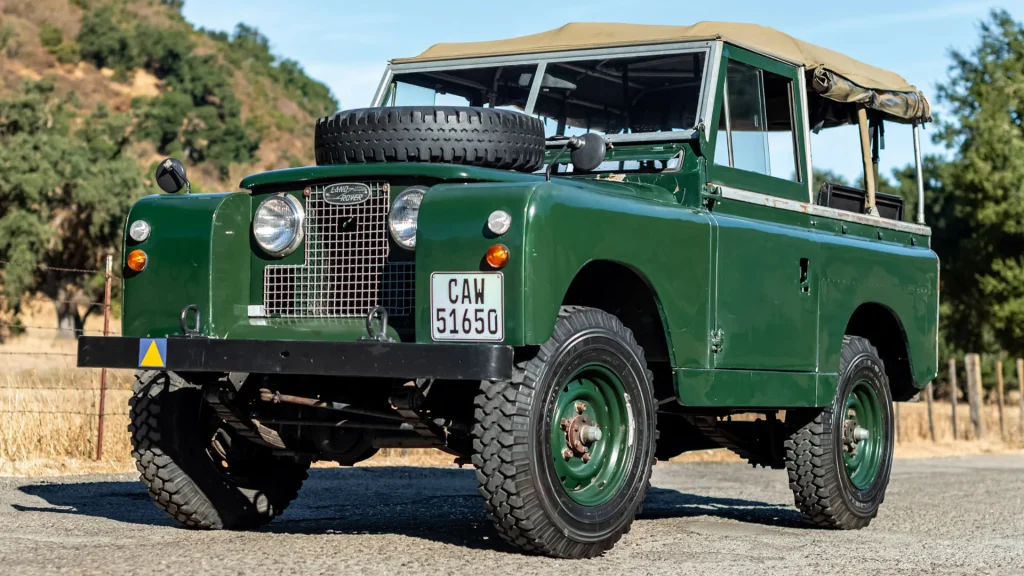
The production vehicle debuted at the 1948 Amsterdam Motor Show, after an extraordinarily short development period. The Series I soon became far more than a temporary postwar utility vehicle. Its capability and simple construction created the foundation for the Land Rover brand.
What began as Rover’s answer to a postwar shortage and the need for an exportable work vehicle eventually became one of the world’s best-known four-wheel-drive nameplates.
4. Toyota Land Cruiser
The Toyota Land Cruiser’s roots are closely connected to Japan’s postwar need for a rugged utility vehicle, and its development accelerated because of the Korean War.
Toyota’s early four-wheel-drive project emerged from a government requirement for a compact military-style vehicle, with the company building a prototype known as the Toyota BJ in 1951.
The BJ was developed using a truck-based chassis and a powerful six-cylinder engine. Toyota wanted to demonstrate that its vehicle could handle demanding terrain, and in July 1951 test driver Ichiro Taira drove a BJ to the sixth station of Mount Fuji, a feat Toyota says helped establish its reputation for capability.
The Korean War then created an important commercial opportunity. The U.S. military had a major presence in Japan, and demand for rugged vehicles increased. Toyota’s BJ was subsequently refined for production and renamed Land Cruiser in 1954. Toyota adopted the name partly to distinguish its vehicle from competing four-wheel-drive models.
Unlike a purpose-built wartime American Jeep, the Land Cruiser was developed into a vehicle that could serve military, government, commercial, and civilian customers. That flexibility became central to its success.
The early Land Cruiser also benefited from Toyota’s decision to develop a vehicle capable of surviving harsh conditions while remaining mechanically straightforward. That philosophy helped the model spread into markets where roads were limited or nonexistent.
The vehicle eventually became a global nameplate rather than remaining a military-style machine. Toyota’s own historical timeline identifies the BJ as the beginning of the Land Cruiser story and records the name change in 1954.
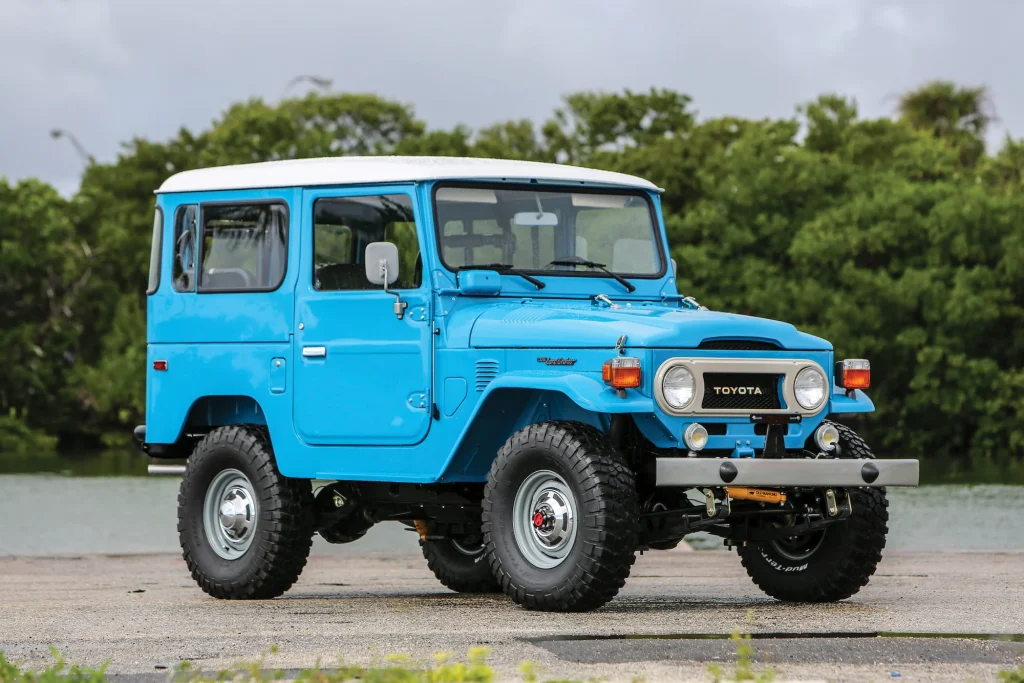
Its transformation from a postwar utility project into a civilian classic was driven by necessity. Japan needed rugged transportation, Toyota needed a commercially viable vehicle, and the Korean War created an immediate opportunity to prove its capabilities.
5. Citroën 2CV
The Citroën 2CV was conceived before World War II, but the war completely changed its development and delayed its arrival as a production car. Citroën’s project was aimed at creating an inexpensive, extremely practical automobile for rural France.
The brief was famously demanding. The car needed to transport people and agricultural goods over poor roads while remaining simple, economical, and easy to operate.
Citroën’s engineers developed prototypes in the late 1930s under the leadership of Pierre-Jules Boulanger. When World War II began, however, Citroën stopped its normal civilian vehicle production.
Several prototypes were hidden or dismantled to prevent them from falling into German hands. Engineers continued refining the concept quietly during the occupation, rather than abandoning it completely.
That wartime secrecy is a major part of the 2CV’s story. The car was not designed as a military vehicle, but its development survived because Citroën engineers continued working toward a postwar economy car while France was occupied.
When peace returned, Citroën finally revealed the production 2CV at the 1948 Paris Motor Show. The unusual appearance attracted immediate attention, but its purpose was straightforward. France needed affordable transportation, especially for rural families and workers.
The production car used simple engineering, modest power, and a lightweight construction philosophy. Citroën concentrated on keeping manufacturing and ownership costs low rather than chasing performance.
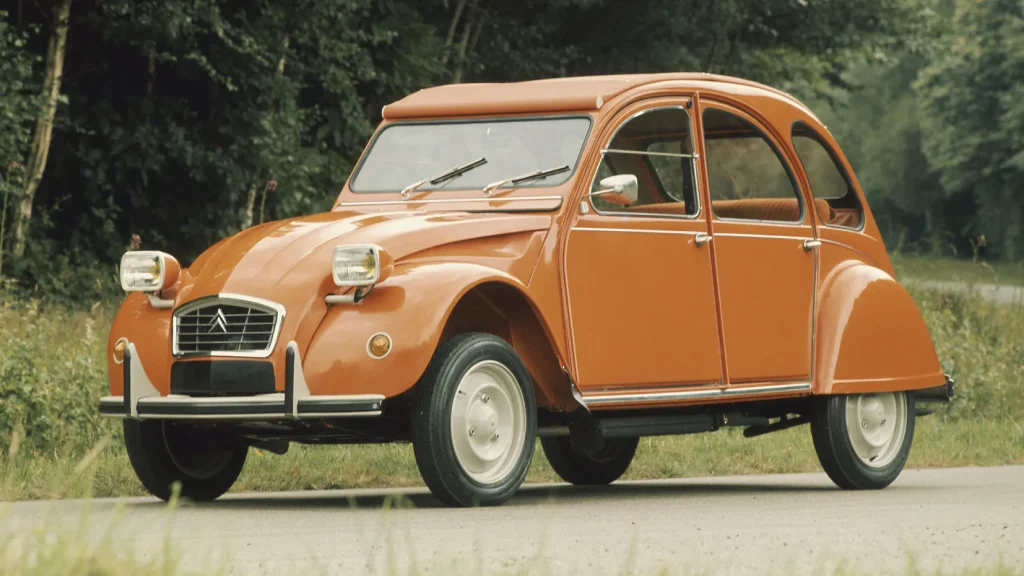
The approach worked remarkably well. Production continued for more than 40 years, with more than 5 million 2CVs and derivatives ultimately built.
The 2CV therefore became a civilian classic not because it was fast or luxurious, but because its wartime-delayed engineering matched the economic realities of postwar Europe almost perfectly.
6. Jeepster
The Jeepster demonstrates how a company tried to transform a military identity into a civilian lifestyle vehicle immediately after World War II.
Willys-Overland had spent the war producing military Jeeps, but company executives understood that the wartime contract would eventually disappear. The challenge was finding civilian customers who wanted Jeep capability without necessarily needing a farm machine.
The answer was the Jeepster, introduced for the 1948 model year. Unlike the utilitarian CJ series, the Jeepster was designed as a more comfortable and recreational vehicle. It had a conventional two-wheel-drive configuration available, although four-wheel drive eventually became part of the Jeepster story through later developments.
Willys positioned it as a vehicle for people who wanted something different from a conventional sedan. Its open body, side curtains, and relatively stylish appearance gave it a recreational character that was unusual for a Jeep-derived product.
The timing explains much of the concept. America was transitioning from wartime production to a consumer economy, and manufacturers were searching for new niches. Willys already possessed a powerful brand association with toughness and off-road capability, so using that reputation in a civilian recreational vehicle made commercial sense.
The Jeepster was not a huge sales success. Production ended after the 1950 model year, but the concept mattered because it helped establish the idea that Jeep could represent recreation as well as work.
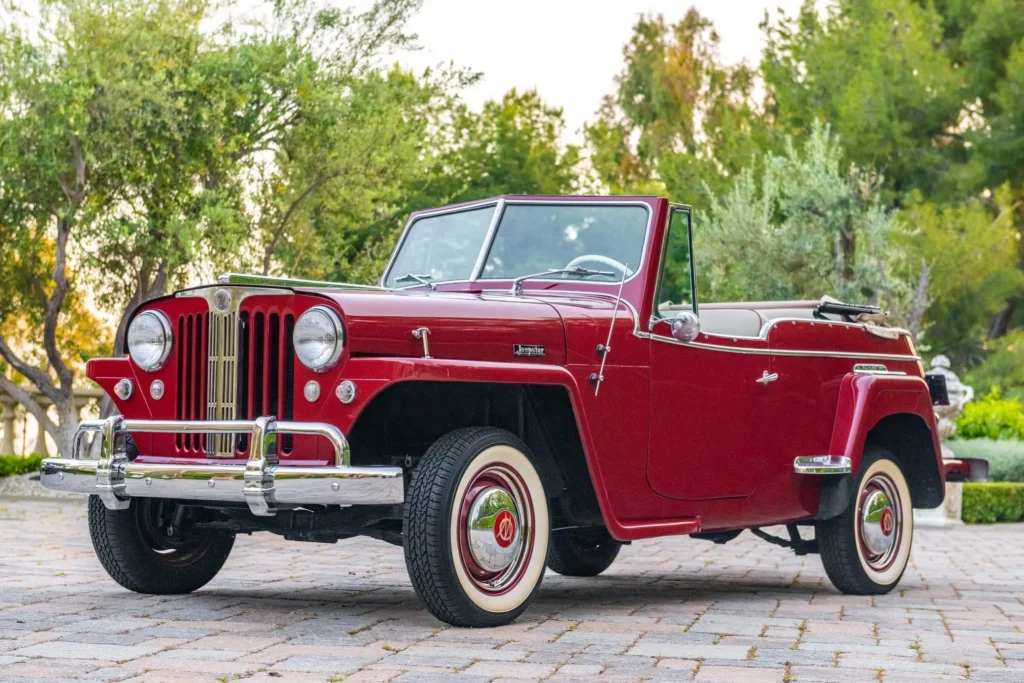
That idea eventually became central to the brand. Modern Jeep vehicles owe part of their identity to this early attempt to move beyond the purely utilitarian military image.
The Jeepster’s importance therefore lies less in its production numbers and more in the direction it established. A wartime work machine was being deliberately transformed into something people could buy for leisure.
7. Renault 4CV
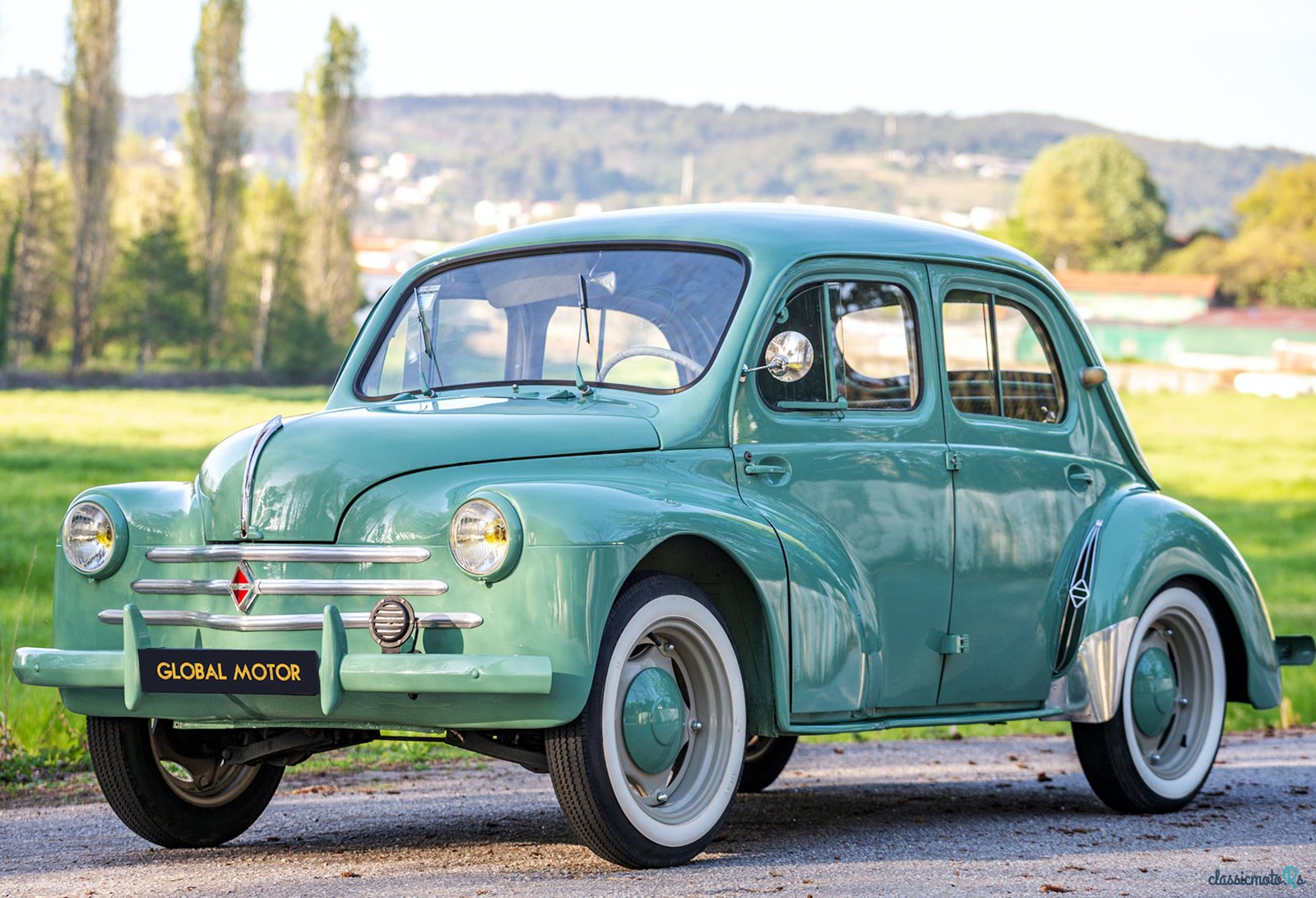
The Renault 4CV was one of the most remarkable cars to emerge from wartime Europe because its development was conducted in secret during the German occupation of France.
Renault engineers Fernand Picard and Charles-Edmond Serre believed France would need a small, economical automobile after the war, particularly because fuel and raw materials were scarce. Renault’s own historical records confirm that the company secretly worked on the small car during World War II and launched it in October 1946.
The project was particularly risky because Renault’s factory was under German control, and new passenger-car development had effectively been prohibited. Engineers therefore disguised the work as part of other projects.
Several prototypes were constructed during the occupation, with the design eventually adopting a rear-mounted engine and compact four-seat layout.
The reason for developing such a car was practical rather than glamorous. Postwar France faced shortages and needed affordable transportation that could be produced economically. Renault specifically designed the 4CV around low cost, efficiency and mass production.
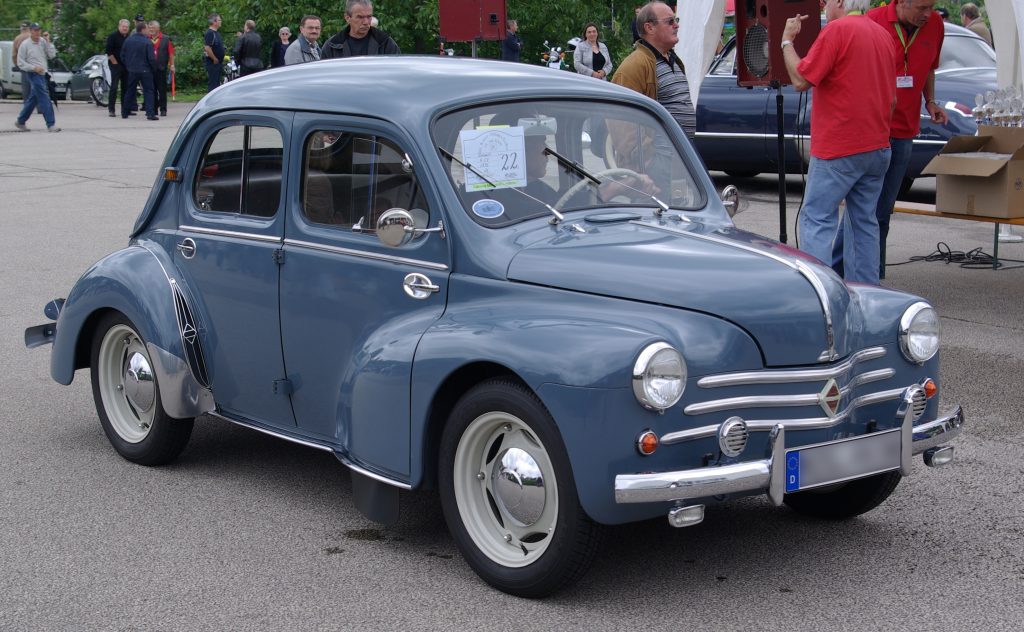
When the car finally appeared publicly at the 1946 Paris Motor Show, it attracted enormous attention. Renault later recorded production of more than 1.1 million examples before manufacturing ended in 1961.
The 4CV became a symbol of France’s return to civilian mobility. What began as a secret wartime engineering exercise ultimately became Renault’s first million-selling car and one of the defining French automobiles of the postwar era.
8. Volvo PV444
The Volvo PV444 was another car designed while World War II was still underway, even though Sweden remained neutral. Volvo recognized that the European automobile market would look dramatically different after the conflict.
Fuel was rationed, materials were difficult to obtain, and customers would need smaller, more economical vehicles than many prewar automobiles.
Volvo began developing the PV444 during the war as a smaller and more affordable car designed for the postwar market. The company introduced the model to the public in Stockholm on September 1, 1944, while the war was still continuing across Europe.
Volvo describes the event as a major turning point because the company was already preparing for the return of civilian motoring.
The car’s development was complicated by shortages. Volvo needed steel for production and eventually turned to American suppliers. Even after the war ended, industrial disruption delayed large-scale manufacturing. Series production finally began in February 1947.
The PV444 was deliberately different from Volvo’s larger prewar models. It featured a compact body, a four-cylinder engine, and unitized steel construction that helped reduce weight and simplify manufacturing. Volvo also equipped the car with an important safety feature, a laminated windshield that reflected the company’s growing emphasis on occupant protection.
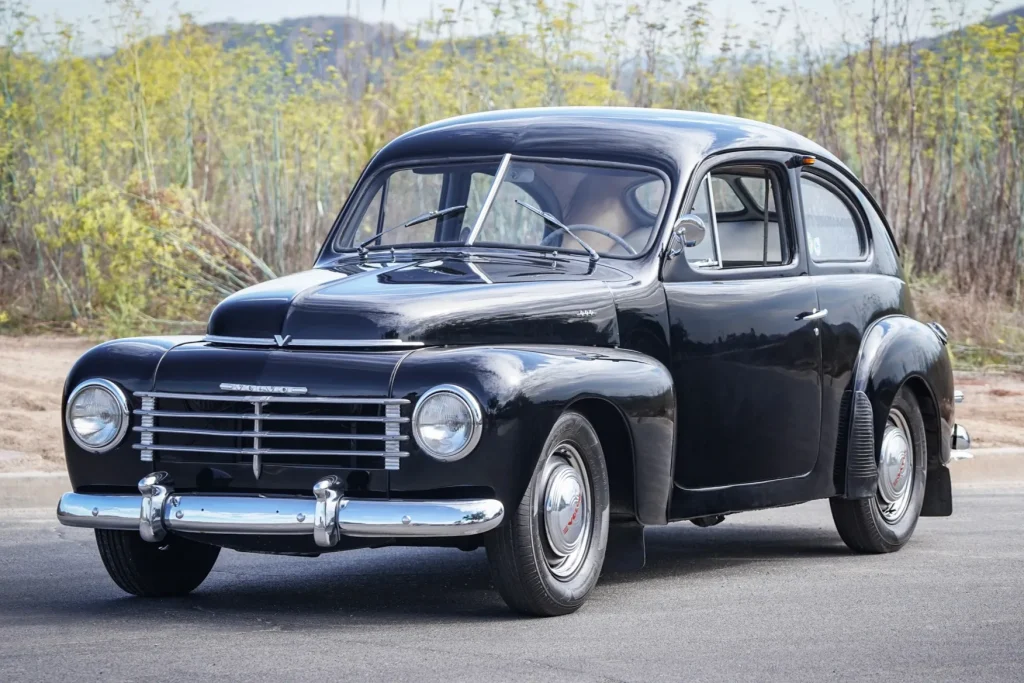
Demand was extraordinary. Volvo had initially planned around 12,000 cars, but customers had already placed more than 10,000 orders before meaningful production began.
The PV444 became an important foundation for Volvo’s postwar growth and international expansion, including the company’s growing presence in the United States. The car was developed during wartime with an eye toward the return of peace, when Volvo would need a strong civilian model for the next stage of its development. The result was one of the company’s most influential early postwar cars.