Cars usually have four wheels because this layout balances stability, steering, manufacturing cost, and everyday usability. Yet automotive history includes several unusual vehicles that challenged this familiar formula by using six wheels.
Some were created for improved traction, others for greater visual appeal, and a few were built simply to push automotive design beyond conventional limits. Several of these vehicles reached private customers and could actually be purchased, making them far more than experimental concepts.
From exotic sports cars to heavily modified off-road machines, these six-wheeled automobiles demonstrate how creative manufacturers and specialist builders can become.

1. Mercedes-Benz G63 AMG 6×6
The Mercedes-Benz G63 AMG 6×6 is perhaps the most recognizable modern six-wheeled vehicle built for private customers. Developed from the G-Class platform, it added a third axle behind the traditional front and rear axles.
The result was a huge luxury off-road vehicle with six driven wheels, exceptional ground clearance, and an appearance that immediately separated it from ordinary SUVs. Mercedes-AMG presented the vehicle as an extreme combination of luxury, performance, and off-road capability.
The G63 AMG 6×6 was closely associated with the Mercedes-Benz G-Class family, but its chassis was heavily modified for the additional axle.
Portal axles helped provide substantial ground clearance, while multiple differential locks allowed the vehicle to maintain traction on difficult surfaces. The suspension was also redesigned to cope with the extra hardware. These changes made the 6×6 considerably more complicated than a conventional G-Class.
Power came from a twin-turbocharged 5.5-liter V8 producing roughly 536 horsepower and 560 lb-ft of torque in the original AMG configuration. That amount of power was remarkable for such a large vehicle.
Acceleration was impressive considering the vehicle’s size and weight, while the six-wheel drivetrain gave it a very distinctive mechanical character. Its enormous tires and raised body reinforced its reputation as an extreme off-road machine.
Mercedes produced the G63 AMG 6×6 in limited numbers rather than treating it as a normal high-volume model. Customers who could afford its considerable price could acquire a road-legal example, meaning it was not simply a promotional concept or a military prototype.
Its rarity has helped the model become highly recognizable among collectors and enthusiasts interested in unusual Mercedes vehicles.
The G63 AMG 6×6 also demonstrated how a manufacturer could turn an unconventional engineering idea into a luxury product. It combined leather, premium equipment, powerful performance, and advanced off-road hardware in a package that looked more like a specialized expedition vehicle than a normal SUV.
Its six-wheel arrangement remains its defining feature, giving the G63 AMG 6×6 a special place among unusual production vehicles.

2. Covini C6W
The Covini C6W took a completely different approach to six-wheel design. Instead of adding two wheels at the rear, Italian engineer Ferruccio Covini placed four wheels at the front and two at the rear.
This unusual configuration was intended to improve stability, braking, steering behavior, and resistance to aquaplaning. The C6W therefore represented a serious engineering experiment rather than simply an attempt to make a vehicle look more dramatic.
The front of the C6W contained two steering axles positioned close together. Each front wheel had its own suspension and braking components, creating a complicated arrangement that required careful engineering.
With four front tires sharing braking and cornering duties, the concept offered potential advantages during hard driving. The arrangement also gave the vehicle an unmistakable appearance that separated it from conventional sports cars.
The C6W evolved from Covini’s earlier ideas about six-wheeled road vehicles. The company eventually developed the concept into a road-going sports car that could be offered to customers.
Its unusual design attracted attention at automotive exhibitions and among specialist enthusiasts. Rather than being mass-produced like a mainstream Ferrari, Porsche, or Lamborghini, the C6W belonged to the highly specialized sector of limited-production automobiles.
Power for the production-oriented C6W came from a mid-mounted six-cylinder engine, with specifications changing during the vehicle’s development.
The car was designed to deliver genuine sports-car performance while retaining the unusual six-wheel layout. Its body used lightweight materials and its engineering focused heavily on handling and stability. The vehicle therefore had a functional reason for its additional wheels.
The Covini C6W remains significant because it showed that a six-wheeled passenger car did not have to be a giant off-road truck. Its four-wheel front arrangement created a rare combination of exotic styling and unconventional chassis engineering.
For enthusiasts interested in unusual automobiles, the C6W is particularly interesting because its extra wheels were connected to the car’s intended dynamic behavior rather than being added solely for appearance.
3. Panther 6
The Panther 6 is a fascinating example from the 1970s, when British specialist manufacturer Panther Westwinds experimented with extravagant and unconventional automotive designs.
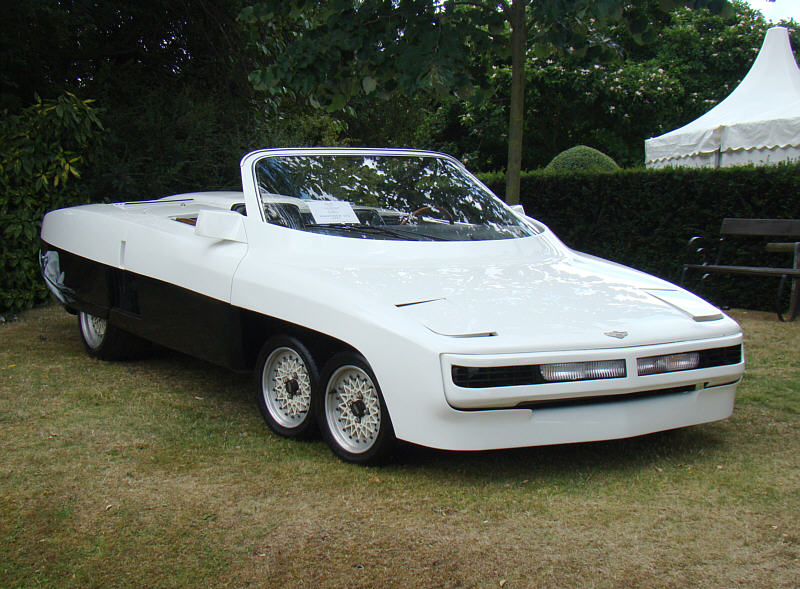
Introduced in 1977, the Panther 6 featured six wheels arranged with four at the front and two at the rear. Its design was heavily influenced by the desire to create an exotic, high-performance road car unlike anything offered by mainstream manufacturers.
Its four front wheels were arranged across two steering axles. This gave the Panther 6 a very unusual stance and created a complicated front suspension system.
The arrangement was claimed to offer advantages in stability and handling, while also giving the car a distinctive visual identity. At a time when many sports cars followed established layouts, Panther’s approach made the vehicle immediately memorable.
The Panther 6 was powered by a large Cadillac-derived V8 engine equipped with twin turbochargers. Contemporary claims surrounding the car included extremely high performance figures, though some of the published specifications and performance claims have been questioned over the years.
It is therefore better to treat the Panther 6 as a genuine engineering project with ambitious performance targets rather than accept every historical claim without qualification.
The vehicle was presented as a road-going automobile rather than a racing prototype. Panther Westwinds built only a tiny number of examples, making it exceptionally rare.
Its limited production means that very few people have ever encountered one in person. The car’s rarity has also contributed to its continuing popularity among automotive historians and enthusiasts who appreciate unusual designs from the 1970s.
The Panther 6 is important in discussions about six-wheeled cars because it demonstrates how far specialist manufacturers were willing to go in search of technical distinction.
Its four-front-wheel configuration was rare even among six-wheel experiments. The car combined extravagant styling, a powerful engine, and ambitious engineering into a package that reflected the bold automotive culture of its era.
4. Hennessey VelociRaptor 6×6
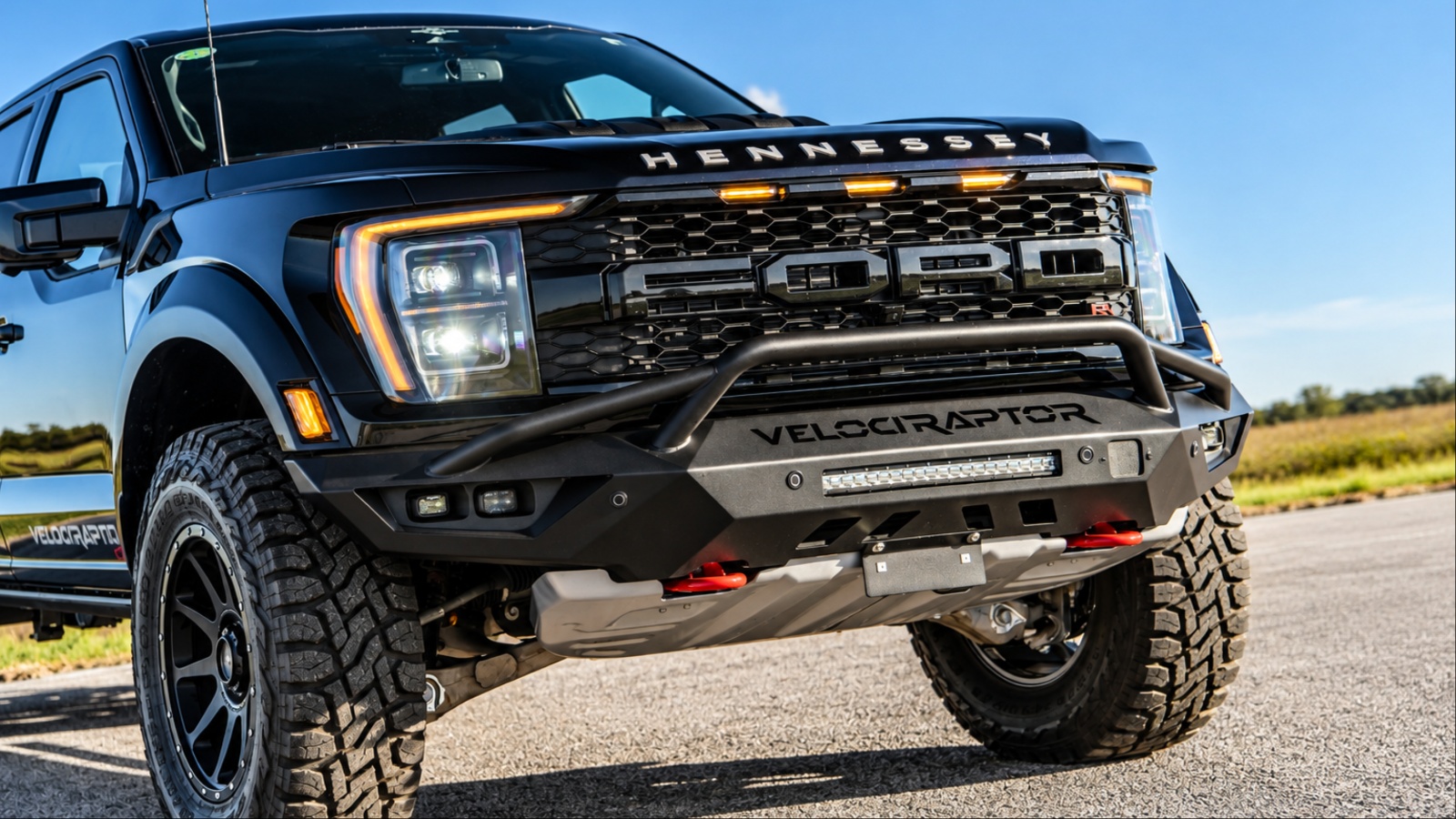
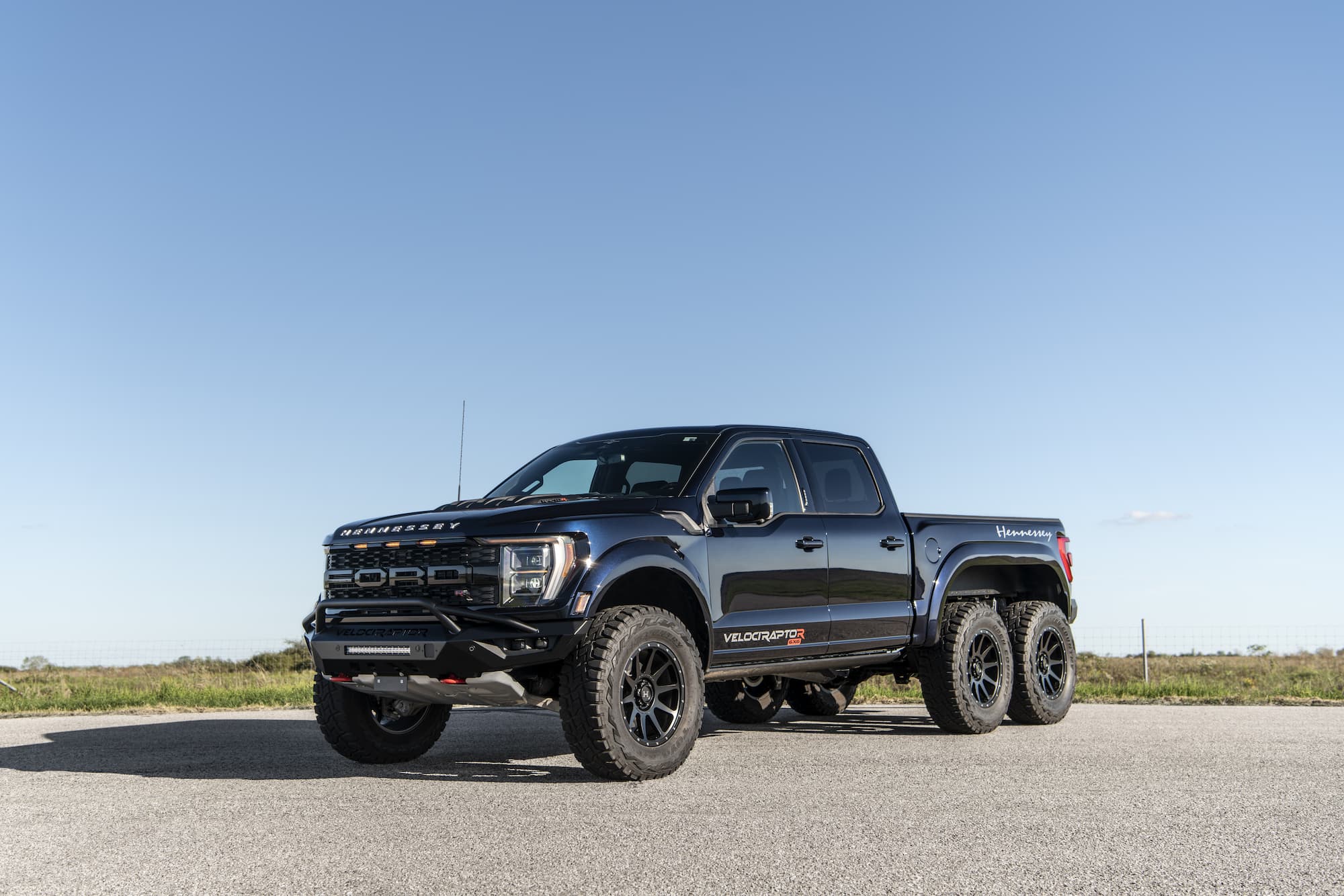
The Hennessey VelociRaptor 6×6 brought the six-wheel concept into the modern pickup truck market. Built by Texas-based performance company Hennessey Performance Engineering, the vehicle was based on the Ford F-150 Raptor.
Hennessey added a third axle, redesigned the rear suspension, modified the body, and upgraded various components to create a much larger and more aggressive off-road pickup.
Unlike a standard F-150 Raptor, the VelociRaptor 6×6 uses six wheels with power sent through all of them. The additional axle improves the truck’s ability to distribute traction across loose terrain.
Hennessey also made substantial changes to the suspension and braking systems to accommodate the increased size and weight. These modifications turned an already capable performance pickup into a highly specialized six-wheel vehicle.
The VelociRaptor 6×6 has been offered with powerful turbocharged engines, with specifications varying according to the model year and donor vehicle. Hennessey has also offered performance upgrades designed to increase output beyond the standard Raptor configuration. Large off-road tires, upgraded suspension components, and an extended rear section contribute to the truck’s distinctive proportions.
The vehicle was available to customers as a specialty conversion rather than as a standard Ford production model. Buyers could therefore obtain a six-wheeled road vehicle through a specialist manufacturer.
This distinction is important because the VelociRaptor 6×6 was not merely a show truck created for an auto exhibition. It represented a customer-focused conversion program built around an existing production pickup.
The VelociRaptor 6×6 illustrates how the six-wheel concept has continued into the modern performance market. Pickup trucks already have a strong connection with utility and off-road driving, making them suitable platforms for an additional axle.
Hennessey’s conversion took that idea to an extreme level, creating a vehicle aimed at customers who wanted extraordinary size, traction, performance, and visual presence.
5. Rezvani Hercules 6×6
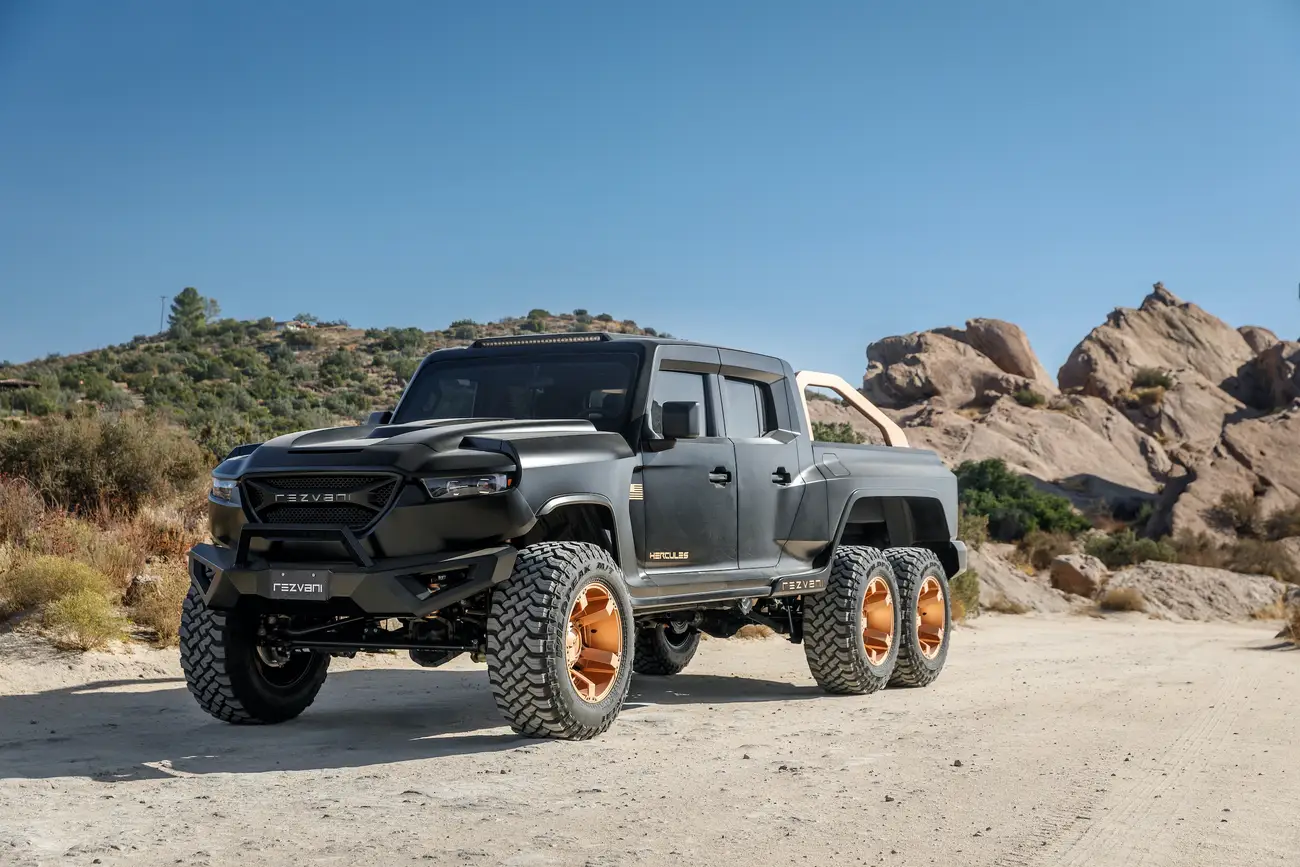
The Rezvani Hercules 6×6 is a modern six-wheeled pickup designed by California-based specialty automaker Rezvani. It uses a three-axle layout and was marketed as an extreme luxury and performance pickup. The Hercules combines the dimensions and utility of a large truck with styling and equipment aimed at customers interested in highly customized vehicles.
The Hercules was offered in different configurations, with powertrain choices depending on the specification selected by the customer.
High-output versions were designed to deliver substantial performance, while the truck’s six-wheel arrangement emphasized traction and visual drama. Its suspension and chassis were adapted for the additional axle, giving it a much more imposing footprint than a conventional four-wheel pickup.
Rezvani also positioned the Hercules as a vehicle with extensive customization possibilities. Buyers could select different equipment packages and exterior configurations, allowing the truck to move beyond ordinary pickup specifications. This approach is common among low-volume specialty manufacturers, where individualization can be as important as raw performance.
The six-wheel configuration gives the Hercules a particularly distinctive appearance. The extra rear axle stretches the vehicle’s profile and provides additional contact points with the ground. For off-road use, this can provide useful traction characteristics, though a six-wheel vehicle also introduces additional weight, mechanical complexity, tire costs, and maintenance requirements.
The Hercules 6×6 shows how the six-wheel formula has become part of the luxury specialty vehicle market. Rather than being created solely for military or industrial work, it was designed for private buyers seeking a highly unusual pickup.
Its combination of customization, powerful engines, large dimensions, and six-wheel traction places it firmly within the modern niche of extreme customer-built automobiles.
6. Kahn Flying Huntsman 6×6
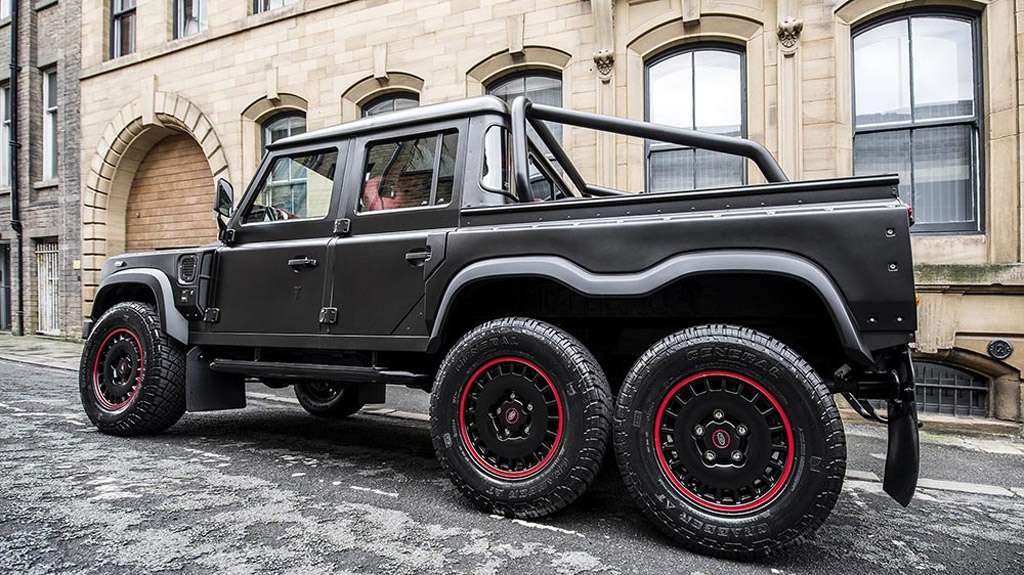
The Kahn Flying Huntsman 6×6 is another British interpretation of the six-wheel SUV. Created by Kahn Design, the Flying Huntsman was based on the Land Rover Defender platform. The project extended the vehicle and added another rear axle, transforming the compact proportions of the traditional Defender into a much larger six-wheeled machine.
The Defender has long been associated with utility and off-road capability, making it a logical starting point for a six-wheel conversion. Kahn Design substantially altered the chassis and body to accommodate the extra axle. The resulting vehicle was longer and wider than a standard Defender, while retaining recognizable styling cues from the original Land Rover design.
Kahn developed several Flying Huntsman concepts and configurations, including six-wheel versions intended for customers.
The company focused heavily on bespoke construction, meaning individual vehicles could receive different specifications and levels of customization. This placed the Flying Huntsman within the high-end specialist vehicle sector rather than the conventional mass-market SUV category.
The additional axle changed the vehicle’s proportions considerably. It also created a larger load-carrying area and more contact with the ground.
Such characteristics could be useful for certain off-road or utility applications, though the increased size also made the vehicle less practical in tight urban environments. The Flying Huntsman was therefore designed around a very different idea of personal transportation.
The Kahn Flying Huntsman 6×6 demonstrates how established automotive designs can become the foundation for radical specialist creations. The Defender already had a strong reputation for ruggedness, but Kahn’s extended configuration pushed the concept into a much more extravagant direction.
For collectors and enthusiasts, the vehicle represents a combination of British utility-car heritage and modern bespoke automotive design.
7. Apocalypse Hellfire 6×6
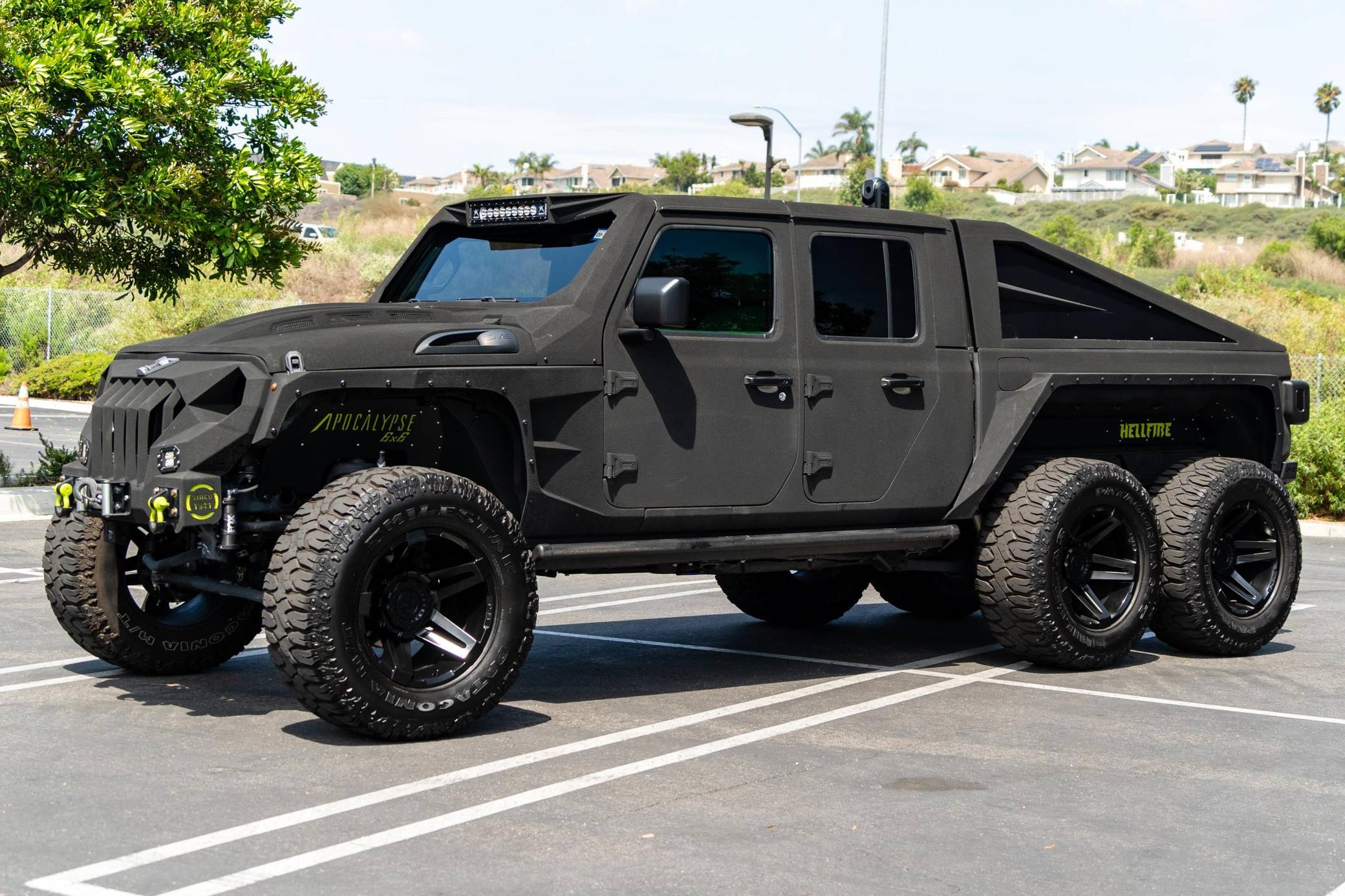
The Apocalypse Hellfire 6×6 represents the American custom-built approach to the six-wheel formula. Created by Apocalypse Manufacturing, the Hellfire is based around the Jeep Gladiator platform and transforms the pickup into a much larger six-wheeled machine.
The company is known for highly customized vehicles, and the Hellfire follows that philosophy through its extended body, aggressive exterior, and additional rear axle.
The vehicle uses six wheels arranged across three axles, with the rear portion redesigned to accommodate the extra axle. The conversion requires extensive work compared with a normal Jeep Gladiator.
Changes can include suspension modifications, body alterations, larger tires, upgraded driveline components, and other mechanical improvements. The final product has a very different character from the standard pickup.
Different Hellfire configurations have been offered with powerful engines and a wide selection of custom equipment. Buyers can specify features according to the particular build, making individual vehicles somewhat different from each other. This approach allows Apocalypse to serve customers who want a vehicle that stands apart from ordinary factory pickups and SUVs.
The Hellfire also demonstrates how the six-wheel format has become closely associated with extreme automotive customization. An extra axle provides a practical engineering challenge, but it also creates a dramatic visual effect. The extended rear section gives the pickup a larger footprint and a distinctive profile that immediately signals its specialist nature.
As a customer-focused custom vehicle, the Apocalypse Hellfire 6×6 fits the definition of a six-wheeled automobile sold to private buyers. It belongs to a category where personalization, power, size, and visual impact are major selling points.
Its existence also shows that six-wheeled vehicles are not limited to European luxury brands or historical prototypes. Specialist American builders continue to develop the formula for modern customers.