
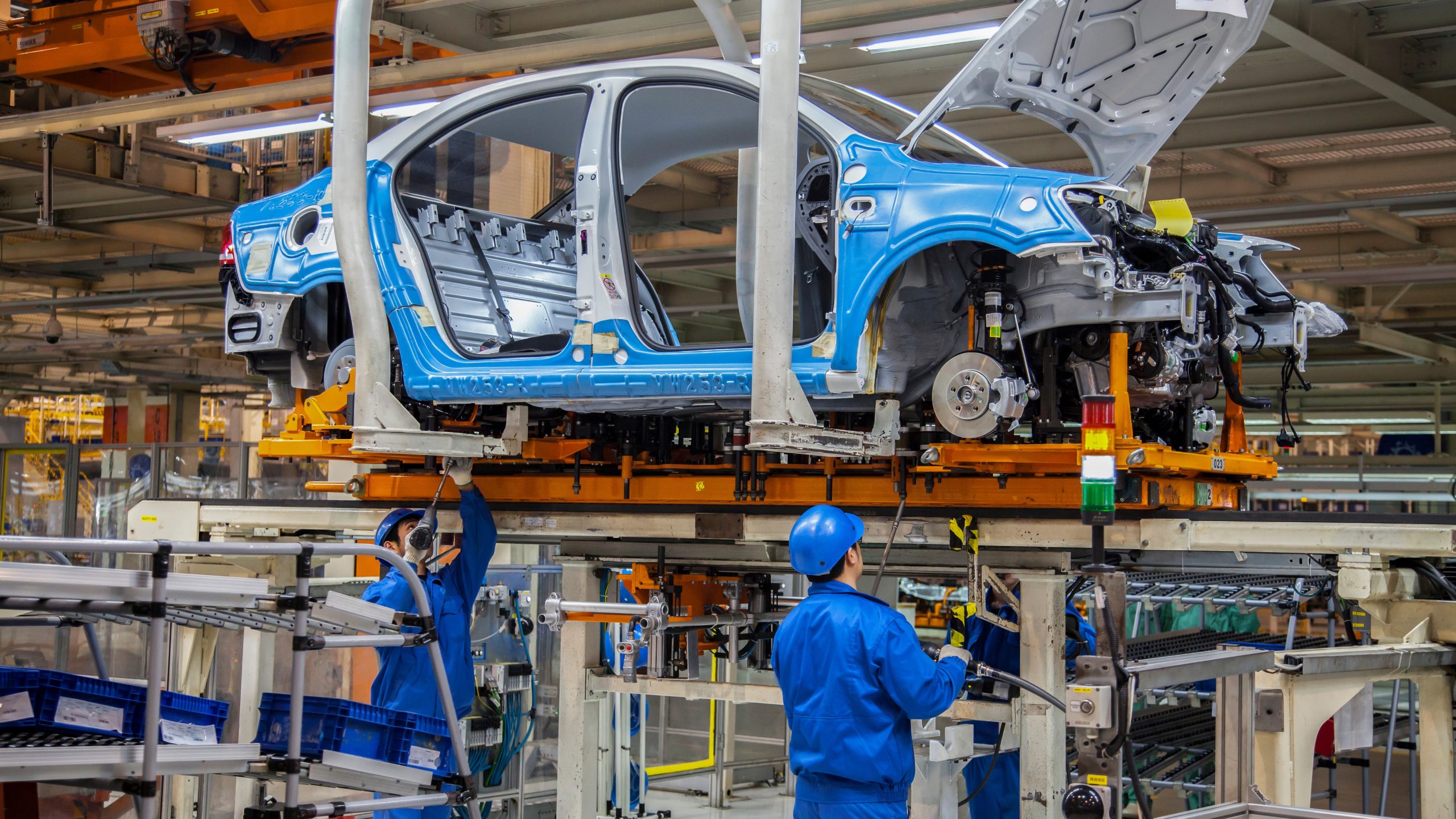
Britain’s automotive industry received a welcome boost in August, with vehicle production rising 5.7% year over year to 40,872 units.
The improvement offered some relief after a difficult first half of 2026, but the recovery remains fragile as manufacturers confront weaker exports to the European Union and growing uncertainty over proposed EU rules that could disadvantage vehicles built in Britain.
Figures from the Society of Motor Manufacturers and Traders (SMMT) showed that total UK vehicle production increased by 2,195 units in August compared with the same month last year. Car production performed even better, rising 6.1% to 39,328 units, its strongest annual growth since December 2025.
However, August needs to be viewed carefully. It is traditionally one of the UK’s lowest-production months because automakers schedule factory shutdowns around the summer holiday period. The timing of those shutdowns varies from year to year, creating significant swings in monthly output.
Even with that volatility, the latest numbers provide evidence that Britain’s vehicle manufacturing sector is beginning to stabilize after a difficult period.
The bigger concern is what happens next. Britain remains heavily dependent on international markets, and the European Union is by far its most important destination. In August, exports to the EU fell 7.4%, even though the bloc still accounted for 54.1% of UK car exports.
That dependence has become increasingly important as Brussels considers new “Made in Europe” provisions that could exclude British-built vehicles from certain incentives and procurement opportunities.
August Production Gives Britain’s Auto Industry Some Relief
The August production increase was driven primarily by stronger domestic demand, according to the SMMT.
UK production for domestic customers increased 21.0% to 9,821 vehicles, while production for export rose a more modest 1.6% to 31,051 vehicles. Exports still accounted for approximately 76% of total UK vehicle production during the month.
The car industry showed a similar pattern. Production for British customers jumped 26.0% to 9,007 cars, while production for overseas markets increased 1.4% to 30,321 units.
That export figure is particularly important because Britain’s automotive industry is structured around international sales. The SMMT says nearly eight out of every 10 cars built in Britain are exported, with vehicles reaching more than 140 markets worldwide.
The industry also supports more than 183,000 manufacturing jobs and approximately 830,000 jobs across the wider automotive sector.
August therefore represents more than a single positive monthly statistic. It demonstrates that British factories are still capable of increasing output when demand and production schedules align. But the broader picture remains difficult.
Total UK vehicle production for the first eight months of 2026 reached 490,506 units, down 7.1% from the same period in 2025. Car production was down 3.9% year to date, while commercial vehicle manufacturing remained under considerably greater pressure.
That means the August improvement has not yet reversed the industry’s accumulated losses. The recovery also remains dependent on overseas demand. Several markets delivered particularly strong gains during August, providing some diversification at a time when Britain’s traditional European market weakened.
The U.S., Australia, and Japan Help Offset Weaker Europe
Exports to several non-European markets increased sharply in August. Among the UK’s 10 largest export destinations, shipments to Australia rose 104.7%, exports to Japan increased 88.4%, and shipments to the United States climbed 48.6%. The U.S. provided the largest numerical increase, with exports rising by 1,508 vehicles.

Those gains are important because they demonstrate the value of Britain’s global export network.
The UK automotive sector has long attempted to maintain access to markets outside Europe, particularly for premium and specialist vehicles. British production includes products from manufacturers such as Bentley, McLaren, and other luxury and performance brands that can command strong demand in international markets.
The SMMT pointed to more than £1 billion in new investment from companies including McLaren, Nissan, and Bentley as evidence that manufacturers continue to see long-term potential in the UK production base.
However, expanding sales outside Europe cannot easily replace the EU market. Exports to the EU fell 7.4% in August, while shipments to China dropped 15%. Despite the decline, the EU remained Britain’s largest overseas market by a considerable margin.
That creates a difficult balancing act for British manufacturers. They can diversify exports to the United States, Japan, Australia, and other markets, but the scale and proximity of European demand make the EU difficult to replace.
The issue becomes even more serious because Britain’s automotive industry is deeply integrated with European supply chains.
A vehicle assembled in Britain can contain components manufactured across several countries before reaching a customer elsewhere in Europe. Changes to trade rules can therefore affect not only finished vehicles but also the flow of batteries, components, and raw materials.
That is why the industry’s concerns about the EU’s proposed “Made in Europe” policy have become so intense.
Why the EU’s “Made in Europe” Rules Matter
The European Union is considering measures designed to strengthen domestic manufacturing and reduce reliance on foreign supply chains, particularly in strategically important industries such as electric vehicles and other clean technologies.
Under the proposed framework, certain incentives, subsidies, and public procurement opportunities could be linked to products meeting European-origin requirements. For Britain, the problem is its status outside the European Union.
The SMMT has warned that excluding UK-built vehicles from the proposed provisions could seriously weaken the competitiveness of British factories. The organization has described the potential impact as an “existential threat” to the country’s automotive manufacturing industry. The concern is not simply about losing access to European customers.
If an EU fleet operator receives an incentive for purchasing vehicles that qualify as European-made, a British-built vehicle could potentially become less attractive even if it is technically competitive. Likewise, exclusion from public procurement programs could remove another potential source of demand.
The SMMT argues that such a policy would be damaging to both sides because UK and EU automotive industries remain closely connected.
Annual automotive trade between Britain and the EU is worth approximately €80 billion, according to industry figures. Britain is also an important customer for European manufacturers, particularly because UK factories and consumers purchase large quantities of components and vehicles from continental Europe.
The issue has therefore developed into a broader debate about how the post-Brexit relationship should work in strategic industries.
British officials have called for the country to be treated as a trusted partner rather than being treated in the same way as countries with little integration into the European economy. EU officials, meanwhile, have emphasized that Britain is no longer a member state and cannot automatically receive the same treatment as countries inside the bloc.
For automakers, the uncertainty itself can be damaging. Vehicle manufacturers make investment decisions years in advance. A factory, production line, or battery facility can require billions of pounds and remain operational for decades. Companies therefore need confidence that their products will retain access to important markets.
Britain’s Recovery Still Faces Several Challenges
The August figures show that the UK auto industry is capable of recovering, but they do not eliminate the structural challenges facing manufacturers.
The first is the industry’s dependence on exports. With approximately three-quarters of production destined for overseas customers, Britain is particularly exposed to changes in foreign demand and trade policy.
The second is the transition toward electric vehicles. Manufacturers are investing heavily in electrified production while attempting to manage uneven consumer demand and rapidly changing regulations.
The third is Britain’s manufacturing cost base. The SMMT has repeatedly raised concerns about energy costs, which can make British factories less competitive than plants in other countries.
There is also the question of scale. Britain produced more than 717,000 cars in 2025, according to SMMT data, but the industry remains considerably smaller than some major European manufacturing hubs. Maintaining investment is therefore crucial if the UK wants to retain its position in global vehicle production.
August’s 5.7% increase provides encouraging evidence that production can recover when market conditions improve. Yet the year-to-date decline shows how much ground the industry still has to regain.
The immediate priority for manufacturers is likely to be maintaining export competitiveness while ensuring that new investment continues to flow into British factories.
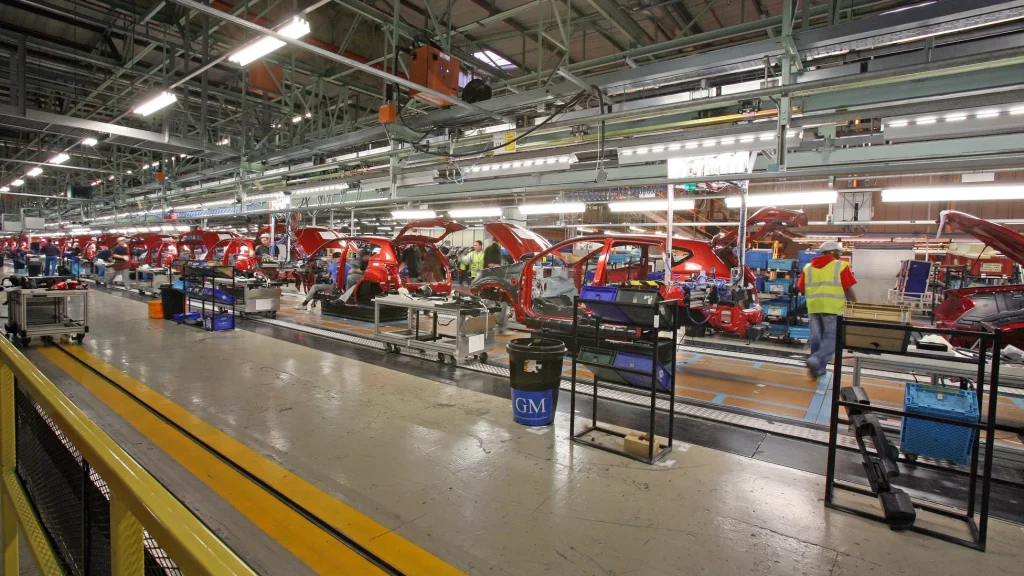
For policymakers, the challenge is more complicated. Britain must strengthen its relationship with the EU without sacrificing opportunities in other global markets.
The latest production figures make the stakes clear. 40,872 vehicles were built in August, up 5.7%, while car production rose 6.1% to 39,328 units.
Exports to the U.S., Australia, and Japan helped support the recovery, but EU shipments fell 7.4%, and the EU still accounted for more than half of Britain’s car exports. That combination captures the central challenge facing Britain’s automotive industry.
The factories are still producing, manufacturers are still investing, and international demand remains available. But the industry’s future will depend heavily on whether Britain can preserve competitive access to its biggest market while continuing to expand its global reach.
For now, August offers a recovery worth noting. The bigger question is whether Britain can turn that monthly improvement into a sustained manufacturing comeback before new trade barriers make the task considerably harder.
