
A dead key fob battery can make a simple trip suddenly feel like a major problem. The buttons stop responding, the locks do not react, and it may appear that the car has become completely inaccessible. But in many modern vehicles, a dead fob battery does not mean you are locked out.
Automakers have designed keyless-entry systems with backup methods specifically for this situation. Many key fobs contain a hidden mechanical key that can manually unlock the driver’s door, while some vehicles can recognize a weak or completely depleted fob when it is placed against a specific area inside the vehicle.
That means the same fob that appears useless can often still get you into the car and allow the engine to start.
The exact procedure varies by manufacturer and model, so owners should check their vehicle’s owner’s manual for the designated emergency locations and instructions. However, there are two particularly useful methods that drivers should know before they find themselves standing beside a locked vehicle with an unresponsive fob.
Method 1: Hold the Key Fob Against the Door
One of the most useful features of modern keyless-entry systems is that some vehicles can still detect a key fob even when its battery is too weak to operate the buttons normally.
This can be surprising because the driver may press the unlock button repeatedly without getting any response. The natural assumption is that the fob is completely dead. In reality, the vehicle’s backup detection system may still be able to identify the fob when it is positioned directly against a specific part of the vehicle.
The location differs between manufacturers and models. On some vehicles, placing the fob against the driver’s door handle or a designated area on the exterior can allow the car to recognize the fob and unlock the door.
Other vehicles require the fob to be held against a particular location near the handle or another marked area.
The reason this can work is that the vehicle does not always depend entirely on the fob’s internal battery for emergency detection. Some keyless systems use passive technology that allows the vehicle to communicate with the transponder at very close range.
That means the distance between the fob and the vehicle becomes extremely important. If the buttons are not working, do not immediately assume the vehicle requires a new fob. First, check the owner’s manual for an emergency unlock procedure.
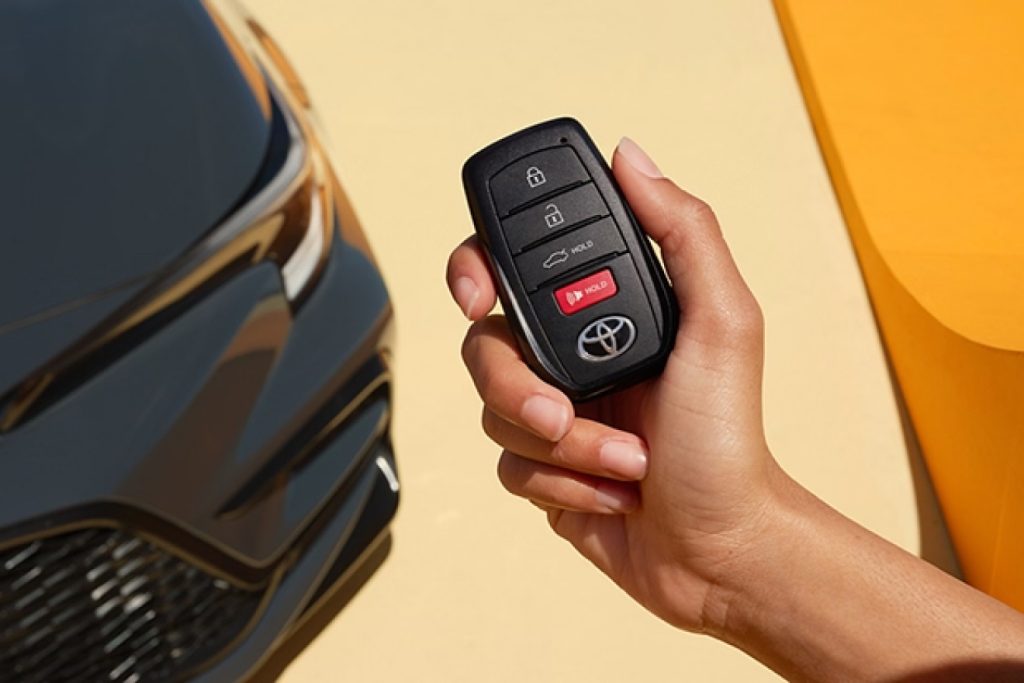
If your vehicle supports exterior emergency detection, the instructions will identify exactly where the fob needs to be positioned.
This is especially useful when the fob battery has become completely depleted, and there is no obvious mechanical key available.
Drivers should also avoid randomly placing the fob against different areas of the vehicle. The emergency detection point is usually specific to the vehicle, and forcing the fob against door handles or trim is unnecessary.
Once inside, the driver may face another challenge when trying to start the vehicle. This is where the second backup method becomes important.
Method 2: Use the Hidden Physical Key
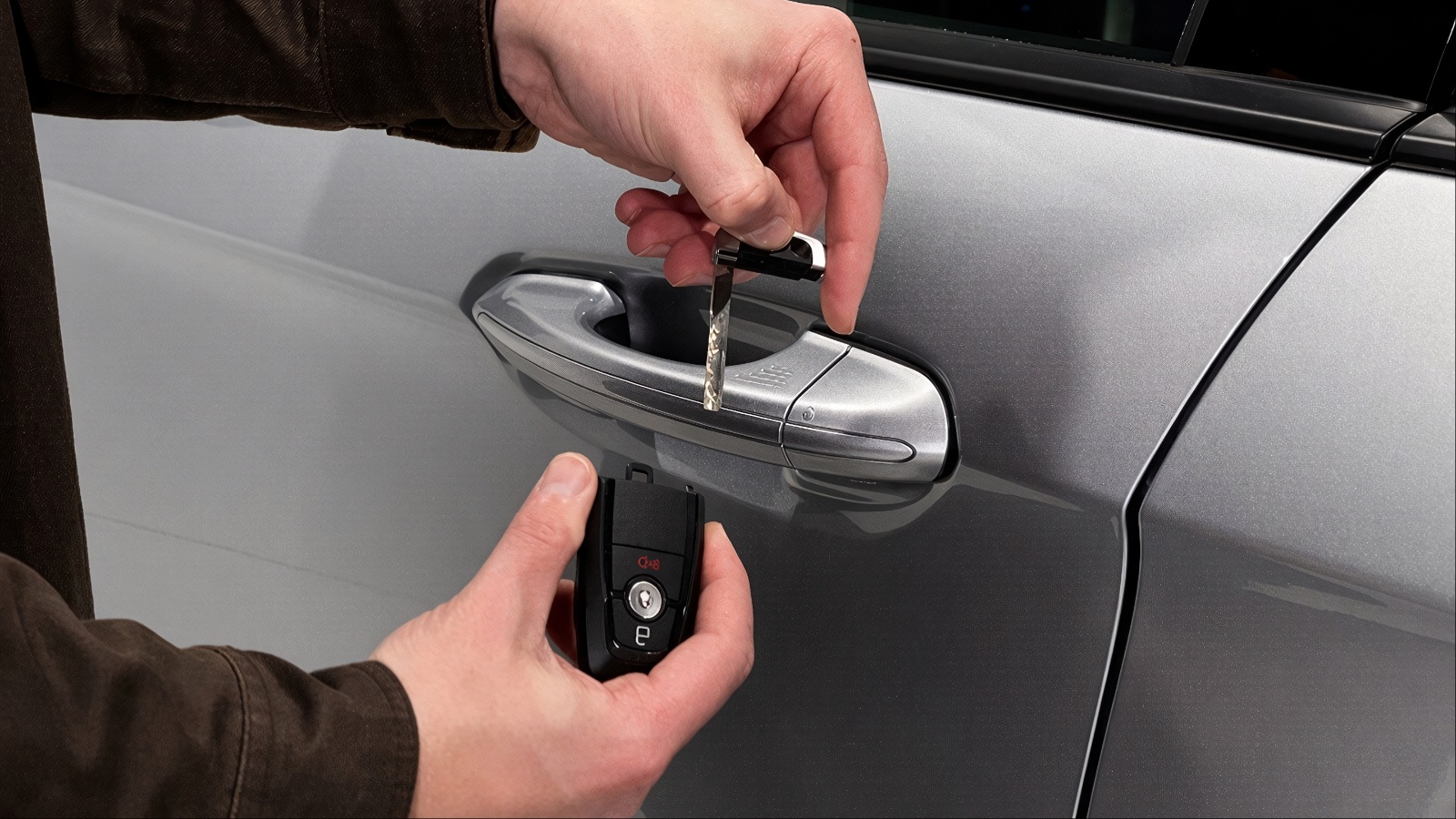
Many modern key fobs still contain a traditional mechanical key, even though there may be no visible key blade on the outside.
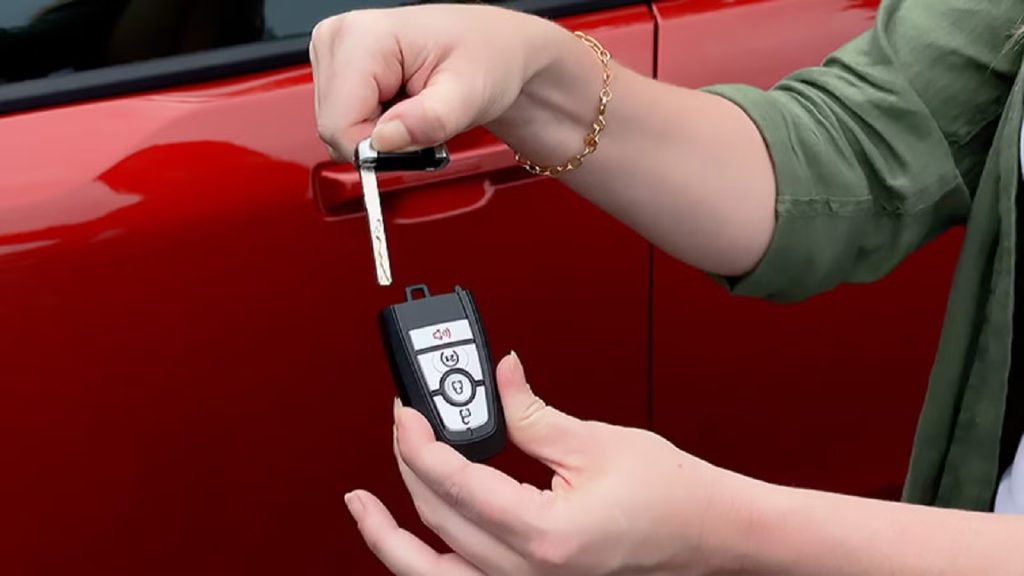
The key is often released using a small button, slider, or latch on the fob. Once released, the mechanical blade can be removed and used to unlock the driver’s door manually.
This feature is easy to overlook because the vehicle is marketed as keyless and the fob may appear to be a completely electronic device. But manufacturers commonly include a physical key specifically for situations such as a dead fob battery.
Finding the key is usually straightforward. Examine the sides or back of the fob for a small release mechanism. Pressing or sliding it may allow the mechanical key to be pulled from the housing. The next challenge is locating the physical keyhole on the vehicle.
Some cars have an exposed key cylinder on the driver’s door, but many modern models hide it behind a small plastic cover to preserve the appearance of the door handle. The owner’s manual normally explains how to remove this cover without damaging the surrounding trim.
Once the keyhole is exposed, insert the mechanical key and unlock the driver’s door. The vehicle’s alarm may activate after the door is opened because the car has detected a mechanical entry rather than the normal electronic unlocking process. This does not necessarily indicate that something has gone wrong.
The important point is that unlocking the door is only the first step. A driver may still need to convince the vehicle that the authorized key is present before the engine or electric powertrain will activate.
How to Start the Car With a Dead Fob Battery
After getting inside, many drivers assume the vehicle will not start because the fob battery has died. That is not necessarily true.
Numerous modern vehicles include a designated emergency starting procedure that allows the vehicle to recognize the fob at extremely close range. In many cases, the driver simply needs to place or touch the key fob against a specific area marked with a key symbol.
The exact location varies considerably. Depending on the vehicle, the emergency detection point may be near the push-button ignition switch, inside the center console, in a cupholder, beneath a storage compartment, or in another designated location.
Some manufacturers place a small key icon on or near the emergency detection area. Others explain the location only in the owner’s manual.
Once the fob is placed in the designated position, the vehicle’s immobilizer system can communicate with the transponder even though the fob’s normal remote functions are unavailable.
The driver can then press the brake pedal and use the start button normally, depending on the vehicle’s operating procedure.
This is one of the most important details to remember because a dead fob battery does not automatically mean the car cannot start.
The vehicle is designed to distinguish between the loss of remote-button functionality and the presence of the authorized key.
That backup system is particularly useful because replacing a fob battery may not always be possible immediately. A driver could be away from home, at night, or in a location where the correct replacement battery is unavailable.
What If the Car Has Both a Dead Fob and a Hidden Key?
If the fob battery has completely failed, the best approach is usually to think of the process as two separate problems. First, gain physical access to the vehicle.
Second, use the vehicle’s emergency key-detection procedure to start it. If the fob contains a mechanical key, use it to unlock the driver’s door. If the vehicle does not have an obvious key cylinder, check whether the lock is hidden beneath a removable cover.
After entering the vehicle, look for the key symbol or consult the owner’s manual to find the emergency fob-detection location.
Place the fob there and attempt to start the vehicle according to the manufacturer’s instructions.
It is important not to assume that every vehicle follows the same procedure. The backup system differs between brands, model years, and individual vehicles. Even two vehicles from the same manufacturer can use different emergency detection locations.
Replace the Battery After Getting Back Inside
The emergency procedure is designed to get you moving again, not to replace the normal operation of the key fob.
Once the vehicle is accessible, replace the fob battery as soon as practical. Most batteries are inexpensive and widely available, but the required battery type differs between fobs.
Before opening the fob, check the owner’s manual or the markings on the existing battery. Using the wrong battery can prevent the remote functions from working correctly.
Drivers should also avoid waiting until the fob completely stops working. Many vehicles provide warning messages when the key-fob battery is becoming weak. If the vehicle displays such a warning, replacing the battery at that point is far easier than discovering the problem when you are standing outside a locked car.
It is also worth learning the emergency procedure before it is needed. Knowing where the hidden mechanical key is located, how to remove the door-lock cover, and where the key symbol is positioned can turn what looks like a serious problem into a quick inconvenience.
A Dead Fob Battery Does Not Mean You Are Locked Out
Modern keyless-entry systems may look entirely dependent on electronics, but manufacturers have generally built backup methods into them.
If the remote buttons stop working, the first option may be to hold the fob against the designated area on the door or handle, if the vehicle supports that feature. If that does not work, look for the hidden physical key inside the fob and use it to unlock the driver’s door.
Once inside, the vehicle may still start even with a dead fob battery. Look for the key symbol or emergency detection area and place the fob against it before following the vehicle’s normal starting procedure.
The exact steps vary by vehicle, so the owner’s manual remains the most reliable source for the correct emergency procedure.
The important lesson is simple: a dead key fob battery usually does not mean a dead car or a locked-out driver. Knowing these two backup methods can save time, prevent unnecessary panic, and potentially eliminate the need to call for roadside assistance simply because a small battery has stopped working.
