
Buying a new vehicle is not only about what the warranty promises on the day of delivery. The more important question for many owners is what happens to that protection when the vehicle changes hands.
Some manufacturers allow the remaining factory warranty to follow the vehicle with little or no reduction, while others reserve their longest powertrain coverage for the original purchaser.
That difference can become significant when a nearly new vehicle enters the used market. Manufacturer warranty booklets make these distinctions clear, even when advertising language can make coverage appear broader than it really is.
The following comparison focuses on U.S. warranty policies and how ownership transfer can affect the protection attached to a vehicle.
5 Brands With Fully Transferable Warranties
1. Toyota
Toyota’s warranty structure is particularly relevant to used buyers because its standard factory coverage is attached to the vehicle rather than being presented as an owner-only benefit.
Toyota documentation instructs owners to pass maintenance records and receipts to subsequent owners, while Toyota dealer warranty information states that remaining new-vehicle coverage transfers to the next owner.
Consider the Camry and Tacoma as two very different examples. A Camry that is sold after its first year does not suddenly lose the remaining factory protection simply because its original purchaser has moved on.
The same principle applies to a Tacoma that changes hands during its warranty period. That distinction is valuable because both vehicles can spend several years in the used market while still being relatively young.
The reason Toyota belongs in this category is therefore not simply the reputation of the brand. It is the practical effect of a warranty that remains associated with the vehicle. A second owner can benefit from coverage that began when the vehicle first entered service, subject to the original time and mileage limits.
For someone comparing two similar used vehicles, the Toyota with documented remaining factory coverage can present a different ownership proposition from an otherwise identical vehicle whose warranty ended with the first owner.
The warranty booklet also emphasizes proper maintenance and the importance of keeping records, which makes documentation an important part of preserving the practical value of the coverage.
2. Nissan
Nissan’s warranty documentation is unusually direct about subsequent owners. Its U.S. warranty booklet states that the new-vehicle limited warranty is provided to the original and subsequent owners and is generally transferable when ownership changes.
Nissan’s current warranty information also confirms that the limited warranty transfers to the next owner, with a specific restriction involving a transfer during the first six months combined with registration outside the United States.
The Rogue and Frontier show why this matters across different vehicle types. A Rogue bought new and sold after a relatively short period can retain the balance of its applicable factory coverage for the next private owner.
A Frontier follows the same basic principle, giving a used buyer access to the remaining factory protection rather than resetting or eliminating it because the truck has changed hands.
Nissan’s standard U.S. factory coverage includes a 3-year/36,000-mile limited warranty and a 5-year/60,000-mile powertrain warranty.
Those periods begin from the vehicle’s applicable in-service date, so the second owner does not receive a fresh warranty clock. Instead, the buyer receives whatever portion remains under the original terms.
That distinction is important when shopping for a lightly used Nissan. A two-year-old vehicle with modest mileage can still carry meaningful factory protection. A buyer should nevertheless verify the vehicle’s in-service date, mileage, and warranty eligibility because transferability does not restart the warranty period.
3. Mazda
Mazda takes a similarly vehicle-centered approach to factory warranty transfer. Its U.S. warranty information states that the new-vehicle warranty is transferable to subsequent owners during the warranty period and provides a process for changing ownership information.
Mazda’s warranty documentation also describes the powertrain warranty as transferable, covering major components such as the engine, transmission or transaxle, and drive system during the applicable period.
The CX-5 and Mazda3 demonstrate the benefit from two different segments. A used CX-5 that is still within its original warranty period can carry the remaining factory protection to the buyer. A Mazda3 can provide the same advantage for someone purchasing a smaller used vehicle.
Mazda’s powertrain limited warranty is 60 months or 60,000 miles, whichever comes first, and the documentation identifies it as transferable. That makes the warranty relevant to resale rather than merely a new-car selling point.
There is still paperwork involved. Mazda’s warranty booklet includes a subsequent ownership notification procedure, so buyers should not assume that simply receiving the keys is the entire administrative process. Keeping the warranty information, maintenance records, and ownership documentation together makes future warranty service easier.
The important difference is that Mazda does not reserve its core remaining powertrain protection exclusively for the first retail purchaser. For a used-car shopper, that can make a newer Mazda more attractive when two vehicles have similar mileage but different amounts of remaining factory coverage.
4. Subaru
Subaru’s warranty booklet uses particularly clear language about ownership. Its U.S. warranty documentation says that every owner of the vehicle during the warranty period is entitled to the benefits of the warranties. It also asks owners to provide the new owner’s information when a vehicle is sold or transferred.
The Outback and Forester illustrate why this matters. Both models can remain in the used market while still having unused factory warranty coverage. If an Outback changes ownership before its original warranty expires, the second owner remains entitled to the applicable protection. The same principle applies to a Forester.
Subaru’s standard new-vehicle limited warranty is 3 years or 36,000 miles, while its powertrain limited warranty extends to 5 years or 60,000 miles. The warranty booklet makes the important point that the benefits belong to every owner during the warranty period.
This is particularly useful when evaluating a used vehicle sold relatively early in its life. A buyer does not have to assume that the factory warranty has vanished simply because the original purchaser sold the vehicle.
Subaru also asks that the warranty booklet and owner’s manual be delivered to the new owner. That seemingly simple instruction matters because warranty documentation provides the framework for determining coverage.
A second owner should therefore treat the booklet as part of the vehicle’s ownership records rather than as paperwork that can be discarded after the initial purchase.
5. Chevrolet
Chevrolet is another strong example because General Motors explicitly addresses warranty transfer in its owner support material. GM states that warranties that are still active transfer to the new owner when a vehicle is sold.
The company also notes that certain models can have special retention rules, showing why the exact warranty booklet remains important even within a broadly transferable system.
The Equinox and Silverado demonstrate how this can work across a crossover and full-size pickup. If an Equinox is sold while eligible factory coverage remains, that active warranty can move to the next owner. A Silverado follows the same general transfer principle, subject to the specific terms applicable to the vehicle.
The benefit is straightforward. The buyer does not necessarily have to treat the vehicle as though its warranty ended with the first owner. Instead, the buyer receives the remaining eligible coverage attached to that particular vehicle.
Chevrolet’s approach also demonstrates why buyers should read the actual warranty conditions rather than relying on a dealership advertisement. GM specifically identifies an exception for the Corvette Z06 involving a six-month retention requirement from the original purchase date.
This exception does not alter the general transfer rule. Rather, it shows that a manufacturer’s standard transfer policy may have additional requirements that apply to specific models.
Checking the VIN, original in-service date, and warranty booklet before buying is therefore more reliable than assuming every Chevrolet has identical transfer conditions.
5. That Shortens on Resale
1. Hyundai
Hyundai is perhaps the clearest example of why buyers must distinguish between advertised warranty length and transferable warranty length.
Hyundai’s U.S. warranty materials state that the 10-year/100,000-mile powertrain limited warranty applies to the original owner. Subsequent owners receive powertrain coverage under the 5-year/60,000-mile New Vehicle Limited Warranty.
Take Tucson and Santa Fe as examples. A new buyer can receive the headline 10-year/100,000-mile powertrain protection, but a later private buyer does not simply inherit the remaining balance of that entire term.
The second owner instead falls under the shorter powertrain coverage associated with the New Vehicle Limited Warranty.
This creates a substantial difference in how a used Hyundai should be valued. A vehicle may have been driven only 40,000 miles when sold, yet the second owner cannot assume that another 60,000 miles of the original 100,000-mile powertrain term remains available.
The distinction is not universal across Hyundai’s entire warranty package. Hyundai’s handbook states that several other warranties transfer to subsequent owners, while the 10-year/100,000-mile powertrain warranty is specifically excluded from transfer.
That is why the headline number can be misleading when used without context. For a used Tucson or Santa Fe, the buyer needs to determine which portions of the original warranty remain active and which were reserved for the first owner. The difference can influence whether an apparently attractive used-car price actually represents good value.
2. Kia
Kia follows a similar structure. Its U.S. warranty materials have long identified the 10-year/100,000-mile powertrain coverage as an original-owner benefit, with second and subsequent owners receiving the shorter 5-year/60,000-mile term. Kia’s warranty manuals explicitly show the distinction between the original owner and later owners.
Consider the Sportage and Telluride. Both are sold with Kia’s highly visible 10-year/100,000-mile warranty program, which can make the brand particularly appealing to new-car shoppers. But that headline figure should not automatically be assigned to a second private owner.
The basic warranty is different. Kia’s program includes a 5-year/60,000-mile basic limited warranty, while the longer powertrain term has the ownership restriction. Current Kia model information continues to advertise the 10-year/100,000-mile powertrain program, while the warranty manual establishes its transfer conditions.
This matters because a used Sportage can look exceptionally attractive in an advertisement that highlights the original warranty.
The same is true of a Telluride. The buyer needs to determine whether the vehicle is being purchased as a normal used vehicle or under a qualifying Certified Pre-Owned program, because CPO status can change the warranty situation.
The key lesson is that Kia’s famous 10-year figure should never be interpreted as 10 years for every owner. The warranty follows specific ownership rules, and those rules can materially change the protection available after resale.
3. Genesis
Genesis uses a structure similar to Hyundai because its U.S. warranty documentation also separates the long powertrain warranty from the standard warranty available to subsequent owners.
The 2025 Genesis warranty manual states that the 10-year/100,000-mile powertrain warranty is for the original owner and that subsequent owners receive powertrain coverage under the 5-year/60,000-mile New Vehicle Limited Warranty.
The GV70 and G80 provide two useful examples. A buyer purchasing either model new can benefit from the longer original-owner powertrain protection. Once the vehicle is sold to another owner, however, the long powertrain term does not simply continue unchanged.
Genesis makes the rule especially clear in its warranty documentation. The powertrain warranty is not transferable to subsequent owners, with a limited exception involving transfer to a spouse under the conditions described in the booklet. For ordinary later ownership, the shorter 5-year/60,000-mile warranty applies.
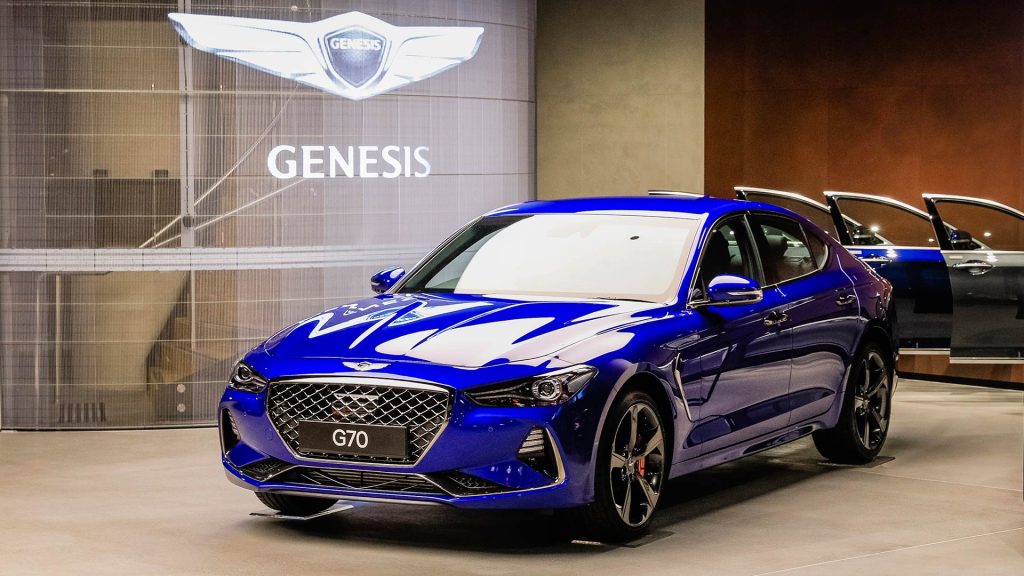
This can make a substantial difference in the used luxury market. A buyer may see a relatively young GV70 or G80 and assume that the original 10-year/100,000-mile powertrain promise remains intact. The warranty booklet says otherwise.
The issue is not that Genesis provides weak warranty coverage. Its original-owner package is substantial. The concern is simply that the headline powertrain period does not retain the same duration after resale. A used Genesis therefore requires a closer warranty check than its new-car advertising might initially suggest.
4. Mitsubishi
Mitsubishi takes a particularly straightforward position. Its current U.S. warranty information states that the 10-year/100,000-mile powertrain limited warranty applies to original owners, while subsequent owners receive the balance of the 5-year/60,000-mile New Vehicle Limited Warranty.
Mitsubishi also says that its complimentary limited maintenance program applies to the original owner and is not transferable.
The Outlander and Eclipse Cross show why the difference can matter. A new Outlander can be marketed with the impressive 10-year/100,000-mile powertrain term, but the second owner does not inherit that full protection. An Eclipse Cross faces the same basic ownership distinction.
Mitsubishi’s policy creates two separate resale considerations. First, the long powertrain warranty loses its original-owner advantage after the vehicle is sold. Second, the maintenance program is also owner-specific.
The manufacturer identifies the maintenance coverage as nontransferable, meaning a used buyer cannot necessarily assign the original owner’s maintenance benefits a value equal to the new-car package.
This makes Mitsubishi an especially interesting case for buyers who intend to keep a vehicle only for a few years.
The original owner can receive benefits that are less valuable to the next owner. Consequently, the warranty package should be assessed according to who currently owns the vehicle, not merely according to what was advertised when it was new.
5. Ram
Ram provides an interesting example of how a long powertrain warranty can change substantially when a vehicle is resold.
For qualifying 2026 model-year vehicles, Ram’s Powertrain Care Limited Warranty extension takes the standard powertrain coverage to 10 years or 100,000 miles, but the manufacturer specifically limits that extension to the original owner. Subsequent owners fall back to the standard powertrain warranty terms.
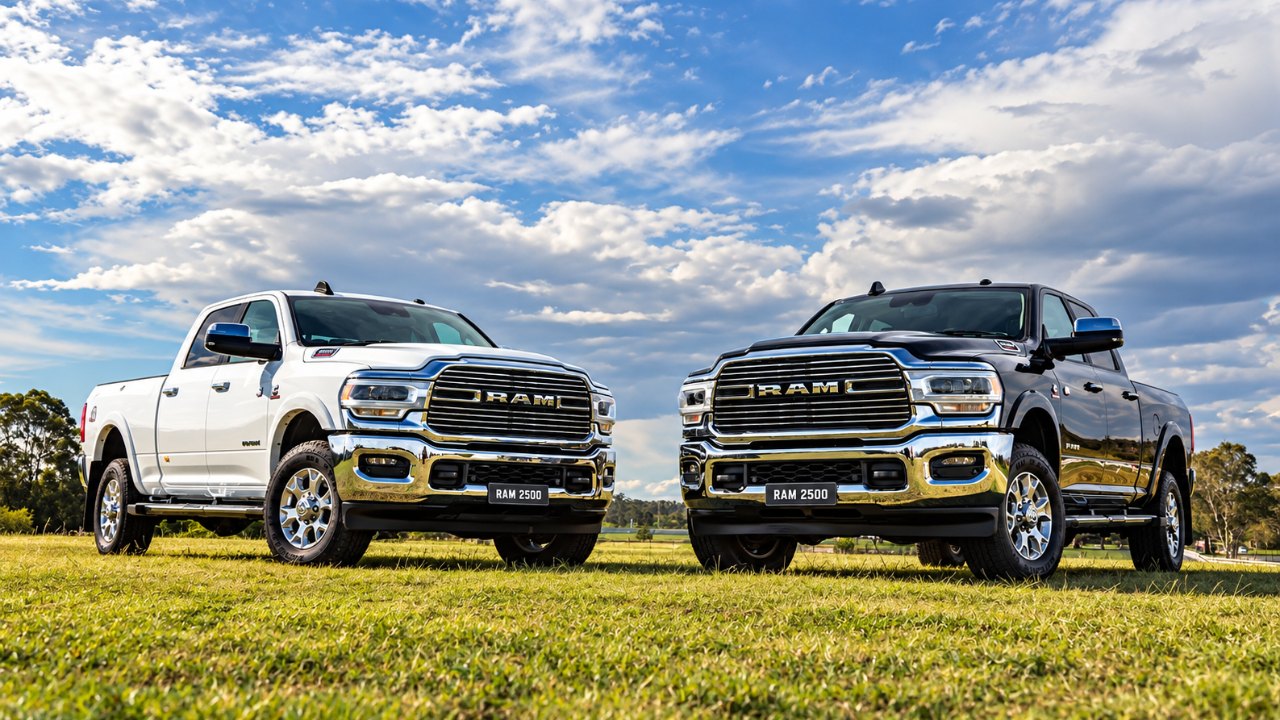
The Ram 1500 and Ram 2500 demonstrate why this distinction deserves attention from used-truck buyers. A new purchaser of a qualifying Ram can receive the extended 10-year/100,000-mile protection, but someone buying the same truck later cannot assume that the full extension follows the vehicle.
Ram’s warranty terms specifically identify the original purchaser as the person eligible for the extended coverage.
For a second owner, the difference can be significant. Ram states that subsequent owners receive powertrain coverage under the 5-year/60,000-mile New Vehicle Limited Warranty, while diesel-equipped vehicles receive the applicable 5-year/100,000-mile powertrain coverage.
That means a used Ram advertised as having a “10-year/100,000-mile warranty” requires closer examination. The advertised figure may describe protection available to the original purchaser rather than the person currently considering the truck.
The vehicle’s model year, engine, original in-service date and ownership history all need to be checked before assigning value to the remaining warranty.
Ram is therefore a much better fit for this list than the previous Kia CPO section because it provides a manufacturer-documented ownership-based reduction in powertrain coverage. It also shows that this issue is not limited to passenger cars.
For pickup buyers, the difference between a long original-owner warranty and shorter subsequent-owner coverage can have a meaningful effect on the financial appeal of a used truck.
