
Some cars fail because they are poorly engineered. Others fail because buyers simply are not ready for what they offer. Automotive history is filled with vehicles that introduced ideas years before those technologies became desirable, affordable, or practical for mainstream customers.
The Chrysler Airflow anticipated aerodynamic styling, the GM EV1 demonstrated that electric transportation could work decades before the modern EV boom, and the Honda Insight proved hybrids could deliver exceptional efficiency.
The Audi A2 pushed lightweight construction to an extreme. These cars did not necessarily have the wrong ideas. In many cases, they simply arrived before the market had caught up.
1. Chrysler Airflow
When the Chrysler Airflow appeared in 1934, American car buyers were accustomed to upright automobiles with separate fenders, tall grilles, and relatively boxy bodies. Chrysler engineers were already thinking about something very different.
Working with aerodynamics and wind-tunnel testing, they developed a shape intended to move more efficiently through the air rather than simply look fashionable.
The result was revolutionary. The Airflow used a streamlined body, a more integrated passenger compartment, and a structural design that placed the body between the wheels instead of sitting high above them.
Chrysler also emphasized its extensive aerodynamic testing. The Airflow Club of America records that engineers Owen Skelton, Carl Breer, and Fred Zeder were conducting wind-tunnel work with assistance from Orville Wright as early as 1930.
The problem was that customers were not ready for the visual change. Chrysler received more than 18,000 orders after the 1934 New York Auto Show, but production difficulties, delays, and early manufacturing defects damaged the car’s reputation.
Sales subsequently disappointed Chrysler. About 55,000 Airflows were produced across Chrysler and DeSoto versions during the 1934 to 1937 period, according to the Airflow Club of America.
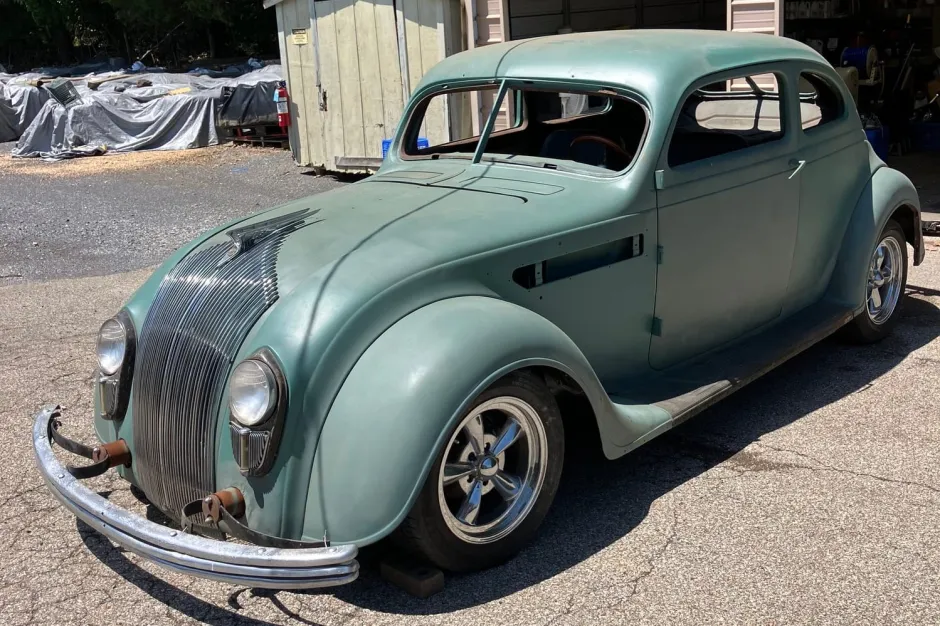
The irony is that Airflow’s basic thinking eventually became mainstream. Lower, smoother bodies, aerodynamic testing, and integrated construction became fundamental to modern vehicle design.
The Airflow did not fail because aerodynamics were useless. It arrived when American buyers still associated an automobile’s appearance with traditional upright proportions. Chrysler had essentially designed part of the future before the public was ready to buy it.
2. General Motors EV1
The General Motors EV1 may be the strongest example of a modern automobile arriving decades before the market was ready. GM introduced the battery-electric car to selected U.S. customers in the mid-1990s, making it one of the most significant early attempts by a major American automaker to put a purpose-built EV into everyday consumer use.
The EV1 was not a converted gasoline car. GM engineered it specifically around electric propulsion, giving the vehicle an aerodynamic body and a dedicated battery-electric powertrain.
Customers obtained the cars through leases rather than conventional purchases, allowing GM to retain control of the vehicles. Between 1996 and 1999, GM produced 1,117 EV1s, according to historical production figures.
Customer reaction was an important part of the story. Some lessees strongly wanted to keep their cars when GM decided to terminate the program.
In 2002, GM began notifying lessees that their vehicles would be recalled, and the company ultimately ended the program in 2003. Most of the returned EV1s were destroyed, although a limited number were preserved by museums and educational institutions.
The EV1’s timing was difficult. Battery technology imposed limitations on range, charging infrastructure was practically nonexistent compared with today’s network, and the U.S. market had little experience with dedicated electric vehicles.
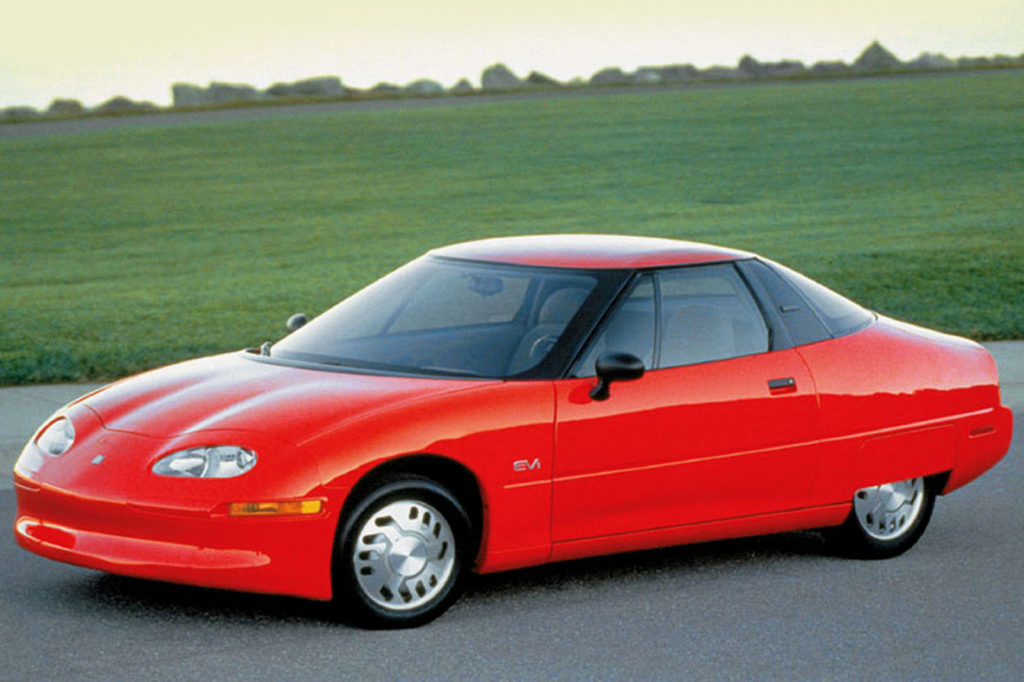
Yet the basic idea proved remarkably durable. Modern EVs now rely on the same fundamental architecture demonstrated by the EV1, with batteries supplying electricity to electric motors, regenerative braking recovering energy, and aerodynamic efficiency playing a major role in maximizing usable range.
The EV1 was therefore less a commercial failure than an early demonstration of where transportation could eventually go. GM attempted the idea before battery technology, charging infrastructure, and consumer demand had matured enough to support it at scale.
3. Honda Insight
The first-generation Honda Insight arrived in the United States in December 1999, at a time when hybrid technology was still an unfamiliar concept to most American buyers. Honda was not simply adding a small electric motor to an existing compact.
The Insight was developed specifically around fuel efficiency, combining a gasoline engine, Honda’s Integrated Motor Assist system, lightweight aluminum construction, and highly aerodynamic bodywork. Honda identifies it as the first mass-production hybrid-electric vehicle sold in the United States.
Its efficiency was extraordinary for the period. The original Insight achieved an EPA rating of 61 mpg city and 70 mpg highway with the five-speed manual transmission. Honda says it remains the most fuel-efficient non-BEV automobile ever sold in America based on its 70-mpg highway rating.
The problem was that Americans were being asked to accept several compromises in exchange for that efficiency.
The first-generation Insight was a small two-seat car rather than a conventional family vehicle. Its styling was deliberately aerodynamic, and its lightweight construction was more expensive and specialized than that of an ordinary economy car.
The sales figures show just how far the market had to go. Honda’s own global records list 17,020 first-generation Insights sold worldwide through January 2009, including 14,288 in North America, 2,340 in Japan, and 392 in Europe.
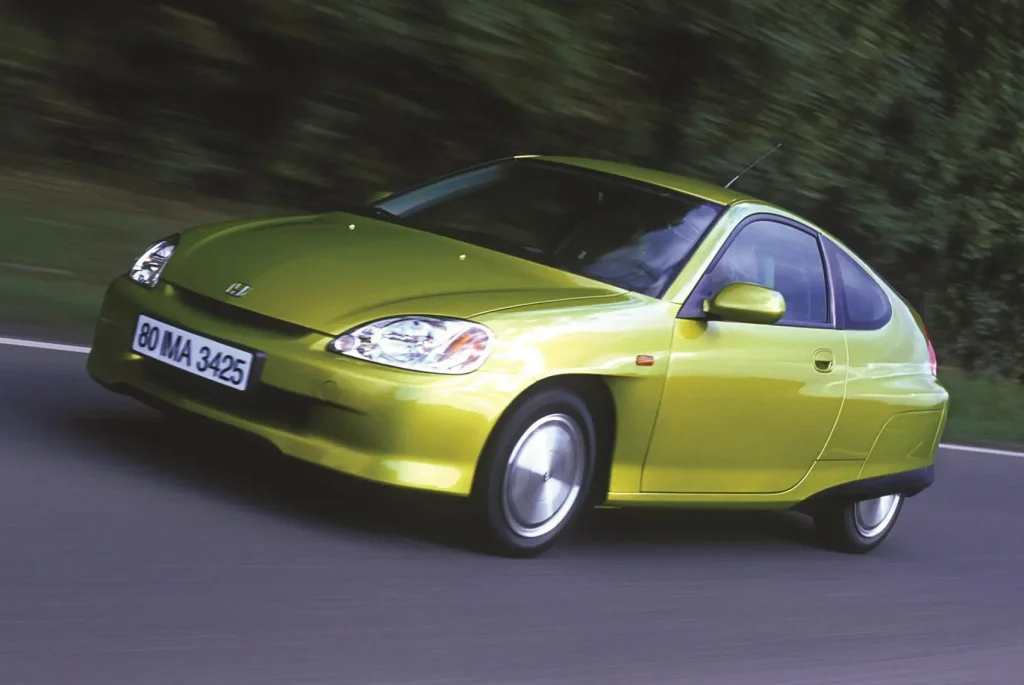
That seven-year production run therefore produced only a modest number of cars. The technology, however, proved far more durable than the sales. Honda’s hybrid strategy eventually expanded into the Civic, Accord, and later CR-V, while hybrids became an increasingly important part of the American market.
The Insight was not wrong about where the automobile industry was heading. It was simply asking consumers to embrace that future before fuel economy, electrification, and environmental concerns had become major mainstream buying priorities.
4. Audi A2
The Audi A2 was arguably too sophisticated for the small-car market it entered. Launched around the turn of the millennium, it combined an unusually lightweight, aluminum-intensive structure with aerodynamic design, efficient engines, and a remarkably spacious interior for its compact dimensions.
Audi’s engineering ambition was considerable. The A2 became the first compact car in recent automotive history with a body made entirely from aluminum, according to Audi. Its body shell, including the doors and tailgate, weighed approximately 153 kilograms, about 60 percent of the body-shell weight of a comparable conventional steel sedan.
The most extreme version pushed efficiency even further. The A2 1.2 TDI became the world’s first four-door three-liter car, with Audi developing extensive lightweight and aerodynamic measures to reduce fuel consumption. The version weighed only about 855 kilograms and used narrow, low-resistance tires and additional aerodynamic modifications.
On paper, this was precisely the kind of technology that would become increasingly valuable. In practice, the A2 was expensive to manufacture and difficult for buyers to understand as a premium-priced small car.
Audi constructed the A2 at its Neckarsulm facility using dedicated production equipment. The sophisticated aluminum construction demanded manufacturing techniques that were more complex than those used for an ordinary steel-bodied hatchback.
The market response was disappointing. Audi eventually ended production in 2005 after building 176,377 examples over roughly five years. The company itself now acknowledges that sales fell short of expectations.
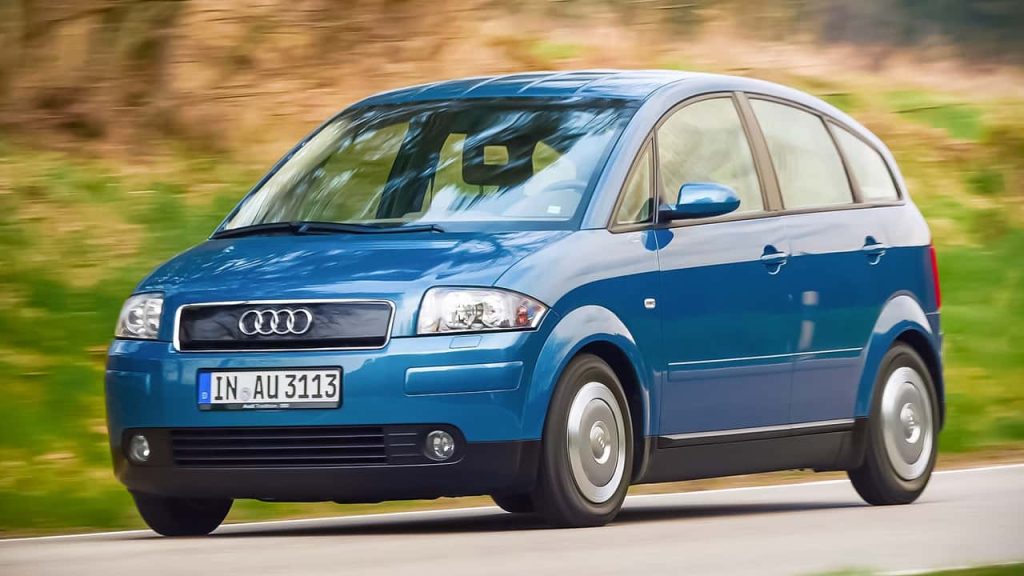
That outcome looks particularly interesting from today’s perspective. Lightweight construction, aerodynamic efficiency, and low fuel consumption are now major engineering priorities. Audi had already combined those principles in a compact premium vehicle more than two decades ago.
The A2 simply asked buyers to pay for advanced engineering when many customers in that class were more interested in straightforward practicality and affordable ownership. Its technology was forward-looking, but the business case arrived before the market was ready to reward it.
5. Toyota Prius
The Toyota Prius was not the first hybrid automobile, but it was the car that demonstrated hybrid technology could become a mainstream product. Its arrival in the United States in 2000 was still remarkably early, especially considering how unfamiliar electrified powertrains were to American buyers at the time.
Toyota launched the first-generation Prius in Japan in 1997 and brought it to North America for the 2001 model year. The car used Toyota’s Hybrid Synergy Drive concept to combine a gasoline engine with electric motors and a battery pack, allowing the powertrain to operate in different combinations depending on driving conditions.
That approach was radically different from the conventional American automobile of the period. The Prius could shut its gasoline engine off when conditions allowed, recover energy during deceleration, and use electric assistance to reduce fuel consumption.
Toyota’s early U.S. Prius was rated at 52 mpg city and 45 mpg highway under the original EPA testing system.
The first-generation car was hardly an immediate sales sensation. Toyota sold 5,562 Prius models in the United States in 2000, according to Toyota’s U.S. sales history. The figure climbed to 15,556 in 2001 and 20,119 in 2002, showing that acceptance was initially gradual rather than instantaneous.
The breakthrough came with the second generation. Toyota redesigned the Prius into a more practical five-door hatchback for 2004, and U.S. sales surged. The model eventually became synonymous with hybrid technology.
That progression illustrates why the original Prius belongs on a list of cars ahead of their time. Its technology worked, but the surrounding market had not yet developed a strong reason for most Americans to pay attention.
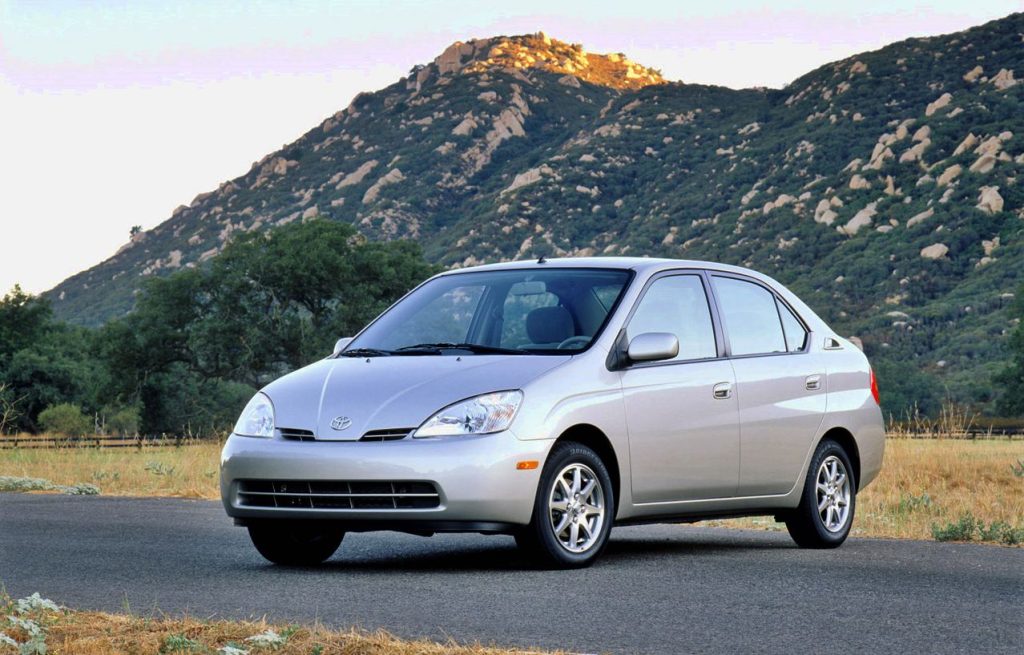
Fuel prices were comparatively modest, environmental concerns had not reached today’s level of prominence, and consumers were accustomed to conventional powertrains.
Toyota’s gamble eventually paid off. The Prius helped normalize the idea that a car could combine gasoline and electric propulsion without requiring owners to plug it in. What initially looked unusual became a template for thousands of later hybrid vehicles.
6. General Motors EV1 Successor Program and Saturn EV Concepts
The Saturn EV program represents a lesser-known attempt by General Motors to continue electric-vehicle development after the EV1 era. While the EV1 itself had already demonstrated GM’s ability to build and lease a dedicated battery-electric car, the company continued investigating electric propulsion for other applications as the industry moved into the 2000s.
One particularly important example was the Saturn Vue Green Line and associated advanced powertrain work, which demonstrated GM’s growing interest in electrification.
The company eventually moved toward the Chevrolet Volt, but that transition required years of development because battery technology, cost and vehicle packaging remained difficult problems.
The significance of these early programs is less about sales numbers and more about the technological gap between what engineers could demonstrate and what manufacturers could commercially deliver.
GM’s EV1 had already shown that an electric car could provide useful everyday transportation. However, the company faced limitations involving battery cost, charging infrastructure and customer demand.
The later Volt program attempted to solve some of those problems by using an electric drive system while retaining a gasoline engine as a range-extending component.
GM unveiled the Chevrolet Volt concept in 2007, and the production model eventually arrived for the 2011 model year. That lengthy development period illustrates how difficult it was to move advanced electrification from an experimental program into mass production.
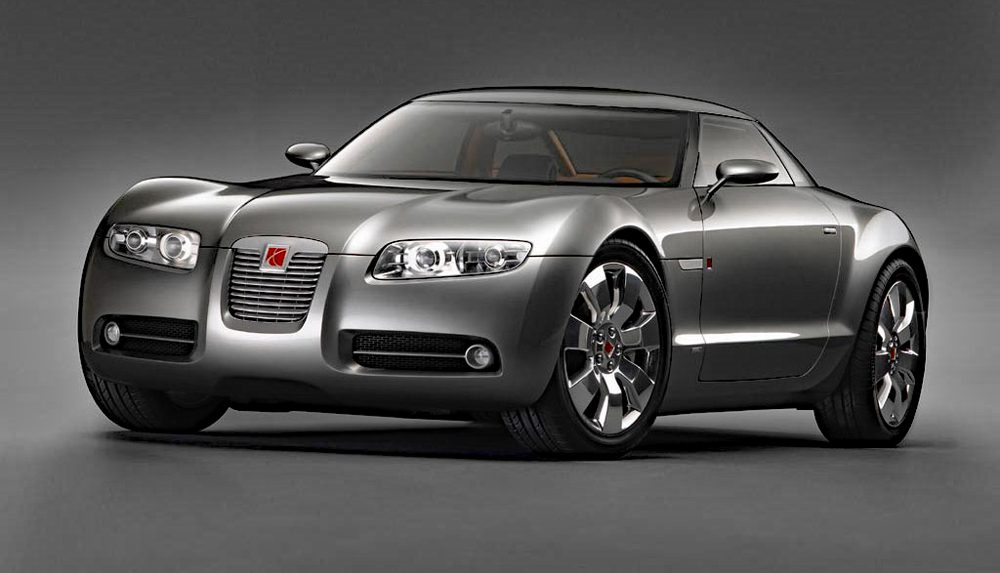
The lesson from GM’s early electric programs is therefore broader than any single vehicle. Electric propulsion was technically possible long before the modern EV market emerged, but successful mass adoption required improvements across several areas simultaneously.
Batteries had to become more energy-dense and affordable. Charging infrastructure had to expand. Consumers needed convincing reasons to change from gasoline vehicles. Automakers also needed manufacturing processes capable of producing electrified vehicles at commercially viable volumes.
GM was tackling many of these challenges decades before today’s EV market existed. In that context, its early programs look less like dead ends and more like important engineering groundwork. The technology came first, while the market, charging infrastructure, and economics needed much more time to catch up.