
The automotive industry regularly kills projects that appear almost ready for showrooms. Sometimes the reason is financial pressure, sometimes changing customer demand, and sometimes an automaker decides that a nearly finished vehicle no longer fits its future strategy.
The most frustrating cases are the cars that have already reached working prototypes, production-ready specifications, or even factory planning before executives pull the plug. The seven examples in this list show how quickly an apparently certain launch can disappear.
From a million-pound Jaguar supercar to Honda EVs that were supposed to enter U.S. production, each cancellation happened after substantial development had already taken place.
1. Jaguar C-X75
The Jaguar C-X75 is one of the clearest examples of a production car being cancelled after the manufacturer had moved far beyond the normal concept stage.
Jaguar introduced the C-X75 as a concept at the 2010 Paris Motor Show, where its advanced hybrid powertrain and dramatic design attracted enormous attention. The strong response encouraged Jaguar to announce plans for a limited production run.
The project then became much more serious. Jaguar partnered with Williams Advanced Engineering to transform the concept into a working hybrid supercar.
Jaguar says the development program produced a fully working all-wheel-drive plug-in hybrid with a carbon-composite monocoque and an extremely high-specific-output engine. The transformation from concept to working prototype took only about two years.
Jaguar ultimately planned a limited run of just 250 cars, with reports putting the projected price at as much as £1 million. By 2012, however, the global economic climate had changed dramatically. Jaguar decided that putting an ultra-expensive hybrid supercar into production was not appropriate for the circumstances.
The company officially announced the cancellation in December 2012, saying the global economic climate meant the C-X75 would not enter full production. Jaguar instead retained several prototypes for development and demonstration work.
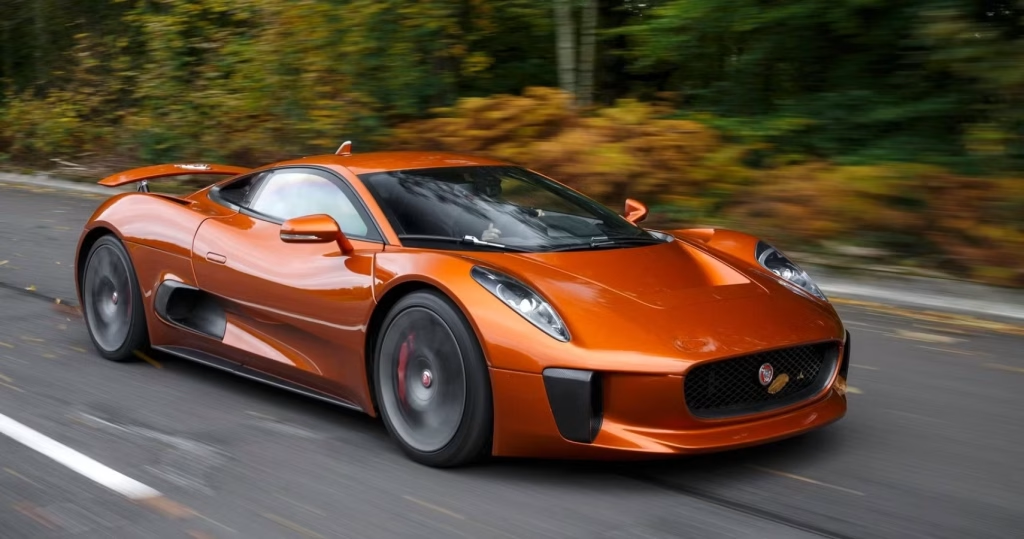
What makes the cancellation particularly painful is how advanced the project had become. This was not a styling exercise abandoned after an auto show. Jaguar had developed functioning prototypes, engineering partnerships, and a production strategy.
The C-X75 eventually gained another life when a version appeared in the James Bond film Spectre, but that only made the missed production opportunity more visible. A car designed to demonstrate Jaguar’s future technology never became a customer vehicle.
2. Jaguar Electric XJ
The electric Jaguar XJ replacement was cancelled in 2021 when the project was already substantially developed and much closer to production than a conventional early-stage concept.
Jaguar had announced that the next-generation XJ would become an electric flagship, replacing the outgoing luxury sedan with a battery-powered model intended to establish the brand’s new technological direction.
Development had progressed far enough for prototypes to be built and tested. Reports at the time described the vehicle as being relatively close to production, with Jaguar Land Rover having invested heavily in its development and preparation for manufacturing.
Then Jaguar changed direction.
In February 2021, Jaguar Land Rover announced its Reimagine strategy, which called for Jaguar to become an all-electric luxury brand. At the same time, the company confirmed that the planned electric XJ replacement would not proceed.
Jaguar explained that a technology review had concluded the vehicle no longer fitted the company’s vision for a reimagined Jaguar brand.
The cancellation was particularly surprising because Jaguar was not abandoning electrification. It was doing almost the opposite. The company was committing Jaguar to an electric future while simultaneously killing the electric flagship that had been expected to lead that transformation.
Jaguar said it was moving toward a different approach for its future EV lineup, centered around a new dedicated platform.
That distinction matters. The XJ was not cancelled because Jaguar suddenly decided electric cars were undesirable. Instead, the company determined that the particular XJ project no longer fitted the strategy it wanted to pursue.
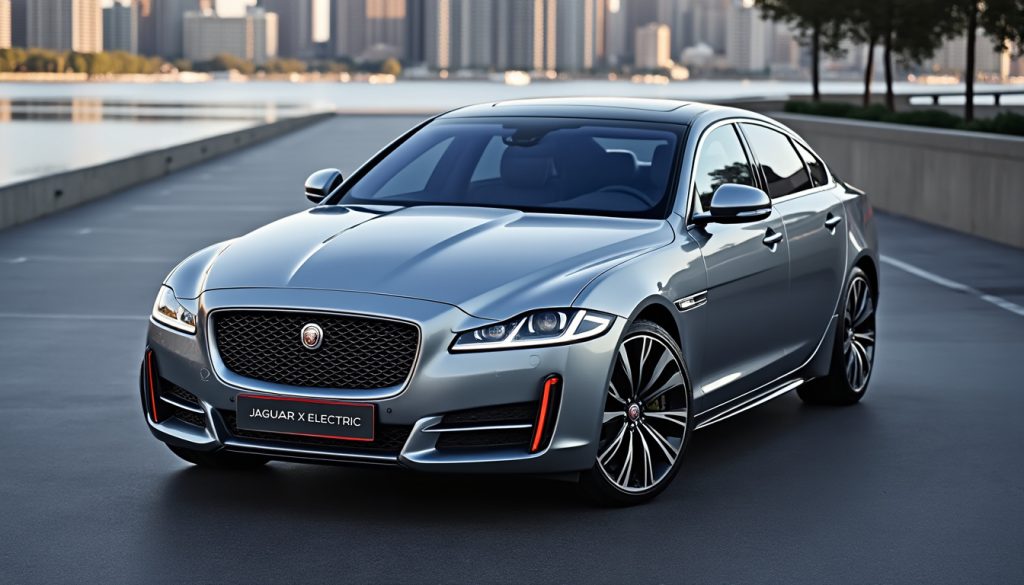
The timing made the decision even more dramatic. A nearly production-ready flagship was sacrificed so Jaguar could reset its entire product plan.
The XJ name was left with the possibility of returning someday, but the electric replacement itself disappeared before customers could buy it.
3. Aston Martin Rapide E
The Aston Martin Rapide E came remarkably close to becoming a customer car before its production plans reportedly disappeared. Unlike a typical concept that exists mainly to test public reaction, the Rapide E reached a production-ready stage and was publicly presented in its final form at the 2019 Shanghai Auto Show.
Aston Martin had planned an extremely limited production run of just 155 examples. The company officially described the car as its first fully electric Aston Martin and said it would be built at the new St. Athan facility in Wales. Aston Martin also confirmed that Williams Advanced Engineering was involved in its development.
The engineering program had progressed considerably. The Rapide E used an 800-volt electrical architecture, two electric motors, and a battery system developed with Williams Advanced Engineering. Aston Martin announced more than 610 PS and 950 Nm of torque for the production-intent car.
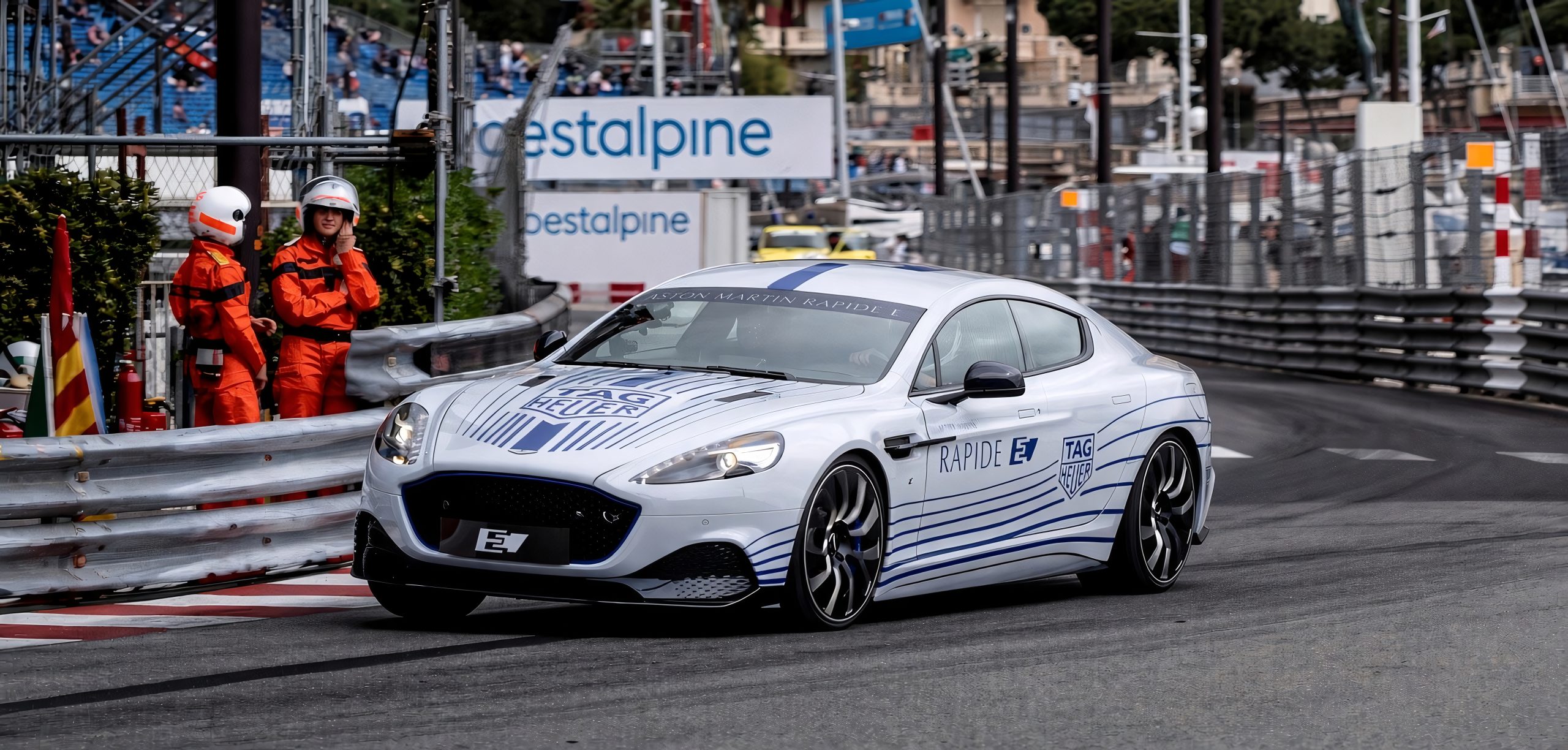
There was even evidence that the car was essentially ready for its intended role. The Rapide E made a dynamic appearance at the 2019 Formula E Monaco E-Prix, demonstrating that the vehicle was a functioning high-performance EV rather than merely a static show car.
Production was supposed to begin later that year, with customer deliveries planned for the fourth quarter. Then the plan apparently changed.
In January 2020, Autocar reported that Aston Martin had shelved the production program and would instead use the Rapide E as a research and development vehicle for future electrification.
Importantly, Aston Martin did not officially confirm the cancellation when asked about the report, so it should be described as reportedly shelved rather than definitively cancelled.
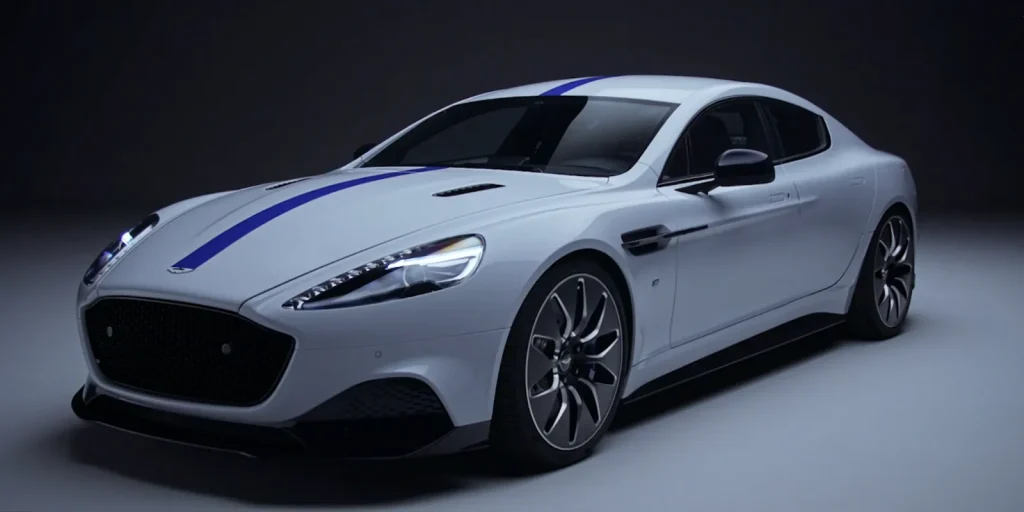
The timing was significant because Aston Martin was under financial pressure and concentrating resources on the new DBX SUV, which was considered strategically important.
That left the Rapide E in an unusual position. It was a fully developed, production-ready electric Aston Martin with a planned customer run of just 155 cars, yet it apparently never entered series production.
4. Dyson Electric Car
The Dyson electric car was cancelled after the company had invested enormous resources into turning an appliance manufacturer’s technology ambitions into a genuine automobile. Unlike the other projects here, Dyson had never previously built production cars, making the undertaking particularly ambitious.
Founder James Dyson announced the automotive project publicly in 2017, with the company planning an advanced battery-electric vehicle. Dyson subsequently committed £2.5 billion to the broader technology program surrounding the project.
The company established an automotive team of hundreds of employees and developed prototypes at its facility in Hullavington, England.
The project eventually became much more than an idea. Dyson engineers produced a functioning vehicle, and the company planned a manufacturing facility in Singapore. The launch had initially been targeted for around 2020 before moving toward 2021.
Then, in October 2019, Dyson abruptly ended the program. The explanation was not that the engineers had failed to make the vehicle work.
Dyson said the company had developed a “fantastic car” but could no longer see a way to make it commercially viable. The company had also attempted to find a buyer for the project without success.
That distinction is important. Dyson’s problem was ultimately the economics of entering the automobile industry. A successful production vehicle would have required enormous additional investment in manufacturing, supply chains, distribution, regulatory compliance, and after-sales support.
Contemporary reporting indicated that the proposed Dyson EV was positioned as a premium vehicle, making its business case particularly difficult against established automakers with vastly larger production volumes.
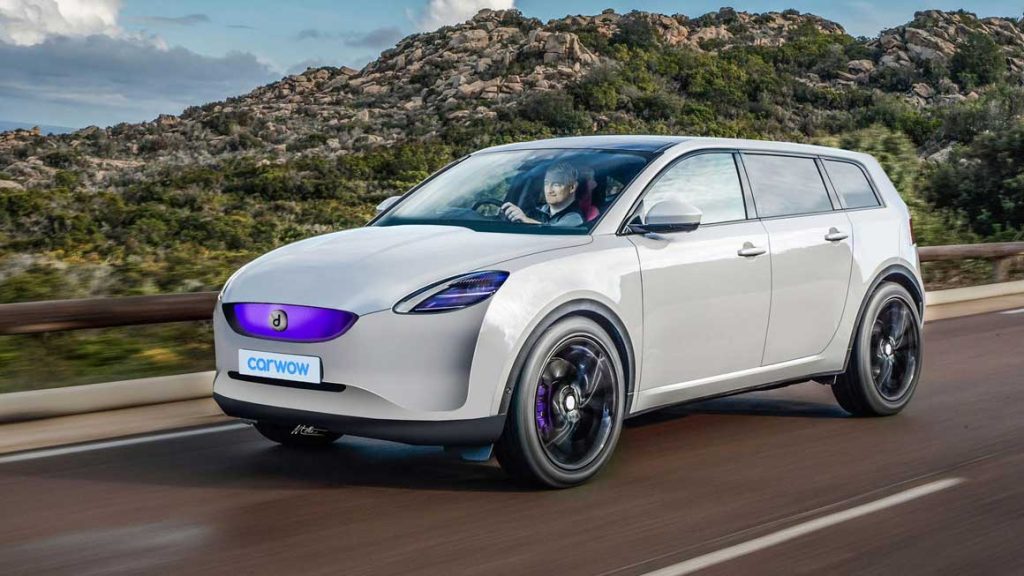
The cancellation came despite the existence of working prototypes and a planned manufacturing operation. Dyson’s automotive division had essentially built the foundation of a new car company, only for the parent company to conclude that completing the final step would not make financial sense.
The £2.5 billion investment did not simply disappear into the car. Dyson said the company would continue developing technologies such as solid-state batteries, sensing systems, robotics, and artificial intelligence, allowing some of the work to survive outside the vehicle itself.
5. Chrysler ME Four-Twelve
The Chrysler ME Four-Twelve was not merely an extravagant concept shown at an auto show. Chrysler actually developed a running prototype and seriously considered putting the car into production.
Its name described the basic formula, a mid-mounted engine, four turbochargers, and 12 cylinders. The project was developed by a small Chrysler team in 2003 and introduced at the 2004 North American International Auto Show in Detroit.
What made the project extraordinary was how quickly Chrysler moved. The show car was created in less than a year, and a second vehicle was subsequently developed as a functional prototype.
The running car was tested at Laguna Seca, giving journalists an opportunity to experience what Chrysler had created rather than simply looking at a static display. Contemporary accounts describe Chrysler executives as genuinely interested in production.
The engineering ambition was enormous for a Chrysler-badged automobile. The car used a Mercedes-derived 6.0-liter V12 with four turbochargers, while Chrysler targeted supercar performance that could have put the vehicle into the same conversation as the world’s most exotic machines.
A fully functioning prototype demonstrated that the project was technically viable. Yet getting from two prototypes to a commercially viable production program was another matter. The bespoke chassis, specialized components, and low expected production volume would have made the car extremely expensive to build.
Contemporary reports also placed potential pricing anywhere from roughly $150,000 to substantially higher figures, depending on the stage of the project and assumptions about production.
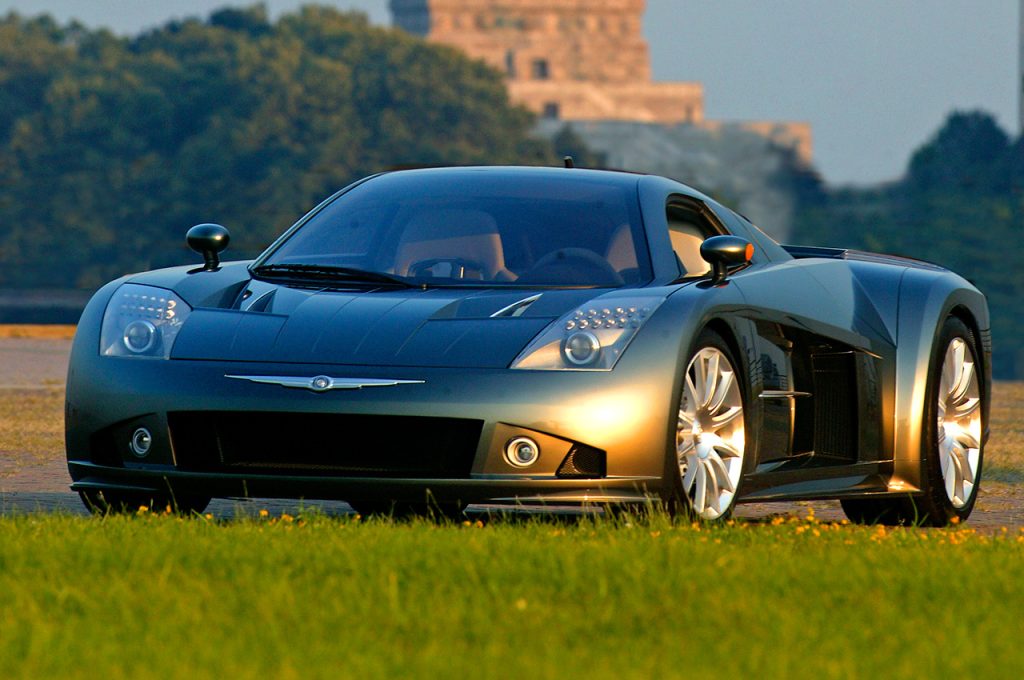
The corporate environment did not help. DaimlerChrysler was already dealing with broader strategic problems, and an ultra-expensive Chrysler supercar was difficult to justify.
The ME Four-Twelve therefore became a particularly frustrating example of a car that had crossed the boundary between fantasy and engineering reality, only to disappear before the business case could be completed.
6. Ford Shelby GR-1
The Ford Shelby GR-1 arrived at the 2005 North American International Auto Show as a modern interpretation of the classic Shelby Daytona Coupe, but Ford quickly gave enthusiasts reason to believe it might become more than an exhibition piece.
The concept used a dramatic long-nose, fastback shape and was based on the architecture associated with the Ford GT program.
Ford’s connection with Carroll Shelby gave the project additional credibility. Shelby was involved in the design process, and the GR-1 was intended to capture the spirit of the legendary Daytona Coupe while using modern Ford engineering.
Its development also reflected Ford’s interest in creating a high-performance halo vehicle following the success of the modern Ford GT.
The GR-1 was far more than a clay model. Ford showed a functional concept powered by a 6.4-liter V10, and the car was engineered as a serious performance machine. Its aluminum construction and low-volume nature, however, presented major obstacles to production.
The biggest problem was not necessarily whether Ford could make the car work. It was whether the company could make the economics work while meeting modern safety requirements.
Contemporary reporting noted that the vehicle would have required further engineering to satisfy U.S. regulations, particularly around passenger protection and structural requirements.
Ford’s financial situation also deteriorated during the period when the GR-1 might have moved toward production. The company was increasingly focused on restructuring and reducing costs rather than investing in another expensive, low-volume sports car.
Former Ford design chief J Mays later explained that the company was concentrating on other priorities as financial difficulties mounted. That left the GR-1 stranded between concept and production.
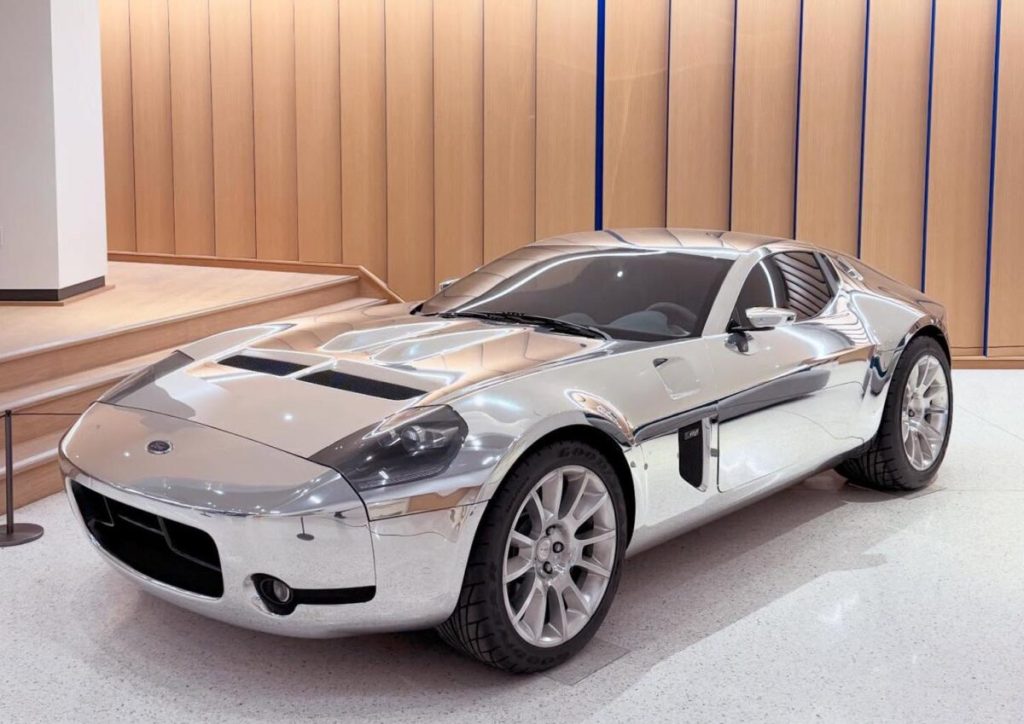
Its cancellation was especially disappointing because the Ford GT had already demonstrated that Ford could successfully build an exotic, limited-production supercar. The GR-1 could have followed that path, but the combination of development costs, regulatory work and Ford’s broader financial problems prevented the transition.
The car therefore survived primarily as a concept, leaving enthusiasts to wonder what a production Shelby GR-1 might have become.
7. Lotus Esprit V8 Replacement
The Lotus Esprit replacement became one of the clearest examples of a production program being repeatedly delayed before ultimately being abandoned. Lotus had planned to replace its aging Esprit with a completely new supercar as part of an ambitious expansion of the brand.
The project appeared publicly during the 2000s and early 2010s, when Lotus presented several future-product concepts and discussed expanding its range dramatically. A new Esprit was among the cars intended to push Lotus further into the supercar market.
Unlike a purely speculative concept, the project was associated with a planned production program. Lotus had publicly indicated that the new Esprit would arrive around the beginning of the 2010s, but development delays repeatedly pushed the timetable back.
The wider Lotus strategy then changed dramatically. The company was attempting to launch several new models at once, including replacements and additions across different segments. That ambitious product plan proved difficult to finance and execute.
By the early 2010s, the new Esprit had effectively disappeared from Lotus’s confirmed product plans. Automotive reporting subsequently treated the project as cancelled after years of delays.
The cancellation was significant because the original Esprit had already ended production in 2004, meaning Lotus was left without a direct successor for years. Rather than immediately replacing its iconic mid-engine sports car, the company eventually shifted toward a different strategy.
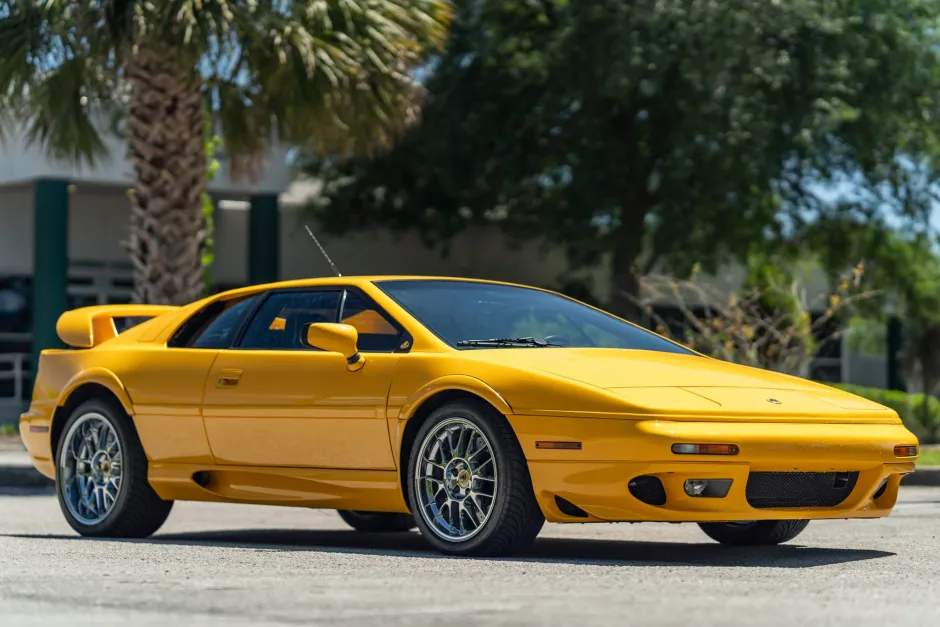
The eventual answer came much later and in a completely different form. Lotus moved toward the Evora, followed by the Emira, while its broader transformation eventually included electric hypercars and SUVs.
The proposed new Esprit therefore became a casualty of changing corporate priorities rather than a simple failure of engineering. Lotus had the design ambition and the heritage to justify another flagship sports car, but the resources required to launch one alongside several other new products proved difficult to sustain.
Its story demonstrates why being close to production does not guarantee a showroom debut. A car can have a recognizable name, a completed design, and an announced development program, yet still disappear when the company’s financial and strategic priorities change.
