Small SUVs have become some of the most popular family vehicles in America, making crash-test performance an increasingly important part of the buying decision.
For 2026, the Insurance Institute for Highway Safety raised the bar for its highest Top Safety Pick+ award, requiring strong performance in multiple crash evaluations along with effective headlights and standard crash-avoidance technology.
Eleven small SUVs reached that highest level this year. The group includes gasoline, hybrid, and electric models from several major automakers. Here is what made each SUV stand out in IIHS testing and why the results matter to buyers looking for a safer everyday vehicle.
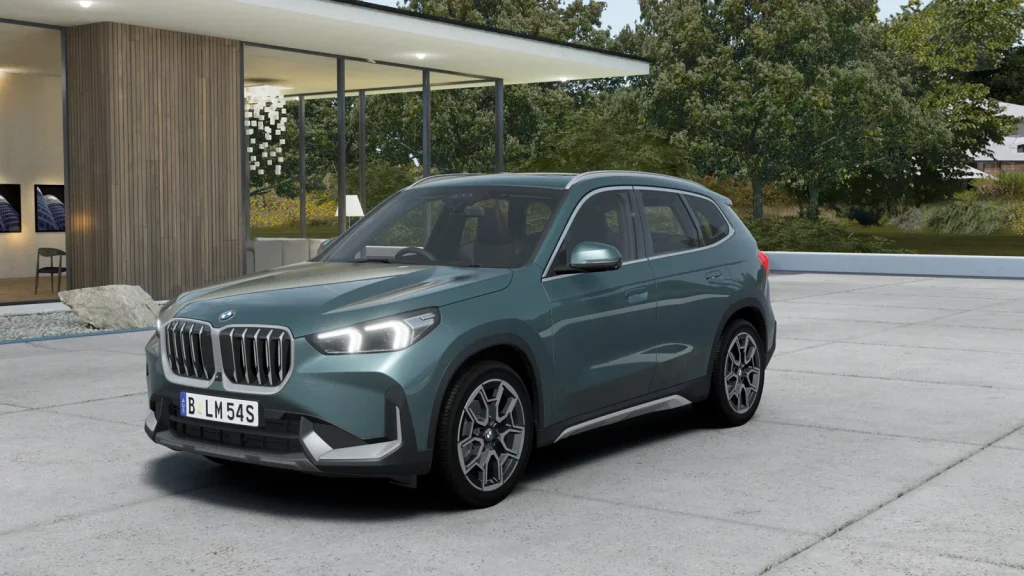
1. 2026 BMW X1
The BMW X1 earned a 2026 Top Safety Pick+ award after meeting the IIHS requirements across the key crash and crash-avoidance evaluations.
Its result is particularly notable because the X1 had to demonstrate strong protection in the updated moderate overlap front test, an evaluation that has become an important dividing line between vehicles that merely perform adequately and those that reach the highest IIHS award level.
The X1 received a good rating in the small overlap front crash test, the updated moderate overlap front test, and the side crash test. IIHS also gave its headlights a Good rating, meaning the available lighting performance met the institute’s standard for the award.
The crash-prevention technology also contributed to the X1’s qualification. Its standard vehicle-to-vehicle front crash prevention system received an Acceptable rating, while the standard pedestrian front crash prevention system earned a Good rating.
Because the Top Safety Pick+ criteria require a Good pedestrian system and an Acceptable or Good vehicle-to-vehicle system, the X1 cleared both requirements.
What makes the result interesting is that the award was not simply a carryover from an older test program. IIHS specifically noted that the X1 entered the winner’s circle after undergoing the moderate overlap test and earning a good result.
That means its 2026 recognition reflects the tougher evaluation structure rather than relying solely on earlier crash performance.
For buyers considering a premium small SUV, the X1’s Top Safety Pick+ status provides evidence that its occupant protection and standard crash-avoidance equipment meet one of the industry’s most demanding independent safety benchmarks.
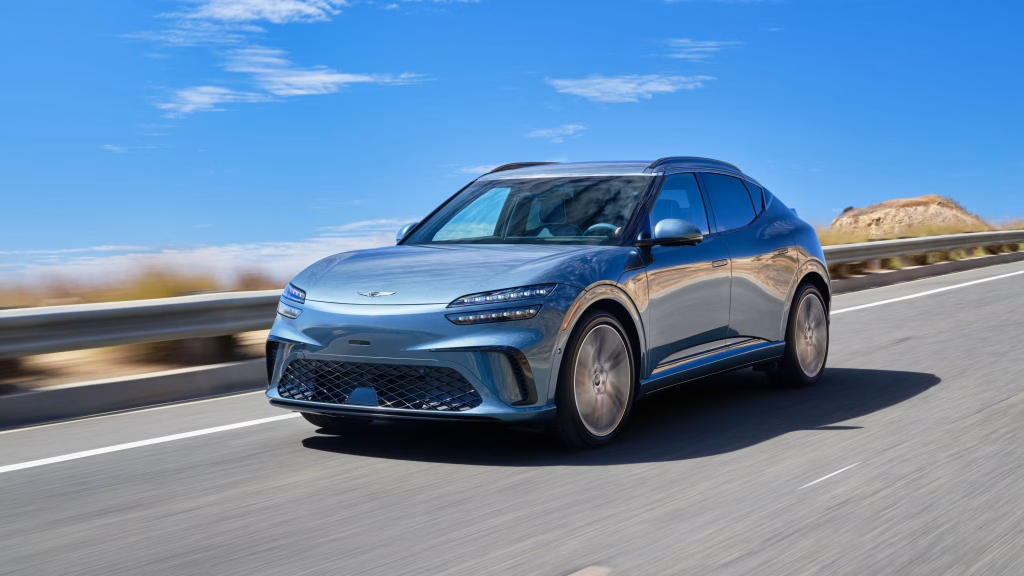
2. 2026 Genesis GV60
The Genesis GV60 brings an electric powertrain to the 2026 small-SUV Top Safety Pick+ group, showing that IIHS’s highest safety award is not limited to conventional gasoline-powered vehicles.
The GV60 achieved the required performance across the institute’s major crash evaluations and also satisfied the standards for headlights and standard crash-prevention technology.
For the 2026 award, a vehicle must earn good ratings in the small overlap front, moderate overlap front, and side crash tests.
It must also have Acceptable or Good headlights and meet specific requirements for pedestrian and vehicle-to-vehicle front crash prevention. The GV60 appears on IIHS’s official 2026 small-SUV list as a Top Safety Pick+ winner, confirming that it met those conditions.
The significance goes beyond simply receiving a badge. IIHS says the 2026 criteria place greater emphasis on crash avoidance, with the institute requiring a Good pedestrian front crash-prevention rating and an Acceptable or Good vehicle-to-vehicle rating for the Plus award. These systems are required to be standard rather than optional equipment.
The GV60’s inclusion also gives electric SUV shoppers another safety-focused option in a category where vehicle weight, battery packaging, and structural design can create different engineering challenges from traditional models.
IIHS lists the GV60 alongside the BMW X1, Honda HR-V, Hyundai Ioniq 5, and other small SUVs that reached the highest award tier for 2026.
For consumers comparing electric and gasoline-powered small SUVs, the GV60’s Top Safety Pick+ recognition offers an independently evaluated measure of crashworthiness and crash avoidance. Rather than relying on manufacturer claims alone, the award reflects performance against IIHS’s current 2026 testing requirements.
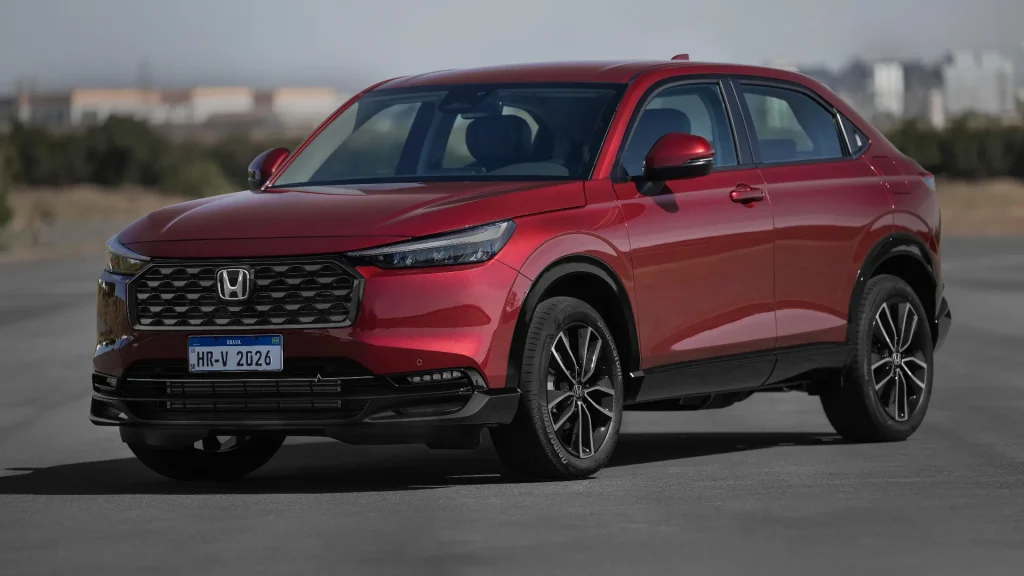
3. 2026 Honda HR-V
The 2026 Honda HR-V secured a Top Safety Pick+ award from IIHS, placing it among the highest-rated small SUVs for crash protection and crash avoidance. The recognition matters because the 2026 award criteria are tougher than previous years, particularly in the area of rear-seat protection and automatic emergency braking performance.
IIHS requires top safety. Pick winners to earn good ratings in the small overlap front, updated moderate overlap front, and side crash tests. The HR-V is included on the institute’s official list of 2026 small-SUV Top Safety Pick+ winners.
The updated moderate overlap test is especially important for family-oriented vehicles such as the HR-V. IIHS changed this evaluation to put greater emphasis on what happens to passengers sitting in the second row.
For 2026, a good result in this test is required for the highest award. That makes the HR-V’s inclusion more meaningful than simply carrying forward an older safety rating.
Crash avoidance is another major part of the achievement. For Top Safety Pick+, IIHS requires standard pedestrian front crash prevention to earn a Good rating.
The vehicle-to-vehicle front crash prevention system must also receive an Acceptable or Good rating. The newer vehicle-to-vehicle evaluation tests systems at 31, 37, and 43 mph and uses passenger car, motorcycle, and semitrailer targets.
The HR-V’s award therefore reflects more than structural crash performance. It demonstrates that Honda’s small SUV meets the institute’s current expectations for occupant protection and standard collision-avoidance technology.
For buyers who want a compact SUV without stepping into a larger vehicle, the 2026 HR-V stands out as one of the models that successfully cleared IIHS’s tougher safety benchmark.
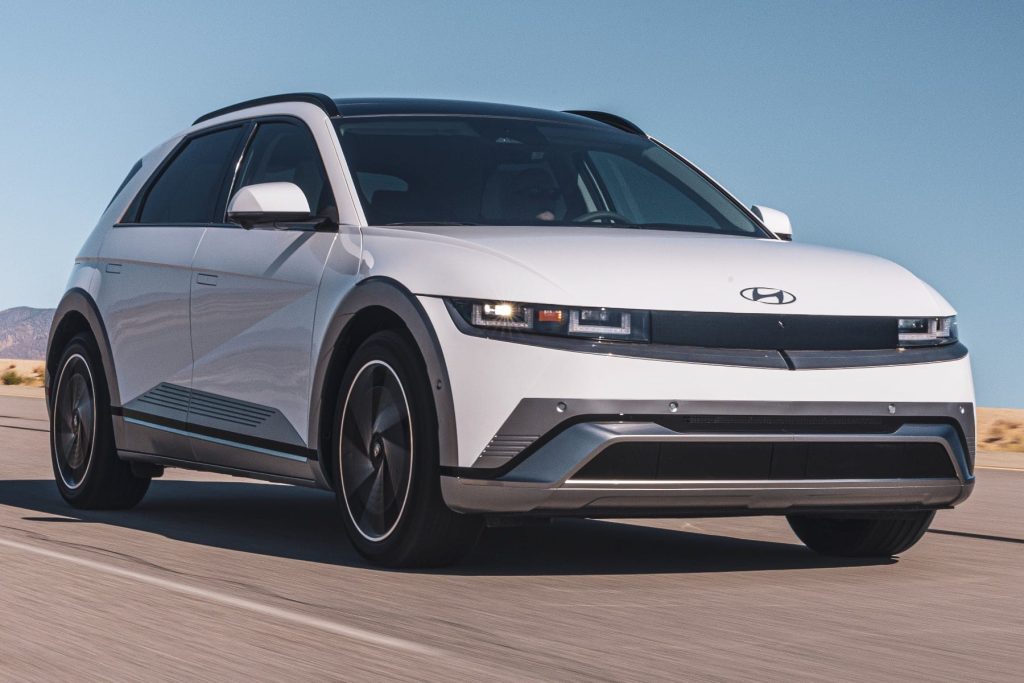
4. 2026 Hyundai Ioniq 5
The 2026 Hyundai Ioniq 5 is another electric vehicle that earned IIHS Top Safety Pick+ recognition in the small-SUV category.
Its position on the 2026 list demonstrates that the award is being applied across different powertrain types, with battery-electric vehicles facing the same demanding crash and crash-avoidance requirements as gasoline-powered SUVs. IIHS officially lists the Ioniq 5 among its 2026 small-SUV Top Safety Pick+ winners.
The 2026 award program places particular emphasis on crash performance involving occupants in the second row. IIHS’s updated moderate overlap front test was designed to reveal weaknesses that may not be obvious when attention is focused primarily on the driver and front passenger.
The institute now requires a good rating in this test for Top Safety Pick+ eligibility. Good results are also required in the small overlap front and side tests.
That makes the Ioniq 5’s recognition relevant for families as well as EV buyers. A vehicle can have advanced driver-assistance equipment and still fall short if its structure or restraint performance does not meet the required crash standards. The Ioniq 5 cleared the combination of requirements necessary for the Plus award.
IIHS has also tightened the technology side of its evaluation. A Top Safety Pick+ winner must have standard pedestrian front crash prevention rated Good and standard vehicle-to-vehicle front crash prevention rated acceptable or good.
The newer vehicle-to-vehicle assessment reaches speeds of 43 mph and includes a motorcycle and a semitrailer target, giving the evaluation a wider range of real-world scenarios than the earlier low-speed system test.
For an electric crossover, the Ioniq 5’s place on the list gives buyers a useful independent safety reference. Its award is not simply about having modern technology or an electric powertrain. It reflects the vehicle’s ability to meet IIHS’s current crashworthiness and collision-avoidance standards at the same time.
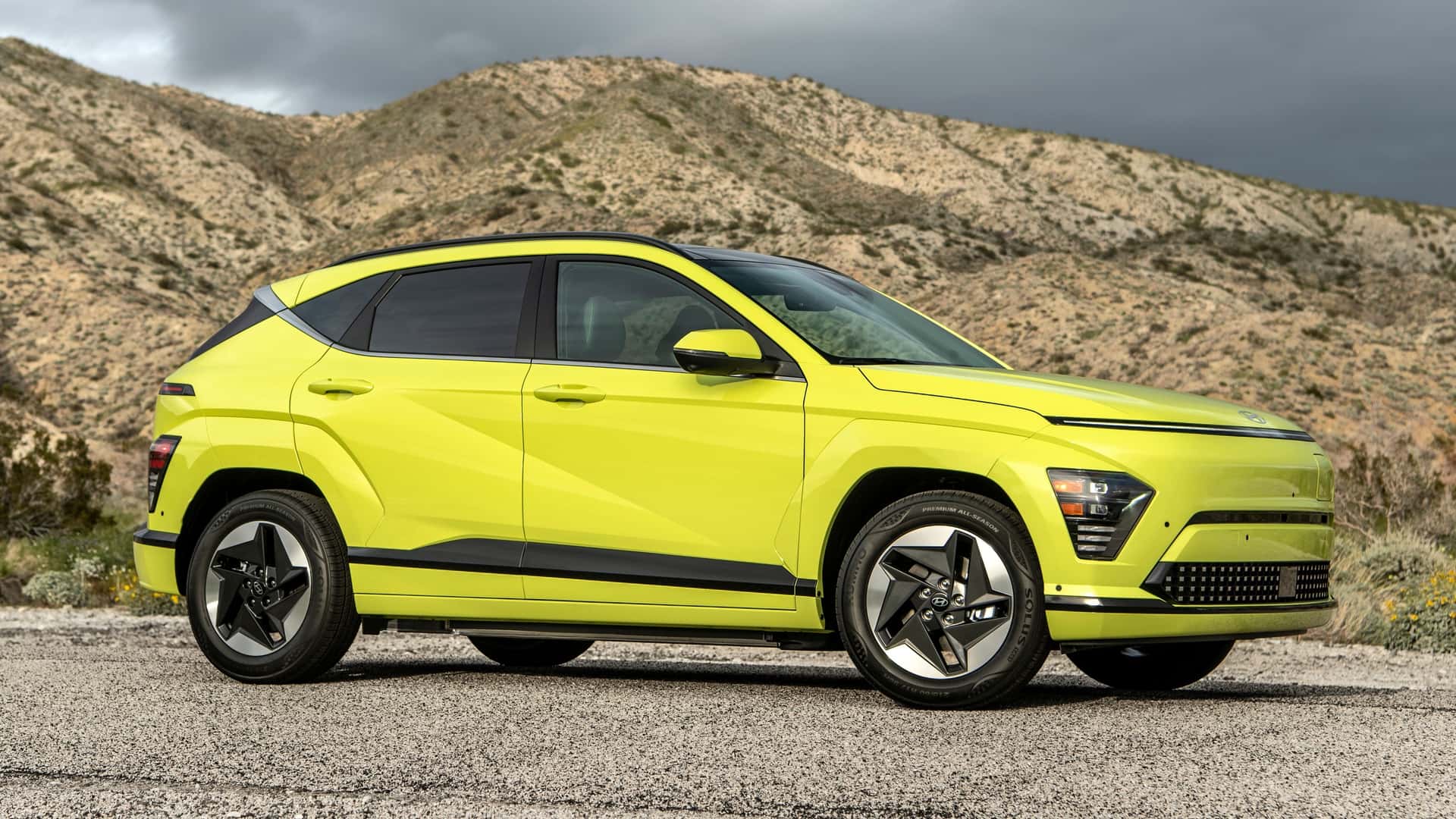
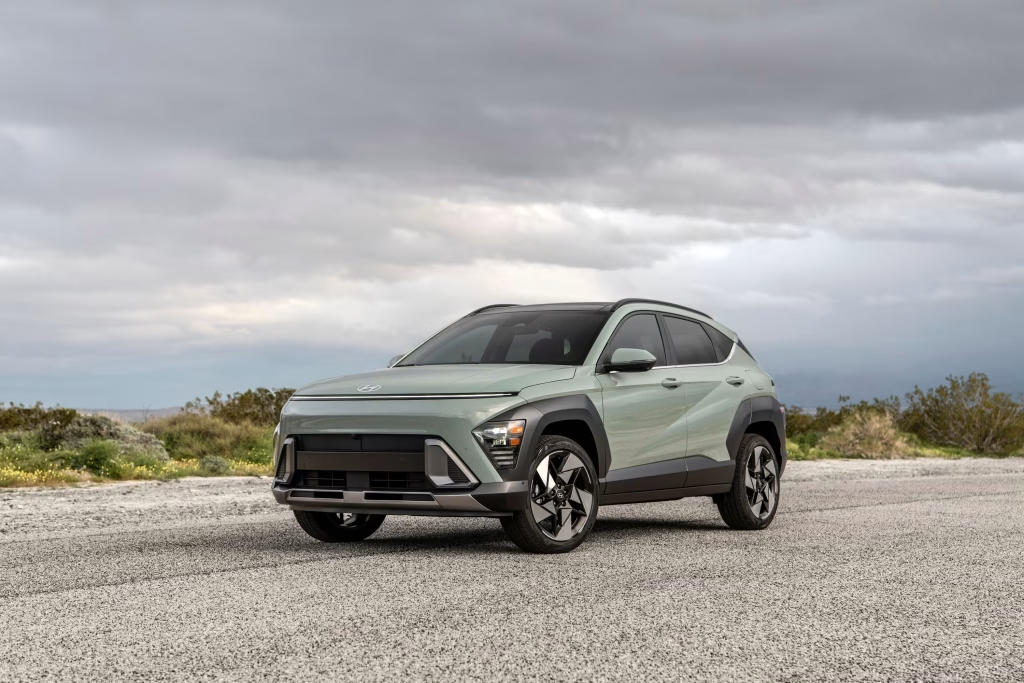
5. 2026 Hyundai Kona
The 2026 Hyundai Kona is one of the smaller vehicles in this group, yet it achieved IIHS’s highest safety designation. The institute lists the Kona as a 2026 Top Safety Pick+ winner in the small-SUV category, meaning it satisfied every requirement attached to the Plus award under the 2026 criteria.
Those requirements include good ratings in the small overlap front, updated moderate overlap front, and side crash tests, along with acceptable or good headlights and strong performance from standard crash-prevention systems.
The updated moderate overlap test is particularly relevant because IIHS has shifted more attention toward rear-seat occupants. Earlier generations of crash testing concentrated heavily on protecting people in the front seats.
The revised evaluation examines how well a vehicle’s structure and restraint systems protect someone seated behind the driver. That makes the Kona’s 2026 recognition more meaningful for families who regularly use the second row.
Safety equipment also plays a major role in the award. For 2026, IIHS requires standard pedestrian front crash prevention to receive a Good rating and standard vehicle-to-vehicle front crash prevention to receive either Acceptable or Good.
The latter system is evaluated in scenarios involving other passenger vehicles, motorcycles, and semitrailers, with testing reaching 43 mph.
The Kona therefore represents an important achievement for Hyundai in a highly competitive segment. Small SUVs often appeal to buyers because they combine a relatively compact footprint with practical seating and cargo space.
The 2026 Kona adds a strong independent safety credential to that formula. Its Top Safety Pick+ designation confirms that its crash structure, restraints, lighting, and standard collision-avoidance technology collectively meet IIHS’s toughest current small SUV requirements.
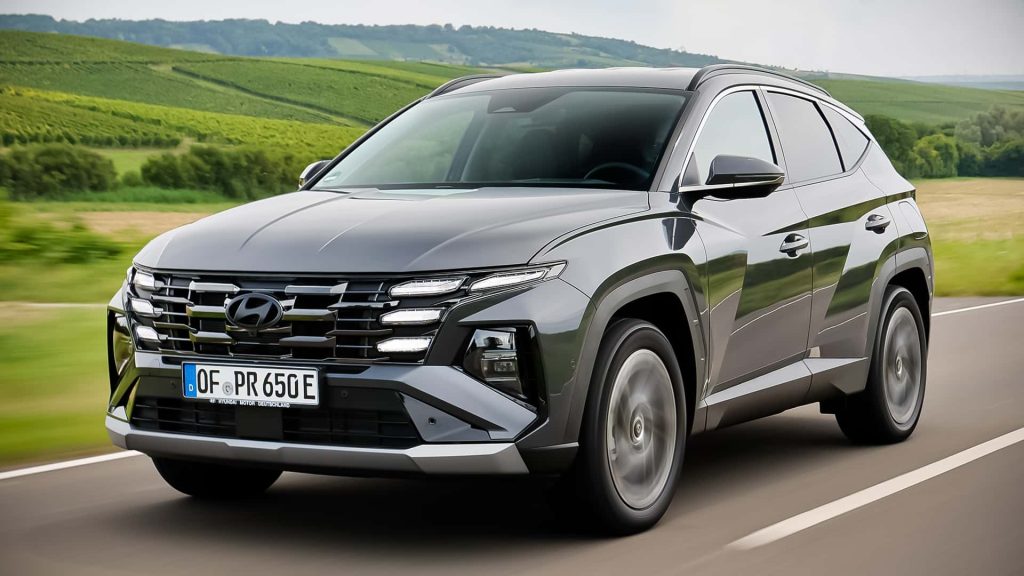
6. 2026 Hyundai Tucson
The 2026 Hyundai Tucson also earned a Top Safety Pick+ designation, giving Hyundai another entry among the small SUVs that reached IIHS’s highest safety tier.
The official IIHS list confirms the Tucson’s Plus status for the 2026 model year. Unlike an award based on a single spectacular crash-test result, the designation requires a vehicle to satisfy several separate performance standards at the same time.
For 2026, IIHS requires a Good rating in three major crash evaluations for Top Safety Pick+. The vehicle must perform well in the small overlap front test, the updated moderate overlap front test and the side test.
The institute also evaluates headlights because good occupant protection is less useful when a driver cannot see hazards effectively at night. The Tucson met the requirements necessary for the Plus award.
One of the biggest changes behind the 2026 standard is the increased attention to crash avoidance. A Plus winner must have standard pedestrian front crash prevention rated Good.
Its standard vehicle-to-vehicle front crash prevention system must also earn Acceptable or Good. This newer evaluation includes situations involving passenger vehicles, motorcycles and semitrailers and reaches speeds of up to 43 mph.
That combination makes the Tucson’s recognition especially relevant to everyday driving. A crash can develop from several directions, and avoiding an impact altogether can be just as important as surviving one. IIHS’s newer criteria therefore look beyond the traditional question of how a vehicle behaves after a collision.
The Tucson’s award also reinforces Hyundai’s strong showing in this year’s small-SUV field. With the Kona and Ioniq 5 also earning Plus recognition, the company has multiple choices for buyers who prioritize independently tested safety.
For Tucson shoppers, the 2026 designation provides evidence that the SUV meets the latest IIHS benchmark for both crashworthiness and collision avoidance.
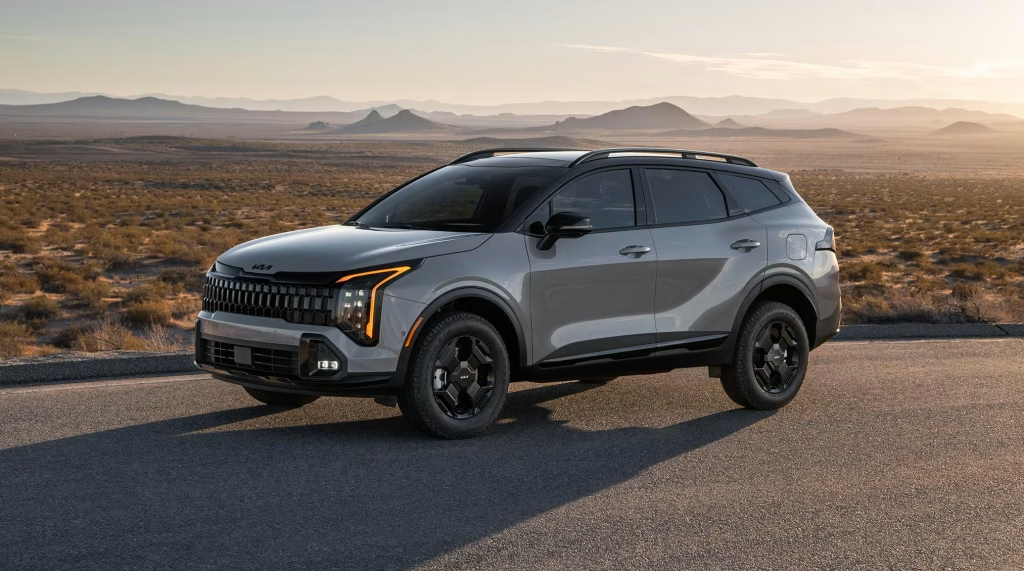
7. 2026 Kia Sportage
The 2026 Kia Sportage earned IIHS Top Safety Pick+ recognition, but the award comes with an important qualification. It applies only to Sportage vehicles built after May 2025.
That distinction matters because Kia made changes to the rear seat belts for these vehicles specifically to improve rear-occupant protection in the updated moderate overlap front test.
The Sportage achieved Good ratings in the small overlap front, updated moderate overlap front and updated side tests. In the moderate overlap evaluation, IIHS recorded a Good result for the structure and safety cage, driver injury measures, and driver restraints and dummy kinematics.
Rear passenger injury measures were also Good, although the rear passenger restraints and dummy kinematics category was rated Acceptable. Despite that individual result, the vehicle’s complete moderate overlap evaluation was Good.
Its crash-avoidance performance was another strength. The standard vehicle-to-vehicle front crash prevention system received a Good rating, as did the standard pedestrian front crash prevention system.
Headlight performance varies by trim and option, but IIHS’s award requirements were satisfied. The Sportage also earned a Good seat-belt reminder rating, while its LATCH ease of use was rated Acceptable.
The Sportage illustrates why buyers should check the build date when researching safety awards. A 2026 model year designation alone does not tell the entire story in this case. IIHS explicitly states that the Plus award applies only to vehicles built after May 2025.
That is a useful detail for shoppers comparing dealer inventory because two vehicles carrying the same model-year badge can have different eligibility depending on when they were manufactured.
8. 2026 Mazda CX-30
The Mazda CX-30 earned IIHS Top Safety Pick+ recognition for 2026 with an unusually strong set of test results. It received Good ratings in all three crash evaluations required for the Plus award, including the small overlap front test, updated moderate overlap front test, and updated side test.
That gives the compact Mazda a particularly consistent crashworthiness record under the institute’s current testing program.
The CX-30 also performed well in the areas that determine whether a vehicle can prevent a crash rather than simply protect occupants afterward. Its headlights received a Good rating, while the standard vehicle-to-vehicle front crash prevention system earned Acceptable.
The standard pedestrian front crash prevention system performed better, receiving a Good rating. Both systems therefore satisfied the requirements for the highest IIHS award.
One detail that makes the CX-30 particularly interesting is its child-restraint performance. IIHS gave its LATCH ease-of-use system a Good+ rating, the institute’s highest rating in that category. The seat-belt reminders also earned Good. Those results add another layer to the vehicle’s safety credentials beyond the three major crash tests.
The CX-30 also earned a Good rating in the IIHS side crash evaluation. Its structure and safety cage performed well, along with most of the occupant injury measures. The driver torso measure received an Acceptable rating, but the vehicle still met the requirements for a Good side rating.
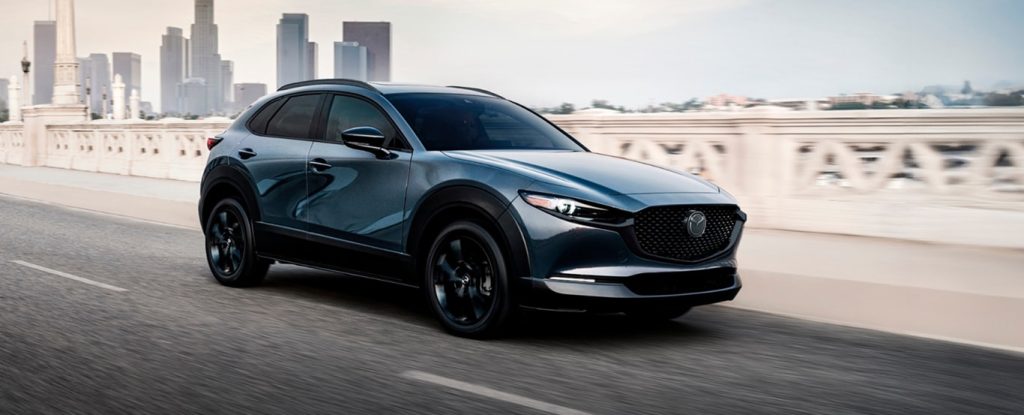
For buyers interested in a smaller crossover, the CX-30 demonstrates how a compact footprint does not necessarily mean compromising on independently tested safety performance.
Its combination of strong crashworthiness, effective standard pedestrian protection and excellent LATCH usability helped it qualify for one of IIHS’s toughest awards.
9. 2026 Mazda CX-5
The redesigned 2026 Mazda CX-5 earned a Top Safety Pick+ award after delivering strong results across the three crash tests that define the 2026 IIHS program.
The new-generation CX-5 received Good ratings in the small overlap front, updated moderate overlap front and updated side evaluations. It also earned Good ratings for standard vehicle-to-vehicle and pedestrian front crash prevention.
The moderate overlap result is particularly significant because this is the revised test that places additional emphasis on rear-seat occupants.
The CX-5 received a Good rating in the evaluation, with strong results for its structure and safety cage, driver injury measures, restraints, and dummy kinematics. The rear passenger injury measures and restraint systems also received Good ratings.
That means the vehicle did not simply perform well for the person behind the wheel. Its rear-seat protection also met the institute’s highest benchmark.
Mazda’s crash-avoidance technology strengthened the result. The standard vehicle-to-vehicle front crash prevention system received a Good rating, while the standard pedestrian system also earned Good.
IIHS’s pedestrian evaluation includes daytime and nighttime scenarios, making the result more demanding than a system that works only under ideal daylight conditions.
The CX-5 also received Good ratings for its seat-belt reminders and a Good+ rating for LATCH ease of use. Headlight performance varies by trim and equipment, but the available ratings satisfied the IIHS award requirements.
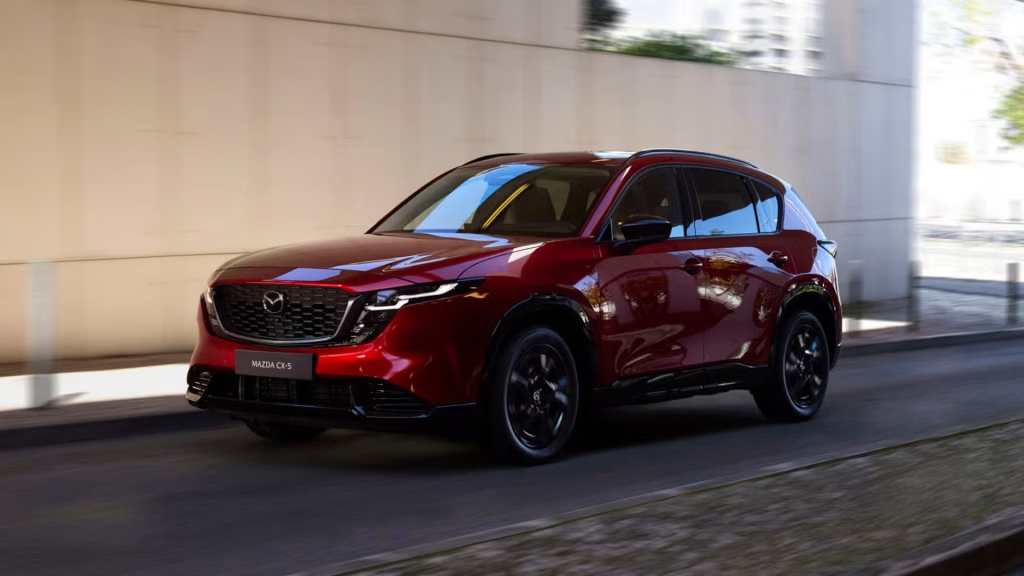
The award is notable because the CX-5 was redesigned for 2026. Rather than relying on the safety performance of an older generation, the new model established its credentials under the latest testing regime.
For shoppers considering a compact SUV, that combination of strong structural performance and standard crash-avoidance technology makes the CX-5 one of the most thoroughly tested safety performers in its class.
10. 2026 Mazda CX-50
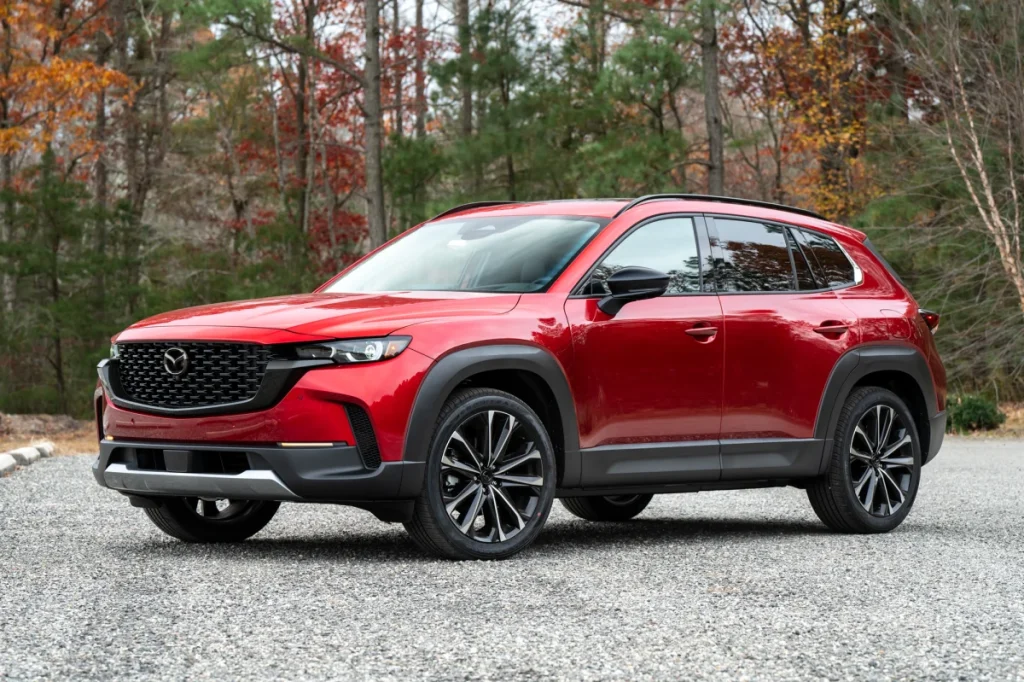
The 2026 Mazda CX-50 joins its smaller CX-30 and redesigned CX-5 sibling as another Mazda SUV carrying the IIHS Top Safety Pick+ designation.
Its inclusion means the CX-50 met the institute’s complete 2026 requirements, rather than qualifying because of a strong result in just one particular crash evaluation. IIHS lists the 2026 CX-50 among the small SUVs receiving the Plus award.
The distinction matters because the 2026 Top Safety Pick+ standard requires Good ratings in the small overlap front, moderate overlap front and side crash tests.
IIHS also requires acceptable or Good headlights, a Good standard pedestrian front crash-prevention system and an Acceptable or Good standard vehicle-to-vehicle front crash-prevention system.
This year’s requirements put particular attention on crash avoidance. The vehicle-to-vehicle evaluation tests automatic emergency braking and warning performance at multiple speeds, including scenarios involving passenger vehicles and motorcycles.
The pedestrian assessment also examines situations that can occur during both daytime and nighttime driving. A vehicle therefore has to demonstrate useful performance before an impact occurs, not simply provide protection once a collision has happened.
For the CX-50, earning the Plus award places it in a relatively select group of small SUVs that cleared every major hurdle in the current IIHS program. The award is especially useful for buyers who want a compact crossover with a more rugged design without giving up independently verified safety credentials.
It is also worth remembering that IIHS awards are comparative within vehicle classes and are not a guarantee that every possible collision will produce the same outcome.
The institute notes that larger, heavier vehicles generally provide greater protection than smaller, lighter vehicles. Even so, within the small-SUV category, the CX-50’s Top Safety Pick+ designation establishes it as one of the models that met the institute’s highest 2026 safety standard.
11. 2026 Subaru Forester
The 2026 Subaru Forester completes this group of 11 small SUVs that earned IIHS Top Safety Pick+ recognition.
The official IIHS ratings list confirms that the Forester achieved the highest award under the institute’s 2026 criteria, joining the BMW X1, Genesis GV60, Honda HR-V, Hyundai Ioniq 5, Hyundai Kona, Hyundai Tucson, Kia Sportage, Mazda CX-30, Mazda CX-5 and Mazda CX-50.
The achievement carries more weight this year because IIHS has made the requirements considerably more demanding. To qualify for Top Safety Pick+, a small SUV must earn Good ratings in the small overlap front, moderate overlap front and side crash tests.
It must also have Acceptable or Good headlights, Good standard pedestrian front crash prevention and Acceptable or Good standard vehicle-to-vehicle front crash prevention.
That updated moderate overlap evaluation is one of the most important changes. IIHS has increased its attention to rear-seat protection, reflecting concerns that safety improvements have historically focused more heavily on front-seat occupants.
For families, that makes the Forester’s Plus designation particularly relevant because the award reflects performance under the newer requirements rather than simply relying on older crash-test standards.
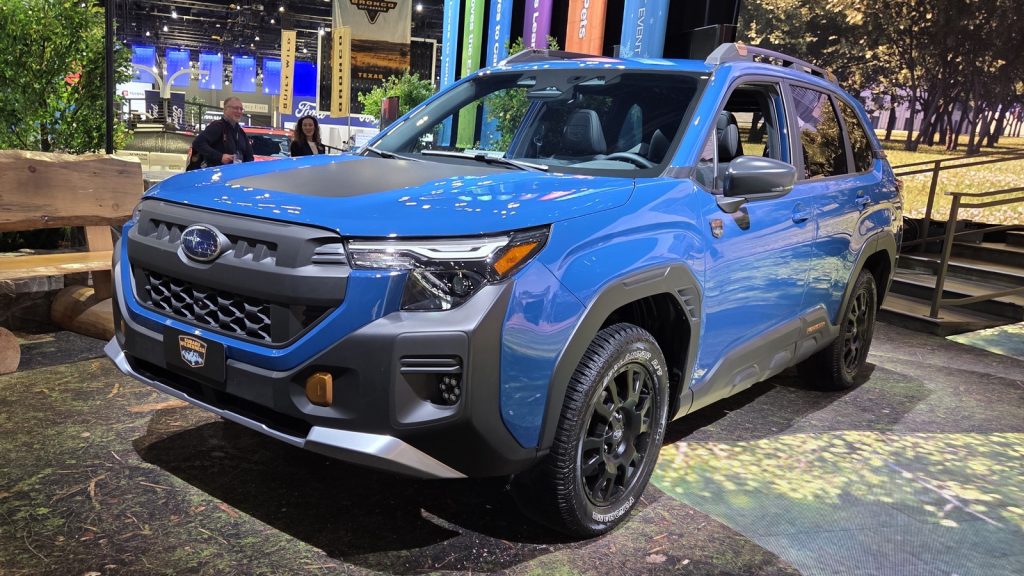
The Forester also benefits from Subaru’s emphasis on standard driver-assistance technology. The 2026 award framework specifically requires the qualifying crash-prevention systems to be available as standard equipment, preventing manufacturers from relying on expensive optional packages to achieve the highest safety designation.
For shoppers considering a small SUV, the Forester therefore represents more than another award-winning model. It is one of only 11 small SUVs listed by IIHS in the 2026 Top Safety Pick+ group.
The achievement places it among the vehicles that successfully met the institute’s complete combination of crashworthiness, lighting and crash-avoidance requirements.