
Every country has driving rules that make visitors do a double take. Some grew out of public-safety research, others out of congestion or air-pollution crises, and a few came from lawmakers trying to head off one very specific problem. Before you hit the road abroad, it helps to know that local rules can be stricter, stranger, or simply different from what you expect at home.
These seven laws are interesting because each one is rooted in a specific concern. What may seem unusual at first often addresses issues such as dangerous stops on busy roads, traffic congestion, air pollution, limited visibility, or pedestrian safety. Some rules are strictly enforced, while others are better known as unusual facts than common sources of fines.
The sections ahead explain what each law requires, why it was introduced, and what drivers should know when traveling in those areas. Use the information as a starting point and check the current local rules before driving.
1. Germany – Running Out of Fuel on the Autobahn Can Cost You
Germany’s Autobahn is famous for stretches with no general speed limit, and that reputation obscures how strict the rules around it are. Stopping on the Autobahn is prohibited except in a genuine emergency, and German traffic law generally treats an empty fuel tank as something a responsible driver could have avoided. A breakdown caused by a mechanical failure is an emergency. Running dry because you skipped the last service station is not.
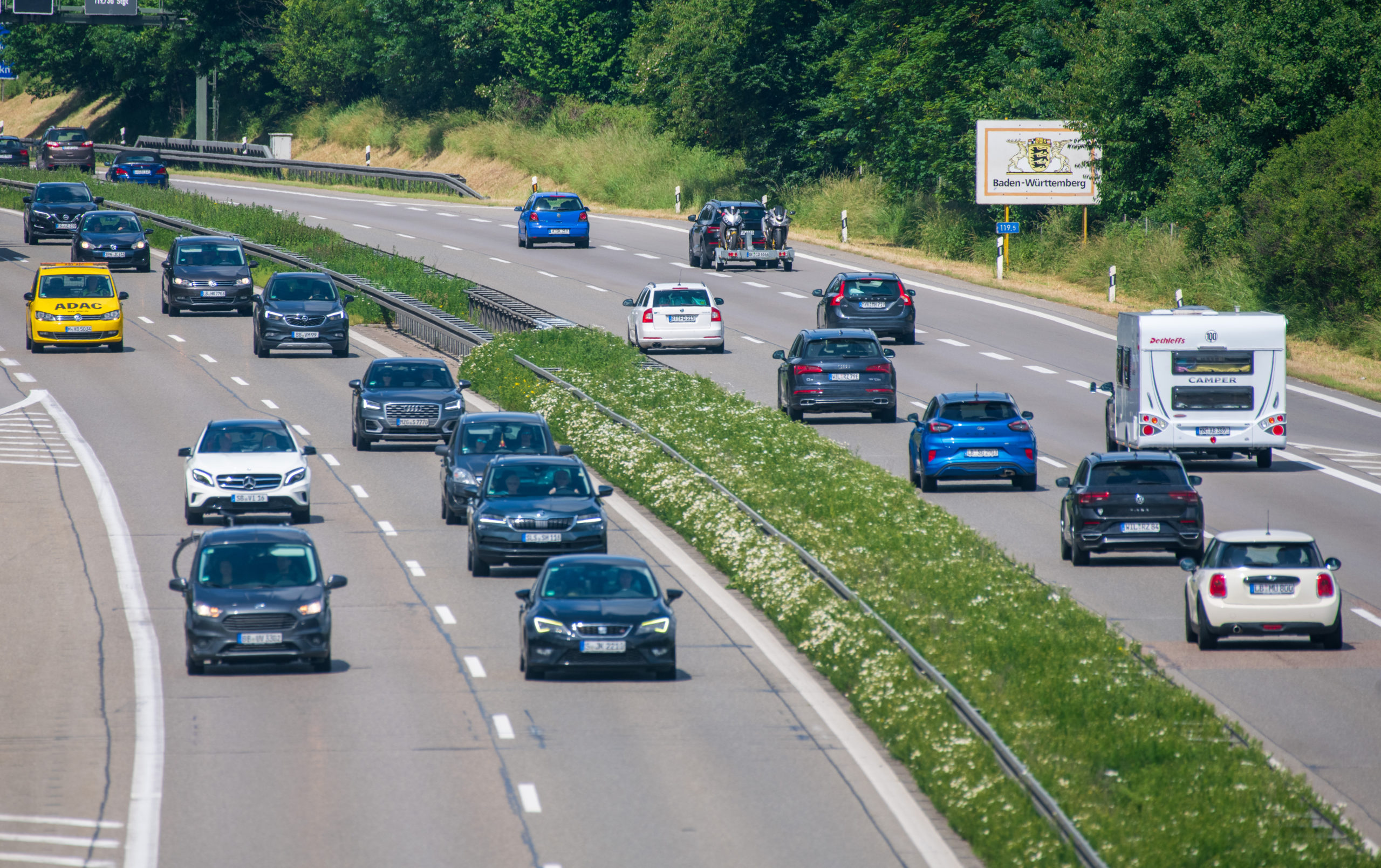
Drivers who run out of fuel can be fined, and stopping on the hard shoulder without a valid reason can add to the penalty. The logic is about physics. At high speed, a stationary vehicle on a fast road is one of the most dangerous hazards there is. Other drivers may be closing at well over 100 km/h, and even a well-placed warning triangle gives them little time to react. Making fuel management the driver’s responsibility discourages the kind of avoidable stop that leads to serious collisions.
The practical advice is straightforward. Refuel before starting a long stretch of Autobahn and do not assume the next service area will appear before the tank runs low.
Rest areas and fuel stations are common, but they are not close enough together to make driving with very little fuel a safe choice. If you experience a genuine breakdown, move the vehicle as far onto the shoulder as possible, turn on the hazard lights, put on a high-visibility vest, and stay behind the guardrail rather than next to the vehicle.
2. Philippines – Number Coding in Metro Manila
Metro Manila’s traffic is notorious, and the region’s best-known response is the Unified Vehicular Volume Reduction Program, which almost everyone simply calls “number coding.”
Under the scheme, private vehicles are barred from major roads during peak hours on one weekday, depending on the last digit of the license plate. Plates ending in 1 and 2 are restricted on Mondays, 3 and 4 on Tuesdays, 5 and 6 on Wednesdays, 7 and 8 on Thursdays, and 9 and 0 on Fridays.
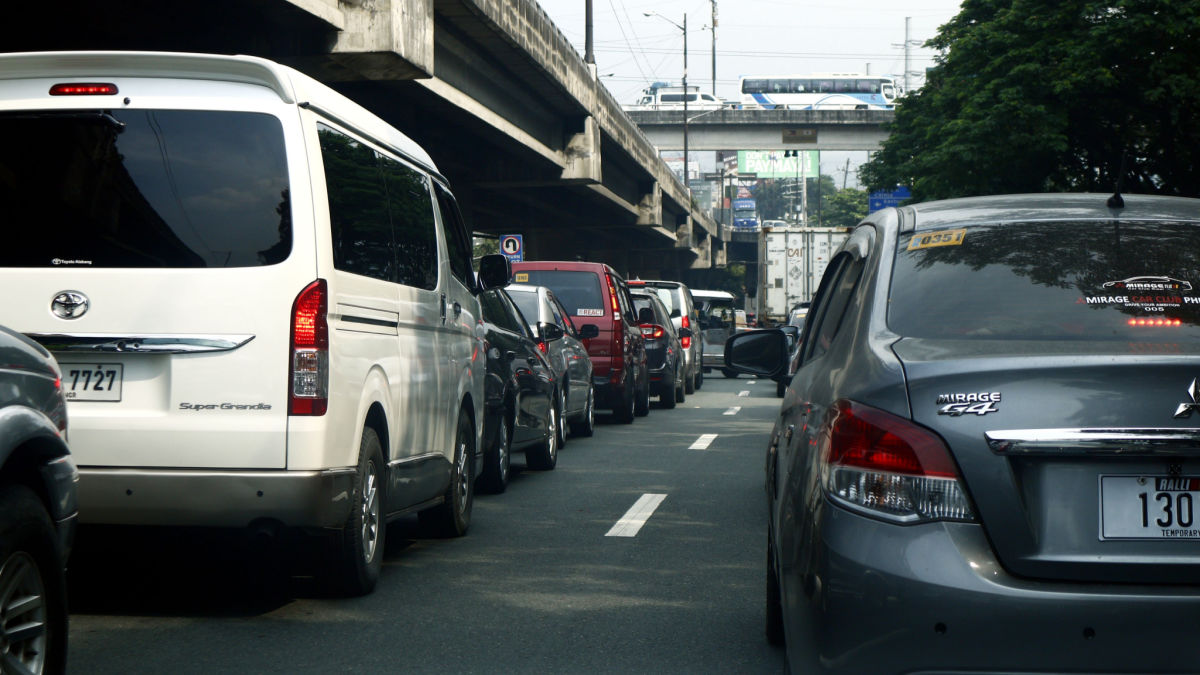
The idea is to take roughly a fifth of private cars off main roads at the busiest times without banning anyone’s car outright. Motorists have had decades to work around it.
Some households own multiple vehicles with different plate endings, and others reorganize their weekly schedules around their coding day, shifting errands, meetings, or commutes to avoid the restricted window. Critics argue the scheme encourages extra car ownership, while supporters say it still provides some relief on roads that would otherwise be more congested.
The details are not static. The hours, the roads covered, the exemptions, and whether the scheme is suspended on certain days have all been adjusted over the years by the Metropolitan Manila Development Authority, particularly around holidays, emergencies, and major road projects.
Different cities within the metropolis have also run their own variations at times, which can confuse drivers crossing boundaries. Anyone planning to drive in the capital should check the MMDA’s current announcements rather than rely on an old rule of thumb. If you use ride-hailing apps instead, the rule matters less, though it can still affect availability and fares at peak times.
3. Mexico City – Hoy No Circula
Mexico City’s “Hoy No Circula,” or “Today You Don’t Drive,” program was introduced in 1989 to address severe air pollution. At the time, the city’s air quality had reached critical levels, prompting officials to adopt a policy that could reduce vehicle emissions quickly. The original system was straightforward. Based on the final digit of a vehicle’s license plate, each car was restricted from driving on one weekday.
Over time, the program became more nuanced. Vehicles are now classified by age and emissions testing, and cleaner cars can receive exemptions or restrictions that differ from those applied to older, higher-polluting ones.
During pollution emergencies, authorities can also impose additional restrictions beyond the normal weekday rule, and the program has included Saturday limits for some older vehicles. The restrictions generally apply in the capital and parts of the surrounding metropolitan area, so a trip that crosses a boundary can change which rules apply to you.
Hoy No Circula is a cautionary tale as well as a policy success story. Studies of the original rule found that some households responded by buying a second, often older and dirtier, car to use on their restricted day, which undermined the environmental goal.
The later shift toward emissions-based criteria was partly a response to that problem. The program shows how a law can reshape behavior in ways its designers didn’t anticipate, and how policymakers refine rules over decades. Visitors in rental cars should ask the rental company about the vehicle’s classification and any restrictions that apply.
4. Sweden – Daytime Headlights, Year-Round
In 1977, Sweden introduced a requirement that vehicles use their headlights during the day all year round. To many visitors, the idea of turning on your lights at noon in July feels odd. The reasoning came from road-safety research. A vehicle with its lights on is easier for other road users to detect, particularly in the long, low-light conditions of northern winters and on forest-lined roads where dappled sun and shadow can camouflage a car.
It is common to see Sweden described as the “first” country to require daytime running lights, but that claim deserves care. Finland introduced a requirement for rural roads earlier, in the early 1970s, so a more accurate framing is that Sweden was among the first and that its nationwide year-round rule became an early and influential model.

Other Nordic countries followed, and the European Union later required new cars to be fitted with automatic daytime running lights, which is why most modern cars switch their lights on by themselves.
Research on the effectiveness of daytime running lights has produced different estimates, but road-safety studies generally indicate that they can reduce certain types of daytime crashes, especially collisions involving multiple vehicles.
The benefit tends to be greater at higher latitudes, where natural light levels are lower during much of the year. For drivers using older rental cars without automatic headlights or traveling across Europe, keeping the lights on is a simple precaution. When in doubt, turning them on can improve visibility with little effort or cost.
5. Japan – Splashing Pedestrians Is an Offense
Japan is known for courteous public behavior, and its traffic law reflects that in a rather charming way. Under the Road Traffic Act, drivers are expected to avoid splashing mud or water onto pedestrians, and driving through a puddle in a way that soaks someone can lead to a fine.
The penalty is modest, typically a few thousand yen for ordinary vehicles, and enforcement is not widespread, but the rule exists in writing and has appeared in news coverage and travel guides for years.
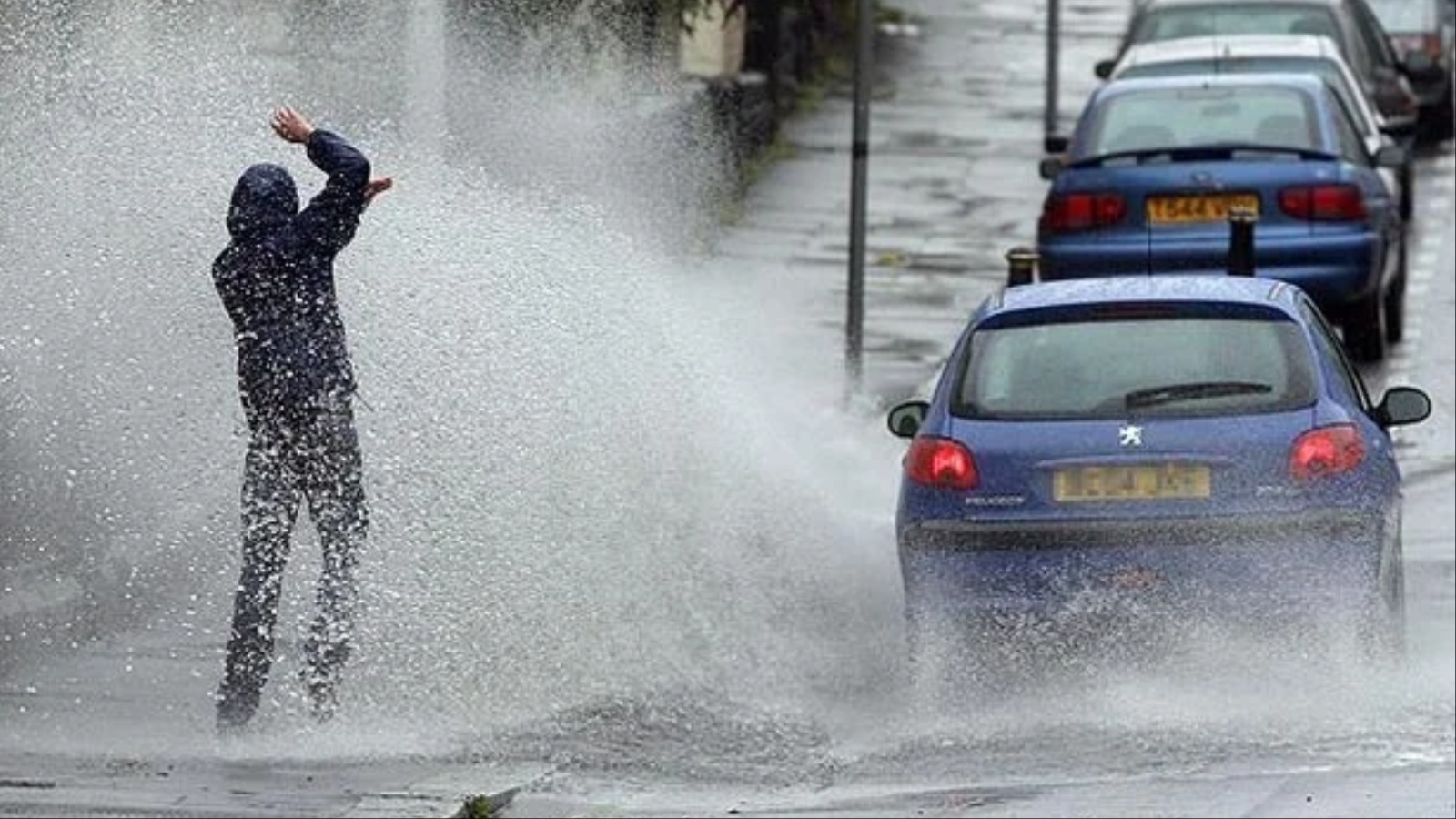
The law belongs to a broader pattern in Japanese driving regulation that emphasizes consideration for others and the duty of the driver to behave with care.
Drivers are expected to slow down near pedestrians, take particular care on narrow residential streets where there is often no separate sidewalk, and yield in a range of situations that other countries leave to common courtesy. Rainy-season driving, in a country where heavy downpours are common, makes the puddle rule more than a curiosity.
It is worth noting that this is one of those laws far better known as a fun fact than as something people are regularly cited for. Treat it as evidence of a cultural attitude rather than a major enforcement priority. A visitor is unlikely to be fined, but is welcome to take the hint and ease off the accelerator near wet sidewalks, bus stops, and crossings. Doing so is both polite and safer, since wet roads lengthen braking distances anyway.
6. Russia – Dirty License Plates
In Russia, driving with a license plate that is obscured by dirt, snow, or anything else that makes it hard to read can result in a fine. The rule is part of the country’s administrative code, which treats an unreadable plate as an offense, and deliberately concealing or altering a plate carries heavier penalties than simply failing to clean it.
The reasoning is straightforward. License plates are the main tool for identifying vehicles, whether for traffic enforcement, automated cameras, parking control, or investigating accidents and crimes. A plate covered in slush or mud defeats all of that. Russian winters, with salted roads and heavy slush, make the issue practical rather than theoretical, and drivers often keep a cloth or brush in the car to wipe their plates clean.

Many countries have similar rules in some form, requiring plates to be visible and legible, but the Russian version gets attention because of how harsh the conditions can be. It also reflects the growing role of automated enforcement, where cameras read plates in real time.
A dirty license plate can create more than a minor problem during a traffic stop. It can interfere with the systems cities increasingly use to identify vehicles and enforce traffic rules. The same lesson applies to drivers almost anywhere. Taking a moment to clean the plates after traveling through mud, snow, or other debris can help prevent unnecessary issues with an automated camera or a traffic officer.
7. Finland – Speeding Fines Based on Your Income
Finland uses an unusual system for handling serious speeding violations, with fines tied to the offender’s income. Under the country’s “day-fine” system, the severity of the speeding offense determines the number of day-fines imposed, while the value of each fine is calculated based on the offender’s earnings.
Minor speeding, by contrast, is generally handled with fixed fines that are the same for everyone. The income-based system applies once the offense passes a certain threshold of seriousness, which is why it mostly affects drivers going well over the limit.
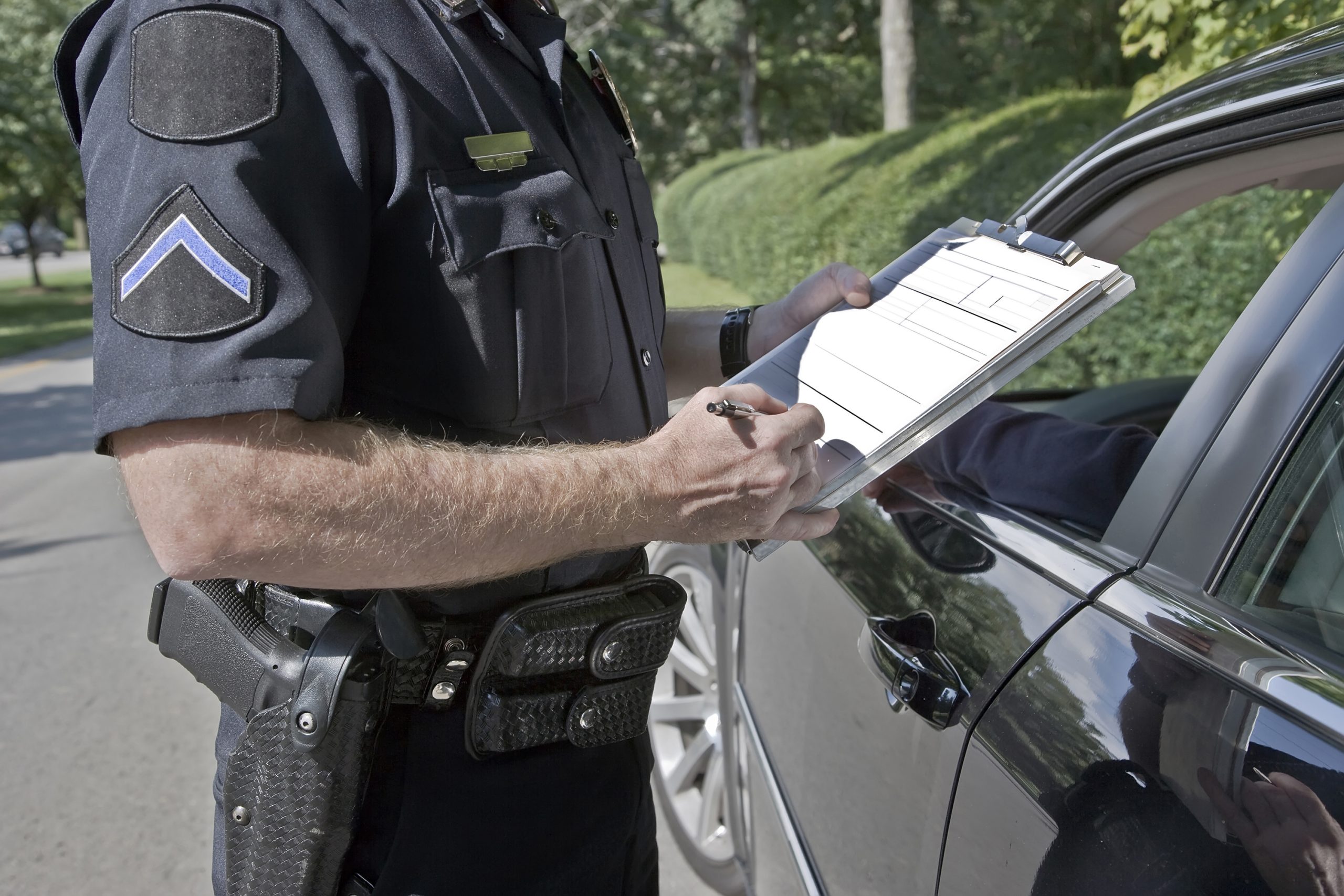
The principle behind it is fairness. A flat fine of a few hundred euros is a real sting for someone on a modest salary and barely a nuisance to a wealthy executive. Scaling the penalty to income is meant to make the punishment feel comparable, so that the deterrent works across the whole population rather than only for those with less money. Finland has used day-fines for decades, and other Nordic countries have similar traditions for some offenses.
The system became internationally famous through cases with eye-catching numbers. A well-known example involved a senior Nokia executive who was reported to have been fined roughly €116,000 for speeding in Helsinki in 2002, after the fine was adjusted to his income.
Stories like this travel widely, but they are the extreme end of the scale. For most drivers, speeding costs a modest fixed amount, and the large figures only appear for serious offenses committed by high earners.
For visitors, the takeaway is not to expect a special tourist exemption, since the rules apply to anyone driving on Finnish roads, though how fines are calculated for non-residents can differ in practice. Finland’s roads also see wildlife, especially moose and reindeer, and winter conditions that make speed limits more than a formality. Keeping to the limit is the sensible approach regardless of how the fine would be calculated.