Ford Motor Co. sold 509,764 vehicles in the United States during the third quarter of 2026, a 6.6% decline from the same period last year.
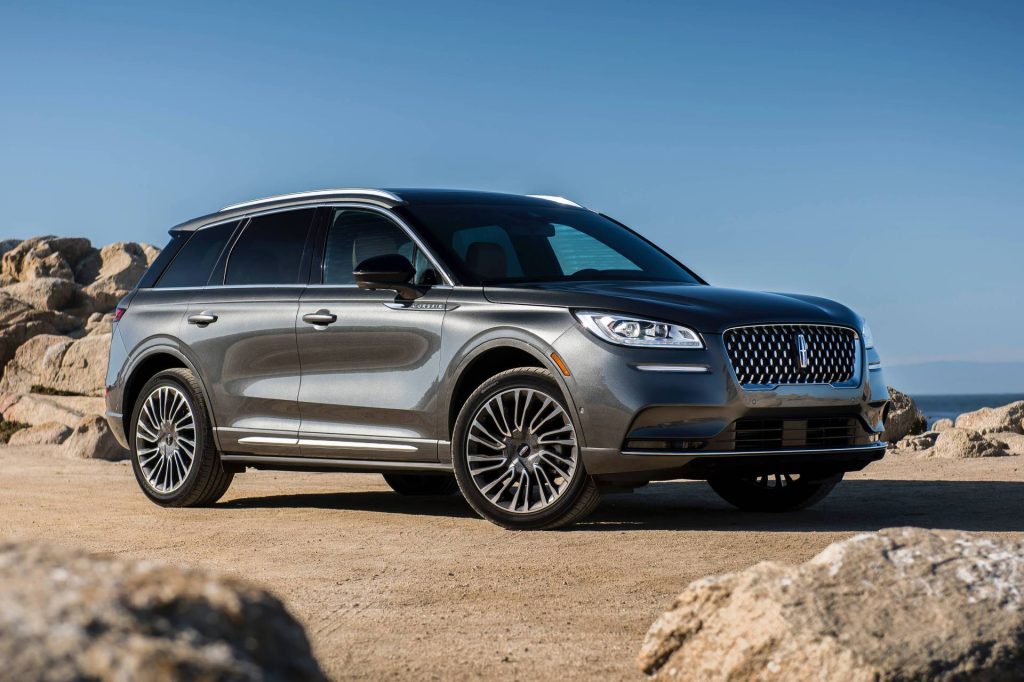
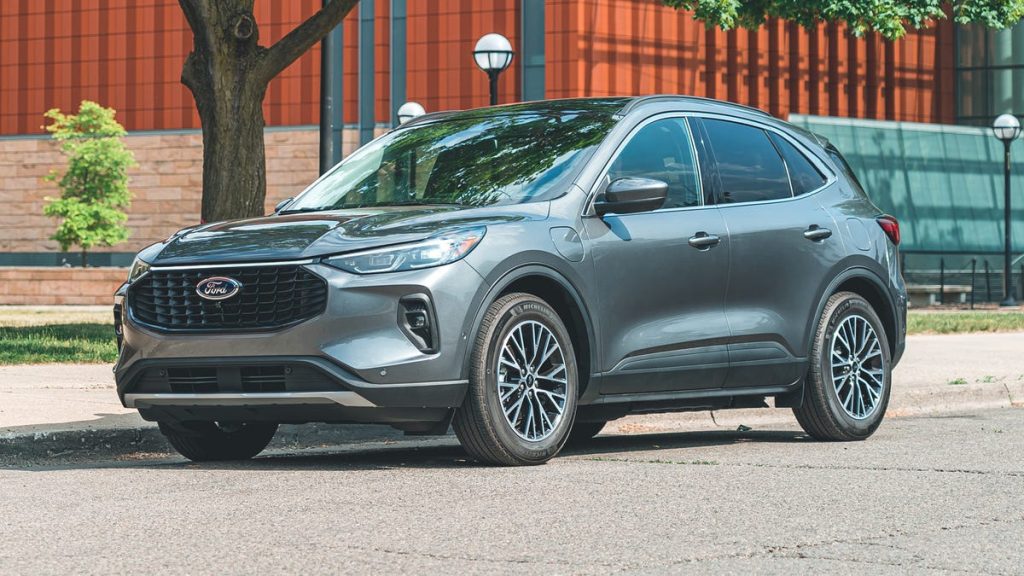
The result reflects a significant transition in Ford’s product lineup, with the automaker phasing out the Escape and Lincoln Corsair while adjusting production and investment across electric, hybrid, and gasoline-powered vehicles.
At first glance, the sales decline looks substantial. However, Ford argues that the underlying performance was considerably stronger once the discontinued models were removed from the calculation.
Excluding the Escape and Corsair, Ford said its third-quarter sales volume was essentially unchanged from a year earlier, while the broader U.S. industry declined about 1%. The company estimated that its retail market share increased by roughly 0.4 percentage points to 12.1%.
The figures illustrate the complicated position Ford currently occupies in the U.S. market. Demand for its trucks, large SUVs, hybrid pickups, and off-road vehicles remains strong, while the company is reducing its dependence on some smaller models and reconsidering how quickly it needs to expand its electric vehicle lineup.
Ford’s Lineup Reset Changes the Sales Picture
Ford’s third-quarter decline cannot be separated from its decision to discontinue two crossover models. The Ford Escape and Lincoln Corsair were phased out as part of a broader effort to reshape the company’s portfolio around products where Ford believes it can achieve stronger demand and profitability.
The impact is especially clear in Ford’s SUV sales. The company reported a 17% decline in SUV sales during the quarter, based on sales data released after its results. In contrast, truck sales rose 0.5%.
Ford says the comparison with 2025 therefore does not provide a complete picture of the business. Once the discontinued Escape and Corsair are excluded, the company estimates that its vehicle volume was essentially flat, despite the U.S. industry itself contracting.
That distinction is important because Ford is not simply shrinking its lineup. It is redirecting resources toward vehicles that currently generate stronger customer interest and better financial returns.
Large SUVs are one example. Explorer sales increased 17.6% through September to 189,210 vehicles, while Expedition retail sales were up 10.1% over the same period. Ford said combined Explorer and Expedition sales reached 249,481 units through the first nine months, making the brand the leading seller in the large three-row SUV segment.
Bronco has also continued to gain momentum. Ford reported a third-quarter record of 38,020 Bronco sales, while its broader off-road lineup, including Bronco, Raptor, Tremor, and FX4 models, accounted for 24% of Ford sales through September. That represented an increase of 3.8 percentage points from the previous year.
The product shift shows where Ford sees its strongest opportunities. Rather than maintaining every segment simply to maximize volume, the company is concentrating on trucks, larger SUVs, and performance-oriented vehicles while using the current period to prepare for a substantially refreshed lineup.
Ford said that by 2029, approximately 80% of its entire lineup is expected to consist of new or refreshed vehicles.
Trucks and Hybrid Pickups Provide Stability
Ford’s truck business remains the most important source of stability as the company adjusts its portfolio.
F-Series sales reached 561,508 vehicles through September, leaving Ford more than 140,000 units ahead of the Chevrolet Silverado. The F-Series remains on track for what would be its 50th consecutive year as America’s best-selling truck line.
September was particularly strong, with F-Series sales increasing 2.4% to 67,448 trucks. Production also increased during the quarter, although a short-term supplier issue affected F-150 production toward the end of September.
Ford said the expected financial impact of that disruption remains within its existing 2026 adjusted EBIT guidance of $10 billion to $11 billion.
The company is also seeing a notable change in customer preferences within the truck market. Hybrid powertrains are attracting greater interest as gasoline prices remain elevated.
Reuters reported that the national average gasoline price reached $4.43 per gallon in September, compared with $3.20 a year earlier. Higher fuel costs have encouraged some buyers to consider hybrid vehicles, including hybrid versions of Ford’s trucks. Ford executives specifically said demand for hybrid powertrains was increasing, including on the F-150.
The Maverick has become an especially strong example of that shift. Third-quarter Maverick Hybrid sales reached a record 27,793 vehicles, an increase of 59.6% from a year earlier. Through September, Maverick Hybrid sales reached a record 74,300 units.
The broader Maverick, Ranger, and Bronco Sport group also grew 9.5% through September to 112,627 vehicles. Ford reported particularly strong demand for entry-level versions, including a 15.5% increase in Maverick XL sales.
These results give Ford an important advantage as consumers become more sensitive to fuel and ownership costs. Instead of forcing buyers to choose between conventional gasoline vehicles and fully electric models, Ford can offer hybrid powertrains in several of its most popular truck and SUV segments.
EV Demand Forces Ford to Rethink Its Strategy
Electric vehicles remain part of Ford’s long-term strategy, but third-quarter sales demonstrate why the company has become more cautious about the pace of the transition.
Ford’s U.S. EV sales fell sharply during the quarter, while hybrid sales also declined according to industry sales data. EV sales dropped 80% year over year to 6,047 vehicles, while hybrid sales declined 20% to 44,308. Sales of vehicles powered by internal-combustion engines were essentially flat, declining just 0.1%.
The weakness comes after the expiration of a federal EV tax incentive last year and amid a broader shift in consumer demand. Ford has reduced production of the all-electric Mustang Mach-E to better align supply with demand, according to reporting from the Detroit Free Press.
That does not mean Ford is abandoning electrification. Instead, the company is attempting to balance its electric vehicle investments with what American customers are actually buying today.
The strategy increasingly places hybrids between traditional gasoline vehicles and full EVs. Hybrid trucks such as the Maverick and F-150 allow Ford to offer improved fuel efficiency without requiring customers to make the full transition to battery-electric ownership.
Affordability is another factor. The average new-vehicle transaction price reached $50,089 in August, up 1.9% from a year earlier, according to Cox Automotive data cited by Reuters. Even though auto loan rates have declined, higher vehicle prices and weaker trade-in values continue to push monthly payments upward.
That environment makes Ford’s smaller and relatively affordable models important, even as the company reduces the number of vehicles it sells in certain segments.
Ford’s third-quarter performance therefore reflects more than a simple sales decline. It represents a deliberate reshaping of the business around trucks, large SUVs, hybrids, and profitable performance vehicles while the automaker prepares a heavily refreshed lineup for the coming years.
The company sold 1,516,279 vehicles in the United States through September, down 8.6% from the same period last year. Yet Ford believes its retail share is improving when the discontinued Escape and Corsair are taken into account.
The coming product cycle will determine whether that strategy succeeds. Ford has strong positions in trucks and large SUVs, growing demand for its hybrid Maverick, and continued momentum from Bronco and other off-road products.
At the same time, it must determine how quickly American buyers will return to EVs and how much of its future investment should be directed toward hybrids versus fully electric vehicles.
For now, Ford is choosing to follow the strongest signals coming from the U.S. market. The third-quarter figures show that those signals are increasingly pointing toward a diversified lineup rather than an all-electric future arriving at the same pace across every vehicle segment.