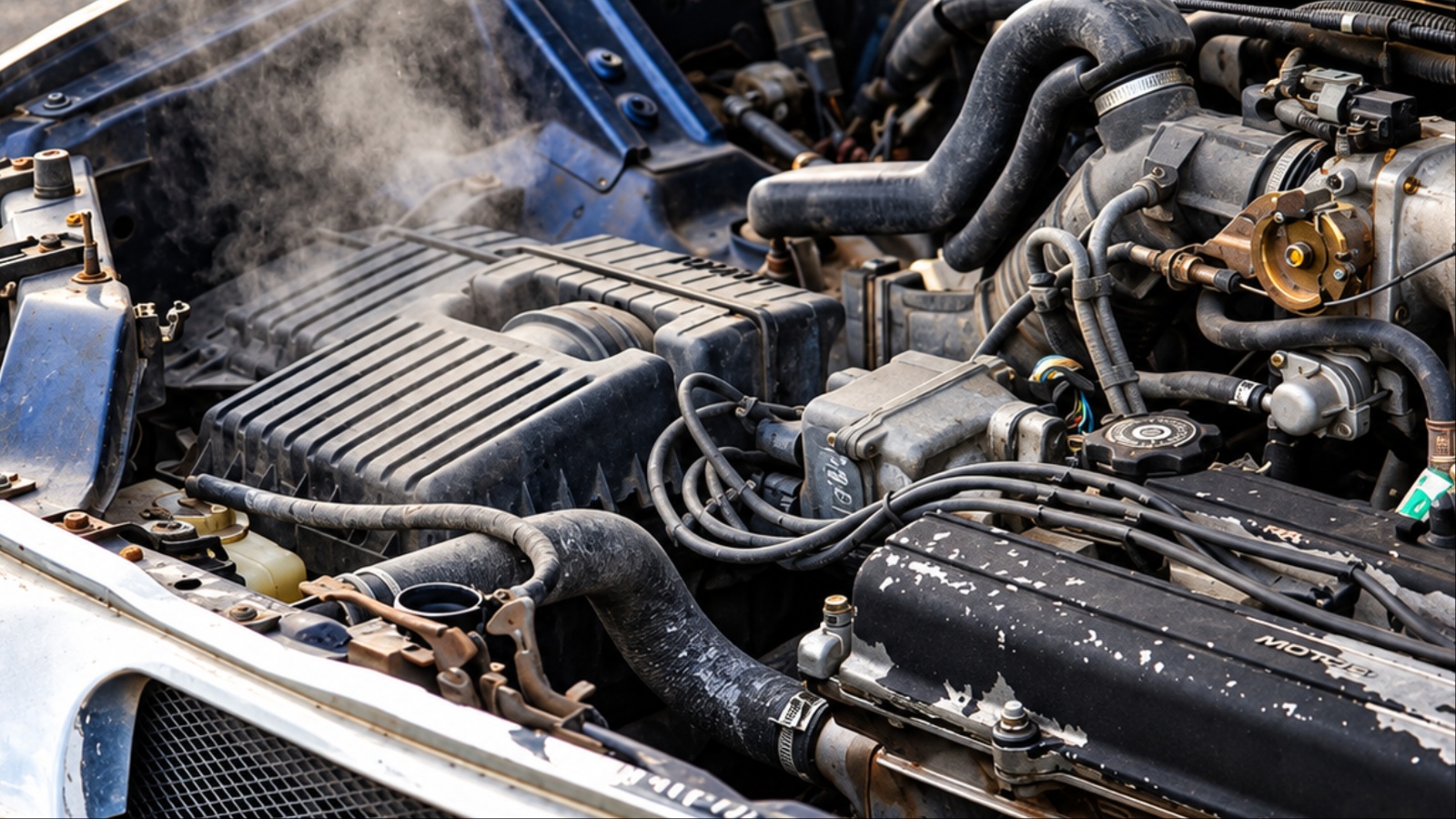
A transmission can tolerate substantial heat, but excessive temperature can quickly turn a manageable maintenance issue into expensive mechanical damage. The problem is that overheating does not always announce itself with a dramatic warning.
Sometimes the first clue is a subtle change in shifting, an unusual smell, or a warning light that appears after towing, climbing a grade, or sitting in heavy traffic.
Transmission fluid plays a critical role because it lubricates components, transfers hydraulic pressure in automatic transmissions, and helps control heat. Low, degraded, or contaminated fluid can contribute to overheating and accelerated wear.
1. A Transmission Temperature Warning Light Appears
For vehicles equipped with a dedicated transmission temperature warning, the dashboard may provide the clearest indication that heat has climbed beyond the normal operating range. The symbol commonly resembles a gear with a thermometer, although the exact design varies by manufacturer.
Firestone notes that this warning can indicate transmission overheating, low fluid levels, or excessive internal friction.
This warning deserves more attention than a routine service reminder because it can appear when the transmission is under significant thermal stress.
Heavy towing, steep grades, extended stop-and-go driving, high ambient temperatures, or other demanding conditions can increase the workload placed on the transmission. If the fluid cannot remove heat effectively, temperatures can rise further and affect lubrication and hydraulic operation.
Drivers should not assume that the warning will disappear simply because the vehicle still moves normally. A transmission can continue operating while its fluid is being subjected to excessive heat. Continuing to drive under those conditions can allow a temporary temperature problem to become a mechanical one.
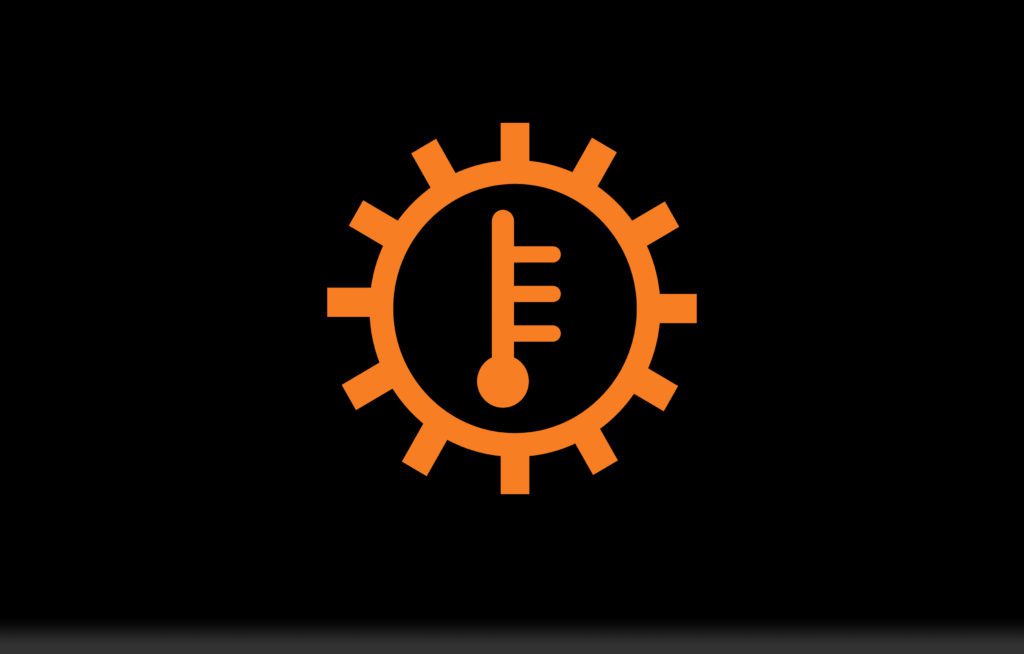
The correct response depends on the vehicle manufacturer’s instructions. If the warning indicates excessive transmission temperature, safely reducing the load and stopping when appropriate gives the system an opportunity to cool.
Consult the owner’s manual for the specific warning procedure because manufacturers can use different warning systems and operating recommendations.
A transmission temperature warning should therefore be treated as a reason to investigate the cause, not merely an inconvenience to be ignored.
2. Shifts Become Slow or Hesitant
One of the most revealing changes can happen without any dramatic dashboard warning. The transmission may begin taking noticeably longer to engage a gear, particularly when moving from Park into Drive or Reverse. It may also hesitate during normal upshifts or downshifts.
This behavior matters because transmission fluid is more than a lubricant. In an automatic transmission, it also helps create the hydraulic pressure needed to operate internal components. When fluid is degraded, contaminated, or insufficient, transmission operation can become less precise.
AAA identifies sluggish or delayed shifting as a potential sign of fluid-related trouble, while Firestone lists delayed engagement and shifting delays among common transmission symptoms.
Heat can make an existing problem more apparent. A transmission that behaves normally when cold but becomes hesitant after extended driving deserves attention, particularly if the change occurs during towing, climbing hills, or prolonged traffic.
The important distinction is between an occasional characteristic of a particular vehicle and a new behavior. Drivers familiar with their vehicle usually notice when gear engagement suddenly takes longer than it once did.
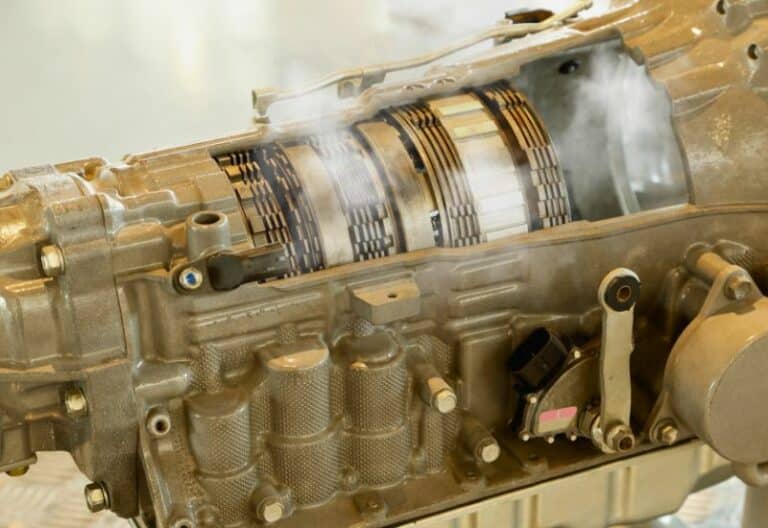
Do not automatically assume that a fluid change will solve the problem. Firestone notes that slipping, grinding, or failure to shift can indicate internal problems requiring diagnosis rather than routine maintenance.
A delayed shift is therefore best treated as an early warning. Catching the issue before the transmission begins slipping severely can give a technician a better chance of identifying whether the problem involves fluid condition, a leak, hydraulic operation, sensors, or internal components.
3. The Transmission Starts Slipping
A slipping transmission can make the engine feel disconnected from the vehicle’s acceleration. You may press the accelerator, watch engine speed rise, and yet feel that the vehicle is not responding with the expected increase in forward motion.
This is particularly concerning when the symptom appears after the vehicle has been driven for some time. Transmission problems can become more noticeable as operating conditions change and components or fluid become hotter.
Firestone describes slipping as a major transmission warning sign. In automatic vehicles, incorrect shift timing can cause the engine to rev higher than expected during an upshift, while the vehicle may feel as though it is struggling to accelerate.
Heat can be part of this chain of problems. Transmission fluid performs lubrication and hydraulic functions, and inadequate or degraded fluid can contribute to increased friction, poor shifting, and overheating. Firestone specifically notes that insufficient clean fluid can allow transmissions to overheat while contributing to slipping and other internal wear.
The sensation can be especially noticeable when accelerating onto a highway or climbing a hill. Instead of a firm, predictable gear change, the engine may flare in rpm before the vehicle catches up.
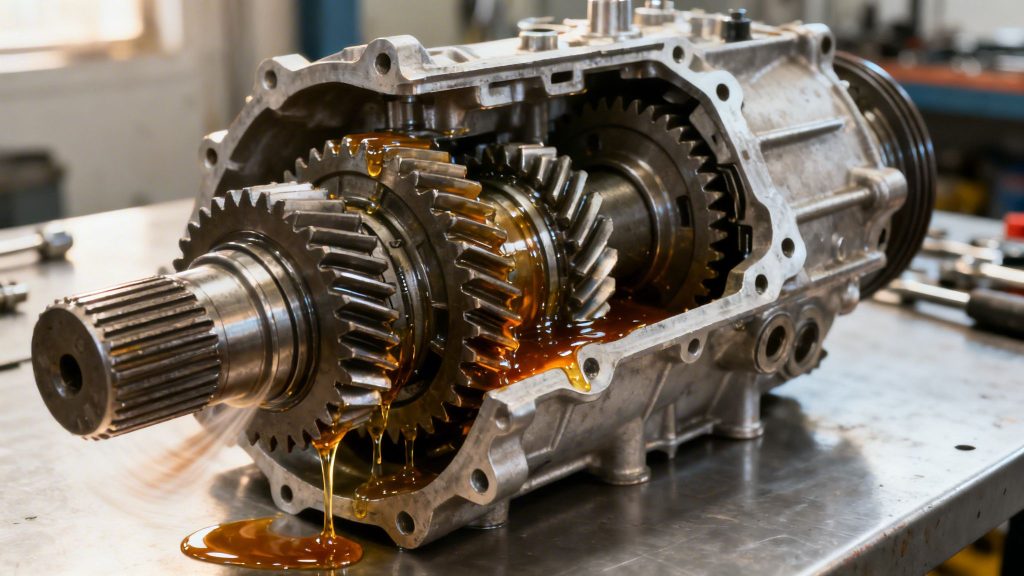
That does not automatically prove the transmission itself is overheating. Other faults can produce similar behavior. Nevertheless, slipping should not be dismissed as a minor inconvenience.
If the symptom is accompanied by a burning odor, warning light, delayed engagement, or unusual noise, the need for inspection becomes more urgent. Continuing to drive a transmission that is repeatedly slipping can increase heat and wear, potentially turning an early fault into a much more expensive repair.
4. A Burnt Smell Comes From the Vehicle
Few transmission symptoms are as recognizable as a sudden burnt odor. When transmission fluid becomes excessively hot, its smell can change noticeably. Firestone states that overheated transmission fluid can produce a burnt smell and lose some of its protective properties, increasing friction and wear inside the transmission.
That makes odor particularly useful because it can appear before a driver sees a puddle or experiences complete loss of transmission operation.
The smell may become noticeable after demanding driving. A vehicle towing a heavy load, climbing prolonged grades, or operating in difficult conditions can place greater thermal demands on its drivetrain. If the transmission’s cooling capacity is inadequate for the circumstances or the fluid is already degraded, heat can build more quickly.
However, a burning smell does not automatically prove that the transmission is the source. Firestone’s technical guidance notes that burning odors can also come from belts, brakes, oil leaks, electrical components, or debris contacting hot parts. That distinction is important. Drivers should not diagnose the source simply by smell.
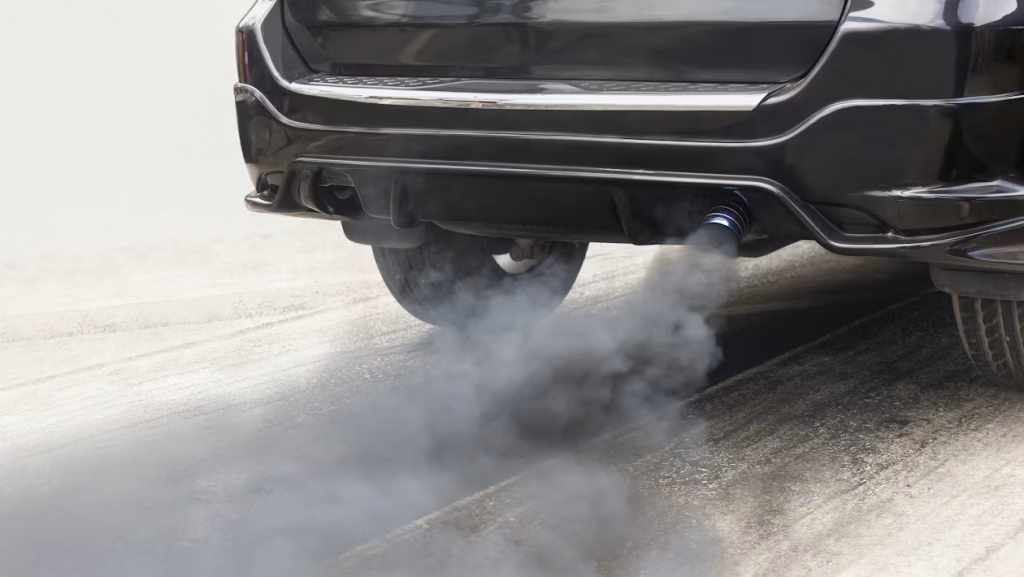
If the odor repeatedly appears after driving and is accompanied by shifting problems, slipping, or a transmission temperature warning, the transmission deserves immediate inspection. A technician can determine whether the fluid is overheated, whether there is a leak, or whether another component is generating the smell.
A persistent burnt odor should never be treated as normal simply because the vehicle still drives. Heat-related transmission damage can progress while the vehicle remains operational.
5. Transmission Fluid Looks Dark, Dirty, or Contaminated
Transmission fluid can provide a useful visual clue when the vehicle is designed to allow the owner to inspect it. Healthy fluid appearance varies by transmission and manufacturer, so there is no universal color standard that applies to every vehicle.
Still, a significant change from the condition specified by the manufacturer can be a warning. Firestone advises watching for fluid that appears dark, cloudy, thick, contaminated, or foul-smelling. Its transmission filter guidance also identifies unusually dark fluid as a possible indication of overheated automatic transmission fluid.
Heat matters because transmission fluid has to perform several jobs simultaneously. It lubricates moving components, helps transfer hydraulic pressure in automatic transmissions, and assists with temperature management. As fluid ages or becomes degraded, its ability to protect internal parts can decline.
Drivers should be careful about checking fluid on vehicles with sealed transmissions. Many modern vehicles do not have a conventional dipstick, and AAA notes that some late-model transmissions are designed as sealed systems. In those vehicles, fluid inspection may require a specific procedure or professional equipment.
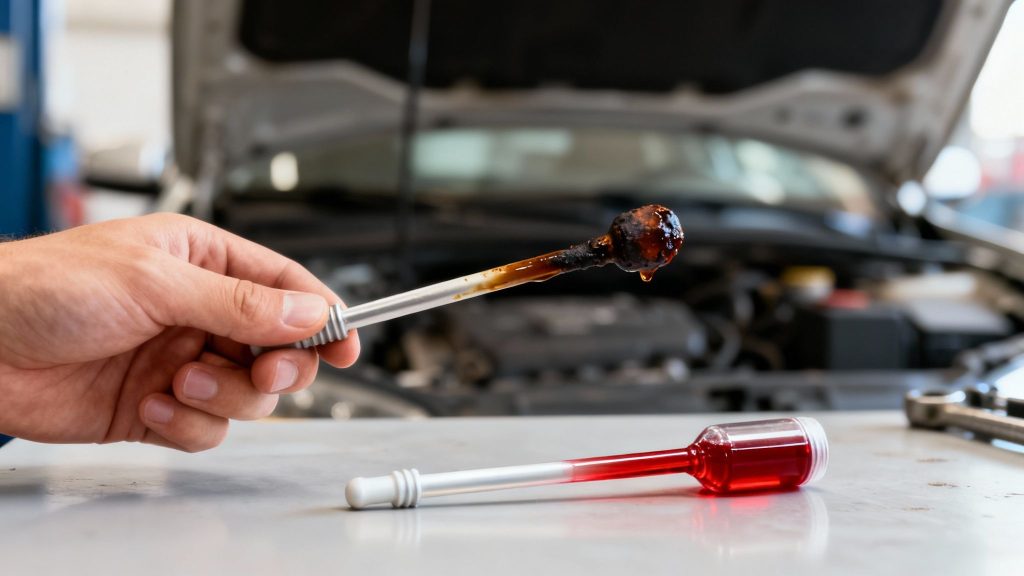
Even when a dipstick is available, the owner’s manual should determine the correct checking procedure. Fluid level and condition can depend on transmission temperature and other requirements.
Dark fluid by itself is not a definitive diagnosis of overheating. But when it appears alongside a burnt smell, slipping, delayed shifts, or unusual noises, it strengthens the case for having the transmission inspected rather than continuing to drive without investigating the cause.
6. Gear Changes Become Harsh or Violent
A healthy transmission should make gear changes in a controlled and predictable manner. When shifts suddenly become harsh, abrupt, or accompanied by a pronounced jolt, something has changed in the drivetrain’s operation.
Firestone identifies shaking, kicking, jumping, and unusually harsh shifts as signs that a transmission may need inspection.
This can become particularly noticeable when moving through several gears during acceleration. Instead of feeling a relatively smooth transition, the driver may experience a sharp engagement or a sudden surge.
Transmission fluid condition can play a role because automatic transmissions depend on hydraulic pressure to control internal components. Low or degraded fluid can interfere with normal operation. But harsh shifting can have numerous causes, including electronic controls, solenoids, mechanical wear, mounts, or other drivetrain problems. That is why the symptom should not be automatically labeled as overheating.
The more useful question is whether the behavior is new and whether it becomes more pronounced after the vehicle has been operating for a while. A transmission that shifts normally when cold but becomes increasingly harsh as it reaches operating temperature deserves attention.
The circumstances surrounding the symptom can also provide valuable information. If harsh shifts began after towing, a long mountain drive, or another demanding trip, tell the technician exactly when they occur.

Drivers should resist the temptation to keep testing the problem through repeated hard acceleration. If excessive heat is already present, adding more load may worsen the condition.
A sudden change in shift quality is not something to normalize. Early diagnosis can help distinguish a fluid-related problem from a deeper transmission or drivetrain fault before the symptom progresses into slipping or loss of gear engagement.
7. Unusual Whining, Grinding or Humming Appears
Noise can provide another warning that a transmission is under stress. A previously quiet drivetrain may begin producing whining, grinding, humming, clunking, or other sounds that change with gear selection or vehicle speed.
Firestone lists unusual noises as a common indication that a transmission or related drivetrain component should be inspected. AAA similarly notes that grinding, clunking, and whining can occur when transmission fluid is inadequate or lubrication is compromised.
The difficulty is that drivetrain noises are not exclusive to the transmission. A differential, driveshaft, CV joint, wheel bearing, or other component can produce similar sounds. The location and timing of the noise therefore matter.
A transmission-related sound may become more obvious during gear changes, acceleration, deceleration, or when the vehicle is placed in a particular gear. If the noise is accompanied by slipping, delayed engagement, a burning odor, or fluid leakage, the combination becomes more concerning.
Low fluid can be particularly important because inadequate lubrication can increase friction and heat. Firestone states that a transmission operating without adequate fluid can overheat and potentially fail.
Do not attempt to diagnose the problem solely by listening for one particular sound. Instead, note when it occurs, whether the vehicle is hot or cold, and whether changing gears alters it.
A new drivetrain noise is worth investigating before it becomes constant. If the transmission is already overheating, continued operation can increase the stress placed on components that are already experiencing abnormal friction or lubrication conditions.
8. Fluid Is Leaking Under the Vehicle
A transmission cannot maintain proper operation indefinitely if it is losing fluid. A puddle beneath the vehicle can therefore be one of the most practical clues that something needs attention.
Transmission fluid leaks can develop from seals, gaskets, transmission pans, cooler lines, or other components. Firestone identifies visible fluid leakage as a common transmission warning and notes that low transmission fluid can contribute to overheating and failure.
The appearance of the fluid can vary by vehicle and manufacturer, so drivers should not rely on the assumption that every transmission leak will produce bright red fluid. AAA notes that transmission fluid may appear reddish or brown, while Firestone also cautions that fluid color can vary.
A leak creates a particularly important connection between a visible problem and overheating. As fluid escapes, the transmission may eventually operate below its required level. Less fluid can mean reduced lubrication and impaired hydraulic operation, while the transmission may have greater difficulty managing heat.
That is why simply wiping away the puddle is not a solution. If you discover fresh fluid underneath the vehicle, identify the location and have the source checked. Avoid guessing based only on color because other automotive fluids can also leak.
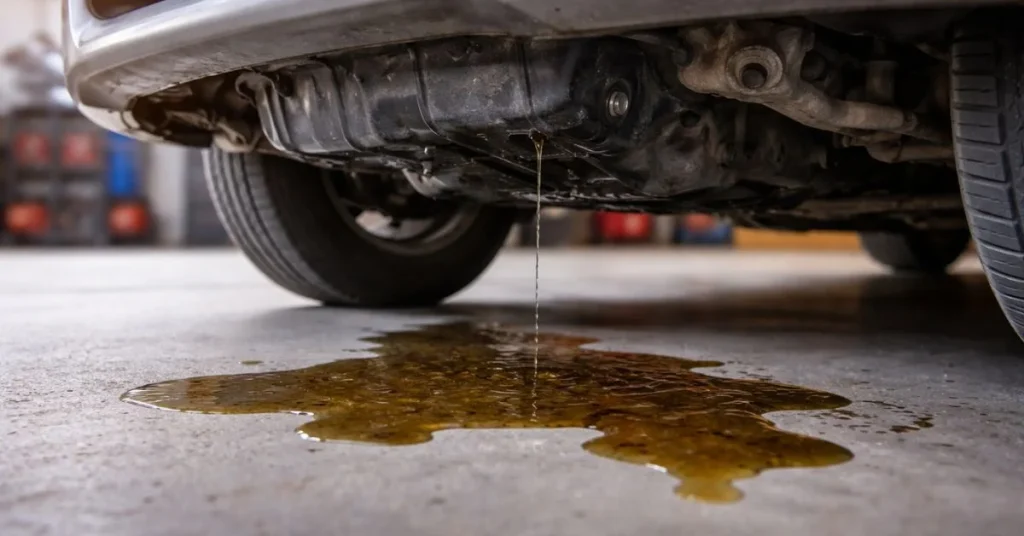
A transmission that is leaking and showing additional symptoms such as delayed shifting, slipping, burning odor, or unusual noises deserves prompt attention. Driving farther in the hope that the problem will correct itself can allow a relatively contained leak to become a serious transmission failure.
For many vehicles, the most important response to a suspected overheating transmission is not finding a temporary workaround. It is identifying why the temperature rose in the first place and correcting the underlying problem before continued heat causes additional damage.