
Horsepower has entered a different era. A decade ago, crossing 1,000 horsepower was largely reserved for a small group of exotic hypercars.
Today, electric motors and hybrid systems have pushed that figure into territory once considered almost impossible for road cars. The American market now includes electric sedans and pickups, Italian supercars, and track-focused machines producing four-digit outputs.
This ranking uses the stated peak or combined output for each model, depending on how the manufacturer defines its power figure. Electric and hybrid systems deliver power differently from conventional engines, so the numbers are not always directly comparable. Still, they provide a useful picture of how extreme modern production cars have become.
1. Rimac Nevera R
The Rimac Nevera R sits at the top with a staggering 2,107 horsepower, putting it in a completely different category from virtually every other production car.
Rimac says the Nevera R uses a four-motor electric drivetrain and a next-generation 108-kWh battery pack. The result is an output figure that more than doubles the horsepower of many conventional supercars.
The performance figures are just as extraordinary. Rimac quotes a 1.66-second 0 to 60 mph time and a manufacturer-overseen top speed of about 267 mph. It also claims 0 to 186 mph in 7.89 seconds and a quarter-mile time of 7.90 seconds.
Four electric motors change how that power reaches the pavement. Instead of relying on a traditional transmission and mechanical differentials, the Nevera R can independently control torque at the wheels. That allows its electronics to manage traction continuously while delivering enormous acceleration.
The car is also exceptionally exclusive. Its limited production places it firmly within hypercar territory.
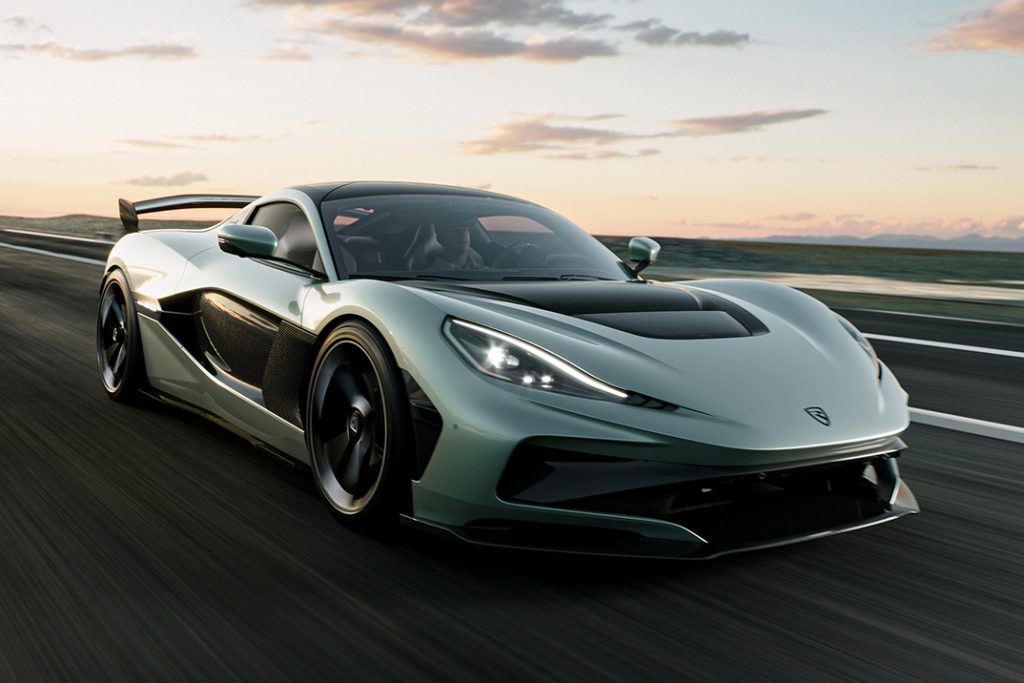
What makes the 2,107-hp figure particularly remarkable is that it comes from an electric powertrain rather than a huge internal-combustion engine.
The Nevera R demonstrates how battery-electric propulsion has pushed horsepower far beyond the levels once associated with the world’s most extreme gasoline-powered machines.
2. Lucid Air Sapphire
The Lucid Air Sapphire brings 1,234 horsepower to a completely different type of vehicle. Instead of a low-slung two-seat hypercar, Lucid built a high-performance luxury sedan capable of carrying passengers while delivering acceleration that rivals dedicated exotic machinery. Lucid describes the Sapphire as a three-motor performance sedan.
Independent testing by Car and Driver in 2026 recorded the Air Sapphire completing a 0 to 150 mph to 0 mph run in 14.4 seconds. Lucid originally quoted a 0 to 60 mph time of 1.89 seconds, a quarter-mile time of 8.95 seconds, and a top speed of 205 mph. The model was also introduced with an EPA-estimated range of 427 miles.
That combination makes the Sapphire unusual even among high-powered EVs. It is not designed merely for one spectacular acceleration run. Its four-door layout and luxury-focused cabin make it usable where a traditional hypercar would be impractical.
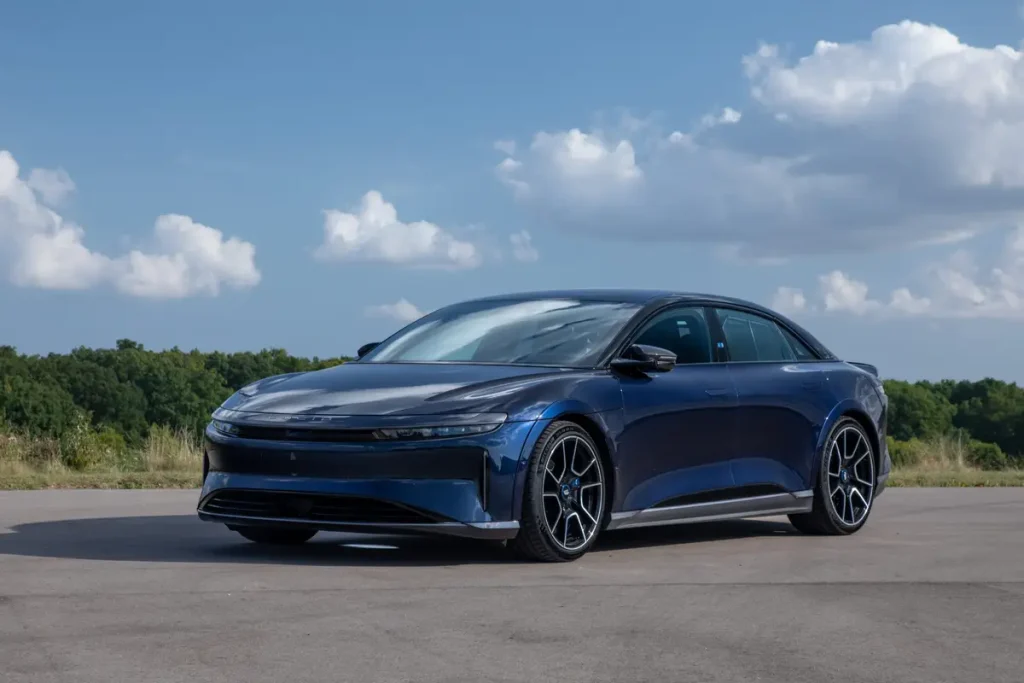
The three-motor arrangement gives Lucid considerable control over torque delivery. Electric motors can react almost instantly, without waiting for gear changes or turbochargers to build boost.
The 1,234-hp figure therefore represents more than a horsepower contest. It shows how electric propulsion can place extraordinary performance inside a sedan that still offers the practicality expected from a four-door luxury car.
3. GMC Hummer EV Pickup
The GMC Hummer EV Pickup produces up to 1,160 horsepower, making it the most unusual vehicle in this ranking. It is not a lightweight supercar or luxury performance sedan. It is a full-size electric pickup designed to combine serious off-road capability with enormous power.
Rather than using horsepower primarily to chase top speed, the Hummer EV uses its electric motors to deliver immediate thrust and substantial traction. GMC pairs that power with four-wheel steering and an architecture designed for demanding terrain.
The manufacturer advertises an available GM-estimated range of up to 363 miles for the 2026 pickup. That gives the truck a combination of high-output performance and long-distance usability.
The Hummer’s approach differs from the cars above it. The Nevera R uses extreme power for hypercar acceleration, while the Air Sapphire packages similar technology into a luxury sedan. The Hummer applies electric power to a much larger vehicle designed for rocks, mud, sand, and steep terrain.
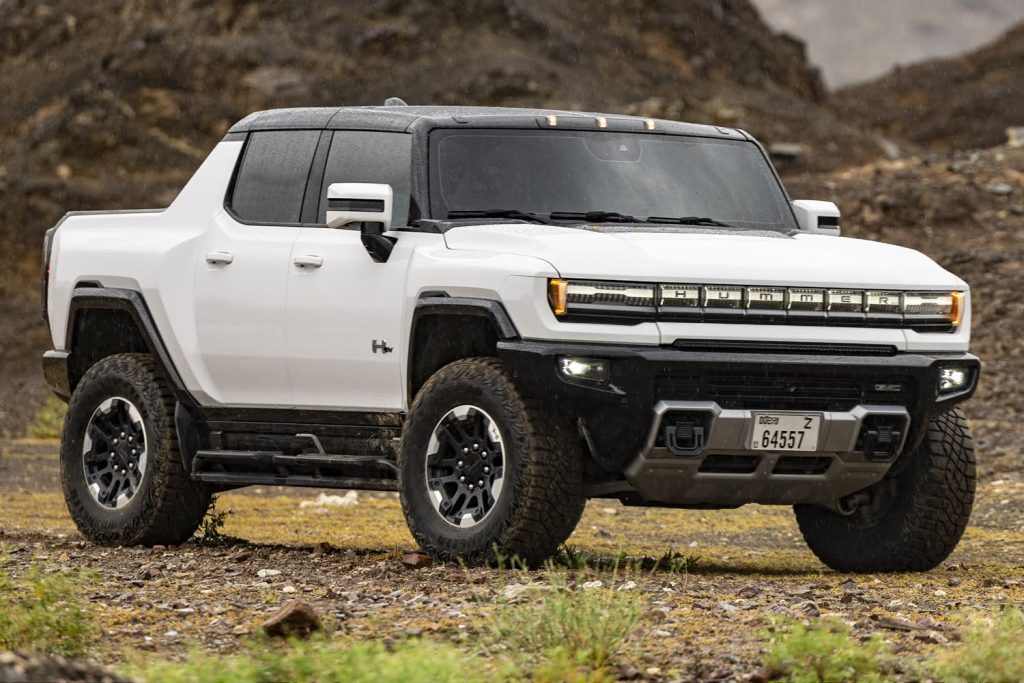
That makes its 1,160-hp rating particularly striking. A truck can now produce more than 1,000 horsepower while retaining its towing, hauling, and off-road identity.
For buyers interested in raw output rather than traditional sports-car styling, the Hummer EV shows how broadly the horsepower race has expanded.
4. Chevrolet Corvette ZR1
The Chevrolet Corvette ZR1 marks a major turning point for American internal-combustion performance because its 5.5-liter twin-turbocharged V8 produces 1,064 horsepower. Chevrolet says that makes it the most powerful production Corvette ever and the most powerful V8 produced by an American automobile manufacturer.
The LT7 engine produces 828 lb-ft of torque at 6,000 rpm and 1,064 horsepower at 7,000 rpm. Unlike the electric vehicles above it, the ZR1 reaches its output through combustion, twin turbochargers, and an eight-speed dual-clutch transmission.
Chevrolet quotes a 0 to 60 mph time of 2.3 seconds with the available ZTK Performance Package. It also gives the car a track top speed of 233 mph and a quarter-mile time of 9.6 seconds at 150 mph.
Aerodynamics are equally important. The available carbon-fiber aero package can generate more than 1,200 pounds of downforce at top speed. Producing horsepower is only part of the challenge. Keeping a car stable while using that power at extreme speeds requires substantial aerodynamic and chassis development.
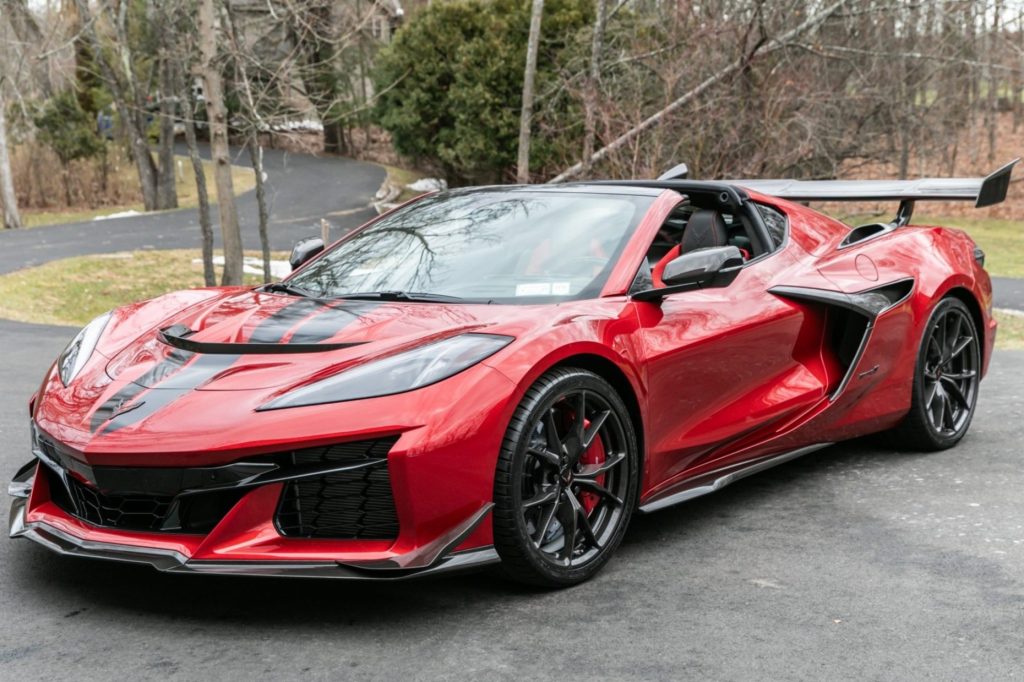
The ZR1 stands out because it delivers four-digit horsepower without entering the million-dollar territory associated with certain hypercars.
At a time when EVs dominate the upper end of horsepower charts, Chevrolet has shown that an internal-combustion V8 can still compete at the highest levels.
5. Rivian R1T and R1S Quad
Rivian’s second-generation Quad-Motor powertrain gives both the R1T and R1S 1,025 horsepower, placing an electric pickup and SUV among America’s most powerful production vehicles. Rivian says the four motors collectively produce 1,198 lb-ft of torque and can propel the R1T from 0 to 60 mph in as little as 2.5 seconds.
The significance of the system is not just its output. Rivian places one motor at each wheel, allowing the vehicle to control torque independently. That provides precise traction management on pavement as well as difficult off-road surfaces.
The second-generation Quad system pushes the R1 platform further than earlier versions. Rivian describes it as its most powerful R1 configuration.
For the 2027 model year, Rivian says both the R1T and R1S Quad can achieve an EPA-estimated range of up to 374 miles, depending on configuration.
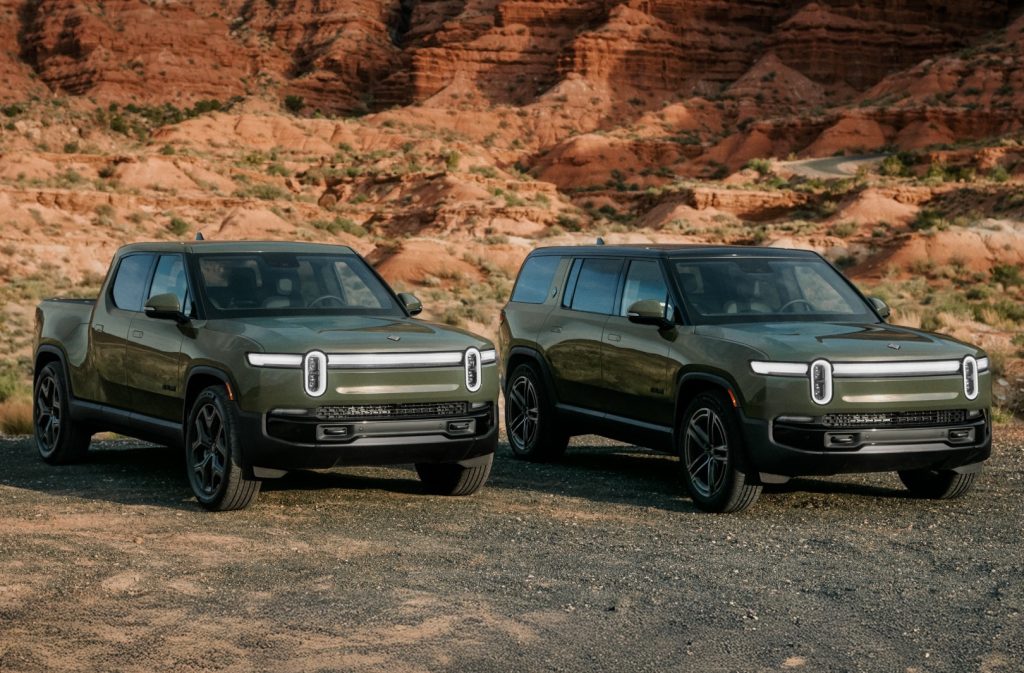
The R1T remains a genuine pickup designed to transport cargo, travel off-road, and serve as a daily vehicle while producing more than 1,000 horsepower. The R1S applies the same concept to an SUV body.
A 1,025-hp pickup and SUV would have sounded absurd only a few years ago. Today, Rivian offers that technology in its high-performance R1 lineup.
6. Tesla Model S Plaid
The Tesla Model S Plaid remains one of the most recognizable high-horsepower electric sedans. Tesla lists the Plaid with 1,020 horsepower, a tri-motor all-wheel-drive system, and a claimed 0 to 60 mph time of 1.99 seconds.
Tesla also lists a 200-mph top speed when the required hardware upgrade is installed. Without it, the vehicle is limited to 163 mph. The Model S Plaid is rated at an EPA-estimated 368 miles of range.
Those numbers make the Plaid unusual because it combines supercar-level acceleration with the dimensions and practicality of a large sedan. It offers passenger and cargo space while producing more than 1,000 horsepower.
Its three-motor architecture also allows precise control of power delivery. Electric motors produce torque almost immediately, so acceleration can begin without waiting for engine revs or turbocharger boost.
The Plaid’s place in this ranking illustrates how quickly electric performance has developed. When the model arrived, 1,000 horsepower was still an extraordinary figure for a production road car. Now several vehicles exceed that threshold.
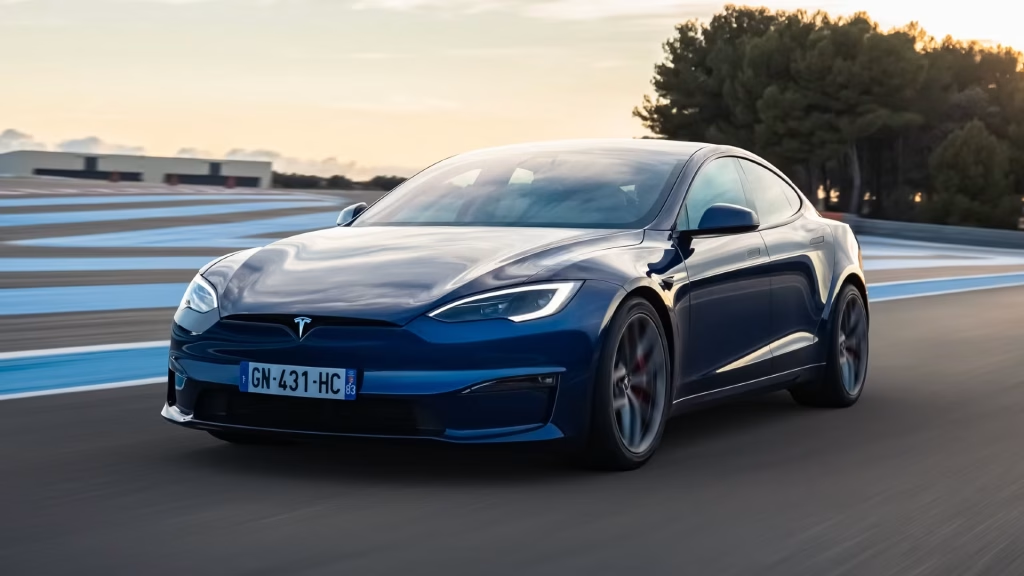
Tesla’s approach differs sharply from the Corvette ZR1. Chevrolet extracts its output from a twin-turbo V8, while Tesla relies on multiple electric motors and a large battery system.
The Model S helped normalize the idea that extreme acceleration does not require a dedicated sports-car body. A family-sized sedan can now deliver performance that once belonged almost exclusively to exotic machinery.
7. Porsche Taycan Turbo GT
The Porsche Taycan Turbo GT delivers 1,019 horsepower with launch control, putting it only one horsepower behind the Tesla Model S Plaid. Porsche lists the Turbo GT at 760 kW, with a 0 to 60 mph time of 2.2 seconds and a top track speed of 180 mph.
The available Weissach Package improves the acceleration figure to 2.1 seconds and raises top speed to 190 mph.
This is an example of Porsche adapting its traditional performance philosophy to electric power. The Taycan is designed around handling, braking, and high-speed stability rather than making acceleration its only objective.
Porsche USA lists a starting price of $243,700 for the 2027 Turbo GT before options and applicable charges.
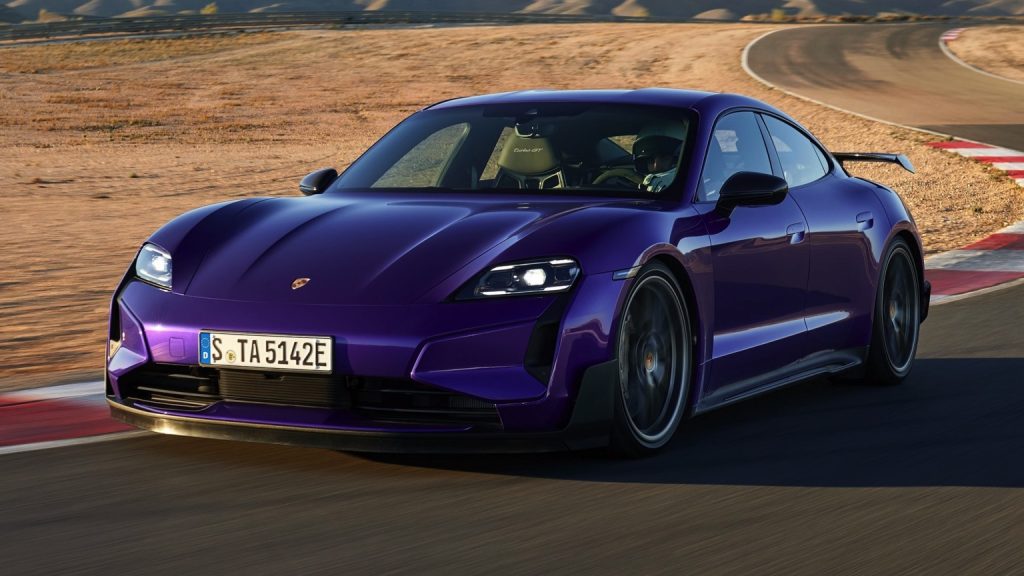
The 1,019-hp figure is achieved under specific conditions associated with launch control. Like other high-performance EVs, peak output can depend on battery temperature and available electrical power. A peak rating does not mean the car produces that figure continuously in every situation.
Still, 1,019 horsepower is extraordinary for a production Porsche. The Taycan Turbo GT shows how the brand has moved into electric performance without abandoning the handling-focused character that defines its sports cars.
8. Lamborghini Revuelto
The Lamborghini Revuelto produces 1,001 horsepower through a hybridized V12 powertrain. Lamborghini combines a 6.5-liter naturally aspirated V12 with three electric motors.
The Revuelto is fundamentally different from the pure-electric vehicles above it. Lamborghini has not abandoned the combustion engine. Instead, it uses electric motors to supplement a traditional V12.
The result combines the response of electric assistance with the character of a high-revving naturally aspirated engine. Lamborghini quotes a top speed above 217 mph and a 0 to 62 mph time of 2.5 seconds.
The V12 remains central to the car’s identity, while the hybrid system adds output and improves power delivery.
The Revuelto represents an important transition in performance-car engineering. Electrification does not necessarily mean abandoning combustion. For Lamborghini, it provides a way to preserve a V12 while entering a new performance era.
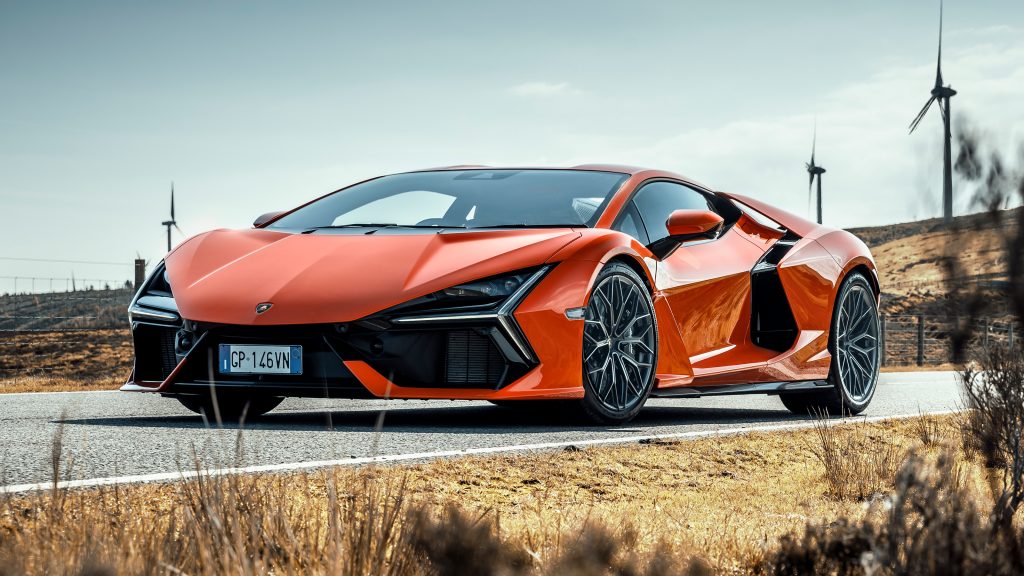
Its 1,001-hp rating is impressive, but the more significant story is how that power is generated. The car combines battery-electric assistance with internal combustion instead of relying entirely on either system.
For enthusiasts who still want the sound and character of a V12, the Revuelto offers a route into the four-digit horsepower era without giving up Lamborghini’s traditional flagship engine.
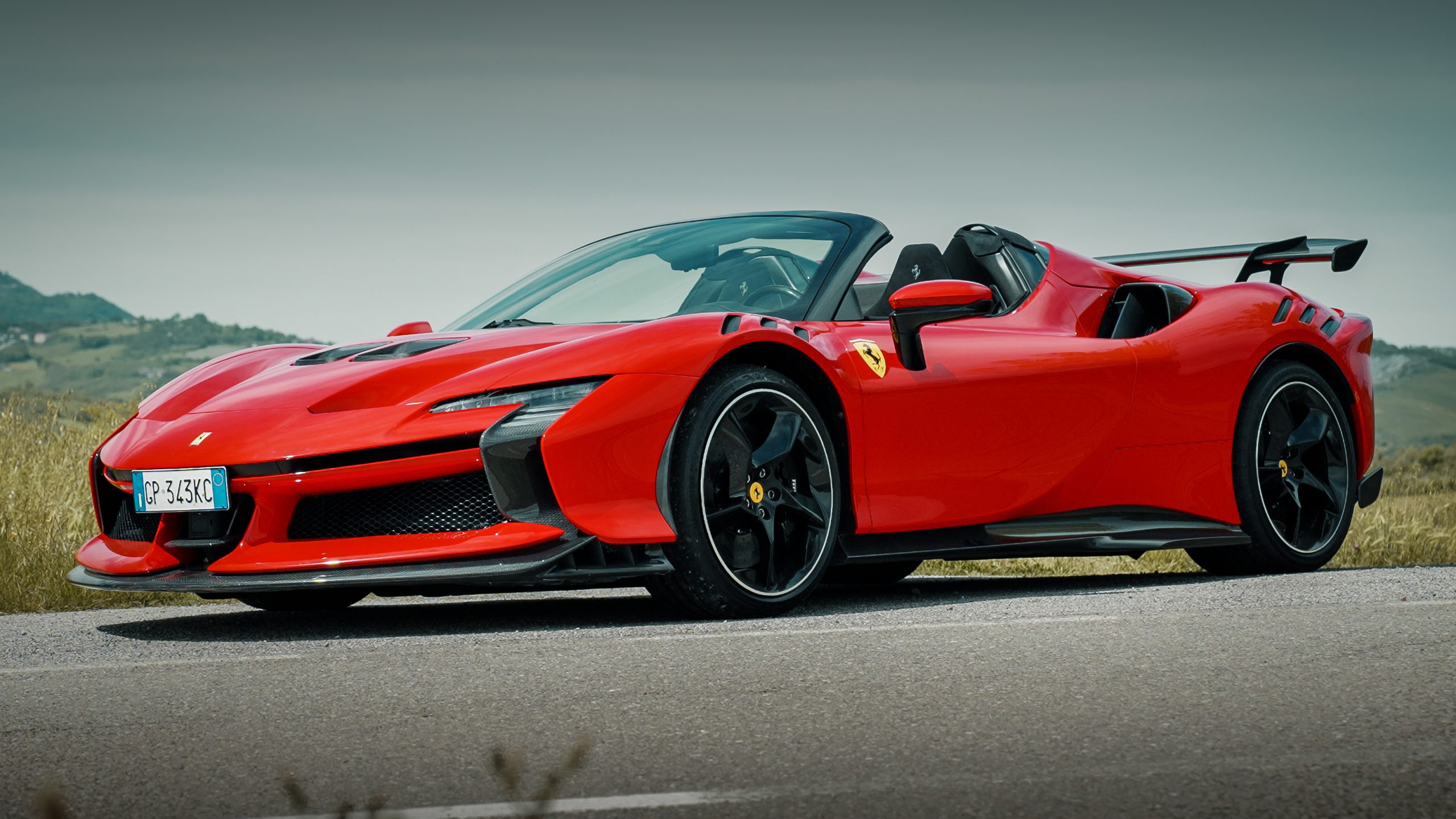
9. Ferrari SF90 Spider
The Ferrari SF90 Spider produces 986 horsepower using a 3.99-liter twin-turbocharged V8 combined with three electric motors.
Ferrari’s technical documentation lists a 780-CV V8 and 1,000 CV of combined output. Two of the electric motors operate at the front axle, giving the car all-wheel drive and precise control of its enormous output. Ferrari quotes a 0 to 62 mph time of 2.5 seconds and a top speed of 211 mph.
The SF90 Spider is significant because Ferrari did not simply create a conventional convertible with a more powerful engine. It retained the sophisticated plug-in hybrid architecture of the SF90 while adding a retractable hardtop.
That allows it to combine open-air driving with performance figures that once belonged to dedicated track-focused machinery.
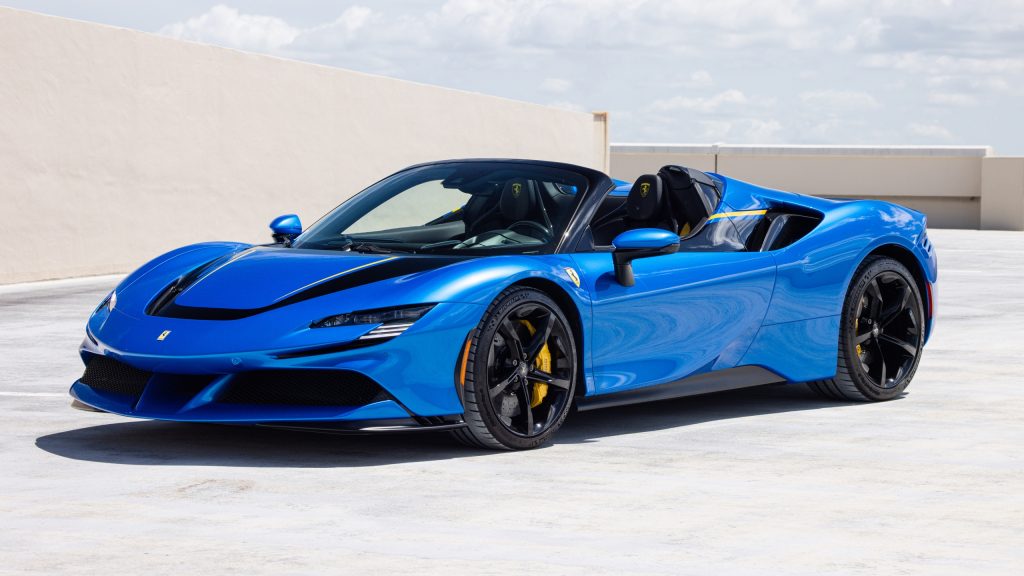
Its approach differs from Lamborghini’s. Both use electrified combustion powertrains, but Ferrari relies on a turbocharged V8 and electric assistance, while the Revuelto centers on a naturally aspirated V12.
The SF90 demonstrates why electrification is not simply a choice between gasoline and battery power. Hybrid systems can combine electric responsiveness with the sustained performance and character of an internal-combustion engine. For a convertible supercar, nearly 1,000 horsepower remains an extraordinary achievement.
10. Audi RS e-tron GT Performance
The Audi RS e-tron GT Performance produces 912 horsepower with launch control, making it the tenth vehicle here to exceed 900 horsepower.
Audi calls it the most powerful and quickest-accelerating production model in its lineup, with a claimed 0 to 60 mph time of 2.4 seconds.
The 912-hp figure is available under specific conditions involving factors such as battery temperature and state of charge. This is common among high-performance EVs because maximum electrical output depends on how much energy the battery can deliver at a given moment.
The RS e-tron GT performance uses an 800-volt electrical architecture and supports charging at up to 320 kW. Audi says a 10% to 80% charge can take around 18 minutes under suitable conditions. Its 2026 EPA-estimated range is 278 miles.
Those figures show that Audi is not simply chasing horsepower. The car also emphasizes charging speed, range and repeatable performance.
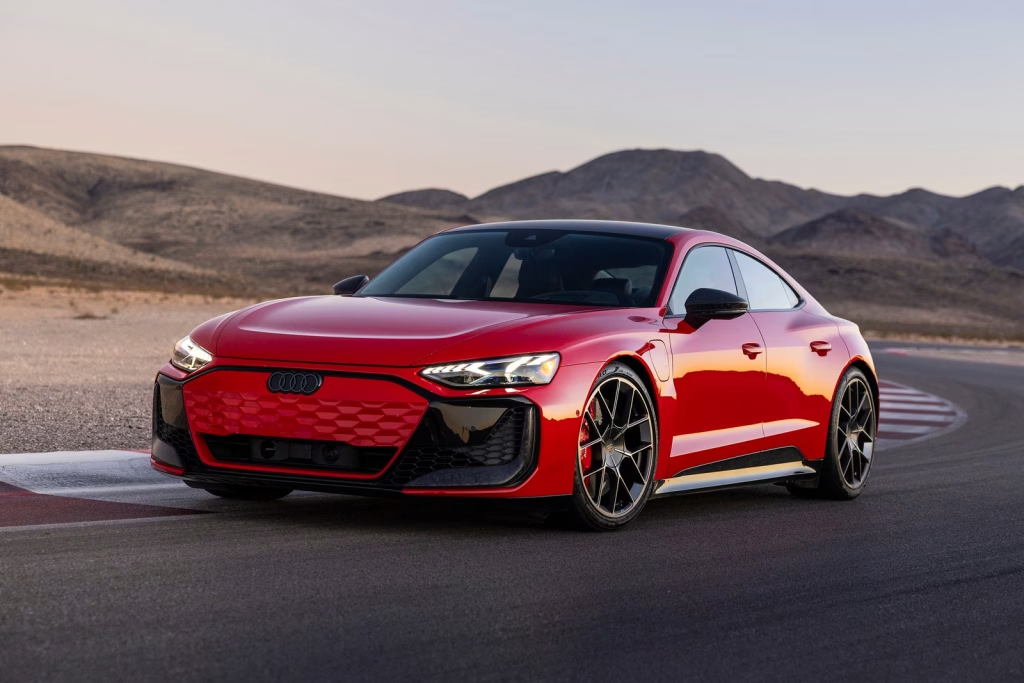
Its four-door body places it alongside the Lucid and Tesla as a practical performance sedan rather than a dedicated exotic.
At 912 horsepower, the RS e-tron GT remains dramatically more powerful than most vehicles sold in America. Its position demonstrates how quickly the high-output EV category has expanded.
11. Mercedes-AMG GT 63 S E Performance
The Mercedes-AMG GT 63 S E Performance produces 831 horsepower from a plug-in hybrid powertrain combining a handcrafted 4.0-liter twin-turbocharged V8 with an electric motor at the rear axle.
Mercedes-AMG lists 831 horsepower and 1,032 lb-ft of combined torque. The V8 itself produces 630 horsepower, while the electric motor contributes 201 horsepower. The result is a claimed 0 to 60 mph time of 2.8 seconds and a top speed of 197 mph.
The relatively small 6.1-kWh battery is not intended to provide long electric driving range. Instead, AMG uses it primarily to deliver rapid performance assistance.
That allows the GT 63 S E Performance to remain a serious gasoline-powered performance car while using electrification to fill gaps in engine response.
The car weighs more than 5,200 pounds, yet its powertrain gives it acceleration comparable to much lighter sports cars.
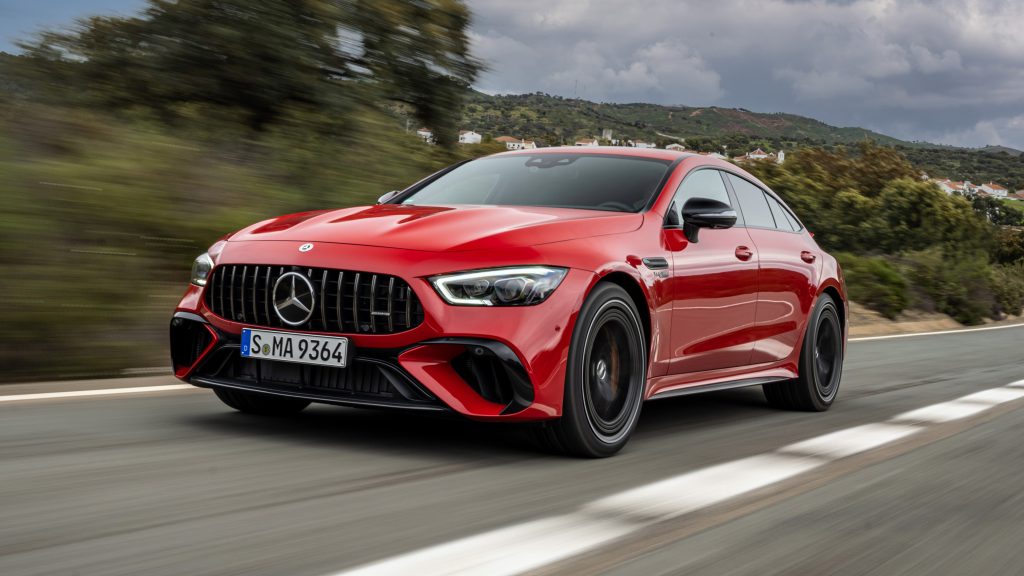
This demonstrates one advantage of performance hybrids. Electric assistance provides immediate torque while the combustion engine supplies sustained power at higher speeds.
At 831 horsepower, the AMG sits below the 900-hp threshold reached by Audi but above the output of many traditional supercars. Its four-door body makes the figure even more unusual.
12. Aston Martin Vanquish
The Aston Martin Vanquish produces 824 horsepower, making it one of the most powerful front-engine V12 cars available to American buyers. Aston Martin equips it with a 5.2-liter twin-turbocharged V12, rear-wheel drive and a ZF eight-speed automatic transmission.
The engine produces 1,000 Nm of torque, equivalent to roughly 738 lb-ft. Aston Martin quotes a 0 to 62 mph time of 3.3 seconds and a top speed of 214 mph.
Unlike the electric vehicles near the top of the ranking, the Vanquish relies on a traditional front-mid-mounted V12 driving the rear wheels.
That makes it significant in a market increasingly dominated by electrification. Aston Martin has retained a large-displacement twelve-cylinder engine while using turbocharging and modern chassis technology to exceed 800 horsepower.
The Vanquish is also designed as a grand tourer rather than a dedicated track machine. It combines extreme performance with the refinement and long-distance character expected from the brand’s flagship sports car.
Its 214-mph top speed puts it firmly in supercar territory, yet the front-engine layout and rear-wheel-drive configuration preserve a traditional character that is becoming increasingly rare.
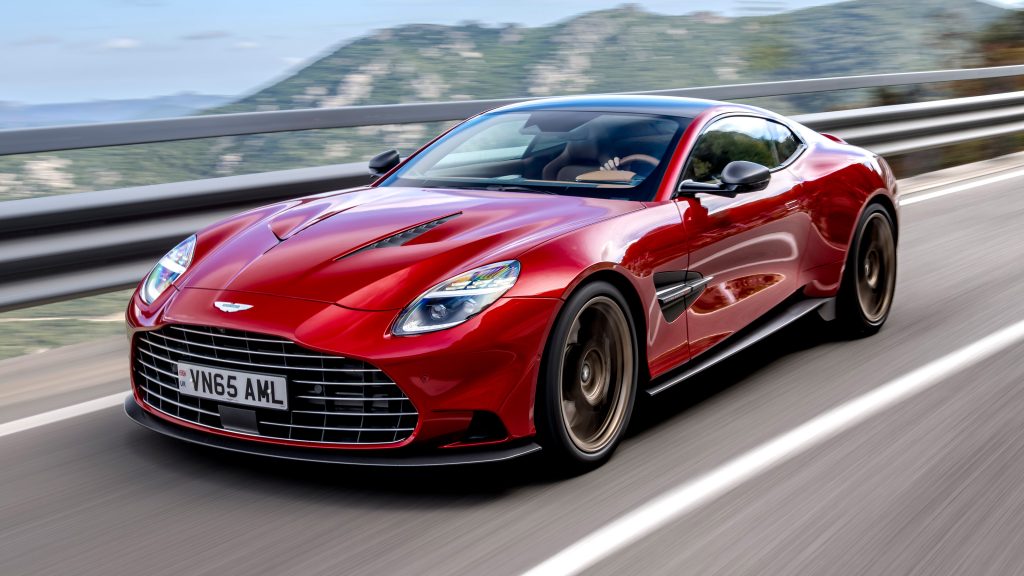
The 824-hp rating shows that the horsepower race is not limited to electric propulsion. Advanced combustion engines can still produce extraordinary output through modern turbocharging, fuel delivery and thermal management.
13. McLaren 750S
The McLaren 750S closes the ranking with 740 horsepower, but that number should not make it seem tame. McLaren equips it with a 4.0-liter twin-turbocharged V8 producing 740 bhp and 590 lb-ft of torque.
The manufacturer quotes 0 to 62 mph in 2.8 seconds, 0 to 124 mph in 7.2 seconds and a top speed of 206 mph.
That means the 750S is considerably less powerful than every other model here, yet its performance remains firmly in supercar territory.
This is an important reminder that horsepower alone does not determine how quickly a car accelerates. Weight, gearing, traction, aerodynamics and power delivery all influence the final result.
McLaren uses a twin-turbocharged V8 rather than a hybrid system. The engine sends power through a seven-speed transmission, while the car’s lightweight construction helps it make the most of every unit of power.
The 750S is available as both a coupe and Spider, giving buyers a choice between a more focused fixed-roof configuration and open-air driving.
Its position at the bottom of this list is not an indication of weak performance. Instead, it shows how dramatically the modern horsepower ceiling has moved. A 740-hp supercar that once would have ranked among the world’s most powerful production cars now sits behind vehicles producing between 824 and 2,107 horsepower.
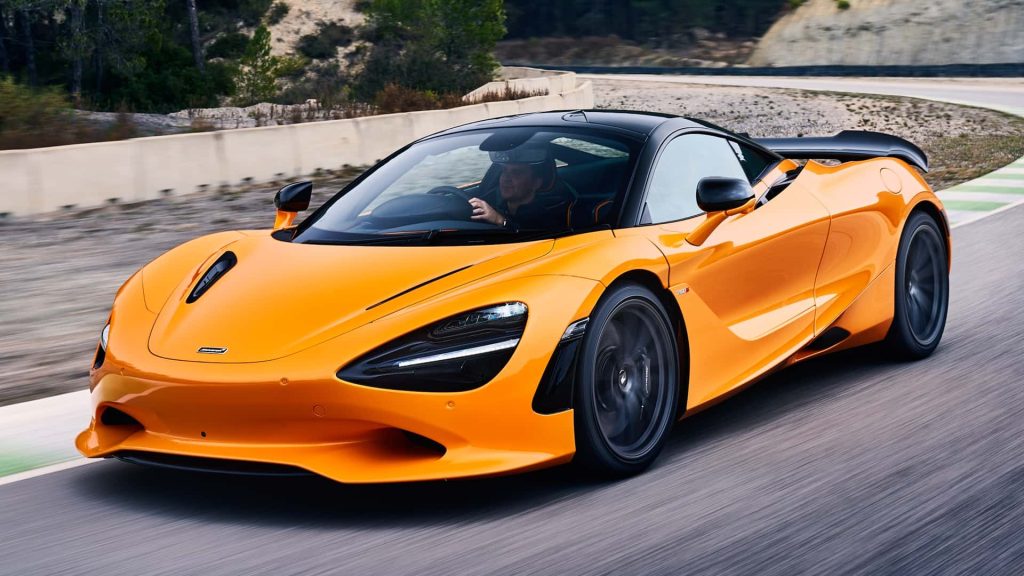
McLaren ultimately follows a different performance philosophy. Rather than chasing a four-digit output figure, it relies on low weight, aerodynamic efficiency and a powerful V8 to create a car capable of exceeding 200 mph.
The modern horsepower race has therefore become much broader than a contest between traditional supercars. Electric hypercars have pushed output beyond 2,000 horsepower, hybrid systems are allowing traditional engines to approach or exceed four digits, and even relatively conventional supercars can deliver performance that would have been extraordinary a generation ago.
