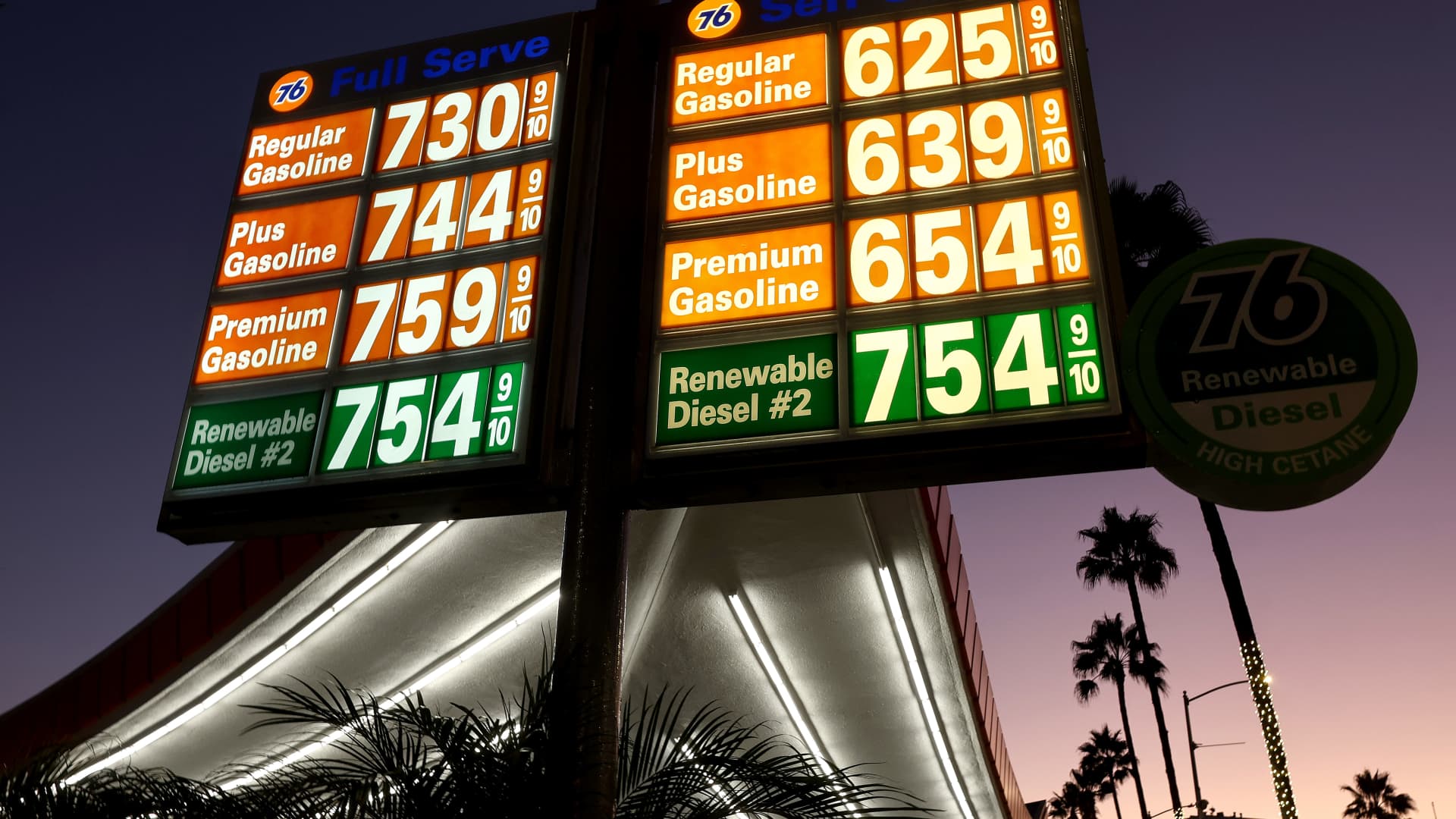
Higher gasoline prices are changing the way Americans shop for new vehicles, with hybrid models gaining momentum as drivers look for lower fuel costs without committing to a fully electric vehicle.
The shift is arriving at a difficult moment for U.S. automakers, which have spent years investing in EVs while demand for battery-powered vehicles has become less predictable and federal policy has moved in a different direction.
The latest sales results show that consumers are not simply choosing between gasoline and electric power. Many are moving toward the middle, where a hybrid can deliver better fuel economy while retaining the familiar refueling process and long-distance convenience of a gasoline vehicle.
That change is putting pressure on automakers to make their product plans more flexible. Companies that offer a broad range of hybrid vehicles are gaining attention, while manufacturers with fewer fuel-efficient choices risk losing buyers as gasoline becomes a larger part of the household transportation budget.
High Gas Prices Are Changing What Buyers Want
The financial impact of higher fuel prices is straightforward. When gasoline costs more than $4 a gallon, the difference between a vehicle that returns 25 mpg and one that delivers 40 mpg becomes much more noticeable over thousands of miles.
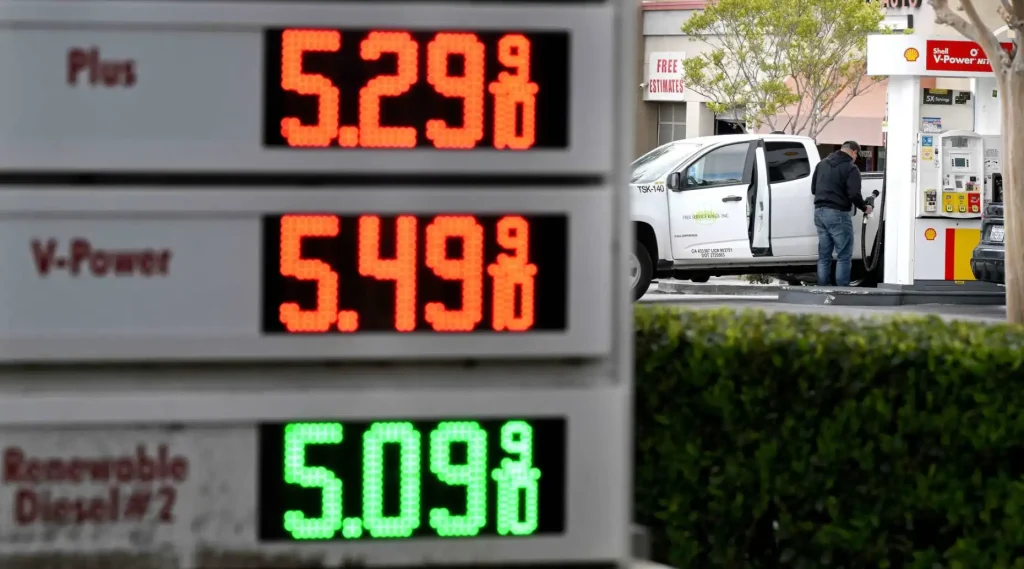
AAA said the national average for regular gasoline reached $4.43 a gallon in September, compared with $3.20 a year earlier. The monthly average of $4.33 was also the highest September average on record. By October 1, the national average had eased to $4.41, but prices remained unusually high for the time of year.
The change is visible in recent sales. Toyota’s U.S. sales increased slightly in the third quarter, while its hybrid-heavy lineup benefited from the fuel-price environment. Toyota’s Corolla hybrid sales jumped 36% during the quarter, according to Reuters. Honda and Hyundai also reported strong demand for hybrids, while Kia’s hybrid sales more than doubled.
Hyundai reported a 39% increase in third-quarter hybrid sales, Kia’s rose 152%, Toyota’s climbed 29%, and Honda’s increased 21%. Those numbers show that the shift is affecting multiple major brands rather than being limited to one successful model.
Hybrids have a practical advantage in this environment. They combine a gasoline engine with electric motors and a battery, allowing the vehicle to use less fuel without requiring drivers to depend on charging stations. For shoppers who want to reduce gasoline spending but still travel long distances or lack convenient home charging, that compromise can be compelling.
Detroit Is Feeling the Consequences
The rise of hybrids is particularly challenging for General Motors, Ford, and Stellantis because their U.S. strategies have historically emphasized large pickups and SUVs. Those vehicles remain highly profitable and continue to attract buyers, but their fuel consumption becomes more important when gasoline prices rise sharply.
The third-quarter sales figures show the competitive consequences. Ford’s U.S. sales fell 6.6% to 509,764 vehicles, while General Motors’ sales dropped 5.5% to 670,974. Stellantis also struggled. At the same time, Toyota, Honda, and Hyundai-Kia gained ground.
Cox Automotive estimated that the Detroit Three’s combined U.S. market share could fall to about 36%, while Asian automakers could account for more than half of new-vehicle sales. The figures illustrate how fuel prices can affect market share when one group of manufacturers has a much broader selection of hybrids than another.
Ford has some hybrid products, and demand for them is increasing. The Maverick pickup has become one of the clearest examples. Ford sold 41,970 Mavericks in the third quarter, more than 20% above the same period a year earlier, with the hybrid powertrain helping make the compact truck attractive to buyers seeking lower fuel consumption.
Ford executives have also told Reuters that they are seeing greater demand for hybrid powertrains on the F-150. That matters because it shows the technology is no longer confined to compact cars. Hybrid systems can now be used to preserve the capability and size that American truck buyers expect while reducing fuel consumption.
The problem is that Detroit has fewer hybrid choices than its Asian competitors. Ford has been expanding its hybrid strategy, but its portfolio remains relatively limited. General Motors has an especially large gap, with only a niche hybrid offering currently available in the Corvette.
That product gap cannot be fixed immediately. Designing a new hybrid powertrain, engineering it into a vehicle, validating it, and preparing factories for production takes years. A company can change its marketing quickly, but it cannot create an entirely new hybrid lineup in response to a gasoline-price spike that appeared within months.
This gives Toyota, Honda, Hyundai, and Kia an advantage because they entered the latest period with established hybrid technology and a larger selection of vehicles.
Policy Is Moving in the Opposite Direction
The industry’s challenge is complicated by changes in U.S. policy. The Trump administration recently finalized less stringent fuel-economy standards for automakers.
The new rules require a fleetwide average of 34.9 mpg by 2031, significantly below the previous target. The administration argues that the change will reduce compliance costs and allow manufacturers to build more of the vehicles customers want.
Automakers have generally welcomed the regulatory easing because it gives them greater flexibility in deciding which powertrains to produce.
But the market is sending a different signal. Consumers facing $4-plus gasoline are asking for greater fuel efficiency even as the government gives manufacturers more freedom to build less-efficient vehicles.
The situation is even more complicated for EVs. The federal $7,500 consumer tax credit ended last year, reducing one of the financial incentives that had helped make battery-electric vehicles more attractive. EV sales have subsequently weakened, while hybrids have benefited from their lower price and simpler ownership requirements.
That does not mean consumers are abandoning electrification. Instead, recent sales suggest that many buyers currently see hybrids as a more practical form of electrification.
Affordability is another major factor. Cox Automotive reported that the average new-vehicle transaction price reached $50,089 in August, up 1.9% from a year earlier. Higher vehicle prices mean buyers are already facing large monthly payments, making a relatively affordable hybrid more appealing than an expensive EV.
The shift could continue even if gasoline prices eventually decline. Once buyers become accustomed to the fuel savings of a hybrid, they may remain interested in the technology when shopping for their next vehicle.
For Detroit, the challenge is not simply responding to today’s fuel prices. It is rebuilding enough hybrid capacity to compete if fuel-efficient vehicles remain popular.
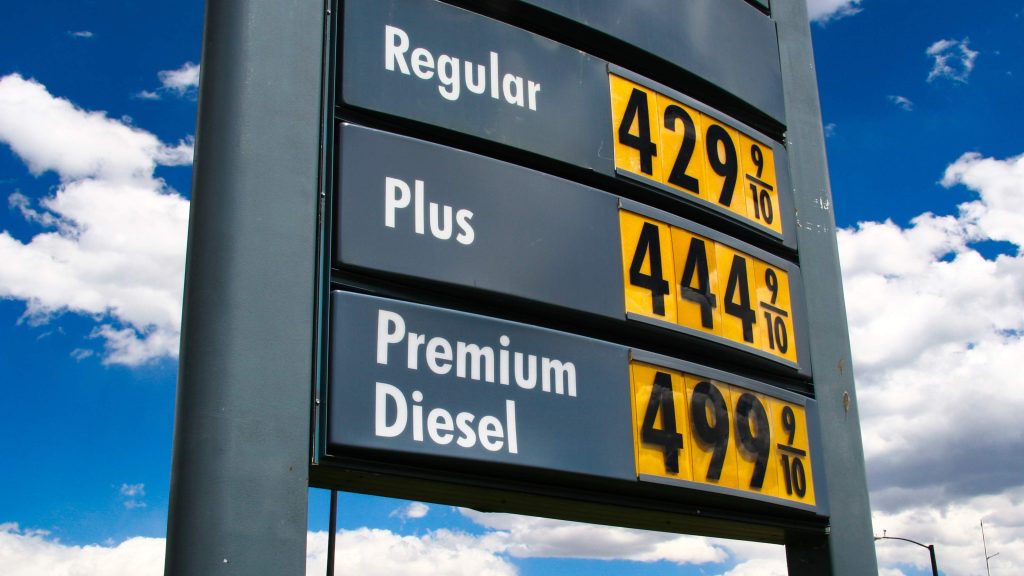
The American market had changed before when gasoline prices surged. The oil shocks of the 1970s helped fuel the rise of Japanese automakers, while the late-2000s fuel-price spike exposed the vulnerability of manufacturers heavily dependent on large SUVs and pickups.
High gasoline prices are therefore creating a test for the U.S. auto industry. EV demand may be softer than manufacturers once expected, but consumers have not stopped caring about efficiency. They are showing it through hybrids, smaller vehicles, and more fuel-conscious purchasing decisions.
Manufacturers that already have those products are benefiting now. Those that reduced their hybrid offerings while betting heavily on larger gasoline vehicles or a rapid EV transition may need to adjust.
The next few years could produce a broader U.S. powertrain market rather than a simple march from gasoline to electric. Hybrids, gasoline engines, and EVs are likely to coexist, with consumer budgets and fuel prices determining how quickly the balance changes.
For automakers, the message is simple. Flexibility matters. When gasoline prices rise sharply, buyers may not wait for the market to complete its transition to EVs. Instead, they tend to choose the technology that offers an immediate response to higher fuel costs. For many Americans, that currently means choosing a hybrid.