Horsepower has become remarkably accessible in the U.S. market, with several 2026 cars delivering output figures that once belonged almost exclusively to exotic machinery.
The supplied Jalopnik data identifies nine cars producing at least 590 horsepower while costing no more than $141,000 before applicable charges and options.
The group includes electric sedans, a hybrid performance sedan, American sports cars, an electric muscle car, and a supercharged V8 luxury sedan.
At the top sits the Tesla Model S Plaid with 1,020 horsepower, while the Porsche Taycan 4S Black Edition closes the group with 590 horsepower. Between them are some of the most powerful performance cars available to American buyers.
1. Tesla Model S Plaid
The Tesla Model S Plaid establishes an enormous horsepower benchmark for this price range. According to the supplied Jalopnik data, it produces 1,020 horsepower and carries a $109,490 price, putting it comfortably below the $141,000 ceiling.
That combination gives the Plaid a particularly unusual position because it delivers more than 1,000 horsepower without requiring the kind of seven-figure budget associated with some of the world’s most extreme performance machines.
Tesla’s official specifications have long positioned the Model S Plaid as an acceleration-focused flagship. The company has quoted a 0-to-60-mph time of 1.99 seconds under specified conditions, demonstrating that the car’s output translates into extraordinary straight-line performance rather than existing solely as a headline figure.
The three-motor all-wheel-drive system is central to that capability. Electric motors can deliver their torque almost immediately, allowing the Plaid to put its immense power to work with very little delay. That characteristic separates it from many high-output gasoline vehicles that build their strongest performance as engine speed rises.
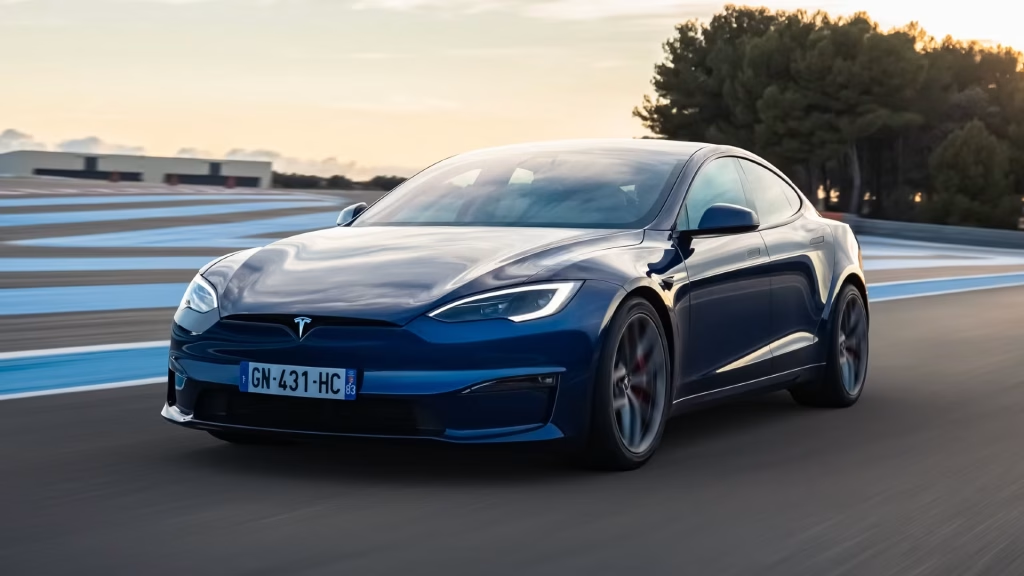
There is another reason the Plaid stands out. It is not a two-seat sports car designed only for occasional high-speed driving. The Model S is a large luxury sedan with four doors and everyday practicality, meaning its enormous power comes in a package that can also function as a regular commuter or family vehicle.
The supplied price makes the comparison even more striking. At $109,490, the Model S Plaid sits $31,510 below the article’s $141,000 limit while producing 351 horsepower more than the second-ranked Lucid Air Grand Touring. That difference illustrates just how aggressively Tesla pushes maximum electric output in its flagship sedan.
2. Lucid Air Grand Touring
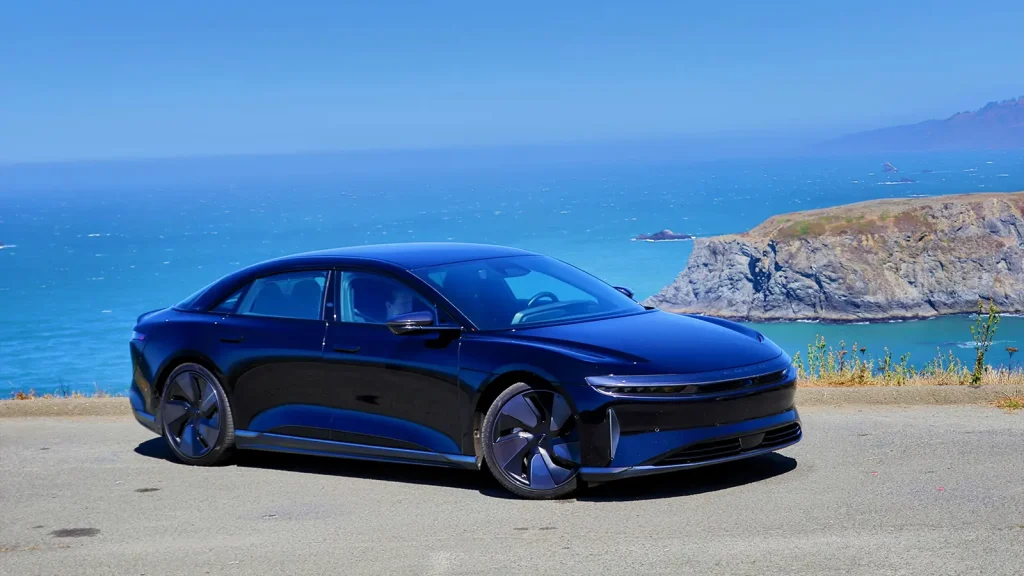
The Lucid Air Grand Touring takes second place with 819 horsepower and a listed price of $114,900. Although it falls well short of the Tesla Model S Plaid’s 1,020-hp figure, 819 horsepower still places the Lucid in an exceptionally powerful category.
Its price is also $26,100 below the $141,000 limit, leaving considerable room between the starting price and the upper boundary of this ranking.
Lucid’s U.S. specifications give the Grand Touring a 0-to-60-mph time of 3.0 seconds and a top speed of 168 mph. The company also advertises up to 512 miles of range for the model, depending on configuration.
Those figures reveal that Lucid has approached the performance equation differently from manufacturers that focus almost exclusively on acceleration.
The Grand Touring is intended to combine serious performance with long-distance electric driving. That makes its 819-hp figure particularly interesting because the car is not simply a stripped-down performance special. It remains a premium sedan designed around comfort, efficiency, and range as well as speed.
Lucid also states that the Grand Touring can add up to 200 miles of range in 12 minutes under its specified charging conditions. That charging capability becomes relevant when considering the vehicle’s role as a high-performance daily driver.
A car producing more than 800 horsepower would already attract attention, but pairing that output with a claimed range exceeding 500 miles gives it a much broader mission.
The price-to-output relationship remains strong as well. At $114,900, the Grand Touring provides 819 horsepower without crossing into the $120,000-plus territory occupied by several other vehicles in this ranking.
It therefore offers a different kind of performance value from the Tesla, emphasizing a balance between power, range, and luxury rather than pursuing the highest horsepower figure available.
3. BMW M5
The BMW M5 brings 717 horsepower into a traditional luxury-performance sedan and does so with a plug-in hybrid powertrain rather than a purely electric system. The supplied Jalopnik data lists a $123,300 price, leaving the M5 $17,700 below the $141,000 limit.
BMW’s U.S. specifications confirm the 717-horsepower output and quote a 0-to-60-mph time of 3.4 seconds. Those numbers put the M5 comfortably into supercar-level acceleration territory while retaining the basic shape and usability of a four-door performance sedan.
What makes this generation especially significant is the role played by electrification. The M5 combines a combustion engine with an electric motor to achieve its system output. Rather than replacing the gasoline engine completely, BMW uses electric assistance to add power and torque while preserving the character associated with the M5 name.
That creates an interesting contrast with the first two vehicles on the list. The Tesla and Lucid rely entirely on electric propulsion, whereas the BMW maintains an internal-combustion engine at the center of its performance identity.
The M5 therefore represents a transitional approach in which hybrid technology is being used to push a familiar performance formula into territory that would have been extremely difficult to reach with a conventional gasoline setup alone.
The price is also notable because the M5 is not the most expensive car in this group. At $123,300, it costs substantially less than the Audi S e-tron GT and Porsche Taycan 4S Black Edition listed later. Its 717 horsepower also places it ahead of the 670-hp Chevrolet Corvette Z06 and Dodge Charger Daytona Scat Pack.
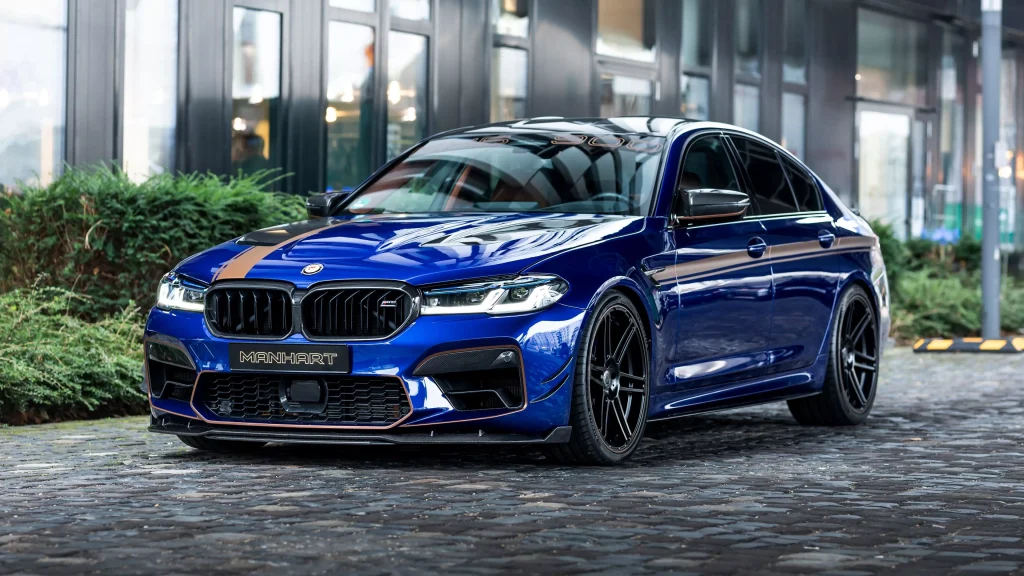
For buyers who want extreme output without moving entirely into battery-electric ownership, the M5 provides one of the most technically distinctive choices in the group. Its combination of 717 horsepower, four-door practicality, and hybrid propulsion gives it a character that cannot be replicated simply by looking at the horsepower number.
4. Chevrolet Corvette Z06
The Chevrolet Corvette Z06 takes a different path to 670 horsepower. Instead of relying on turbocharging, hybrid assistance, or battery-electric motors, it uses a naturally aspirated 5.5-liter V8 with a flat-plane crankshaft. Chevrolet lists 670 horsepower for the Z06, while the supplied Jalopnik data gives it a $120,300 starting price.
Chevrolet’s published performance figures make the Z06 considerably more than a high-horsepower specification. The company quotes a 0-to-60-mph time of 2.6 seconds and a quarter-mile time of 10.6 seconds at 131 mph under its specified conditions. Those numbers demonstrate the effectiveness of the engine and chassis combination.
The Z06’s engine architecture is one of its defining characteristics. A naturally aspirated engine does not use a turbocharger to force additional air into the cylinders, nor does it rely on an electric motor to supplement its output. The power comes from the high-revving V8 itself.
That gives the Corvette a very different identity from the electric cars at the top of this list. The Tesla and Lucid can produce enormous output through electric motors, while the Z06 provides a mechanical experience centered around engine speed, sound, and throttle response.
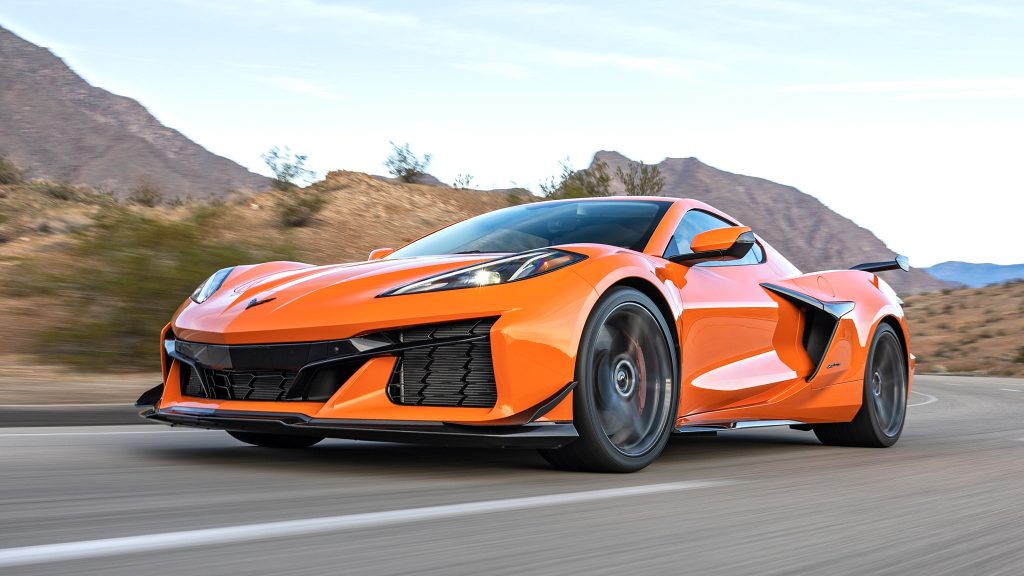
Its $120,300 starting price also keeps it well below the $141,000 ceiling. There is, however, an important distinction between the base price and the final price of an optioned car. Higher trims, equipment, and other charges can push the transaction considerably higher.
The supplied figure should therefore be understood as the starting point used for this ranking rather than a guarantee of the final purchase price.
Even so, the Z06’s place on this list is significant. It demonstrates that a high-revving gasoline sports car can still compete with much newer electric performance technology on horsepower, acceleration, and price.
5. Dodge Charger Daytona Scat Pack
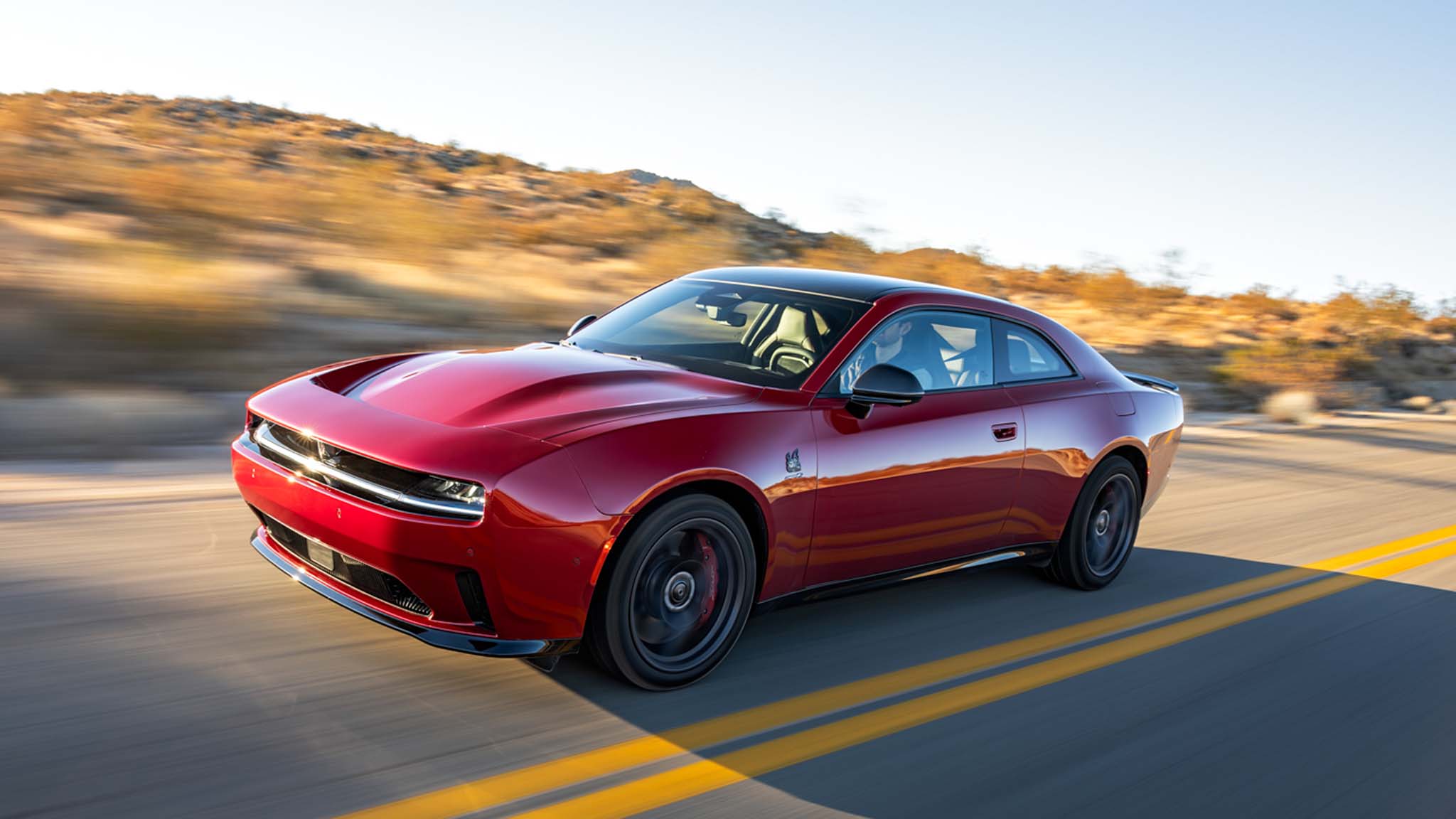
The Dodge Charger Daytona Scat Pack is arguably the biggest price surprise in the group. It produces 670 horsepower, matching the Corvette Z06, yet the supplied Jalopnik data places its price at only $73,985. That means it costs less than every other vehicle on this list while still clearing the 650-horsepower mark.
Dodge’s official information confirms 670 horsepower and 627 lb-ft of torque for the Charger Daytona Scat Pack. The manufacturer also quotes a 0-to-60-mph time of 3.3 seconds. Those figures give the electric Charger the performance credentials expected from the Scat Pack name while moving the formula into an entirely different powertrain era.
The price difference is substantial. The Charger is $46,315 below the $120,300 starting price of the Corvette Z06 and $49,315 below the BMW M5’s supplied figure. Yet its horsepower output is identical to the Corvette and only 47 horsepower below the BMW.
That makes the Daytona Scat Pack one of the strongest examples of how electric propulsion has changed the relationship between horsepower and purchase price. Electric motors can generate substantial output without the complex mechanical hardware traditionally associated with very high-performance gasoline engines.
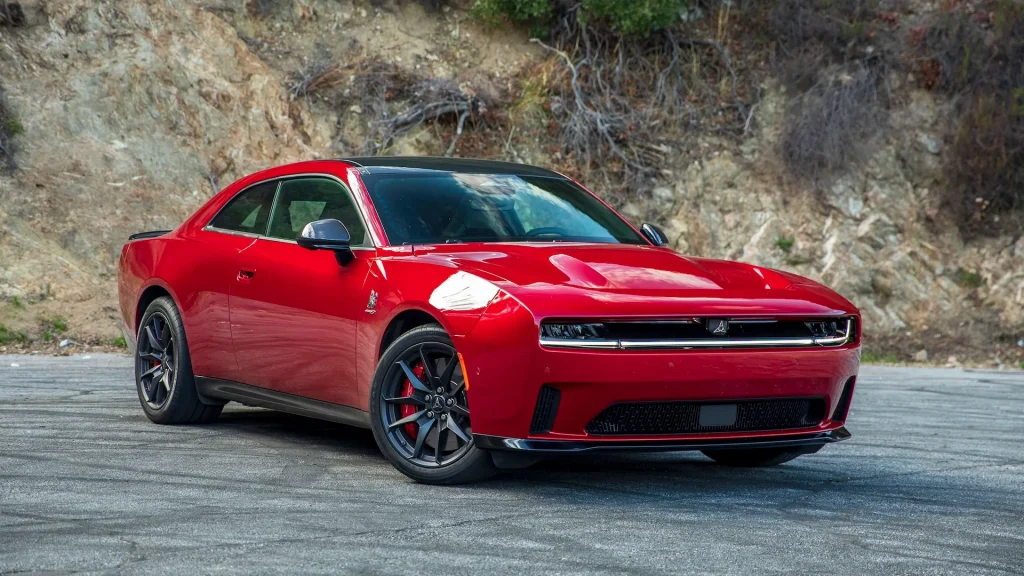
The all-wheel-drive system also plays an important role in making use of the power. With 670 horsepower and 627 lb-ft of torque, traction becomes a major consideration, particularly during hard acceleration. Dodge’s quoted 3.3-second 0-to-60-mph figure demonstrates that the power is not simply theoretical.
The Charger Daytona Scat Pack therefore occupies a unique position. It has the horsepower of a serious sports car, the body style associated with a modern muscle sedan and a starting price far below the rest of this high-output group.
6. Audi S e-tron GT
The Audi S e-tron GT produces 670 horsepower and carries a $127,700 starting MSRP in the supplied data. That places it at the upper end of the price range while giving it the same horsepower figure as both the Corvette Z06 and Dodge Charger Daytona Scat Pack.
Audi’s U.S. specifications list a 0-to-60-mph time of 3.3 seconds with launch control. The company also uses a 105-kWh battery in the model, with the electric powertrain delivering its output through all four wheels.
The interesting part of the S e-tron GT is the way its performance is packaged. The car is designed as a premium grand-touring-style electric performance sedan rather than a stripped-down acceleration machine. Its cabin, technology, and high-speed road manners are part of the equation, meaning buyers are paying for more than horsepower.
The price reflects that positioning. At $127,700, the Audi costs $53,715 more than the Charger Daytona Scat Pack even though both produce 670 horsepower. That difference demonstrates how the same output number can exist in radically different products.
The Audi’s electric architecture also allows it to deliver its power without the delays associated with building engine speed. Electric propulsion provides immediate response, while all-wheel drive helps distribute the available output between the front and rear axles.
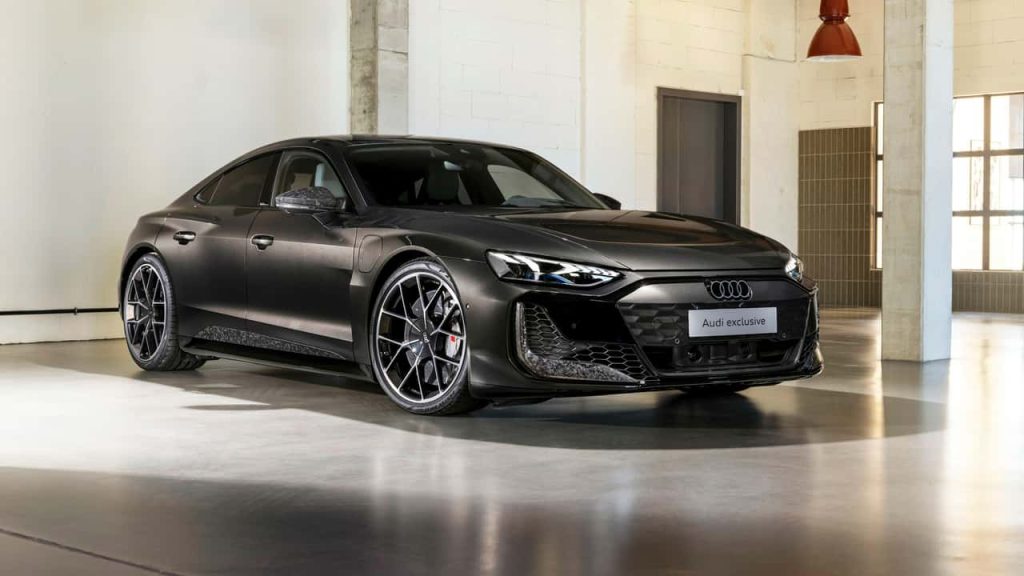
This makes the S e-tron GT an interesting middle ground in the ranking. It does not chase the Tesla’s four-digit horsepower figure, nor does it attempt to preserve the mechanical character of the Corvette. Instead, Audi uses 670 horsepower as part of a sophisticated luxury-electric package.
For a buyer who values refinement as much as outright acceleration, the S e-tron GT demonstrates why horsepower figures should always be considered alongside the vehicle’s intended role and engineering approach.
7. Cadillac CT5-V Blackwing
The Cadillac CT5-V Blackwing stands apart from the electric vehicles because its 668 horsepower comes from a supercharged 6.2-liter V8. Cadillac lists 659 lb-ft of torque and a starting MSRP of $98,900, placing the sedan well below the $141,000 limit.
The Blackwing’s price is one of its strongest points in this comparison. At $98,900, it remains below $100,000 while producing more than 660 horsepower. The supplied price also puts it $24,400 below the Chevrolet Corvette Z06.
Cadillac quotes a 0-to-60-mph time of 3.4 seconds for the Blackwing with the appropriate configuration. The car is also available with a six-speed manual transmission, a feature that makes it particularly unusual in a market increasingly dominated by automatic and electric drivetrains.
That manual gearbox changes the meaning of the horsepower figure. The CT5-V Blackwing is not simply a machine designed to reach a specific acceleration number as quickly as possible. It gives the driver a greater role in managing the engine’s output and selecting gears.
Cadillac also equips the model with performance-focused hardware including Brembo brakes and Magnetic Ride Control. These components help demonstrate that the Blackwing was engineered as a complete performance sedan rather than a standard luxury car with a larger engine.
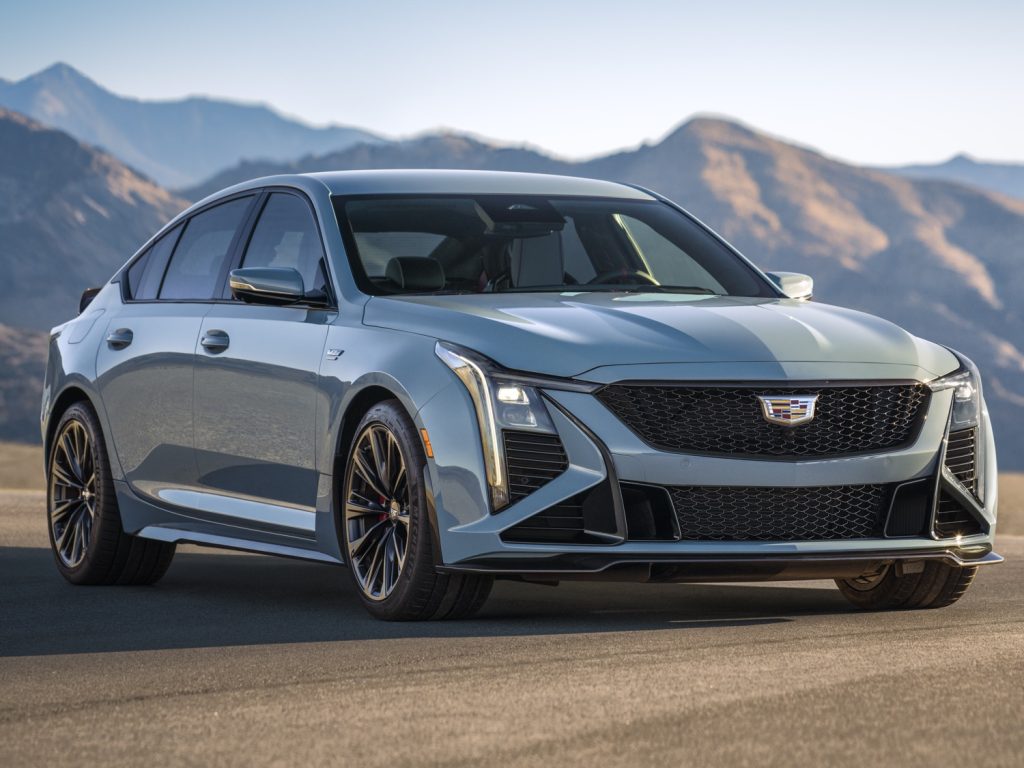
Its 668 horsepower places it only two horsepower below the 670-hp Corvette and Charger. Yet the Cadillac delivers that power through a very different mechanical formula. The supercharged V8 provides the low-end response and exhaust character expected from a traditional American performance engine.
The CT5-V Blackwing is therefore one of the most distinctive cars in the group. It combines four-door practicality, a large supercharged V8, serious chassis hardware and an available manual transmission, all while keeping the starting price below six figures.
8. Chevrolet Corvette E-Ray
The Chevrolet Corvette E-Ray produces 655 horsepower and starts at $108,600 in the supplied data. That puts it only 15 horsepower behind the 670-hp Z06 and Charger Daytona Scat Pack while introducing a completely different drivetrain strategy.
The E-Ray combines Chevrolet’s 6.2-liter V8 with an electric drive unit powering the front axle. This makes it the first Corvette to use all-wheel drive, with the electric motor providing propulsion at the front while the gasoline engine drives the rear wheels.
Chevrolet quotes a 0-to-60-mph time of 2.5 seconds for the E-Ray. That figure is particularly impressive because the car does not need to be a full battery-electric vehicle to achieve extremely rapid acceleration.
The hybrid layout also gives the E-Ray an interesting advantage in traction. Electric power at the front axle can help supplement the rear-driven V8 during acceleration, allowing the car to deploy its combined output more effectively.
At $108,600, the E-Ray costs $11,700 less than the Z06’s supplied starting price while giving buyers all-wheel drive and hybrid assistance. Its 655 horsepower is slightly lower, but the difference is small enough that the two Corvettes remain close on a pure output comparison.
The E-Ray also represents a broader shift in sports-car engineering. Rather than treating electrification as something reserved for economy-focused vehicles, Chevrolet uses an electric motor to enhance performance. The result is a Corvette that retains its V8 character while gaining another source of propulsion.
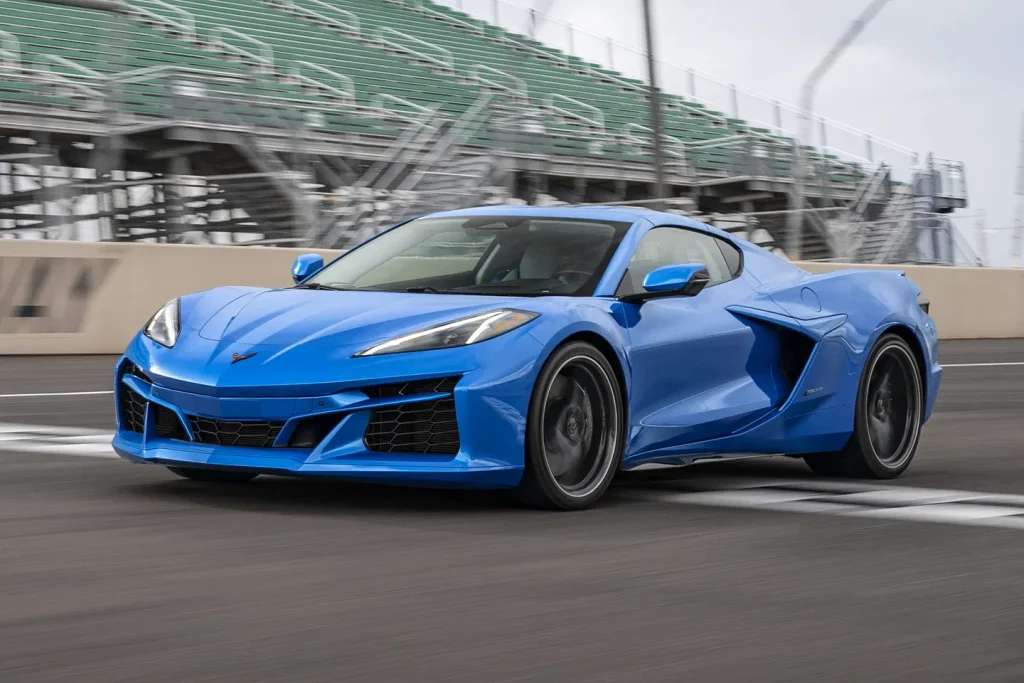
For buyers deciding between the Z06 and E-Ray, the choice is therefore not simply about which one has more horsepower. The Z06 emphasizes its naturally aspirated engine and performance-car character, while the E-Ray adds all-wheel-drive traction and electric assistance to the Corvette formula.
9. Porsche Taycan 4S Black Edition
The Porsche Taycan 4S Black Edition completes the ranking with 590 horsepower and a $141,000 starting price. It therefore sits exactly at the upper price limit specified for this group and produces the lowest horsepower figure among the nine qualifying vehicles.
Porsche information for the 2026 Taycan 4S Black Edition lists 590 horsepower with Launch Control and an EPA-estimated range of 295 miles. The model uses a 105-kWh battery and all-wheel drive, giving it the hardware necessary to deliver its power through both axles.
The performance numbers remain strong despite its position at the bottom of this particular horsepower list. Porsche quotes a 0-to-60-mph time of 3.5 seconds with Launch Control and a top track speed of 155 mph.
That means the Taycan is not included simply because it barely meets the 590-hp requirement. Its output is paired with a sophisticated electric chassis and high-speed performance capability. The car’s purpose is to deliver the refinement and road manners associated with Porsche while taking advantage of the instant response of electric motors.
Its $141,000 starting price also makes it the most expensive vehicle in the supplied ranking. The gap between the Porsche and the $73,985 Charger Daytona Scat Pack is $67,015, despite the two cars being separated by only 80 horsepower.
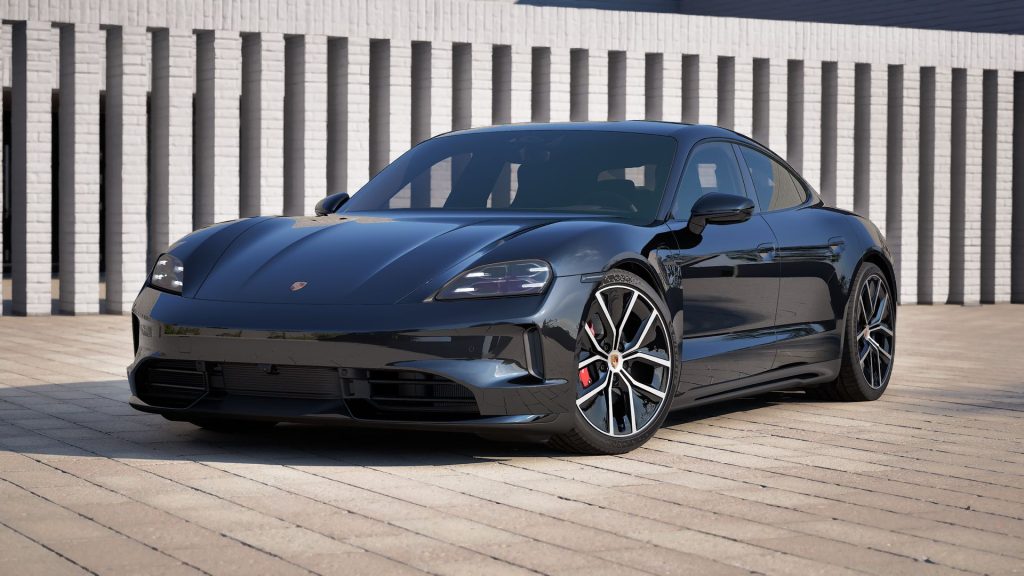
That comparison illustrates how different the vehicles are. The Dodge prioritizes enormous electric output at a comparatively low entry price, while the Porsche sits at the premium end of the segment and emphasizes luxury, engineering and performance integration.
The Taycan 4S Black Edition consequently provides a fitting final entry for the list. Its 590 horsepower may be the lowest figure here, but it still represents an extraordinary amount of output for a production sports sedan, and it achieves that figure through an all-electric powertrain while retaining the performance credentials expected from the Porsche name.